
How to Make Dalgona Coffee for a Perfectly Stable, Creamy Foam
To make dalgona coffee, use fine-grain instant coffee and granulated white sugar. Whip equal parts of each with hot water until stiff peaks form. The foam’s stability depends on the granule size; coarse coffee creates a gritty, collapsing foam, while powdered sugar yields a runny mess that won’t hold.
To make dalgona coffee, whip equal parts instant coffee granules, granulated white sugar, and hot water together until they form stiff, glossy peaks, then spoon the foam over a glass of cold milk. The foam’s stability depends entirely on the type of instant coffee and the sugar you use, get those wrong and the foam slides into the milk within two minutes.
Most recipes tell you to whip three ingredients. They don’t tell you that the wrong instant coffee granule size creates a gritty, collapsing foam, or that powdered sugar guarantees a runny mess. You’ll follow the steps, get a beautiful peak, and watch it dissolve before you can take a picture.
This guide walks through the exact granule type, the water temperature that matters, and the whipping method that actually works. We’ll cover why your first attempt probably failed and how to fix it for good.
Key Takeaways
- Use coarse, agglomerated instant coffee granules (like Nescafé Taster’s Choice or Folgers Classic Roast), not fine powder, for a stable foam that holds for over an hour.
- Granulated white sugar is non-negotiable; powdered sugar contains cornstarch that breaks the foam’s structure.
- Whip with a hand mixer or immersion blender, a whisk won’t build enough volume, and you’ll quit from arm fatigue before peaks form.
- The foam goes through three distinct phases: frothy bubbles, a dark liquid stage, then stiff peaks. Stopping in the liquid stage is the most common failure point.
- Pour the foam over cold milk, not hot. Heat from the milk starts melting the sugar-coffee matrix immediately.
The Physics of Whipped Coffee Foam
Dalgona coffee foam isn’t magic. It’s a stable suspension of air bubbles trapped in a matrix of dissolved sugar and instant coffee solids. The sugar provides viscosity and structure. The instant coffee granules, which contain soluble solids and sometimes stabilizers, help form and hold the bubbles.
The stability of the foam depends on the particle size of the instant coffee and the complete dissolution of the sugar. Fine powders whip faster but offer less structural support, leading to quicker collapse. Coarser granules dissolve more slowly, creating a thicker, more resilient network around the air bubbles.
If your foam weeps liquid or deflates quickly, the matrix broke. This usually means the sugar didn’t fully dissolve, you used a sugar substitute that can’t form the needed bonds, or you whipped a fine powder that couldn’t support the structure. Understanding this turns a frustrating recipe into a predictable chemical process.
What Kind of Instant Coffee Works Best?
Not all instant coffee is created equal. The granule size and shape dictated by its manufacturing process decide whether your foam stands tall or slides.
Agglomerated instant coffee granules are your best bet. These are the larger, irregularly shaped crystals you find in jars like Nescafé Taster’s Choice or Folgers Classic Roast. They dissolve just slowly enough in hot water to create a thick, syrupy base perfect for trapping air.
Spray-dried instant coffee powder is the fine, dusty powder often found in single-serve packets or some store-brand tins. It whips in half the time but creates a foam with a grainy mouthfeel that collapses much faster. The tiny particles don’t interlock to form a strong network.
| Instant Coffee Type | Best For | Foam Stability | Mouthfeel |
|---|---|---|---|
| Agglomerated granules | Dalgona coffee, stable foam | High (holds >1 hour) | Smooth, creamy |
| Spray-dried fine powder | Quick dissolution, baking | Low (collapses in 10-15 min) | Gritty, sandy |
| Freeze-dried crystals | Straight drinking, flavor | Medium (holds 20-30 min) | Light, airy |
The first time I tried making dalgona, I used a fancy single-origin freeze-dried instant. It whipped up beautifully in three minutes. I took two photos, picked up the glass, and the entire foam cap slid off the milk like a puck. The crystals were too uniform and slick. I switched to a basic jar of agglomerated granules the next day and the foam stayed put until the last sip.
TL;DR: Grab the cheapest jar of coarse instant coffee granules you can find. The fancy stuff fails here.
Sugar and Water: The Non-Negotiable Partners
Granulated white sugar and hot water aren’t just ingredients. They’re the engine of the recipe.
Sugar does more than sweeten. As it dissolves in hot water, it increases the solution’s viscosity dramatically. This thick syrup is what allows the whisk or mixer to incorporate and trap air, building volume. The recrystallization of sugar as the foam cools is what gives it a stable, meringue-like structure.
Common mistake: Substituting powdered sugar for granulated, the cornstarch anti-caking agent interferes with sugar dissolution and foam formation. Your peaks will look soft and will melt into the milk within five minutes.
Water temperature needs to be hot enough to fully dissolve the sugar and coffee, but not boiling. Aim for water just off a boil, around 90–95°C (194–203°F). Boiling water can potentially “cook” the instant coffee, altering its flavor and, some argue, slightly hindering its ability to foam. Water that’s not hot enough leaves undissolved sugar granules that will never whip into peaks, giving you a gritty, thin foam.
The 7-Step Dalgona Coffee Process (and the One Step Nobody Skips)
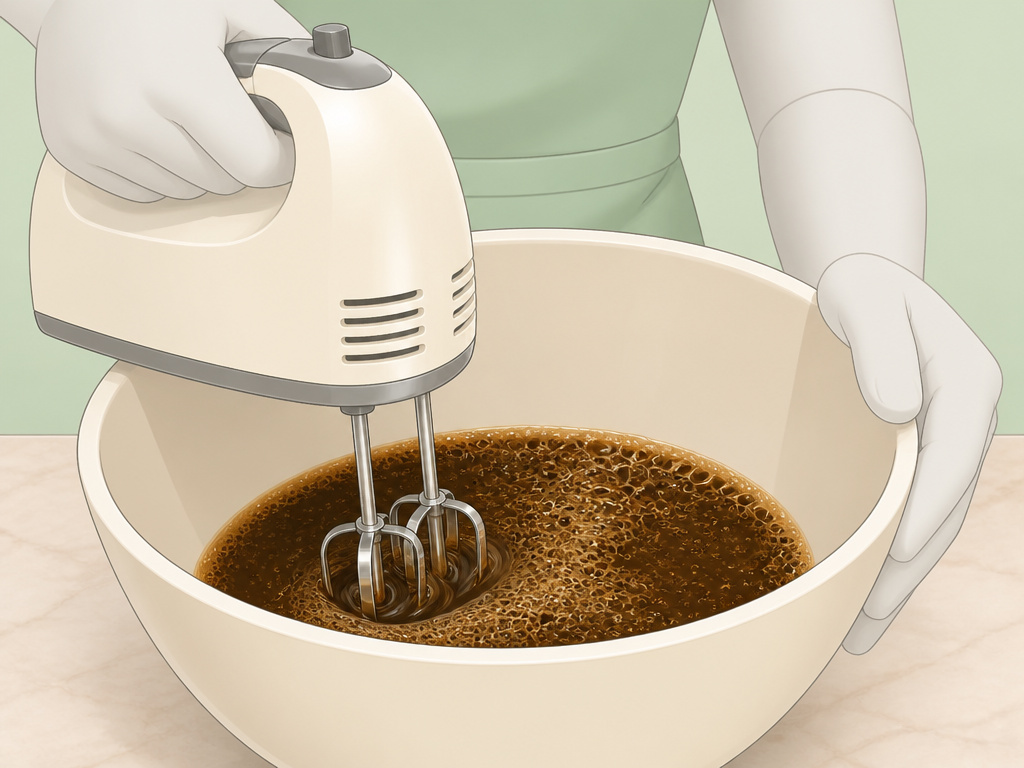
Follow this sequence exactly. Skipping the pre-whisk or stopping early are the two reasons people post “it didn’t work” comments.
Before you start: Ensure your bowl and mixer attachments are completely clean and dry. Any trace of fat (from butter, oil, or dairy residue) will sabotage the foam’s ability to form stiff peaks. Wash them with hot, soapy water and dry thoroughly.
- Measure with spoons, not cups. Combine 2 tablespoons of instant coffee granules, 2 tablespoons of granulated white sugar, and 2 tablespoons of hot water (90–95°C) in a large mixing bowl. The bowl needs to be large, the mixture will triple in volume.
- Pre-whisk by hand for 30 seconds. This is the step every video edits out. Use a small whisk or fork to manually stir the mixture for about half a minute. This ensures the sugar and coffee are fully saturated and beginning to dissolve before the mixer hits it. Skipping this leaves dry pockets that never incorporate.
- Start mixing on low. Using a hand mixer or immersion blender with a whisk attachment, begin on the lowest setting for 30 seconds. This incorporates the ingredients without splattering dark liquid everywhere.
- Increase to medium and watch the phases. Bump the speed to medium. The mixture will go through three clear stages:
- Frothy Bubbles (0–1 min): The mixture lightens in color and becomes frothy with large, unstable bubbles.
- Liquid Stage (1–3 min): The froth collapses and the mixture turns into a thin, dark, glossy liquid. This is where 90% of people stop, thinking they failed. Keep going.
- Thickening (3–5 min): The liquid begins to thicken, cling to the beaters, and lighten to a caramel or peanut butter color.
- Whip to stiff peaks on medium-high. Increase the speed to medium-high. Whip for another 1–2 minutes until the mixture forms stiff, glossy peaks. When you lift the beaters, the peak should hold its shape without drooping. The total whipping time is typically 4–6 minutes.
- Prepare your milk glass. Fill a glass about three-quarters full with cold milk. You can use dairy, oat, almond, or soy milk. Iced milk is fine, but avoid warm milk, it will start melting the foam.
- Spoon and serve. Use a spoon to dollop the whipped coffee foam on top of the milk. Do not stir until you’re ready to drink. The contrast is the point.
TL;DR: Don’t stop mixing during the dark liquid stage. That’s not failure; it’s the necessary transition before the foam thickens.
Tools You Actually Need (and One You Don’t)
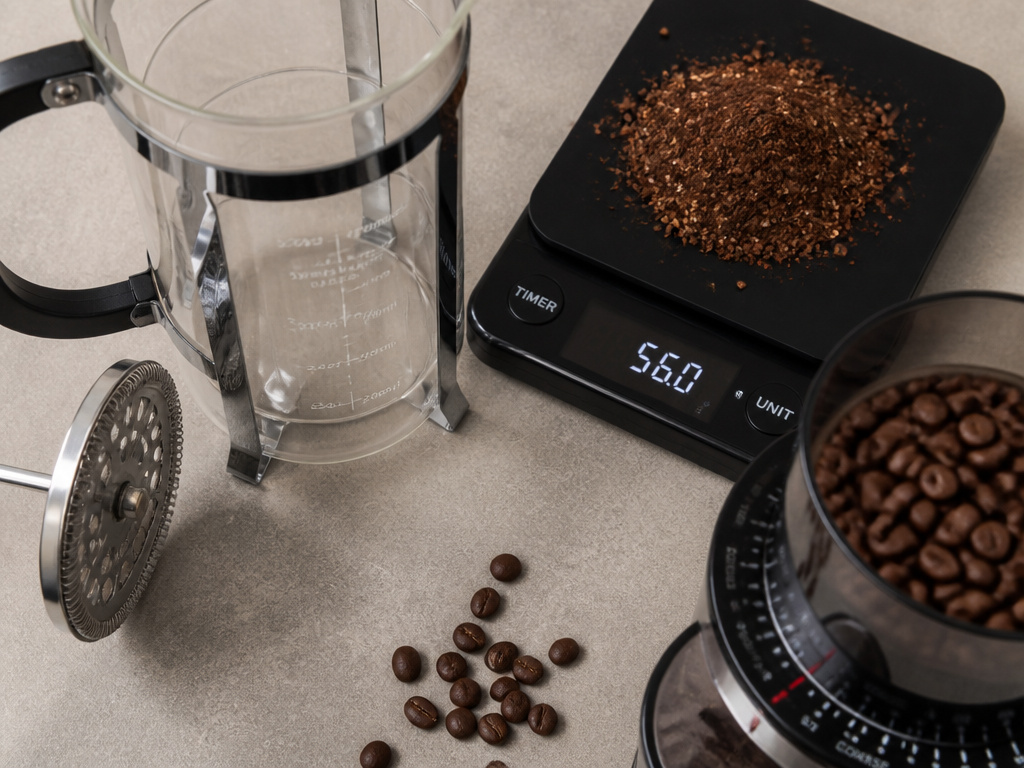
You can make this with tools you likely own. The right tool changes the effort from a workout to a two-minute task.
- Hand mixer or immersion blender (with whisk attachment): This is the only way to reliably achieve stiff peaks without dedicating 15 minutes and your forearm muscles to the task. A stand mixer works but is overkill.
- Large metal or glass mixing bowl: Plastic can retain grease. Metal or glass ensures a clean, fat-free environment. The bowl should be at least 8 inches in diameter to contain splatter.
- Measuring tablespoons: Precision matters. The 1:1:1 ratio is the foundation.
- A whisk (for the pre-mix): A small wire whisk or even a fork for the initial 30-second manual incorporation.
You do not need a special frother, a milk steamer, or any other gadget. A regular hand mixer is the workhorse.
Why Your Foam Failed: Troubleshooting Dalgona Coffee
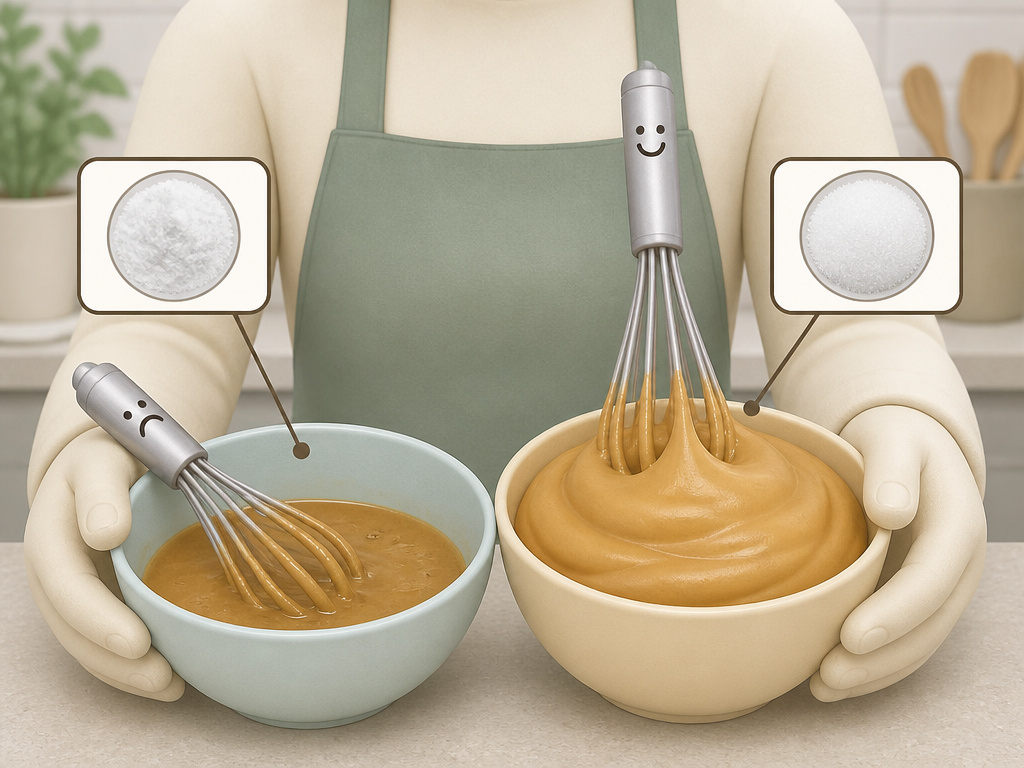
Your foam collapsed, tasted bitter, or never peaked. Here’s the fix for each scenario.
The foam collapsed or became liquid soon after whipping.
Cause: Likely used powdered sugar or a fine instant coffee powder. The structure wasn’t strong enough.
Fix: Next time, use only granulated white sugar and coarse instant coffee granules. Ensure your tools were perfectly clean.
The mixture never got past the dark liquid stage.
Cause: You stopped whipping too soon. The liquid stage is a mandatory phase, not the end.
Fix: Keep whipping on medium-high speed. It will thicken. It always thickens if your ingredients are correct.
The foam tastes unpleasantly bitter or burnt.
Cause: The instant coffee itself may be a dark roast, or you used boiling water which can accentuate bitter compounds.
Fix: Use a medium-roast instant coffee and water just below boiling. You can also add a tiny pinch of salt to the mix before whipping, it counteracts bitterness without making it taste salty.
The foam is grainy.
Cause: Undissolved sugar crystals. Your water wasn’t hot enough, or you didn’t pre-whisk.
Fix: Use hotter water and don’t skip the 30-second manual stirring at the start.
Customizing Your Dalgona Coffee
Once you’ve mastered the basic foam, you can play with the base. The foam itself is versatile.
Milk choices: Cold whole milk gives the classic, rich contrast. For a dairy-free coffee option, oat milk works well due to its natural creaminess, but note that foam over some plant-based milk alternatives may separate slightly faster. Almond milk offers a lighter base.
Flavor twists: Incorporate flavors into the milk, not the foam. Stir a teaspoon of cinnamon in coffee into the cold milk before adding the foam. For a richer, keto-friendly version, blend MCT oil benefits or coconut oil coffee into the milk base.
Sweetener experiments: The foam itself must use granulated sugar. However, you can sweeten the milk layer with a different sweetener, like a brown sugar sweetener syrup, to add caramel notes without risking the foam’s integrity.
Remember, the foam is the star. Changing the supporting cast is how you make it yours.
Frequently Asked Questions
Can I make dalgona coffee without a mixer?
Technically yes, with a whisk and immense patience (10-15 minutes of vigorous whipping). Practically, no. Most people’s arm stamina gives out before reaching stiff peaks. A hand mixer costs less than the frustration.
Is dalgona coffee stronger than regular coffee?
It depends on your definition. The foam contains a concentrated amount of instant coffee, but it’s diluted when mixed with the milk. An entire batch of foam uses about two tablespoons of instant, which contains roughly the same caffeine in espresso as two shots of espresso. Sipped slowly, it’s a potent drink.
Can I use decaf instant coffee?
Absolutely. The foam-forming properties come from the coffee solids and sugar, not the caffeine. Decaf instant granules work identically.
How long does dalgona foam last?
Properly made foam can hold its shape in a bowl at room temperature for over an hour. Once placed on cold milk, it will slowly start to blend but should remain distinct for at least 20-30 minutes.
Can I make a big batch and store it?
You can whip a larger batch (keeping the 1:1:1 ratio) and store the unused foam in an airtight container in the refrigerator for up to 24 hours. It will soften and darken slightly but can be re-whipped for 30 seconds to refresh it.
What’s the difference between this and an Americano coffee?
They’re completely different. An Americano is espresso dilution with hot water. Dalgona is a sweet, whipped foam made from instant coffee and sugar served over cold milk. The texture, taste, and preparation share nothing in common.
The Bottom Line
Dalgona coffee succeeds or fails on three specifics: coarse instant coffee granules, granulated white sugar, and the discipline to whip through the liquid stage. Get those right and you get a foam that holds for a photo, a sip, and the whole experience.
It’s a simple recipe that punishes approximations. Measure with tablespoons, not guesses. Use a mixer, not hope. And start with the jar of instant coffee you’d normally overlook, it’s probably the one that works.
{
“@context”: “https://schema.org”,
“@type”: “HowTo”,
“name”: “How to Make Dalgona Coffee (Whipped Coffee)”,
“totalTime”: “PT10M”,
“tool”: [
{
“@type”: “HowToTool”,
“name”: “Large mixing bowl”
},
{
“@type”: “HowToTool”,
“name”: “Hand mixer or immersion blender”
},
{
“@type”: “HowToTool”,
“name”: “Measuring spoons”
}
],
“step”: [
{
“@type”: “HowToStep”,
“name”: “Measure ingredients”,
“text”: “Combine two tablespoons each of instant coffee granules, granulated white sugar, and hot water in a large, clean bowl.”
},
{
“@type”: “HowToStep”,
“name”: “Start whipping”,
“text”: “Using a hand mixer on medium speed, begin whipping the mixture. It will go through a frothy, then a liquidy phase before thickening.”
},
{
“@type”: “HowToStep”,
“name”: “Whip to stiff peaks”,
“text”: “Continue whipping on medium-high speed for 4-6 minutes until the mixture forms stiff, glossy peaks that hold their shape.”
},
{
“@type”: “HowToStep”,
“name”: “Prepare milk base”,
“text”: “Fill a glass with cold milk (dairy or plant-based) to about three-quarters full. Ice is optional.”
},
{
“@type”: “HowToStep”,
“name”: “Assemble the drink”,
“text”: “Spoon the whipped coffee foam on top of the milk. Do not stir until ready to drink.”
}
]
}
{
“@context”: “https://schema.org”,
“@type”: “FAQPage”,
“mainEntity”: [
{
“@type”: “Question”,
“name”: “Can I make dalgona coffee without a mixer?”,
“acceptedAnswer”: {
“@type”: “Answer”,
“text”: “Technically yes, with a whisk and immense patience (10-15 minutes of vigorous whipping). Practically, no. Most people’s arm stamina gives out before reaching stiff peaks. A hand mixer costs less than the frustration.”
}
},
{
“@type”: “Question”,
“name”: “Is dalgona coffee stronger than regular coffee?”,
“acceptedAnswer”: {
“@type”: “Answer”,
“text”: “It depends on your definition. The foam contains a concentrated amount of instant coffee, but it’s diluted when mixed with the milk. An entire batch of foam uses about two tablespoons of instant, which contains roughly the same caffeine in espresso as two shots of espresso. Sipped slowly, it’s a potent drink.”
}
},
{
“@type”: “Question”,
“name”: “Can I use decaf instant coffee?”,
“acceptedAnswer”: {
“@type”: “Answer”,
“text”: “Absolutely. The foam-forming properties come from the coffee solids and sugar, not the caffeine. Decaf instant granules work identically.”
}
},
{
“@type”: “Question”,
“name”: “How long does dalgona foam last?”,
“acceptedAnswer”: {
“@type”: “Answer”,
“text”: “Properly made foam can hold its shape in a bowl at room temperature for over an hour. Once placed on cold milk, it will slowly start to blend but should remain distinct for at least 20-30 minutes.”
}
},
{
“@type”: “Question”,
“name”: “Can I make a big batch and store it?”,
“acceptedAnswer”: {
“@type”: “Answer”,
“text”: “You can whip a larger batch (keeping the 1:1:1 ratio) and store the unused foam in an airtight container in the refrigerator for up to 24 hours. It will soften and darken slightly but can be re-whipped for 30 seconds to refresh it.”
}
},
{
“@type”: “Question”,
“name”: “What’s the difference between this and an Americano coffee?”,
“acceptedAnswer”: {
“@type”: “Answer”,
“text”: “They’re completely different. An Americano is espresso dilution with hot water. Dalgona is a sweet, whipped foam made from instant coffee and sugar served over cold milk. The texture, taste, and preparation share nothing in common.”
}
}
]
}
