
How Long Does Coffee Stay in Your System: The 12-Hour Rule
Coffee stays in your system with an active half-life of about 5 to 6 hours for a healthy adult, meaning half the caffeine is still circulating after that time. A quarter of the original dose remains after roughly 12 hours, which is enough to disrupt sleep. Your personal timeline depends heavily on genetics, medications like birth control, and lifestyle factors like smoking.
Most people think caffeine wears off in a couple of hours. They have their afternoon pick-me-up and assume they’ll sleep fine. That assumption ruins a lot of nights. The quarter-life is the part everyone misses.
Here’s how caffeine’s clock really works, why your genetics are the biggest variable, and how to time your last cup so it doesn’t steal your sleep.
Key Takeaways
- The half-life of caffeine is 5–6 hours on average, but the quarter-life is about 12 hours. A quarter of your afternoon coffee’s caffeine is still active at bedtime.
- Your CYP1A2 gene variant decides if you’re a fast or slow metabolizer, creating a huge range in personal experience, from 1.5 hours to over 10 hours for a half-life.
- Oral contraceptives can double caffeine’s half-life to around 10 hours. Pregnancy can stretch it to 15 hours. Smoking can cut it in half.
- Liver disease is the most extreme modifier, extending caffeine’s half-life to up to 96 hours, four days for the body to clear half a dose.
- “Feeling” the effects and “testing positive” are different timelines. Urine tests can detect caffeine traces for 24–48 hours after consumption, long after the stimulant effect is gone.
The Caffeine Half-Life and Quarter-Life Explained
Forget how long you “feel” jittery. Pharmacology measures how long a substance stays active in your bloodstream using its half-life. For caffeine, the consensus from sources like the U.S. National Library of Medicine and the FDA puts the average half-life at about 5 to 6 hours for a healthy adult. If you drink a standard 8oz coffee with 95mg of caffeine at 8 a.m., you’ll still have roughly 47.5mg of active caffeine in your system at 2 p.m.
The half-life of a drug is the time it takes for the concentration of the drug in the bloodstream to be reduced by half. For caffeine in healthy adults, this period averages 5 to 6 hours, with a broad range of 1.5 to 9.5 hours depending on individual metabolic factors.
The quarter-life is less commonly discussed but far more relevant to sleep. It takes about 12 hours for your body to metabolize down to a quarter of the original dose. That late-afternoon latte at 3 p.m. means a quarter of its caffeine is still circulating at 3 a.m. Dr. Matthew Walker, a neuroscientist, frames this starkly: having a coffee at noon is like drinking a quarter-cup right before bed and hoping for good sleep.
This slow, logarithmic decline is why “one cup in the morning” can still subtly impact sleep architecture. It’s not about feeling wired at bedtime. It’s about the adenosine receptor blockade that fragments deep sleep stages.
TL;DR: Caffeine has a 5–6 hour half-life and a 12-hour quarter-life. A 3 p.m. coffee leaves a significant dose in your system at 3 a.m.
What Actually Changes Your Personal Caffeine Timeline?
The 5–6 hour average is useless for individuals. Your personal metabolic speed is set by a combination of fixed traits and modifiable habits.
| Factor | Effect on Caffeine Half-Life | Mechanism & Consequence |
|---|---|---|
| CYP1A2 Gene (Fast Metabolizer) | Shortens to ~3 hours | Liver enzyme variant clears caffeine rapidly. You might handle afternoon coffee fine. |
| CYP1A2 Gene (Slow Metabolizer) | Extends to ~9+ hours | Slower enzyme activity. Afternoon caffeine significantly disrupts sleep; anxiety risk is higher. |
| Smoking | Reduces by 30–50% | Tobacco smoke induces the CYP1A2 enzyme, speeding clearance. Half-life can drop to ~3 hours. |
| Oral Contraceptives | Doubles (~10 hours) | Estrogen inhibits the CYP1A2 enzyme. A 2 p.m. coffee acts like a 5 p.m. coffee for a non-user. |
| Pregnancy (3rd Trimester) | Triples (~15 hours) | Hormonal changes and increased blood volume slow metabolism. Doctors advise strict limits. |
| Liver Disease (e.g., Cirrhosis) | Dramatically extends (up to 96 hours) | Impaired liver function cripples clearance. Even small doses accumulate dangerously. |
Your genetics are the master switch. The CYP1A2 gene codes for the primary liver enzyme that processes caffeine. You inherit either a fast or slow variant. This isn’t minor, it’s the difference between clearing a morning coffee by lunch and still having it affecting you at dinner. You can’t change your genes, but you can identify your likely type. If one cup after 2 p.m. guarantees a restless night, you’re probably a slow metabolizer.
Medications are the next biggest lever. The NIH specifically notes that oral contraceptives can prolong the half-life of caffeine up to 10 hours. If you start or stop birth control, your caffeine tolerance will shift noticeably within a week. Other medications that affect liver enzymes, like some antibiotics and antidepressants, can have similar effects.
Lifestyle choices matter, too. Smoking is a powerful accelerator. The same NIH source states smoking can decrease caffeine’s half-life by 30–50%. A smoker might process a coffee in 3 hours, while their non-smoking twin takes 6. Quitting smoking will suddenly make your usual coffee feel twice as strong, because, metabolically, it is.
Common mistake: Assuming your caffeine tolerance is static, starting a medication like birth control or quitting smoking changes your metabolic clock overnight. That 4 p.m. cup you’ve had for years might suddenly keep you up.
Caffeine “Effects” vs. Caffeine “Detection”
You stop feeling the alertness boost after a few hours. That doesn’t mean the caffeine is gone. The stimulant effect diminishes as receptor sites in your brain become less saturated, but trace compounds remain in your body far longer.
Urine tests can detect caffeine and its metabolites for 24 to 48 hours after your last cup. This is why some workplace or athletic drug screenings include caffeine panels. The detection window isn’t about intoxication; it’s about proving recent consumption. For context, this is a different metabolic path than understanding the caffeine content in espresso versus drip coffee, which focuses on the initial dose entering your system.
Blood tests have a shorter detection window, typically up to 24 hours. Hair follicle tests can theoretically detect caffeine use for months, though they’re rarely used for this purpose.
The takeaway is simple. You cannot use your subjective feeling of “crashing” or “coming down” as a gauge for when caffeine has cleared your system. The pharmacological tail is long. This is crucial for athletes subject to doping controls or anyone trying to reset their tolerance through abstinence.
How to Time Your Last Cup of Coffee
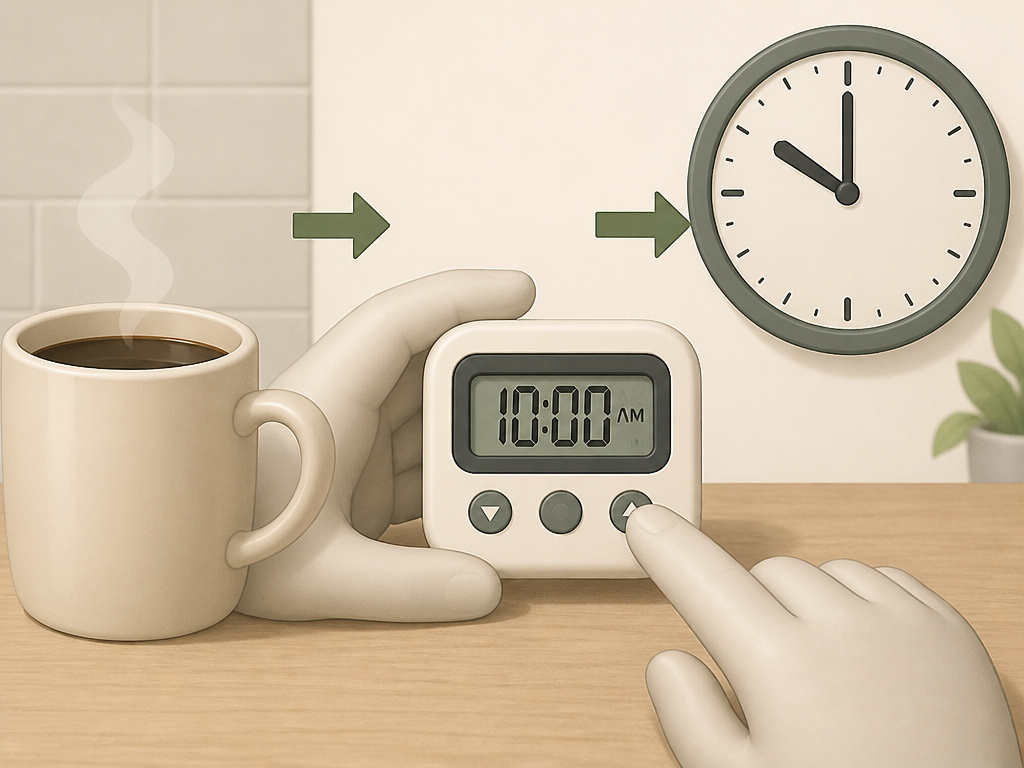
You need a personal rule, not a generic one. The old “no caffeine after 2 p.m.” advice is based on an average metabolism that likely isn’t yours.
- Find your baseline. If you’re a healthy adult with no major modifiers, use the 12-hour quarter-life rule. Count back 12 hours from your target bedtime. That’s your absolute latest cutoff for a full-strength coffee.
- Apply your personal multipliers. Are you on birth control? Push that cutoff back by 4-6 hours. Do you smoke? You might get away with a later cup. Suspect you’re a slow metabolizer? Treat the 12-hour rule as a minimum, not a limit.
- Switch to low-caffeine or caffeine-free options early. If your bedtime is 10 p.m., your full-coffee cutoff might be 10 a.m. This is where knowing the caffeine in tea or caffeine in black tea helps. A cup of black tea at noon has about half the caffeine of coffee, effectively moving your “last dose” timeline.
- Account for total daily dose. Four cups of coffee spread through the day creates a higher baseline level than one cup, even if the last cup is earlier. The caffeine content in energy drinks from a late-afternoon pick-me-up adds directly to this cumulative load.
The goal is to give your adenosine receptors a clean, long window to function normally before sleep. Even small amounts of caffeine can prevent you from reaching the deepest, most restorative stages of sleep. This is why relying on an afternoon Monster Energy caffeine boost is a direct trade with sleep quality later.
| If your bedtime is… | Full-Coffee Cutoff (Avg. Metabolism) | Smart Afternoon Swap (Post-Cutoff) |
|---|---|---|
| 10:00 p.m. | 10:00 a.m. | Black tea (~40mg) before 2 p.m.; Decaf after. |
| 11:00 p.m. | 11:00 a.m. | Green tea (~30mg) before 3 p.m.; Herbal tea after. |
| Midnight | 12:00 p.m. (Noon) | Cappuccino caffeine from a single shot (~75mg) before 2 p.m. |
When Caffeine Stays Too Long: Health and Medication Interactions
For most people, caffeine’s longevity is a sleep issue. For some, it’s a health risk. The extremes outlined in the NCBI pharmacology of caffeine research are important to recognize.
Pregnancy demands extreme caution. Hormonal changes and increased blood volume in the third trimester can stretch caffeine’s half-life to 15 hours. A morning coffee’s quarter-life then extends to the middle of the following night. This is a key reason obstetricians recommend severe restriction or elimination.
Liver disease represents the most severe slowdown. With conditions like cirrhosis, the liver’s ability to metabolize caffeine is profoundly impaired. The half-life can extend to an astonishing 96 hours, four days to clear just half a dose. For these individuals, even a small coffee can lead to prolonged anxiety, tachycardia, and sleep disruption.
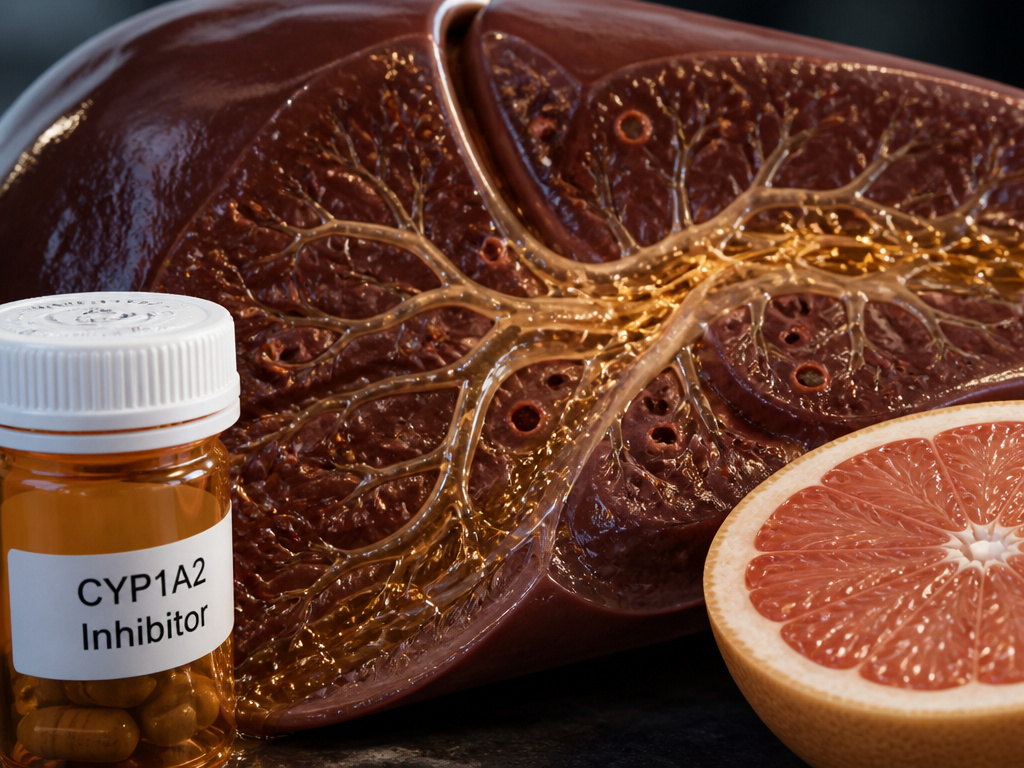
Common medications are a hidden trap. Beyond oral contraceptives, certain antibiotics (ciprofloxacin), heartburn drugs (cimetidine), and some antidepressants (fluvoxamine) inhibit the CYP1A2 enzyme. They can double or triple the half-life. Always check medication labels or ask your pharmacist about caffeine interactions.
The mechanism is always the same: anything that slows the CYP1A2 enzyme keeps caffeine in your blood longer. This includes grapefruit juice, which is a known enzyme inhibitor. Your caffeine in hot chocolate might be low, but if you drink it with a medication that inhibits CYP1A2, its effects are amplified and prolonged.
Frequently Asked Questions
Can you build a tolerance to caffeine?
Yes, and it’s a double-edged sword. Regular consumption causes your brain to produce more adenosine receptors. This means you need more caffeine to achieve the same blocking effect (tolerance), but it also means when caffeine wears off, you have more receptors free, leading to a more severe crash. Withdrawal headaches are largely from this adenosine receptor rebound.
Does decaf coffee have zero caffeine?
No. Decaffeinated coffee still contains about 2–5 mg of caffeine per 8oz cup. For slow metabolizers or those extremely sensitive, even this trace amount from several decaf cups in the evening can be enough to slightly impact sleep. It’s not zero.
How does this compare to other sources, like soda or energy drinks?
The pharmacokinetics are the same, caffeine is caffeine. However, the dose and co-ingredients change the experience. A can of Coca-Cola caffeine (34mg) is a smaller, slower dose compared to a shot of espresso. An energy drink vs coffee comparison shows energy drinks often deliver caffeine faster due to carbonation and may include other stimulants like taurine, but the liver still processes the caffeine molecule on the same 5–6 hour average clock.
Does drinking water or exercising help flush caffeine out faster?
No. Caffeine is metabolized almost entirely by the liver. Hydration supports kidney function, which excretes the metabolites, but it doesn’t speed up the liver’s enzymatic breakdown. Exercise might make you feel less jittery by burning energy, but it doesn’t accelerate the metabolic clearance rate.
The Bottom Line
The 5–6 hour half-life is a population average, not your personal truth. Your genetics set the baseline, and your lifestyle and medications tweak the dial. The 12-hour quarter-life is the silent sleep killer most people never account for.
If you’re troubleshooting sleep or anxiety, track your caffeine cutoff time against your personal multipliers for two weeks. Move your last full-caffeine drink 1 hour earlier each day until you find the point where sleep improves. For many slow metabolizers or birth control users, that cutoff is before noon.
The science from the Scientific Reports cold brew study on extraction or the FDA’s caffeine guidelines matters less than your own experiment. Your body’s response is the only metric that counts. Start with the 12-hour rule, adjust for your personal factors, and give your brain the caffeine-free window it needs to actually rest.
