
Does Coffee Make Your Pee Smell? Understanding the Cause
Yes, coffee can make your urine smell because your body absorbs and then excretes specific aromatic compounds from the beans—chemicals like 2,3-dimethylpyrazine and guaiacol pass through your kidneys largely unchanged. The scent is most noticeable within 2 to 4 hours after drinking, and its intensity depends on your hydration and genetic ability to smell these particular metabolites.
Most people notice the smell but mistake it for a sign of dehydration or a kidney problem. They don’t realize it’s a normal, documented metabolic process with a roster of specific chemicals.
This guide walks through the peer-reviewed science that names the exact compounds, explains why only some people notice it, and separates this olfactory quirk from coffee’s other bodily effects like its diuretic action.
Key Takeaways
- The smell comes from volatile compounds like 2,3-dimethylpyrazine and guaiacol that survive digestion and are excreted by the kidneys.
- You’ll likely notice the odor 2–4 hours after your last cup, which matches the peak excretion window found in metabolomics studies.
- Not everyone can smell it due to genetic differences in olfactory receptors, similar to the “asparagus pee” phenomenon.
- The smell is a separate process from coffee’s diuretic effect, which is caused by caffeine blocking antidiuretic hormone (ADH).
- Dehydration concentrates your urine, making any coffee-related odor much more pronounced.
The Specific Chemicals Behind the Scent
This isn’t about “toxins” or generic “byproducts.” Researchers have isolated the exact volatile organic compounds (VOCs) that travel from your cup to your bladder. A 2010 study published in the Journal of Agricultural and Food Chemistry identified several key culprits by analyzing urine samples after coffee consumption.
The standout compounds are pyrazines and phenols. 2,3-dimethylpyrazine and 2,3,5-trimethylpyrazine are pyrazines that carry coffee’s nutty, roasted aroma. Guaiacol and 4-ethylguaiacol are phenols responsible for smoky, spicy notes. Your digestive system absorbs them. Your liver modifies some, but a significant portion passes through the renal filter unchanged.
A 2010 peer-reviewed study identified 2,3-dimethylpyrazine, 2,3,5-trimethylpyrazine, guaiacol, and 4-ethylguaiacol as key volatile compounds in human urine after coffee consumption. These chemicals, which contribute directly to coffee’s aroma, are absorbed, partially metabolized, and then excreted by the kidneys, creating the recognizable odor.
Your body starts excreting them quickly. A follow-up 2013 study in Metabolomics tracked the timeline, showing a significant shift in urinary metabolites within 2 to 4 hours post-consumption. That’s your scent window.
TL;DR: The smell comes from identifiable coffee aroma chemicals like 2,3-dimethylpyrazine and guaiacol that your kidneys excrete, peaking 2–4 hours after you drink.
Why Only Some People Notice It (The Genetic Wild Card)
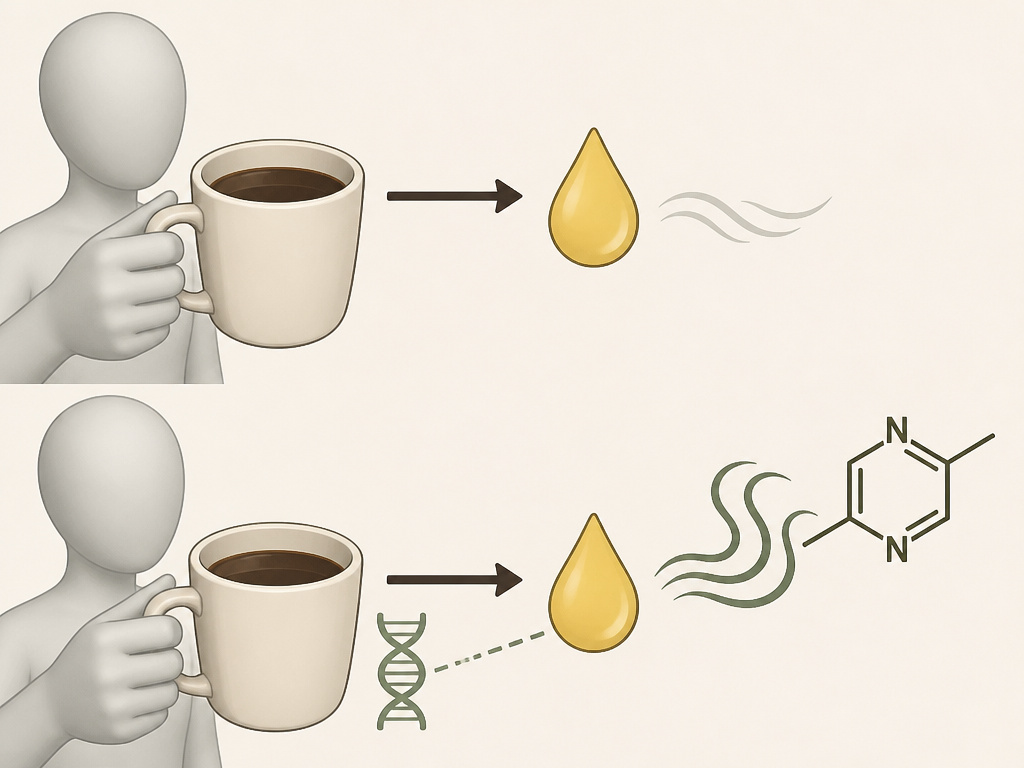
If you’ve never noticed your pee smelling like coffee, you’re not alone. This variation is a classic case of genetic polymorphism in olfaction. Your ability to detect specific volatile compounds depends on whether you possess the working olfactory receptor genes for them.
It’s identical to the well-documented “asparagus pee” phenomenon. Only a portion of the population has the receptors to smell the sulfurous metabolite asparagus produces. The same principle applies here. The 2010 Journal of Agricultural and Food Chemistry paper explicitly noted individual variation in the perception of coffee-smelling urine, pointing to genetic or metabolic differences.
| Factor | Effect on Odor Perception | Why It Matters |
|---|---|---|
| Genetic Olfactory Receptors | Determines if you can smell the specific compounds (e.g., 2,3-dimethylpyrazine). | Explains why your experience may differ from a friend’s, even after the same brew. |
| Hydration Status | Concentrated urine (dark yellow) amplifies all odors, including coffee metabolites. | A strong smell might signal you need water, not that you should quit coffee. |
| Metabolic Rate | Influences how quickly you process and excrete the compounds. | Faster metabolism may shorten the scent window; slower may prolong it. |
| Coffee Roast & Origin | Darker roasts produce more guaiacol (smoky phenols). | A single-origin light roast might produce a different scent profile than a French roast. |
This individual variance is why blanket statements fail. Your personal caffeine metabolism and sensory hardware are unique. For a deeper look at how different stimulants compare, our analysis of tea vs coffee breaks down their distinct chemical profiles.
Common mistake: Assuming a strong smell means you’re drinking too much coffee — the intensity often has more to do with your hydration level and genetic nose than your intake volume.
Coffee’s Diuretic Effect: A Separate Mechanism
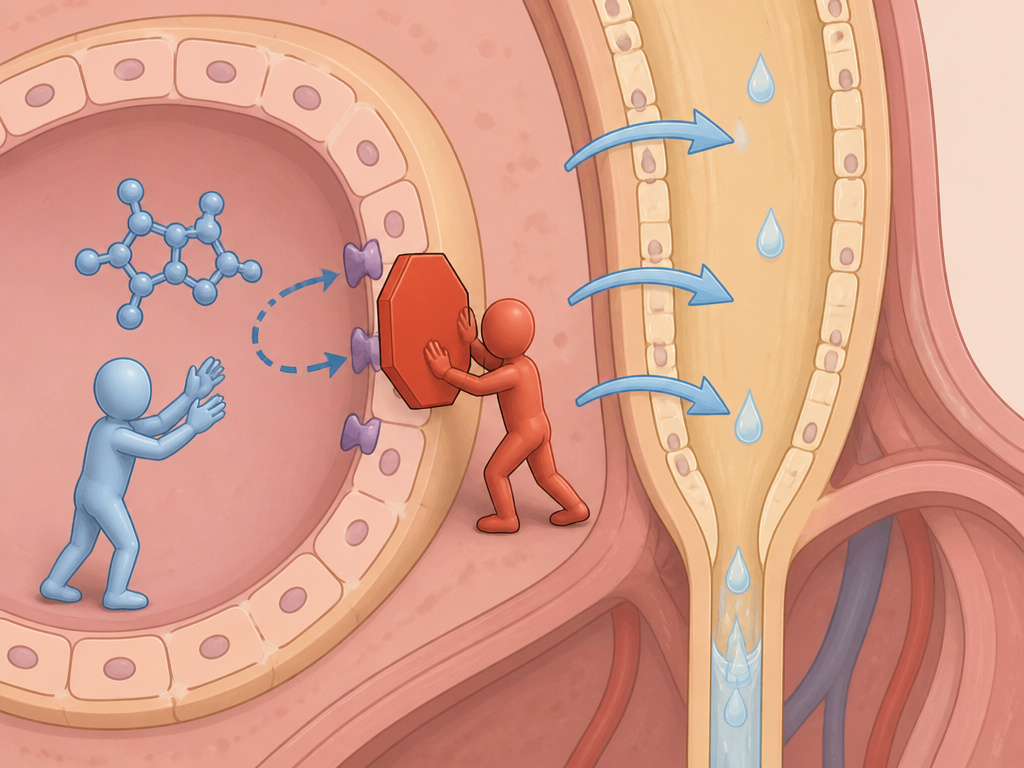
The smell and the sudden urge to go are two different biological processes. The urge is primarily a diuretic effect. Caffeine inhibits the release of antidiuretic hormone (ADH) from your pituitary gland.
ADH’s job is to signal your kidneys to reabsorb water, concentrating your urine. When caffeine blocks it, your kidneys produce more dilute urine, and you produce more volume. That’s the diuresis. It’s a temporary pharmacological effect, not a sign of dehydration from the fluid itself. The fluid in the coffee still counts toward your daily intake.
This diuretic action is also why coffee can affect your coffee and heart health profile for some individuals, as it causes a short-term increase in blood pressure and heart rate. Managing this caffeine intake is key for those sensitive to its stimulant effects.
TL;DR: The smell is from excreted aroma compounds. The frequent urination is from caffeine blocking ADH. They are related to the same beverage but operate on completely different pathways.
When the Smell Signals Something Else

Coffee-related urine odor is almost always benign. But it’s worth knowing when a change in scent might point elsewhere. Your nose can be a crude diagnostic tool.
First, rule out concentration. Dark yellow, strong-smelling urine usually just means you need a glass of water. Drink 16 ounces of water and check again in an hour. If the coffee scent disappears or fades dramatically, hydration was the amplifier.
Persistent, unusually sweet, foul, or ammoniac odors are different. A sweet, almost sugary smell can indicate excess glucose being excreted, a sign of uncontrolled diabetes. A persistent, sharp ammonia odor might suggest a urinary tract infection or that you’re consistently not drinking enough water, concentrating urea.
If you cut out coffee for 48 hours and a strong, unusual odor persists, it’s worth mentioning to a doctor. It’s rarely the coffee alone causing that.
I once panicked after a three-day espresso tasting event, convinced the potent smell was a kidney issue. A nurse friend asked for a simple timeline. The odor spiked 3 hours after each tasting session and was gone by morning. She called it a “textbook caffeine metabolite dump.” I just needed to space out my cupping sessions and drink more water between rounds.
How to Manage It (If You Want To)
You don’t need to manage a harmless, natural metabolic process. But if the odor bothers you or you’re in a situation where it’s inconvenient, you have levers to pull.
Hydrate strategically. This is the biggest one. For every cup of coffee, drink an equal cup of water. This dilutes the concentration of excreted metabolites in your bladder, directly dampening the scent. It also mitigates coffee’s acidic nature, which can benefit those managing acid reflux.
Experiment with roast profiles. Since darker roasts generate more of the phenolic compounds like guaiacol, switching to a light or medium roast might yield a less potent aromatic profile in your urine. It’s a subtle change, but some people notice it.
Consider your brewing method. Espresso and French press methods, which have longer contact time with grounds, may extract a broader spectrum of compounds, including the volatile aromatics. A paper-filtered pour-over or drip coffee traps more oils and fine particulates, potentially altering the excreted metabolite mix. For a different low-oil option, explore the world of black coffee.
Adjust timing. If you have an important meeting or a long drive, schedule your coffee consumption so the 2–4 hour excretion window falls at a convenient time. The compounds clear your system relatively quickly.
These tweaks are about personal comfort, not health necessity. The smell itself is not a problem to solve.
Frequently Asked Questions
Does decaf coffee make your pee smell?
Yes, but likely less so. The aromatic compounds (pyrazines, phenols) that cause the smell are still present in decaffeinated coffee. However, since you avoid the diuretic effect of caffeine, you may produce less urine volume, which could concentrate the odor. The scent might be similar but the urge to go will be less frequent.
How long after coffee does pee smell?
The odor typically becomes noticeable within 2 to 4 hours after drinking, based on metabolomics research tracking the excretion of coffee compounds. It can last for several hours as your body continues to process and clear the metabolites.
Why does my pee smell like coffee but I only drank one cup?
Individual sensitivity is key. Your genetics may make you an especially good “smeller” of the specific compounds like 2,3-dimethylpyrazine. Also, if you were even mildly dehydrated before that single cup, your concentrated urine will amplify the aroma of any excreted metabolites.
Is smelly pee from coffee a sign of kidney problems?
Almost never. Kidney issues typically cause other, more pronounced symptoms like foamy urine, swelling, or pain. The coffee smell is a direct result of filtering normal dietary compounds. If you stop coffee for two days and the unusual smell persists, or if it’s accompanied by other symptoms, then consult a doctor.
Can other foods or drinks do this?
Absolutely. Asparagus is the most famous, due to asparagusic acid. Fish, garlic, cumin, and Brussels sprouts can also impart odors due to sulfur-containing compounds. It’s a normal part of how the body handles aromatic, volatile elements in food.
Before You Go
Coffee-smelling urine is a fingerprint of your metabolism at work, not a flaw. It’s proof that the complex chemistry in your cup—the 2,3-dimethylpyrazines and guaiacols—is interacting with your unique biology. The smell peaks a few hours after drinking and is heavily influenced by how much water you’ve had.
Remember, this is separate from coffee’s role as a diuretic, which is a caffeine-driven effect on your hormones. One creates an aroma, the other creates an urge. If the odor ever concerns you, the first step is always to drink water and observe. For most of us, it’s just a passing, fragrant reminder of a good brew.
For further reading on how coffee interacts with your body, from your digestive system to your oral health, we have detailed guides that separate myth from metabolic fact.
