
Does Coffee Have Mold? The Real Risks & How to Avoid Them
Yes, coffee can have mold, specifically fungi like Aspergillus and Penicillium that may produce harmful mycotoxins such as ochratoxin A (OTA). The European Union sets a safety limit of 5 micrograms of OTA per kilogram of roasted coffee. Risk is highest when green beans are improperly dried or stored in humid conditions before roasting, but commercial roasting and proper storage at home drastically reduce any danger.
Most people get this wrong by focusing on the roast color in the bag. They assume a dark, oily bean is somehow cleaner or that visible fuzz is the only problem. The real issue is invisible and happens months before the beans ever reach a roaster, in warehouses and shipping containers where humidity isn’t controlled.
This guide breaks down the science of mycotoxins in coffee, explains where contamination actually happens, and gives you clear, actionable steps to choose and store beans that minimize your risk.
Key Takeaways
- The primary mold-related toxin in coffee is ochratoxin A (OTA), regulated in the EU at 5 µg/kg for roasted beans.
- Mold growth requires water activity (aw) above 0.80; properly dried coffee beans sit safely below this threshold.
- Wet-processed beans face a higher contamination risk if the fermentation and drying stages are rushed or done in humid weather.
- Storing coffee in the fridge or freezer introduces condensation, raising the water activity and creating a mold-friendly environment.
- Reputable roasters who source from quality-focused farms and publish their processing standards are your best defense.
What Mycotoxins Are in Coffee?
You are not looking for fuzzy spoilage like on old bread. The concern in coffee is mycotoxins, which are toxic compounds produced by certain molds. The most significant one is ochratoxin A (OTA). Peer-reviewed studies, including a 2017 review in the Journal of Food Science and Technology, identify OTA as the key mycotoxin of concern due to its potential impact on kidney health and its classification as a possible human carcinogen.
The molds that produce it, primarily Aspergillus ochraceus and Penicillium verrucosum, are soil fungi. They do not necessarily make the bean look rotten. They can grow on coffee cherries while they’re still on the tree or, more commonly, during post-harvest processing if conditions are wet and slow.
Common mistake: Assuming a visibly clean, shiny bean is toxin-free — OTA is a chemical contaminant, not a visible mold. A bean can look perfect and still contain mycotoxins if it was processed poorly.
Commercial coffee is subject to safety standards. The European Union enforces a maximum limit of 5 micrograms of OTA per kilogram of roasted coffee beans and ground coffee. This limit is based on extensive toxicological research and provides a large safety margin for regular consumption. The existence of this regulated limit is actually reassuring—it means the industry monitors for this specific compound.
TL;DR: The real risk isn’t visible mold, it’s ochratoxin A, an invisible toxin regulated to safe levels in commercial coffee.
How Does Mold Get Into Coffee?
Contamination is a farming and processing story, not a roasting story. The journey from cherry to bag has several vulnerable points where humidity and time can let fungi thrive.
The two main processing methods create different risk profiles. Wet processing involves removing the cherry’s pulp and then fermenting the beans in water before drying. If this fermentation lasts too long or the drying is incomplete, the damp beans become a perfect habitat for mold. Dry processing, where whole cherries are sun-dried, avoids the water bath but requires consistent, hot, dry weather for weeks. A sudden rainstorm can ruin an entire batch.
The critical factor is water activity (aw), a measure of available moisture in a product. Research indicates that OTA-producing molds like Aspergillus ochraceus require a water activity above 0.80 to grow. Properly dried green coffee beans have a water activity well below this—typically between 0.50 and 0.60. The danger arises when beans are dried inadequately or absorb moisture during storage or shipping in humid environments. This is why the storage of green beans before roasting is a major focus of industry FAO mycotoxin prevention guidelines.
| Processing Stage | Mold Risk Factor | What Goes Wrong |
|---|---|---|
| Wet Processing Fermentation | High | Extended fermentation in warm water raises bean moisture and temperature. |
| Drying (All Methods) | Critical | Inconsistent heat, high ambient humidity, or stacking beans too thick prevents even drying. |
| Green Bean Storage | Very High | Storage in porous jute bags in humid port warehouses lets beans re-absorb moisture. |
| Home Storage After Roasting | Low | Improper storage in the fridge or a clear jar on a sunny windowsill reintroduces moisture. |
Roasting itself provides a significant reduction. High temperatures degrade some OTA and kill living molds, but they do not eliminate 100% of any pre-formed toxins. This is why preventing contamination earlier in the chain is so vital. A roaster cannot fix bad green beans.
Are Mycotoxins in Coffee Dangerous to Your Health?
For the vast majority of people drinking commercially prepared coffee, the risk is negligible. The regulatory limits are set with large safety margins. The scientific consensus, as noted in the commodity research, is that mycotoxin levels in commercially available coffee are generally well below established safety thresholds.
However, your personal sensitivity and total dietary exposure matter. Ochratoxin A is not only found in coffee; it’s also present in cereals, wine, dried fruit, and some spices. If your diet is high in several of these foods, your cumulative intake could be higher. For individuals with existing kidney issues or certain autoimmune conditions, some holistic health practitioners recommend minimizing exposure as a precaution.
It is also worth noting that coffee and digestion are closely linked for many people. While caffeine and acidity are the usual culprits for gastrointestinal distress, a sensitivity to trace mycotoxins could theoretically be a contributing factor for a small subset of individuals. This is an area of ongoing research, not settled science.
The dose makes the poison. You would need to consume an implausibly large amount of severely contaminated coffee to reach a dose shown to cause harm in animal studies. The more realistic concern is long-term, low-level exposure from a consistently poor-quality source. This is why sourcing matters.
I used to buy the cheapest bulk beans I could find online. After a few months, I noticed a persistent, musty aftertaste that cleaning my grinder and machine didn’t fix. Switching to a roaster that detailed their farm partnerships and drying methods eliminated that flavor entirely. The old beans probably weren’t toxic, but they were definitely lower quality.
TL;DR: Regulatory limits keep commercial coffee safe for most. Your total diet and source quality are the variables you can control.
How to Minimize Your Risk
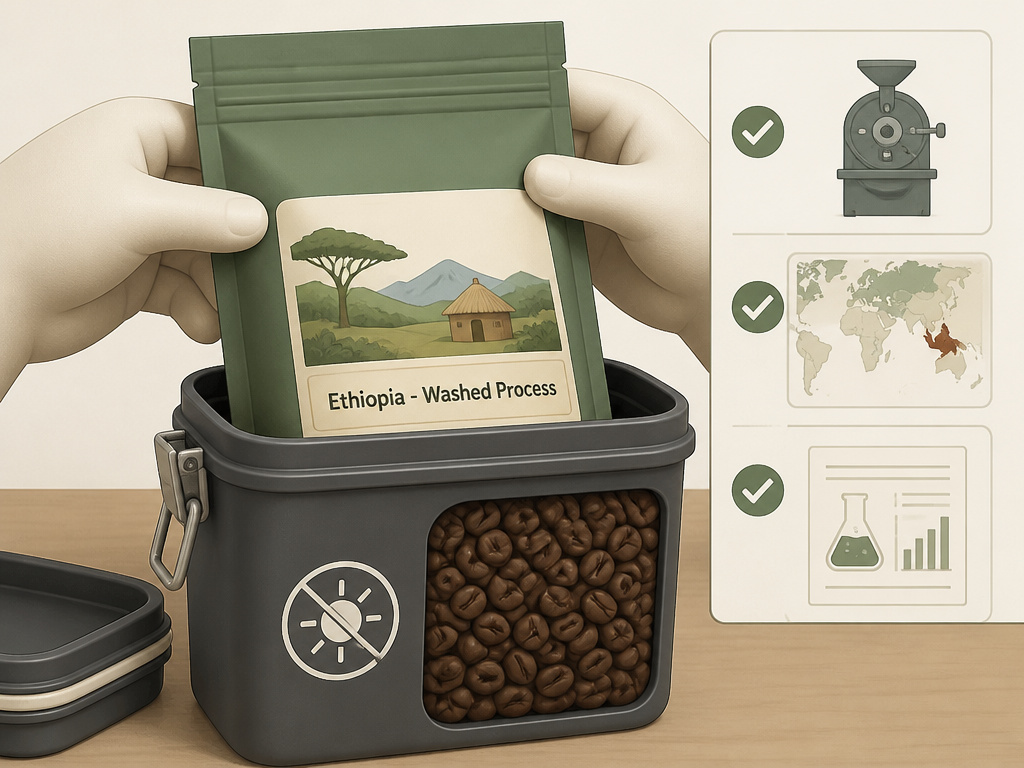
You cannot test your beans at home. Your strategy must be proactive, focusing on selection and storage to stack the odds in your favor.
- Buy from transparent roasters. Look for roasters who name their farms or cooperatives and describe their processing method (washed, natural, honey). This transparency often correlates with better quality control at origin. A roaster investing in that relationship cares about how the beans are dried and stored.
- Understand processing implications. If you are particularly concerned, you might lean towards beans from drier climates (like much of Ethiopia or Yemen) that use dry processing well, or seek out wet-processed beans from roasters who explicitly mention controlled fermentation and drying times.
- Store coffee properly at home. This is where most well-intentioned people fail. The enemy is moisture, air, heat, and light.
- Use an airtight container. The bag it comes in is rarely good enough after the first opening.
- Keep it in a cool, dark cupboard. Not on the counter, not above the stove.
- Never store coffee in the refrigerator or freezer. Every time you take it out, condensation forms on the cold beans, raising the water activity. This directly contradicts the ECF mould prevention code, which emphasizes keeping moisture out.
- Buy in quantities you’ll use within 2-3 weeks. Freshness and safety go hand-in-hand.
- Consider tested brands. A small number of specialty brands now pay for independent laboratory testing for mycotoxins and publish the results. These coffees are typically more expensive, but they offer the highest assurance.
- Explore alternative options. Steam-treated or Swiss Water Process decaffeinated coffees undergo an additional washing step that can reduce surface contaminants. Some people with extreme sensitivities report better tolerance with these.
Your choice of paper coffee filters can also play a minor role. While not a primary defense against mycotoxins, a high-quality paper filter can trap some oil-soluble compounds, potentially including trace toxins, that would otherwise pass through a metal filter or French press.
Wet Process vs. Dry Process: Which Is Safer?
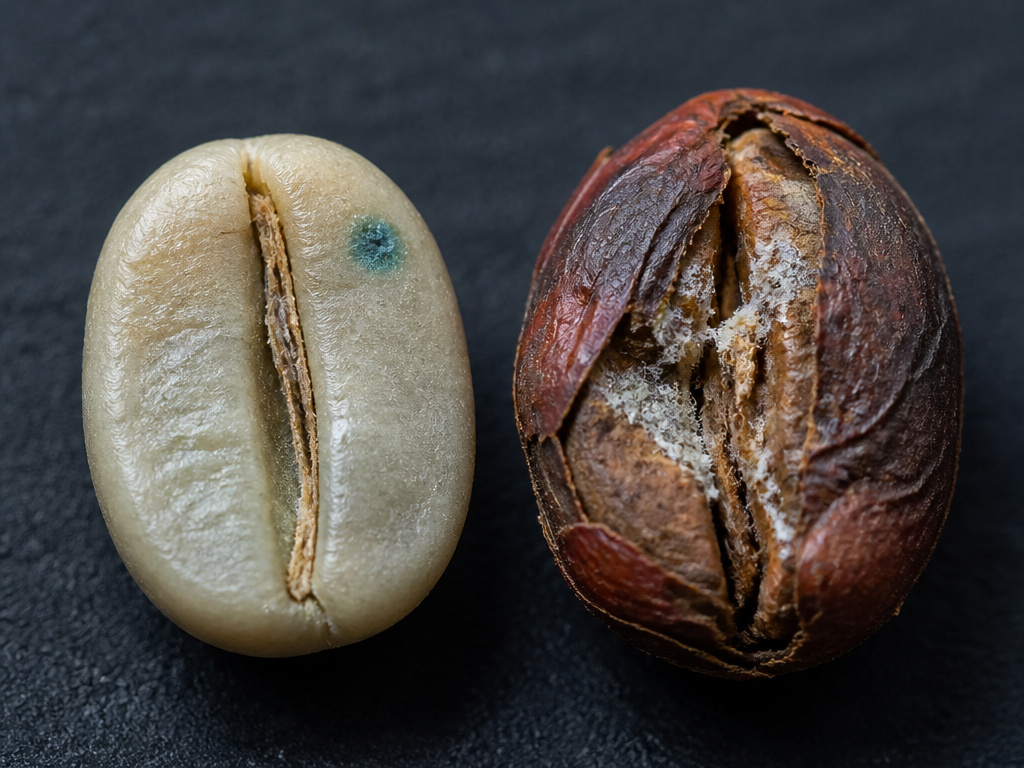
This is a nuanced question without a single winner. Each method has its own failure mode.
Wet Processing (Washed):
- The Risk: The fermentation tank. If beans sit in sweet, warm water for too many hours, microbial activity skyrockets. Inadequate drying after washing leaves beans with a high internal moisture content.
- The Safeguard: Precise, time-controlled fermentation and mechanical drying with monitored airflow. High-quality washed coffees from Central America often excel here.
Dry Processing (Natural):
- The Risk: The weather. The cherries dry whole on patios or raised beds for weeks. A few days of rain or high humidity can trigger mold growth inside the cherry, which then affects the bean.
- The Safeguard: Consistent sunshine, frequent turning of the cherries, and raised beds that allow air circulation underneath. Well-executed naturals from arid regions like Brazil can be very clean.
The industry’s focus is on improving practices for both methods, not abandoning one. The FAO coffee ochratoxin guidelines provide detailed recommendations for farmers using either technique, emphasizing that careful drying to the correct moisture level is the universal, non-negotiable step for safety.
| Factor | Wet Process Advantage | Dry Process Advantage |
|---|---|---|
| Control | Fermentation time can be precisely managed. | Less machinery required, simpler process. |
| Speed of Drying | Beans dry faster once pulp is removed. | Slower, but can produce uniquely fruity flavors. |
| Vulnerability | High if fermentation/drying is rushed. | High if weather is unstable during drying. |
| Result When Done Well | Clean, consistent, acidic flavor profile. | Sweet, complex, full-bodied flavor profile. |
Your takeaway should not be fear of one method, but appreciation for roasters who understand and communicate the care taken at this stage.
Frequently Asked Questions
Can you taste mold in coffee?
Sometimes, but not reliably. Moldy or musty flavors can indicate poor processing or storage, often described as “baggy,” “earthy,” or like damp cardboard. However, ochratoxin A itself is tasteless. A clean-tasting cup is a good sign, but the absence of off-flavors does not guarantee the absence of mycotoxins.
Does dark roast coffee have less mold?
No. Roast level is about flavor development, not sanitation. The same green beans, with the same potential contaminants, are used for light, medium, and dark roasts. The roasting process reduces some OTA, but a dark roast does not magically clean a contaminated bean more than a light roast.
Are instant coffee or decaf higher risk?
Not inherently. Instant coffee (soluble coffee) has a higher EU OTA limit (10 µg/kg) because the concentration process can increase levels, but manufacturers monitor this closely. Decaffeination processes, especially the Swiss Water Method, involve extensive washing that may reduce some surface contaminants. The primary risk factor remains the quality of the green beans used.
How does coffee mold affect health compared to other sources?
For a typical drinker, the contribution from coffee is small. Greater dietary exposure to ochratoxin A usually comes from contaminated grains (wheat, barley) and dried vine fruits. If you are investigating potential coffee and heart health issues or other sensitivities, mycotoxins are a far less likely culprit than caffeine’s direct effects on blood pressure and circulation.
Should I be worried about mycotoxins in my daily brew?
If you buy from reputable roasters and store your beans properly, there is little cause for concern. The regulatory systems and industry practices are designed to manage this known risk. Your energy is better spent ensuring fresh, proper storage to maximize flavor and avoid the moisture that could theoretically pose a problem over very long periods.
The Bottom Line
Mold in the form of mycotoxins is a reality in the coffee supply chain, but it is a managed one. The science points to specific, preventable failure points during processing and storage. Your power as a consumer lies in your purchasing and storage habits, not in fear.
Choose roasters who are transparent about their sources. Treat your beans like a dry, aromatic spice—keep them sealed, dark, and cool. Understand that a musty flavor is a quality red flag. By focusing on these actionable steps, you ensure your daily ritual is both deeply enjoyable and aligned with the best practices that keep coffee safe, from the farm to your Breville machine filter.
The conversation about coffee acidity levels or caffeine while breastfeeding often has clearer answers. With mycotoxins, the answer is about informed choice, not definitive avoidance. Buy good coffee, store it right, and drink it with confidence.
