
Why Is My Delonghi Coffee Machine Not Pumping Water? Fix It
This post contains affiliate links. As an Amazon Associate, we earn from qualifying purchases.
Your Delonghi coffee machine is not pumping water due to an air lock in the system. The primary fix is a simple three-step purge using the steam wand to clear the trapped air. If that fails, the likely internal culprits are a failed solenoid valve or a pump severely clogged by scale.
Your Delonghi coffee machine not pumping water is almost always an air lock in the hydraulic circuit. The fix is a simple 3-step bypass using the steam wand to purge the air, which takes about two minutes. If that fails, the cause is typically a failed solenoid valve or a severely scaled pump, both require internal access.
Most people hear the loud grinding noise and assume the pump is broken. They start taking the machine apart or look up replacement parts. The real problem is air trapped between the pump and the brew group, and the machine’s design makes it hard to push that air through the narrow coffee path. You have to give it an escape route.
This guide walks through the diagnosis in order: from the simple tank check, through the definitive air-lock purge, to the internal component failures. You’ll know which step applies to your machine by the sound it makes.
Key Takeaways
- The classic loud grinding noise with no water is an air lock. Bypass the brew group by running water through the steam wand for 10-15 seconds.
- A perfectly seated water tank is non-negotiable. A 2mm gap at the base breaks the seal and lets air into the pump intake.
- Delonghi’s service manuals specify descaling intervals by water hardness: 48 liters for hard water, 156 liters for soft. Ignoring this scales the pump’s internal veins shut.
- A failing solenoid valve (often EV3) will still pass some water, but you’ll see constant bubbles rising in the water tank during operation.
- Never store the machine with water in the tank if room temperatures can drop below freezing. Ice expands and cracks the plastic pump housing.
The First Check Everyone Misses
Look at the water tank. Now push it down until you hear a click.
A tank that looks seated often isn’t. The weight of the water can keep it a few millimeters proud of the base. That tiny gap breaks the vacuum seal at the pump’s intake tube. The pump pulls air instead of water, and the grinding noise starts immediately. I’ve watched this happen on a Delonghi DEDICA MAESTRO EC900 that had been working fine for months. The owner had refilled the tank and set it down gently. The machine screamed on the next power-up. One firm press fixed it.
The machine’s own indicator can lie. The “TANK” LED on some models lights up only when the reed sensor detects no water. A tank that’s half-full but poorly seated might not trigger the light, leaving you confused. The physical seating is your first diagnostic step.
TL;DR: Before you touch anything else, remove the water tank and firmly reseat it. Listen for the click.
Diagnosing the Loud Grind
If the tank is seated and the pump still screams, you have an air lock.
The sound is distinct. It’s a rapid, loud, dry grinding, not a hum or a buzz. That’s the pump’s piston trying to compress air, which offers almost no resistance. According to the Delonghi Fundamental Safety Warnings manual, this noise coupled with air bubbles in the tank connector confirms “air in hydraulic circuit.” The prescribed fix is to deliver hot water until the system clears.
Common mistake: Letting the tank run dry mid-cycle, pulling the tank to refill it introduces a large air bubble directly into the pump’s intake line. The machine will not self-correct; you must manually prime it.
Here’s the mechanism. The pump sits below the water tank, connected by a plastic tube. Water should fill that tube and the pump chamber. When air gets in, the pump can’t create enough suction to pull a new column of water up from the tank. It just churns the air pocket. This is why simply pressing the coffee button repeatedly never works. You need to purge the air from the highest point in the circuit, which is usually the steam wand.
The 3-Step Bypass That Primes the Pump
This procedure uses the steam circuit as a vent for trapped air. It works on the Delonghi Dedica, ECP series, and most models with a separate steam valve.
- Move the brew switch to the steam position. On a Dedica, this means turning the knob to the steam icon. This activates the solenoid valve (EV3 in the service manual) that directs water to the thermoblock and steam wand.
- Place a large cup or container under the steam wand. Open the steam dial fully.
- Press and hold the coffee (brew) button. You are now commanding the pump to run while the steam path is open.
You’ll hear the awful grinding noise for 3-5 seconds. Then a sputter. Then a steady stream of water should flow from the steam wand. Let it run for 10-15 seconds to ensure all air is purged from the line. Close the steam dial and release the brew button.
The reason this works is pressure. The brew group has a spring-loaded valve that requires about 3 bars of pressure to open. An air lock can’t build that pressure. The steam wand path has no such valve, offering a clear, low-resistance route. The pump can push the air bubble straight through and out.
I won’t recommend running the pump dry for more than 10 seconds at a time. If water doesn’t flow after two 10-second attempts, stop. The problem is not an air lock; it’s a blockage or a failed component. Continuing to grind air overheats the pump motor.
TL;DR: Bypass the brew group by running water through the open steam wand. This vents the air lock in seconds.
When Descaling Is the Real Answer
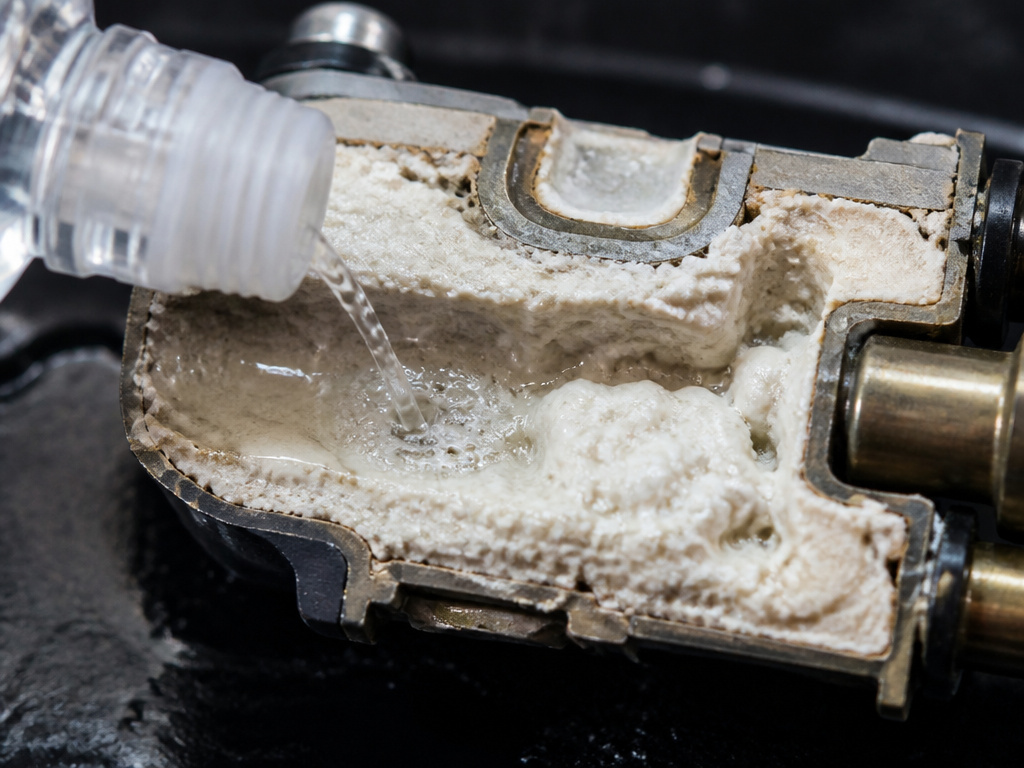
If the bypass procedure fails, the pump grinds but no water ever appears, the machine is likely scaled shut. This is a gradual failure. You might have noticed weaker coffee pressure or longer brew times over the preceding weeks.
Delonghi’s own data sheets specify exact descaling intervals based on water hardness, measured in liters of water used. They use an impulse counter inside the machine to track this.
| Water Hardness | Impulses Until Descaling | Approx. Liters of Water |
|---|---|---|
| Soft | 312,000 | 156 L |
| Medium | 168,000 | 84 L |
| Hard / Very Hard | 96,000 | 48 L |
An average double shot uses about 0.1 liters of water. At 2 shots a day, a household with hard water hits the 48-liter descaling threshold in under 8 months. The scale (calcium carbonate) forms inside the narrow copper veins of the thermoblock and the pump’s own internal chambers. Eventually, the passage is completely blocked.
Descaling is not a suggestion. It’s a maintenance requirement printed in the manufacturer’s user guide. Use the official Delonghi descaling solution or a white vinegar mix as a last resort. The acid dissolves the mineral scale. After a full descaling cycle, you must then perform the steam-wand bypass procedure again. Scale flakes can break loose and cause a new, partial air lock.
When the Problem Is Inside the Machine
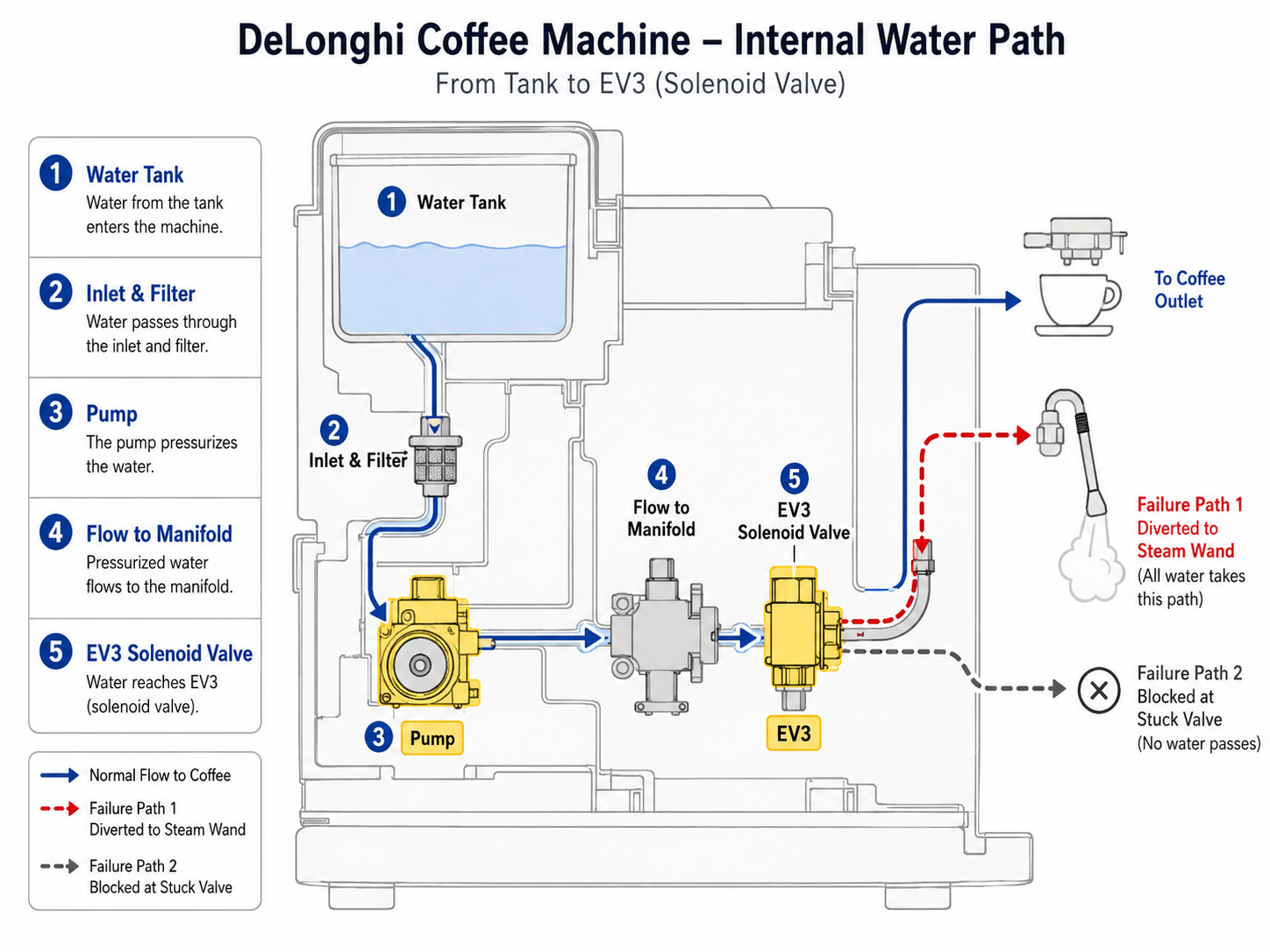
Two internal components fail and mimic a “no pump” symptom: the solenoid valve and the pump itself.
The solenoid valve (labelled EV3 in service schematics) is an electrically controlled gate that directs water to either the brew group or the steam thermoblock. When it fails stuck in the steam position, water never reaches the brew head. The machine might still deliver hot water from the steam wand. If it fails stuck closed, water goes nowhere. Diagnosis requires a multimeter to check for coil continuity, or listening for a distinct click when the machine switches modes.
A failing pump behaves differently. It might run quietly but produce no pressure, resulting in a slow dribble from the group head. Or it might not start at all. Before condemning the pump, verify it’s getting power (12-24V DC on most Delonghi models) and that the inlet isn’t clogged with debris from a degraded water filter. Speaking of which, a clogged Breville filter cartridge can starve any machine’s pump, not just a Breville.
| Symptom | Likely Cause | Test |
|---|---|---|
| Loud grind, no water, steam wand works | Air Lock | Steam wand bypass procedure |
| Loud grind, no water from any outlet | Severe Scale or Blockage | Descaling cycle |
| Pump hums, weak or no flow | Failed Pump or Clog | Check inlet tube; measure pump voltage |
| Water flows from steam wand only | Stuck Solenoid Valve (EV3) | Listen for valve click during mode change |
| Bubbles constantly rise in tank | Leaking OPV or Valve | Visual inspection during operation |
Replacing these parts isn’t for everyone. It involves disassembling the outer casing, which is held together by hidden clips and Torx security screws. If you’re not comfortable tracing wires and disconnecting water lines, this is the point you consult a professional or review a detailed coffee machine manual.
The Freezing Warning Nobody Reads
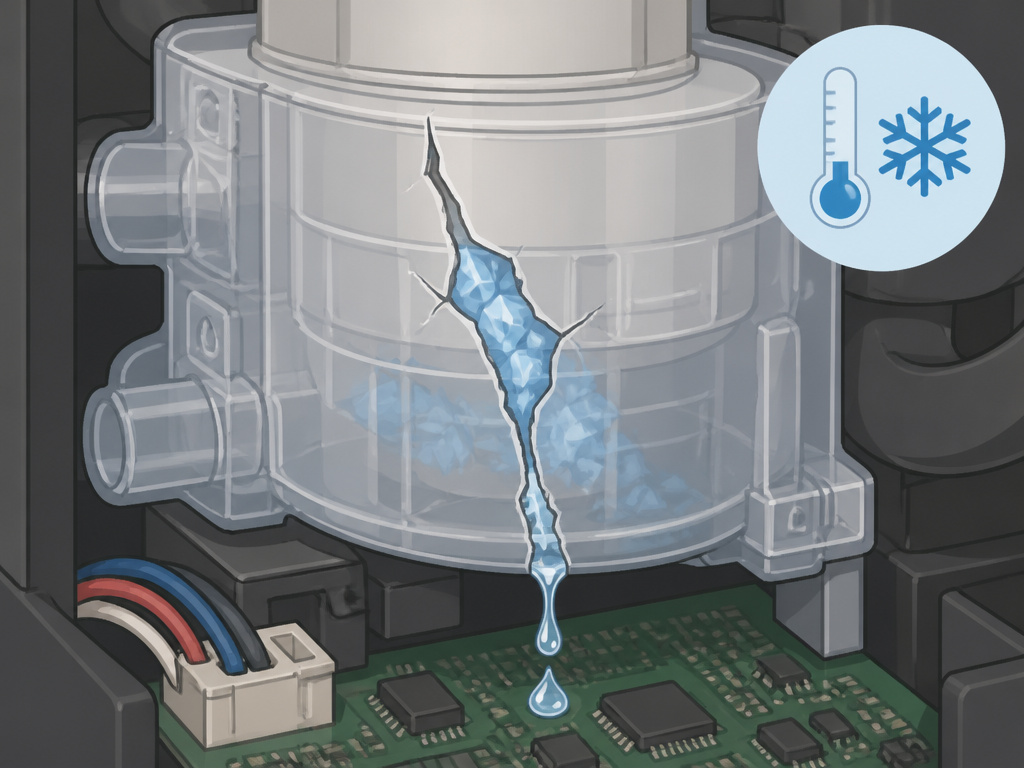
Store your machine dry if it will be in a cold garage, cabin, or storage unit.
The Delonghi safety manual states it directly: “Do not install the appliance in a room where the temperature could drop below freezing point.” Water inside the plastic pump housing, the thermoblock, and the tubes will freeze and expand. Ice is stronger than the molded plastic. The housing cracks, and when it thaws, water leaks onto the electronics. This is a total loss.
The fix is simple. If you’re storing the machine or if your kitchen gets very cold, empty the water tank and run the pump until no more water comes from the steam wand. This clears most of the internal water. It’s a five-minute ritual that saves a $150 machine.
Preventative Habits That Keep the Pump Running
Your machine’s reliability hinges on three routines. They’re boring, but they work.
- Descale on schedule, not on symptoms. Mark your calendar based on your water hardness. If you don’t know your hardness, assume it’s hard and descale every 3-4 months.
- Never let the tank run dry mid-cycle. Refill it when it’s at the one-quarter mark. This maintains the water column in the intake tube.
- Wipe the drip tray area weekly. The manual notes it’s normal for water to sit under the tank. Letting it stagnate promotes mold, which can be drawn into the pump.
These habits also protect other components. Regular descaling preserves the thermoblock. Keeping the area dry protects the reed sensor from corrosion. This sensor is what tells the machine a tank is present; if it fails, the machine may not start at all, thinking the tank is empty. It’s a small thing, like choosing the right bleached paper filters for your pour-over, that prevents bigger issues.
Think of your grinder, too. A consistent grind from a burr coffee grinder prevents fine particles from backing up into the machine’s shower screen, which can indirectly affect water flow. Everything is connected.
Frequently Asked Questions
Why does my Delonghi make a loud buzzing noise but no water comes out?
This is the definitive sign of an air lock. The pump is running but compressing air instead of moving water. Follow the steam-wand bypass procedure to purge the air from the hydraulic circuit.
How do I know if my coffee machine pump is broken?
broken pump often fails silently, it gets no power and doesn’t make noise. If the pump is buzzing or grinding but moving no water, the issue is usually a blockage or air lock, not a dead pump. Check for power at the pump’s connectors with a multimeter to be sure.
Can hard water break my coffee machine?
Yes, absolutely. Hard water deposits scale (calcium carbonate) inside the narrow water pathways and the pump itself. Over time, this can completely block flow, causing the pump to overwork or fail. Descaling according to the manufacturer’s intervals is critical, especially if you use unfiltered tap water.
Is it worth repairing a Delonghi that won’t pump water?
Usually, yes. The most common causes, air locks and scaling, are cheap fixes. Even replacing a solenoid valve or pump is often cheaper than a new machine. The decision point is if the thermoblock is also scaled solid or if there’s internal corrosion from a leak.
What should I do if the steam wand trick doesn’t work?
If bypassing the brew group via the steam wand yields no water after two attempts, stop. The issue is not an air lock. The next steps are to run a full descaling cycle. If that also fails, the problem is likely a mechanical blockage or a failed internal component requiring disassembly.
Before You Go
Start with the tank. Push it down until it clicks. Ninety percent of “no pump” problems end right there.
If you hear the grind, bypass the brew group. Use the steam wand as a vent for two minutes. This solves the other nine percent.
The last one percent is scale or a broken part. Descale first. If the machine is still silent, you’ve ruled out the easy stuff. At that point, you’re holding a screwdriver and reading a service manual, or you’re calling for service. Knowing the difference saves an afternoon.
{
“@context”: “https://schema.org”,
“@type”: “HowTo”,
“name”: “How to Fix a Delonghi Coffee Machine That’s Not Pumping Water”,
“totalTime”: “PT15M”,
“tool”: [
{
“@type”: “HowToTool”,
“name”: “A clean cup or small container”
},
{
“@type”: “HowToTool”,
“name”: “A flat-head screwdriver (for some models)”
},
{
“@type”: “HowToTool”,
“name”: “Delonghi descaling solution or white vinegar”
}
],
“step”: [
{
“@type”: “HowToStep”,
“name”: “Check the water tank seating”,
“text”: “Remove and firmly reseat the water tank, ensuring it clicks into place with no visible gap at the base.”
},
{
“@type”: “HowToStep”,
“name”: “Bypass the brew group via the steam wand”,
“text”: “Place a container under the steam wand. Press the coffee button and immediately open the steam dial fully to purge air from the hydraulic circuit.”
},
{
“@type”: “HowToStep”,
“name”: “Run a descaling cycle if priming fails”,
“text”: “If the pump still won’t prime, the machine likely needs descaling. Follow the manufacturer’s descaling procedure using Delonghi-brand solution.”
}
]
}
{
“@context”: “https://schema.org”,
“@type”: “FAQPage”,
“mainEntity”: [
{
“@type”: “Question”,
“name”: “Why does my Delonghi make a loud buzzing noise but no water comes out?”,
“acceptedAnswer”: {
“@type”: “Answer”,
“text”: “This is the definitive sign of an air lock. The pump is running but compressing air instead of moving water. Follow the steam-wand bypass procedure to purge the air from the hydraulic circuit.”
}
},
{
“@type”: “Question”,
“name”: “How do I know if my coffee machine pump is broken?”,
“acceptedAnswer”: {
“@type”: “Answer”,
“text”: “broken pump often fails silently, it gets no power and doesn’t make noise. If the pump is buzzing or grinding but moving no water, the issue is usually a blockage or air lock, not a dead pump. Check for power at the pump’s connectors with a multimeter to be sure.”
}
},
{
“@type”: “Question”,
“name”: “Can hard water break my coffee machine?”,
“acceptedAnswer”: {
“@type”: “Answer”,
“text”: “Yes, absolutely. Hard water deposits scale (calcium carbonate) inside the narrow water pathways and the pump itself. Over time, this can completely block flow, causing the pump to overwork or fail. Descaling according to the manufacturer’s intervals is critical, especially if you use unfiltered tap water.”
}
},
{
“@type”: “Question”,
“name”: “Is it worth repairing a Delonghi that won’t pump water?”,
“acceptedAnswer”: {
“@type”: “Answer”,
“text”: “Usually, yes. The most common causes, air locks and scaling, are cheap fixes. Even replacing a solenoid valve or pump is often cheaper than a new machine. The decision point is if the thermoblock is also scaled solid or if there’s internal corrosion from a leak.”
}
},
{
“@type”: “Question”,
“name”: “What should I do if the steam wand trick doesn’t work?”,
“acceptedAnswer”: {
“@type”: “Answer”,
“text”: “If bypassing the brew group via the steam wand yields no water after two attempts, stop. The issue is not an air lock. The next steps are to run a full descaling cycle. If that also fails, the problem is likely a mechanical blockage or a failed internal component requiring disassembly.”
}
}
]
}
