
The Hidden Downsides: Why Dark Roast Coffee Is Bad For You
Dark roast coffee is not inherently ‘bad,’ but it represents a specific chemical trade-off: extended roasting reduces acrylamide and some heavy metals while degrading antioxidants like chlorogenic acid and increasing certain furan compounds, with the final impact depending heavily on bean origin, processing, and how you brew it.
Most people think a dark roast just tastes stronger. They miss the fact that the flavor comes from a chemical cascade that burns away the very compounds often cited as coffee’s health benefit. The bitterness isn’t just taste, it’s a receipt for thermal degradation.
This guide walks through the measurable changes in dark roast coffee, from carcinogen formation to antioxidant loss, and gives you the data to decide which trade-offs are acceptable for your cup.
Key Takeaways
- Dark roasting reduces acrylamide levels, often bringing them below the European Commission’s 400 µg/kg guidance, but simultaneously increases furan derivatives like 2-methylfurfural.
- The antioxidant chlorogenic acid can drop by 50-70% in a dark roast compared to a light roast, directly impacting the potential health benefits linked to polyphenols.
- Caffeine content is more tied to extraction yield and dose-by-weight than roast level; a dark roast brewed for longer can deliver more caffeine than a fast-pulled light roast.
- Industrial-scale roasters often use dark roasting to mask inconsistent green bean quality, creating a uniform, smoky flavor profile that hides origin characteristics.
- Your brewing method magnifies the roast’s effects, dark roasts extract faster, so a fine grind and boiling water will over-extract bitterness and concentrated furans.
What Actually Happens to Coffee Beans During a Dark Roast?
Heat does more than brown a bean. It triggers the Maillard reaction and pyrolysis, breaking down original compounds and creating new ones. Think of it as a forced chemical evolution.
A light roast stops this process early, preserving more of the bean’s innate character, acidity, fruity notes, and origin-specific flavors. A dark roast pushes the reaction until sugars caramelize and the bean’s structure itself starts to carbonize. That’s where the shift from “flavor” to “roast flavor” happens.
The European Commission recommends a maximum acrylamide content of 400 µg/kg for roasted coffee. Light roasts of Colombian and Nicaraguan specialty beans tested at 413–457 µg/kg, slightly above that limit, while dark roasts of the same beans measured 192–277 µg/kg.
TL;DR: Dark roasting is a balancing act between reducing one potential toxin (acrylamide) and increasing others (furans) while sacrificing native antioxidants.
The Chemical Cost of a Dark Roast
The flavor change is a side effect of the main event: chemical conversion. You’re trading one set of compounds for another, and the receipt is in the lab data.
Acrylamide Drops, But Furans Rise
Acrylamide forms in the early stages of roasting when an amino acid (asparagine) reacts with reducing sugars. As the roast progresses past the 210°C (410°F) mark and time extends, that acrylamide begins to break down. A NIH study on roasting and acrylamide on Colombian and Nicaraguan beans found dark roasting (215°C for 12 minutes) cut acrylamide levels nearly in half compared to light roasting (210°C for 10 minutes).
The problem is the trade-off. The same thermal energy that breaks down acrylamide accelerates the formation of furans and their derivatives. Research on Vietnam Robusta and Brazil Arabica found the most abundant furan derivative was 2-methylfuran, averaging 70% of the total, with furan itself making up about 20%. These compounds peak in dark roasts.
| Compound | Light Roast Trend | Dark Roast Trend | Health Context |
|---|---|---|---|
| Acrylamide | Higher concentration | Lower concentration | Classified as a probable human carcinogen |
| Furans (e.g., 2-MF) | Lower concentration | Higher concentration | Some are considered possible carcinogens |
| Chlorogenic Acid | High (intact) | Low (degraded by 50-70%) | Primary antioxidant linked to several benefits |
| Total Polyphenols | Generally higher | Generally lower | Contribute to antioxidant activity |
The Antioxidant Drain
Polyphenols, including chlorogenic acid (CGA), are sensitive to heat. A study on spent coffee grounds confirmed that light roasts retained higher levels of total phenolic content and antioxidant activity. Darker roasting promoted thermal degradation, plain and simple.
The 5-caffeoylquinic acid (5-CQA) isomer, a significant polyphenol, decreased by 61–70% in Colombian coffees and 49–58% in Nicaraguan coffees after dark roasting. That’s not a subtle loss. It’s a major part of the bean’s protective compound profile burning away.
If you’re drinking coffee specifically for its antioxidant potential, a blend vs single origin debate matters less than your roast choice. A single-origin dark roast may have fewer polyphenols than a blended light roast.
The Impossibility of a “Perfect” Roast
You can’t optimize for everything. The research is blunt on this point. One study concluded that simultaneous mitigation of both acrylamide and furans by varying roasting parameters or pre-treatments was not possible. Special roasts, like double roasting or roasting with sudden temperature changes, also failed to minimize both contaminants.
Double roasting, roasting on two separate days with cooling in between, reduced acrylamide by up to 36% in some light roasts. But furans tended to increase, not decrease. In a 5-minute double roast sample using a tangential roaster, acrylamide content was actually higher than the single roast reference.
Common mistake: Chasing a “healthier” dark roast by extending roast time, this linearly increases furan concentration while offering diminishing returns on acrylamide reduction after a certain point.
TL;DR: The chemistry is a series of trade-offs, not a path to a perfect bean. You pick your poison, or more accurately, you pick which compounds you’re willing to lose and which new ones you’ll accept.
The Caffeine Myth: It’s Not What You Think
The old adage that light roast has more caffeine is only true if you measure by volume. Dark roast beans are less dense. They’ve lost more moisture and expanded. If you use a scoop, you’re putting fewer beans, and therefore less caffeine, into your grinder.
When you measure by weight, the story changes. Caffeine is remarkably stable until very high temperatures. A PubMed Central filter coffee analysis found that caffeine concentrations in brews generally decreased for roast batches dropped above 400–420°F (204-215°C), suggesting sublimation. The maximum caffeine levels were observed at 14–16% roasting mass loss.
| Measurement Method | Light Roast | Dark Roast | Practical Implication |
|---|---|---|---|
| By Volume (scoop) | More bean mass per scoop | Less bean mass per scoop | A scoop of dark roast yields less caffeine unless you compensate with an extra scoop. |
| By Weight (scale) | Caffeine content is largely preserved | Caffeine content is largely preserved | 20g of light roast beans and 20g of dark roast beans will have nearly identical caffeine. |
| Extraction Yield | Can be harder to extract fully | Extracts faster and more easily | A dark roast brewed longer can yield a higher-caffeine cup than a light roast. |
The real lever for caffeine in your cup is extraction yield. If you achieve the same extraction yield, dark roasts can actually show higher caffeine concentrations. This turns the myth on its head. Your espresso caffeine content depends more on your dose weight and brew time than the roast color on the bag.
TL;DR: Dose by weight, not volume. A dark roast brewed to a higher extraction yield can deliver more caffeine than a poorly extracted light roast.
Why Big Brands Love Dark Roast (And You Should Know)
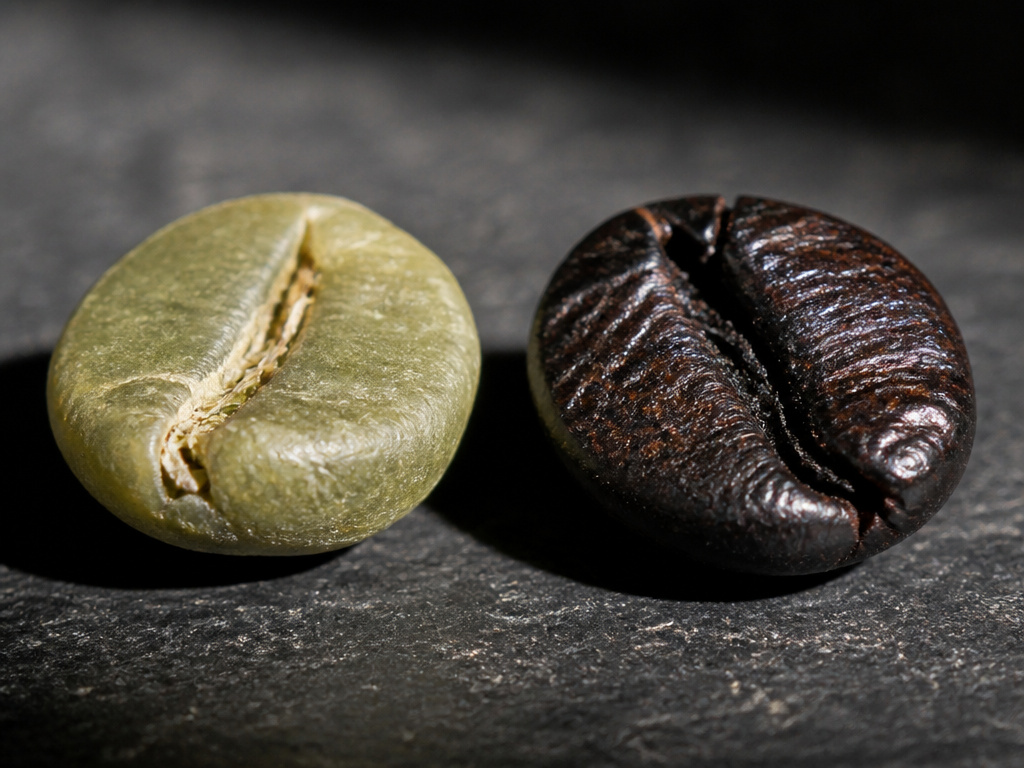
There’s a business reason dark roast dominates supermarket shelves. It’s a great equalizer. Green coffee beans vary wildly in quality, origin, and defect count. A dark roast burns those inconsistencies into a uniform, smoky flavor profile.
As one YouTube coffee expert put it, “You can take coffee from anywhere in the world with any toxin level. You can burn it to an even amount and you can standardize the flavor profile.” This lets large companies maintain a consistent taste across millions of pounds of inventory sourced from different regions and harvests.
For the drinker, this means dark roast often obscures the bean’s true origin. The terroir, the nuanced fruity or floral notes of a single-origin coffees, it all gets masked by the taste of the roast itself. You’re tasting the process, not the product.
This isn’t inherently bad. It guarantees a predictable cup. But it means you’re often paying for a flavor that could have come from a lower-grade bean. If you want to taste what a specific region or farm has to offer, you need to step back into medium or light roast territory.
I switched to medium roasts about five years ago after a trip to Colombia. Tasting a lightly roasted Huila bean was like hearing a song I’d only ever heard on a blown-out speaker. The clarity of flavor, stone fruit, a hint of cocoa, was completely erased in the dark roast version I’d been buying at home. I still drink a dark roast occasionally, but now I know it’s the flavor of the roaster’s heat, not the farmer’s soil.
How to Drink Dark Roast (If You Still Want To)
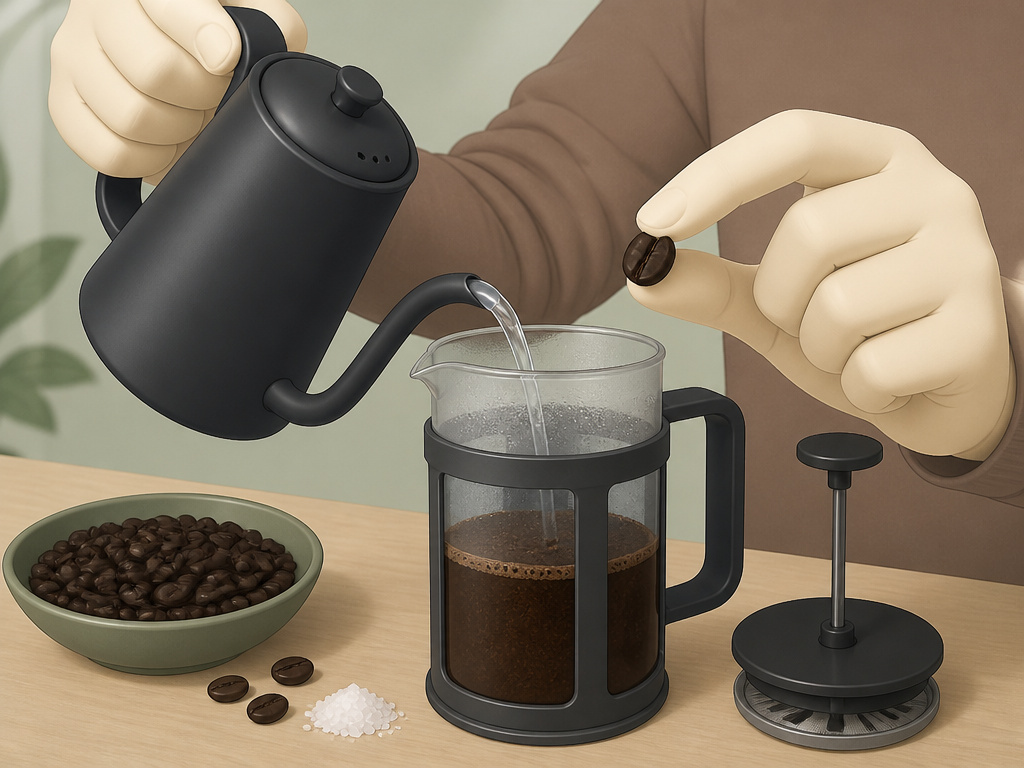
Maybe you love the smoky, bitter punch. That’s fine. The goal is awareness, not abstinence. You can make smarter choices to mitigate some of the downsides.
Choose your bean wisely. A high-quality, specialty-grade Arabica bean roasted dark will start with a better nutritional profile than a low-grade Robusta. Some of those original compounds will survive the roast.
Grind coarser and use cooler water. Dark roasts are more soluble. They extract faster. Using boiling water and a fine grind is a surefire way to over-extract, pulling out excessive bitterness and concentrating those furan compounds. Aim for water around 195°F (90°C) and a slightly coarser grind setting than you’d use for a light roast.
Consider a pinch of salt. It’s not just an old barista trick. A tiny pinch of salt in the grounds can counteract bitterness by blocking bitter receptors on your tongue. This lets you use a slightly shorter brew time, potentially reducing extraction of unwanted compounds. Our guide on adding salt to coffee breaks down the science and the right amount to use.
Listen to your body. If you experience jitters, acid reflux, or digestive issues, the roast might be a factor. Dark roasts are often lower in acidity, which can help some people with acid reflux and coffee sensitivity. However, the higher furan content or different caffeine extraction could affect others. It’s a personal experiment.
When a Dark Roast Might Be the Better Choice

It’s not all downside. For certain drinkers and health considerations, a darker roast could be the pragmatic pick.
If you are highly sensitive to caffeine’s effects, the potential for slightly lower caffeine content (if dosing by volume) might be a benefit. More importantly, dark roasting reduces levels of certain heavy metals found in green coffee beans. The same NIH study on roasting and acrylamide also tracked heavy metals, noting reductions with longer roast times.
For those concerned about coffee and heart health or cholesterol, the specific compounds formed or destroyed by dark roasting may play a role, though the research is ongoing and complex.
If your primary concern is digestive comfort, the lower acidity of a dark roast may prevent the coffee acidity digestion issues that light roasts can exacerbate for some people. It’s a trade-off between digestive ease and antioxidant intake.
Frequently Asked Questions
Does dark roast coffee have more acrylamide?
No, it has less. Acrylamide forms early in the roasting process and then breaks down with extended heat. Light roasts typically have higher acrylamide levels, sometimes exceeding recommended limits, while dark roasts fall below them.
Is dark roast worse for your health?
It’s not categorically worse; it’s different. Dark roast has lower acrylamide and often lower acidity, which may benefit some people. However, it has fewer antioxidants like chlorogenic acid and higher levels of certain furan compounds, which are under study. The net health effect depends on which compounds you’re most concerned about and how your body reacts.
Why is dark roast more bitter?
The bitterness comes from two main sources: the continued caramelization of sugars until they taste charred, and the extraction of compounds like trigonelline and chlorogenic acid breakdown products that become more soluble and bitter-tasting at higher roast levels.
Can I get the same caffeine from dark roast as light roast?
Yes, if you dose by weight. A gram of dark roast bean contains nearly the same caffeine as a gram of light roast bean. The difference comes when you scoop by volume, the darker, less dense beans mean you’re using less coffee, resulting in a weaker, lower-caffeine brew unless you add more scoops.
Before You Go
Dark roast coffee isn’t a health villain. It’s a specific chemical profile born from a longer, hotter process. You lose some things, notable antioxidants and origin character, and you gain others, a consistent, bold flavor and lower acrylamide.
The smart move is to understand the trade. If you drink for antioxidant potential, lean lighter. If you love the smoky taste or need lower acidity, choose a dark roast consciously. Grind it coarser, use slightly cooler water, and always, always dose by weight.
Your perfect cup sits at the intersection of the chemistry in the bean and the physiology of your own taste buds and gut. That’s a more interesting place to be than simply choosing the darkest bag on the shelf.
{
“@context”: “https://schema.org”,
“@type”: “HowTo”,
“name”: “How to Choose a Coffee Roast Based on Health and Flavor”,
“totalTime”: “PT5M”,
“step”: [
{
“@type”: “HowToStep”,
“name”: “Identify your priority: flavor or compounds”,
“text”: “Light roasts retain more chlorogenic acid and polyphenols but can exceed acrylamide limits. Dark roasts drop acrylamide but lose those antioxidants and develop more furans.”
},
{
“@type”: “HowToStep”,
“name”: “Check the bean’s origin and processing method”,
“text”: “Robusta beans and wet-processed (washed) coffees behave differently under heat than dry-processed Arabica. Biomimetic fermentation can preserve some compounds through a medium roast.”
},
{
“@type”: “HowToStep”,
“name”: “Measure your dose by weight, not volume”,
“text”: “Dark roast beans are less dense. Scooping by volume gives you less actual coffee and can lower your caffeine per cup if you’re not careful.”
},
{
“@type”: “HowToStep”,
“name”: “Adjust your brew method for the roast”,
“text”: “Dark roasts extract faster. Use a slightly coarser grind and cooler water (around 195°F/90°C) to avoid over-extracting bitterness and furan concentration.”
},
{
“@type”: “HowToStep”,
“name”: “Taste and decide based on your body’s response”,
“text”: “If you experience acid reflux or jitters with light roasts, a medium-dark might be better despite the compound trade-offs. Your tolerance is the final filter.”
}
]
}
{
“@context”: “https://schema.org”,
“@type”: “FAQPage”,
“mainEntity”: [
{
“@type”: “Question”,
“name”: “Does dark roast coffee have more acrylamide?”,
“acceptedAnswer”: {
“@type”: “Answer”,
“text”: “No, it has less. Acrylamide forms early in the roasting process and then breaks down with extended heat. Light roasts typically have higher acrylamide levels, sometimes exceeding recommended limits, while dark roasts fall below them.”
}
},
{
“@type”: “Question”,
“name”: “Is dark roast worse for your health?”,
“acceptedAnswer”: {
“@type”: “Answer”,
“text”: “It’s not categorically worse; it’s different. Dark roast has lower acrylamide and often lower acidity, which may benefit some people. However, it has fewer antioxidants like chlorogenic acid and higher levels of certain furan compounds, which are under study. The net health effect depends on which compounds you’re most concerned about and how your body reacts.”
}
},
{
“@type”: “Question”,
“name”: “Why is dark roast more bitter?”,
“acceptedAnswer”: {
“@type”: “Answer”,
“text”: “The bitterness comes from two main sources: the continued caramelization of sugars until they taste charred, and the extraction of compounds like trigonelline and chlorogenic acid breakdown products that become more soluble and bitter-tasting at higher roast levels.”
}
},
{
“@type”: “Question”,
“name”: “Can I get the same caffeine from dark roast as light roast?”,
“acceptedAnswer”: {
“@type”: “Answer”,
“text”: “Yes, if you dose by weight. A gram of dark roast bean contains nearly the same caffeine as a gram of light roast bean. The difference comes when you scoop by volume, the darker, less dense beans mean you’re using less coffee, resulting in a weaker, lower-caffeine brew unless you add more scoops.”
}
}
]
}
