
Why Can’t Mormons Drink Coffee? An Explanation of the Ban
This post contains affiliate links. As an Amazon Associate, we earn from qualifying purchases.
Mormons cannot drink coffee because their health code, the Word of Wisdom, received by Joseph Smith in 1833, advises against “hot drinks.” Church leaders have consistently interpreted this to mean coffee and tea. Adherence to this rule is a requirement for temple worship and is seen as a covenant of health and obedience.
Most people assume the ban is about caffeine. They see a member drinking a Diet Coke and call it a contradiction. The confusion is understandable, but it misses the point entirely. The rule was never about a single chemical.
This guide breaks down the historical revelation, the modern enforcement, and the specific 2019 clarification that shut down creative ordering at coffee shops. We will also look at what is actually prohibited, what is allowed, and how younger generations are navigating this rule today.
Key Takeaways
- The prohibition comes from Doctrine and Covenants 89:9, which warns against “hot drinks,” interpreted since 1833 as coffee and tea.
- Caffeine is not the issue. The Church has never banned it, and many members drink caffeinated soda.
- A 2019 clarification in the New Era magazine explicitly banned drinks with names containing café, mocha, latte, espresso, or -ccino.
- The rule applies to black and green tea but not herbal tea, which comes from different plants.
- Obedience to the Word of Wisdom is a requirement for a temple recommend, linking the dietary rule directly to core religious practices.
What Does the Word of Wisdom Actually Say?
The source is a section of Latter-day Saint scripture called the Doctrine and Covenants. Section 89, received by Joseph Smith in 1833, outlines a health code. Verses 5-7 command abstinence from alcohol. Verse 8 advises against tobacco. Verse 9 is the one in question: “And again, hot drinks are not for the body or belly.”
Doctrine and Covenants 89:9 advises against “hot drinks” as “not for the body or belly.” This single phrase, interpreted by early church leadership, forms the basis for the coffee and tea prohibition.
Joseph Smith himself defined “hot drinks” as tea and coffee that same year. The text does not mention caffeine, temperature, or any other specific compound. The original revelation was given as “wisdom,” not a strict commandment. For decades, it was treated as counsel. The shift to a mandatory requirement for full church participation began around 1918. This coincided with the U.S. Prohibition era, a time when temperance movements influenced many American religious groups.
TL;DR: The rule originates from an 1833 scripture verse against “hot drinks,” which Joseph Smith defined as coffee and tea, not from a modern health analysis of caffeine.
The Caffeine Confusion: Why Soda is Okay
This is the most common point of confusion. If coffee is bad because of caffeine, why are Mountain Dew and Diet Coke acceptable? The official answer is that the Word of Wisdom does not mention caffeine. The prohibition is against the specific substances of coffee and tea.
The Church addressed this directly in a 1972 statement regarding cola drinks. The Priesthood Bulletin stated the Church had never taken an official position on them but advised against any drink containing “harmful habit-forming drugs.” Members are expected to use personal judgment. This opened the door for widespread consumption of caffeinated soft drinks, which became culturally normalized.
| Beverage | Word of Wisdom Status | Primary Reason |
|---|---|---|
| Coffee (Any form) | Prohibited | Defined as a “hot drink” in D&C 89:9 |
| Black & Green Tea | Prohibited | Defined as a “hot drink” in D&C 89:9 |
| Herbal Tea | Permitted | Not from the Camellia sinensis plant |
| Caffeinated Soda | Permitted (with caution) | Caffeine itself is not prohibited by the code |
| Energy Drinks | Permitted (with caution) | Falls under the 1972 advice on “habit-forming” substances |
The 2012 presidential election forced the issue into the open. When Mitt Romney was photographed with a Diet Coke, critics questioned his adherence. The Church quickly clarified that the Word of Wisdom’s “hot drinks” meant coffee and tea specifically, not caffeine. This public statement cemented the distinction. You can explore the caffeine content in soda and other drinks in our detailed comparison.
TL;DR: Caffeine is not banned. The rule targets coffee and tea plants, which is why caffeinated soda is culturally common among members while coffee is not.
Tea, Vapes, and Marijuana: What Else is Forbidden?
The Word of Wisdom’s scope extends beyond coffee. The 2019 clarification in the New Era magazine, the Church’s publication for youth, listed several other prohibited items.
- Tea: The clarification specified “products containing black or green tea.” This targets the Camellia sinensis plant. Herbal teas (peppermint, chamomile, rooibos) are permitted because they are infusions of other plants. This is a critical distinction many outsiders miss.
- Vaping and E-Cigarettes: The 2019 update explicitly added these to the prohibition, grouping them with tobacco.
- Alcohol: Forbidden as per the original text (D&C 89:5–7).
- Illegal Drugs & Misuse of Legal Drugs: The For the Strength of Youth booklet teaches abstinence. The 2019 note added that marijuana and opioids are only for medicinal use under a “competent physician’s” care.
Common mistake: Assuming “tea” means any herbal infusion — the prohibition applies only to black and green tea from the Camellia sinensis plant. Drinking chamomile tea does not violate the Word of Wisdom.
This creates a clear boundary. The rule isn’t about “hot” temperature or “stimulating” effects. If it were, iced tea would be allowed, and hot herbal tea would be forbidden. Neither is true. Iced coffee and iced black tea are prohibited. A hot cup of peppermint tea is fine. For those seeking a low-stimulant alternative hot beverage, herbal teas are a perfect fit.
The Modern Clarification: Closing the Coffee Shop Loophole
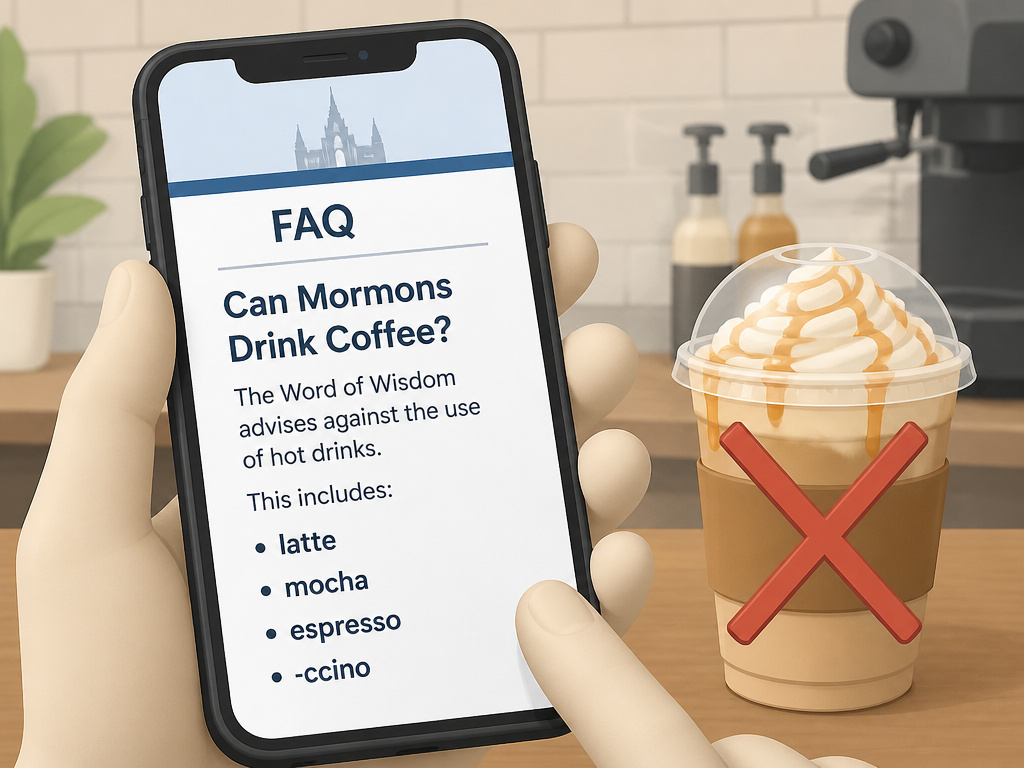
By the 2010s, a generational shift was happening. Coffee shops had become standard venues for work and social meetings. Some members wondered if the rule applied to coffee-flavored desserts or if ordering a steamer (just steamed milk) was acceptable. The Church’s August 2019 New Era article provided a definitive answer.
It stated: “Drinks with names that include café or caffé, mocha, latte, espresso, or anything ending in -ccino are coffee and are against the Word of Wisdom.” This shut down any ambiguity. A caramel latte, an iced mocha, a frappuccino—all were definitively classified as coffee, regardless of temperature or how much milk and sugar they contained.
This clarification was widely seen as a response to surveys showing slipping compliance. A 2016 survey by Jana Riess for her book The Next Mormons found that four in ten active members under 51 had consumed coffee in the previous six months. The Church was drawing a bright, unambiguous line for its younger members. Historian Patrick Mason noted that past generations avoided coffee shops altogether, while today’s youth might go to Starbucks for social reasons. This ruling gave them a clear standard to follow inside those shops. You can read the full official Church FAQ on coffee for this precise language.
TL;DR: The 2019 ruling explicitly banned any drink with coffee-related names (latte, mocha, etc.), closing loopholes for members who frequent modern coffee shops.
Why It Matters: Temple Recommends and Cultural Identity
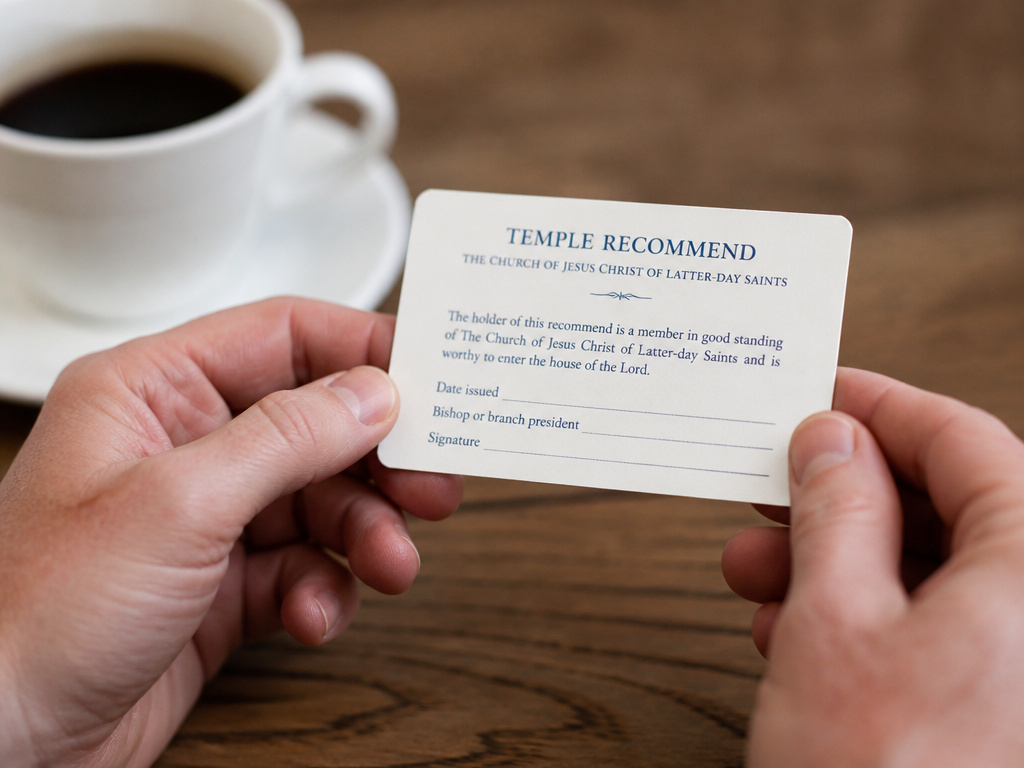
For a practicing Latter-day Saint, this isn’t just a dietary preference. Adherence to the Word of Wisdom is a required question during the temple recommend interview. A temple recommend is necessary to enter Latter-day Saint temples, where the faith’s most sacred ordinances, like marriages and baptisms for the dead, are performed.
Before you start: Discussing religious dietary rules requires respect for deeply held beliefs. This is not a health debate but an explanation of a faith-based practice that millions follow as a covenant with God.
The “why” has layers. On one level, it’s about physical health, avoiding addictive substances. On another, it’s about spiritual obedience—following commandments as a demonstration of faith. For many members, it’s also a powerful marker of cultural identity. Abstaining from coffee and tea sets them apart in a tangible, daily way. It’s a shared practice that reinforces community belonging. This religious rationale for dietary code is explained in depth on the Church’s own pages.
The rule’s evolution from counsel to commandment also reflects the Church’s institutional development. As it grew, standardized practices became important for unity. The Word of Wisdom transformed from personal health advice to a uniform requirement for full participation. This faith-based dietary rule analysis explores that historical journey in more detail.
What About Energy Drinks and Herbal Supplements?
The Word of Wisdom provides principles that members apply to items not explicitly mentioned. The 1972 statement on “habit-forming drugs” is the guiding light here.
- Energy Drinks (Monster, Red Bull): These are not explicitly banned. However, many church leaders and parents counsel against them, citing the principle of avoiding harmful or habit-forming substances. They often contain high levels of caffeine and sugar, falling into a gray area of personal interpretation.
- Herbal Supplements & Caffeine Pills: Similar logic applies. Using a pure caffeine pill for a stimulant effect would likely be discouraged under the “habit-forming” principle, even though it’s not coffee.
The Church encourages members to seek wisdom and make informed choices for their own health. This is why you’ll see a spectrum of behavior. Some members avoid all stimulants, including soda. Others regularly drink energy drinks without a second thought. The core, non-negotiable items remain coffee, black tea, green tea, alcohol, and tobacco. For a look at the stark health impacts of stimulants like those found in energy drinks versus coffee, we have a dedicated comparison.
Frequently Asked Questions
Can Mormons drink decaf coffee?
No. The prohibition is against the substance of coffee, not its caffeine content. Decaffeinated coffee is still coffee and is therefore not permitted under the Word of Wisdom.
Can Mormons drink iced coffee or iced tea?
No. The 2019 clarification confirmed that the prohibition is based on the substance, not the temperature. Iced coffee and iced black or green tea are not allowed.
Why can Mormons drink hot chocolate but not hot coffee?
Hot chocolate is made from cocoa, not the coffee or tea plant. The Word of Wisdom’s “hot drinks” refers specifically to coffee and tea. Other hot beverages like herbal tea, hot cider, or hot chocolate are permitted.
Do Mormons get kicked out for drinking coffee?
No. Drinking coffee is not an excommunicable offense. However, it would prevent a member from obtaining or renewing a temple recommend, which is required for participation in the faith’s highest ordinances. It is considered a serious matter of personal worthiness.
What do Mormons drink instead of coffee?
Common alternatives include herbal tea, hot chocolate, Postum (a roasted grain beverage), cider, and simply hot water with lemon. Many also drink caffeinated soft drinks like Diet Coke or Dr Pepper, which are culturally common.
Before You Go
The rule against coffee for members of The Church of Jesus Christ of Latter-day Saints is specific and deeply rooted. It springs from an 1833 scripture, was defined early on as targeting coffee and tea, and was elevated to a commandment in the early 20th century. The 2019 clarification ended debates about fancy coffee drinks by naming them explicitly.
It is not a ban on caffeine or hot liquids. It is a religious dietary code that binds adherence to core spiritual privileges. While surveys show varying levels of compliance, especially among younger members, the official standard remains clear. For the practicing member, it’s a daily act of faith. For the curious observer, it’s a distinctive practice that shapes identity. Understanding the “why” requires looking at history, scripture, and the evolving process of defining a religious community’s boundaries.
