
What Roast is Strongest? Light Roast Coffee Has More Caffeine
The strongest coffee is determined by caffeine content per volume, not flavor intensity. Light roast beans retain more caffeine than dark roast beans. Robusta beans contain roughly double the caffeine of Arabica beans. Brewing method is the biggest lever: espresso yields the highest concentration, while a specific cold brew preparation can deliver the most caffeine in a single serving.
People get this wrong because they equate “strong” with bitter, smoky flavor. That’s a taste perception, not a chemical measurement. Dark roast tastes intense, but it’s actually lighter on caffeine. The real answer involves three separate factors fighting each other.
This guide maps the variables: bean type, roast level, and brewing method. It shows you how to combine them for maximum caffeine, and why your morning dark roast might be the weakest cup you drink.
Key Takeaways
- Light roast beans have more caffeine than dark roast. Longer roasting burns off caffeine.
- Robusta beans contain about twice the caffeine of Arabica beans. Choose Robusta if caffeine is your goal.
- Espresso delivers the highest caffeine concentration per ounce. A shot packs more caffeine per milliliter than any other brew.
- Brewing method outweighs roast level for total caffeine. You can get a massive dose from a long-steep cold brew.
- Measure coffee by weight, not scoop. A scoop of light roast beans is denser and contains more beans, and more caffeine, than a scoop of dark roast.
The Bean Type Decides the Battle
The fight starts before the roaster even turns on the machine. The species of coffee plant dictates the caffeine baseline.
Robusta (Coffea canephora) runs at 2.2–2.7% caffeine content by weight. Arabica (Coffea arabica) sits between 1.2–1.5%. That’s nearly double. If you’re chasing stimulation, Robusta is the obvious pick. Its flavor is often described as earthy, woody, and sometimes harsh, it’s the bean in many inexpensive supermarket blends and instant coffees.
Arabica is the specialty coffee standard. It’s smoother, more complex, and carries the fruity, floral, and chocolate notes roasters prize. But those notes come with a lower caffeine payload. This is the first trade-off: flavor versus chemical strength. A high-quality single-origin coffee from Ethiopia might taste incredible and contain half the caffeine of a budget Robusta blend.
Common mistake: Assuming a dark roast of Arabica is “stronger” than a light roast of Robusta, the Robusta light roast will win on caffeine every time, even if the cup tastes less refined.
TL;DR: Robusta beans have roughly double the caffeine of Arabica. Choose Robusta for chemical strength, Arabica for flavor complexity.
Roast Level: Light Beats Dark
Roasting transforms green coffee beans. Heat drives off water, expands the bean, and breaks down compounds. Caffeine is one of those compounds.
Light roast beans spend less time in the roaster. They retain more of their original mass, including caffeine. As roasting progresses to medium and then dark, the bean loses more water and mass. Caffeine degrades and burns off. A peer-reviewed NIH study on coffee caffeine content confirms that longer roasting reduces caffeine concentration.
The Specialty Coffee Association defines a “cupping level” roast for evaluation. It’s a light roast, measured by colorimetry as an Agtron Gourmet scale reading of around 63. That’s the roast level professionals use to judge bean quality, because it preserves the bean’s inherent characteristics, including its caffeine.
| Roast Level | Caffeine Retention | Flavor Profile | Best Brewing Method |
|---|---|---|---|
| Light | Highest | Bright, acidic, fruity | Pour-over, drip |
| Medium | Moderate | Balanced, sweet, caramelized | French press, cold brew |
| Dark | Lowest | Bold, smoky, chocolatey | Espresso, Aeropress |
Dark roast tastes strong. The bold, sometimes bitter, flavors hit your palate hard. That’s not caffeine. It’s the result of longer roasting which creates those flavor compounds while simultaneously destroying caffeine. Your darkest, most intense-tasting cup could be your weakest in terms of actual stimulant.
Volume versus weight plays a trick here too. Dark roast beans are less dense. They’ve expanded more. If you measure by scoop, a scoop of dark roast contains fewer actual beans than a scoop of light roast. That means less caffeine per scoop. Always use a scale.
The Brewing Method is the Real Lever
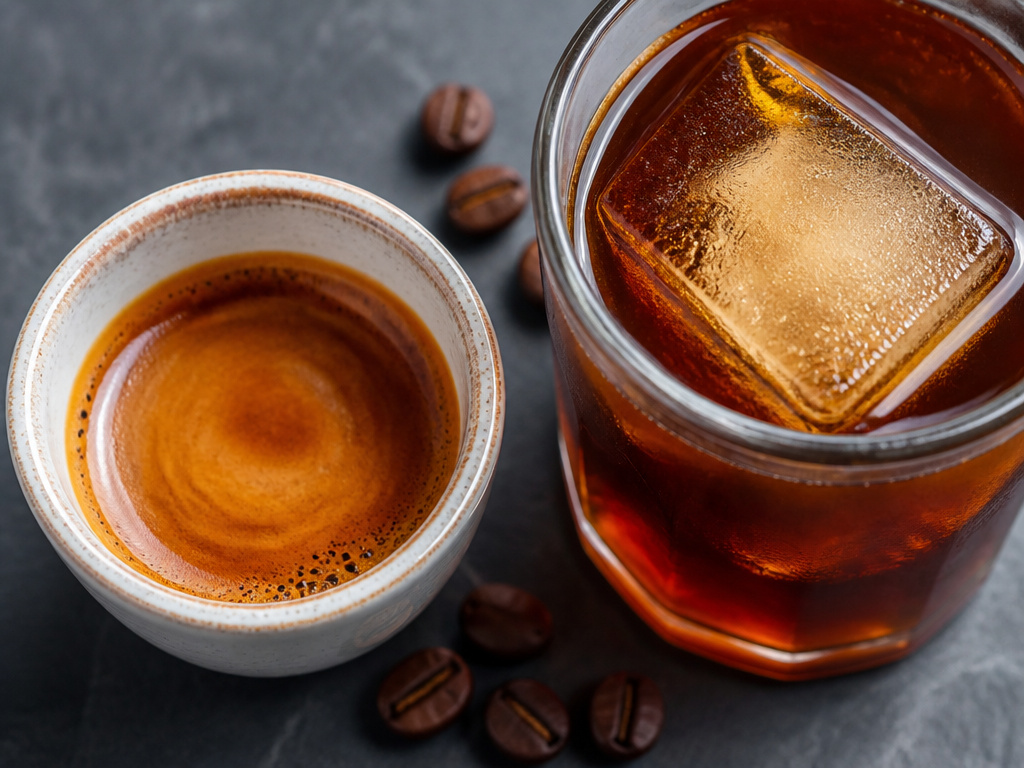
Roast and bean type set the ceiling. Brewing method determines how much of that caffeine ends up in your cup.
Espresso is the champion of concentration. The NIH study on coffee caffeine content recorded the highest caffeine concentration per liter in espresso brews. One study found a blend of 95% Robusta and 5% Arabica, extracted with 7.5g of coffee, 25mL of water at 92°C and 7 bar pressure, yielded a staggering 10.303 g/L. That’s pure caffeine density.
Espresso’s high pressure and fine grind force extraction. The short contact time (25–30 seconds) means less caffeine is lost to over-extraction of bitter compounds. It’s a precision method.
Cold brew is the champion of total dose. The same study found that a preparation of 50g of Robusta coffee with 500mL of cold water (25°C), followed by boiling, delivered the highest caffeine content in a single portion. The long steep time (12–24 hours) at cold temperature allows caffeine to slowly migrate into the water without extracting many of the bitter oils that hot water pulls. Then boiling doesn’t degrade it further. You get a massive, smooth, highly caffeinated punch.
| Brewing Method | Caffeine Concentration (g/L) | Total Caffeine Potential | Why It Works |
|---|---|---|---|
| Espresso | Highest (up to 10.303 g/L) | Moderate per serving | Pressure, fine grind, short time |
| Cold Brew | Moderate | Highest per serving | Long steep, cold water, no bitter oil extraction |
| Drip / Pour-over | Low | Low | Gravity flow, medium grind, medium time |
| French Press | Low | Moderate | Full immersion, coarse grind, no paper filter |
Drip coffee and pour-over are gentler. They rely on gravity and a paper filter, which traps some oils and fines. They produce a clean cup but extract less caffeine per gram of coffee. The espresso caffeine content is why many people feel a sharper kick from a shot than from a mug of drip.
TL;DR: For concentrated caffeine, choose espresso. For the biggest total dose, choose a long-steep cold brew with Robusta beans.
Putting It All Together: The Strongest Possible Cup
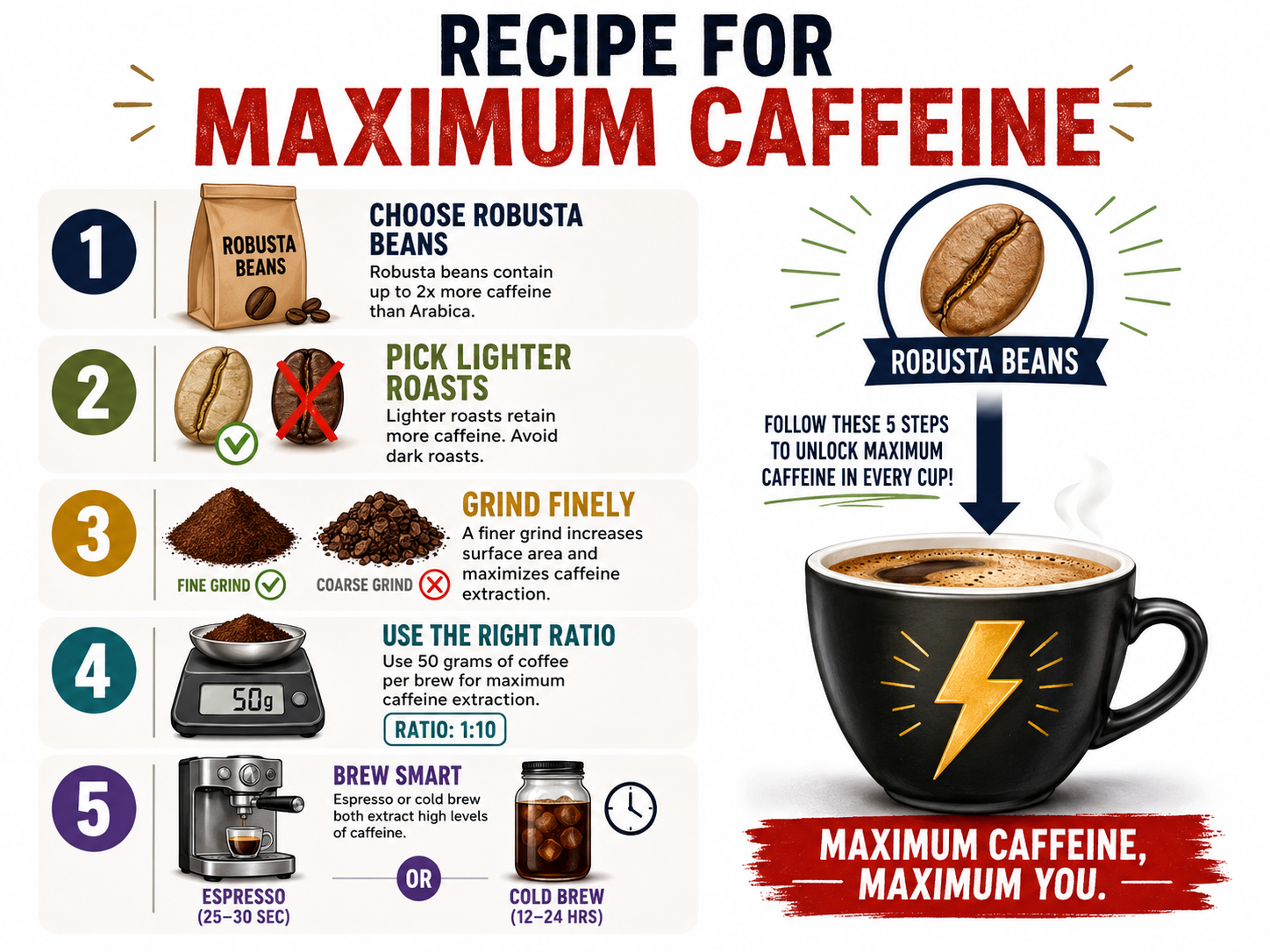
You want the maximum caffeine hit. Here’s the recipe, step by step.
- Source Robusta beans. This is non-negotiable. Arabica can’t compete on raw caffeine content. Find a reputable supplier, the bean’s quality still matters for taste, even if you’re prioritizing stimulation.
- Request a light roast. Tell your roaster you want a light roast, Agtron 63-ish if they measure it. If they don’t, describe it as “just past first crack, no oil on the bean.” Skipping this step and using a dark roast throws away 15–20% of your caffeine potential.
- Grind correctly for your method. For espresso, grind fine enough that 18g yields 36g of liquid in 25–30 seconds. For cold brew, go coarse, a French press grind size. Wrong grind size either blocks extraction or lets caffeine slip through unextracted.
- Use a scale, not a scoop. Measure your coffee by weight. For the high-dose cold brew method, you need 50g of coffee. For espresso, 7.5g is the studied optimum. Volume measurement is unreliable because bean density changes with roast.
- Choose your brewing weapon. For pure concentration, pull an espresso shot with the parameters above. For total dose, combine 50g of coarse-ground light roast Robusta with 500mL of cold water. Steep for 18–24 hours in the fridge, then strain. You can boil the result if you want a hot drink, the caffeine is already extracted.
I tried the 50g Robusta cold brew steep for a week. The first day, I felt the buzz two hours later, a slow, sustained lift. By day three, my usual afternoon espresso felt like a placebo. The method works. It’s not about flavor, it’s about payload.
Mixing bean types in a coffee blend can balance things. A blend with 80% Robusta for caffeine and 20% Arabica for flavor might be the practical compromise. But for sheer strength, go pure Robusta.
Why Your Dark Roast Isn’t “Strong”
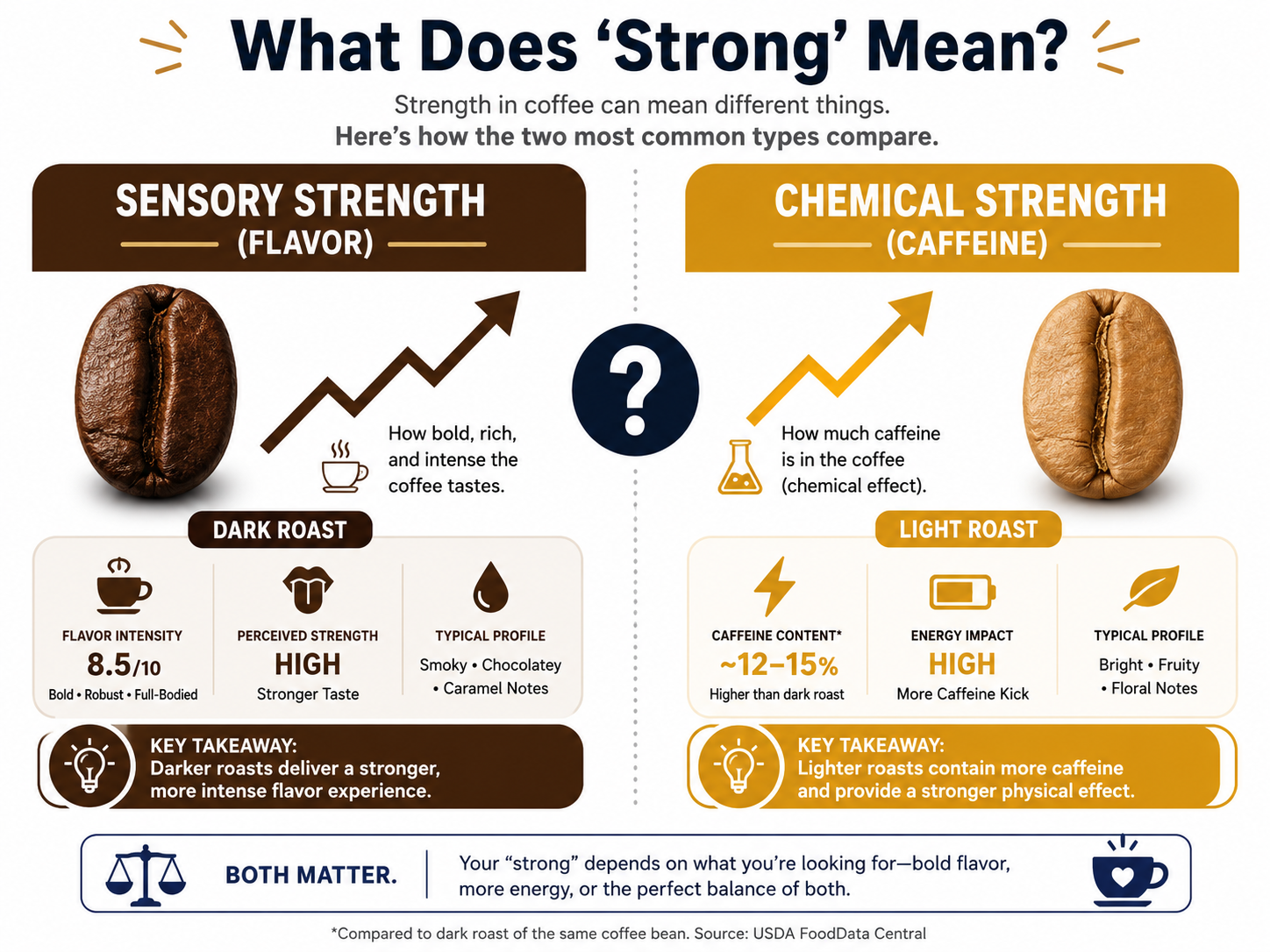
The word “strong” in coffee has two definitions. One is chemical: caffeine concentration. The other is sensory: flavor intensity.
Dark roast achieves sensory strength. The longer roast develops bitter, smoky, chocolaty compounds that dominate your taste buds. It can also mask flaws in lower-quality beans. That’s why many commercial coffees and espresso blends are dark roasted, it creates a consistent, bold flavor profile.
Chemical strength is different. It’s a numbers game. Light roast wins because caffeine is preserved. Robusta wins because it starts with more. Espresso wins because it extracts efficiently.
When someone says they prefer a “strong” coffee, they usually mean the sensory kind. They want that bold, dark flavor. That’s fine. But if they’re seeking a caffeine jolt, they’re drinking the wrong roast. The brewed coffee strength of a dark roast Arabica drip is lower than a light roast Robusta cold brew on both fronts: concentration and total dose.
This confusion is why the question “what roast is the strongest coffee” is incomplete. You must ask: “strong in flavor, or strong in caffeine?” The answers point in opposite directions.
Frequently Asked Questions
Does dark roast coffee have more caffeine?
No. Dark roast coffee has less caffeine than light roast. The extended roasting process burns off caffeine. While dark roast tastes more intense and bold, its stimulant content is actually lower.
Which brewing method gives the most caffeine?
For caffeine concentration per milliliter, espresso is the highest. For the largest total caffeine dose in a single serving, a specific cold brew method, 50g of Robusta coffee steeped in 500mL of cold water for 18–24 hours, delivers the most.
Is light roast coffee stronger than dark roast?
Yes, in terms of caffeine content. Light roast beans retain more of their original mass, including caffeine. In terms of flavor strength or intensity, dark roast is stronger.
Does the type of coffee bean affect strength?
Absolutely. Robusta beans contain approximately 2.2–2.7% caffeine, nearly double the 1.2–1.5% found in Arabica beans. For maximum caffeine, choose Robusta.
Why does my dark roast coffee taste stronger but feel less energizing?
The strong taste comes from roasted compounds like bitter oils and smoky flavors. The reduced energizing effect is due to lower caffeine content. You’re experiencing sensory strength without the chemical strength.
The Bottom Line
Strength is a split concept. For caffeine, light roast Robusta beans brewed as espresso or long-steep cold brew win. For flavor intensity, dark roast Arabica wins.
If you want the hardest kick, ignore the dark, oily beans. Buy a light roast Robusta. Grind it fine for espresso or coarse for cold brew. Measure by weight on a scale.
Your taste buds might protest. Robusta is rougher. But your nervous system will get the message.
{
“@context”: “https://schema.org”,
“@type”: “HowTo”,
“name”: “How to Brew Coffee with the Highest Caffeine Content”,
“totalTime”: “PT10M”,
“tool”: [
{
“@type”: “HowToTool”,
“name”: “Coffee scale”
},
{
“@type”: “HowToTool”,
“name”: “Burr grinder”
},
{
“@type”: “HowToTool”,
“name”: “Espresso machine or cold brew setup”
}
],
“step”: [
{
“@type”: “HowToStep”,
“name”: “Choose Robusta beans”,
“text”: “Select Robusta coffee beans, which contain 2.2-2.7% caffeine versus Arabica’s 1.2-1.5%.”
},
{
“@type”: “HowToStep”,
“name”: “Grind for your method”,
“text”: “Grind beans finely for espresso or coarse for cold brew to maximize extraction.”
},
{
“@type”: “HowToStep”,
“name”: “Use a light roast”,
“text”: “Opt for a light roast, which retains more caffeine than darker roasts.”
},
{
“@type”: “HowToStep”,
“name”: “Measure by weight”,
“text”: “Use a scale to measure coffee by weight, not volume, for consistent caffeine dosage.”
},
{
“@type”: “HowToStep”,
“name”: “Employ high-extraction brewing”,
“text”: “Use a brewing method with high extraction efficiency, like espresso or a long-steep cold brew.”
}
]
}
{
“@context”: “https://schema.org”,
“@type”: “FAQPage”,
“mainEntity”: [
{
“@type”: “Question”,
“name”: “Does dark roast coffee have more caffeine?”,
“acceptedAnswer”: {
“@type”: “Answer”,
“text”: “No. Dark roast coffee has less caffeine than light roast. The extended roasting process burns off caffeine. While dark roast tastes more intense and bold, its stimulant content is actually lower.”
}
},
{
“@type”: “Question”,
“name”: “Which brewing method gives the most caffeine?”,
“acceptedAnswer”: {
“@type”: “Answer”,
“text”: “For caffeine concentration per milliliter, espresso is the highest. For the largest total caffeine dose in a single serving, a specific cold brew method, 50g of Robusta coffee steeped in 500mL of cold water for 18–24 hours, delivers the most.”
}
},
{
“@type”: “Question”,
“name”: “Is light roast coffee stronger than dark roast?”,
“acceptedAnswer”: {
“@type”: “Answer”,
“text”: “Yes, in terms of caffeine content. Light roast beans retain more of their original mass, including caffeine. In terms of flavor strength or intensity, dark roast is stronger.”
}
},
{
“@type”: “Question”,
“name”: “Does the type of coffee bean affect strength?”,
“acceptedAnswer”: {
“@type”: “Answer”,
“text”: “Absolutely. Robusta beans contain approximately 2.2–2.7% caffeine, nearly double the 1.2–1.5% found in Arabica beans. For maximum caffeine, choose Robusta.”
}
},
{
“@type”: “Question”,
“name”: “Why does my dark roast coffee taste stronger but feel less energizing?”,
“acceptedAnswer”: {
“@type”: “Answer”,
“text”: “The strong taste comes from roasted compounds like bitter oils and smoky flavors. The reduced energizing effect is due to lower caffeine content. You’re experiencing sensory strength without the chemical strength.”
}
}
]
}
