
What Is Nitro Brew Coffee | The Science Behind the Cascade
This post contains affiliate links. As an Amazon Associate, we earn from qualifying purchases.
Nitro brew coffee is cold brew coffee infused with pressurized nitrogen gas, served through a specialized tap that creates a cascading waterfall effect and a dense, creamy head. The nitrogen bubbles are 5-10 times smaller than CO2 bubbles, which gives the drink a smooth, velvety mouthfeel and a naturally sweeter taste perception without adding sugar.
Most people think the magic is in the tap. It’s not. The real difference happens inside the keg, under pressure, and it collapses the moment you add ice. Understanding that pressure window is what separates a good nitro pour from a flat, disappointing glass.
This guide breaks down the science, the commercial systems, and the honest reality of making it at home. We’ll cover why it tastes different, how to spot the real thing, and what most home setups get wrong.
Key Takeaways
- Nitrogen gas creates micro-bubbles that produce a creamy texture and reduce perceived bitterness, unlike the larger, acidic bubbles from carbon dioxide.
- The signature cascade and foam last about ten minutes after pouring from a draft system; canned nitro uses a widget and the effect dissipates in half that time.
- Home methods using whipped cream dispensers often fail because they use nitrous oxide (N2O) instead of pure nitrogen (N2), resulting in larger bubbles and a foamy, not creamy, texture.
- Adding milk or ice to nitro cold brew destroys its defining texture and dilutes the experience.
- Commercial systems like the Hardtank® HT1000 use precise pressure (0.3–1.5 bar) and temperature control to maximize antioxidant extraction, yielding up to 172% more chlorogenic acid than traditional methods.
How Does Nitrogen Change Cold Brew?
The transformation isn’t magic. It’s physics and physiology. When you force nitrogen gas into cold brew under pressure, it dissolves into the liquid. Serving it through a restrictor plate in a stout faucet knocks the gas out of solution, creating millions of tiny bubbles.
Nitrogen (N2) bubbles measure 5–10 microns in diameter. Carbon dioxide (CO2) bubbles, like those in soda or sparkling water, are 5–10 times larger. This size difference is why nitro feels creamy and smooth, not prickly and acidic.
Your tongue registers those micro-bubbles as texture, not flavor. They create a silky, almost Guinness-like mouthfeel. More importantly, they physically suppress your perception of bitterness. The bubbles coat your palate, masking the sharper acidic notes that can come from a long brewed coffee steep. That’s why nitro tastes naturally sweeter, even with no added sugar. It’s not actually sweeter; the sensation of sweetness is heightened because bitterness is muted.
TL;DR: Nitrogen micro-bubbles create a creamy texture that physically blocks bitter compounds from registering on your tongue, making the coffee taste sweeter.
The Draft vs. Canned Nitro Divide
Not all nitro is created equal. The experience from a cafe tap is fundamentally different from what you get in a can from the grocery store.
| Aspect | Draft (Keg) Nitro | Canned Nitro |
|---|---|---|
| Gas Delivery | Pressurized nitrogen tank into a sealed keg. | Nitrogen-loaded widget inside the can. |
| Cascade Effect | Slow, cascading waterfall for 8-12 minutes. | Fast, aggressive fizz that settles within 5 minutes. |
| Foam Quality | Dense, creamy, persistent head. | Thinner, more effervescent head. |
| Serving Vessel | Poured fresh from a tap into a glass. | Pre-packaged, static until opened. |
| Best For | Drinking immediately at a cafe or from a home keg. | Portability and convenience. |
The canned version is an approximation. The widget releases nitrogen when you crack the seal, but it can’t replicate the sustained pressure and precise temperature control of a keg system. The cascade is quicker, the foam is thinner, and the entire experience flattens out faster. It’s still a fun, textured drink, but it’s a different product.
Starbucks brought nitro cold brew to the masses in 2016, but Stumptown Coffee Roasters had the first commercial tap in Portland back in June 2013. The canned versions from brands like La Colombe and Stok followed shortly after, capitalizing on the trend but delivering a compromise.
What’s Inside a Commercial Nitro System?
Walk behind the counter at a specialty shop and you’ll see a polished tap. The real machine is in the back. A commercial setup like the Hardtank® HT1000 isn’t just a keg of coffee hooked to a gas tank.
It’s a closed-loop extraction and infusion system. The PMC study on coffee chemical composition details its operation: it combines 550 grams of coffee with 10 liters of water, then modulates pressure between 0.3 and 1.5 bar for 30 minutes. This isn’t just infusing gas; it’s actively pulling more compounds out of the grounds during the brew phase.
The result is a concentrate with measurably higher levels of antioxidants. The study found the Hardtank® method extracted 135.3% more phenolics and 172.3% more chlorogenic acid compared to a standard 70% methanol reflux method. Then, this super-charged concentrate is nitrogenated and stored at 4–20°C until served. The integrated tap, like a Hardtap dispenser, has a built-in cooler and pulls nitrogen from the ambient air to maintain the pressurization without external tanks.
Common mistake: Thinking the tap does all the work, the texture is built in the keg over 24-48 hours of constant, cold pressure. A tap just releases it.
Can You Make Real Nitro Cold Brew at Home?
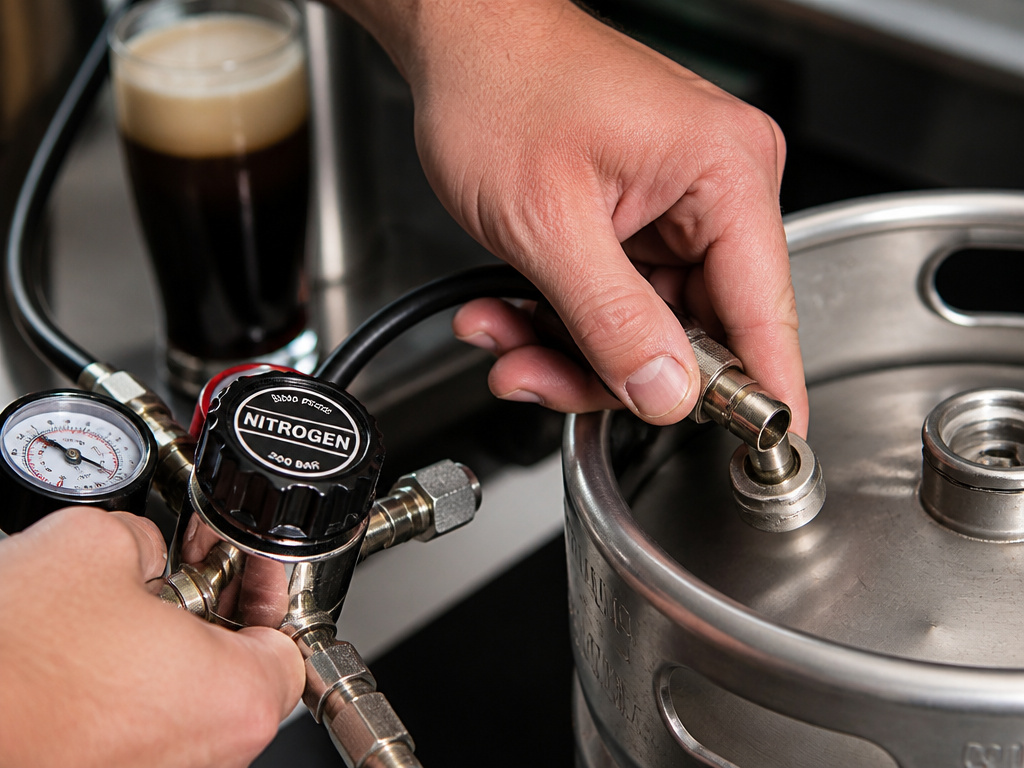
Yes, but your results depend entirely on your gear. The most common home method uses a whipped cream dispenser, often called a “nitro press.” You fill it with cold brew, charge it with a cartridge, shake, and dispense.
Here’s where it usually goes wrong. Most affordable cartridges are nitrous oxide (N2O), not pure nitrogen (N2). N2O creates larger bubbles. Your drink will be foamy and slightly sweet, but it won’t have the velvety micro-foam of a true nitro. It’s a different beverage. The bebup.org nitro cold brew guide confirms this distinction and warns against overfilling the dispenser, which leaves no headspace for the gas to expand.
A more authentic, albeit more involved, home method uses a small keg system with a nitrogen tank and a stout faucet. One YouTube creator documented the process and the classic failure: using only one nitrogen cartridge and serving immediately. The result was hollow and flat. The fix was two cartridges and a full 24-hour rest in the fridge after agitating the charged keg. Patience is non-negotiable.
The 5-Step Home Keg Method That Works
- Brew and chill your concentrate. Use a coarse grind and a 1:8 coffee-to-water ratio. Steep for 18-24 hours, then filter twice. Chill it to at least 4°C (40°F) before kegging. Warm coffee won’t hold the gas.
- Transfer to a sanitized keg. Use a 1-gallon or 5-liter mini keg. Leave at least 20% headspace. This empty volume is critical for the gas to pressurize the liquid.
- Pressurize with pure nitrogen. Hook up a nitrogen tank regulator set to 30-40 PSI. Purge the keg’s headspace of oxygen by blasting gas in and venting it out three times. Then seal it at pressure.
- Force-carbonate (actually, nitrogenate). Lay the keg on its side and roll it back and forth vigorously for 5 minutes. This maximizes gas-to-liquid contact. Then refrigerate the pressurized keg for 24 hours. This rest period is where the magic happens, the nitrogen fully dissolves.
- Serve through a stout faucet. Attach a beer line and a stout faucet with a restrictor plate. The plate is what creates the cascade. Pour into a clean glass at a 45-degree angle. Drink it within ten minutes.
Skipping the 24-hour fridge rest gives you slightly fizzy coffee, not nitro. The gas hasn’t fully integrated.
Why You Should Never Add Ice or Milk

This is a hill I will die on. Adding ice to nitro cold brew is like adding water to whiskey. The cascade and creamy head are fragile structures held in suspension by dissolved nitrogen. Introducing ice cubes causes thermal shock, knocking massive amounts of gas out of solution all at once. The beautiful cascade collapses instantly, and you’re left with diluted, flat coffee. A proper nitro tap system chills the coffee line, so the serve is cold enough without ice.
Adding milk is worse. The entire point of nitro is its silky, self-created texture from nitrogen. Pouring in milk overrides that unique mouthfeel with the fat and protein of dairy. You’ve just made a weak, cold latte and wasted the nitro. If you want a creamy coffee drink with milk, order a different milk-based coffee drinks. Nitro stands alone.
Nitro Cold Brew vs. Other Cold Coffee Drinks

It’s easy to confuse nitro with its cousins. Here’s how to tell them apart at a glance.
| Drink | Base | Gas / Texture | Serving Method | Key Characteristic |
|---|---|---|---|---|
| Nitro Cold Brew | Cold brew concentrate | Infused with nitrogen (N2), creamy | Draft tap, no ice | Cascading serve, dense foam, naturally sweet |
| Regular Cold Brew | Cold brew concentrate | Still, no gas | Over ice | Smooth, low-acidity, strong |
| Iced Coffee | Hot-brewed coffee | Chilled and poured over ice | Over ice | Can be acidic, lighter body, faster to make |
| Iced Americano | Espresso + water | Still, no gas | Over ice | Strong, espresso-forward flavor |
Some cafes offer a cheater version called an “Aico” – an iced Americano aerated with a steam wand. It’s frothy and fun, but it’s hot water forced into a cold drink. It lacks the 18-hour steeped depth of true cold brew and the integrated texture of real nitrogen.
Choosing Beans and Grind for Nitro
Because the process mutes bitterness, it actually highlights other flavor notes. A bland or stale coffee will taste even flatter. You need a coffee with bright, distinct character.
I prefer a single-origin Ethiopian or Kenyan bean for nitro. The nitrogen seems to amplify the fruity, tea-like notes while rounding out any harsh edges. A dark, smoky blend just turns into a murky, intense cup.
A single-origin coffee with citrus or berry notes works brilliantly. A blonde roast can also shine, as its delicate flavors aren’t overpowered. Grind is non-negotiable: use a coarse grind, similar to French press. A fine grind will over-extract and clog your keg or dispenser lines. A consistent coarse grind from a burr grinder is mandatory; a blade grinder creates dust that will muddle the texture and the flavor.
Frequently Asked Questions
Does nitro cold brew have more caffeine?
Not inherently. The caffeine content depends on the cold brew concentrate used. However, because nitro is often served without ice or dilution, you’re drinking a more concentrated volume of coffee compared to an iced drink. Ounce for ounce, a nitro pour and a standard brewed coffee caffeine serving can be similar, but you might drink the nitro faster because it’s so smooth.
Can I make nitro coffee with hot brew?
Technically, you can force nitrogen into any liquid. But the defining characteristic of nitro cold brew is the combination of the smooth, low-acidity cold brew base with the nitrogen texture. Using hot-brewed coffee that’s been chilled (iced coffee) will result in a sharper, more acidic drink with the nitro texture, an interesting experiment, but not the classic.
How long does nitro cold brew last?
In a sealed, pressurized keg, it can last 2-3 weeks refrigerated. Once dispensed into a glass, the cascade and foam last about ten minutes before it settles into still cold brew. In a sealed can, follow the best-by date, but expect the nitro effect to be less pronounced the longer it sits.
Is it bad for you?
It’s coffee. The NCBI analysis of antioxidant properties shows the Hardtank® extraction method actually increases beneficial antioxidants like chlorogenic acid. As with any caffeinated beverage, moderation is key. It has no more inherent health risks than standard drip coffee, though the smoothness might lead you to drink more.
Why is it more expensive?
The equipment is costly, commercial nitrogenation systems, kegs, taps, and gas tanks. The process is also slower (brewing + nitrogenation time) and waste-prone (lines need frequent cleaning). You’re paying for the technology and the experience, not just the coffee.
Before You Go
Nitro cold brew is a texture experience first, a coffee second. The goal is that silky cascade and the sweet, creamy finish. Achieving that at home requires the right gas, pure nitrogen, and serious patience. Skip the N2O cartridges if you want the real deal.
Remember, the window of perfection is short. Pour it, admire the waterfall, and drink it within ten minutes. Don’t add ice. Don’t add milk. Let the nitrogen do its one job. When you get it right, it’s less like drinking coffee and more like drinking a cloud.
{
“@context”: “https://schema.org”,
“@type”: “HowTo”,
“name”: “How to Make Nitro Cold Brew Coffee at Home”,
“totalTime”: “PT24H”,
“supply”: [
{
“@type”: “HowToSupply”,
“name”: “Cold brew concentrate”
},
{
“@type”: “HowToSupply”,
“name”: “Filtered water”
}
],
“tool”: [
{
“@type”: “HowToTool”,
“name”: “Whipped cream dispenser or home nitro keg system”
},
{
“@type”: “HowToTool”,
“name”: “Nitrogen (N2) or nitrous oxide (N2O) cartridges”
},
{
“@type”: “HowToTool”,
“name”: “Refrigerator”
}
],
“step”: [
{
“@type”: “HowToStep”,
“name”: “Brew and chill your concentrate”,
“text”: “Steep your coarse-ground coffee in cold water for 12-24 hours. Filter it thoroughly and chill the concentrate to at least 4°C (40°F).”
},
{
“@type”: “HowToStep”,
“name”: “Load your dispenser”,
“text”: “Pour the chilled cold brew into your whipped cream dispenser or nitro keg. Do not fill past the maximum fill line. The headspace is necessary for the gas to infuse.”
},
{
“@type”: “HowToStep”,
“name”: “Charge with gas”,
“text”: “Screw in a nitrogen (N2) cartridge for authentic micro-foam or a nitrous oxide (N2O) cartridge for a foamy, slightly sweet alternative. Use two cartridges if your system allows for better pressurization.”
},
{
“@type”: “HowToStep”,
“name”: “Agitate and rest”,
“text”: “Shake the charged dispenser vigorously for 30 seconds. Then, place it in the refrigerator for at least 12 hours, ideally 24, to allow the nitrogen to fully dissolve into the coffee.”
},
{
“@type”: “HowToStep”,
“name”: “Dispense and serve immediately”,
“text”: “Hold your glass at an angle and dispense the nitro cold brew from a height. The cascade and creamy head are best enjoyed within ten minutes of pouring.”
}
]
}
{
“@context”: “https://schema.org”,
“@type”: “FAQPage”,
“mainEntity”: [
{
“@type”: “Question”,
“name”: “Does nitro cold brew have more caffeine?”,
“acceptedAnswer”: {
“@type”: “Answer”,
“text”: “Not inherently. The caffeine content depends on the cold brew concentrate used. However, because nitro is often served without ice or dilution, you’re drinking a more concentrated volume of coffee compared to an iced drink. Ounce for ounce, a nitro pour and a standard brewed coffee caffeine serving can be similar, but you might drink the nitro faster because it’s so smooth.”
}
},
{
“@type”: “Question”,
“name”: “Can I make nitro coffee with hot brew?”,
“acceptedAnswer”: {
“@type”: “Answer”,
“text”: “Technically, you can force nitrogen into any liquid. But the defining characteristic of nitro cold brew is the combination of the smooth, low-acidity cold brew base with the nitrogen texture. Using hot-brewed coffee that’s been chilled (iced coffee) will result in a sharper, more acidic drink with the nitro texture, an interesting experiment, but not the classic.”
}
},
{
“@type”: “Question”,
“name”: “How long does nitro cold brew last?”,
“acceptedAnswer”: {
“@type”: “Answer”,
“text”: “In a sealed, pressurized keg, it can last 2-3 weeks refrigerated. Once dispensed into a glass, the cascade and foam last about ten minutes before it settles into still cold brew. In a sealed can, follow the best-by date, but expect the nitro effect to be less pronounced the longer it sits.”
}
},
{
“@type”: “Question”,
“name”: “Is it bad for you?”,
“acceptedAnswer”: {
“@type”: “Answer”,
“text”: “It’s coffee. The NCBI analysis of antioxidant properties shows the Hardtank® extraction method actually increases beneficial antioxidants like chlorogenic acid. As with any caffeinated beverage, moderation is key. It has no more inherent health risks than standard drip coffee, though the smoothness might lead you to drink more.”
}
},
{
“@type”: “Question”,
“name”: “Why is it more expensive?”,
“acceptedAnswer”: {
“@type”: “Answer”,
“text”: “The equipment is costly, commercial nitrogenation systems, kegs, taps, and gas tanks. The process is also slower (brewing + nitrogenation time) and waste-prone (lines need frequent cleaning). You’re paying for the technology and the experience, not just the coffee.”
}
}
]
}
