
What Is Blonde Coffee? A Guide to the Light, Bright Roast
Blonde coffee is a light roast stopped shortly after first crack, roasted at 350–400°F. It retains the bean’s origin characteristics, resulting in a brighter, more acidic, and often fruity or floral cup with less bitterness than darker roasts. It requires a finer grind and hotter water to brew properly.
Most people assume “light roast” means weak coffee. That mistake makes them brew it like a dark roast, which guarantees a sour, underwhelming cup. The flavor isn’t weak, it’s just different, and it demands a different approach.
This guide breaks down what blonde roast actually is, why it tastes the way it does, and the specific steps you need to take to brew it correctly.
Key Takeaways
- Blonde roast is defined by its roast temperature (350–400°F) and timing (stopped just after first crack), not just its color.
- Its flavor profile highlights the bean’s origin with bright acidity and floral or fruity notes, not roasty bitterness.
- You must grind blonde beans finer and use hotter water (93–95°C) than for dark roasts due to their higher density.
- Measuring by volume (a scoop) yields slightly more caffeine with blonde roast; measuring by weight yields roughly the same.
- The 2018 launch of Starbucks blonde espresso mainstreamed the category but also diluted its definition for many consumers.
What Defines a Blonde Coffee Roast?
Roasters stop the blonde roast process around 350 to 400 degrees Fahrenheit, pulling the beans from the roaster just as they finish their first crack. This is a technical endpoint. The beans haven’t had time to develop the oils, caramelized sugars, and carbonized notes that define darker profiles.
Blonde roast coffee beans are roasted at temperatures between 350°F and 400°F (180°C to 205°C). The roasting process is intentionally halted around the “first crack” stage, which preserves the bean’s inherent cellular structure and original flavor compounds from its geographic origin.
The result is a dry, matte bean. It feels denser and harder than a dark roast bean, which will often have a visible oily sheen. That density is the first clue that brewing it will be different.
TL;DR: Blonde roast is a light roast defined by a specific temperature window (350–400°F) and a short roast time that ends around first crack, preserving origin flavors.
Key Characteristics of Blonde Roast Coffee
Forget “weak” or “mild.” The right words are bright, acidic, and complex. Because the roasting process is shorter and cooler, hundreds of volatile aromatic compounds that get burned off in a darker roast remain intact in the blonde bean.
You taste the coffee’s terroir, the soil, climate, and processing method of its origin. Expect notes of citrus, berry, honey, or tea-like florals. The body is typically lighter and more tea-like, and the finish is clean without a lingering bitter aftertaste.
| Characteristic | Blonde Roast | Dark Roast |
|---|---|---|
| Bean Appearance | Dry, matte, light brown | Oily, shiny, dark brown to black |
| Flavor Focus | Origin (fruity, floral, acidic) | Roast (chocolate, smoky, bitter) |
| Acidity | High, bright | Low to none |
| Body | Light, tea-like | Heavy, syrupy |
| Caffeine (by volume) | Slightly more | Slightly less |
This profile is why specialty coffee lovers often prefer light roasts. It’s a purer expression of the bean. However, that purity is fragile.
Common mistake: Brewing blonde roast like a dark roast, using the same grind size and water temperature guarantees under-extraction. You’ll get a sharp, sour cup that masks all the subtle flavors you paid for.
The higher acidity can be jarring if you’re used to dark roast’s rounded bitterness. In one YouTube review, a taster described the experience bluntly: the flavors “sort of smashed up against one another.” That’s what happens when your palate isn’t prepared for that level of brightness.
TL;DR: Blonde roast tastes bright and acidic, highlighting fruity and floral origin notes. Its light body and clean finish are distinct from the heavy, bitter profile of dark roast.
The Starbucks Effect and Market Confusion
Starbucks launched its Blonde Espresso Roast in 2018. This move was a direct play for customers who found their traditional espresso “too strong or bitter,” as their promotional material stated. They succeeded in making blonde roast a household term.
But they also created a muddled benchmark. The Starbucks blonde roast is still a commercial, large-batch product designed for consistency across thousands of stores. It’s milder than their dark roast, but it often lacks the nuanced origin clarity a craft roaster’s single-origin blonde roast will have.
This has led to a split in understanding. For the general public, “blonde” means a smoother, less bitter espresso from Starbucks. For coffee enthusiasts, it means a specific light-roast profile that demands precision brewing. When discussing blended coffees versus single-origin options, this distinction in roast philosophy becomes critical.
Brewing Adjustments: It’s Not Just Another Coffee
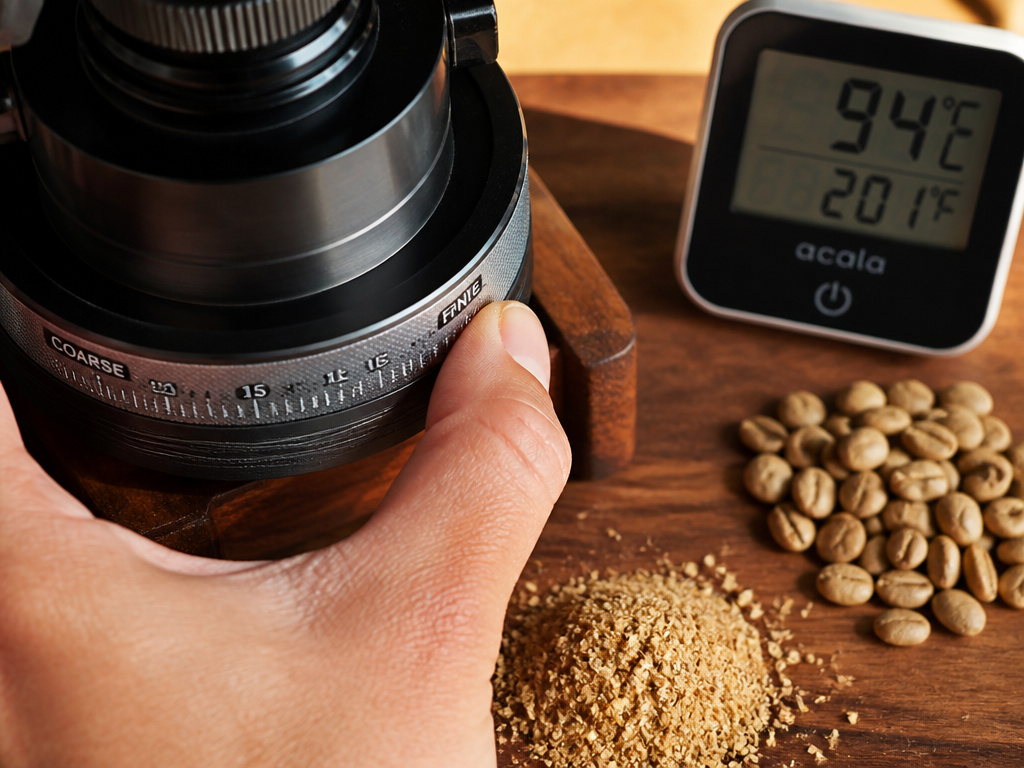
You cannot use your standard dark roast recipe. The bean’s physical hardness and density change the rules. This is the most practical takeaway.
First, grind size. Because the bean is denser, water has a harder time penetrating it. You need a finer grind to increase the surface area for extraction. A blade grinder that produces uneven chunks will fail here, creating a mix of sour under-extracted and bitter over-extracted flavors. A burr coffee grinder is non-negotiable for consistency.
Second, water temperature. The extraction of those delicate acids and sugars requires more energy. Aim for 93 to 95 degrees Celsius (200 to 203°F). If your water is too cool, the extraction stalls, and sourness dominates.
Here’s a quick-reference table for switching from dark to blonde roast:
| Brewing Variable | Dark Roast Setting | Blonde Roast Adjustment | Why It Matters |
|---|---|---|---|
| Grind Size | Medium | Fine | Denser beans resist water; finer grind enables full extraction. |
| Water Temp | 90–93°C (194–199°F) | 93–95°C (200–203°F) | Hotter water provides the energy needed to dissolve hard cellular structures. |
| Brew Time | Standard | Slightly longer (30-60 sec more) | Finer grind and harder beans slow water flow; allow time for full flavor development. |
| Coffee-to-Water Ratio | 1:16 | Start at 1:15 | A slightly stronger ratio can help balance pronounced acidity. |
My own failure was assuming my trusty Baratza Encore grinder setting for a Sumatra dark roast would work for an Ethiopian blonde. The shot gushed through in 18 seconds, tasting like lemon juice and salt. I went two clicks finer, and the world changed. The shot time hit 28 seconds, and the cup revealed jasmine and peach notes I didn’t know were in there.
TL;DR: Grind finer and use hotter water (93–95°C). Blonde beans are denser and harder, so standard dark roast settings will under-extract them every time.
The Caffeine Question: Weight vs. Volume

This causes more arguments than it should. The answer depends entirely on how you measure.
If you measure by weight, using a scale, a gram of blonde roast beans contains roughly the same amount of caffeine as a gram of dark roast beans. The caffeine molecule is stable at roasting temperatures; very little is destroyed.
If you measure by volume, using a scoop, you get more caffeine with blonde roast. Because the beans are denser and haven’t expanded as much from prolonged roasting, more bean mass fits into that scoop. So, one scoop of blonde grounds contains more coffee, and therefore more caffeine, than one scoop of dark grounds.
This nuance is why blanket statements about “espresso caffeine content” can be misleading. Your brewing method and measurement tool dictate the outcome.
Ideal Brewing Methods for Blonde Roast
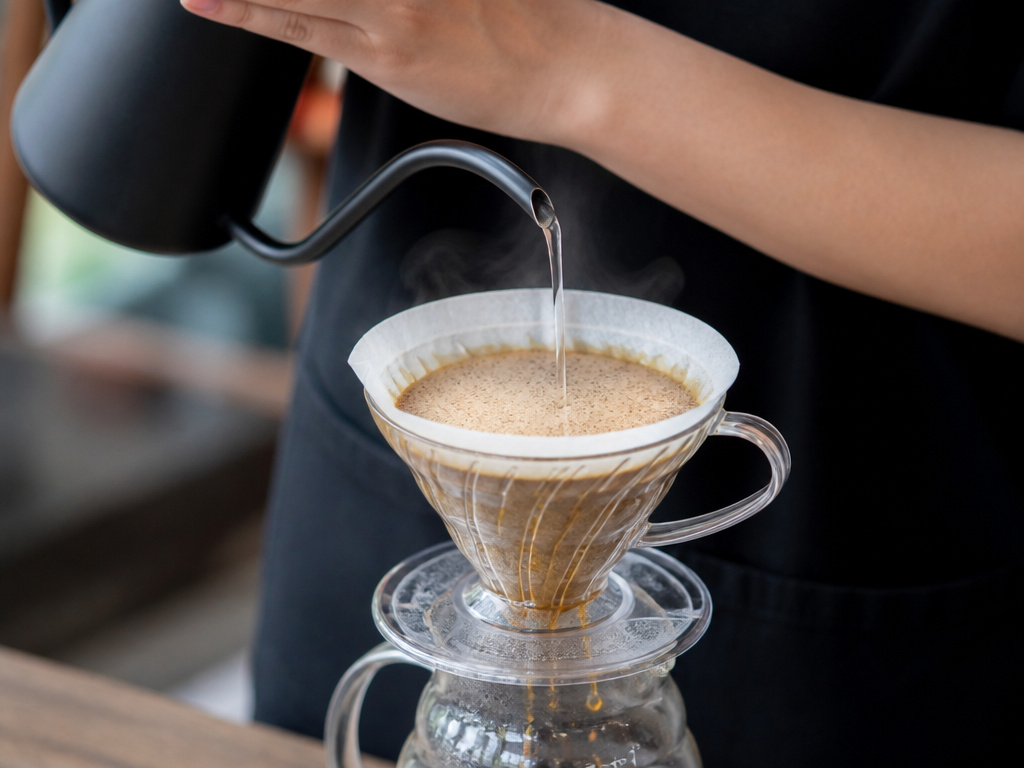
Not all methods are created equal for highlighting blonde roast’s virtues. You want methods that allow control over temperature and time.
Pour-over methods like the Hario V60 or Chemex are excellent. The gooseneck kettle gives you command over water temperature and flow rate, letting you evenly saturate those fine grounds. Use unbleached coffee filters if you want to avoid any potential paper taste interfering with the delicate notes.
Espresso is a high-stakes but high-reward option. It demands the most adjustment, fine grind, high temperature, and a slightly longer extraction time. When you nail it, the clarity of flavor in a blonde espresso shot is breathtaking. It’s also the base for a fantastic cafe americano, where the hot water lengthens the drink without masking its origin character.
Avoid full-immersion methods like a French press as your first attempt. The metal filter allows fine silt through, which can over-extract and add a muddy bitterness that clashes with the coffee’s brightness. If you do use one, grind slightly coarser and cut the steep time by a minute.
Frequently Asked Questions
Is blonde roast coffee stronger than dark roast?
“Stronger” is ambiguous. It has more caffeine per scoop due to bean density, and its flavor profile is more acidic and bright, which can taste “stronger” or more intense to some palates. In terms of body and roasty bitterness, it is lighter.
Why does my blonde roast coffee taste sour?
Sourness means under-extraction. Your water is likely too cool, your grind is too coarse, or your brew time is too short. Grind finer, increase your water temperature to 93-95°C, and ensure your contact time is adequate. This is the most common issue when switching from dark roasts.
Can I use blonde roast for cold brew?
You can, but it may not be ideal. Cold brew naturally mutes acidity and highlights chocolate and nutty notes. Since blonde roast’s best attributes are its bright acidity and fruity notes, you might be subduing what makes it special. A medium roast is often a better candidate for cold brew.
What’s the difference between blonde roast and white coffee?
They are different. Blonde roast is a light roast stopped after first crack. “White coffee” is a very hard, barely roasted bean (often under 325°F) that’s ground for espresso. It’s pale, has a nutty flavor, and is extremely dense, often requiring specialized grinders.
Does blonde roast have more antioxidants?
Likely, yes. The longer and hotter a bean is roasted, the more certain antioxidant compounds, like chlorogenic acids, break down. Because blonde roast undergoes less thermal degradation, it may retain higher levels of these compounds compared to darker roasts.
Before You Go
Blonde roast isn’t a weaker version of dark coffee. It’s a distinct category defined by a shorter, cooler roast that preserves the bean’s origin story. To enjoy it, you have to meet it on its own terms: grind finer, use hotter water, and expect a cup that’s bright and complex rather than heavy and smoky.
Start with a high-quality single-origin coffee from a reputable roaster. Dial in your grind and temperature. When you get it right, the experience is worth the extra step, it’s the difference between hearing a song and understanding the lyrics.
{
“@context”: “https://schema.org”,
“@type”: “HowTo”,
“name”: “How to Brew Blonde Roast Coffee”,
“totalTime”: “PT10M”,
“tool”: [
{
“@type”: “HowToTool”,
“name”: “Burr coffee grinder”
},
{
“@type”: “HowToTool”,
“name”: “Gooseneck kettle for precise pouring”
},
{
“@type”: “HowToTool”,
“name”: “Digital scale”
}
],
“step”: [
{
“@type”: “HowToStep”,
“name”: “Weigh and grind the beans”,
“text”: “Measure 18g of blonde roast beans. Grind them finer than you would for a dark roast—aim for a texture like fine table salt.”
},
{
“@type”: “HowToStep”,
“name”: “Heat your water”,
“text”: “Bring fresh water to 93–95°C (200–203°F). This hotter temperature is critical for extracting the dense blonde beans.”
},
{
“@type”: “HowToStep”,
“name”: “Pre-wet your filter and grounds”,
“text”: “Pour a small amount of hot water over your paper filter and grounds to rinse the paper and bloom the coffee for 30 seconds.”
},
{
“@type”: “HowToStep”,
“name”: “Pour and extract”,
“text”: “Pour the remaining water in a slow, steady spiral, targeting a 1:15 to 1:16 coffee-to-water ratio. Total brew time should be around 3–4 minutes.”
}
]
}
{
“@context”: “https://schema.org”,
“@type”: “FAQPage”,
“mainEntity”: [
{
“@type”: “Question”,
“name”: “Is blonde roast coffee stronger than dark roast?”,
“acceptedAnswer”: {
“@type”: “Answer”,
“text”: “\”Stronger\” is ambiguous. It has more caffeine per scoop due to bean density, and its flavor profile is more acidic and bright, which can taste \”stronger\” or more intense to some palates. In terms of body and roasty bitterness, it is lighter.”
}
},
{
“@type”: “Question”,
“name”: “Why does my blonde roast coffee taste sour?”,
“acceptedAnswer”: {
“@type”: “Answer”,
“text”: “Sourness means under-extraction. Your water is likely too cool, your grind is too coarse, or your brew time is too short. Grind finer, increase your water temperature to 93-95°C, and ensure your contact time is adequate. This is the most common issue when switching from dark roasts.”
}
},
{
“@type”: “Question”,
“name”: “Can I use blonde roast for cold brew?”,
“acceptedAnswer”: {
“@type”: “Answer”,
“text”: “You can, but it may not be ideal. Cold brew naturally mutes acidity and highlights chocolate and nutty notes. Since blonde roast’s best attributes are its bright acidity and fruity notes, you might be subduing what makes it special. A medium roast is often a better candidate for cold brew.”
}
},
{
“@type”: “Question”,
“name”: “What’s the difference between blonde roast and white coffee?”,
“acceptedAnswer”: {
“@type”: “Answer”,
“text”: “They are different. Blonde roast is a light roast stopped after first crack. \”White coffee\” is a very hard, barely roasted bean (often under 325°F) that’s ground for espresso. It’s pale, has a nutty flavor, and is extremely dense, often requiring specialized grinders.”
}
},
{
“@type”: “Question”,
“name”: “Does blonde roast have more antioxidants?”,
“acceptedAnswer”: {
“@type”: “Answer”,
“text”: “Likely, yes. The longer and hotter a bean is roasted, the more certain antioxidant compounds, like chlorogenic acids, break down. Because blonde roast undergoes less thermal degradation, it may retain higher levels of these compounds compared to darker roasts.”
}
}
]
}
