
What Is a Red Eye Coffee? Understanding Its Caffeine Boost
A Red Eye coffee is drip coffee with a shot of espresso added, designed for a significant caffeine boost. The standard build uses 8 oz of drip coffee and a single espresso shot, creating a drink that leverages the volume of brewed coffee and the concentrated intensity of espresso for a powerful effect.
A Red Eye coffee is a cup of standard brewed drip coffee with a shot of espresso added to it. The name refers to the drink’s purpose, combining the caffeine of two brewing methods to combat fatigue, much like a “red-eye” overnight flight. The standard build uses an 8-ounce cup of drip coffee and a single 1-ounce espresso shot, but variations with two or three shots (Black Eye, Dead Eye) exist for higher intensity.
Most guides treat it as a simple sum of two coffees. They miss the practical friction. The espresso’s concentrated oils and fine solids hit the hotter, more diluted drip coffee and can separate or sink if you use the wrong roast or let it sit. The drink isn’t just coffee plus coffee; it’s a specific chemical meeting that changes texture and stability.
This guide covers the drink’s real composition, the exact caffeine math from primary sources, how to build one that stays integrated, and why the dark roast espresso standard exists.
Key Takeaways
- A standard Red Eye combines ~95mg of caffeine from drip coffee with ~75mg from a single espresso shot, totaling roughly 170mg.
- The Starbucks Espresso Roast blend, a dark roast of Latin American and Asia Pacific beans, is the commercial benchmark for the espresso component.
- Sedimentation happens faster in a Red Eye than in either component alone due to protein-polyphenol interactions between the two brews, especially if the drip coffee is extracted at a lower temperature.
- For a balanced homemade version, use a medium roast for the drip base and a dark roast for the espresso shot to avoid a muddy, overly bitter cup.
- The Specialty Coffee Association’s cupping roast standard (L* 26–29 on the CIELAB scale) is a medium roast, darker than the espresso component, which is why cupping and drinking are different processes.
What Defines a Red Eye Coffee?
The definition is procedural, not ingredient-specific. You take a serving of hot, brewed filter coffee, whether from a batch brewer, pour-over, or French press, and pour a freshly extracted shot of espresso directly into it. No milk, no sweetener. The result is a black coffee with a stronger aroma, a thicker body, and a pronounced caffeine kick.
The drip coffee provides the volume and the familiar, rounded flavor profile. The espresso injects intensity, acidity, and crema. The crema typically dissipates within seconds of hitting the hotter drip coffee, but it contributes a fleeting aromatic burst.
A Red Eye is brewed drip coffee, from a pour-over or a batch brew system, topped with a shot of espresso. If you’re drinking a Red Eye, there’s only one reason to do that, and that’s more caffeine.
This combination isn’t about creating a new, subtle flavor. It’s a functional drink. The history points to the 1990s, crafted for travelers on cross-country red-eye flights and shift workers needing an extended alertness window. The simplicity is the point. You can make it with any coffees, but the standard build in cafes uses a dark roast espresso blend and a medium roast drip coffee.
TL;DR: It’s a drip coffee with a shot of espresso poured in. The goal is caffeine and wakefulness, not flavor subtlety.
The Red Eye’s Caffeine Math: Espresso + Drip Coffee
People order this drink for the numbers. Generic articles estimate “about 200mg” of caffeine. The real totals come from standard serving sizes and primary source data.
A standard 8-ounce cup of drip coffee contains approximately 95 milligrams of caffeine. A single 1-ounce shot of espresso contains about 75 milligrams. The math is simple addition.
| Drink Component | Standard Serving Size | Approximate Caffeine Content |
|---|---|---|
| Drip Coffee (base) | 8 fl oz (236 ml) | 95 mg |
| Single Espresso Shot | 1 fl oz (30 ml) | 75 mg |
| Red Eye Total | 9 fl oz | ~170 mg |
The popular variations scale the espresso.
* Black Eye: Drip coffee + 2 shots of espresso. Total: ~245 mg.
* Dead Eye (or Green Eye): Drip coffee + 3 shots of espresso. Total: ~320 mg.
These numbers assume a standard brew strength. Using a light roast for the drip coffee or a robusta blend for the espresso will push the totals higher. The key is that the caffeine is not synergistic, it’s additive. You get the stimulant effect of two distinct brewing methods in one cup.
This additive logic is why people compare it to other high-caffeine drinks. Understanding the espresso caffeine content per volume shows why adding a shot makes a measurable difference compared to just drinking a larger standard cup of coffee. The cappuccino caffeine level, by contrast, is lower per serving because milk dilutes the same single espresso base.
TL;DR: A standard Red Eye has about 170mg of caffeine. Each additional espresso shot adds roughly 75mg.
Why the Espresso Shot Is Usually a Dark Roast
The espresso component in a commercial Red Eye isn’t arbitrary. Cafes use their standard espresso blend, which is almost always a dark roast. Starbucks defines this benchmark with its Starbucks Espresso Roast, a dark roast blend of Latin American and Asia Pacific beans.
There are two mechanical reasons for this preference, beyond tradition.
First, dark roasts are less dense and more brittle. They grind more consistently for espresso, creating fewer fine particles that can over-extract and choke the machine. This reliability matters during a busy service.
Second, and more relevant to the drinker, dark roast espresso provides a strong, bitter-chocolate note that cuts through the milder drip coffee. Using a light roast espresso could make the combined drink taste sour and thin. Using the same medium roast for both components results in a flat, one-dimensional flavor, all mid-tones, no contrast.
The science of coffee stability also plays a role. A ScienceDirect coffee sedimentation study on coffee beverage stability identified that low-temperature extraction favors protein-polyphenol aggregation, a primary sedimentation pathway. Since drip coffee is often brewed slightly cooler than espresso, adding a dark roast espresso (with its different soluble profile) changes the chemical environment. This can accelerate the visible settling of solids at the bottom of your mug if you let the drink sit.
Common mistake: Using light roast beans for both the drip and espresso components, the combined drink tastes weak, sour, and separates into distinct layers within three minutes.
For a balanced homemade Red Eye, mimic the cafe standard. Use a medium or light-medium roast for your drip base for clarity and sweetness. Then pull your shot from a dedicated dark roast espresso blend. This contrast gives the drink its recognizable structure.
How to Make a Red Eye Coffee (The Integrated Version)
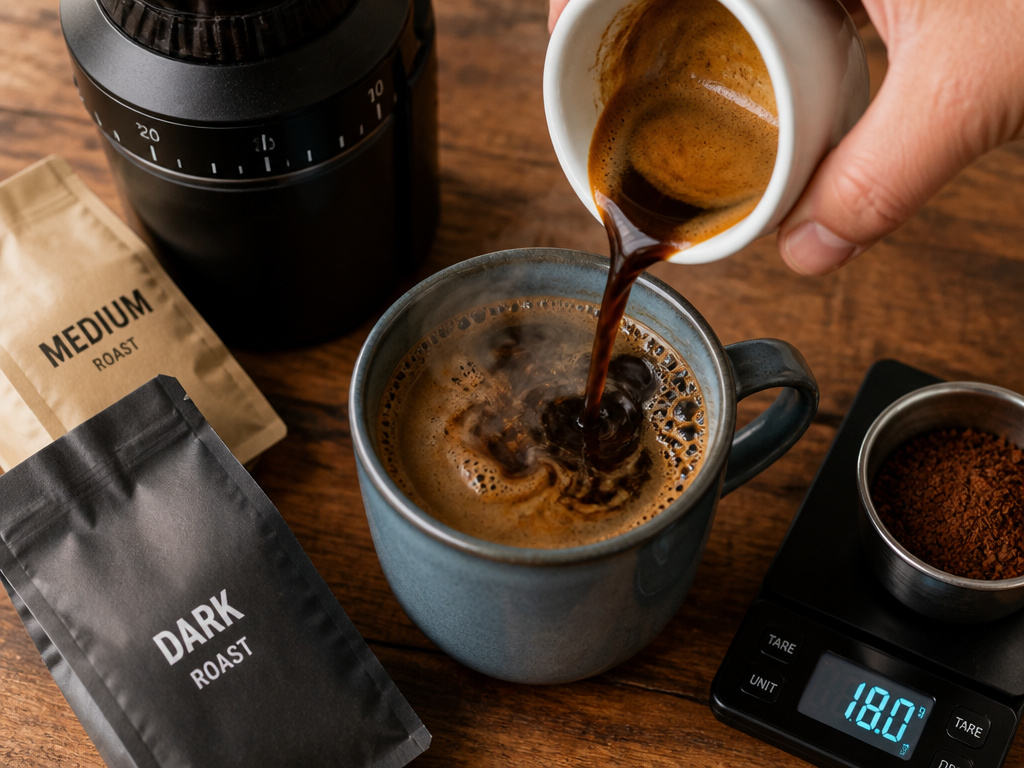
Building one is straightforward. Making one that tastes cohesive requires a few deliberate choices.
You will need:
- A drip coffee maker, pour-over, or AeroPress for the base coffee.
- An espresso machine, Moka pot, or strong AeroPress brew for the shot.
- A burr coffee grinder for consistent particle size.
- A scale to measure coffee grounds (18g for espresso, 15g for drip is a good start).
- Two separate coffee beans: a medium roast for drip, a dark roast for espresso.
The Steps:
- Brew the drip coffee first. Aim for an 8-ounce cup. Use your preferred method, but ensure the coffee is fresh and hot. Starting with a stale or lukewarm base ruins the entire drink.
- Grind and pull the espresso shot immediately. While the drip coffee is fresh, grind your dark roast beans finely. Pull a single shot (about 1 ounce) directly into a pre-warmed shot glass or small cup. Timing matters, the shot should be no more than 30 seconds old when you combine.
- Pour and stir. Pour the espresso shot directly into the center of the drip coffee. Give it one firm stir with a spoon. This integrates the crema and heavier espresso solids throughout the cup, delaying separation.
- Drink promptly. A Red Eye is not a sipping drink you linger over for an hour. The flavors and texture are best in the first five minutes. After that, cooling and sedimentation change the experience.
The goal is a unified drink, not two separate coffees floating in the same mug. Using the two different roasts and stirring once achieves that. Think of it less like mixing paints and more like folding egg whites into a batter, gentle integration, not annihilation.
Red Eye vs. Americano: A Critical Texture Difference
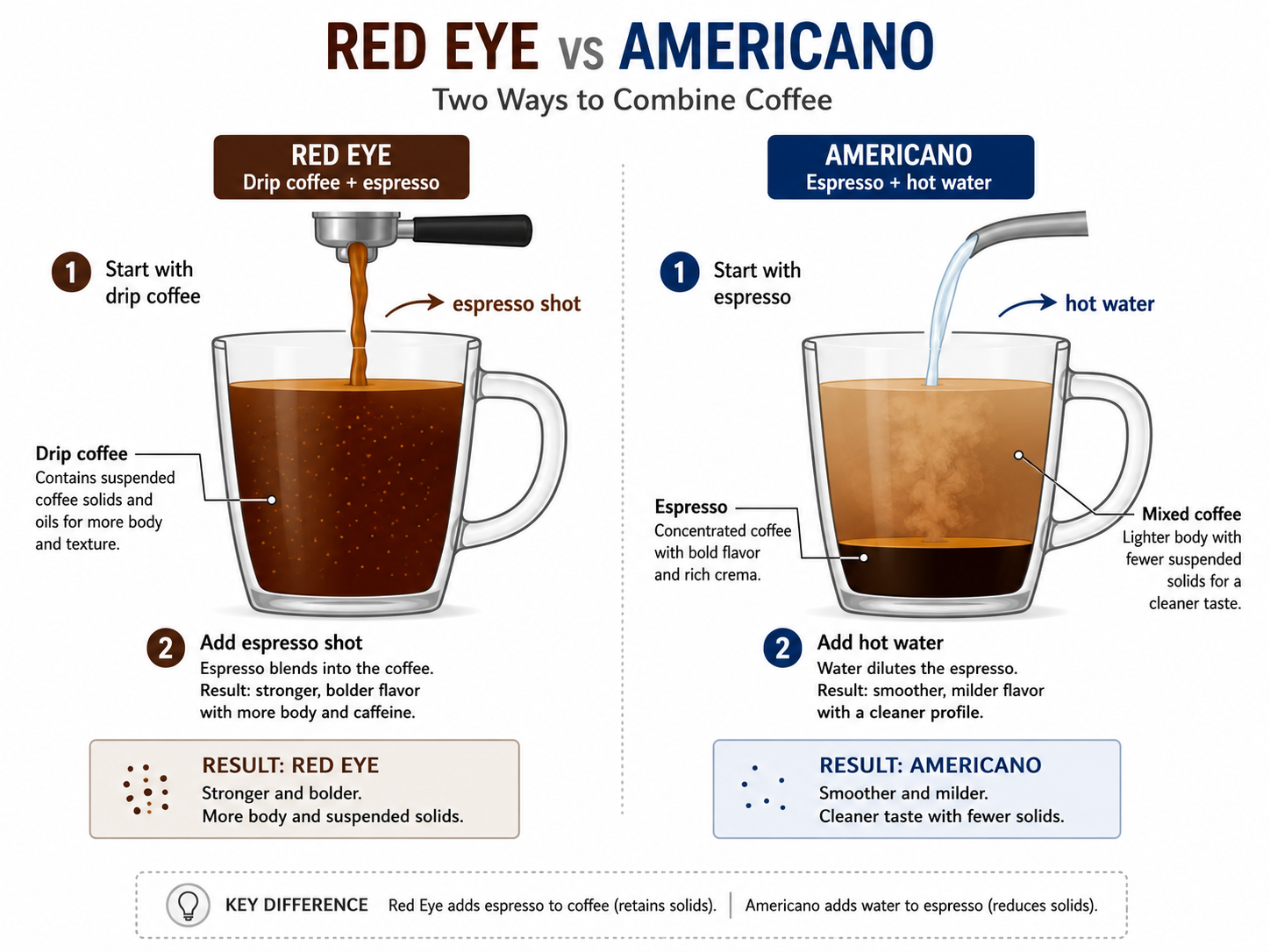
This is a common point of confusion. Both drinks contain espresso and hot water. The difference is order of operations and particle concentration, which changes the mouthfeel entirely.
An Americano is made by pouring hot water over a shot of espresso. This dilutes the espresso’s concentrated solids and preserves much of its crema and layered flavor, creating a cleaner, tea-like body. It’s a diluted espresso drink.
A Red Eye pours espresso into already-brewed coffee. The drip coffee is a complex solution of its own, full of extracted oils and suspended solids. When the espresso hits it, those solids interact. The result is a heavier, murkier, more textured cup. It’s a fortified drip coffee.
| Aspect | Red Eye Coffee | Cafe Americano |
|---|---|---|
| Base Liquid | Pre-brewed drip coffee | Hot water |
| Espresso Addition | Poured into the base coffee | Has hot water poured over it |
| Primary Flavor | Drip coffee profile, intensified | Espresso profile, diluted |
| Body & Texture | Heavier, more opaque, can sediment | Lighter, cleaner, more tea-like |
| Best For | Maximum caffeine, robust flavor | Espresso taste in a larger volume |
The choice isn’t about strength alone, it’s about texture. If you want the distinct taste of espresso in a bigger cup, you make an Americano vs drip coffee. If you want your morning drip coffee to hit harder and faster, you make a Red Eye. Understanding this brewed coffee vs Americano distinction prevents disappointment.
The Science of Stability: Why Your Red Eye Settles
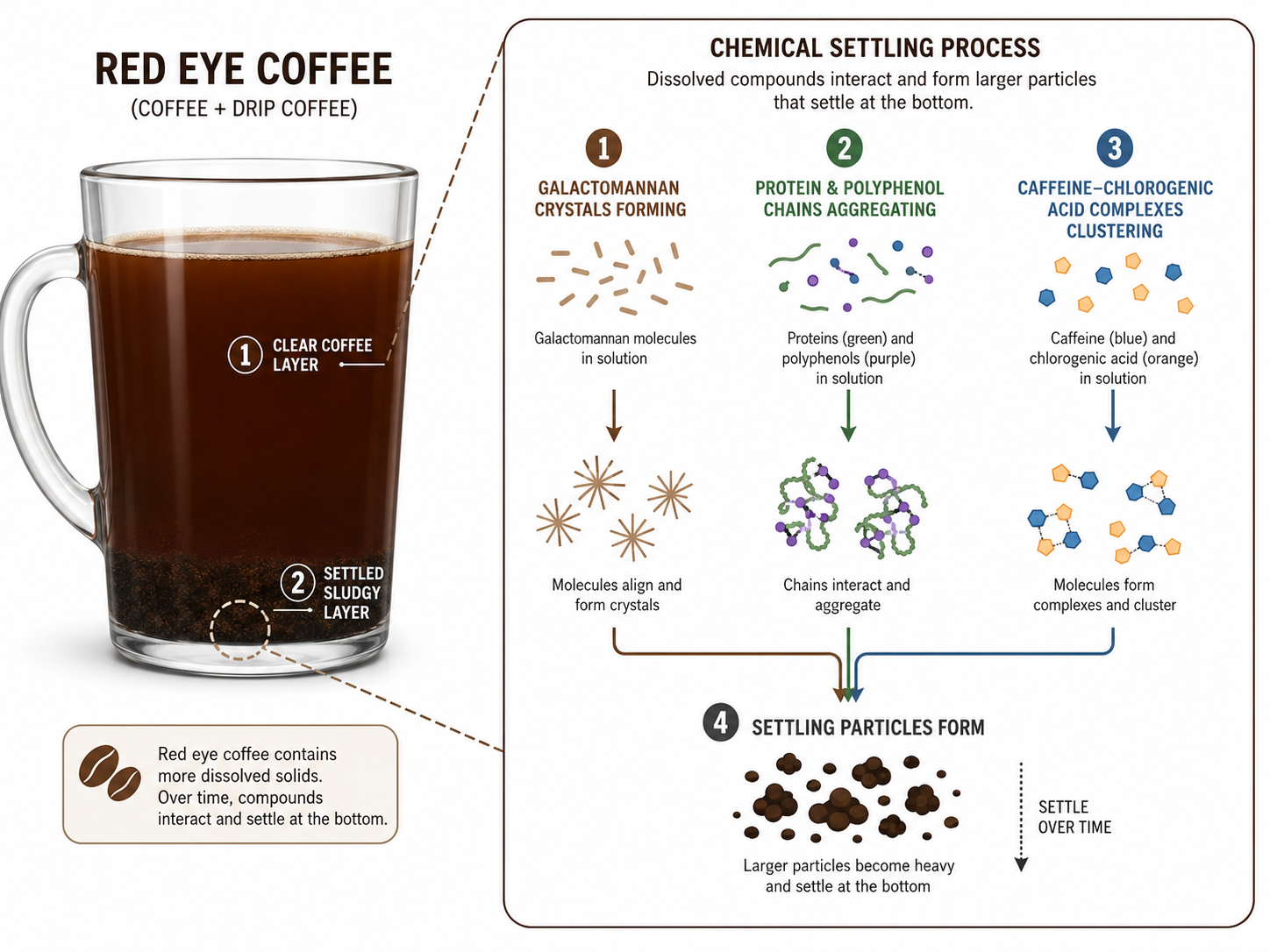
Notice a sludgy layer at the bottom of your mug after ten minutes? That’s not bad coffee. It’s chemistry.
The cited study on coffee beverage sedimentation outlines three primary pathways: galactomannan crystallization, protein-polyphenol interactions, and caffeine-chlorogenic acid complex formation. Which pathway dominates depends on processing conditions.
When you combine drip coffee and espresso, you mix two extracts with different chemical histories. The espresso, extracted under high pressure and temperature, has a specific profile of dissolved solids. The drip coffee, often brewed with water just off the boil, has another.
Low-temperature extraction of the drip coffee favors protein-polyphenol aggregation. Adding the espresso shot introduces a new wave of polyphenols and proteins, accelerating this aggregation pathway. The particles grow large enough to fall out of suspension.
This is why a Red Eye sediments faster than either component alone. It’s also why using filtered water for both brews can slow the process, fewer mineral catalysts are present to speed the reactions.
There’s no way to stop it completely. Stirring well at the start distributes the particles more evenly, so the settling is less dramatic. Drinking it fast is the only surefix. This stability issue is a hidden reason the drink is served for immediate consumption, not leisurely enjoyment.
Choosing Your Beans: Blend vs. Single Origin
You can use any coffee you like. However, the conventional wisdom among baristas leans toward a blended coffee for the espresso component. Blends are crafted for balance and consistency, which helps the shot play well with the drip coffee without overpowering it with wild, fruity notes.
For the drip base, you have more flexibility. A bright, fruity single-origin coffee can work well, as the espresso will temper its acidity. A classic medium Arabica bean blend is always a safe choice.
Avoid using two intensely flavored, light roasts. The combination often clashes, producing a sour and confusing cup. The espresso should be an anchor, not a competing soloist. This is why even a high-quality blonde roast bean is rarely used for the shot in this context, its delicate notes get lost.
Frequently Asked Questions
Why is it called a Red Eye coffee?
The name is a direct reference to overnight “red-eye flights.” The drink was popularized as a high-caffeine option for travelers and shift workers needing to stay alert through long, fatiguing hours, mimicking the purpose of those flights.
Can I make a Red Eye without an espresso machine?
Yes. A strongly brewed Moka pot coffee is the closest substitute for an espresso shot. A very concentrated AeroPress brew (using a fine grind and a 1:5 coffee-to-water ratio) can also work in a pinch, though it will lack the crema and some intensity.
Does a Red Eye have more caffeine than regular coffee?
Yes, by design. A standard 8-ounce drip coffee has about 95mg of caffeine. Adding a single espresso shot brings the total to roughly 170mg. A standard 8-ounce cup of coffee would need to be almost twice as strong to match that, which most batch brewers are not set up to do.
Is a Red Eye the same as a Black Eye?
No. A Red Eye uses one shot of espresso. A Black Eye uses two shots. A “Dead Eye” or “Green Eye” uses three shots. The names signal the escalating caffeine content.
What’s the best roast for a Red Eye?
Use a medium or light-medium roast for the drip coffee base. Use a dark roast for the espresso shot. This contrast provides balance, with the drip offering sweetness and the espresso providing a bitter, anchoring depth.
The Bottom Line
A Red Eye coffee is a functional, no-frills drink for when you need more than a standard cup. It’s 8 ounces of drip coffee with a shot of espresso poured in, totaling around 170mg of caffeine. The commercial standard uses a dark roast espresso blend for reliability and flavor contrast.
The drink’s simplicity is its virtue, but it hides subtle chemistry. The combination of two different extractions accelerates sedimentation, so it’s best consumed quickly. For the best homemade version, split your bean choice, medium roast for the drip, dark roast for the shot, and stir it once after combining.
It won’t win a subtlety award. That’s not the point. It delivers a specific, potent result. When you need your coffee to work double duty, this is the recipe.
{
“@context”: “https://schema.org”,
“@type”: “HowTo”,
“name”: “How to Make a Red Eye Coffee”,
“totalTime”: “PT5M”,
“tool”: [
{
“@type”: “HowToTool”,
“name”: “Drip coffee maker or pour-over setup”
},
{
“@type”: “HowToTool”,
“name”: “Espresso machine or Moka pot”
},
{
“@type”: “HowToTool”,
“name”: “Coffee grinder (burr type preferred)”
},
{
“@type”: “HowToTool”,
“name”: “Digital scale”
}
],
“step”: [
{
“@type”: “HowToStep”,
“name”: “Brew the base coffee”,
“text”: “Prepare a standard 8-ounce cup of drip coffee using your preferred method and beans. A medium roast works well for clarity.”
},
{
“@type”: “HowToStep”,
“name”: “Pull the espresso shot”,
“text”: “Grind 18-20 grams of dark roast coffee finely and pull a single shot (about 1 ounce) of espresso directly into a small cup or shot glass.”
},
{
“@type”: “HowToStep”,
“name”: “Combine the drinks”,
“text”: “Pour the freshly pulled shot of espresso directly into the hot drip coffee. Stir once to integrate the crema.”
},
{
“@type”: “HowToStep”,
“name”: “Serve immediately”,
“text”: “Drink the Red Eye right away. Letting it sit allows the combined coffees to cool and can accelerate sedimentation, changing the mouthfeel.”
}
]
}
{
“@context”: “https://schema.org”,
“@type”: “FAQPage”,
“mainEntity”: [
{
“@type”: “Question”,
“name”: “Why is it called a Red Eye coffee?”,
“acceptedAnswer”: {
“@type”: “Answer”,
“text”: “The name is a direct reference to overnight \”red-eye flights.\” The drink was popularized as a high-caffeine option for travelers and shift workers needing to stay alert through long, fatiguing hours, mimicking the purpose of those flights.”
}
},
{
“@type”: “Question”,
“name”: “Can I make a Red Eye without an espresso machine?”,
“acceptedAnswer”: {
“@type”: “Answer”,
“text”: “Yes. A strongly brewed Moka pot coffee is the closest substitute for an espresso shot. A very concentrated AeroPress brew (using a fine grind and a 1:5 coffee-to-water ratio) can also work in a pinch, though it will lack the crema and some intensity.”
}
},
{
“@type”: “Question”,
“name”: “Does a Red Eye have more caffeine than regular coffee?”,
“acceptedAnswer”: {
“@type”: “Answer”,
“text”: “Yes, by design. A standard 8-ounce drip coffee has about 95mg of caffeine. Adding a single espresso shot brings the total to roughly 170mg. A standard 8-ounce cup of coffee would need to be almost twice as strong to match that, which most batch brewers are not set up to do.”
}
},
{
“@type”: “Question”,
“name”: “Is a Red Eye the same as a Black Eye?”,
“acceptedAnswer”: {
“@type”: “Answer”,
“text”: “No. A Red Eye uses one shot of espresso. A Black Eye uses two shots. A \”Dead Eye\” or \”Green Eye\” uses three shots. The names signal the escalating caffeine content.”
}
},
{
“@type”: “Question”,
“name”: “What’s the best roast for a Red Eye?”,
“acceptedAnswer”: {
“@type”: “Answer”,
“text”: “Use a medium or light-medium roast for the drip coffee base. Use a dark roast for the espresso shot. This contrast provides balance, with the drip offering sweetness and the espresso providing a bitter, anchoring depth.”
}
}
]
}
