
Discover What a Coffee Plant Looks Like: The 8-Foot Shrub
This post contains affiliate links. As an Amazon Associate, we earn from qualifying purchases.
A coffee plant is an 8-foot-tall tropical shrub with glossy leaves, fragrant white flowers, and red berries called cherries. Each cherry holds two seeds, which are the coffee beans we roast. The plant, typically pruned for cultivation, is a woody perennial that thrives in warm, humid climates.
A coffee plant, specifically Coffea arabica, is a woody evergreen shrub or small tree with glossy, dark green leaves, fragrant white flowers, and small red fruit called cherries that each hold two coffee beans. In the wild it can reach 8 meters, but it’s usually pruned to 4-6 feet for cultivation. Its appearance is defined by opposite leaf arrangement, star-shaped blooms, and the iconic two-seeded cherry.
Most people picture a bean in a bag, not the living shrub it came from. That mental gap is why coffee’s origin feels abstract. You brew a drink from a seed, but the plant itself is a full-scale tropical perennial with specific needs and a recognizable look.
Let’s break down exactly what you’re looking at, from leaf shape to cherry color, and what those details tell you about your morning cup.
Key Takeaways
- Coffee is a shrub, not a tree. Commercial Coffea arabica is pruned to a bushy 4-6 feet, though it can grow over 25 feet tall unmanaged.
- Leaves are the first clue. Look for pairs of shiny, dark green, oval leaves 1-3 inches long with prominent veins.
- The “bean” is a seed inside a fruit. The red coffee cherry is a drupe; each holds two flat-sided seeds (beans) wrapped in parchment.
- Climate dictates survival. True coffee plants perish below freezing; leaf drop starts under 55°F. They thrive in USDA Zones 10-12.
- Robusta looks similar but is tougher. Coffea canephora (Robusta) is a hardier, more heat-tolerant plant with a higher caffeine content.
The Coffee Plant’s Physical Profile
Head to a producing region and you won’t see towering trees. You’ll see orderly rows of dense, leafy shrubs about waist- or chest-high. That’s the cultivated form. The plant’s natural architecture is a small understory tree, but for harvest efficiency, it’s kept low and bushy.
A mature Coffea arabica plant in cultivation is typically maintained at 1.2 to 1.8 meters (4 to 6 feet) tall. Unpruned specimens in ideal conditions can reach 8 meters (over 25 feet). The plant has a central trunk with multiple primary branches, creating a rounded, compact canopy that facilitates hand-picking of the fruit.
TL;DR: Look for a bushy, evergreen shrub around 5 feet tall with dense foliage, that’s the cultivated coffee plant.
Leaves: Glossy, Green, and Paired
The leaves are your best initial identifier. They grow in opposite pairs along the stem, a classic botanical trait. Each leaf is simple (not compound), ovate in shape, and measures between 1 and 3 inches in length according to the NC State Extension coffee plant factsheet. The surface is coriaceous, leathery and glossy, with a dark green color that shines in sunlight. Prominent veins run through the blade, and the margins can be slightly wavy.
That glossy surface isn’t just for show. It helps the plant shed water efficiently in its humid native habitat and maximizes light capture in the dappled shade of the forest understory. When you’re comparing coffee bean varieties, the leaf structure is largely consistent across Coffea arabica cultivars.
Flowers: Fragrant and Fleeting
The flowers appear in clusters nestled in the joins between leaves and stems. They’re small, white, and star-shaped, usually with five petals. Their scent is sweet and jasmine-like, and a healthy plant in bloom can fill a greenhouse with fragrance.
Here’s the critical detail: the bloom period is brief. Flowers open and are pollinated within a few days. Coffea arabica is primarily self-pollinating, which is a key reason for its genetic consistency compared to other species. After pollination, the petals fall, and the ovary begins its months-long swell into the fruit. This transition from flower to tiny green fruit is easy to miss if you’re not checking the plant weekly.
From Flower to Bean: The Coffee Cherry
This is where the magic, and the common misunderstanding, happens. What we call a coffee “bean” is not a bean at all. It’s the seed of a stone fruit.
The Cherry’s Journey
The fruit is a drupe, botanically similar to a peach or plum. It’s universally called a coffee cherry. It starts as a tiny green dot after flowering. Over several months, it grows to less than half an inch in length, turning yellow and then a vibrant, glossy crimson when fully ripe. The skin (exocarp) is thin but tough. Underneath is a sweet, mucilaginous pulp (mesocarp) that clings to the seed.
| Cherry Component | Botanical Name | Description | What Happens to It |
|---|---|---|---|
| Outer Skin | Exocarp | Thin, red (when ripe) layer. | Removed during pulping. |
| Sweet Pulp | Mesocarp | Mucilaginous, sugary fruit flesh. | Removed by fermentation or mechanical washing. |
| Parchment | Endocarp | Tough, papery hull surrounding the seed. | Removed during milling (hulling). |
| Silver Skin | Testa | Thin, silvery membrane clinging to the bean. | Mostly removed in milling; some remains on the bean. |
| The Bean | Seed | The two ellipsoidal, flat-sided seeds. | Roasted, ground, and brewed. |
Each cherry typically houses two seeds, facing each other with their flat sides inward. These are the green coffee beans. They’re covered by the parchment and a final, delicate silvery skin. In about 5-10% of cherries, only one seed develops fully, resulting in a rounder, denser peaberry.
The Seed Inside: Your Coffee Bean
Peel away all those layers, and you reach the prize. The raw seed is hard, dense, and greenish. It has that characteristic elliptical shape with one flat side and one rounded side, a result of the two seeds pressing against each other inside the cherry. The UF/IFAS coffee plant publication FP135 notes these seeds are 8.5 to 12.5 mm long. This is the form that gets shipped, roasted, and transformed. The entire process of coffee bean preparation, from grinding coffee beans to choosing paper coffee filters, starts with this seed’s structure and oil content.
Arabica vs. Robusta: A Visual and Practical Divide
Two species dominate global production: Coffea arabica (Arabica) and Coffea canephora (Robusta). To the untrained eye, they look similar. The differences are in the details and, more importantly, in their hardiness.
| Trait | Coffea arabica (Arabica) | Coffea canephora (Robusta) |
|---|---|---|
| Plant Height | 2-8 m unpruned; often kept at 4-6 ft. | Can grow taller, up to 10 m. |
| Leaf Shape | Glossy, oval, 1-3 in. | Larger, broader, and less glossy. |
| Cherry Shape | More oval, matures slower (9-11 months). | More rounded, matures faster (6-8 months). |
| Seed (Bean) Shape | Flatter, more elongated. | Smaller, rounder. |
| Caffeine Content | Lower (~1.2-1.5%). | Higher (~2.2-2.7%). |
| Key Strength | Cup quality, nuanced flavor. | Disease/heat resistance, yield. |
| Pollination | Self-fertile. | Requires cross-pollination. |
Arabica is the quality king but a climate diva. It prefers the cool, stable temperatures of high altitudes, ideally 18-23°C (64-73°F). It’s susceptible to pests like coffee leaf rust and suffers in heat. Robusta is the tough workhorse. It tolerates higher temperatures, resists disease better, and produces more cherries. As the UF Gardening Solutions coffee plant profile notes, Robusta is considered a more sustainable alternative for warmer, lowland areas. Its beans have a stronger, more bitter profile, often used in coffee blends and instant coffee.
Common mistake: Assuming a coffee plant in a nursery is “just a coffee plant.” If you’re buying one for home, confirm it’s Coffea arabica for the classic flavor potential. A Robusta plant will survive neglect better but won’t yield the same cup.
Can You Grow a Coffee Plant at Home?
Absolutely. It’s a popular houseplant in temperate zones. But managing expectations is crucial. You’re growing a beautiful ornamental foliage plant that might, after several years and with perfect care, produce a handful of cherries.
The Indoor Reality
A potted Coffea arabica will happily grow to 6 or 7 feet indoors if you let it. It wants very bright, indirect light, think an east or west-facing window. A south window works if filtered. North light is insufficient. Water it when the top quarter of the soil dries out, then soak it thoroughly. These are acid-loving plants; use a fertilizer for acid-loving plants during the growing season.
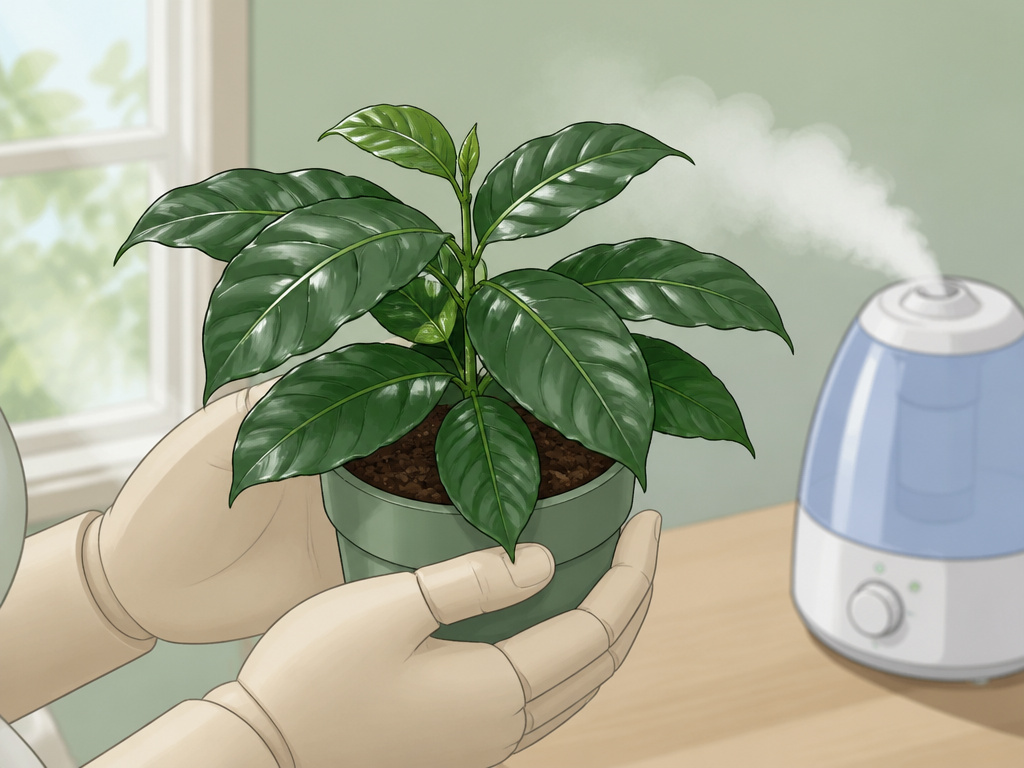
The biggest hurdle is humidity. Average home air is desert-dry to a tropical plant. Leaf tips will brown without extra moisture. A pebble tray or humidifier helps. Repot every two years or when roots circle the pot. Use a well-draining, peat-based potting mix.
I kept a coffee plant in a Denver apartment for three years. It grew lush and dark green but never flowered. The winter indoor humidity hovered around 20%. I learned that without consistent humidity above 50%, you get a lovely shrub, not a fruit-bearing one.
Climate Limits: Where It Can Live Outside
Your geographic location is the ultimate gatekeeper. Coffee is a Zone 10-12 plant. It cannot survive freezing temperatures. Prolonged exposure below 55°F triggers leaf drop. A single frost will kill it.
This confines outdoor cultivation in the US to frost-free parts of Florida, Hawaii, Southern California, and Puerto Rico. Even there, it requires protection from scorching afternoon sun and strong winds. The principles of care are similar to indoors but scaled up: consistent moisture, acidic soil, and partial shade when young. Understanding your local climate is as important as understanding your coffee maker manuals for appliance care.
The Lifecycle and Yield of a Coffee Plant
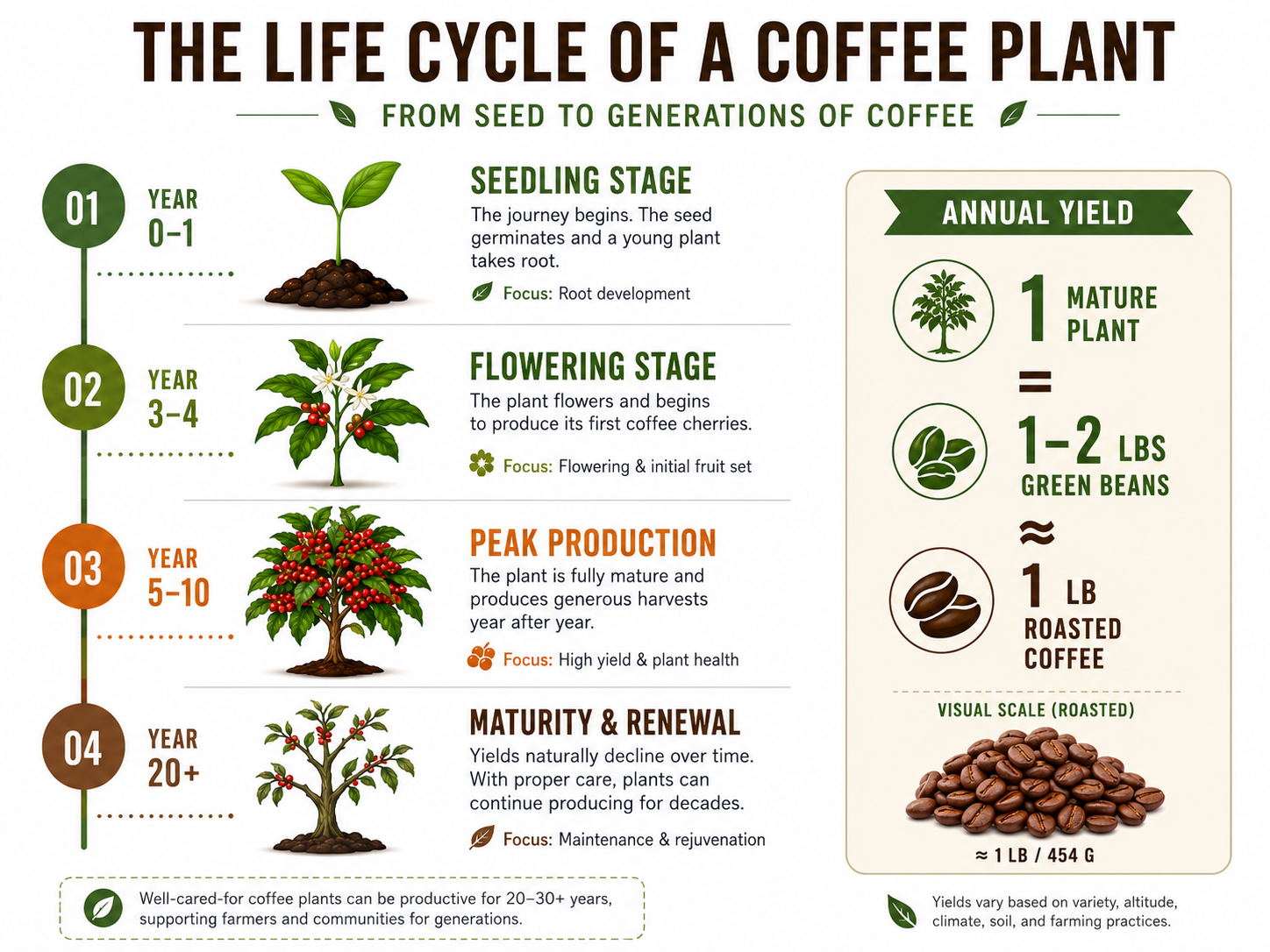
A coffee plant is a long-term investment. It doesn’t produce overnight.
- Year 0-1: Seedling establishment. No fruit.
- Year 3-4: First meaningful flowering and a small harvest.
- Year 5-10: Prime production years.
- Year 20+: Yield gradually declines, though plants can live 50+ years.
A single mature Coffea arabica plant in ideal conditions might produce only 1-2 pounds of green coffee beans per year. That’s roughly enough for one pound of roasted coffee. This minuscule yield per plant is why coffee farming requires vast numbers of shrubs and so much manual labor. It puts the value of specialty single-origin coffee into stark perspective. Each bean represents months of growth on a specific shrub in a specific patch of land.
Frequently Asked Questions
Do coffee plants smell like coffee?
No. The leaves have a faint, green, vegetal scent when crushed. The flowers smell sweet, like jasmine. The classic coffee aroma only develops when the seeds are roasted.
How long does it take for a home coffee plant to produce beans?
From a seedling, expect a 3-5 year wait for the first flowers and cherries. Even then, indoor yields are tiny, maybe a dozen cherries, more a novelty than a crop.
Can you eat a coffee cherry?
Yes, the ripe pulp is sweet and edible, with a flavor reminiscent of watermelon, rose, or hibiscus. The skin and parchment are not eaten. The seed inside (the bean) is far too hard to eat raw.
What’s the difference between a coffee plant and a coffee tree?
It’s the same plant. “Coffee tree” often refers to its unpruned, wild form that can reach tree-like heights. “Coffee plant” or “coffee shrub” typically describes its cultivated, pruned form. Most commercial references use “coffee plant.”
Why are my coffee plant’s leaves turning brown?
Brown leaf tips or edges are almost always a sign of low humidity. Dry air causes leaf scorch. Whole leaves turning yellow and dropping can indicate overwatering, poor drainage, or a nutrient deficiency. Check your soil moisture and humidity first.
Before You Go
A coffee plant is a living link between your morning ritual and a tropical hillside. It’s not a mysterious entity. It’s a tangible shrub with glossy leaves, fragrant flowers, and bright red fruit. Recognizing it demystifies the journey from farm to cup. Whether you’re admiring one in a botanical garden, struggling to keep a potted version alive, or simply choosing your next bag of blonde roast beans, you’re now seeing the whole picture. That knowledge makes every sip a little richer.
