
Pour Through Coffee Filter Specs: Mastering Clarity and Body
This post contains affiliate links. As an Amazon Associate, we earn from qualifying purchases.
A pour through coffee filter is a permeable barrier that holds ground coffee while hot water passes through, extracting flavor and oils. Your choice of filter material, paper, metal, or ceramic, directly controls which oils and microscopic particles end up in your cup, deciding its clarity, body, and sediment level.
Most people pick a filter based on convenience or environmental feel. They miss the mechanical fact that the filter’s pore size is the final editor of your coffee. It overrules your grind setting, your water temperature, even your fancy scale. Get the filter wrong, and you’re fixing a problem you can’t see.
This guide breaks down the three main filter types by the numbers, shows you how to match grind size to each material, and lays out the model-specific rules that prevent clogging and weak brews.
Key Takeaways
- Paper filters trap oils and fine particles, producing a clean, bright cup. Unbleached paper filters can impart a subtle papery taste if not pre-rinsed thoroughly.
- Metal and ceramic filters allow oils and micro-fines through, creating a heavier body and richer mouthfeel. They demand a coarser grind to avoid sediment and clogging.
- The SCA Standard 102-2024 specifies a cupping grind where 70–75% of grounds pass through a 20 US mesh sieve (850 µm). That’s your baseline for paper filters.
- Your brewer’s manual has non-negotiable rules. The Cuisinart CPO-800 clogs if you double up paper filters. The Chemex requires three filter leaves on the spout side for proper airflow.
- The ECBC sediment limit for certified brewers is 75 milligrams per 100 milliliters. A metal filter with too fine a grind will blow past that limit quickly.
Paper vs. Metal vs. Ceramic: The Taste Trade-Off
The filter material is your first and most important brewing variable. It’s not an accessory. It’s a valve.
Paper filters are the strictest editors. Their dense cellulose fiber network traps nearly all coffee oils and fine particles. The result is a cup with high clarity, pronounced acidity, and a light body. It’s the choice for highlighting delicate floral or fruity notes in a light roast coffee. The trade-off is a lack of the viscous, syrupy mouthfeel that oils provide.
According to the SCA Standard 102-2024 for descriptive assessment, a batch brew using paper filters should use a ratio of 55–60 grams of coffee per liter of water, roughly a 17:1 to 18:1 water-to-coffee ratio. This standardizes the strength for professional evaluation.
Metal filters, usually stainless steel mesh, are the opposite. Their pores are larger and more uniform. They let oils and very fine coffee particles pass into the carafe. This gives the coffee a fuller body, a richer mouthfeel, and often a perceptible sediment at the bottom of the cup. Some brewers, like certain Zwilling models, integrate a permanent metal filter to eliminate the need for paper filter types.
Ceramic filters are a porous middle ground. They are literally the filter, as seen in brewers like the Sarapata. The material itself is engineered to trap some fines while allowing oils through. The goal is a clean cup with more body than paper. The reality, per user testing, is that many ceramic filters clog over time. One YouTube reviewer noted that most clog and leave grit, but a well-designed flat-bottom ceramic dripper can work with just a rinse.
| Filter Type | What It Removes | Resulting Cup Profile | Best For |
|---|---|---|---|
| Paper | Oils, nearly all fine particles | Clean, bright, acidic, light body | Highlighting nuanced light roast coffee flavors; SCA-standard cupping |
| Metal (Stainless) | Only the largest grounds | Full body, rich mouthfeel, visible sediment | Drinkers who prefer French-press-like body; avoiding waste from biodegradable coffee filters |
| Ceramic | Some fines, allows oils | Aim: clean with medium body. Risk: clogging, grit | Experimental brewing; seeking a middle path between paper and metal |
TL;DR: Paper for clarity, metal for body, ceramic for a compromise that requires careful maintenance.
The Grind Size That Actually Matters
Grind size is your dial for extraction speed. The filter is the gatekeeper that grind size must negotiate with. Send the wrong grind to the wrong gate, and everything jams.
For paper filters, you need a consistent medium-fine grind. The SCA Standard 102-2024 gives us the exact spec for the coffee grind consistency used in professional cupping: 70–75% of the grounds must pass through a 20 US standard mesh sieve. That sieve has 850 micron openings. Visually, think granulated table salt. This size allows for a total brew time, including a 4-minute steep, that extracts fully without over-extracting bitter compounds.
If your grind is too fine for a paper filter, water pools on top, the brew stalls, and you get over-extracted, bitter coffee. If it’s too coarse, the water runs straight through, leaving sour, under-extracted coffee. This is the core challenge of the drip coffee method.
Common mistake: Using a blade grinder for paper filter coffee, the inconsistent powder and boulders create simultaneous over- and under-extraction, making the cup taste both bitter and weak.
Metal filters require a coarser grind. Because the mesh lets fines through, a fine grind will flood your cup with silt and can clog the pores. Go one click coarser on your grinder than you would for paper. The goal is a grind like coarse sand. This slows the flow enough for proper extraction while keeping most sediment manageable. The ECBC sediment limit of 75mg per 100ml is a useful benchmark. A metal filter with a fine grind can exceed that in a single cup.
Ceramic filters are the trickiest. Their non-uniform pore size means you must experiment. Start with a true medium grind, finer than for metal, coarser than for paper. Watch the flow. If the water drains painfully slowly, the pores are clogging. Go coarser immediately.
TL;DR: Paper: medium-fine (SCA spec). Metal: coarse. Ceramic: start medium and adjust based on flow rate.
Model-Specific Rules You Can’t Ignore
Your brewer’s manual isn’t a suggestion pamphlet. It’s a list of failure modes that the engineers already documented. Ignoring it guarantees a problem.
The Cuisinart PurePrecision Pour-Over Brewer CPO-800 manual is brutally specific. It states that clogging will occur if: coffee is too finely ground, two or more paper filters are used, or the stainless steel filter is used with a paper filter. The machine’s Brew Pause feature also stops flow for a maximum of 20 seconds. Exceed that by fiddling, and the coffee stalls.
The Breville BDC465 manual has a different warning. It explicitly says never to use both a mesh basket filter and a paper filter at the same time. It also directly links grind size to mechanical failure: a grind that’s too fine will cause the basket to overflow or allow sediment through the mesh. This is critical for anyone using a Breville coffee filter.
Chemex has its own dogma. The official FAQ states that three leaves of the filter paper must be placed on the spout side. This isn’t for aesthetics. It prevents the filter from collapsing into the spout and sealing off the air channel, which would cause brewing to halt. They also sell a filter vent clip to solve this sealing issue.
I used a generic #4 cone filter in a Bonavita brewer for months. The coffee was fine, but never great. Switching to the Bonavita-branded filters recommended in the manual cut my brew time by 30 seconds and eliminated a faint papery aftertaste. The shape was subtly different. It mattered.
These aren’t quirks. They are physical constraints written down after the first thousand units jammed.
| Brewer Model | Critical Filter Rule | Consequence of Breaking It |
|---|---|---|
| Cuisinart CPO-800 | Do not use steel + paper filters together; do not stack paper filters. | Immediate clogging; water backs up into the heating chamber. |
| Breville BDC465/415 | Never use mesh basket and paper filter simultaneously. | Poor extraction, potential overflow, and sediment in the carafe. |
| Chemex | Place three filter leaves on the spout side. | Filter seals against glass, blocks airflow, brewing stalls. |
| Generic Drip Machines (Black & Decker, Braun) | Use correct basket shape (cone or flat). | Poor water distribution, grounds overflow, weak coffee. |
TL;DR: Your brewer’s manual contains the exact mistakes you are about to make. Read it first.
The Step-by-Step Filter Prep That Changes Everything
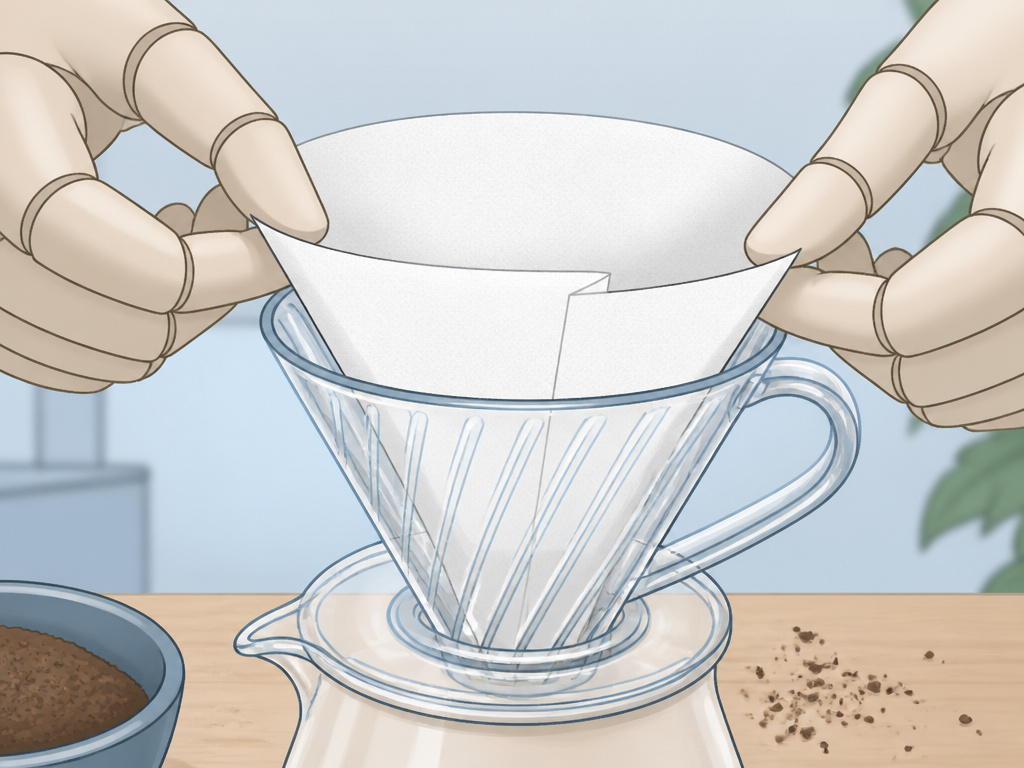
Filter preparation is a three-step ritual. Skip a step, and you taste the skip.
Step 1: Choose and seat the filter.
If using paper, select the correct size and shape for your brewer. A #2 cone for a small pour-over, a #4 for a larger one like the Cuisinart CPO-800, or the proprietary square filters for a Chemex. Seat it properly, ensuring it’s centered and the three-leaves-on-spout rule is followed for Chemex. For metal or ceramic, ensure it’s clean and fully seated in the brewer. A misaligned metal filter leaks grounds.
Step 2: Pre-wet (paper only).
Rinse the paper filter with hot water from your kettle. This accomplishes three things: it washes away any paper taste (especially from unbleached coffee filters), it preheats the brewer and carafe, and it seals the filter against the brewer’s walls. Discard the rinse water from the carafe. Do not pre-rinse metal or ceramic filters, it serves no purpose and cools the brewer.
Step 3: Add coffee and assess the bed.
Add your ground coffee to the damp filter. Give the brewer a gentle shake to level the bed. A level bed ensures water passes through all grounds evenly. An uneven bed creates channels where water flows fast, leading to under-extraction. This is the last visual check before water hits grounds. Get it right.
The moment hot water touches the grounds, the filter’s job begins. A paper filter will show a slow, steady drip. A metal filter will have a faster, fuller stream. Ceramic should be somewhere in between. If the flow doesn’t match the expected pattern for your filter type, your grind size is wrong. Adjust on the next brew.
Frequently Asked Questions
What is the difference between bleached and unbleached paper filters?
Bleached coffee filters are whitened using oxygen or hydrogen peroxide, processes that leave minimal residue. Unbleached coffee filters are brown, retaining their natural paper color. Unbleached filters can impart a subtle papery or cardboard-like taste to the first few brews unless they are pre-rinsed very thoroughly. Bleached filters generally have a more neutral taste from the start.
Can you reuse a pour through coffee filter?
Paper filters are designed for single use. Reusing them leads to clogging, trapped old oils that turn rancid, and terrible-tasting coffee. Permanent metal filters and ceramic filters are designed to be reused. Clean them immediately after use with hot water and a soft brush. For metal filters, a monthly soak in a cafiza-style cleaner prevents oil buildup.
Why does my coffee taste bitter with a paper filter?
Bitterness with a paper filter almost always means over-extraction. The most common cause is a grind that is too fine. The fine particles slow the water flow drastically, over-extracting the grounds. Check your grind size and ensure it matches the SCA’s medium-fine spec. The second cause is water that is too hot, though this is less common.
How do I prevent sediment with a metal filter?
Sediment is a feature, not a bug, with metal filters. You can minimize it by using a coarser grind setting. This reduces the number of fine particles small enough to pass through the mesh. Also, allow the coffee to sit in the carafe for 30 seconds after brewing; much of the sediment will settle to the bottom. Pour gently to avoid stirring it up.
Are ceramic filters better than metal?
They are different, not universally better. A well-made ceramic filter aims to provide a cleaner cup than metal while retaining more body than paper. However, many ceramic filters on the market are prone to clogging and are difficult to keep perfectly clean. A high-quality stainless steel mesh filter is often more consistent and durable for daily use.
The Bottom Line
Your pour through coffee filter is the final decision point in your brew. Paper filters give you clarity and precision, cutting through the noise to highlight a bean’s origin notes. Metal filters deliver body and richness, embracing the oils that paper removes. Ceramic tries to bridge the gap, but demands more attention to avoid clogging.
Start with the filter your brewer’s manual dictates. Match your grind size for filters to that material’s reality, not an online recipe. Remember the SCA’s 20-mesh sieve spec for paper, and respect the ECBC’s sediment limit as a guide for metal. This turns a simple piece of paper or metal from a passive strainer into an active tool you control. The choice isn’t just about taste. It’s about which conversation you want to have with your coffee.
