
How To Make New Orleans Style Coffee With A Smooth Cold Brew
New Orleans style coffee combines a dark roast, often blended with roasted chicory root, brewed strong and served sweetened with milk over ice. The authentic method uses a cold brew steep for 12-24 hours, producing a smooth, low-acidity concentrate that balances the chicory’s earthy bitterness with creamy sweetness.
Most guides tell you to just add chicory to hot coffee. That works, but it highlights the chicory’s astringent edge. The real balance comes from cold extraction, which mutes bitterness and lets the sweet, woody notes of the blend shine through. It’s the difference between a historical footnote and the creamy, refreshing drink that defines modern cafes.
This guide walks through the beans, the blend, and the two brewing paths. You will get the classic hot method for authenticity and the cold brew method for the drink you actually want to sip on a porch.
Key Takeaways
- Use a 4:1 ratio of dark roast coffee to roasted chicory root. A pure chicory brew is too medicinal.
- Cold brewing for 12-24 hours is non-negotiable for the modern, smooth profile. Hot brewing amplifies chicory’s bitter tannins.
- The serving ratio is 1 part coffee concentrate to 3 parts water or milk. Under-diluting makes it syrupy and overwhelming.
- Chicory was a historical coffee stretcher, but today it’s a flavor component. Its earthy, slightly sweet bitterness needs the dark roast’s cocoa notes to balance.
- Store green coffee beans in a cool, dark place. A PubMed Central coffee extraction study on lipid oxidation shows that improper storage leads to papery off-flavors in the cup.
What Defines New Orleans Style Coffee?
The signature is the blend, not a single origin. You start with a dark roast coffee, often a blend itself for consistent body. Then you add roasted, ground chicory root. The coffee provides the caffeine and the deep cocoa or nutty base. The chicory contributes a woody, earthy bitterness with a hint of natural sweetness. Served, it is always sweetened, usually with simple syrup, and cut with milk or cream. It is a drink of contrasts that resolves into something smooth.
The history is practical. During the Civil War and earlier coffee shortages, New Orleans residents stretched their precious coffee beans with locally abundant chicory root. The habit stuck because the combination worked. The chicory’s flavor stood up to the long, strong brewing methods common at the time. Today, brands like French Market Coffee and Cafe du Monde sell the pre-blended grounds, but the best versions start from separate components.
New Orleans style coffee is a beverage defined by its use of roasted chicory root blended with dark roast coffee, characterized by a low-acidity, full-bodied profile with earthy, sweet-bitter notes, traditionally served iced with milk and sugar.
TL;DR: It’s a dark roast and chicory blend, brewed strong and served sweet and creamy, with roots in scarcity and a modern life in cold brew.
The Core Ingredients: Beans, Chicory, and Water
You cannot fake the components. The choices here set the ceiling for your final cup.
The Coffee: Dark Roast is Mandatory
A light or medium roast will taste sour and thin against the chicory. The dark roast brings the necessary bitter-chocolate, caramelized sugar, and roasted nut flavors that partner with chicory instead of fighting it. A single-origin coffee can be wonderful, but a coffee blend designed for balance is often more reliable. Think of the coffee as the bass line, it needs to be deep and supportive.
The Chicory: Roasted Root, Not Extract
Buy whole or pre-ground roasted chicory root. Avoid chicory extract or instant versions; they taste chemical. The root should look like dark, woody pellets. Its flavor is earthy, like burnt caramel or dark malt, with a lingering sweetness that cuts its own bitterness. The blending ratio is critical.
| Ingredient | Role in the Blend | Risk If Misused |
|---|---|---|
| Dark Roast Coffee | Provides caffeine, body, and foundational cocoa/roasted notes. | A light roast turns acidic and weak, overpowered by chicory. |
| Roasted Chicory Root | Adds earthy bitterness, natural sweetness, and historical authenticity. | Exceeding a 1:4 ratio (chicory to coffee) makes the brew unpalatably medicinal. |
| Filtered Water | The solvent; its quality dictates extraction clarity. | Hard water or strong chlorine notes will muddy the delicate sweet-bitter balance. |
The Water: Filtered and Cold
For cold brew, always use filtered water. Chlorine or mineral hardness will lock into the concentrate over the long steep. The Specialty Coffee Association (SCA) has water standards for brewing, but the simple rule is: if your tap water tastes good, it’s fine. If it tastes like a pool, filter it.
The Grind: Coarse for Cold, Medium for Hot
Grind size determines extraction speed. For the 12-24 hour cold steep, you need a coarse grind, similar to breadcrumbs. A fine grind will over-extract and turn bitter, even with cold water. For a hot method like a French press, use a medium-coarse grind. This is where a burr coffee grinder is non-negotiable. A blade grinder creates powder and boulders that extract unevenly.
The Two Brew Paths: Hot Tradition vs. Cold Innovation
You have two authentic methods. One is the historical hot brew, best for a morning cafe au lait. The other is the modern cold brew, designed for the iced, sweet drink that sparked its revival.
The Hot Method (Cafe au Lait)
This is the classic. Use a French press or a drip pot. Brew the coffee-chicory blend strong with water just off the boil (195-205°F). The result is bold, hot, and sharp. It is traditionally mixed with an equal part of hot milk for a cafe au lait. This method highlights the chicory’s bite. It is authentic, but it is not the smooth iced coffee most people seek today.
Common mistake: Brewing hot New Orleans coffee at a standard 1:17 ratio, the chicory dominates and the cup tastes astringent. Brew it at a stronger 1:13 ratio to give the coffee enough presence to balance.
The Cold Brew Method (The Modern Standard)
This is the game-changer. Steeping coarse grounds in cold water for 12-24 hours produces a concentrate with low acidity and minimal bitter tannins. The chicory’s harsh edges soften, leaving the sweet, woody core. This concentrate, diluted with milk and sugar over ice, is what cafes like Blue Bottle bottle and sell. It is the reason New Orleans coffee found a new audience.
The science backs it up. Research on specialty coffee brew aroma profile found cold brew methods often yield higher levels of pleasant volatile compounds and are preferred in sensory tests over hot methods like French press for certain coffees. The absence of heat avoids extracting the undesirable compounds that clash with chicory.
TL;DR: Hot brew for a historic, sharp cafe au lait. Cold brew for the smooth, sweet iced drink that defines the modern style.
How to Make New Orleans Cold Brew: A Step-by-Step Guide
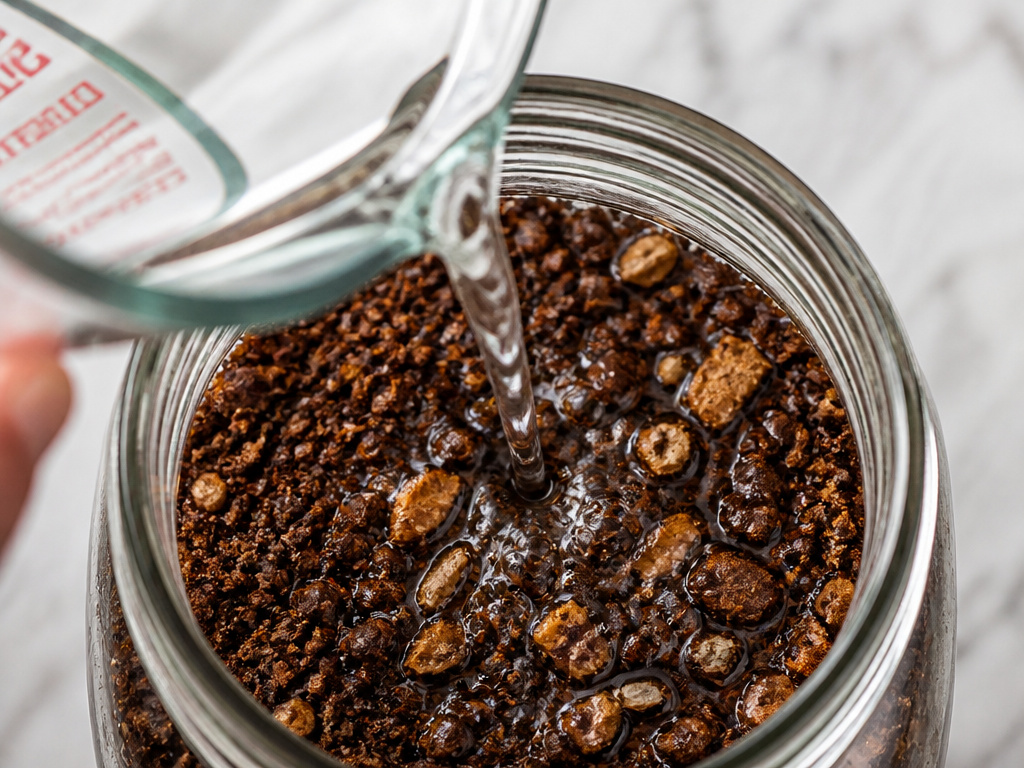
This process takes minutes of active work and hours of patience. The payoff is a concentrate that lasts a week in the fridge.
What You’ll Need
- Coarsely ground dark roast coffee (100g)
- Roasted chicory root (25g)
- Filtered water (1 Liter)
- Large jar or pitcher (1.5 L capacity)
- Fine mesh strainer
- Cheesecloth or a nut milk bag
- A second container for the finished concentrate
The Process
- Combine the coffee and chicory. In your large jar, mix 100g of coarsely ground coffee with 25g of chicory root. This 4:1 ratio is the sweet spot. Stir them together so the chicory is evenly distributed.
- Add the water. Pour 1 liter of filtered cold water over the grounds. Stir gently for about 30 seconds to ensure all the grounds are fully saturated. A dry clump is wasted flavor.
- Steep. Cover the jar and let it sit at room temperature for 12-24 hours. I find 18 hours in a cool pantry is perfect. Steeping in the fridge is safer but takes closer to 24 hours for full extraction. The longer it steeps, the more pronounced the chicory flavor becomes.
- Strain. Place your strainer over the second container and line it with 2-3 layers of cheesecloth. Slowly pour the steeped mixture through. Let it drain completely. Do not squeeze the cheesecloth, that forces bitter silt into your concentrate.
- Store and serve. The resulting liquid is your concentrate. Seal it in a clean bottle or jar and refrigerate. It will keep for 7-10 days. To serve, mix one part concentrate with three parts cold water, milk, or almond milk. Add simple syrup to taste.
I once tried to shortcut the steep by using warm water for 4 hours. The concentrate was cloudy and harsh, with a tannic bite that even milk couldn’t soften. The long, cold wait is part of the recipe.
Serving and Customizing Your Brew
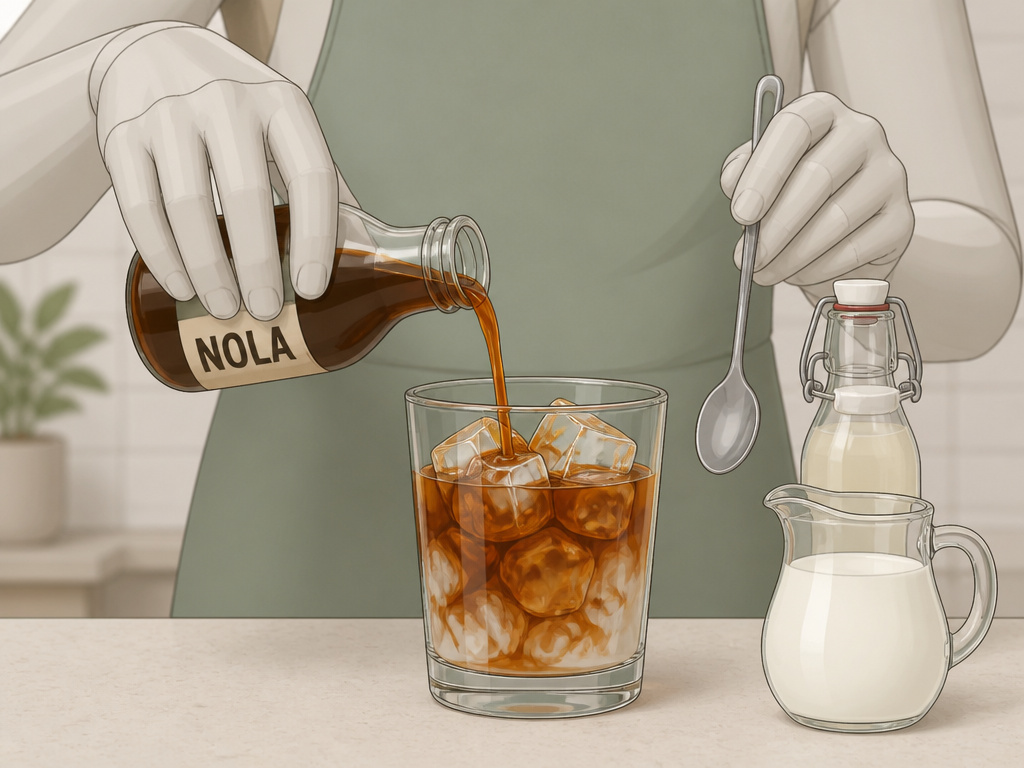
The serve completes the transformation. A concentrate is not a drink.
The Standard Serve
Fill a glass with ice. Add 1 part coffee concentrate (about 2 oz) and 3 parts cold water or milk (about 6 oz). Sweeten with 1/2 to 1 oz of simple syrup. Stir. The result should be smooth, creamy, and refreshingly sweet without being cloying. The chicory should be a background note of earthy complexity, not the main event.
Customization Ideas
- Sweeteners: Simple syrup integrates best. Brown sugar sweetener adds a molasses depth that pairs beautifully with the chicory. For a classic touch, use cane sugar syrup.
- Dairy and Alternatives: Whole milk or half-and-half provide classic richness. For a dairy-free version, oat milk or almond milk work well, but avoid strongly flavored varieties like hazelnut.
- Spices: A tiny pinch of cinnamon or nutmeg grated on top can accentuate the woody notes. Do not add spices to the steep, they become overpowering.
How does this compare to other coffees?
It is stronger than standard drip coffee but less intense than a straight espresso shot. Its flavor profile is unique because of the chicory. If you find it too bitter even when made correctly, a tiny pinch of salt in your serving glass can round the edges without making it taste salty.
Sourcing and Storing for Best Quality
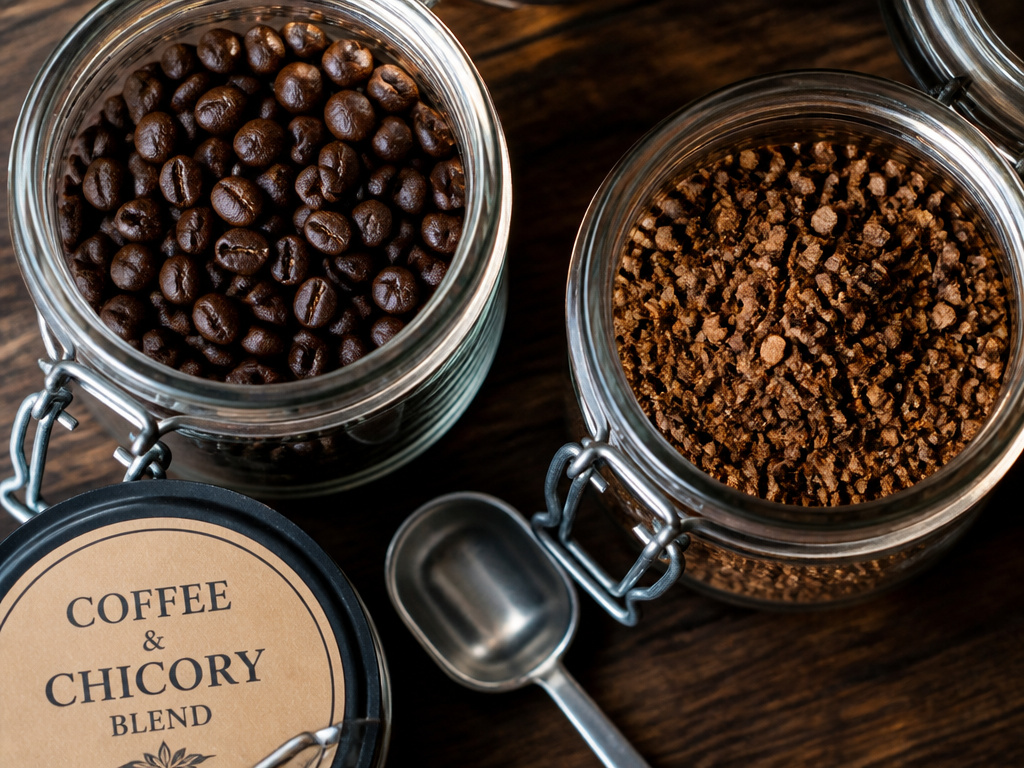
The beans and chicory are shelf-stable, but they are not immortal.
Buying Chicory
Look for roasted chicory root from a reputable spice shop or online retailer. It is often sold alongside herbal teas. Cafe du Monde and French Market Coffee sell pre-ground blends, but for the best flavor, buy the chicory separately so you control the ratio.
Coffee Bean Storage
Once opened, store your Arabica coffee beans in an airtight container in a cool, dark cupboard. Do not freeze them. The enemy is moisture and oxygen. A study on water activity in green coffee noted that lipid oxidation, which leads to stale, papery flavors, accelerates when water activity (Aw) rises above 0.450. While that science is for green beans, the principle holds for roasted: keep them dry and sealed.
Concentrate Storage
Your cold brew concentrate should live in the fridge in a sealed glass jar or bottle. Use it within 10 days. You will know it has turned if it develops a sharp, vinegary note or a flat, cardboard taste. That is oxidation at work.
Frequently Asked Questions
Is New Orleans style coffee stronger than regular coffee?
It depends on your definition. Its caffeine content is similar to a strong brewed coffee because you use a high coffee-to-water ratio for the concentrate. In terms of flavor, it is much bolder and more intense due to the dark roast and chicory, but the cold brew method makes it taste smoother, not harsher.
Can I make it without chicory?
You can, but then it is just strong dark roast cold brew. The chicory provides the distinctive earthy, sweet-bitter character that defines the style. If you dislike chicory, try a different cold brew recipe.
What’s the difference between New Orleans coffee and Vietnamese coffee?
Both are strong, sweet, and often served iced. Vietnamese coffee uses a dark roast, often with Robusta beans, and is brewed hot through a metal phin filter directly over sweetened condensed milk. New Orleans coffee uses a chicory blend and is typically brewed as a cold concentrate, then mixed with milk and simple syrup. The textures and flavor profiles are distinct.
Why is my homemade version too bitter?
Three likely causes: your chicory ratio is too high (stick to 1:4), you used a fine grind for cold brew, or you squeezed the grounds during straining. Also, ensure you are diluting the concentrate sufficiently. A 1:3 ratio with milk is the target.
Can I use a light roast coffee?
I do not recommend it. A light roast coffee has bright, acidic flavors that clash with the earthy chicory. The dark roast’s caramelized, bitter-sweet notes are what harmonize with the root.
Before You Go
New Orleans style coffee is a lesson in balance. The bitterness of chicory finds its match in the deep roast of the coffee. The strength of the concentrate is tempered by sweet milk and ice. Skipping any element throws the whole thing off.
Start with a reliable pre-blend if you are new, but move to mixing your own for control. Grind coarse, steep cold and long, and dilute with a generous hand. The goal is not a history lesson in a cup, but a perfectly balanced, refreshing drink that justifies its own ritual. That is the style that survived a blockade and found its way into a modern glass.
{
“@context”: “https://schema.org”,
“@type”: “HowTo”,
“name”: “How to Make New Orleans Style Cold Brew Coffee at Home”,
“totalTime”: “PT16H”,
“tool”: [
{
“@type”: “HowToTool”,
“name”: “Large jar or KitchenAid Cold Brew Coffee Maker”
},
{
“@type”: “HowToTool”,
“name”: “Fine mesh strainer or cheesecloth”
},
{
“@type”: “HowToTool”,
“name”: “Measuring cups and scale”
}
],
“supply”: [
{
“@type”: “HowToSupply”,
“name”: “Dark roast coffee beans, coarsely ground”
},
{
“@type”: “HowToSupply”,
“name”: “Roasted chicory root”
},
{
“@type”: “HowToSupply”,
“name”: “Filtered water”
},
{
“@type”: “HowToSupply”,
“name”: “Milk or cream and simple syrup (for serving)”
}
],
“step”: [
{
“@type”: “HowToStep”,
“name”: “Mix the coffee and chicory”,
“text”: “Combine a 4:1 ratio of coarsely ground dark roast coffee to roasted chicory pieces in your brewing container.”
},
{
“@type”: “HowToStep”,
“name”: “Add cold water”,
“text”: “Pour filtered cold water over the grounds at a 1:8 coffee-to-water ratio. Stir gently to ensure all grounds are saturated.”
},
{
“@type”: “HowToStep”,
“name”: “Steep for 12-24 hours”,
“text”: “Cover the container and let it steep at room temperature or in the refrigerator for 12 to 24 hours. A longer steep extracts more body and chicory flavor.”
},
{
“@type”: “HowToStep”,
“name”: “Strain the concentrate”,
“text”: “Strain the liquid through a fine mesh strainer lined with cheesecloth or a coffee filter into a clean carafe or bottle.”
},
{
“@type”: “HowToStep”,
“name”: “Dilute and serve”,
“text”: “For serving, dilute the concentrate with water or milk at a 1:3 ratio. Add simple syrup to taste and serve over ice.”
}
]
}
{
“@context”: “https://schema.org”,
“@type”: “FAQPage”,
“mainEntity”: [
{
“@type”: “Question”,
“name”: “Is New Orleans style coffee stronger than regular coffee?”,
“acceptedAnswer”: {
“@type”: “Answer”,
“text”: “It depends on your definition. Its caffeine content is similar to a strong brewed coffee because you use a high coffee-to-water ratio for the concentrate. In terms of flavor, it is much bolder and more intense due to the dark roast and chicory, but the cold brew method makes it taste smoother, not harsher.”
}
},
{
“@type”: “Question”,
“name”: “Can I make it without chicory?”,
“acceptedAnswer”: {
“@type”: “Answer”,
“text”: “You can, but then it is just strong dark roast cold brew. The chicory provides the distinctive earthy, sweet-bitter character that defines the style. If you dislike chicory, try a different cold brew recipe.”
}
},
{
“@type”: “Question”,
“name”: “What’s the difference between New Orleans coffee and Vietnamese coffee?”,
“acceptedAnswer”: {
“@type”: “Answer”,
“text”: “Both are strong, sweet, and often served iced. Vietnamese coffee uses a dark roast, often with Robusta beans, and is brewed hot through a metal phin filter directly over sweetened condensed milk. New Orleans coffee uses a chicory blend and is typically brewed as a cold concentrate, then mixed with milk and simple syrup. The textures and flavor profiles are distinct.”
}
},
{
“@type”: “Question”,
“name”: “Why is my homemade version too bitter?”,
“acceptedAnswer”: {
“@type”: “Answer”,
“text”: “Three likely causes: your chicory ratio is too high (stick to 1:4), you used a fine grind for cold brew, or you squeezed the grounds during straining. Also, ensure you are diluting the concentrate sufficiently. A 1:3 ratio with milk is the target.”
}
},
{
“@type”: “Question”,
“name”: “Can I use a light roast coffee?”,
“acceptedAnswer”: {
“@type”: “Answer”,
“text”: “I do not recommend it. A light roast coffee has bright, acidic flavors that clash with the earthy chicory. The dark roast’s caramelized, bitter-sweet notes are what harmonize with the root.”
}
}
]
}
