
Light vs Dark Roast Coffee Compared | Flavor, Body & Caffeine
Light roast vs dark roast coffee is defined by roasting time and temperature, which drastically alter flavor, body, and caffeine. Light roasts are roasted for less time at lower heat, preserving the bean’s origin flavors, higher acidity, and slightly more caffeine. Dark roasts are roasted longer and hotter, creating bolder, smoother, and simpler flavors with less caffeine.
Light roast vs dark roast coffee comes down to three chemical shifts: the Maillard reaction browns proteins and sugars, caramelization sweetens then bitters, and thermal breakdown drives out acids and oils. The result is a complete flavor profile inversion, light roasts are bright, acidic, and complex, while dark roasts are bold, smooth, and simple.
Most people get this wrong because they assume a darker bean means a stronger, more caffeinated cup. That’s backwards. The roasting process burns off caffeine and volatile acids, making dark roast milder in stimulant punch and easier on sensitive stomachs. Choosing the right roast isn’t about toughness; it’s about matching a bean’s inherent flavors to the heat applied.
This guide walks through the science of the roast, the tangible differences in your cup, and a straightforward method to pick your perfect roast every time.
Key Takeaways
- Dark roast coffee has slightly less caffeine by weight than light roast because longer roasting burns off caffeine and other volatile compounds.
- Light roasts showcase the bean’s origin flavors, think floral, fruity, tea-like. Dark roasts showcase the roaster’s craft, think chocolate, caramel, smokiness.
- If you have acid reflux or a sensitive stomach, a dark roast is often better tolerated due to higher levels of N-methylpyridinium, a compound that reduces gastric acid secretion.
- Your brewing method decides the winner: light roasts excel in pour-over and AeroPress, while dark roasts are built for espresso and French press.
- The oily sheen on dark roast beans comes from lipids migrating to the surface during extended roasting, not added flavorings.
What Actually Changes in the Roast?
Roasting isn’t just coloring beans brown. It’s a timed thermal reaction that transforms raw, grassy seeds into the aromatic packages we grind. Two chemical processes dominate: the Maillard reaction and caramelization.
The Maillard reaction is the same browning that gives seared steak and toasted bread their flavor. In coffee, it starts around 300°F (149°C) and creates hundreds of new flavor compounds from amino acids and reducing sugars. This is where complexity builds.
Caramelization of sugars peaks in a bell curve. Maximum sweetness happens in the medium roast range. Push past that peak, and the same sugars that tasted like honey or brown sugar start tasting charred and ashy.
Caramelization kicks in around 340°F (171°C). It’s a simpler breakdown of sucrose into sweet, then bitter, compounds. Roasters talk about “development time” after first crack, the period where they ride this curve, deciding when to drop the beans to stop the process.
TL;DR: Light roast stops development soon after first crack, preserving origin character. Dark roast continues into or past second crack, trading origin notes for roast-driven flavors like chocolate and smoke.
The Crack Timeline
You can hear the roast level. Beans pop as internal moisture turns to steam and escapes.
First crack happens around 395°F (202°C), around 7–9 minutes into a typical roast. It sounds like popcorn popping. This marks the end of the drying phase and the start of “development.” At this point, the bean is a light roast, it’s technically drinkable but will taste grassy or bready.
Second crack occurs around 435–450°F (224–232°C), often 3–5 minutes after first crack. It’s a quieter, snappier sound, like rice crispies. This is the realm of dark roast. Oils begin to migrate from the bean’s core to its surface, producing the characteristic shiny look. Continue much past second crack and you enter “espresso” or “Italian” roast territory, where the primary flavor is carbon.
| Roast Stage | Approx. Temp | Audible Cue | Bean Surface | Dominant Flavor Process |
|---|---|---|---|---|
| Light Roast | 395–410°F (202–210°C) | Just after first crack | Dry, matte | Maillard reaction builds complexity |
| Medium Roast | 410–425°F (210–218°C) | Between cracks | Dry to slight sheen | Caramelization peaks (max sweetness) |
| Dark Roast | 425–450°F (218–232°C) | During/after second crack | Oily, shiny | Caramelization bitters, sugars carbonize |
Flavor, Body, and Acidity: The Cup Comparison
Forget “strong” versus “weak.” The real difference is in the flavor profile.
Light roast coffee is about transparency. It lets the bean’s origin, the soil, climate, and processing method, speak loudly. You’ll taste higher acidity, often described as brightness or crispness. The body is lighter, more tea-like. Flavors lean floral, fruity, or herbal. A light-roasted Ethiopian Yirgacheffe might taste of bergamot and blueberries.
Dark roast coffee is about transformation. The roaster’s heat becomes the dominant flavor maker. Acidity drops dramatically. Body becomes heavier, oilier, and more syrupy. Flavors shift toward the roast itself: bittersweet chocolate, toasted nuts, caramel, and smoke. A dark-roasted Sumatran bean loses its earthy funk and gains a uniform, robust character.
Common mistake: Choosing a dark roast because you want more caffeine, a 10g dose of dark roast beans actually contains less caffeine than a 10g dose of light roast. The longer roast time degrades the stimulant.
Why Your Stomach Prefers Dark
That bright acidity in light roast isn’t just a tasting note. It’s literal acid, chlorogenic acid, citric acid, malic acid. Longer roasting breaks these down. More importantly, dark roasts develop more N-methylpyridinium. Research, including a study cited by Ember Coffee Co., indicates this compound can reduce gastric acid secretion.
If coffee gives you heartburn, a switch to dark roast might be the fix, not a weaker brew. It’s a chemical change, not a dilution.
Caffeine Content: The Biggest Myth
Here’s the truth that flips the script: dark roast has less caffeine per bean than light roast.
Caffeine is stable up to about 465°F (240°C), but it begins to sublimate, turn directly from a solid to a gas, well before that. The longer a bean sits in the roaster, the more caffeine burns off. Furthermore, beans lose mass (water and organic matter) during roasting. A dark roast bean is less dense than a light roast bean.
So, if you measure by scoop, a scoop of fluffy dark roast beans contains fewer beans and less total caffeine than a scoop of dense light roast. If you measure by weight, the difference narrows but the degradation still gives light roast a slight edge.
The takeaway: The “bold, wake-me-up” dark roast is actually the milder stimulant. The perceived “strength” is all about flavor intensity, not chemical potency.
How to Choose Your Roast
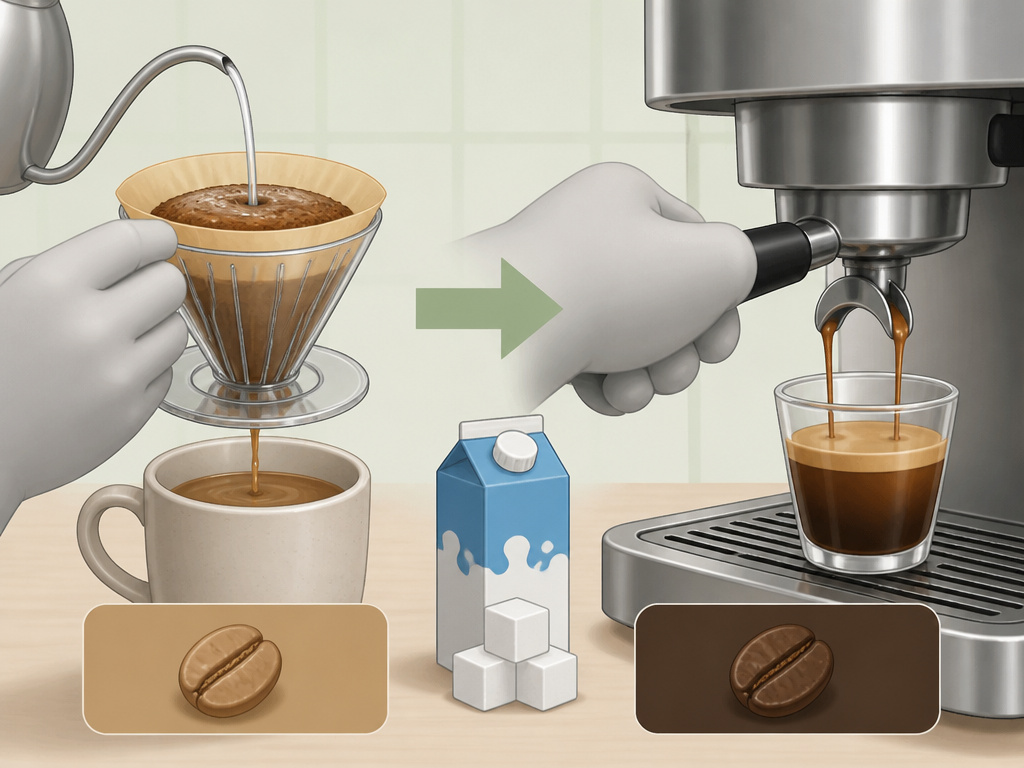
Stop thinking about roast level in a vacuum. Your choice should lock into two things: your brewing method and what you add to your cup.
Match the Brew Method
Your equipment favors a roast profile. It’s about extraction and flavor balance.
- Espresso & Moka Pot: Dark roast wins. The intense, fast pressure extraction pulls out the chocolate and caramel notes beautifully. Light roasts often taste sour and under-extracted in espresso unless you have a high-end grinder and machine to precisely control temperature and pressure.
- French Press: Dark roast is classic. The immersion brewing and metal filter let oils and heavy body through, complementing the roast’s character. A light roast in a French Press can taste thin and overly bright.
- Pour-Over (V60, Chemex), AeroPress, Drip Machine: This is light roast territory. These methods highlight clarity and nuance. You’ll miss the floral top notes of a light roast if you brew it as espresso, but in a pour-over, they sing.
- Cold Brew: Both can work, but for different results. Dark roast makes a classic, smooth, chocolatey cold brew. Light roast makes a surprisingly bright, fruity cold brew that’s less heavy. It’s a matter of preference.
Consider Your Additives
What you stir in changes the game.
I used to drink light roast Ethiopian black. Then I started adding a splash of milk. The milk flattened all those beautiful floral notes into a vague, sour creaminess. I switched to a dark roast for my milky coffees and never looked back.
Light roast’s delicate flavors are easily drowned out by milk, cream, or sugar. If you take your coffee with additions, a dark roast’s robust, roast-forward flavors will stand up better. The caramel and chocolate notes complement dairy and sweeteners instead of disappearing.
If you drink your coffee black, you have the freedom to explore light roasts and appreciate their complexity. Your choice between Arabica beans from different geographic coffee origins becomes the main event.
A Decision Matrix
Still unsure? This table cuts through the noise.
| Your Preference | Best Roast | Why It Works |
|---|---|---|
| Black coffee, fruity/floral notes | Light Roast | Preserves the bean’s inherent acidity and origin characteristics. |
| Black coffee, chocolate/nutty notes | Dark Roast | Highlights roast-developed sugars and maillard compounds. |
| Coffee with milk or sugar | Dark Roast | Bold, roast-driven flavors withstand dilution and complement sweetness. |
| Espresso or French press | Dark Roast | Suits the full-bodied, oily extraction these methods produce. |
| Pour-over or AeroPress | Light Roast | Clean, bright methods that showcase a light roast’s complexity. |
| Sensitive stomach | Dark Roast | Lower in acidity and higher in N-methylpyridinium. |
| Maximum caffeine perception | Light Roast | Slightly higher caffeine content per equal weight. |
Buying and Storing for Peak Flavor
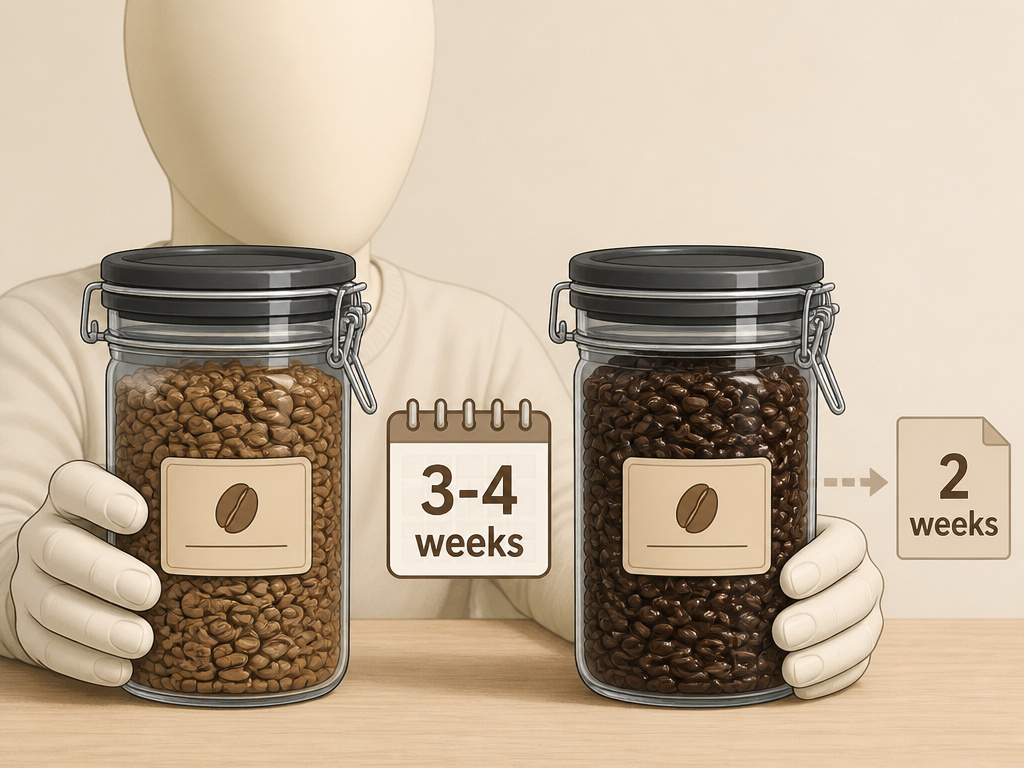
Roast level also dictates how you should buy and store your beans.
Buy Whole Bean. This is non-negotiable for flavor. Pre-ground coffee loses its nuanced flavors within minutes. A good burr coffee grinder is the single best upgrade you can make, providing the consistent grind consistency needed for proper extraction.
Check the Roast Date, Not the Expiry. Coffee is best used within 3-4 weeks of its roast date. Dark roasts, with their oils on the surface, go stale and rancid faster than light roasts, sometimes in as little as two weeks after opening. Light roasts, with a dry surface, can maintain peak flavor a bit longer.
Storage is Key. Keep beans in an airtight container away from light, heat, and moisture. Do not refrigerate or freeze your daily beans, the condensation from temperature changes introduces moisture and can ruin flavor. That shiny oil on dark roasts? It’s a sign it’s fresh from the roaster, but also makes it more vulnerable.
Frequently Asked Questions
Does dark roast coffee have more caffeine?
No. Dark roast coffee has slightly less caffeine by weight than light roast. The extended roasting time burns off a small amount of caffeine, and the beans become less dense. If you measure by volume (scoop), the difference is even greater because the darker, fluffier beans mean fewer beans per scoop.
Which roast is more acidic?
Light roast coffee is significantly more acidic. The longer roasting process of dark roast breaks down acids like chlorogenic acid, resulting in a smoother, less bright cup. This is why dark roast is often recommended for people with acid reflux or sensitive stomachs.
Why is dark roast oilier?
The oils are inside every coffee bean. During the extended high heat of a dark roast, these lipids migrate from the bean’s core to its surface, creating the characteristic shiny, oily appearance. It’s a natural process, not an added ingredient.
Can I use light roast for espresso?
You can, but it’s challenging. Light roast beans are denser and harder to extract evenly under espresso’s fast, high-pressure method. Without precise temperature and grind control, light roast espresso often tastes sour and under-extracted. Dark roast is more forgiving and traditionally favored for espresso.
Does roast level affect the choice of coffee filter?
Indirectly, yes. Dark roast’s oils can clog paper coffee filters faster, potentially leading to a slower brew and over-extraction. Some prefer unbleached coffee filters for their neutral taste with delicate light roasts. For a full-bodied dark roast brew like French press, a metal or cloth coffee filter that allows oils through is ideal.
The Bottom Line
Choosing between light and dark roast isn’t a test of your palate’s strength. It’s a choice between flavor origins. Light roast is a passport to a coffee farm’s terroir. Dark roast is a ticket to the roaster’s craft.
Your brewing method picks the winner. Your stomach might cast the deciding vote. Start with a medium roast as a baseline, then move lighter if you crave complexity and brightness, or darker if you want comforting, robust simplicity. Remember, the best roast is the one you enjoy drinking, not the one you think you’re supposed to like.
{
“@context”: “https://schema.org”,
“@type”: “HowTo”,
“name”: “How to Choose Between Light and Dark Roast Coffee”,
“totalTime”: “PT5M”,
“tool”: [
{
“@type”: “HowToTool”,
“name”: “Fresh coffee beans (light and dark roast samples)”
},
{
“@type”: “HowToTool”,
“name”: “Burr coffee grinder”
},
{
“@type”: “HowToTool”,
“name”: “Preferred brewing equipment (e.g., French press, pour-over)”
}
],
“step”: [
{
“@type”: “HowToStep”,
“name”: “Taste a light roast black”,
“text”: “Brew a light roast coffee, like a single-origin Ethiopian, with no additives. Note the high acidity, floral or fruity notes, and lighter body.”
},
{
“@type”: “HowToStep”,
“name”: “Taste a dark roast black”,
“text”: “Brew a dark roast coffee, like a French or Italian roast, with no additives. Note the low acidity, bold, smoky or chocolatey notes, and heavier, oily body.”
},
{
“@type”: “HowToStep”,
“name”: “Compare with milk or sugar”,
“text”: “Repeat both brews, but add a splash of milk or a teaspoon of sugar. Observe how the dark roast’s bold flavors hold up better against the additives.”
},
{
“@type”: “HowToStep”,
“name”: “Match roast to your brewing method”,
“text”: “Choose light roasts for pour-over, Chemex, or AeroPress to highlight nuanced flavors. Choose dark roasts for espresso, French press, or milk-based drinks where body and robustness are key.”
},
{
“@type”: “HowToStep”,
“name”: “Consider your stomach”,
“text”: “If you have acid reflux or a sensitive stomach, opt for a dark roast. The longer roasting process develops compounds like N-methylpyridinium that can reduce gastric acid stimulation.”
}
]
}
{
“@context”: “https://schema.org”,
“@type”: “FAQPage”,
“mainEntity”: [
{
“@type”: “Question”,
“name”: “Does dark roast coffee have more caffeine?”,
“acceptedAnswer”: {
“@type”: “Answer”,
“text”: “No. Dark roast coffee has slightly less caffeine by weight than light roast. The extended roasting time burns off a small amount of caffeine, and the beans become less dense. If you measure by volume (scoop), the difference is even greater because the darker, fluffier beans mean fewer beans per scoop.”
}
},
{
“@type”: “Question”,
“name”: “Which roast is more acidic?”,
“acceptedAnswer”: {
“@type”: “Answer”,
“text”: “Light roast coffee is significantly more acidic. The longer roasting process of dark roast breaks down acids like chlorogenic acid, resulting in a smoother, less bright cup. This is why dark roast is often recommended for people with acid reflux or sensitive stomachs.”
}
},
{
“@type”: “Question”,
“name”: “Why is dark roast oilier?”,
“acceptedAnswer”: {
“@type”: “Answer”,
“text”: “The oils are inside every coffee bean. During the extended high heat of a dark roast, these lipids migrate from the bean’s core to its surface, creating the characteristic shiny, oily appearance. It’s a natural process, not an added ingredient.”
}
},
{
“@type”: “Question”,
“name”: “Can I use light roast for espresso?”,
“acceptedAnswer”: {
“@type”: “Answer”,
“text”: “You can, but it’s challenging. Light roast beans are denser and harder to extract evenly under espresso’s fast, high-pressure method. Without precise temperature and grind control, light roast espresso often tastes sour and under-extracted. Dark roast is more forgiving and traditionally favored for espresso.”
}
},
{
“@type”: “Question”,
“name”: “Does roast level affect the choice of coffee filter?”,
“acceptedAnswer”: {
“@type”: “Answer”,
“text”: “Indirectly, yes. Dark roast’s oils can clog paper coffee filters faster, potentially leading to a slower brew and over-extraction. Some prefer unbleached coffee filters for their neutral taste with delicate light roasts. For a full-bodied dark roast brew like French press, a metal or cloth coffee filter that allows oils through is ideal.”
}
}
]
}
