
How Strong Is Blonde Coffee? Debunking Caffeine Myths
Blonde coffee is strong, primarily in caffeine and bright flavor, not roasty body. It often has more caffeine by weight than dark roast, as roasting burns off caffeine and original flavors. Strength is multi-dimensional: a light roast’s potency comes from its high caffeine and intense, complex acidity.
Blonde coffee is strong, but its strength is multi-dimensional: it often has higher caffeine content by weight than dark roasts, and its flavor profile is intensely bright and complex, not heavy or roasty. The common mistake is equating “strong” only with a dark, bitter taste and heavy body. Strength in coffee is a combination of caffeine potency, flavor intensity, and mouthfeel, blonde roasts excel in the first two.
Most people walk into this question thinking a dark, oily bean must be the powerhouse. They’re comparing roast color to fuel octane. It doesn’t work that way. The roasting process burns off caffeine and original bean flavors, replacing them with roast-derived tones.
This guide breaks down the three pillars of blonde coffee strength: the caffeine numbers that surprise most drinkers, the volatile chemical compounds that create its piercing flavor intensity, and the exact brewing protocol that unlocks its power without wrecking the cup.
Key Takeaways
- By weight, blonde roasts can have more caffeine than dark roasts because less is burned away during the shorter, lighter roast.
- Flavor strength in blonde coffee comes from high concentrations of bright, fruity, and floral volatile compounds preserved by the light roast, not from roasty bitterness.
- Brew it wrong, with water that’s too hot or a grind that’s too coarse, and you get a sour, weak-tasting cup that confirms every bad stereotype about light roasts.
- For maximum extraction and strength, use a 1:15 coffee-to-water ratio, 203°F (95°C) water, and a medium-fine grind on a burr grinder.
- The perceived “strength” of any coffee drink is dramatically altered by serving size and preparation; a Starbucks Blonde Espresso shot has more caffeine than a Signature shot, but in a large milk drink, the difference feels smaller.
The Caffeine Surprise: Blonde vs. Dark Roast
The data is clear and counterintuitive. A Starbucks Blonde Espresso shot contains about 85 mg of caffeine. Their darker Signature Espresso Roast shot has about 75 mg. That’s a tangible difference you can feel.
A 2020 study published in Foods journal analyzing volatile compounds in coffee found that finer grinds (355 µm) for espresso produced significantly higher measured intensities of most flavor and aroma compounds. This extraction efficiency principle applies directly to caffeine.
The reason is physical, not magical. During roasting, beans lose mass and density. A dark roast bean is less dense than a light roast bean. If you measure your coffee by scoops, using a tablespoon, you’ll get more caffeine with a blonde roast because you’re fitting more actual coffee mass into that scoop. The darker bean is puffier and lighter. If you measure by weight, the difference narrows, but the lighter roast often still wins because the prolonged heat of a dark roast can degrade a small percentage of the caffeine.
| Roast Type | Caffeine per Single Shot (approx.) | Bean Density | Key Differentiator |
|---|---|---|---|
| Blonde/Light | 85 mg (e.g., Starbucks Blonde Espresso) | Higher | More caffeine by volume; original bean compounds intact. |
| Medium | 75-80 mg | Moderate | Balanced caffeine; some roast flavor introduced. |
| Dark | 70-75 mg (e.g., Starbucks Signature) | Lower | Less caffeine by volume; dominant roast-derived flavors. |
This has a direct impact on your morning. Choose a blonde espresso for your latte if you want a bigger caffeine kick from the same number of shots. The flavor will be brighter, but the jolt will be real.
TL;DR: By volume, blonde roasts pack more caffeine than dark roasts. A scoop of light beans contains more coffee mass and thus more caffeine than a scoop of dark, puffed-up beans.
Flavor Strength: It’s Not What You Think
When coffee professionals talk about a “strong” flavor profile, they don’t mean bitter. They mean pronounced, distinct, and intense. This is where blonde roasts dominate, thanks to chemistry.
Dark roast flavors come largely from the roasting process itself, think smoky, chocolaty, or bittersweet notes. These can be powerful, but they also mask the inherent flavors of the coffee bean’s origin. Blonde roasting stops before those roast flavors develop, preserving the bean’s original volatile compounds. A 2023 study using explainable AI to link volatile composition to sensory intensity identified key compounds like pyrazines and furans that contribute to sweet, nutty, and fruity aromas. These compounds are more prevalent in lighter roasts.
Common mistake: Brewing blonde roast with boiling water, the delicate acids and fruity notes scorch, leaving a flat, sour cup that tastes “weak” and confirms the bias against light roasts.
The strength of a blonde roast is the strength of a lemon versus a molasses cookie. One is immediately bright and piercing; the other is deep and rounded. Your palate might register the lemon as more intense. That’s the experience of a well-brewed blonde coffee. The flavors, citrus, floral, berry, tea-like, smack your taste buds with clarity. They can be jarring if you’re expecting a wall of dark chocolate.
This clarity is why many specialty coffee lovers and baristas prefer light roasts. They offer a more transparent window into the coffee bean types and coffee bean origins. The strength of a single-origin coffee from Ethiopia is its explosive blueberry note, a characteristic utterly destroyed by a dark roast.
Brewing for Maximum Strength

Brewing blonde coffee is a tightrope walk. Under-extract, and it’s sour and thin. Over-extract, and it’s bitter and hollow. The goal is full extraction of those desirable compounds without pulling out the harsh ones. This requires precision.
First, ignore the old rule of using near-boiling water for all coffee. The target for blonde roasts is 200-205°F (93-96°C). Water that’s too hot will over-extract the acids too quickly, making the cup taste sharp and unpleasant. Start at 203°F.
Second, grind size is non-negotiable. You need a consistent, medium-fine grind. A blade grinder creates a mix of dust and boulders, leading to uneven extraction, part sour, part bitter. A burr coffee grinder is the single most important tool for unlocking blonde coffee strength. The research shows finer grinds (355 µm) yield significantly higher volatile compound extraction. For pour-over, aim for a texture like table salt.
Third, water quality matters more than you think. That same 2020 study found filtered water led to significantly higher measured intensities of 18-22 key volatile compounds in espresso. Tap water minerals can interfere with extraction, muting the very flavors you’re trying to highlight. Use filtered water.
Here’s a starter recipe for a strong, clear cup:
1. Weigh 20g of blonde roast coffee beans.
2. Grind to a medium-fine consistency.
3. Heat 300g of filtered water to 203°F (95°C).
4. Bloom: Place grounds in a rinsed filter. Pour 40g of water evenly over them to saturate. Wait 30 seconds.
5. Pour: Slowly add the remaining 260g of water in a steady, circular pour, aiming to finish around 3 minutes total.
TL;DR: Strength through clarity, not brutality. Use a 1:15 ratio, 203°F water, a medium-fine burr grind, and filtered water to fully extract the bright, complex strength of a blonde roast.
Blonde Coffee in the Wild: Espresso, Instant, and Cold Brew
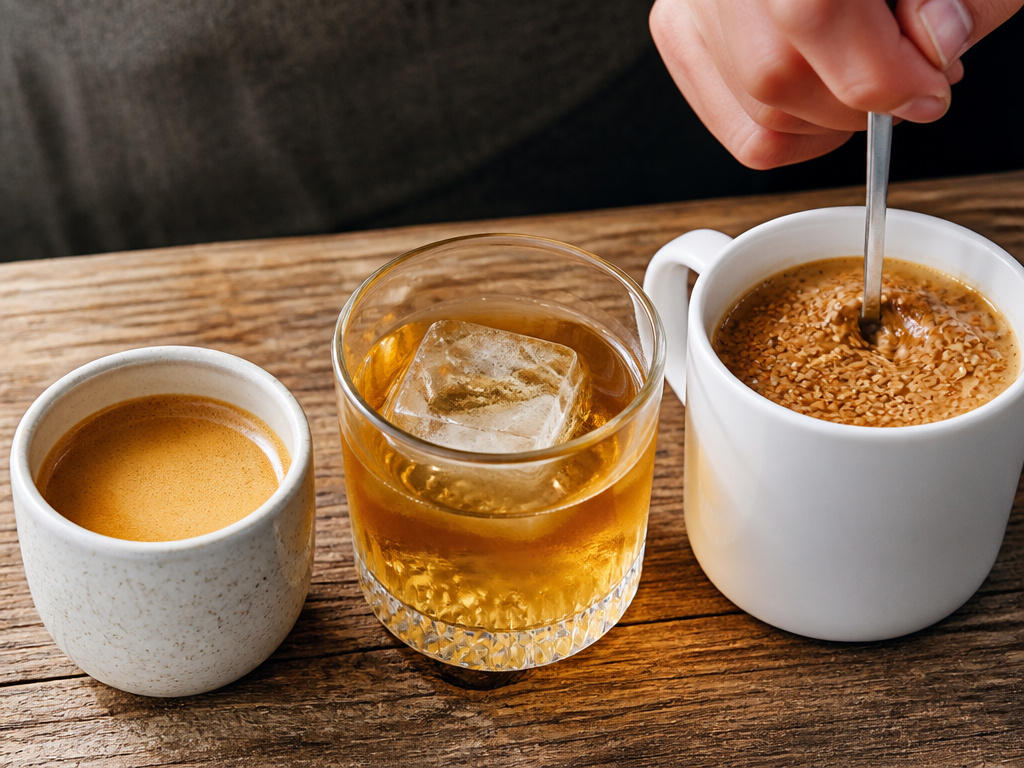
How does this translate to the drinks you actually buy?
Blonde Espresso: Starbucks launched this for a reason. It provides a brighter, more citrusy kick and more caffeine in their milk-based drinks. In a straight shot, the intensity can be bracing, a strong, lemony acidity rather than a strong, bitter roast. It changes the entire character of a latte.
Instant Blonde Coffee: Products like Nescafé Gold Espresso Blonde show the trend moving to convenience. A concentrated 30–50 ml “espresso-style” shot from this instant contains 50–80 mg of caffeine. The strength here is about a quick, potent caffeine delivery with a lighter flavor profile than traditional dark instant coffee.
Cold Brew: This is where blonde roast strength takes an interesting turn. Cold brew is known for being smooth and sweet with less bitterness. Using a blonde roast for cold brew can highlight fruity and floral notes even more. The study data shows cold brew can contain up to two-fold more caffeine than hot espresso and higher levels of specific sweet, nutty compounds like pyrazines when made with middle-sized grounds. A blonde cold brew is strong on caffeine and unique flavor intensity, not on traditional “coffee” bitterness.
The strength of drip coffee from a blonde roast will differ from that of an espresso-based drink like an Americano. It’s a reminder that strength is contextual, influenced by brewing methods, concentration, and what you’re comparing it to.
The Body and Mouthfeel Question

This is the one dimension where blonde roasts often concede. “Body” refers to the weight and texture of the coffee on your tongue, the feeling of whole milk versus skim milk. Dark roasts, partly due to longer roasting that develops more oils and soluble solids, typically have a fuller, heavier body.
A blonde roast will often have a lighter, tea-like body. This is not a weakness, but a characteristic. Its strength lies elsewhere. If you crave that thick mouthfeel, you might find a blonde coffee less “strong” in this tactile sense. You can manipulate this slightly by using a paper filter that traps oils (lighter body) versus a metal filter or French press that lets oils through (heavier body).
The trade-off is direct. You are choosing flavor complexity and caffeine potency over a syrupy texture. For many drinkers, that’s an easy choice. For others, the mouthfeel is non-negotiable. Knowing this lets you decide what “strong” means for you.
Frequently Asked Questions
Is blonde roast coffee stronger than dark roast?
In terms of caffeine content per scoop, yes, blonde roast is typically stronger. In terms of bold, roasty flavor and heavy body, dark roast is stronger. It depends on which attribute you define as “strength.”
Why does my blonde coffee taste sour?
Sourness means under-extraction. Your water temperature is likely too low, your grind is too coarse, or your brew time is too short. Try increasing your water temperature to 203°F (95°C), using a finer grind, or extending your contact time slightly.
Does blonde roast have more caffeine than medium roast?
Generally, yes. As roast level darkens, beans lose a small amount of caffeine by weight and more by volume. A light or blonde roast will have marginally to moderately more caffeine than a medium roast when measured equivalently.
Is blonde coffee good for people who like strong coffee?
If you define “strong” as high caffeine and intense, bright, complex flavors, then absolutely. If you define “strong” as a deeply bitter, smoky taste and thick body, you may prefer a dark roast. It’s worth trying a well-brewed blonde coffee to reassess your definition.
How does the caffeine content in coffee from a blonde roast affect my intake?
If you measure by scoops, switching from dark to blonde roast could increase your caffeine intake without you drinking more volume. If you are sensitive to caffeine, be aware of this. Managing your overall caffeine intake is about understanding these sources.
Before You Go
Blonde coffee is strong. It’s just strong in ways that break the old, dark-roasted rules. Its strength is a potent combination of higher caffeine yield and a vibrant, sometimes jarring, flavor intensity drawn from the bean’s origin. This strength is fragile, it demands precise brewing with the right temperature, grind, and water. Get it wrong, and you’ll think it’s weak. Get it right, and it’s a revelation.
The next time you want a powerful coffee experience, don’t just reach for the darkest bag on the shelf. Grab a blonde roast. Use a scale and a burr grinder. Taste the strength of clarity. It might change what you look for in every cup.
