
Weight Loss: Is Black Coffee Good for Your Diet and Metabolism?
Black coffee is good for weight loss because it contains minimal calories (2-5 per cup) and its caffeine can temporarily boost metabolism and fat oxidation. For it to support weight loss, you must drink it black, without sugar, milk, or cream, and within a structured calorie deficit.
Most people think the benefit is just the low calorie count. They miss the real trade-off: the same compounds that might slightly increase calorie burn can also spike your stress hormones if you overdo it. And your choice of brew method quietly adds more fat to your cup than you’d guess.
This guide breaks down the science, the hidden calories in your brew, and the exact line where coffee stops helping and starts hindering your goals.
Key Takeaways
- An 8-ounce cup of black, paper-filtered coffee contains only 2-5 calories.
- Caffeine can increase metabolic rate by 3-11%, but the effect diminishes with habitual use.
- Adding just one fluid ounce of heavy cream introduces about 102 calories.
- Artificial sweeteners like sucralose can raise insulin response by roughly 20%, potentially breaking a fasted state.
- For strict autophagy fasting, some experts avoid coffee entirely despite the low calorie count.
How Many Calories Are in Black Coffee?
A standard 8-ounce cup of black coffee made with a paper filter holds between 1 and 5 calories. The exact number depends on the bean, the roast, and the extraction. Darker roasts have slightly fewer soluble solids, so they might land on the lower end.
Paper filtration is the key. The filter traps most of the coffee oils and a compound called cafestol. French press coffee, which lacks a filter, allows these oils through. Studies show cafestol levels can be around 12 mg/L in paper-filtered coffee versus 90 mg/L in French press. Those oils carry calories, about 9 per gram of fat. While a single cup won’t wreck your diet, the difference adds up if you’re drinking multiple cups during a fasting window.
Common mistake: Assuming all black coffee is equal, a day’s worth of French press can add the caloric equivalent of a small pat of butter compared to drip coffee.
The oils also matter for cholesterol. Cafestol is a potent LDL cholesterol raiser. That’s a separate health consideration, but it’s the same mechanism that adds those stealth calories. If you’re fasting for metabolic health beyond weight loss, your brew method choice matters more than you think.
TL;DR: Stick with paper-filtered black coffee for the lowest calorie count (2-5 per cup). French press and espresso add more oils and calories.
The Caffeine Boost: Real Metabolic Impact or Myth?
Caffeine is a central nervous system stimulant. It can increase your metabolic rate, the number of calories your body burns at rest, by between 3% and 11%. The effect is most pronounced in people who don’t regularly consume caffeine and tends to diminish with habitual use.
The mechanism is straightforward. Caffeine blocks adenosine receptors in your brain. This not only wards off drowsiness but also signals your nervous system to tell your fat cells to break down fat. This process, lipolysis, releases fatty acids into your bloodstream to be used for energy.
That’s the theory. In practice, the boost is modest and short-lived. A 2014 study by Pietrocola in Cell Cycle showed coffee induced autophagy in mice. Autophagy is the body’s process of cleaning out damaged cells, which is a separate benefit often pursued with fasting. The study found both regular and decaffeinated coffee triggered it, accompanied by inhibition of a protein complex called mTORC1. This suggests compounds beyond caffeine are at play.
Caffeine’s fat-burning effect is real but small. Don’t expect a cup of coffee to offset a bad diet.
For weight loss, timing matters more than the caffeine content itself. Drinking coffee 30 to 60 minutes before a workout can enhance performance and increase fat oxidation during the session. But chasing this effect by drinking coffee all day backfires. Exceeding 400 mg of caffeine, the FDA’s daily guideline, can elevate cortisol, your primary stress hormone. Chronically high cortisol promotes abdominal fat storage. The tool becomes the obstacle.
What Actually Breaks a Fast? It’s Not Just Calories.
This is where the conversation gets messy. If your only goal is weight loss through calorie restriction, a 5-calorie cup of black coffee is negligible. It won’t break your fast in any meaningful way.
But fasting is pursued for other reasons, like improving insulin sensitivity or triggering autophagy for cellular repair. For these goals, the rules tighten.
Insulin Response: Even in the absence of calories, certain substances can provoke an insulin release. A Washington University trial found that sucralose increased total insulin response by roughly 20% during an oral glucose-tolerance test in obese adults. Your brain doesn’t care that the sweetener has zero calories; your pancreas might still react. For fasting aimed at insulin sensitivity, black coffee with a zero-calorie sweetener might be counterproductive.
Autophagy: This is the strictest mode. Practitioners like Dr. Peter Attia personally avoid coffee during water-only fasting protocols aimed at maximizing autophagy. The thinking is that any foreign compound might signal the body to pause its cellular clean-up processes, even though the Pietrocola mouse study suggests coffee might actually promote it. The human data isn’t there yet.
| Fasting Goal | Black Coffee OK? | Key Consideration |
|---|---|---|
| Weight Loss / Calorie Deficit | Yes | The 2-5 calories are negligible. Avoid additives. |
| Improved Insulin Sensitivity | Maybe | Skip artificial sweeteners (sucralose, aspartame). Stevia or monk fruit are safer bets. |
| Autophagy / Cellular Repair | Controversial | Some experts avoid it to be certain; animal studies show it may not hurt. |
TL;DR: For weight loss, black coffee is fine. For insulin sensitivity, skip artificial sweeteners. For strict autophagy, you might skip coffee altogether to be safe.
The Brew Method That Adds Hidden Calories
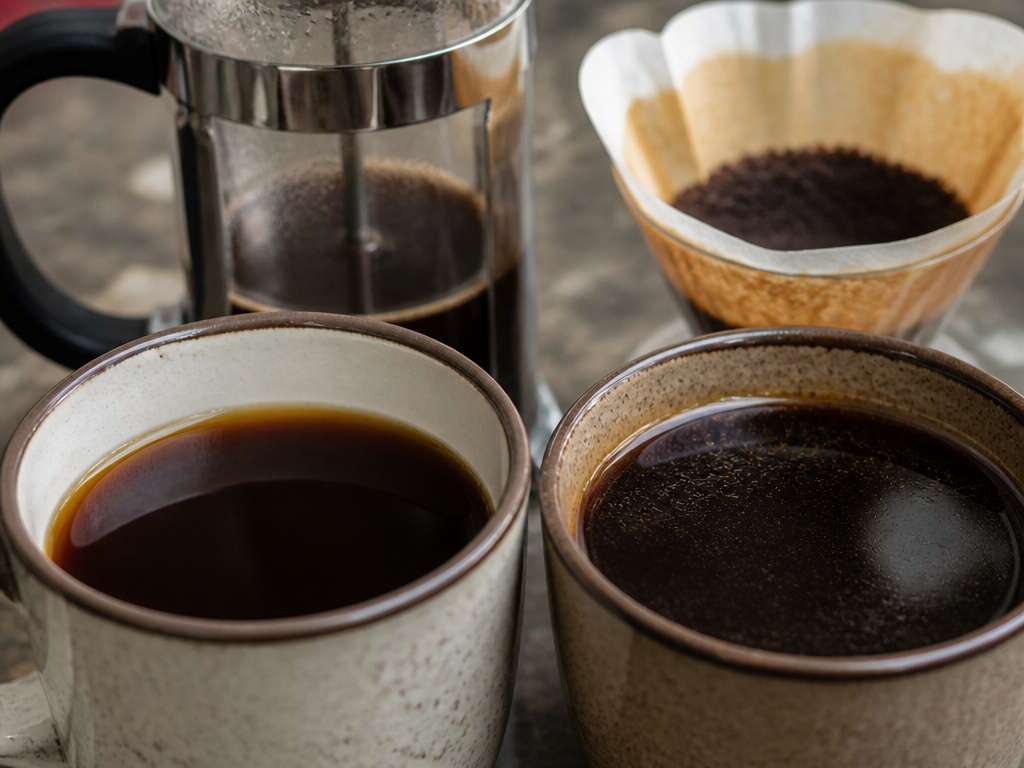
Not all black coffee is created equal. The device on your counter decides how many oils, and therefore calories, end up in your cup.
Paper-filtered methods, drip machines, pour-overs like the V60, Chemex, and AeroPress with a paper filter, are the winners for low-calorie fasting. The paper acts as a barrier, trapping the insoluble oils and most of the cafestol.
French press and espresso are the outliers. With no paper filter, the metal mesh or portafilter allows these oils through. Turkish coffee, where grounds are boiled in water and settle to the bottom, also falls into this higher-oil category. The caloric difference per cup is small, maybe an extra 3-5 calories. But over a morning of drinking two or three cups, you’ve added the equivalent of a teaspoon of oil to your fast.
I switched from French press to a Clever Dripper during a 16:8 fasting protocol. The first thing I noticed was the mouthfeel, it was thinner, less oily. I didn’t think it would matter, but after two weeks, the scale was moving slightly faster. It was the only change I made.
If you love French press, this isn’t a demand to stop. It’s a call to be precise. If your fasting goal is weight loss, the extra calories are still minimal. If you’re fasting for cholesterol management or the most stringent cellular repair, the paper filter is non-negotiable.
Additives That Turn Coffee Into a Meal
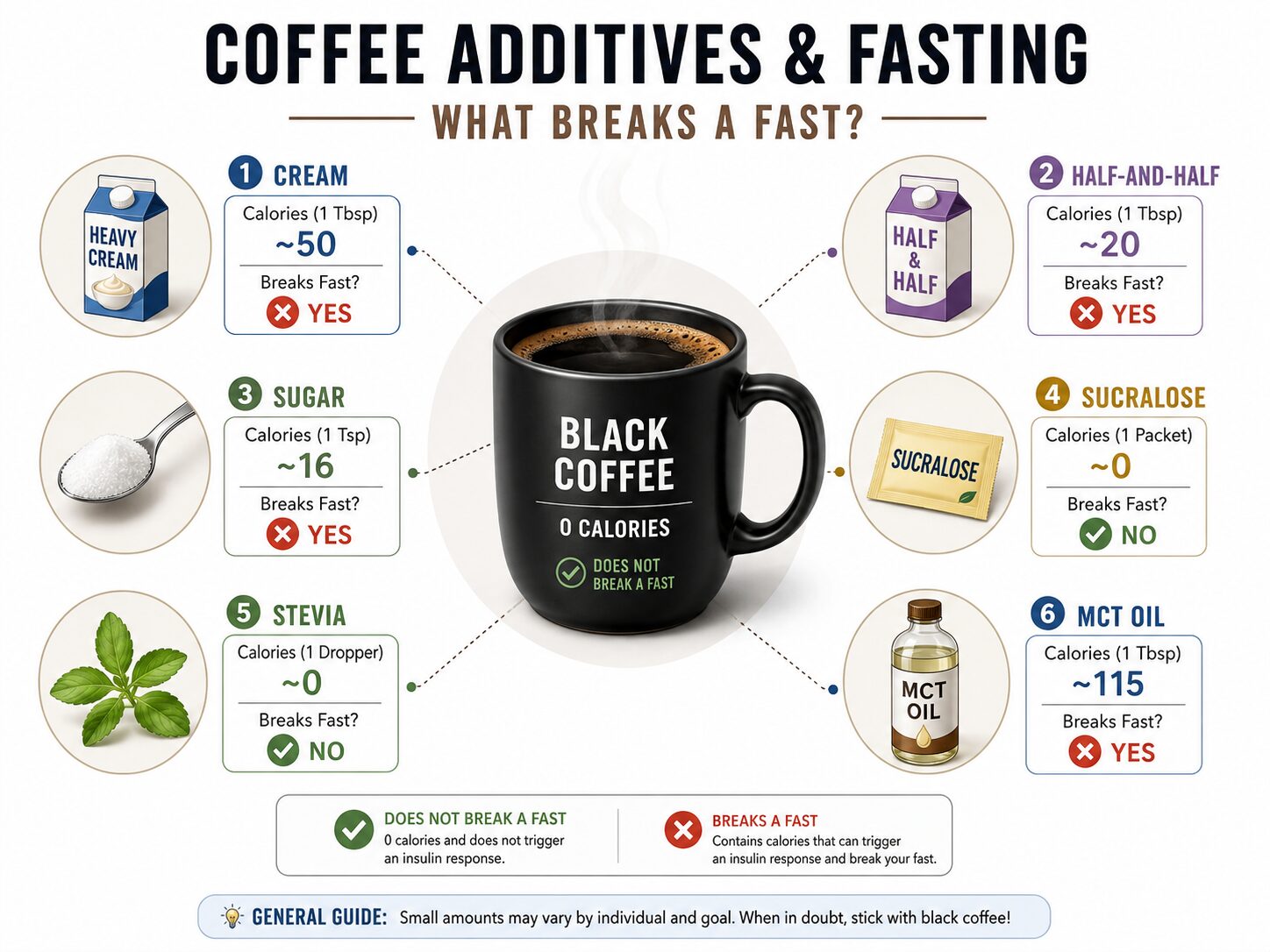
This is the most common failure point. Black coffee is a tool. Additives turn it into a snack, or worse, a dessert.
Let’s talk numbers. One fluid ounce (two tablespoons) of heavy cream packs about 102 calories. A splash becomes a quarter-cup pour for many people. That’s over 200 calories before you’ve eaten a single bite. Half-and-half is lower, around 40 calories per ounce, but it adds up just as fast. Milk, almond milk coffee, and oat milk all bring sugars and calories.
Sweeteners are a trickier beast. A spoon of sugar is about 16 calories. You might think zero-calorie artificial sweeteners are the answer. The Washington University study on sucralose suggests otherwise. That 20% increase in insulin response could signal your body to store fat, breaking your fast metabolically even if not calorically. Natural zero-calorie options like stevia or monk fruit appear to have a lesser effect, but the research is still evolving.
Then there’s the trend of adding coconut oil or MCT oil coffee. These are marketed for ketosis and sustained energy. They are also high-calorie fats. A typical “bulletproof” coffee can contain 200 to over 400 calories. That’s a meal. It breaks a fast categorically.
| Additive | Approximate Calories | Breaks a Fast for Weight Loss? | Breaks a Fast for Insulin Sensitivity? |
|---|---|---|---|
| Heavy Cream (1 oz) | 102 | Yes | Yes |
| Half-and-Half (1 oz) | 40 | Yes | Yes |
| Sugar (1 tsp) | 16 | Yes | Yes |
| Sucralose (0 cal) | 0 | No | Likely Yes |
| Stevia (0 cal) | 0 | No | Probably No |
| Coconut/MCT Oil (1 tbsp) | 120 | Yes | Yes |
The rule is simple. If you’re using coffee as a weight loss aid, drink it black. The moment you add anything else, you’re trading a tool for a treat.
When Black Coffee Can Hinder Weight Loss
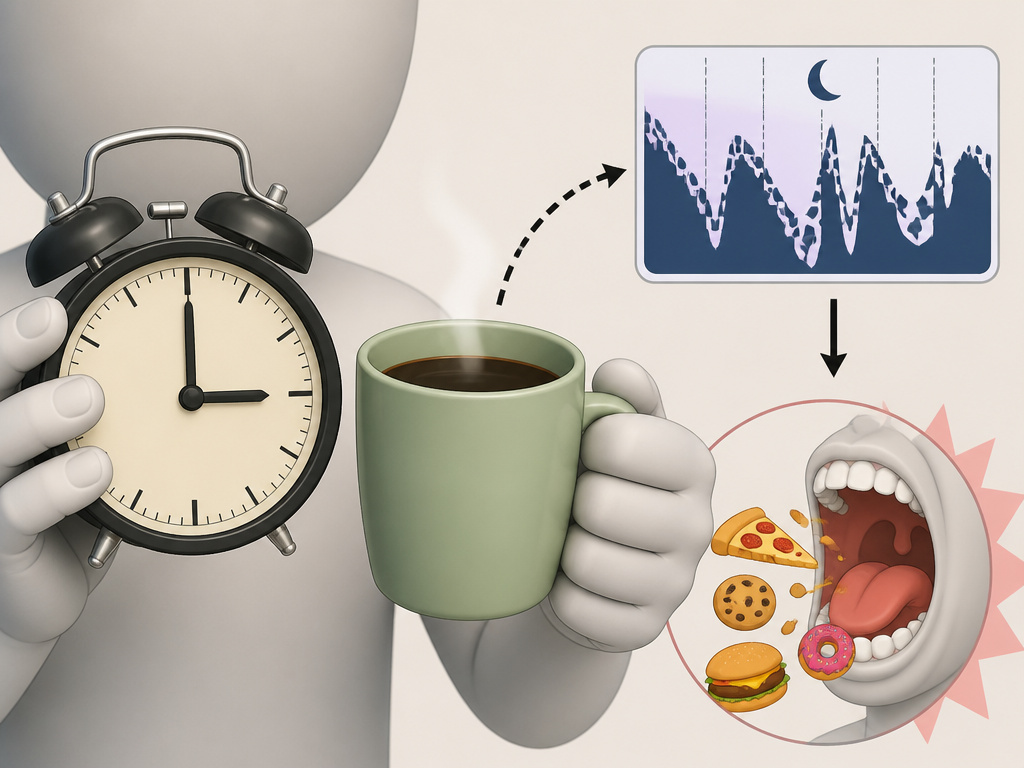
Coffee is not a magic fat-burning potion. It’s a mild metabolic stimulant with a narrow effective window. Step outside that window, and it works against you.
The biggest pitfall is using coffee as a hunger suppressant. Caffeine can blunt appetite temporarily. Relying on it to skip meals often leads to overeating later when the caffeine wears off and hunger comes roaring back. You end up consuming the calories you avoided, plus more.
Sleep disruption is another silent saboteur. Caffeine has a half-life of 5-6 hours. A late afternoon coffee can significantly fragment your sleep, even if you feel you’re out cold. Poor sleep raises levels of ghrelin (the hunger hormone) and lowers leptin (the satiety hormone). You wake up hungrier and less satisfied by food, making a calorie deficit feel brutal.
Finally, there’s the issue of tolerance. Your body adapts to chronic caffeine exposure. The metabolic boost and appetite suppression you felt in week one are often gone by week four. To get the same effect, you drink more. This accelerates the sleep disruption and stress hormone problems. It’s a downward spiral.
Common mistake: Drinking coffee after 2 PM to power through the afternoon, the resulting poor sleep can increase next-day hunger by up to 25%, wiping out any calorie deficit from the morning.
The fix is to treat coffee like a precision tool, not a crutch. Drink it early in the day, ideally before morning exercise. Keep daily intake under the 400 mg FDA guideline. And never let it replace a meal composed of real, satiating protein and fiber.
Frequently Asked Questions
Does black coffee burn belly fat?
No, black coffee does not specifically target belly fat. The caffeine may slightly increase overall metabolic rate and fat oxidation, but spot reduction is a myth. Belly fat loss requires a sustained calorie deficit.
Can I drink black coffee while intermittent fasting?
Yes, for the 16:8 or similar time-restricted feeding methods aimed at weight loss, black coffee is generally acceptable. Its 2-5 calories are considered negligible. For fasts targeting autophagy or extreme insulin sensitivity, some experts recommend avoiding it.
What can I add to coffee that won’t break a fast?
For a strict fast, nothing. For a more pragmatic approach to weight loss fasting, a sprinkle of cinnamon or a drop of pure stevia extract are unlikely to add meaningful calories or spike insulin. Avoid milk, cream, sugar, and artificial sweeteners like sucralose.
How does black coffee compare to green tea benefits for weight loss?
Both can support weight loss. Green tea contains EGCG, an antioxidant that may also mildly boost metabolism. Coffee typically has more caffeine for a stronger stimulant effect. The choice often comes down to personal tolerance and preference. Some people use both.
Is it better to drink coffee before or after a workout for weight loss?
Before. Consuming black coffee 30-60 minutes prior to exercise can enhance performance, increase fat oxidation during the workout, and improve focus. Drinking it after does not provide these exercise-specific benefits.
Before You Go
Black coffee is a useful, nearly calorie-free tool in a weight loss plan. Its benefit hinges on two non-negotiable rules: you must drink it black, and you must consume it within a structured calorie deficit. The caffeine can give a slight edge to your metabolism and workout performance, but it cannot create that deficit for you.
Pay attention to your brew method, paper filtration keeps calories lowest. Be ruthless about additives; even “healthy” fats like coconut oil in coffee turn a fast-assisting drink into a high-calorie meal. And remember the limits: too much caffeine, too late in the day, sabotages the sleep and stress hormones that govern your hunger.
Coffee isn’t a hack. It’s an amplifier. It makes a good diet and exercise plan work a little better. It makes a bad one fail a little faster.
{
“@context”: “https://schema.org”,
“@type”: “HowTo”,
“name”: “How to Use Black Coffee for Weight Loss”,
“totalTime”: “PT5M”,
“tool”: [
{
“@type”: “HowToTool”,
“name”: “Paper-filtered coffee brewer (drip, pour-over, Chemex)”
},
{
“@type”: “HowToTool”,
“name”: “Digital kitchen scale”
},
{
“@type”: “HowToTool”,
“name”: “Timer”
}
],
“step”: [
{
“@type”: “HowToStep”,
“name”: “Choose a paper-filtered brew method”,
“text”: “Use a drip machine, pour-over, Chemex, or AeroPress with a paper filter. Paper traps insoluble oils and cafestol, keeping calorie content at 2-5 per cup.”
},
{
“@type”: “HowToStep”,
“name”: “Drink it black within your fasting window”,
“text”: “Consume your coffee with no additives. Even a splash of milk or a zero-calorie sweetener can trigger an insulin response that disrupts fasting.”
},
{
“@type”: “HowToStep”,
“name”: “Time your intake before exercise”,
“text”: “Drink your coffee 30-60 minutes before a workout. The caffeine peak can increase fat oxidation during moderate-intensity exercise.”
},
{
“@type”: “HowToStep”,
“name”: “Limit total daily caffeine”,
“text”: “Stay under the FDA guideline of 400 mg of caffeine per day, roughly 3-4 cups of drip coffee. Excess caffeine can increase stress hormones that promote fat storage.”
},
{
“@type”: “HowToStep”,
“name”: “Avoid high-calorie coffee drinks”,
“text”: “Steer clear of lattes, mochas, and bulletproof coffee. A single bulletproof coffee can contain 200-400 calories, negating a calorie deficit.”
}
]
}
{
“@context”: “https://schema.org”,
“@type”: “FAQPage”,
“mainEntity”: [
{
“@type”: “Question”,
“name”: “Does black coffee burn belly fat?”,
“acceptedAnswer”: {
“@type”: “Answer”,
“text”: “No, black coffee does not specifically target belly fat. The caffeine may slightly increase overall metabolic rate and fat oxidation, but spot reduction is a myth. Belly fat loss requires a sustained calorie deficit.”
}
},
{
“@type”: “Question”,
“name”: “Can I drink black coffee while intermittent fasting?”,
“acceptedAnswer”: {
“@type”: “Answer”,
“text”: “Yes, for the 16:8 or similar time-restricted feeding methods aimed at weight loss, black coffee is generally acceptable. Its 2-5 calories are considered negligible. For fasts targeting autophagy or extreme insulin sensitivity, some experts recommend avoiding it.”
}
},
{
“@type”: “Question”,
“name”: “What can I add to coffee that won’t break a fast?”,
“acceptedAnswer”: {
“@type”: “Answer”,
“text”: “For a strict fast, nothing. For a more pragmatic approach to weight loss fasting, a sprinkle of cinnamon or a drop of pure stevia extract are unlikely to add meaningful calories or spike insulin. Avoid milk, cream, sugar, and artificial sweeteners like sucralose.”
}
},
{
“@type”: “Question”,
“name”: “How does black coffee compare to green tea benefits for weight loss?”,
“acceptedAnswer”: {
“@type”: “Answer”,
“text”: “Both can support weight loss. Green tea contains EGCG, an antioxidant that may also mildly boost metabolism. Coffee typically has more caffeine for a stronger stimulant effect. The choice often comes down to personal tolerance and preference. Some people use both.”
}
},
{
“@type”: “Question”,
“name”: “Is it better to drink coffee before or after a workout for weight loss?”,
“acceptedAnswer”: {
“@type”: “Answer”,
“text”: “Before. Consuming black coffee 30-60 minutes prior to exercise can enhance performance, increase fat oxidation during the workout, and improve focus. Drinking it after does not provide these exercise-specific benefits.”
}
}
]
}
