
How to Make Cold Brew Concentrate: The Smooth, Strong Recipe
To make cold brew coffee concentrate, combine coarsely ground coffee with cold, filtered water at a 1:4 ratio by weight (e.g., 6 oz coffee to 24 oz water). Steep the mixture, covered, for 16–24 hours at room temperature or in the fridge, then strain it through a fine-mesh sieve and cheesecloth. A second pass through a paper filter yields a silt-free concentrate that lasts up to two weeks refrigerated.
Most people dump fine grounds into a random jar, top it with tap water, and wait a day. The result is a muddy, bitter sludge that tastes like stale diner coffee. It goes sour in three days. That’s not concentrate. That’s wasted beans.
This guide walks through the weight-based ratio, the grind size that prevents over-extraction, and the two-stage filtration that professional systems like the Toddy use. You will get a clean, potent concentrate that mixes into anything without turning gritty.
Key Takeaways
- Use a 1:4 coffee-to-water ratio by weight, not volume. Six ounces of coffee to 24 ounces of water is the sweet spot for a strong, versatile concentrate.
- Grind size is non-negotiable. Coarse, breadcrumb-like grounds prevent over-extraction and silt. A blade grinder makes dust that will cloud your final product.
- Steep for 18 hours at room temperature for full flavor development. Going longer than 24 hours pulls out woody, astringent notes.
- Filter twice: first through a cheesecloth-lined sieve, then optionally through a paper coffee filter. Skipping the second pass leaves fine silt that settles and shortens shelf life.
- Properly stored in a sealed glass bottle in the fridge, your concentrate stays fresh for two weeks. Metal or plastic containers can impart off-flavors within a week.
The Foundation: Coffee, Water, and Time
Your equipment is simple. Your ingredients are everything.
Start with whole beans. Pre-ground coffee is ground for drip machines—too fine. It will over-extract, turning your concentrate harsh and cloudy. Grind just before brewing. The target is coarse, like rough breadcrumbs or sea salt. If your grinder only has a “coarse” setting, that’s a start. For true consistency, a burr grinder is the tool. The uniform particle size extracts evenly, which is the whole point of a slow steep.
Water matters more than you think. Tap water with high mineral content or chlorine can lock in off-flavors. Use filtered or bottled water. Cold is mandatory. Hot water would start extracting acids and oils you’re trying to avoid.
Cold brew extraction relies on time, not heat, to slowly dissolve sugars and caffeine while leaving most acidic compounds behind. This process, detailed in an NCBI study on cold brew grinding and extraction, is why the final product tastes sweeter and less bitter than hot-brewed coffee.
The vessel is any large, clean glass jar or food-safe pitcher. Avoid reactive metals. A 2-quart container is perfect for a standard batch.
TL;DR: Whole beans, a coarse grind, and filtered cold water are your only non-negotiable ingredients. Everything else is technique.
The Critical 1:4 Coffee-to-Water Ratio
This is where batches fail. A “cup” of coffee can mean 5 ounces or 8 ounces. A “scoop” is meaningless. You must work by weight.
The specialty standard for cold brew concentrate is a 1:4 coffee-to-water ratio by weight. For a manageable batch, that’s 6 ounces (170 grams) of coffee to 24 ounces (680 grams) of water. This produces a potent concentrate meant for dilution.
| Ratio (Coffee:Water) | Strength | Best For | Risk If Used Incorrectly |
|---|---|---|---|
| 1:4 (e.g., 6 oz : 24 oz) | Concentrate (requires dilution) | Versatile mixing, longevity | Too strong to drink straight; can taste overly intense if not diluted properly. |
| 1:8 | Ready-to-drink | Immediate consumption over ice | Weak as a concentrate; dilutes to tastelessness if you add milk or ice. |
| 1:12 | Very mild | Those sensitive to caffeine | Will not store well; spoils faster due to higher water content. |
Why 1:4? It creates a high enough solute concentration to inhibit microbial growth, extending shelf life. A PMC optimization study for cold brew identified this range as optimal for balancing flavor intensity and stability. A 1:8 ratio is just iced coffee. It won’t keep.
Common mistake: Measuring coffee by volume using a scoop — a “cup” of whole beans weighs less than a “cup” of ground beans. This throws the ratio off by 20% or more, resulting in a weak, short-lived product.
Weigh your coffee on a kitchen scale. Weigh your water. It takes ten seconds and guarantees the batch.
The Steeping Process: Patience Over Power
Combine your coarse grounds and cold water in your jar. Stir vigorously for a full 30 seconds. This isn’t gentle incorporation. You need to wet every ground completely to start extraction and release trapped gases that would otherwise cause floating clumps.
Cover the jar loosely. A sealed lid will trap carbon dioxide and could build pressure. Use the jar’s lid but don’t screw it tight, or cover the opening with plastic wrap.
Now, wait. The sweet spot is 18 hours at room temperature. You can steep in the fridge, but it will need a full 24 hours. Heat accelerates molecular movement. At room temperature, extraction happens efficiently. In the fridge, it slows down.
Why 18 hours? It’s the window where sugar extraction peaks before tannin extraction ramps up. Shorter steeps taste weak and sour. Longer steeps, especially beyond 24 hours, pull out woody, astringent compounds from the grounds. Your concentrate will taste like over-steeped tea.
Filtration: The Difference Between Clean and Muddy
This is the most physical part. You have a jar full of sludge. Your job is to remove every solid particle without rushing.
First, set a fine-mesh sieve over a large bowl or pitcher. Line the sieve with a double layer of cheesecloth or use a nut milk bag. Slowly pour the steeped mixture through. Let gravity do the work. Do not press on the grounds. Squeezing forces fine silt and bitter oils through the cloth.
The first pass will yield a liquid that looks clear but isn’t. Hold a glass of it to the light. You’ll see a haze of super-fine particles in suspension. This is “fines” or silt. It will settle in your bottle, creating sludge at the bottom, and it introduces enzymes that shorten shelf life.
For a professional-grade, silt-free concentrate, you need a second filtration. This is the step home brewers skip. And it’s why their concentrate goes off in a week.
Place a paper coffee filter inside a clean sieve or a funnel over your storage bottle. Slowly pour the once-filtered concentrate through the paper filter. This will take time—maybe 30 minutes for a batch. The paper catches particles down to about 20 microns.
| Filtration Stage | Tool | Removes | Consequence If Skipped |
|---|---|---|---|
| Primary | Cheesecloth-lined sieve | Coffee grounds | Impossible to separate liquid from solid; batch is ruined. |
| Secondary (Optional) | Paper coffee filter | Fine silt (fines) | Silt settles, creates bitter sludge, reduces shelf life to 5–7 days. |
| Tertiary (Commercial) | 5-micron absolute filter | All particulates, oils | Not necessary for home; done for microbial stability in bottled products. |
I tried skipping the paper filter for years. The convenience wasn’t worth it. Every bottle developed a thick, bitter sediment after four days. The concentrate above it tasted flat. Now I never skip it. The clarity is instant, and the concentrate stays bright for two full weeks.
TL;DR: Filter twice. Cheesecloth catches the grounds; a paper filter catches the silt that ruins flavor and shelf life.
Storage and Serving Your Concentrate
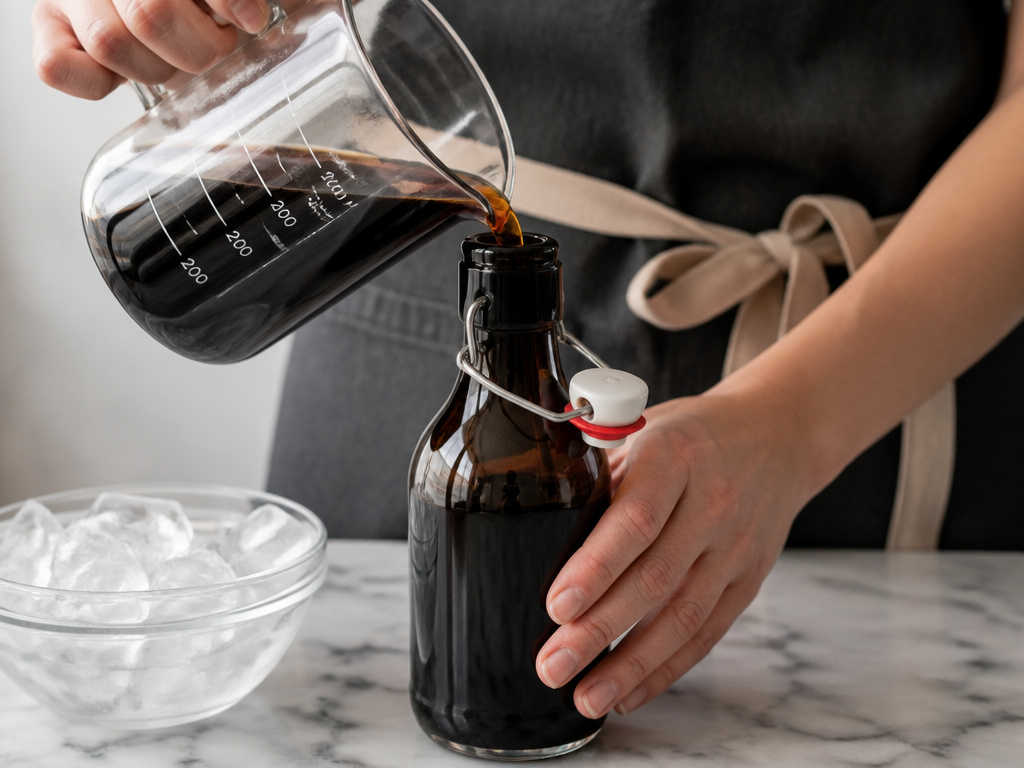
Your finished concentrate should look like dark maple syrup. Pour it into a clean, sealable glass bottle. Dark glass is ideal to block light, but any glass is better than plastic or metal. Plastic can absorb odors; metal can react with the coffee’s acids.
Store it in the refrigerator immediately. The concentrate is stable at cold temperatures. Properly filtered and stored, it maintains peak flavor for two weeks. After that, it won’t spoil like milk, but it will oxidize and taste stale. You’ll notice a flat, papery note.
To serve, dilute. The standard is a 1:1 ratio of concentrate to water, milk, or ice. For a stronger kick, try 2 parts concentrate to 1 part water. This is where you adjust for personal taste. The concentrate is also your base for coffee cocktails, baking, or making frozen coffee cubes.
I won’t use a stainless steel water bottle for storage anymore. After three days, the concentrate picked up a faint metallic tang. Glass is inert. It’s the only material I trust for the full two-week shelf life.
Choosing Your Coffee Beans
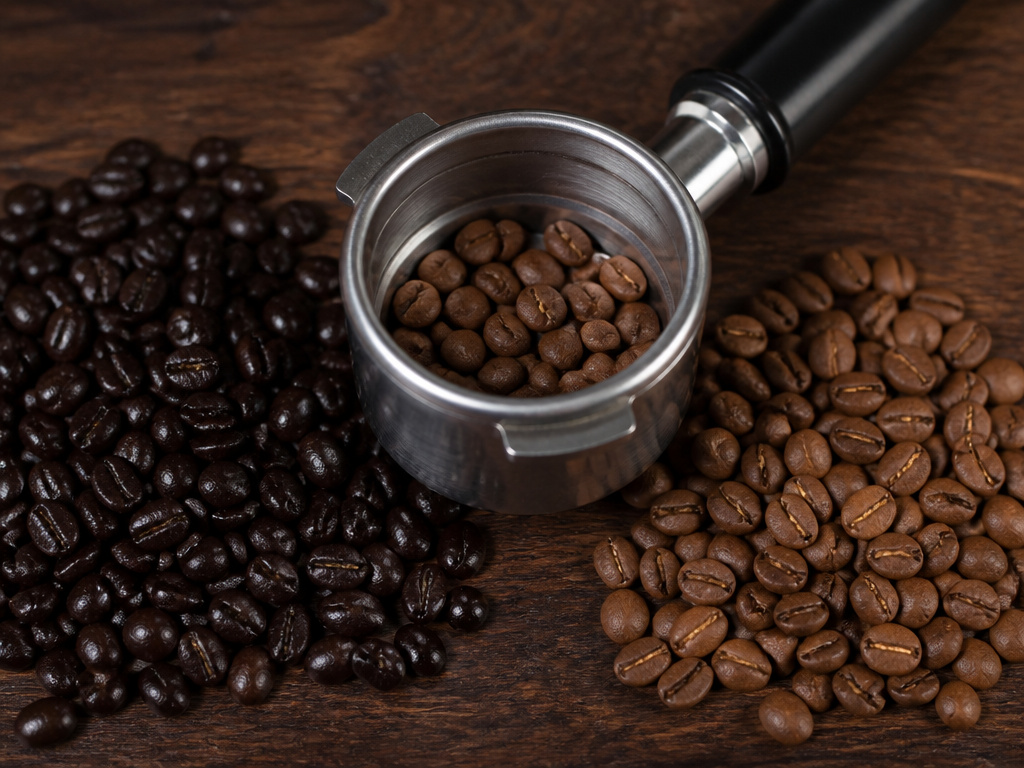
Any coffee will work, but the bean dictates the final character. This is where personal preference and your coffee bean origins knowledge come into play.
For a classic, chocolatey concentrate, use a medium or dark roast. These roasts have fewer acids to begin with, and the cold process further mellows them. A blended coffee profile designed for balance often works beautifully.
For a brighter, more complex concentrate, try a light or blonde roast flavor. The cold extraction highlights fruity and floral notes that heat can destroy. A high-quality Arabica bean from Ethiopia or Colombia can yield a concentrate that tastes like berries and honey.
Avoid any coffee labeled as “espresso roast” for your first batch. These are often very dark and oily. The oils can go rancid during the long steep and cloud your filtration. Start with a standard drip roast.
Equipment Deep Dive: Jar vs. Dedicated System
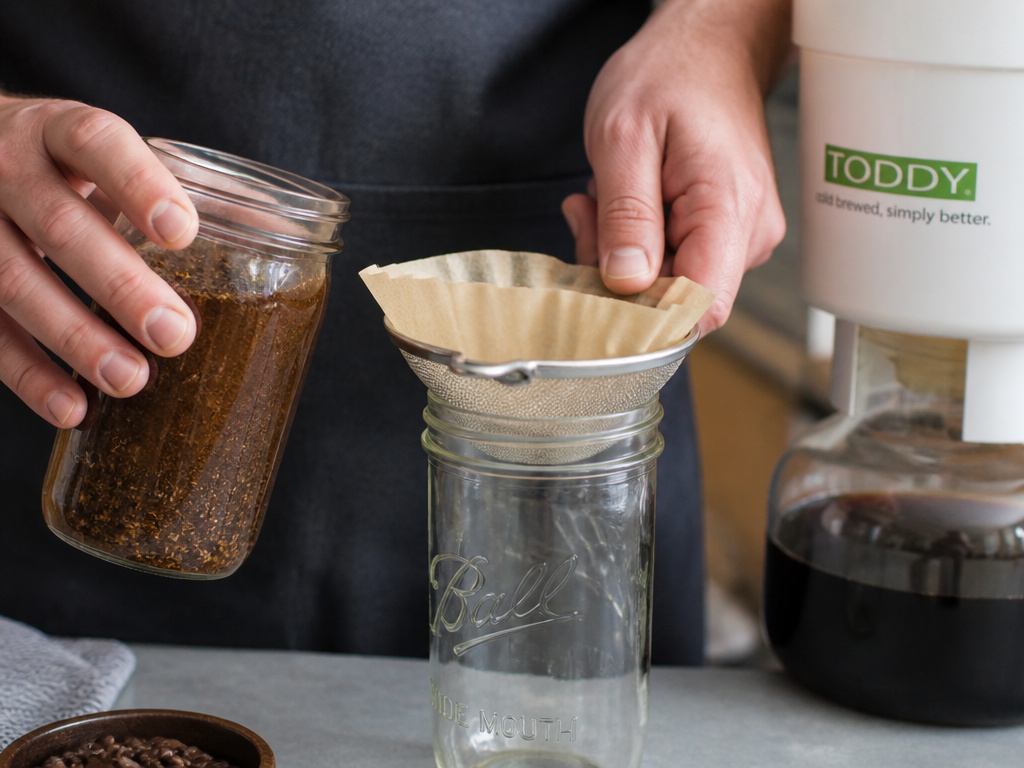
You need a jar, a sieve, and cloth. That’s it. Dedicated cold brew systems like the OXO Brew Compact (Model 11236100) or the Toddy Cold Brew System (T2N) are conveniences, not necessities.
These systems integrate the filtration. The Toddy uses a thick felt filter that acts as both sieve and fine filter. The OXO uses a stainless steel mesh filter and a “rainmaker” lid for even saturation. They work well. They also cost money and take up cabinet space.
The jar method gives you more control over the ratio and the filtration stages. You can taste and adjust each batch. The dedicated system standardizes the process. If you drink cold brew daily, a Toddy is a worthwhile investment. For the occasional batch, the jar is superior.
Your choice of paper coffee filters matters here too. Unbleached filters can impart a faint papery taste to the very first batch. Rinse them with hot water first. Bleached filters are inert. For the purest flavor, a rinsed unbleached filter is my pick.
Troubleshooting Your Cold Brew Concentrate
Problem: The concentrate tastes sour or weak.
Cause: Under-extraction. Your grind was too coarse, your steep time was too short, or your water was too cold (if refrigerated). The coffee didn’t have enough time to dissolve the sugars.
Fix: Next time, ensure a consistent coarse (not extra-coarse) grind, steep at room temperature, and go for 18 hours. Check your ratio by weight.
Problem: The concentrate is bitter and astringent.
Cause: Over-extraction. Your grind was too fine, you steeped too long (over 24 hours), or you pressed on the grounds during filtration.
Fix: Use a proper coarse grind. Set a timer for 18 hours. Never squeeze the filter bag or cheesecloth.
Problem: There’s thick sludge at the bottom of the storage bottle.
Cause: Incomplete filtration. You skipped the paper filter stage.
Fix: Pour the clear concentrate off the top into a new bottle. Next time, perform the secondary paper filtration. It’s not optional if you want clarity.
Problem: The concentrate developed an off smell after 5 days.
Cause: Contamination or storage in a reactive container. Plastic bottles or poorly cleaned jars can harbor bacteria or impart flavors.
Fix: Always use scrupulously clean glass bottles. Sanitize with hot water and dish soap, and ensure they are completely dry before filling.
Frequently Asked Questions
What’s the difference between cold brew concentrate and regular iced coffee?
Cold brew concentrate is brewed with a high coffee-to-water ratio (1:4) and is meant to be diluted. Regular iced coffee is typically hot-brewed coffee that is then chilled, often at a standard brewing ratio (1:16). The cold brew process creates a smoother, less acidic, and more stable product.
Can I use a blender or food processor to grind the beans?
No. Blade grinders create an inconsistent mix of boulders and dust. The dust will over-extract and turn bitter, while the boulders will under-extract. This inconsistency will ruin your batch. For proper coffee grind consistency, a burr grinder is essential.
How should I dilute the concentrate?
Start with a 1:1 ratio of concentrate to water, milk, or almond milk. Adjust to taste. For a stronger drink, use more concentrate. For a lighter one, use more liquid. Remember, you can also adjust the strength by using less water in your initial brew.
Why does my concentrate have so much foam on top after filtering?
The foam is caused by gases released during brewing and agitation during pouring. It’s harmless and will dissipate after a few hours in the fridge. To minimize it, pour your filtered concentrate slowly down the side of the storage bottle.
Can I sweeten the concentrate before storing it?
It’s not recommended. Adding sugar or brown sugar sweetener creates a nutrient-rich environment that can promote microbial growth, shortening shelf life. Sweeten each individual serving instead.
If my concentrate is too strong, did I brew it wrong?
No, that’s the point. Concentrate is supposed to be too strong to drink straight. If it’s unpalatably intense even after dilution, your next batch can use a slightly weaker ratio, like 1:5. But first, try diluting it more. The power of a concentrate is its flexibility.
Before You Go
Making exceptional cold brew concentrate hinges on three commitments: weigh your coffee and water for a true 1:4 ratio, grind your beans coarse and consistent, and filter twice—once through cloth, once through paper. The 18-hour steep at room temperature is the quiet engine that extracts sweetness without bitterness.
Store your work in glass, not plastic. Dilute it to your taste, whether with water, a plant-based milk, or over ice. This method yields a concentrate that’s not just a summer shortcut. It’s a staple that gives you perfect, smooth coffee for two weeks from a single batch. The upfront minutes save you daily dollars and disappointments.
