
How to Make Coffee Milk | The Real Rhode Island Ratio
This post contains affiliate links. As an Amazon Associate, we earn from qualifying purchases.
To make coffee milk, combine 2 tablespoons of coffee syrup with 1 cup of cold milk in a tall glass and stir vigorously for 15 seconds. The drink is defined by Rhode Island law as a mixture of coffee syrup and milk, with the syrup providing both flavor and sweetness in one step.
Most guides overcomplicate it. They treat it like sweetened iced coffee and tell you to brew, cool, sweeten, and then add milk. That’s a different drink. Real coffee milk starts with a prepared syrup. The mistake is using the wrong base.
This guide covers the authentic method, the legal definition, and how to adapt it for any kitchen. We’ll look at syrup choices, milk alternatives, and how to avoid the two most common texture failures.
Key Takeaways
- Authentic coffee milk uses a pre-made coffee syrup, not just sweetened coffee. Rhode Island law defines it this way.
- The standard ratio is 2 tablespoons of syrup to 1 cup of milk. Going beyond 3 tablespoons makes it cloying.
- Stir for a full 15 seconds. Syrup is denser than milk and will layer at the bottom if you don’t mix it thoroughly.
- For a frothy diner-style texture, use very cold milk and a handheld frother for 30 seconds before adding the syrup.
- If using plant-based milk, warm it slightly before mixing to prevent curdling from the syrup’s acidity.
What Coffee Milk Actually Is (It’s a Law)
Forget everything you know about iced coffee. Coffee milk is a specific, legally defined beverage. Rhode Island General Laws § 21-2-29.1 calls it “a mixture of coffee syrup and milk.” The law further defines “coffee syrup” as a flavored syrup containing coffee extract, sugar, and other ingredients. This isn’t a recipe suggestion. It’s the official standard.
The history is practical. The syrup format solved two problems: it diluted strong, bitter coffee concentrate into something palatable for kids, and it created a shelf-stable flavoring for soda fountains. Using brewed coffee instead of syrup changes the chemistry. The sugar isn’t fully dissolved into the coffee solids, so it sinks differently. The mouthfeel is thinner.
Common mistake: Using cooled brewed coffee and sugar — the sugar never fully integrates with the cold coffee, leaving a granular layer at the bottom of the glass and a weak coffee flavor throughout.
If your goal is the authentic Rhode Island drink, you start with syrup. Everything else is a variation.
TL;DR: Authentic coffee milk is defined by law as coffee syrup mixed with milk. Brewed coffee plus sugar is a different, less stable beverage.
The Rhode Island Ratio: Syrup to Milk
The proportions are not a mystery. They were standardized by diner and dairy counter practice decades ago. For an 8-ounce serving, you use 2 tablespoons of coffee syrup. That’s 1 fluid ounce. For a stronger, more adult palate, 3 tablespoons is the ceiling. More than that and the drink becomes syrup with a milk afterthought.
The milk must be cold. Ice-cold. The temperature shock helps the syrup viscosity break down and integrate faster. If your milk is even slightly warm, the syrup will cling to the spoon and the sides of the glass in sticky rivulets.
| Glass Size | Syrup (tbsp) | Milk (cups) | Best For |
|---|---|---|---|
| Small (12 oz) | 3 | 1.5 | A quick treat |
| Standard (16 oz) | 4 | 2 | Diner-style serving |
| Large (20 oz) | 5 | 2.5 | Sharing or a long sip |
The process is simple but time-bound. Pour the syrup first. Then add the milk slowly, preferably down the side of the glass to minimize bubbles if you’re not frothing. Stir immediately. The stirring is non-negotiable. Set a timer for 15 seconds and stir from the very bottom, scraping the glass. The syrup is heavier than milk. Stop early and you’ll get a sickly-sweet final gulp.
TL;DR: Use 2 tbsp syrup per cup of ice-cold milk. Stir from the bottom for a full 15 seconds to prevent a sugary sinkhole.
Choosing Your Base: Syrup vs. DIY Extract
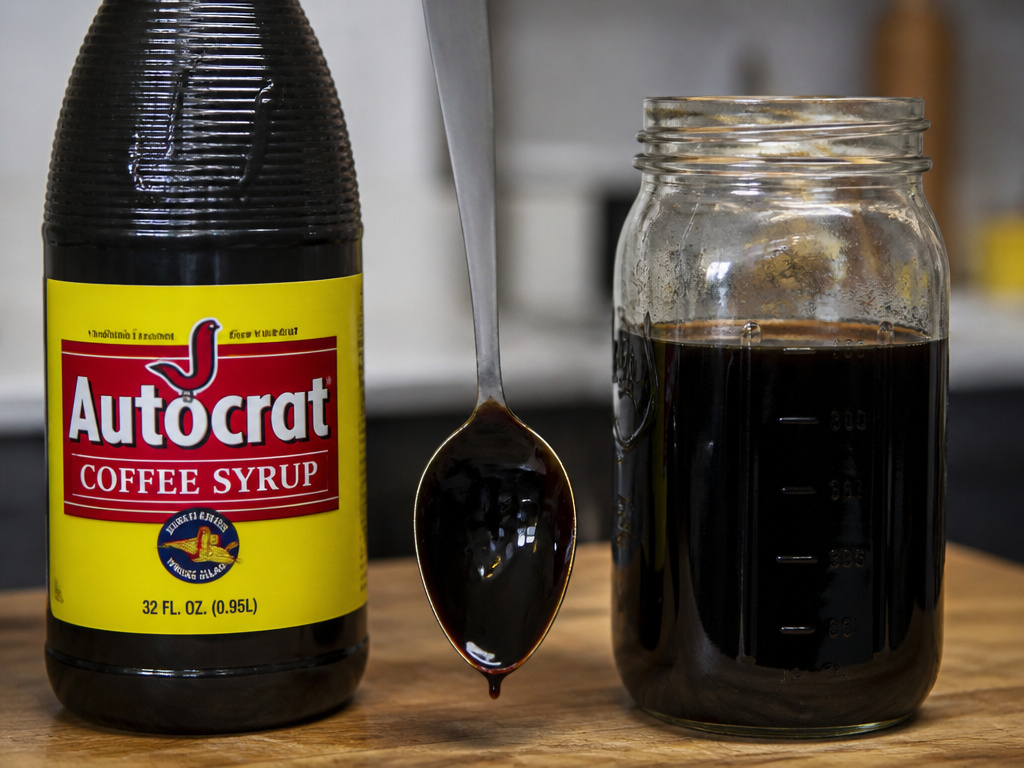
Your first decision is the syrup. The iconic brand is Autocrat Coffee Syrup. It’s the default in Rhode Island for a reason. The flavor profile is a deep, almost chocolaty coffee that stands up to the fat in milk without tasting bitter. It’s a balanced product.
You can make a homemade version. Simmer 2 cups of very strong brewed coffee with 2 cups of sugar until it reduces by half and coats the back of a spoon. This gives you control over the coffee’s origin. A medium roast from Brazil or Sumatra works better than a light, acidic Ethiopian for syrup. The reduction caramelizes the sugars slightly.
The trade-off is shelf life. A commercial syrup like Autocrat uses preservatives to stay stable in the pantry for months. Your homemade reduction needs refrigeration and should be used within two weeks. If you see bubbles or smell fermentation, dump it.
I once made a big batch of homemade syrup with a fruity Kenyan coffee. After ten days in the fridge, it started to bubble. The resulting coffee milk had a faint, unpleasant yeastiness. Now I only make small batches or buy the bottled stuff.
The other option is a cold brew concentrate. This is a modern workaround. Use a 1:1 concentrate and add simple syrup to taste. It’s brighter and less caramelized than a reduced syrup. It’s a good choice if you want to highlight a specific single-origin characteristic but it’s technically a different beverage.
The Tools You Already Own
You don’t need special equipment. A tall glass and a long spoon are the minimum. The glass matters more than you think. A thick, diner-style glass keeps the drink colder than thin crystal. If you have one, put it in the freezer for five minutes before you start.
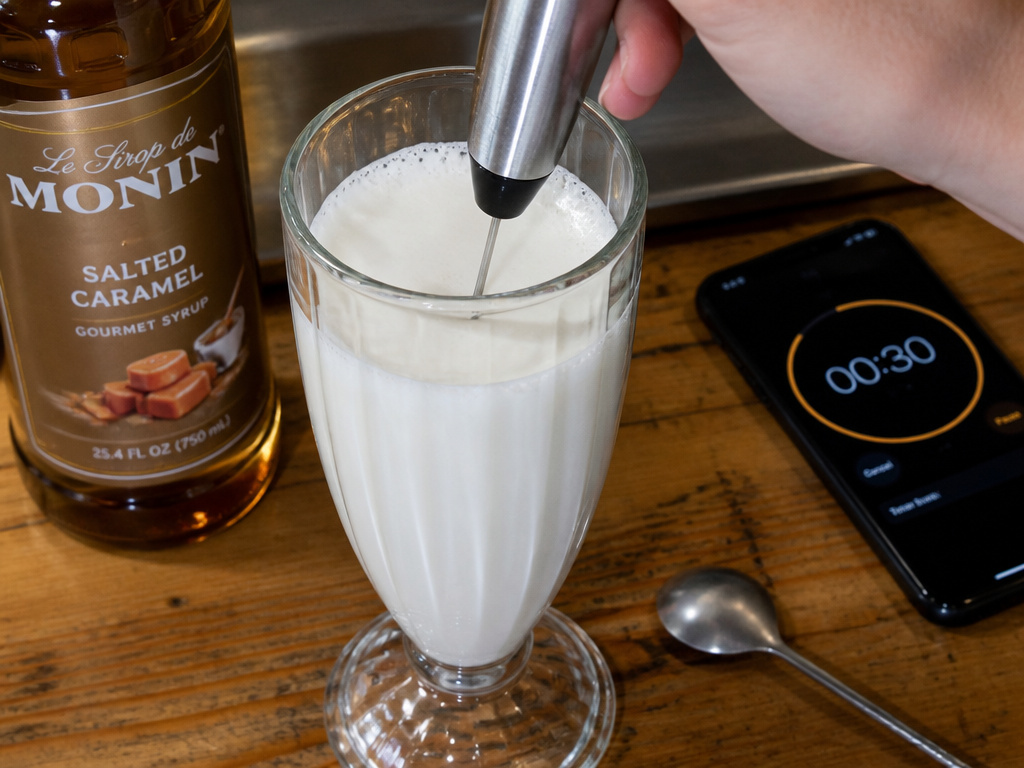
For the frothy, latte-like texture you see in some shops, you need a frother. A handheld milk frother is the best five-dollar tool you’ll own for this. The technique from the YouTube transcript is correct: froth the cold milk first, then add the syrup.
Froth for about 30 seconds. You’re looking for a creamy microfoam, not stiff peaks. If you over-froth, you get a cup of foam with liquid milk underneath. After frothing, gently pour the syrup down the side of the glass and give it one slow fold with a spoon. Don’t stir vigorously or you’ll collapse the foam.
If you’re using the syrup-to-milk method for a hot version, the order reverses. Warm your milk first (to about 55–60°C / 130–140°F), then stir in the syrup. Adding syrup to cold milk and then microwaving it often scorches the sugar against the glass.
Navigating the Milk Aisle
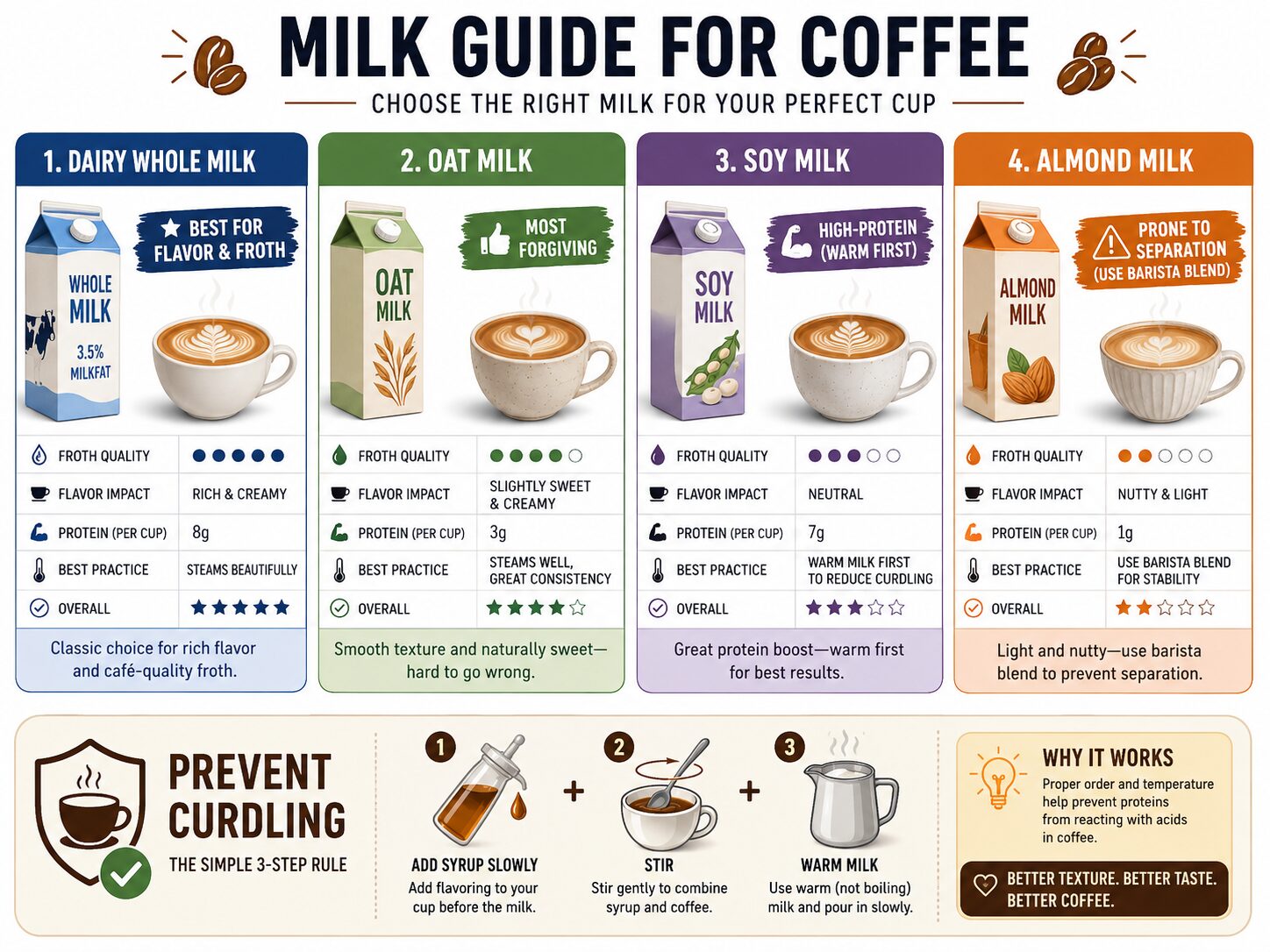
Dairy milk is the standard. Whole milk is best—the fat carries the coffee flavor and creates a luxurious mouthfeel. Skim milk works, but the drink tastes watery and the coffee flavor can become astringent.
Plant-based milks are a minefield. Their different protein structures react with coffee’s acidity and temperature. The main issue is curdling.
- Oat milk is the most forgiving. Its higher fat and fiber content mimics dairy. It froths well and rarely curdles.
- Soy milk is high-protein and can curdle if the coffee syrup is very acidic or if the milk is too cold. Let it sit out for 10 minutes to take the chill off before mixing.
- Almond milk is tricky. It’s thin and prone to separation. If you’re using almond milk in coffee, choose a “barista blend” which contains stabilizers to prevent curdling.
The curdling happens because the acid in the coffee syrup destabilizes the proteins in the plant milk, causing them to coagulate. You’ll see little grainy bits. To prevent it, always add the syrup to the plant milk slowly while stirring constantly. Warming the plant milk slightly (to room temperature) also helps.
If you’re counting your intake, the calorie content of milk changes the math. A cup of whole milk has about 150 calories; unsweetened almond milk has about 30. The syrup adds roughly 100 calories per two tablespoons. Choose your base accordingly.
Leveling Up: Flavored Variations
The basic recipe is a canvas. Once you master the 2:1 ratio, you can modify it.
For a spiced version, add a pinch of salt](https://beanthusiast.com/add-salt-to-coffee/) to the glass before you pour the milk. It won’t make it taste salty. It neutralizes lingering bitterness and makes the coffee flavor pop. About 1/16th of a teaspoon is enough.
Swirl in a quarter teaspoon of cinnamon in coffee](https://beanthusiast.com/benefits-of-cinnamon-coffee/) into the syrup at the bottom of the glass before adding milk. The powder will mix in as you stir. Don’t use cinnamon on top of frothed milk—it’ll just float and get inhaled.
You can swap the sweetener. Instead of coffee syrup, use two tablespoons of sweetened condensed milk and a teaspoon of instant coffee granules. Stir until the granules dissolve. It’s richer and thicker. Or, for a caramel note, use a brown sugar sweetener syrup made by dissolving brown sugar in a little hot water.
For a keto or high-energy version, blend your coffee milk with a teaspoon of MCT oil coffee additive. The oil will emulsify and create a shockingly creamy texture without dairy. Blend it; don’t just stir.
| Variation | Base Change | Result |
|---|---|---|
| Salty Dog | Add 1/16 tsp salt to glass | Rounds bitterness, enhances coffee notes |
| Cinnamon Spice | Add 1/4 tsp cinnamon to syrup | Warm, aromatic finish |
| Condensed Coffee | Use sweetened condensed milk + instant coffee | Extremely rich, dessert-like texture |
| Brown Sugar Bourbon | Use brown sugar simple syrup | Deep caramel, molasses undertones |
| Keto Creamer | Add 1 tsp MCT oil and blend | Creamy, energy-boosting, no sugar crash |
Safety and Storage: Don’t Get Sick
This is a dairy-based beverage. Treat it like milk. The USDA Food Code mandates that time/temperature control for safety foods like milk must not sit in the “danger zone” (40°F–140°F) for more than two hours. For homemade coffee milk, that means one hour if the ambient temperature is above 90°F.
If you’re making a large batch for a party, keep it in a pitcher nestled in a bowl of ice. Do not let it sit on the picnic table. The sugar in the syrup accelerates bacterial growth.
Store-bought coffee syrup is shelf-stable. Once opened, refrigeration extends its life and prevents mold. Homemade syrup must always be refrigerated. Any batch that develops an off smell, visible mold, or carbonation should be discarded.
Before you start: Wash your hands and utensils. Use clean, cold milk. Do not prepare coffee milk if you are ill. If making for others, disclose all ingredients to check for dairy or allergen concerns.
Never mix a batch and leave it out to “cool down” before refrigerating. Pour it over ice to drink immediately, or get it into the fridge within 30 minutes of mixing. The risk isn’t worth the laziness.
Frequently Asked Questions
Can I use espresso for coffee milk?
You can, but it becomes a different drink—essentially a sweetened latte. For true coffee milk, the coffee flavor needs to come from a syrup. Espresso is too concentrated and not sweet enough. If you want to try, pull a single shot, dissolve a tablespoon of sugar in it while hot, let it cool, and then add it to milk. It’s closer to an iced café au lait.
Why did my plant-based milk curdle?
The acidity in the coffee syrup caused the proteins to coagulate. Next time, warm the plant milk to room temperature before adding the syrup slowly while stirring constantly. Using a barista-formula plant milk also helps.
How long does coffee milk last in the fridge?
Because it’s a fresh mixture, consume it within 24 hours. The milk will begin to separate and the syrup will settle. It’s not unsafe if refrigerated, but the texture and taste degrade quickly. Shake or stir vigorously before drinking if stored.
Is coffee syrup just coffee and sugar?
Legally, yes—coffee extract and sugar. Commercially, syrups like Autocrat contain additional ingredients like preservatives (potassium sorbate) and stabilizers (xanthan gum) for shelf life and consistency. A true from-scratch syrup is just reduced, sweetened coffee.
What’s the best coffee to use for homemade syrup?
Use a medium or dark roast with low acidity. A Brazilian or Sumatran blend flavor profile works well. Light roasts often taste sour and thin once reduced. Grind the beans fresh with a burr grinder benefits for a consistent, sediment-free brew.
The Bottom Line
Coffee milk is simplicity defined by law: syrup plus milk. Respect the ratio of two tablespoons to one cup. Stir like you mean it. The brand of syrup matters less than the technique.
For the authentic experience, buy a bottle of Autocrat. For creative control, simmer your own syrup and use it within two weeks. If your plant milk curdles, warm it first. Never let the finished drink sit out.
The charm is in its straightforwardness. It’s not craft coffee. It’s a cold, sweet, coffee-flavored milk that’s stood the test of time because it works. Get the base right, and the rest is just stirring.
