
How Long Does Coffee Creamer Last? Refrigerated vs. Pantry
Coffee creamer lasts based on its type and storage. Refrigerated dairy creamers last 7-14 days after opening. Shelf-stable liquid creamers last about 30 days after opening without refrigeration. Powdered creamers can last 6-24 months unopened, and about 6 months once opened. These timelines assume strict adherence to temperature control and using clean utensils every time.
Most people think the date on the bottle is a guarantee. It is not. That date assumes perfect, unopened storage from factory to your fridge. Once you break the seal, the clock resets to a much shorter, and far more specific, countdown.
This guide breaks down the official manufacturer timelines, the government food safety rules that back them up, and the physical signs that tell you the creamer has turned. We will cover refrigerated, shelf-stable, and powdered types, plus the one mistake that cuts any creamer’s life in half.
Key Takeaways
- Refrigerated creamers like International Delight have a 7-10 day post-opening window per their packaging, a hard stop based on dairy spoilage rates.
- “Shelf-stable” is a lie after opening. Pump-bottle creamers that don’t need refrigeration still expire 30 days after you break the seal.
- Temperature abuse is the silent killer. The USDA states perishables left between 40°F and 140°F for over two hours can become unsafe.
- Powdered creamer’s enemy is moisture, not time. An opened canister lasts about 6 months in a dry pantry, but clumping means it’s done.
- Your nose knows first. A sour or rancid smell is a definitive sign of bacterial or fungal growth; tasting it is unnecessary and risky.
The Official Timelines (And What They Actually Mean)
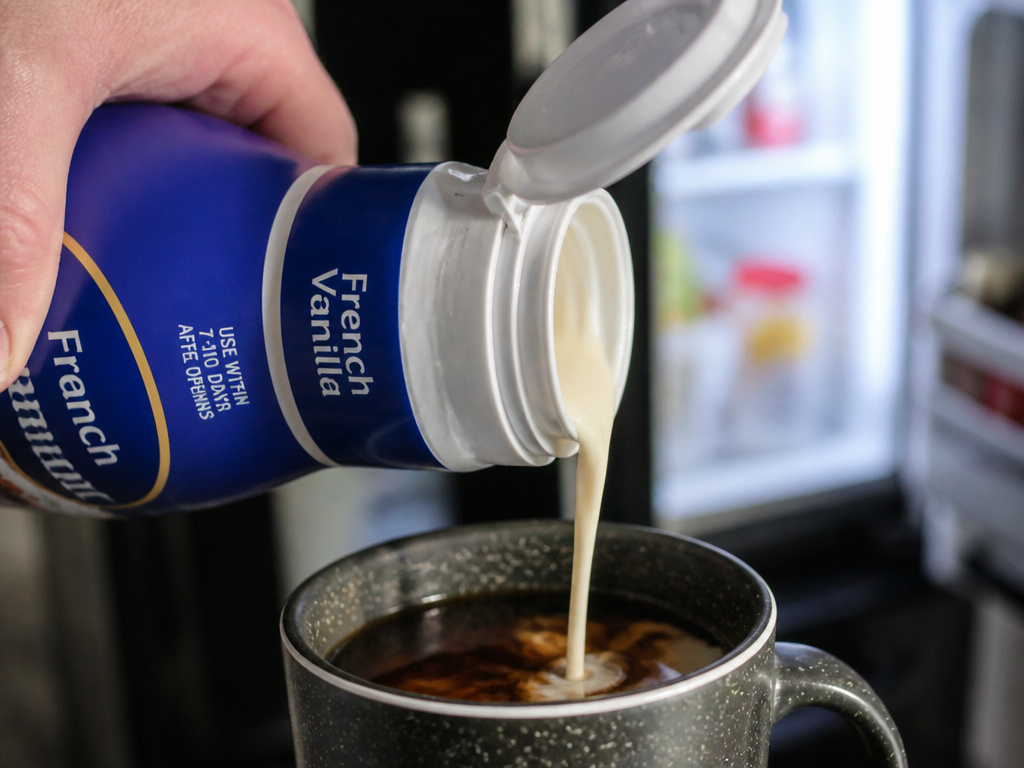
Manufacturer guidelines are your starting point, not your finish line. They are built for ideal conditions. Your kitchen is not a lab.
Refrigerated, ready-to-eat foods like dairy creamers should be discarded within 7 days of opening if held at 41°F (5°C) or below, according to FDA Food Code guidelines for date marking to control pathogen growth.
Take International Delight French Vanilla. The bottle often says “use within 7-10 days after opening.” That is not a suggestion. Dairy sugars and proteins begin breaking down predictably at refrigerator temperatures. By day 11, the population of spoilage bacteria reaches a level that can alter taste and safety. I have pushed it to 12 days. The coffee tasted faintly sour, like yogurt, and I spent the next hour wondering if it was psychosomatic.
TL;DR: Brand timelines are maximums under perfect storage. Your real window is often 2-3 days shorter.
Refrigerated Liquid Creamers (Dairy & Non-Dairy)
These live and die by the cold. The countdown starts the moment you twist the cap.
| Creamer Type | Unopened (Fridge) | After Opening | Why The Short Window? |
|---|---|---|---|
| Dairy-based (Half & Half, Lactose) | 2-3 weeks past “sell-by” | 7-10 days | Lactose ferments rapidly. Smell turns sour, texture may curdle. |
| Non-Dairy (Almond, Soy, Oat) | 4-6 weeks past “best-by” | 10-14 days | Vegetable oils can turn rancid. Stabilizers separate after repeated temperature swings. |
| Flavored Dairy (International Delight) | As per printed date | 7-10 days | Added sugars accelerate microbial growth. Vanilla flavor can mask early sour notes. |
The most common mistake is storing the bottle on the fridge door. Every time you open the fridge, the creamer experiences a 5-10 degree temperature spike. This thermal cycling accelerates separation and rancidity. Keep it on a shelf in the back, against the cold plate.
Common mistake: Using the creamer straight from a warm counter for morning coffee, then returning it to the fridge — that 20-minute stint above 40°F each day cuts the safe window by nearly half.
Shelf-Stable Liquid Creamers (The Pump Bottle Loophole)
This category causes the most confusion. “Shelf-stable” refers to the unopened product, sterilized and sealed in an airtight container. The second you open it, you introduce airborne microbes and oxygen.
Nestlé Coffee-mate liquid concentrate in a pump bottle is a prime example. The label states “no refrigeration required” but also “use within 30 days of opening.” The product relies on ultra-pasteurization and packaging to achieve shelf stability. Once opened, it is as vulnerable as any other liquid. I learned this the hard way with a large pump bottle in a home office. After about 5 weeks, the coffee developed a faint, metallic aftertaste. The creamer hadn’t smelled bad, but the flavor was off.
TL;DR: A shelf-stable creamer is only stable until you break the seal. After that, the 30-day clock is strict.
Powdered Coffee Creamer
Powdered creamer, like Nestlé Coffee-mate Original, is the long-hauler. Its shelf life is dictated by humidity, not bacteria.
Unopened, in a cool, dry pantry, it can last 18-24 months. Once you open the canister, the clock changes. The manufacturer recommends using it within 6 months. The reason is clumping. Hygroscopic ingredients like corn syrup solids and sodium caseinate pull moisture from the air. Each time you open the lid, humid air enters. Over months, this leads to hardening and clumping. Those clumps are not just texture issues; they can harbor mold spores if moisture is high enough.
Why Creamer Spoils: The Science Behind the Timeline
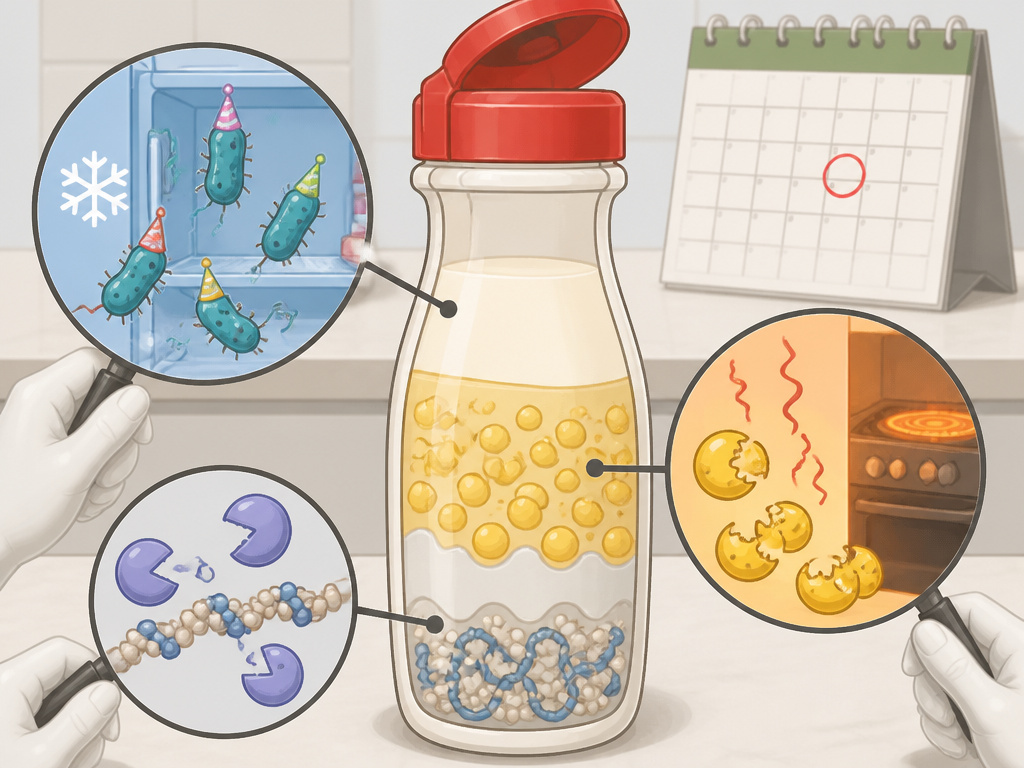
Knowing the “why” helps you spot the “when.” Spoilage is a chemical and biological process.
Bacterial Growth: Refrigerated creamers are a buffet for psychrotrophic bacteria, which thrive at cold temperatures. They consume sugars and fats, producing acids and gases. This leads to sour smells, carbonation (tiny bubbles), and eventual curdling. The FDA Food Code’s 7-day rule for ready-to-eat foods is designed to outpace the growth cycle of pathogens like Listeria.
Oxidation: This is the fate of powdered and oil-based non-dairy creamers. When the fats inside are exposed to oxygen, they break down and become rancid. The telltale sign is a stale, crayon-like or paint-like smell. This process is accelerated by light and heat, which is why clear bottles or pantry storage near the stove are terrible ideas.
Enzymatic Action: Even in a sealed, sterile container, natural enzymes in the ingredients slowly break down proteins and fats. This is what causes the gradual “flavor fade” in shelf-stable creamers long before the printed date. The product might still be safe, but it will taste flat and dull.
The 3-Step Spoilage Check (Before You Taste)
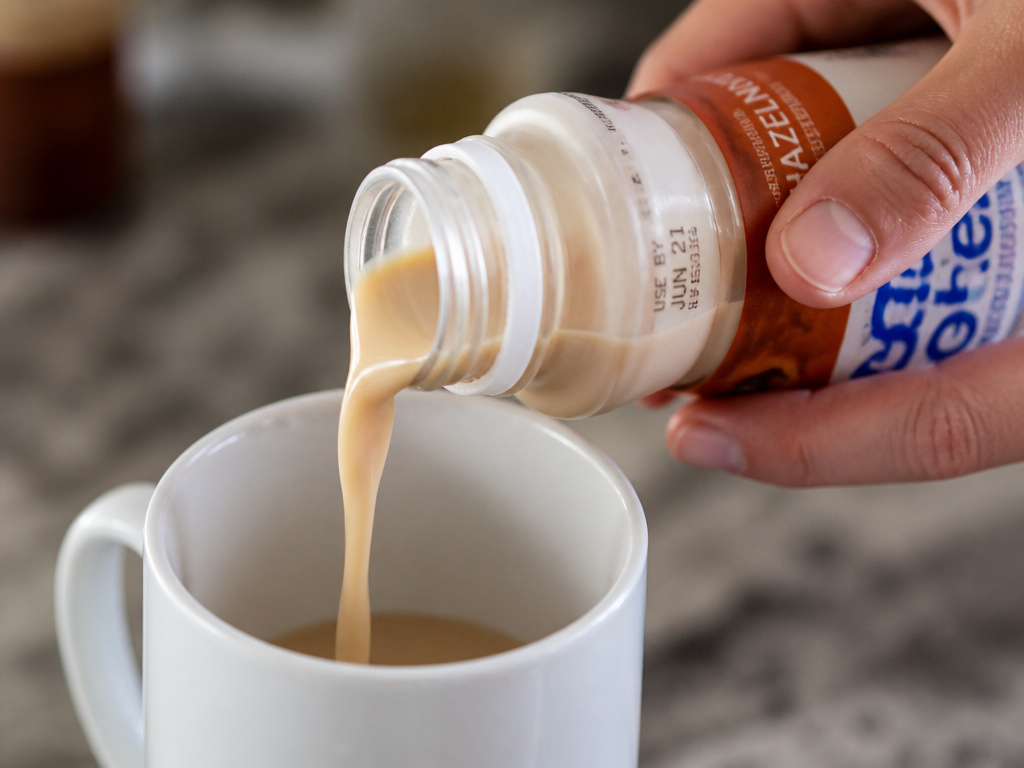
Never rely on taste as your first test. Your eyes and nose are faster and safer.
- Inspect. Pour a small amount into a white cup. Look for:
- Separation: Oil pooling on top or water sitting at the bottom.
- Discoloration: Any yellowing, grey patches, or dark spots.
- Texture: Unusual thickness, sliminess, or visible mold (fuzzy spots of any color).
- Smell. Give it a sharp sniff right at the bottle opening. You are looking for anything that diverges from the intended flavor profile. Sour milk, old cheese, rotten nuts, or a harsh chemical smell are all immediate discard signals. A good rule: if you hesitate, it’s bad.
- Consider the History. This is the step people skip. Mentally retrace:
- Has it been left out for an afternoon?
- Did someone use a dirty spoon in it?
- Is it past the opened timeline for its type?
If it passes all three, a tiny taste on the tip of your tongue is the final check. Any bitterness or sourness means spoilage compounds are present. Spit it out and pour the whole container down the drain.
How Storage Dictates Longevity
You cannot beat science, but you can optimize your conditions.
Refrigerator Temperature is Non-Negotiable. Buy a cheap fridge thermometer. The safe zone is 33°F to 40°F (0.5°C to 4.4°C). Every degree above 40°F roughly doubles the spoilage rate. The back of the top shelf is usually the coldest, most stable spot.
The Clean Utensil Rule. Never pour creamer directly from the bottle into your coffee cup over steam. Never use a spoon you just licked or that was sitting on the counter. Introduce a dedicated, clean stir stick or pour carefully. Each contamination introduces new microbes that jump-start the spoilage clock.
Container Matters. Glass is better than plastic. Plastic is slightly permeable to air over time, which speeds up oxidation. If you transfer a shelf-stable creamer to a glass carafe after opening, you might gain a few extra days of peak flavor.
The Recall Reality: When Timelines Don’t Matter
Sometimes, creamer goes bad long before any date. The 2022 Lyons Magnus recall is a stark reminder. They recalled dozens of nutritional and beverage products, including specific coffee creamers, due to potential Cronobacter sakazakii contamination. This bacteria can be deadly to infants and cause serious illness in adults with weakened immune systems.
The recalled products had “Best By” dates stretching into 2024. The contamination originated at the manufacturing facility. This is why the sniff-and-look test is critical. If a product tastes or smells “off” in any way, even if it’s freshly opened and well within date, trust your senses and discard it. You can check current FDA recall notices if you suspect a broader issue.
Frequently Asked Questions
Can you freeze coffee creamer?
Yes, but with major caveats. Dairy-based creamers will separate and become grainy when thawed. Non-dairy and powdered creamers freeze better. If you must freeze, use an ice cube tray for portioned amounts and thaw in the refrigerator. Expect texture changes that make it unsuitable for drinking straight, but it will still work for cooking or baking.
Does coffee creamer go bad if unopened?
Yes, eventually. Unopened refrigerated creamers will spoil past their printed date. Unopened shelf-stable and powdered creamers can last months to years, but will suffer flavor degradation and nutritional loss over time. Always check an unopened product with the spoilage test if it’s past the date.
What about homemade creamer?
Homemade creamers, like the popular half-and-half and sweetened condensed milk mix, have the shortest life of all. They lack commercial stabilizers and preservatives. Treat them like the most perishable dairy product you own. The common advice of “up to two weeks in the fridge” is optimistic. Use it within 5-7 days for safety.
Why does my powdered creamer get hard?
Moisture. Powdered creamer is hygroscopic. Every time you open the canister in a humid kitchen, it absorbs water from the air. Store it with the lid tightly sealed in a cool, dry pantry, not next to the stove or kettle. Once it forms solid clumps, it’s time to replace it.
Before You Go
Coffee creamer longevity is a dance between product type, storage discipline, and your own vigilance. The printed dates are a guideline, but the real authority is your senses backed by the science of spoilage. Remember the three non-negotiables: refrigerate immediately, use clean utensils, and when in doubt, throw it out. Managing your coffee and oral hygiene is easier when you’re not worried about what’s in your cup. For a richer, flavorful alternative, consider exploring the benefits of cinnamon in coffee or a dash of salt in coffee to enhance your brew without the shelf-life concerns.
{
“@context”: “https://schema.org”,
“@type”: “HowTo”,
“name”: “How to Determine If Your Coffee Creamer Is Still Good”,
“totalTime”: “PT5M”,
“tool”: [
{
“@type”: “HowToTool”,
“name”: “Clean spoon or stir stick”
},
{
“@type”: “HowToTool”,
“name”: “White bowl or cup”
},
{
“@type”: “HowToTool”,
“name”: “Refrigerator thermometer”
}
],
“step”: [
{
“@type”: “HowToStep”,
“name”: “Check the calendar and temperature”,
“text”: “Note the date you opened the creamer and verify your refrigerator is at or below 40°F (4.4°C). Creamer left out for over two hours enters the temperature danger zone.”
},
{
“@type”: “HowToStep”,
“name”: “Perform a visual and smell test”,
“text”: “Pour a small amount into a white bowl. Look for separation, unusual thickness, or discoloration. Smell for sour, rancid, or chemical odors distinct from the original flavor.”
},
{
“@type”: “HowToStep”,
“name”: “Conduct a taste test (if passes smell)”,
“text”: “If it looks and smells normal, taste a tiny amount. Any sour, bitter, or ‘off’ flavor means spoilage has begun, even if no mold is visible.”
},
{
“@type”: “HowToStep”,
“name”: “Decide and discard”,
“text”: “If any sign of spoilage is present, discard the entire container. Do not try to salvage creamer by skimming or reheating.”
}
]
}
{
“@context”: “https://schema.org”,
“@type”: “FAQPage”,
“mainEntity”: [
{
“@type”: “Question”,
“name”: “Can you freeze coffee creamer?”,
“acceptedAnswer”: {
“@type”: “Answer”,
“text”: “Yes, but with major caveats. Dairy-based creamers will separate and become grainy when thawed. Non-dairy and powdered creamers freeze better. If you must freeze, use an ice cube tray for portioned amounts and thaw in the refrigerator. Expect texture changes that make it unsuitable for drinking straight, but it will still work for cooking or baking.”
}
},
{
“@type”: “Question”,
“name”: “Does coffee creamer go bad if unopened?”,
“acceptedAnswer”: {
“@type”: “Answer”,
“text”: “Yes, eventually. Unopened refrigerated creamers will spoil past their printed date. Unopened shelf-stable and powdered creamers can last months to years, but will suffer flavor degradation and nutritional loss over time. Always check an unopened product with the spoilage test if it’s past the date.”
}
},
{
“@type”: “Question”,
“name”: “What about homemade creamer?”,
“acceptedAnswer”: {
“@type”: “Answer”,
“text”: “Homemade creamers, like the popular half-and-half and sweetened condensed milk mix, have the shortest life of all. They lack commercial stabilizers and preservatives. Treat them like the most perishable dairy product you own. The common advice of \”up to two weeks in the fridge\” is optimistic. Use it within 5-7 days for safety.”
}
},
{
“@type”: “Question”,
“name”: “Why does my powdered creamer get hard?”,
“acceptedAnswer”: {
“@type”: “Answer”,
“text”: “Moisture. Powdered creamer is hygroscopic. Every time you open the canister in a humid kitchen, it absorbs water from the air. Store it with the lid tightly sealed in a cool, dry pantry, not next to the stove or kettle. Once it forms solid clumps, it’s time to replace it.”
}
}
]
}
