
How Coffee Works: The Brain Science Behind Your Daily Brew
Coffee works because its active ingredient, caffeine, is a molecular mimic that blocks adenosine receptors in your brain. Adenosine is a neurotransmitter that promotes sleepiness by slowing neuron activity. By occupying these receptors, caffeine prevents the sleep signal, leading to a cascade of stimulant effects: increased neuron firing, the release of dopamine and adrenaline, and heightened alertness.
Most explanations stop at “caffeine blocks sleepiness.” They miss the physical chain reaction, the adrenaline dump, the dopamine trick, the way your liver decides how long the party lasts. They also skip what happens when the party’s over: the brain’s adaptation that leads to tolerance and the very real physics of withdrawal.
This guide walks through the entire process, from the first sip to the last jitter. We’ll cover the key chemical players, the timeline of effects in your body, the genetic and lifestyle factors that change everything, and what you’re actually feeling when you reach for that second cup.
Key Takeaways
- Caffeine doesn’t stimulate you directly; it blocks adenosine, the brain’s primary sleep-signaling molecule, which indirectly increases neural activity.
- The average half-life of caffeine is 5 hours, but this can double or triple if you are pregnant, on birth control, or have specific genetic variations in your CYP1A2 liver enzyme.
- Regular consumption causes your brain to grow more adenosine receptors, requiring more caffeine for the same effect (tolerance) and causing fatigue and headaches if you stop (withdrawal).
- Beyond alertness, caffeine triggers adrenaline release (increasing heart rate) and affects dopamine reuptake (boosting mood), which contributes to its addictive potential.
- Robusta beans contain nearly twice the caffeine of Arabica beans (2.5% vs. 1.5% by weight), making brew method and bean choice critical for predicting strength.
The Chemical Keys: Caffeine and Adenosine
Think of your brain as having two chemical keys for the same lock. One key, adenosine, fits perfectly and tells your body to power down. The other key, caffeine, is a slightly misshapen copy. It jams the lock so the real key can’t turn.
The lock is the adenosine receptor. Your body produces adenosine continuously as a byproduct of burning ATP for energy. The longer you’re awake, the more adenosine accumulates, binding to these receptors and slowing neuronal firing. That’s the biochemical basis of sleep pressure.
Caffeine is an adenosine receptor antagonist. Its molecular structure is similar enough to adenosine to bind to A1 and A2A receptors in the brain, but different enough that it does not activate the sleep-inducing signal. This competitive blockade is the foundational mechanism of coffee’s wakefulness effect.
Caffeine’s affinity for these receptors is in the micromolar range, which is why a standard cup’s dose is so effective. Once it’s wedged in, adenosine is locked out. The neurons, no longer being told to slow down, fire more readily. This increased activity prompts the release of other stimulating neurotransmitters, like norepinephrine.
TL;DR: Caffeine is a molecular impersonator that jams the brain’s sleep-signal locks (adenosine receptors), preventing the slowdown and causing a net increase in neural activity.
Your Brain on Coffee: The Timeline
The experience isn’t a simple on/off switch. It’s a wave with a predictable crest and trough, dictated by absorption, peak concentration, and metabolism.
First, the liquid hits your stomach. Caffeine is water-soluble and passes quickly into the bloodstream. You might feel the initial tinge of alertness within 15 minutes. The peak blood concentration typically arrives 30 to 60 minutes after drinking. This is when the blockade is most complete, and the secondary effects kick in hardest.
Those secondary effects are where the “buzz” comes from. The heightened neuronal activity signals your pituitary gland, which in turn triggers your adrenal glands to release adrenaline. Your heart rate increases. Blood vessels constrict. Your muscles get a ready-for-action signal. Simultaneously, in neurons where adenosine and dopamine receptors are linked, caffeine’s presence can make it easier for dopamine, the “feel-good” neurotransmitter, to bind, lifting your mood.
Then, the decline begins. Your liver gets to work, metabolizing caffeine via the CYP1A2 enzyme. The average elimination half-life is about 5 hours. If you have a cup at 8 AM, by 1 PM roughly half the caffeine is gone. By 6 PM, only a quarter remains.
Common mistake: Drinking a late-afternoon coffee to beat the 3 PM slump, the 5-hour half-life means significant caffeine will still be in your system at bedtime, fragmenting sleep even if you feel you can fall asleep.
This timeline is why spacing matters. A second cup at noon stacks on top of the remaining caffeine from the first, potentially pushing you into jittery or anxious territory. It also explains the brutal logic of withdrawal: if you drink coffee daily, your brain adapts. It creates more adenosine receptors to overcome the blockade. When you suddenly stop, you have a surplus of receptors and a full supply of adenosine. The sleep signal hits like a truck, often accompanied by a headache from sudden changes in cerebral blood flow.
What Changes the Rules? Genetics, Health, and Bean Type
The “average” 5-hour half-life is just that, an average. Your real-world experience depends on variables most generic guides ignore.
Your genetics are the biggest wildcard. The CYP1A2 enzyme in your liver does the metabolizing heavy lifting. Some people have a genetic variant (like the CYP1A2 1F allele) that makes this enzyme slow. For them, caffeine lingers. A single cup can feel like a double, and the effects last well into the evening. Fast metabolizers, on the other hand, might feel the need to re-up every two hours.
| Factor | Effect on Caffeine | Typical Half-Life Shift |
|---|---|---|
| Pregnancy | Slows metabolism drastically | Can extend to 15+ hours |
| Oral Contraceptives | Inhibits CYP1A2 enzyme activity | Can double or triple |
| Liver Disease (e.g., Cirrhosis) | Severely reduces clearance | Dramatically prolonged |
| Smoking | Induces CYP1A2 enzyme, speeding metabolism | Can reduce to ~3 hours |
| “Fast Metabolizer” Gene | Efficient processing | Closer to 3 hours |
These aren’t minor tweaks. If you’re on birth control, your afternoon latte might as well be a bedtime espresso. This is a primary-source finding from pharmacological reviews, not speculation.
The bean itself sets the baseline dose. Coffea arabica, the high-quality specialty staple, contains about 1.5% caffeine by dry weight. Its rougher cousin, Coffea canephora (Robusta), packs 2.5% or more. A dark roast espresso made with a blend of Arabica and Robusta beans will deliver a harder, more caffeinated punch than a light roast single-origin coffee brewed as a pour-over. The brewing method then extracts that caffeine at different rates, which is why comparing a standard cup of coffee to an espresso shot is about more than just volume.
The Body’s Response: Beyond the Brain
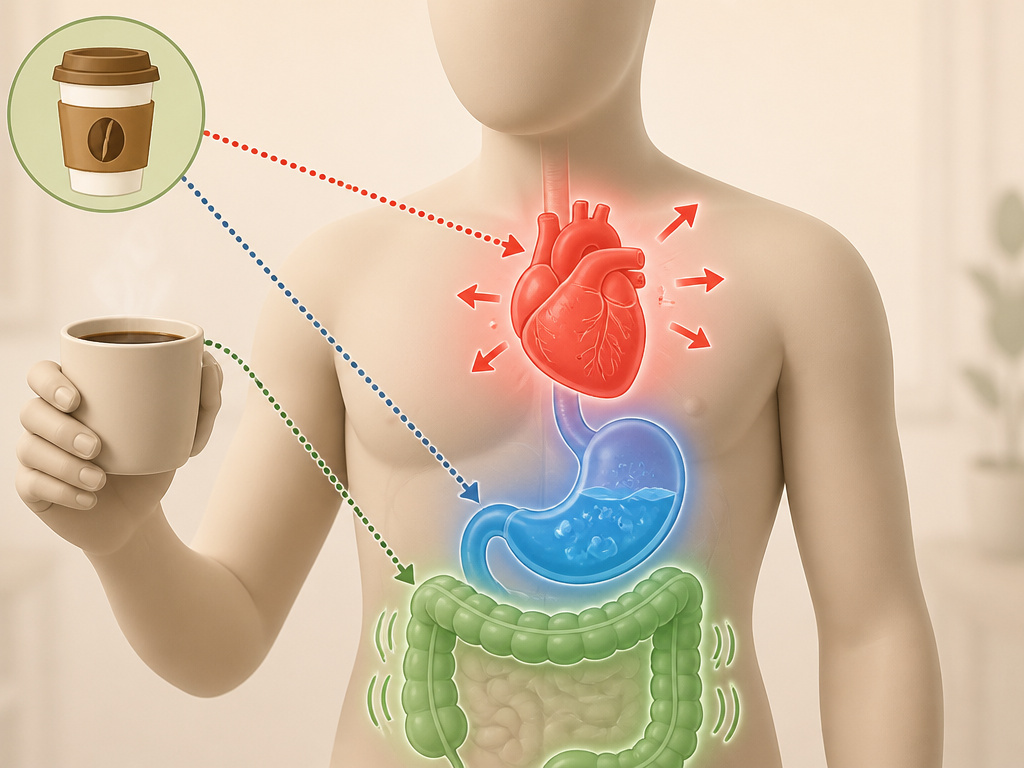
The brain is the primary theater, but the play has a full-body cast. The adrenaline surge has direct physical consequences.
Your cardiovascular system reacts immediately. Heart rate increases. Blood pressure rises temporarily as blood vessels constrict. For most healthy people, this is a mild, transient effect. For someone with hypertension or a heart condition, it can be a meaningful stressor. This is also why you might feel a need to urinate sooner, caffeine has a mild diuretic effect and can increase blood flow to the kidneys.
Your digestive system gets a memo, too. Caffeine stimulates gastric acid secretion. That’s why drinking coffee on an empty stomach can lead to discomfort or heartburn for some. It also prompts the colon to contract, which explains coffee’s notorious… let’s call it “motivational” effect on bowel movements.
Muscles receive a slight performance enhancement. Caffeine can increase the release of calcium within muscle cells, improving contraction efficiency, and it also promotes the use of fat as fuel, sparing glycogen. This is the legitimate reason it was once a restricted substance in Olympic competition.
I used to blame my post-lunch espresso for shaky hands during delicate latte art. Turns out, it was the combo of caffeine’s neuromuscular effects and my own low-grade tolerance. Cutting back to one morning coffee strength adjustment fixed the jitters, but my pour times suffered for a week until my brain re-calibrated.
The takeaway is that the “coffee feeling” is a whole-body alert state. It’s not just mental clarity; it’s physical readiness, for better or worse.
Tolerance, Dependence, and the Withdrawal Equation
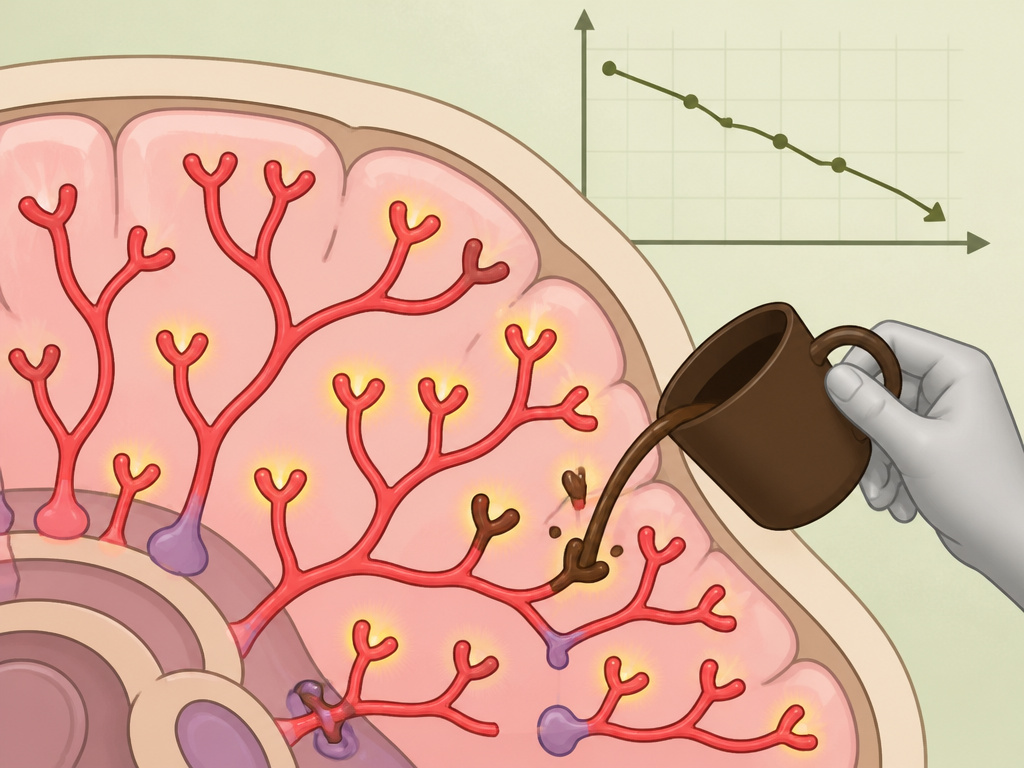
Here’s the inconvenient truth your daily habit teaches your brain: adapt or die. Chronic caffeine consumption is a sustained chemical argument. Your brain’s counter-argument is to grow more adenosine receptors.
This upregulation is tolerance. With more receptors, your morning cup only blocks a portion of them. You need a higher dose, another cup, a stronger brew, to achieve the same level of blockade and alertness. This creates a feedback loop. You drink more, your brain makes even more receptors.
Dependence is the state where your normal functioning relies on this chemical negotiation. The problem becomes clear when you stop. Now you have a surplus of wide-open adenosine receptors and no caffeine to block them. Adenosine binds freely, slamming the brakes on neural activity. The result is the classic withdrawal syndrome: crushing fatigue, difficulty concentrating, irritability, and often a severe headache.
The headache has a mechanical cause. Caffeine constricts blood vessels in the brain. When you withdraw, those vessels dilate rapidly, increasing blood flow and pressure, which triggers pain.
| Symptom | Underlying Cause | Typical Onset / Duration |
|---|---|---|
| Fatigue & Lethargy | Unopposed adenosine action on upregulated receptors | 12-24 hours after last dose, peaks Day 2 |
| Headache | Rebound cerebral vasodilation after caffeine’s constrictive effect wears off | 18-24 hours after last dose, lasts 2-7 days |
| Irritability | Altered dopamine signaling and general system stress | Day 1, can persist for several days |
| Brain Fog | Reduced neuronal firing in key attention networks | Day 1-3 |
| Flu-like Aches | Poorly understood, may relate to adenosine’s role in inflammatory pathways | Possible, less common |
The good news? Withdrawal is self-limiting. Without the constant blockade, your brain gradually reduces the number of extra adenosine receptors. Most people return to baseline within 7 to 12 days. The fatigue lifts. The headache fades. You’ll feel just as alert without caffeine as you did before you ever started, a fact that surprises most long-term drinkers.
Maximizing the Benefits, Minimizing the Drag

Knowing the mechanism lets you hack the system. The goal is to use caffeine as a precision tool, not a blunt instrument.
Time your first cup. Wait 60 to 90 minutes after waking. Your cortisol levels are naturally high in the morning; adding caffeine on top can blunt your adrenal response over time and lead to a bigger afternoon crash. Let the natural wake-up cycle peak, then use caffeine to extend the plateau.
Choose your weapon based on your goals. Need a sustained, focused energy for a long work session? A slow-drip method like a brewed coffee method provides a gentler rise and fall. Need a rapid, sharp cognitive jumpstart? An espresso shot delivers a high concentration fast. Remember, the caffeine content in espresso is about concentration, not total volume.
Manage tolerance with planned breaks. This doesn’t mean quitting cold turkey for a month. A simple 48-hour reset every few weeks can significantly reduce your baseline tolerance. Expect a headache; plan it for a weekend. Hydrate well. The reset makes your regular dose feel potent again.
Listen to your body’s side-effect signals. Anxiety and jitters mean you’ve overshot the optimal dose for your current tolerance and genetics. Switch to a tea caffeine content lower-caffeine option like black tea, or dilute your coffee into an Americano preparation. If coffee disrupts your sleep even when consumed before noon, you’re likely a slow metabolizer. Get your fix earlier, or accept that you’re trading tomorrow’s rest for today’s focus.
Finally, support the machine. Caffeine’s effects are clearest and most positive in a well-rested, hydrated body. Using it to paper over chronic sleep deprivation is a losing game that accelerates tolerance and burnout.
Frequently Asked Questions
Why does coffee make me tired sometimes?
This is usually a combination of two things. First, dehydration: coffee’s mild diuretic effect can compound if you’re not drinking enough water, leading to fatigue. Second, and more likely, it’s the crash after the adrenaline and dopamine effects wear off. If you have developed tolerance, the caffeine may only block a fraction of your adenosine receptors. When it metabolizes, you’re left with both the built-up adenosine and all those extra receptors, causing a wave of sleepiness that can feel sharper than your original tiredness.
Is caffeine addiction real?
Yes, but it’s more accurately termed dependence. Caffeine meets the criteria for a substance-use disorder: it causes tolerance, leads to withdrawal symptoms upon cessation, and is often consumed in larger amounts or over a longer period than intended. However, its social acceptance, legal status, and the relatively mild severity of its withdrawal place it in a different category than drugs of abuse. The dependence is primarily physical, driven by the neuroadaptation of adenosine receptors.
How much caffeine is too much?
For most healthy adults, the FDA cites 400 mg per day, roughly four 8-ounce cups of brewed coffee, as an amount not generally associated with dangerous side effects. “Too much” is highly individual. The lethal dose is astronomically high (around 150 mg per kg of body weight), making overdose from coffee alone practically impossible. The real-world limit is defined by unpleasant side effects: anxiety, jitters, insomnia, rapid heartbeat, or digestive upset. If you hit those, you’ve had too much for your system.
Does decaf coffee have the same effect?
No. Decaffeinated coffee contains a small amount of caffeine, typically 2-5 mg per 8-ounce cup compared to 80-100 mg in regular. This trace amount is negligible for blocking adenosine receptors. Any perceived “lift” from decaf is likely due to the placebo effect or the ritual and warmth of drinking coffee. However, decaf still contains other bioactive compounds that can affect digestion and mood.
Why do I feel coffee’s effects faster than my friend?
Individual differences in metabolism are key. You might have a more efficient CYP1A2 liver enzyme variant, faster gastric emptying, or even a lower body weight, leading to a higher blood concentration from the same dose. Your friend could be a slow metabolizer, perhaps due to genetics, medication, or hormone levels. The same cup that wires you for three hours might buzz them gently for six.
Before You Go
Coffee works because caffeine is a clever chemical imposter, not a magic bullet. Its power comes from preventing a sleep signal, not from creating energy. The alertness, the mood lift, the physical buzz, they’re all downstream effects of that single blockade.
The half-life rule of thumb is five hours, but your personal clock is set by your liver’s enzymes, your hormones, and your genes. Respect that clock if you want to sleep well. Your brain will adapt to daily use by growing more targets for caffeine, which is why the third cup never hits like the first. That adaptation is also the root of withdrawal’s headache and fog.
Use this knowledge. Time your intake. Pick your brew and bean, whether it’s a bright blonde roast or a classic Arabica bean, with intention. Listen when your body says it’s had enough. Coffee is a brilliant tool for focus and enjoyment, but it’s a chemical negotiation. Understanding the terms puts you in control.
