
Perfect Hot Chocolate and Coffee: The Ultimate Ratio Guide
Hot chocolate and coffee combine best at a 3:1 ratio of chocolate to coffee by weight, using a high-cacao dark chocolate and a strong, freshly brewed coffee base. This creates a balanced drink where neither flavor dominates, and the chocolate melts cleanly into the hot liquid.
Most people dump cocoa powder into weak coffee and wonder why it tastes gritty or bitter. They use the wrong form of chocolate for the temperature, or they add the ingredients in the wrong order. The drink separates, the chocolate seizes, or the coffee gets lost.
This guide covers the methods that work, from a quick stovetop mocha to a layered cafe-style drink. You’ll get the ratios, the tools, and the warnings about what breaks the process.
Key Takeaways
- Use chopped chocolate, not powder, for a smooth, non-gritty texture. Powder clumps in hot coffee unless you make a paste first.
- The Bunn Ultra-2 Slush Machine manual specifies a 28–32°F operating range for frozen chocolate drinks, highlighting that temperature control is critical for any chocolate beverage, hot or cold.
- Steam wands used for chocolate require more aggressive cleaning than for milk alone; chocolate sugars caramelize and clog the tip within a week of daily use.
- At altitudes above 5,000 feet, brew your coffee component with a finer grind or longer steep to compensate for lower boiling point and weaker extraction.
- The FDA milk chocolate standard of identity requires at least 10% chocolate liquor, but for a drink, you want dark chocolate with 70% cacao or higher for a pronounced flavor that stands up to coffee.
The 3:1 Chocolate-to-Coffee Rule (and When to Break It)
Start with 30 grams of chocolate to 100 milliliters of coffee. That’s the baseline.
This isn’t a arbitrary number. Thirty grams of 70% dark chocolate contains roughly 21 grams of cocoa solids and cocoa butter. That’s enough mass to create a stable emulsion with 100ml of hot liquid, coffee plus milk, without tasting like a candy bar dissolved in a cup. Go under 25 grams of chocolate and the coffee overpowers it. Over 40 grams and the drink becomes a thick, cloying paste that coats your mouth.
For a balanced hot chocolate and coffee beverage, use 30g of finely chopped dark chocolate (70% cacao) per 100ml of strong brewed coffee. This 3:1 weight-to-volume ratio ensures the chocolate melts into a stable emulsion, providing richness without overwhelming the coffee’s acidity or creating a gritty texture.
The type of chocolate changes the math. A milk chocolate with 30% cacao needs nearly double the weight to deliver the same chocolate impact, but it also brings more sugar and milk solids that can make the drink overly sweet and dull. That’s why dark chocolate is the professional pick. It’s efficient.
Break the rule in two cases. First, if you’re using a very light, floral coffee like a washed Ethiopian, drop the chocolate to 25 grams. You want the jasmine and bergamot notes to peek through. Second, for a pre-dinner digestif style drink, ramp the chocolate to 35 grams and use a bitter espresso. It becomes almost like a liquid dessert.
TL;DR: Thirty grams of dark chocolate to 100ml coffee is the sweet spot. Adjust down for delicate coffees, up for a bitter espresso base.
Your Chocolate Form Decision Tree
Powder, syrup, chopped bar, or flakes? The form dictates your method and your cleanup.
| Chocolate Form | Best For | Primary Risk | Fix If It Goes Wrong |
|---|---|---|---|
| Chopped Dark Chocolate Bar | All methods, especially stovetop | Seizing if added to cool liquid | Reheat the entire mixture gently while whisking. |
| High-Quality Cocoa Powder | Large-batch brewing, baking | Clumping in hot coffee | Always make a paste with hot water or a splash of milk first. |
| Chocolate Syrup / Sauce | Iced drinks, speed | Artificial flavor, separation | Stir vigorously into hot coffee before adding milk. |
| Chocolate Flakes / Curls | Garnish, melting directly in milk | Uneven melting, sinking to bottom | Stir continuously over low heat. |
Chopped bar chocolate is the winner for control. You know the cacao percentage. You avoid the stabilizers and corn syrup in many commercial sauces. Remember the 2019 Ghirardelli recall? Their Sweet Ground Chocolate Flavored Sauce was pulled for undeclared milk and soy allergens. When you chop your own bar, you see the ingredient list, cacao, sugar, maybe cocoa butter, maybe vanilla. That’s it.
Syrup has its place. It’s fast. But read the label. If glucose syrup or high-fructose corn syrup is the first ingredient, you’re making sugar-coffee, not chocolate-coffee. The flavor will be one-dimensional and sickly sweet.
Powder is tricky. Natural cocoa powder is acidic and bitter. Dutch-process is milder. Neither dissolves easily in a hot liquid unless you work it into a paste. The lazy method, sprinkling powder over hot coffee, creates a floating, gritty layer that never fully incorporates. You get a mouthful of sludge at the bottom of the mug.
Common mistake: Adding cocoa powder directly to hot coffee, the powder hydrates on the surface and forms impenetrable clumps that no amount of stirring will fully dissolve, leaving a gritty texture throughout the drink.
Tools and Ingredients You Actually Need
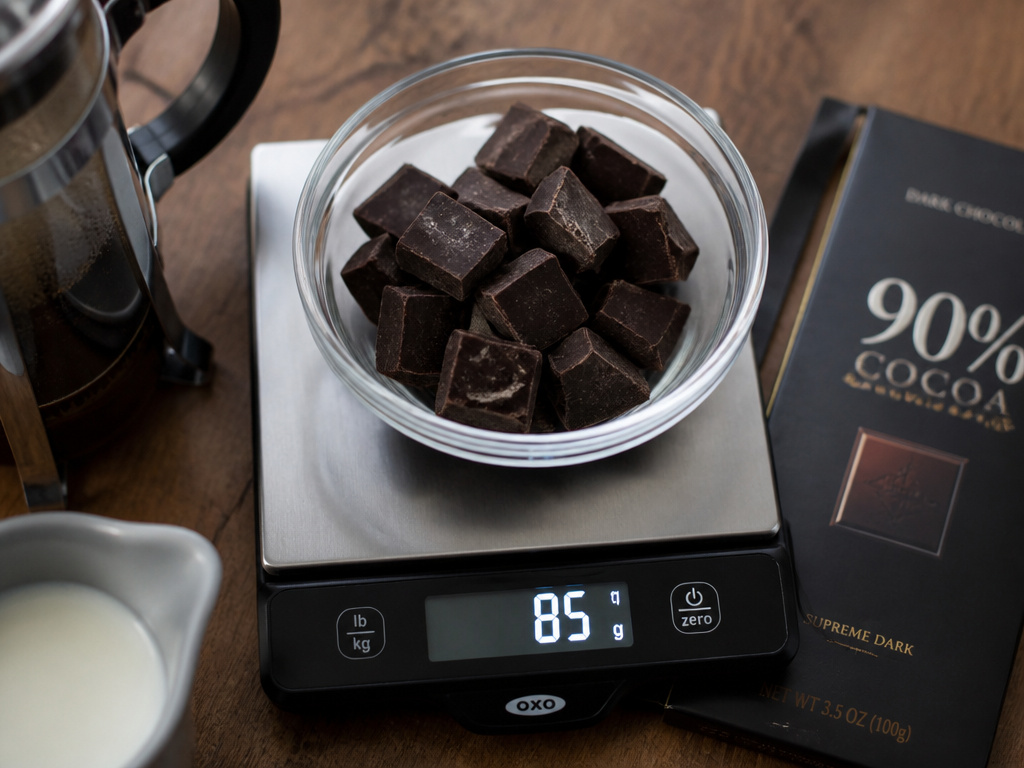
You need a scale. Volume measures for chocolate are useless. A cup of chocolate chips weighs differently than a cup of chopped bar. The 3:1 ratio only works by weight.
For brewing the coffee component, your existing method is fine. A French press, a moka pot, an espresso machine, a drip machine, all work. The variable is strength. You need a coffee that tastes good on its own, because the chocolate will mute its subtleties but amplify any bitterness or sourness. A poorly extracted, astringent coffee will make a harsh, unpleasant drink. A balanced, sweet coffee will make a complex, rounded drink.
Milk choice matters. Whole milk steams and integrates best. The fat carries the chocolate flavor. Non-dairy milks can work, but know their limits. Oat milk tends to be sweet and thick. Almond milk can separate or taste nutty against dark chocolate. If you’re using a dairy alternative like almond milk in coffee, pick a barista-grade version designed for steaming.
Sweetener is optional. Good dark chocolate brings its own sugar. If you need more, add it after combining everything. A teaspoon of brown sugar sweetener adds caramel notes that pair well with chocolate. White sugar just adds sweetness.
The Step-by-Step Mocha Method

This is the cafe standard. It layers espresso, chocolate, and steamed milk.
- Prep the chocolate. Chop 30g of dark chocolate bar into small pieces. Place them in the bottom of a warm mug. A cold mug will cool the espresso too quickly and hinder melting.
- Pull the espresso. Brew a single shot (30ml) directly over the chocolate in the mug. Let it sit for 30 seconds. The heat begins melting the chocolate.
- Stir the base. Use a small whisk or spoon to stir the espresso and chocolate into a smooth, glossy paste. This is the foundation. If there are any solid bits, the drink is already compromised.
- Steam the milk. Steam 180ml of whole milk to 65°C (149°F). This temperature is hot enough to drink but won’t scorch the chocolate or create a skin.
- Pour and combine. Pour the steamed milk into the mug, using a spoon to hold back the foam initially. Stir gently to incorporate. Then spoon the remaining foam on top.
Skip step 3, the stirring, and the chocolate will remain partially solid at the bottom. You’ll sip milky coffee, then get a blast of unmelted chocolate at the end. The stirring emulsifies the fat into the liquid.
For a stovetop version, combine chopped chocolate and a splash of milk in a small saucepan over low heat. Stir until melted, then whisk in the coffee and remaining milk. Heat until just steaming. This method is foolproof for avoiding seized chocolate.
Why Your High-Altitude Mocha Tastes Weak
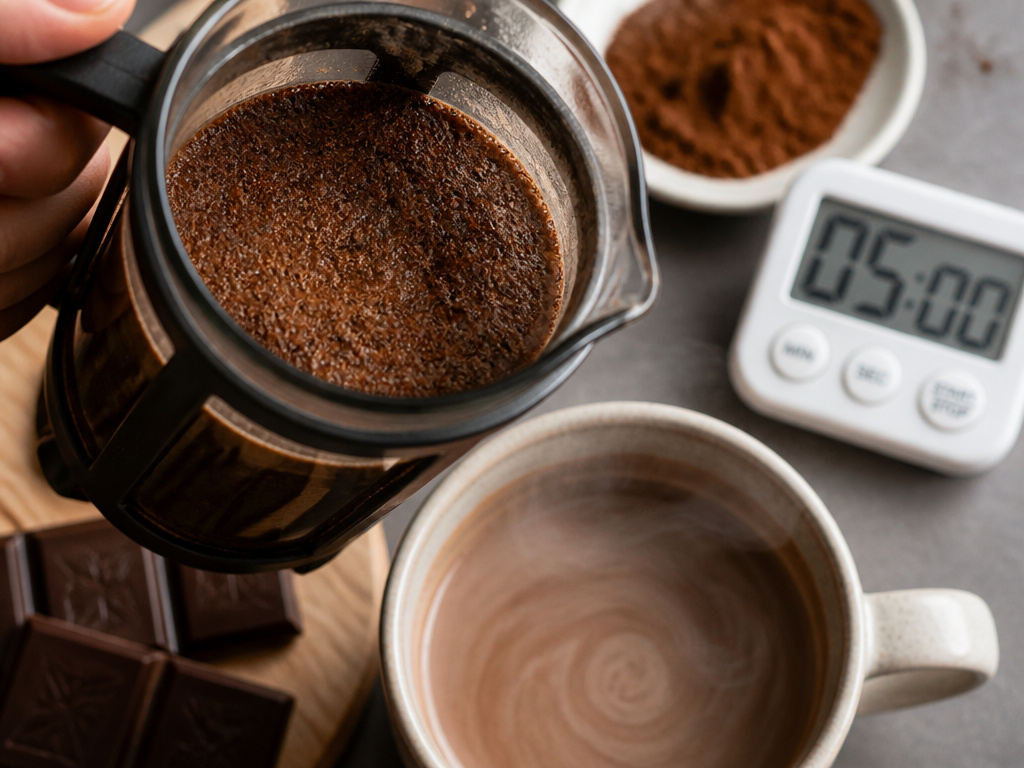
If you live above 5,000 feet, your water boils below 100°C. At 7,000 feet, it’s about 90°C. That lower temperature underextracts coffee.
The chocolate will taste fine. The coffee component will be weak, sour, and thin. When combined, the drink lacks the backbone to balance the chocolate’s richness. The fix is in the coffee prep, not the chocolate ratio.
Use a finer grind for your coffee. Increase the contact time. If you use a French press, steep for 5 minutes instead of 4. For pour-over, slow your pour. The goal is to extract more soluble solids from the beans to compensate for the lower water temperature. It’s the same principle baristas in Denver or Bogotá use. Your hot chocolate and coffee will have the structure it needs.
Cleaning Up the Mess Everyone Ignores
Chocolate is worse than milk for equipment gunk.
When you steam milk, you get a protein film. When you steam chocolate-infused milk or simply pass chocolate sauce through a machine, you get sugar and fat. The sugar caramelizes on hot metal. The fat coats surfaces. The combination, over days, creates a sticky, varnish-like residue that regular coffee cleaning won’t touch.
Common mistake: Cleaning an espresso machine’s steam wand with only a wet rag after frothing chocolate milk, the sugars bake onto the wand tip within a week, eventually clogging the steam holes and imparting a burnt, bitter taste to every subsequent drink.
Professional baristas who serve mochas often run a dedicated backflush cycle with a cleaning agent designed for chocolate, not just the standard coffee detergent. They might soak steam wand tips in hot water immediately after use. At home, if you use your steam wand for chocolate drinks, wipe it, then purge steam for 10 seconds to clear the internal channel. Once a week, unscrew the tip and soak it in hot water to dissolve any buildup.
The same goes for blenders or saucepans. Chocolate hardens as it cools. Wash everything with hot water immediately. Letting a mug sit overnight means a ten-minute soak and scrub in the morning.
Hot Chocolate and Coffee vs. Other Pairings
How does this combination stack up against other popular duo?
It’s richer than tea vs coffee. Tea brings tannins and floral notes; chocolate brings fat and deep roasted flavors. The caffeine story is different, too. The caffeine in hot chocolate is minimal, maybe 5mg per serving from the cocoa. The coffee brings 80-100mg. So your mocha is a delivery system for coffee’s stimulant, wrapped in chocolate’s comfort.
Compared to black tea vs black coffee, the chocolate-coffee drink is a dessert. It’s not something you drink six cups of while working. It’s a deliberate, occasional treat. The acidity of tea is often brighter and more citrusy; coffee’s acidity, when paired with chocolate, gets rounded out and softened.
Think of it this way. Green tea vs coffee is about alertness and antioxidants. Hot chocolate and coffee is about indulgence and warmth. They serve different moments in the day.
Frequently Asked Questions
Does hot chocolate and coffee have a name?
Yes, the most common name is a café mocha or simply mocha. It’s a standard espresso drink combining chocolate, espresso, and steamed milk. A “dirty hot chocolate” is hot chocolate with a shot of espresso added.
Can I use hot chocolate mix with coffee?
You can, but the result is often overly sweet and artificial-tasting. Most hot chocolate mixes are mostly sugar, powdered milk, and low-quality cocoa. If you go this route, use half the recommended mix powder and add it to strong black coffee, not hot water.
Is there caffeine in hot chocolate and coffee?
Yes, almost all the caffeine comes from the coffee component. The chocolate contributes a negligible amount, around 5mg per serving from the cocoa solids. Your total caffeine will be roughly equal to the coffee you used. For a deeper dive, our article on caffeine levels breaks it down.
What’s the best coffee to use with hot chocolate?
medium or dark roast with chocolate, nut, or caramel notes works best. Think Brazilian Santos, Sumatran, or a classic espresso blend. Avoid very light, fruity roasts as the chocolate can overwhelm their delicate notes.
Can I make this dairy-free?
Absolutely. Use a high-quality dark chocolate bar that is dairy-free (check the label) and pair it with a creamy non-dairy milk like oat or soy. Be aware that the melting and emulsifying behavior might differ slightly from dairy milk.
How do I prevent the chocolate from settling at the bottom?
The key is to melt the chocolate completely into a hot liquid base (espresso or a splash of hot milk) before adding the bulk of the milk. Stir vigorously until it’s completely smooth and glossy. If you see streaks, keep stirring.
The Bottom Line
Measure your chocolate by weight. Start with 30 grams of the darkest chocolate you enjoy. Melt it completely into your coffee before adding milk. That’s the sequence.
Ignore the syrup bottle and the instant mix. A good bar of chocolate and a decent coffee make a drink that’s more than the sum of its parts. It’s a small ritual.
Clean your gear right away. Chocolate residue turns from a sweet coating into a stubborn, flavor-ruining crust faster than you think. A quick wipe and a hot rinse save you a long soak later.
Adjust for your water. If you’re up a mountain, extract your coffee harder. If your chocolate is very bitter, use a touch less. The 3:1 ratio is a guide, not a law. Your taste buds get the final vote.
