
Does Coffee Creamer Go Bad? How Long It Lasts & When to Toss
Coffee creamer goes bad, and the timeline is strict: opened, refrigerated liquid creamer lasts 7–14 days, powdered creamer lasts about 6 months in a dry place, and unopened shelf-stable creamer is good until its printed date. Once any creamer shows signs of spoilage, sour smell, slimy texture, mold, or separation, it must be discarded immediately.
Most people assume the date on the carton is the only rule. They miss the real timer: the moment you break the seal. Refrigerator doors get opened, temperatures fluctuate, and bacteria don’t read labels.
This guide breaks down the spoilage clocks for every type of creamer, from the common Coffee-mate liquid bottle to the powdered jar in your pantry. You’ll learn the exact signs of spoilage, the science behind why creamer turns, and how to store each type to maximize its safe life.
Key Takeaways
- Opened liquid creamer has a 7–14 day fridge life, per manufacturer specs, but the FDA’s 7-day rule for opened, refrigerated foods is the stricter, safer guideline.
- Temperature abuse, leaving liquid creamer above 40°F (4°C) for over two hours, creates a food safety risk requiring immediate disposal.
- Powdered creamer spoils via oil rancidity and moisture clumping, not bacterial growth; store it in an airtight container away from heat and light.
- Shelf-stable liquid creamers (UHT/aseptic packaging) are safe until opened due to sterile processing; treat them as perishable immediately after opening.
- Always use the sniff, look, and texture test before using creamer. Your senses are more reliable than any printed date once the container is open.
The Science Behind Creamer Spoilage
Creamer doesn’t just “go bad” as a single event. Different types spoil through different physical and chemical pathways. Understanding the mechanism tells you what to look for and how urgent the problem is.
Refrigerated liquid creamers, both dairy and non-dairy, are primarily susceptible to bacterial growth. They contain water, sugars, and proteins, a perfect buffet for microbes like Pseudomonas and Lactobacillus. The cold slows them down but doesn’t stop them. Once you open the container, you introduce airborne bacteria. Every time you pour, you also introduce warmer room air, which causes condensation inside the bottle, adding more water for bacteria to use.
The USDA Food Safety and Inspection Service states that perishable foods, including opened liquid creamer, should not be held above 40°F (4°C) for more than two hours. After that window, bacterial growth accelerates to unsafe levels.
Powdered creamers face a different enemy: oxidation. The fats in the powder, often from coconut or palm kernel oil, slowly react with oxygen in the air. This process, called rancidification, produces off-flavors and compounds that smell like crayons or old paint. Moisture is the other killer. It causes the powder to clump into solid, rock-hard masses and can even allow mold to grow inside the jar if the humidity is high enough.
TL;DR: Liquid creamer spoils from bacterial growth after opening; powdered creamer spoils from fat oxidation and moisture. Each requires a different storage strategy.
How Long Does Coffee Creamer Last? (A Type-by-Type Breakdown)
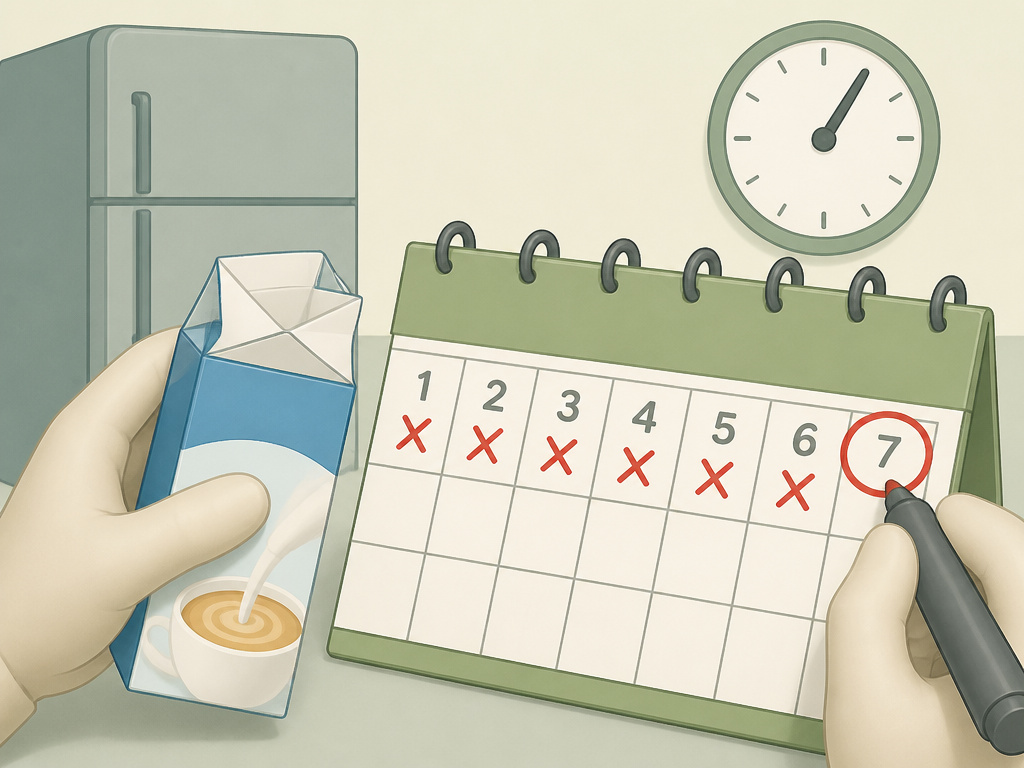
Forget the one-size-fits-all answer. The countdown clock starts at different times and ticks at different speeds depending on what’s in the bottle or can.
| Creamer Type | Unopened Shelf Life | After Opening | Key Spoilage Mechanism |
|---|---|---|---|
| Liquid Refrigerated | Until “Best By” date | 7–14 days in fridge | Bacterial growth |
| Powdered | Until “Best By” date | ~6 months in cool, dry place | Oil rancidity, moisture clumping |
| Shelf-Stable Liquid (UHT) | Until “Best By” date | Treat as refrigerated; consume within days | Bacterial growth after seal broken |
| Liquid Concentrate | Until “Best By” date | Consume immediately after opening | Bacterial growth |
Manufacturers publish specific guidelines, and they are your first reference. International Delight says its refrigerated liquid creamers should be used within 7–10 days after opening. Coffee-mate gives a slightly longer window of 14 days for its refrigerated liquids. Their powdered product, however, is best used within 6 months of opening.
These are quality guidelines. The food safety rule is stricter. The FDA Food Code 2017 stipulates that opened, refrigerated, ready-to-eat, potentially hazardous food should be discarded after 7 days. This code is the basis for health department regulations in restaurants. For absolute safety at home, that 7-day mark is your hard stop for any opened liquid creamer in the fridge.
Common mistake: Using the “Best By” date to judge an opened container, that date is for unopened, sealed product integrity. Once open, the 7- to 14-day clock starts, regardless of the printed date.
Shelf-stable creamers in those small, room-temperature boxes use Ultra-High Temperature (UHT) processing and aseptic packaging. The product is sterilized and sealed in a sterile environment. That’s the only reason it doesn’t need refrigeration. The second you pierce that sterile seal, you introduce bacteria. From that moment on, it behaves exactly like a refrigerated liquid creamer. If you don’t use the entire single-serve container, you must refrigerate the remainder and use it within a couple of days.
How to Tell If Your Coffee Creamer Has Gone Bad
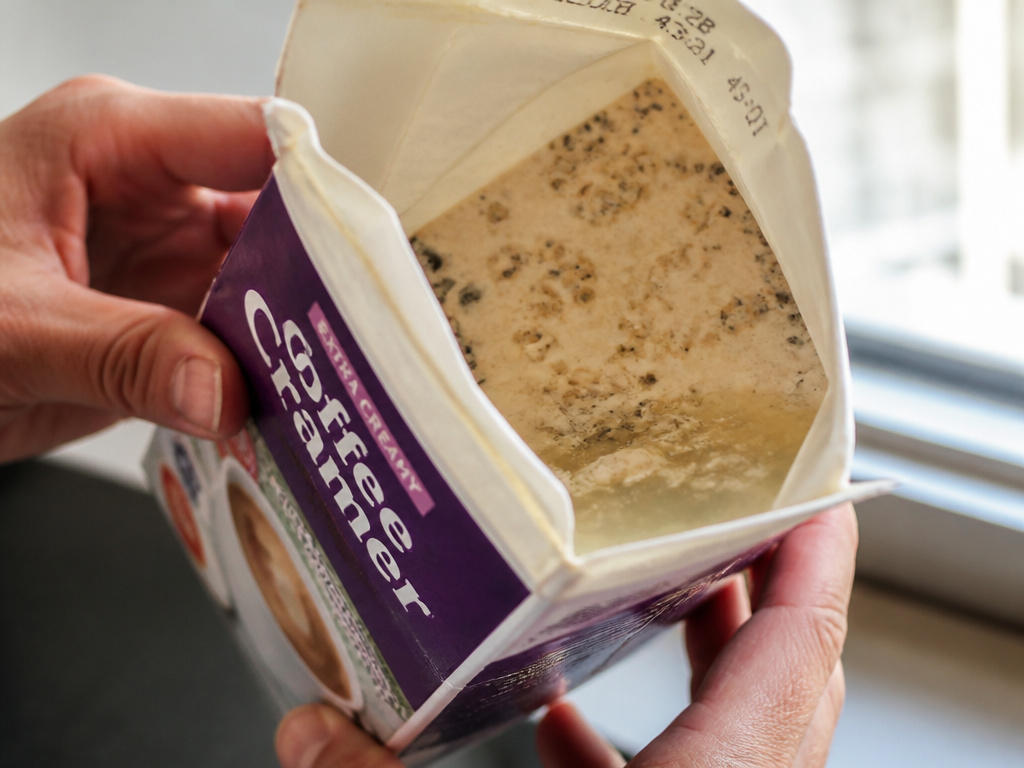
Your nose and eyes are the best tools you have. Spoilage announces itself if you know the signals.
- The Sniff Test. Open the container and take a quick, short sniff. Fresh liquid creamer has a mild, sweet, creamy aroma. Spoiled creamer smells sour, like spoiled milk, or can have a sharp, chemical, or rancid odor. For powdered creamer, a stale, oily, or paint-like smell means the fats have oxidized.
- The Visual Inspection. Hold the bottle up to the light. Look for:
- Mold: Any fuzzy spots, especially around the cap or threads, are an immediate discard signal.
- Separation: Some natural separation is normal, especially in non-dairy creamers. But if shaking doesn’t reincorporate the liquid and it remains curdled or has solid chunks, it’s gone.
- Color Change: A yellowing or darkening tint indicates chemical breakdown.
- The Texture Check. Pour a small amount into a spoon. Liquid creamer should be smooth. A slimy, thickened, or chunky texture is a sure sign of bacterial proliferation. For powder, it should pour freely. If it’s clumped into hard rocks or feels damp, moisture has gotten in and compromised it.
- The Taste Test (Last Resort). If it passes all other checks but you’re still unsure, place a single drop on your tongue. Immediately spit it out. Any off-flavor, sour, bitter, metallic, or just “not right”, confirms spoilage.
If your creamer fails any one of these checks, the entire container is compromised. Do not try to skim off mold or use the “good part” from the bottom. Bacteria and their byproducts spread throughout the liquid.
What Happens If You Use Bad Coffee Creamer?
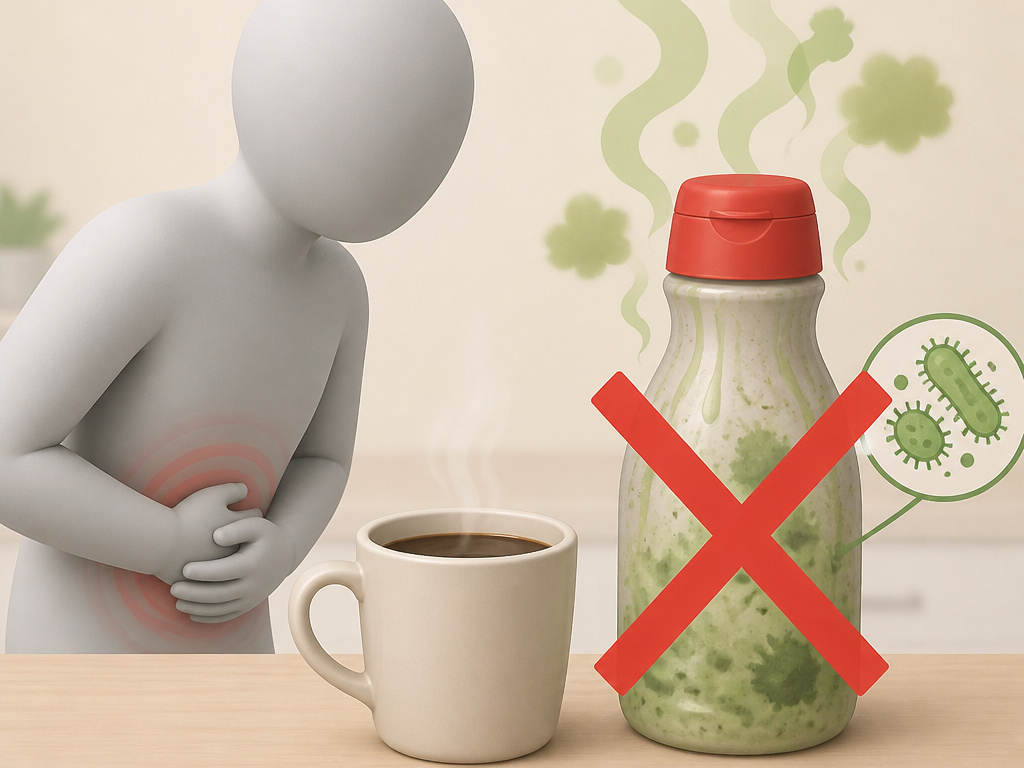
Drinking spoiled creamer is a game of Russian roulette with your gastrointestinal tract. The consequences range from unpleasant to dangerous.
The most common result is food poisoning. Bacteria like Salmonella, E. coli, or Listeria can cause symptoms including nausea, vomiting, stomach cramps, and diarrhea. These can start within a few hours or take up to a few days to appear. For most healthy adults, this means a very bad 24 to 48 hours.
Common mistake: Thinking a small amount of spoiled creamer is harmless, even a tablespoon can contain enough pathogenic bacteria or toxins to make you sick. Your coffee’s heat is not enough to sterilize it.
For powdered creamer, the risk is less about immediate illness and more about long-term health. Rancid fats contain free radicals and other compounds that, when consumed regularly, may contribute to inflammation and are generally not good for you. The taste will be so foul it will likely ruin your coffee before you drink enough to cause harm.
Individuals with compromised immune systems, the elderly, pregnant women, and young children are at higher risk for severe reactions from consuming spoiled dairy or dairy-alternative products. For these groups, strict adherence to use-by dates and storage rules is non-negotiable.
The Best Ways to Store Coffee Creamer to Extend Its Life
Proper storage can’t stop the spoilage clock, but it can prevent you from speeding it up. Here’s how to give each type its best chance.
- For Liquid Refrigerated Creamer: Always store it in the main body of your refrigerator, not on the door. The door is the warmest part, with temperature fluctuations every time you open it. Ensure your fridge is at or below 40°F (4°C). Keep the lid tightly sealed after every use to minimize air exposure and contamination.
- For Powdered Creamer: This is all about defeating moisture and oxygen. Transfer the powder to an airtight container if the original packaging isn’t resealable. A mason jar with a clamp lid works perfectly. Store this container in a cool, dark pantry, away from the stove, dishwasher, or any heat source. Never scoop powder with a wet spoon.
- For Shelf-Stable Creamers: Before opening, store them in a cool, dry pantry away from direct sunlight. After opening, if you have leftover liquid from a single-serve cup, transfer it to a small, sealed container and refrigerate it immediately. Plan to use it within 24-48 hours.
A simple refrigerator thermometer is one of the best investments for your kitchen’s food safety. You’d be surprised how many fridges run a few degrees too warm, silently shortening the life of everything inside.
Frequently Asked Questions
Can you use coffee creamer after the expiration date if it’s unopened?
Maybe, but it’s a quality gamble. An unopened “Best By” date is a manufacturer’s guarantee of peak quality, not a safety expiration. An unopened, shelf-stable liquid creamer stored properly might be fine for weeks or even months past that date, but the flavor may degrade. For powdered creamer, the fats will slowly oxidize. Always perform the smell and visual check before using any product past its date.
Does non-dairy creamer last longer than dairy creamer?
Not in a meaningful way for food safety. Both are susceptible to bacterial growth once opened and refrigerated. While the higher sugar content in some non-dairy creamers can act as a mild preservative, and the lack of dairy protein changes the spoilage flavor profile, the 7- to 14-day opened fridge rule still applies. The spoilage mechanism is similar.
Why did my powdered creamer turn hard?
Moisture found its way in. This usually happens from repeated exposure to humid air or from using a damp spoon. The powder absorbs water, the sugars and proteins dissolve slightly, and then they re-crystallize into a solid mass. If it’s one hard lump at the top, you can often break it up and use the dry powder beneath. If the entire container is solidified, it’s best to discard it, as the moisture invites mold.
Is it safe to freeze coffee creamer?
You can freeze liquid creamer, but it will likely separate and become grainy when thawed due to the emulsifiers breaking down. It’s not recommended for quality reasons. Powdered creamer should never be frozen, as the condensation that forms when it thaws will cause immediate and severe clumping. Freezing is not a reliable extension method for creamer.
What are the healthiest creamer alternatives that last?
For a longer shelf life without preservatives, consider single-ingredient additives. Heavy cream (dairy) lasts about a week opened. Almond milk or other plant-based milks typically last 7-10 days after opening. For a truly shelf-stable, healthy fat addition, a spoonful of coconut oil or MCT oil doesn’t spoil and can be stored at room temperature. Exploring these dairy-free creamer alternatives can change your coffee routine.
Before You Go
Coffee creamer has a finite, and often short, life after you open it. The printed date is just the starting line. The real countdown begins the moment the seal breaks. Mark your containers with the date you opened them, respect the 7-day fridge rule for liquid types, and trust your senses over the calendar.
Store powdered creamer like flour, airtight and dry. Treat those shelf-stable boxes as perishable the instant you open them. And if you’re looking for a change, the world of plant-based creamers and simple oil-based coffee additives offers options with different, often more forgiving, storage profiles. Your morning coffee deserves a fresh, safe start.
