
Coffee Roast Guide: The Difference Between Light, Medium, Dark
The difference between light, medium, and dark roast coffee comes down to three measurable things: the internal bean temperature when roasting stops, the resulting chemical breakdown of sugars and acids, and the physical weight loss from moisture evaporation. Light roast stops just after first crack (around 196–205°C), medium roast stops between cracks, and dark roast stops during or after second crack (224–230°C).
Most guides talk about flavor. They miss the physics. If you measure coffee by volume, using a scoop, you will get a completely different amount of coffee and caffeine from a light roast than from a dark roast. The beans change size and density.
This guide walks through the temperature benchmarks, the tangible weight changes, and the brewing methods that actually work for each roast. It explains why your dark roast tastes bitter in a French press and why your light roast seems weak in an espresso machine.
Key Takeaways
- Light roast beans are denser and heavier by volume. A scoop of light roast contains more coffee and more caffeine than the same scoop of dark roast.
- The official industry measure for roast color is the Agtron Gourmet Scale, where light roast scores 60–70, medium 40–50, and dark 20–30.
- Dark roasts lose 18–20% of their green weight during roasting. Light roasts lose only 12–15%. This weight is almost entirely water.
- Brew light roasts with slow, controlled methods like pour-over to highlight acidity. Brew dark roasts with fast methods like espresso or AeroPress to minimize bitter extraction.
- The “roasty” flavor in dark coffee comes from the breakdown of chlorogenic acids into phenols and the caramelization (and eventual carbonization) of sugars.
The Chemistry Behind the Color
Roast color is a visual proxy for chemical change. Green coffee beans contain sucrose, chlorogenic acids, and trigonelline. Heat breaks these down. The rate and endpoint of that breakdown define your cup.
Roast level is quantified industrially using the Agtron Gourmet Scale, which measures reflected light from ground coffee. A higher number (60–70) indicates a light roast with more original cellulose structure intact; a lower number (20–30) indicates a dark roast where sugars have caramelized and cell walls have carbonized.
First crack is the audible signal that matters. It happens when internal steam pressure fractures the bean’s cellulose structure, typically between 196°C and 205°C. A light roast drops the beans from the roaster within a minute of this crack. The bean’s internal acids, malic, citric, phosphoric, remain largely intact. That’s where the bright, fruity notes originate.
Medium roast continues the heating process for another few minutes, pushing the bean temperature into the 210–220°C range. Sucrose rapidly caramelizes here. Chlorogenic acids start breaking down into quinic and caffeic acids, which taste less sharp. The result is a sweeter, more balanced cup with reduced acidity.
Dark roast pushes the bean into or past second crack, around 224–230°C. This crack is the sound of the bean’s woody cellulose structure fracturing further. At this point, the caramelized sugars begin to carbonize. The chlorogenic acids are almost entirely decomposed, which removes perceived acidity but can introduce bitter phenols. Oils migrate to the surface because the cellular matrix has broken down.
TL;DR: Color tracks chemical progression: acids dominate light roasts, caramelized sugars define medium, and carbonized compounds create dark roasts.
Weight, Density, and the Caffeine Myth
You have heard that light roast has more caffeine. That is only true if you measure by volume, not by weight. This is the most practical difference in your kitchen.
During roasting, beans lose 12–20% of their starting mass. The loss is mostly water vapor and a small amount of organic material. A light roast might lose 13%. A dark roast can lose 20%. This means a dark roast bean is physically lighter than a light roast bean from the same green batch.
More importantly, the bean expands. The same bean is denser before first crack. After second crack, it’s puffed up like popcorn. So a tablespoon scoop packs in more dense light-roast beans than puffy dark-roast beans.
| Measurement Method | Light Roast | Dark Roast | Why It Matters |
|---|---|---|---|
| By weight (e.g., 20g) | Same bean count | Same bean count | Consistent strength and extraction. The professional method. |
| By volume (e.g., 1 scoop) | More beans, more caffeine | Fewer beans, less caffeine | Inconsistent brews. Your “one scoop” recipe fails when you switch roasts. |
A Scientific Reports study on roast levels confirmed that caffeine content per bean is remarkably stable across roasts. The difference in your cup comes from how many beans you use. Always use a scale.
This density shift also affects grind settings. Dense light-roast beans are harder. They can require a finer grind on your burr coffee grinder to achieve the same extraction time as a darker roast. If you don’t adjust, your light roast will under-extract and taste sour.
Flavor Profiles: What You Actually Taste
Forget “strong” versus “weak.” Those are descriptions of body and solubility, not roast. The flavor profile shifts from origin-centric to process-centric.
Light roast highlights the bean’s origin. You taste the natural compounds of the Arabica coffee beans or the specific farm. Notes include floral, tea-like, citrus, berry, and stone fruit. The acidity is pronounced, often described as bright or sparkling. Body is typically lighter, more like tea.
Common mistake: Brewing a light roast in an espresso machine without adjusting the recipe, the high acidity and dense bean can lead to a sharp, unbalanced shot that channels easily. Pre-infusion is mandatory.
Medium roast is the crowd-pleaser. The caramelization of sugars introduces flavors like chocolate, caramel, nuts, and toasted grain. The origin characteristics blend with these roast-developed notes. Acidity is muted but still present as a pleasant sweetness. Body becomes rounder and fuller. This is the profile most coffee blends target for consistency.
Dark roast flavors are dominated by the roasting process itself. Origin notes are mostly gone, replaced by deep, smoky, spicy, or bittersweet chocolate notes. The bitterness comes from phenols like quinic acid. The body can feel heavy and syrupy, partly due to the migrated oils. There’s a reason this profile pairs well with milk, the fat and sugar counterbalance the bitterness.
Your water quality matters more with light roasts. Mineral content can highlight or flatten those delicate acids. With dark roasts, the roast character is so dominant that water has less impact.
How to Brew Each Roast Level
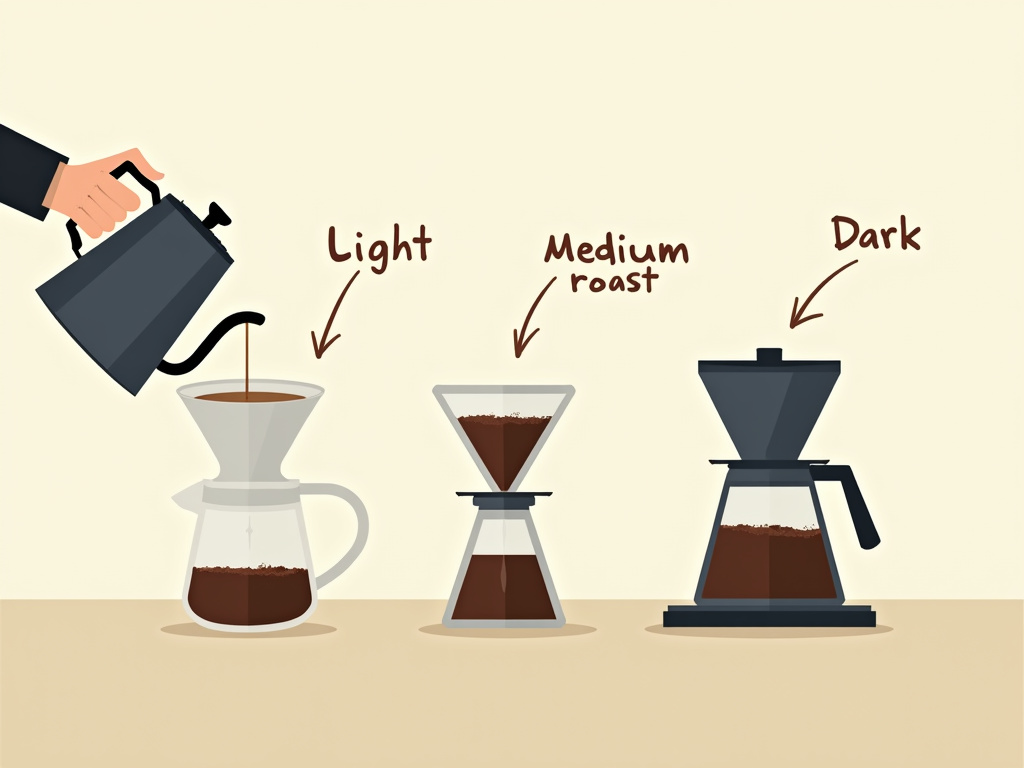
Your brewer is not neutral. Some methods exaggerate the best traits of a roast; others amplify its flaws. Matching the method to the roast level is the final step.
The rule is simple: extraction time relative to solubility. Light roast beans are less soluble, their cellular structure is tighter. They need more time and/or more agitation to fully extract. Dark roast beans are more soluble, their cell walls are fractured and their sugars are caramelized. They give up their flavors quickly, and over-extraction leads to harsh bitterness.
| Roast Level | Best Brew Methods | Why It Works | Method to Avoid |
|---|---|---|---|
| Light | Pour-over (V60, Chemex), Siphon | Controlled, gradual extraction highlights clarity and acidity. | French Press (often muddles delicate notes) |
| Medium | French Press, Drip Machine, Cold Brew | Immersion or steady percolation extracts balanced sugars and body. | None—it’s the most forgiving. |
| Dark | Espresso, AeroPress, Moka Pot | Fast, pressurized extraction pulls desirable oils and sugars before bitter compounds dissolve. | Pour-over (can taste flat and ashy) |
For light roasts, use water just off boil (96–98°C). Grind fine enough to get a total brew time of 3:00–3:30 for a pour-over. If your coffee tastes sour, grind finer. If it’s bitter and astringent, grind coarser. The goal is to extract those bright acids without pulling out the vegetal notes behind them.
Medium roasts are flexible. You can use them in any method, which is why they dominate supermarket shelves and typical coffee strength expectations. A French press with a 4-minute steep is classic. A standard drip machine works perfectly.
Dark roasts demand speed. An espresso shot should run 25–30 seconds. An AeroPress brew should be under 2 minutes. Use slightly cooler water (90–93°C) to slow the extraction of bitter compounds. The espresso caffeine content in a dark roast shot is similar to a light roast shot, but the flavor profile is entirely different, bold and syrupy versus bright and complex.
Choosing Your Roast: A Practical Guide
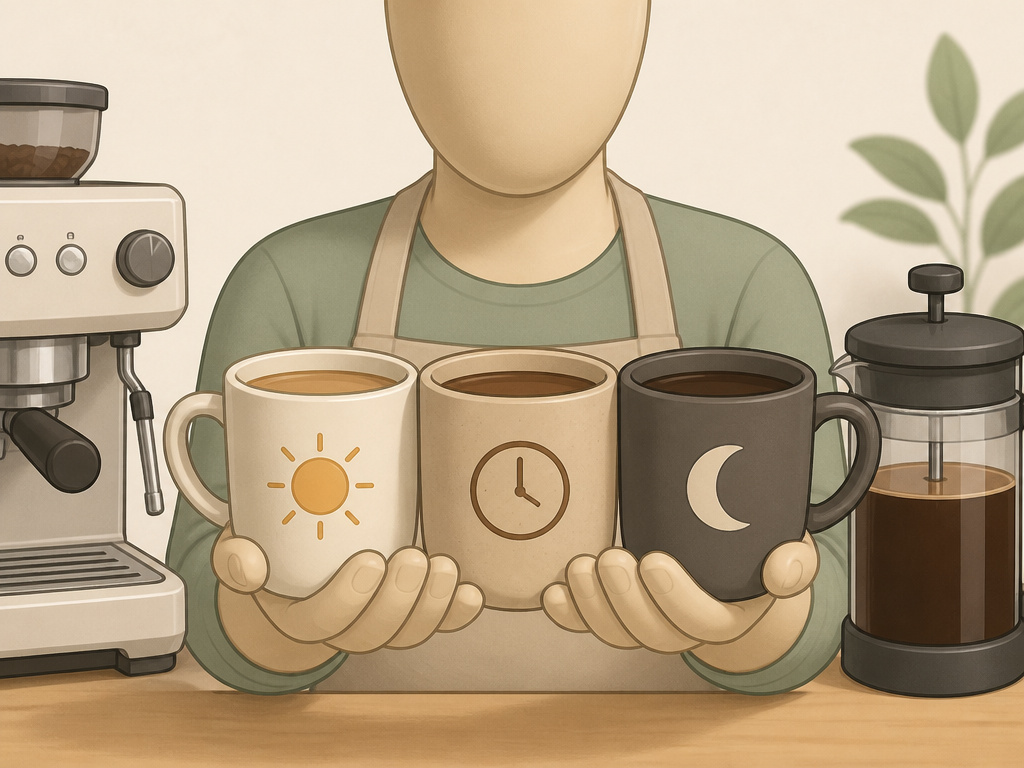
Don’t pick a roast because you think it’s “stronger.” Pick it based on your preferred brewing method, your sensitivity to acidity, and your flavor cravings.
Start with your equipment. If you only have a French press, buy medium or dark roast. If you have an espresso machine, you can experiment with all three, but know that light roasts require precise tuning. If you love drip coffee flavor, medium roast is your safest bet.
Consider your palate. Do you dislike tartness? Avoid light roasts. Do you find smoky, charred flavors unpleasant? Avoid dark roasts. The middle road offers the balanced flavor profile most people enjoy daily.
Think about time of day. The brighter, more caffeinated kick of a light roast (by volume) might suit your morning. A mellower, sweeter medium roast could be your afternoon pick-me-up. A dense, low-acid dark roast often works as an after-dinner drink.
Finally, buy fresh and in small batches. Roast date matters more than roast level. Stale dark roast tastes like charcoal. Stale light roast tastes like hay. Grind just before brewing.
Frequently Asked Questions
Does dark roast have less caffeine?
If you measure by weight, using a scale, dark and light roast have virtually identical caffeine content per gram. If you measure by volume, using a scoop, the less-dense dark roast beans will give you fewer beans and less caffeine. The difference is in your measuring tool, not the bean.
Which roast is the most acidic?
Light roast is the most acidic in terms of measurable pH and perceived brightness. The acids like malic and citric are preserved. Dark roast has the least acidity because those acids break down into other compounds during prolonged roasting.
Why are dark roast beans oily?
The oils are inside every coffee bean. During a dark roast, the bean’s internal structure fractures extensively, allowing the oils to migrate to the surface. An oily bean is a sign of a very dark roast, not necessarily of freshness or quality.
Is light roast the same as blonde roast?
Yes, for all practical purposes. “Blonde roast” is a marketing term popularized by large chains for a very light roast. It falls within the light roast spectrum, often at the lighter end, similar to some blonde roast coffee beans from specialty roasters.
Can I use any roast for espresso?
You can, but results vary wildly. Dark roast is traditional for its solubility and boldness. Medium roast is increasingly popular for balanced shots. Light roast is challenging, it requires a finer grind, higher temperature, and often a longer pre-infusion to extract properly without channeling.
Does roasting destroy antioxidants?
Roasting reduces some antioxidants, like chlorogenic acids, but creates others, like melanoidins. A PubMed Central coffee roasting characteristics study notes that the overall antioxidant activity changes but isn’t simply lost. Both light and dark roasts offer health benefits of coffee, just with different chemical profiles.
Before You Go
Choose your roast based on your brewer and your mouth. Want clarity and vibrancy? Grab a light roast and a pour-over cone. Desire a smooth, versatile daily drinker? A medium roast for your French press or drip machine is the answer. Crave a bold, smoky kick? Pick a dark roast and run it through an AeroPress or espresso machine.
Remember the scale. Weigh your beans. A light roast and a dark roast are different physical objects, treat them that way in your recipe. Your grind must follow suit; dense light beans often need a finer setting.
The roast is just one variable. The bean’s origin, the processing method, the grind, the water, and the brewer all shout just as loud. Start with the roast level to set your direction, then dial in the rest. Your perfect cup is waiting.
