
The Real Difference Between Espresso and Coffee Explained
This post contains affiliate links. As an Amazon Associate, we earn from qualifying purchases.
Espresso is a method of brewing coffee by forcing hot water under high pressure (around 9 bars) through finely-ground coffee for 20-30 seconds. Coffee is the general term for the beverage, with other methods like drip or pour-over using gravity to pull hot water through coarser grounds over several minutes. The pressure, not the bean, defines espresso.
Most people get this wrong because they think espresso is just a dark roast bean or a tiny, strong cup. That confusion leads to buying the wrong gear and expecting flavors a machine can’t deliver.
Let’s break down the mechanics, the myths, and the machines so you can finally understand what you’re drinking and how to make it.
Key Takeaways
- Espresso is defined by 9-bar pressure extraction, not bean type or roast level. You can make espresso from any coffee.
- A proper espresso grind is fine like table salt. Using a drip grind in an espresso machine jams the portafilter and results in a sour, under-extracted shot.
- Per ounce, espresso has more caffeine. But a standard 8-ounce cup of drip coffee delivers more total caffeine because you’re drinking a larger volume of a less concentrated brew.
- The Specialty Coffee Association specifies an espresso brew ratio of 1:1 to 1:3 (coffee to water). Drip coffee ratios are typically 1:15 to 1:18.
- Machine reliability matters. Early-model Breville Dual Boiler machines had solenoid valves that failed within 12-24 months, a timeline you won’t find in a drip coffee maker.
The Core Difference: It’s All About Pressure
Forget roast color and cup size. The single, non-negotiable factor separating espresso from other coffee is pressure. The international standard ISO 3509:2018 defines espresso coffee by “the passage of hot water under pressure.” That pressure is quantified at about 9 bars, or 130 pounds per square inch.
Espresso coffee is defined in ISO 3509:2018 as a beverage prepared from roasted and ground coffee by the passage of hot water under pressure. This distinguishes it from other coffee beverages prepared by extraction with hot water without the specified pressure parameter.
This force pushes water through a densely packed puck of finely-ground coffee in 20-30 seconds. The resistance creates emulsification, pulling oils and dissolved solids into a small, concentrated shot topped with crema, the tan foam of trapped gases and oils. Other methods like drip coffee or pour-over use gravity. Hot water passively soaks and drips through a bed of coarser grounds over several minutes. No pump, no intense resistance, no crema. The result is a larger, clearer beverage.
TL;DR: Espresso requires a machine that generates 9 bars of pressure. All other coffee methods rely on gravity.
Espresso vs. Coffee: A Side-by-Side Breakdown
The pressure difference creates a domino effect across every other variable. This table shows how the core mechanical distinction dictates the entire brewing process.
| Factor | Espresso | Drip / Pour-Over Coffee |
|---|---|---|
| Defining Mechanism | High pressure (9 bar) forced extraction | Gravity-fed percolation or immersion |
| Brew Time | 20–30 seconds | 3–5 minutes (drip) / 2:30–4:00 (pour-over) |
| Grind Size | Very fine (like table salt) | Medium to coarse (like coarse sand) |
| Coffee-to-Water Ratio | 1:1 to 1:3 (e.g., 18g in, 36g out) | 1:15 to 1:18 (e.g., 18g in, 270g out) |
| Serving Size | 1–2 oz (30–60 ml) shot | 8–12 oz (240–350 ml) cup |
| Resulting Texture | Concentrated, syrupy, with crema | Lighter-bodied, tea-like |
| Primary Equipment | Pump-driven espresso machine, fine burr grinder | Drip machine or pour-over cone, standard burr grinder |
The Tools Define the Method
You cannot make real espresso without an espresso machine. A Moka pot produces a strong coffee, but its 1-2 bars of steam pressure don’t qualify. The machine’s pump is the engine. Commercial models like the La Marzocco Linea PB use PID controllers to keep water temperature stable within ±0.5°C, which is critical for consistency shot-to-shot.
The grinder is the other half of the equation. Espresso demands precision. The Baratza Sette 270Wi has 270 micro-adjustments, each changing the grind by about 0.005mm. That level of control is necessary because a shift of two clicks can turn a perfect 28-second shot into a 20-second sour gusher. For brewed coffee methods, grind consistency from a good burr grinder matters, but the margin for error is wider.
Common mistake: Using a blade grinder for espresso, the inconsistent particle size creates channels. Water takes the path of least resistance, resulting in a shot that is both bitter (from over-extracted fines) and sour (from under-extracted boulders) in the same cup.
Drip coffee is more forgiving. A simple drip machine or a pour-over setup like a Hario V60 has no pump to fail. The complexity shifts to the pour technique and water temperature. The failure modes are different. Where an espresso machine might suffer a solenoid valve failure, a drip machine’s heater plate might scale up or its thermal fuse might blow.
Flavor, Body, and the Caffeine Myth
Pressure extraction changes the chemistry in your cup. A 2023 PMC study on coffee extraction methods found that different brewing methods significantly alter the aroma profile and antioxidant activity of the final beverage. Espresso’s high pressure and short contact time extract different compounds than a slow drip.
- Espresso tastes concentrated, full-bodied, and often has a heavier mouthfeel. The crema adds a textured, slightly creamy sensation. Flavors can be intense and complex, but the method also highlights bitterness if the coffee is over-extracted.
- Drip or Pour-Over highlights clarity and nuance. You can more easily taste the specific fruity, floral, or tea-like notes of a single-origin coffee. The body is lighter, cleaner.
The caffeine debate is settled with simple math. Yes, per fluid ounce, espresso packs more caffeine. But you drink one ounce. A standard 8-ounce mug of drip coffee, by volume, delivers more total caffeine. Our detailed breakdown of espresso caffeine content explains this further. It’s not about which is stronger; it’s about concentration versus total dose.
The Bean and The Roast: What Actually Matters?
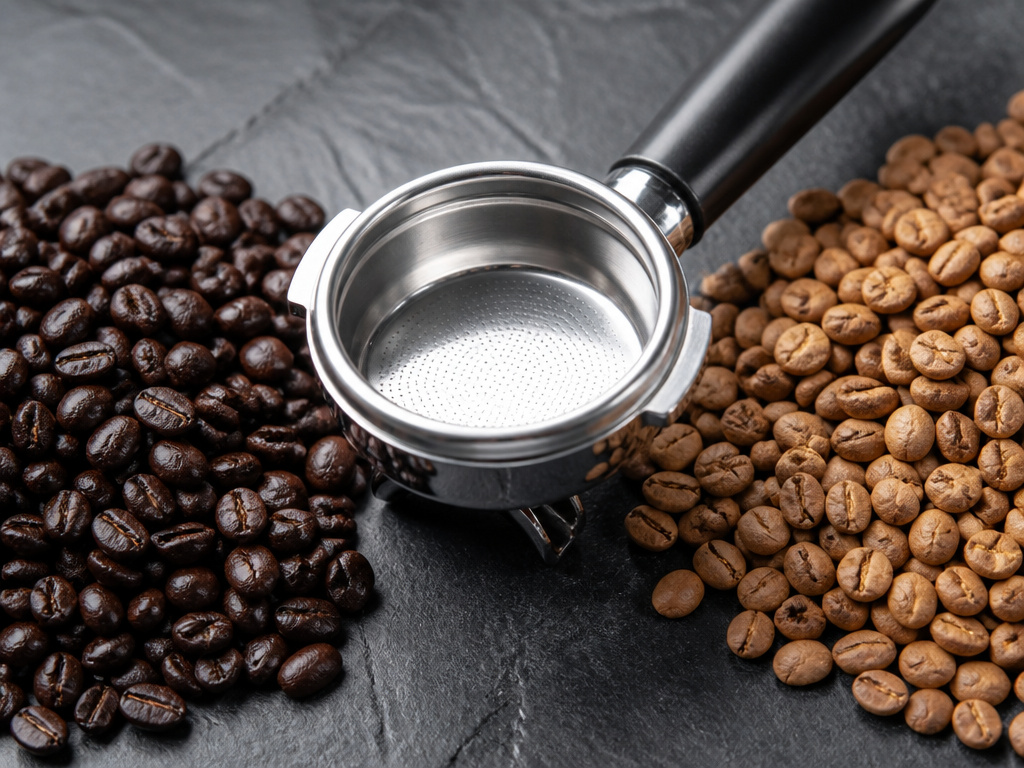
You can use any coffee bean to make espresso or drip. The notion of “espresso roast” is a tradition, not a rule. Historically, darker roasts were used because they withstand high-pressure extraction without tasting overly acidic or sharp. The darker roast also provides the classic bittersweet chocolate and caramel notes people associate with espresso.
But a light blonde roast can make a fantastic, bright espresso. It’s just harder to dial in. The grind must be perfect, and the machine’s temperature needs to be spot-on to avoid sourness. The choice between a blend and a single-origin often comes down to purpose. Blends are crafted for balance and consistency in milk-based drinks like a cappuccino. A fruity Arabica coffee from Ethiopia might sing as a pour-over but taste wildly acidic as a straight shot.
When the Rules Bend: Edge Cases and Advanced Techniques
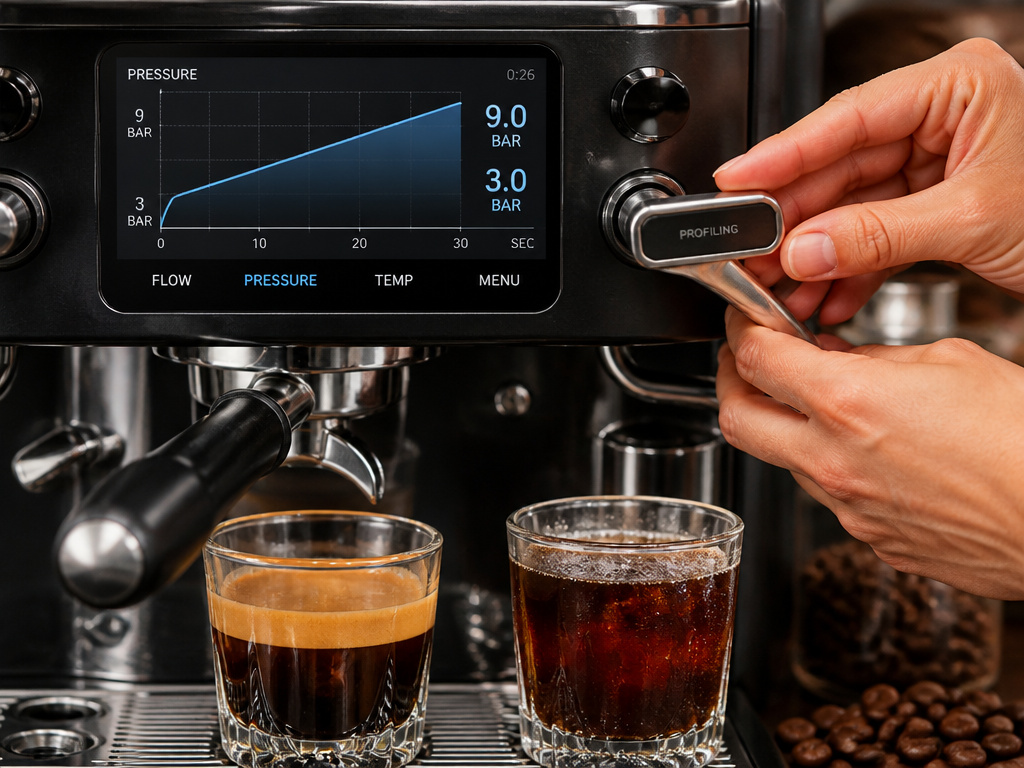
Even within the world of espresso, the 9-bar standard is not absolute. This is where the craft gets interesting.
- Flow Profiling (“Slayer Shots”): High-end machines like those from Slayer Espresso allow baristas to manipulate pressure throughout the shot. They might start with a long, low-pressure pre-infusion (3 bars for 10-15 seconds) to evenly saturate the puck before ramping to 9 bars. This can mitigate channeling and highlight delicate flavors in light roasts that a standard pressure profile would crush.
- Cold Brew “Espresso”: This is a misnomer. It’s a highly concentrated cold brew, not espresso. It misses the defining element of pressure and the resulting crema. It makes a fine iced latte base, but it’s a different beverage entirely.
- The Americano Bridge: An Americano is espresso diluted with hot water. It approximates the strength and volume of drip coffee but retains the distinct flavor footprint of pressure extraction. It’s a useful drink for comparing methods.
Research into espresso extraction kinetics shows how variables like flow rate and particle size interact under pressure. These studies inform these advanced techniques, moving espresso from a fixed recipe to a variable tool for flavor.
Which One Should You Choose?
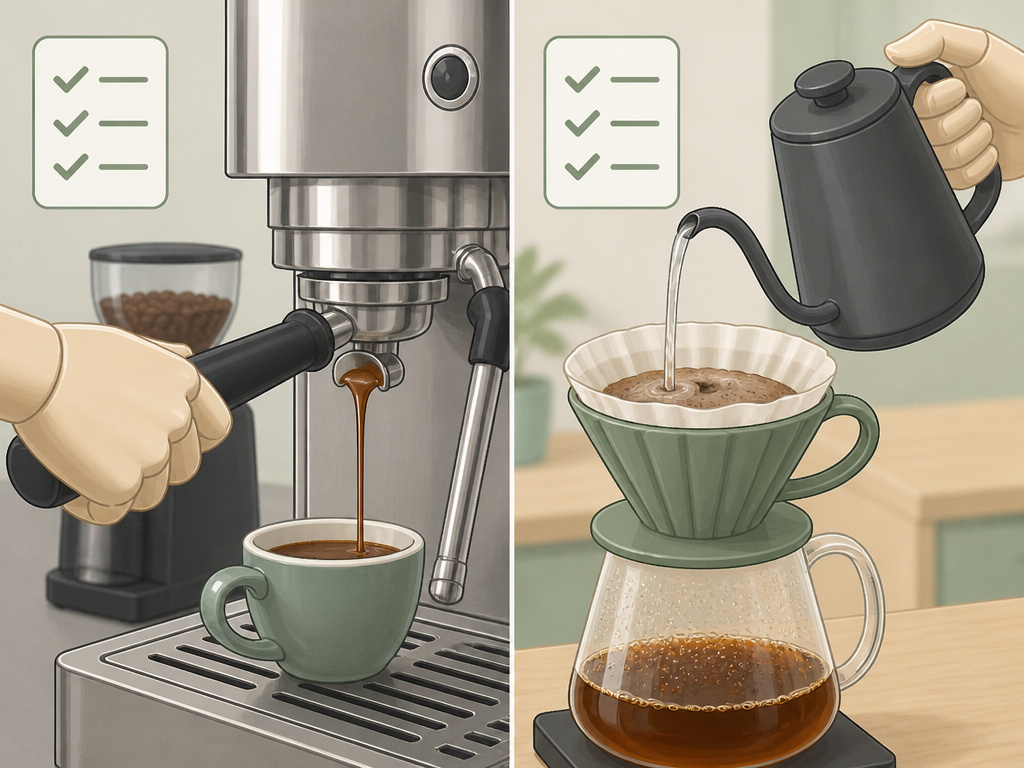
Your choice depends on your goal, budget, and patience.
Choose espresso if:
- You love concentrated, full-bodied coffee drinks, straight or with milk.
- You enjoy the technical process and precision of dialing in a shot.
- You’re willing to invest in a quality machine ($400+) and a dedicated fine-adjustment grinder.
- You value speed, a drink is ready in 30 seconds.
Choose drip/pour-over if:
- You prefer drinking larger cups of coffee and appreciating nuanced, tea-like flavors.
- You want a simpler, more forgiving morning routine with less equipment maintenance.
- Your budget is tighter, a good setup can cost under $100.
- You often brew for multiple people at once.
There’s no hierarchy. A well-executed pour-over of a fantastic single-origin coffee is as much an achievement as a perfectly balanced shot. It’s about matching the method to the bean and your mood.
Frequently Asked Questions
Can you use espresso beans for regular coffee?
Yes. “Espresso beans” are just coffee beans roasted with espresso brewing in mind, typically darker. They will work fine in a drip machine, though the resulting cup may taste stronger and more bittersweet than a medium roast designed for drip.
Which has more caffeine, espresso or coffee?
An average 1-ounce shot of espresso contains about 64 mg of caffeine. An average 8-ounce cup of drip coffee contains about 95 mg. So, the cup of drip coffee has more total caffeine. However, espresso has a much higher concentration of caffeine per ounce.
Do you need a different grinder for espresso?
Yes, ideally. Espresso requires a burr grinder capable of very fine adjustments to dial in the shot time. A grinder suitable for drip coffee may not go fine enough or have the precise micro-adjustments needed for espresso. Using the wrong grind consistency is the number one cause of bad espresso at home.
Is espresso less acidic than coffee?
Not necessarily. The darker roast often used for espresso can reduce perceived acidity, but the high-pressure extraction can also extract certain acidic compounds efficiently. A light roast espresso can be very bright. Acidity is more tied to bean origin, roast level, and extraction than to the brewing method alone.
What is crema and why does only espresso have it?
Crema is the golden-brown foam on top of an espresso shot. It’s an emulsion of coffee oils, gases (mainly CO2), and water created by the high-pressure extraction process. No pressure, no crema. The presence and quality of crema are quick indicators of bean freshness and extraction quality.
The Bottom Line
Espresso and coffee are not rivals. They are two branches of the same tree, defined by a simple mechanical fork in the road: pressure versus gravity. One isn’t better; they are different tools.
Understanding that espresso is a method, a 9-bar pressure extraction, frees you from marketing myths. It lets you choose equipment and beans based on the drink you want to make, not the label on the bag. Whether you crave the thick intensity of a straight shot or the clear, nuanced cup from a pour-over, the truth starts with how the water meets the grounds. Now you know the difference.
