
Coffee Bags Like Tea Bags: Brewing Convenience in Your Cup
Coffee bags like tea bags brew a convenient cup, but their quality hinges on packaging science, not the steeping method. The key is nitrogen flushing: replacing oxygen in the sealed bag to prevent oxidation. Without this, the ground coffee stales rapidly, resulting in a flat, bitter brew regardless of brew time.
Most people assume these bags are just coarse-ground coffee in a tea bag. That’s the mistake. The real difference between a great cup and a weak, stale-tasting one isn’t the act of steeping, it’s the packaging science that happens before you ever pour the water. A bag that sat on a warehouse shelf for six months brews a completely different drink than one packed last week.
This guide breaks down how they work, what you’re actually tasting, and when to reach for them over your regular setup. We’ll use a direct taste test from a roaster’s own experiment and look at the packaging that decides your coffee’s fate.
Key Takeaways
- Steeped coffee bags produce a lighter, less textured cup than pour-over methods due to limited agitation and filter design, but the convenience is unmatched for specific scenarios.
- The shelf life of coffee in these bags is a race against oxidation; nitrogen-flushed Mylar bags can preserve freshness for weeks, not months.
- Grind size inside the bag is critical, too fine and it over-extracts quickly, too coarse and the cup tastes watery no matter how long you steep.
- Their best use is as a reliable backup: in a hotel room, at a campsite, or in an office kitchenette where your only other option is stale instant coffee.
- Never judge the method by a single bag from an unknown roaster; quality varies wildly based on the roast date, bean quality, and packaging integrity.
How Do Coffee Bags Like Tea Bags Actually Work?
The mechanism is pure immersion brewing. Ground coffee is sealed inside a small, porous pouch, usually a paper filter material similar to what’s in your drip machine. When you add hot water, it saturates the grounds through the filter, and extraction happens as the coffee steeps. There’s no percolation or flow-through, which is the biggest factor shaping the final taste.
A single-serve coffee bag is an immersion brewer where the filter pouch contains a fixed dose of ground coffee, typically between 10-12 grams. Extraction occurs solely through diffusion as water permeates the pouch, resulting in a full-immersion profile with lower clarity and body than pour-over methods.
Because the water becomes static around the grounds, extraction is even but limited. In a pour-over, fresh water constantly flows through the coffee bed, carrying away solubles and preventing over-extraction of certain compounds. In the bag, everything stews together. This gives you a round, simple cup but misses the layered acidity and clean finish a good pour-over delivers.
TL;DR: It’s immersion brewing in a disposable pouch. You get even extraction but lose the flavor-clarity that flowing water provides.
The Real Trade-Off: Convenience vs. Taste (A Side-by-Side Test)
You don’t have to guess. A roaster already ran the experiment. In a YouTube comparison, the host brewed two cups from the same batch of Counter Culture’s Big Trouble beans: one using a Chemex pour-over and one using the roaster’s own steeped coffee bag.
The pour-over won, no contest. The host noted the bag-produced coffee was “lighter in color” and tasted “a little watery,” lacking the texture and strength of the Chemex cup. The thick Chemex filter and flowing water created a cleaner, more defined drink. The bag made a acceptable, but noticeably weaker, cup.
That’s the universal result. The convenience tax is a thinner body and muted top notes.
| Brewing Method | Best For | The Flavor Compromise |
|---|---|---|
| Steeped Coffee Bag | Travel, camping, no-equipment situations | Lighter body, less aromatic complexity, can taste flat or papery if stored too long. |
| Pour-Over (e.g., Chemex, V-6) | Home brewing, flavor clarity | Requires gear, technique, and time; not portable. |
| French Press | Full-bodied, rich immersion coffee | Requires a press, produces sediment, needs cleaning. |
| Instant Coffee | Absolute minimalism, weight/space critical | Often has a distinct, processed taste and weak aroma. |
The bag sits between instant and a true immersion brewer. It’s better than instant but can’t match a freshly ground and properly brewed cup. That’s the honest positioning.
Common mistake: Expecting a steeped bag to match your home setup. It won’t. The bag format limits agitation and water refreshment, capping the extraction potential. Judge it as a great option for its specific niche, not as a replacement for your go-to method.
Why Freshness Is the Biggest Challenge (The Packaging Science)
Ground coffee stales fast. Exposing it to oxygen starts degrading aromatic compounds almost immediately. The entire value proposition of a coffee bag hinges on the package slowing this decay to a crawl between roasting and brewing.
Quality bags use a multi-layer Mylar packaging with a one-way degassing valve and a nitrogen flush. The nitrogen displaces oxygen inside the bag before sealing, dramatically slowing oxidation. The valve lets carbon dioxide from the coffee escape without letting air back in. Without this, the coffee inside would taste like cardboard within a week of grinding.
Research on coffee storage underscores the point. A study on roasted coffee quality parameters found that oxygen exposure is the primary driver of staling, leading to a rapid loss of volatile aromatics and the development of off-flavors. This is why the packaging date matters more than anything else.
You cannot see this from the outside. A bag on a grocery store shelf that’s been sitting for months under fluorescent lights is a dead product. The coffee might brew brown liquid, but the vibrant notes are long gone. Always look for a roast date, not just a “best by” date. If there’s no date, assume it’s stale.
TL;DR: The bag is a tiny, sealed environment. If the packaging fails or the coffee is old, you’re drinking stale grounds no matter how perfect your water temperature is.
How to Use Coffee Bags for the Best Possible Cup
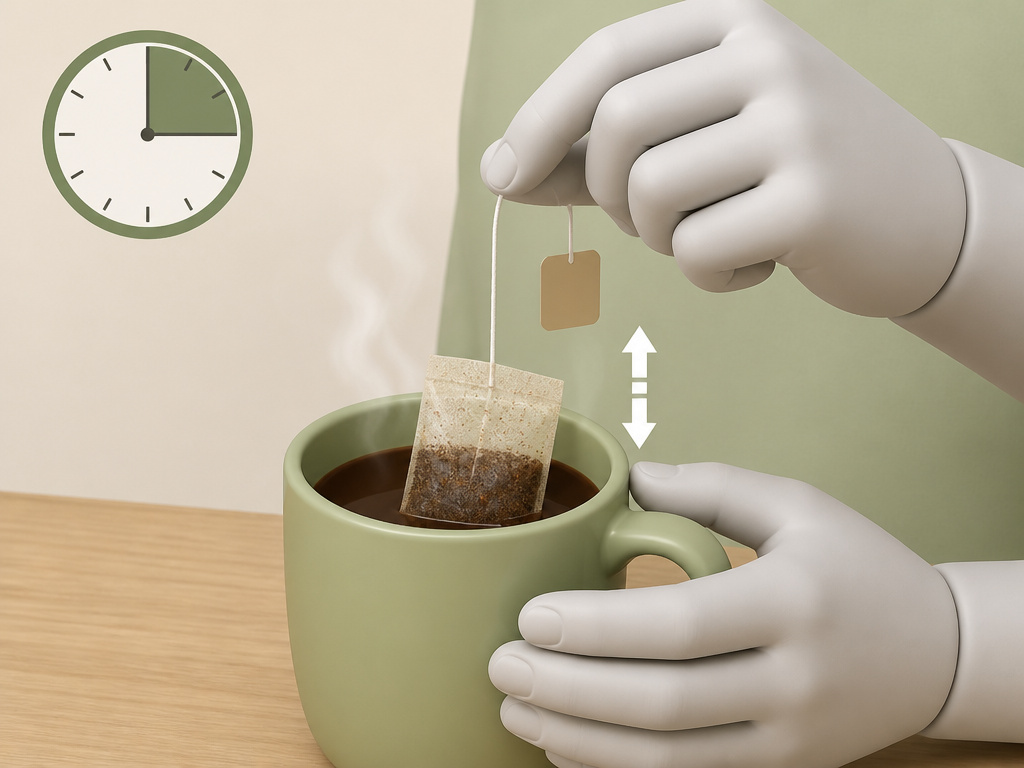
The instructions on the box are a starting point. To get the most out of a bag, you control the variables you still have: water, time, and agitation.
- Use water just off the boil. Aim for 195°F to 205°F. Water that’s too cool won’t extract enough, leaving the coffee sour and weak. Water that’s boiling will scorch the grounds, adding a harsh bitterness. If you can’t measure, let a full boil sit for 30 seconds.
- Pre-warm your mug. Pour a little hot water into your empty mug, swirl it, and dump it out. A cold mug steals heat from the brew water, dropping the temperature and stalling extraction early. This step takes five seconds and makes a real difference.
- Steep for 4-5 minutes, and agitate. Place the bag in the mug and pour 8 ounces of water over it, ensuring the bag is fully submerged. About halfway through the steep, gently dunk the bag up and down a few times with the string or tag. This agitates the grounds, refreshing the water around them and boosting extraction. Skipping this leads to uneven saturation, the coffee at the center of the pouch might stay dry.
- Remove the bag decisively. When time’s up, pull the bag out and discard it. Don’t let it sit in the mug. Continuing to steep will only pull out bitter, over-extracted compounds. The brew is done.
I prefer a 4:30 steep time with a vigorous dunk at the 2-minute mark. The shorter time than the maximum recommended prevents the tail-end bitterness from seeping in, especially with darker roasts that extract faster. Found that out after a week of overly strong, astringent cups on a camping trip.
If your coffee tastes sour, steep longer or use hotter water next time. If it’s bitter, shorten the steep or use slightly cooler water. You have a small dial to turn.
When Do Coffee Bags Actually Make Sense?
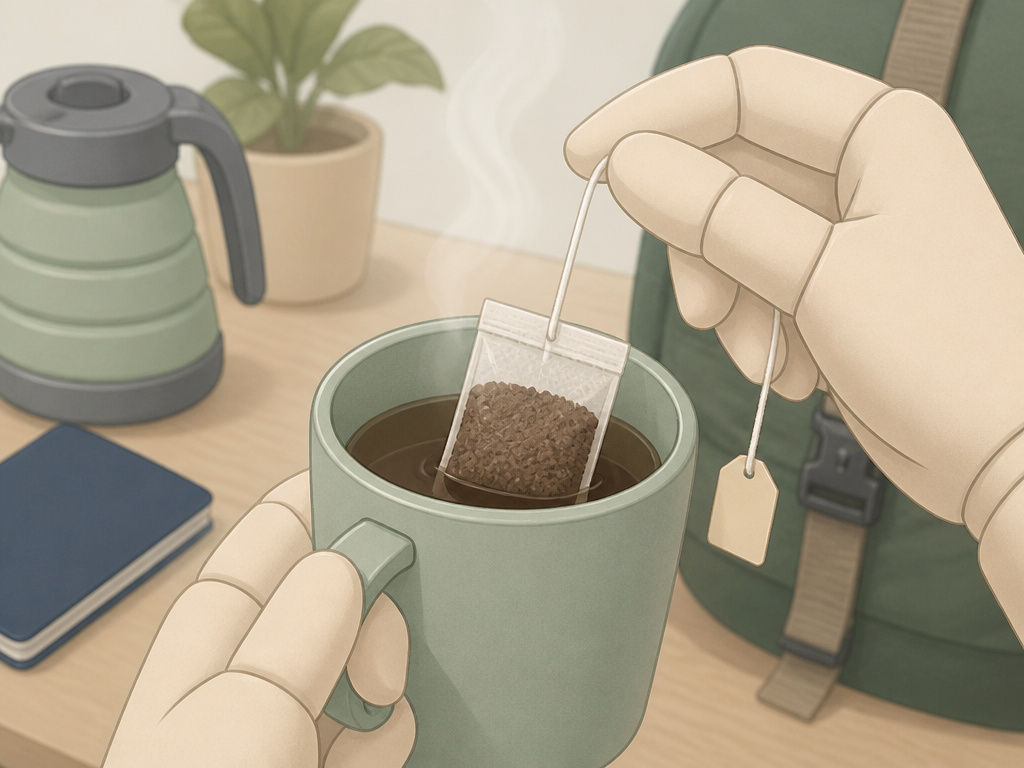
This isn’t an everyday solution for the coffee-obsessed. It’s a strategic tool. Keep a box in these specific places.
- Your travel dopp kit. Hotel room coffee is notoriously bad. A coffee bag and a collapsible kettle give you a reliable morning ritual anywhere in the world.
- The emergency desk drawer. For those days when the office pot is empty or tastes like burned rubber, having a personal backup saves the afternoon.
- Camping and backpacking. Weight and space are premium. A few coffee bags are far lighter than a French press or an AeroPress, and they require zero cleaning. Just pack out the used bag.
- As a low-stakes introduction. Want to let a friend try a new roaster without gifting a whole bag and a brewing lesson? A single-serve bag is a perfect, approachable sample.
They fail as a primary home brewing method. The cost per cup is higher than buying whole beans, the environmental footprint of the single-use packaging adds up, and you sacrifice too much flavor control. For daily use, a simple drip coffee method is more economical and satisfying.
Frequently Asked Questions
Are coffee bags like tea bags stronger than instant coffee?
Yes, typically. Steeped bags use real ground coffee, so they extract a broader range of oils and solubles than the freeze-dried or spray-dried crystals in instant coffee. The result is a flavor profile closer to brewed coffee preparation, with more body and authentic aroma.
How much caffeine is in a coffee tea bag?
Caffeine content depends entirely on the coffee inside, the bean type (Robusta vs. Arabica), roast level, and dose. A standard 10-12 gram bag of Arabica coffee will contain roughly 80-120mg of caffeine, which is comparable to a standard cup of black coffee. This is generally more caffeine than a bag of black tea, which releases its caffeine more slowly during steeping.
Can you reuse a coffee bag like a tea bag?
Technically, you could steep it a second time, but the result will be extremely weak. The first steep extracts the vast majority of the coffee’s soluble compounds. A second cup will taste like slightly brown, flavored water. It’s not worth it.
Are the bags themselves compostable or biodegradable?
It depends on the manufacturer. The filter material is often a biodegradable coffee filter paper, but the string, tag, and outer packaging usually are not. You need to check the specific brand’s claims. Even compostable items require industrial facilities to break down efficiently.
Do any major coffee makers use bags, like Keurig or Nespresso?
No, the systems are different. Keurig and Nespresso use rigid plastic or aluminum pods designed for their proprietary machines that force water through the grounds under pressure. Coffee bags are meant for passive steeping in hot water and are machine-agnostic. They are more analogous to the paper coffee filters in your drip machine than to a K-Cup.
Before You Go
Coffee bags like tea bags solve a specific problem: getting a decent cup of coffee when you have nothing but hot water. They are a testament to smart, minimal design. The taste will never beat your carefully curated home brew, and the packaging waste is a real downside. But for the scenarios they’re built for, a tent, a hotel, a last-resort desk drawer, they are quietly brilliant.
Understand the trade-off. Use them strategically, not habitually. Pay attention to roast dates like you would with any other coffee. And when you’re back at your own counter, savor the deeper, cleaner notes of your regular coffee brewing methods all the more.
