
Coffee Filter Substitute: Can You Safely Use a Paper Towel?
You can use a paper towel as a coffee filter substitute in an emergency, but it is not recommended for safety or taste. Unbleached, food-grade paper towels are the only remotely safe option, as standard bleached towels introduce chemicals and a cardboard flavor, while the thickness leads to poor, slow extraction.
You can use a paper towel as a coffee filter in an absolute pinch, but it will make your coffee taste like wet cardboard and may introduce chemicals not approved for food contact. The paper’s thickness and bleaching agents slow extraction and add off-flavors, while its lack of a food-grade guarantee is the primary safety concern. This is a survival hack, not a brewing method.
Everyone runs out of filters. The instinct is to grab whatever is absorbent and paper-like from the kitchen drawer. That instinct delivers a cup that tastes like regret.
This guide walks through the real-world consequences, the regulatory safety lines, and the least-worst way to execute the paper towel hack if you’re truly desperate.
Key Takeaways
- Paper towels are not manufactured or regulated as food-contact items. The FDA’s Food Contact Substances program does not evaluate them, meaning bleaching agents and binding chemicals could leach into hot water.
- Unbleached, plain paper towels are the lesser of two evils if you must proceed, as they avoid chlorine dioxide residues common in bleached products.
- The paper towel’s dense weave drastically slows water flow, causing severe under-extraction. Your coffee will taste sour, weak, and distinctly of paper.
- For a basket-style drip machine, you must fold the towel into a proper basket shape and wet it first to prevent tearing and channeling.
- This method is a one-time emergency stopgap. Investing in a reusable metal or cloth filter eliminates the problem permanently.
The Safety Question: What the FDA Says
The core issue isn’t just taste. It’s regulatory status. The FDA’s Food Contact Substances (FCS) framework exists to evaluate materials that touch what we eat and drink. Paper designed for food packaging, like standard paper coffee filters, undergoes this review.
Paper towels do not.
Paper towels are engineered for absorbency and strength when wet with cleaners or grease, not for compatibility with near-boiling water and organic acids from coffee. Their chemical makeup—binders, wet-strength resins, and bleaching agents—is not validated for safe ingestion.
Manufacturers use chemicals like epichlorohydrin to give towels wet strength. Chlorine compounds bleach them white. These substances are stable when wiping counters. Submerged in 200°F acidic water for minutes, the leaching potential is unknown and unregulated. That’s the risk.
TL;DR: Paper towels lack FDA food-contact clearance. Chemicals used in their production could migrate into your brew, making them a potential health gamble.
Taste and Performance: Expect a Letdown
Even if safety isn’t your foremost concern, the drinking experience should be. Multiple first-hand tests, including those documented on YouTube, converge on the same result: bad coffee.
The paper towel’s physical structure is the culprit. Its fibers are packed tightly for durability, creating extreme flow resistance.
| Filter Type | Draw-Down Time (for 300ml) | Resulting Flavor Profile | Primary Issue |
|---|---|---|---|
| Standard Paper Filter | 2.5–3.5 minutes | Clean, balanced, true to bean | Designed for the task |
| Paper Towel (2-ply) | 5+ minutes | Sour, weak, strong paper taste | Severe under-extraction |
| Metal Mesh Filter | 1–2 minutes | Full-bodied, some silt | Fast, allows oils |
Water struggles to pass through, stalling over the coffee grounds. This causes under-extraction. The bright, acidic compounds extract first, while the deeper sugars and caramelized notes never get pulled out. You’re left with a sour, thin cup. One tester described it as “super under-extracted and tastes sour. Plus, you definitely taste the paper towels.”
The paper taste itself is pervasive. It’s that wet cardboard note that masks any origin character or roast nuance. It doesn’t matter if you’re using a premium single-origin or generic pre-ground; the paper towel will dominate.
Common mistake: Using a thick “ultra-absorbent” towel — it filters so slowly your coffee becomes unpalatably sour and the paper flavor intensifies, ruining the entire pot.
Paper Towel as a Coffee Filter: A Direct Comparison
Understanding how a paper towel differs from its purpose-built counterpart explains the poor results. It’s not just a matter of thickness.
A dedicated paper coffee filter is a precision tool. Its material is thin, porous, and specifically engineered for hot water and coffee oils. It’s often oxygen-bleached (a safer process) or simply unbleached. The goal is to trap fines while allowing water and dissolved coffee solids to flow through at an optimal rate.
A paper towel is a general-purpose sponge. Its design goals are conflict:
1. Absorbency: To soak up liquids quickly, which requires a loose structure.
2. Wet Strength: To not disintegrate when wet, which requires strong binders and resins.
3. Bleaching: For visual appeal, which involves chemical agents.
When brewing, the binders that provide wet strength also retard water flow. The bleaching agents can contribute off-flavors. The absorbent structure traps water within the towel itself, stealing it from the extraction process.
Why-layer: The sour taste isn’t random. Extraction happens in stages: acids first, then sugars, then bitter compounds. A slow filter only pulls the early acidic stage before the water cools or you stop brewing, locking the sweetness out of your cup.
The Paper Towel Brewing Method (If You Must)
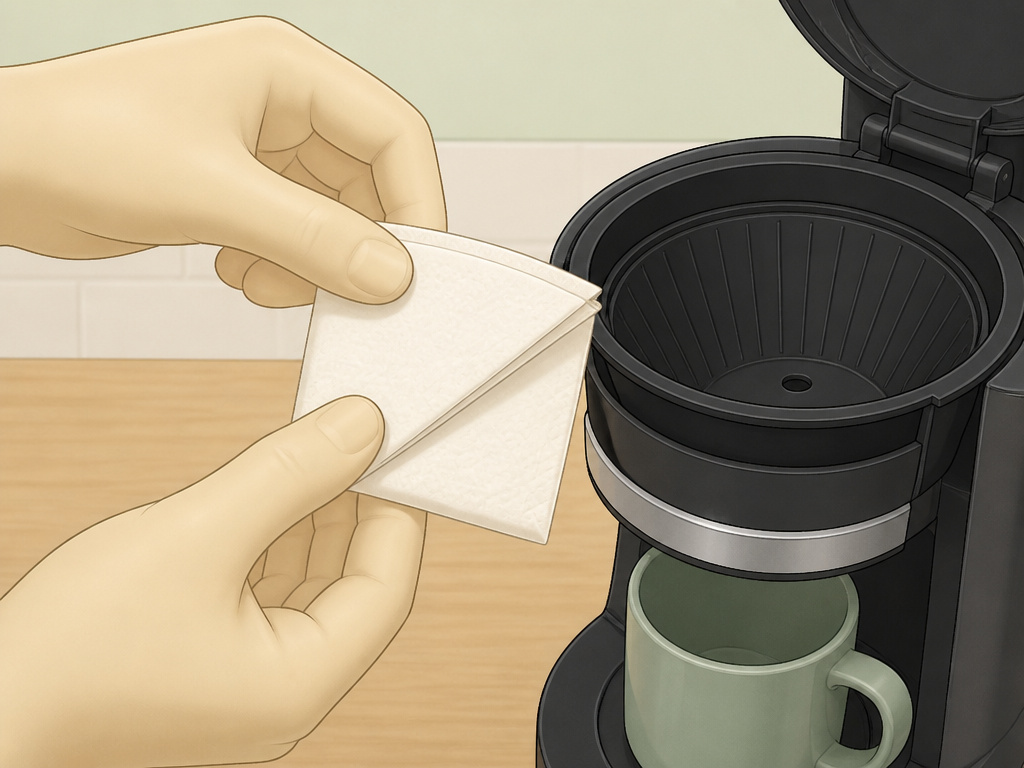
If the warning hasn’t deterred you and the coffee craving is overwhelming, this is the least bad way to proceed. The goal is to minimize contact time and avoid structural failure.
Before you start: Use unbleached paper towels to avoid chlorine residues. Have a mug or carafe ready. Work quickly to prevent a soggy collapse.
What You’ll Need
- Plain, unbleached paper towels
- Your coffee brewer (drip basket, V60, or even a mug)
- Ground coffee
- Hot water (just off the boil)
- A steady hand
Step-by-Step for a Drip Machine Basket
- Fold into a basket shape. Take a single paper towel sheet. Fold it in half, then in half again to form a smaller square. Open one layer to create a cone or press it into the basket, ensuring it covers all sides.
- Rinse with hot water. Briefly pour hot water over the towel to wash away any loose fibers and help it stick to the plastic basket. Discard this water from the carafe.
- Add coffee grounds. Use your normal amount. Do not tamp or press.
- Brew immediately. Start your machine. The flow will be slower. Do not walk away.
- Remove the spent towel immediately after brewing. If left sitting in the basket, it will continue to leach paper taste into any warm, residual coffee.
Skipping the rinse step is tempting. The towel will likely tear under the weight of wet grounds, sending a slurry of coffee and pulp into your carafe. That’s worse than paper-taste coffee.
For a Pour-Over Like a V60 or Chemex
The principle is similar, but the fit is harder. You must form a cone that sits snugly in the ridges.
1. Fold the towel into a rough cone shape that matches your brewer.
2. Wet it and press it into the grooves. It won’t be perfect.
3. Pour very slowly. The draw-down will be extremely slow. Expect a brew time double the normal 3-4 minutes.
4. The resulting cup will be the most under-extracted of all, highlighting why this method fails for brewed coffee preparation.
Better Alternatives to Paper Towels
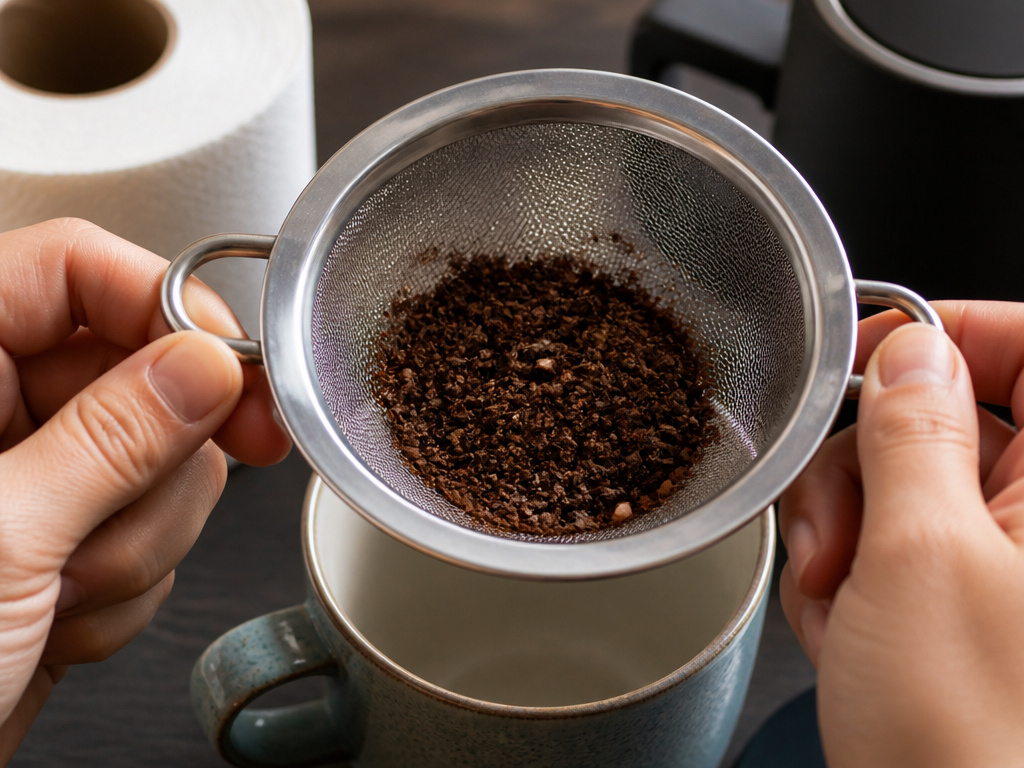
You have superior options that don’t involve culinary Russian roulette. Some require a small purchase, others use common household items.
A Permanent Metal Filter: A $15 stainless steel mesh filter for your drip machine or pour-over is a one-time buy. It lasts for years, requires no paper, and allows coffee oils through for a fuller-bodied cup. It’s the definitive solution.
A Clean Handkerchief or Nut Milk Bag: Any thin, undyed cotton cloth can work. Rinse it thoroughly with hot water first to remove lint or residues. Shape it over a mug with a rubber band. This is essentially a primitive cloth filter. It works surprisingly well, though it will impart a slight cloth taste the first few uses.
The Cowboy Method (No Filter): For true emergencies. Add coarse ground coffee directly to a pot of hot (not boiling) water. Stir, let it steep for 4-5 minutes, then let the grounds settle for another 2. Carefully pour the clear top layer into your mug. You’ll get some silt, but zero paper taste. This is a core standard coffee brewing technique worldwide.
French Press Plunge: If you have a French press, you’ve already won. It is the ultimate emergency brewer, as it requires no paper at all. Use your standard coffee grind consistency for press.
I keep a small gold cone filter in my camping kit for this exact reason. After one desperate morning using a paper towel at a rental cabin, the metallic aftertaste of regret was too strong. The $12 investment saved countless future cups.
Paper Towel Variables: Bleached vs. Unbleached
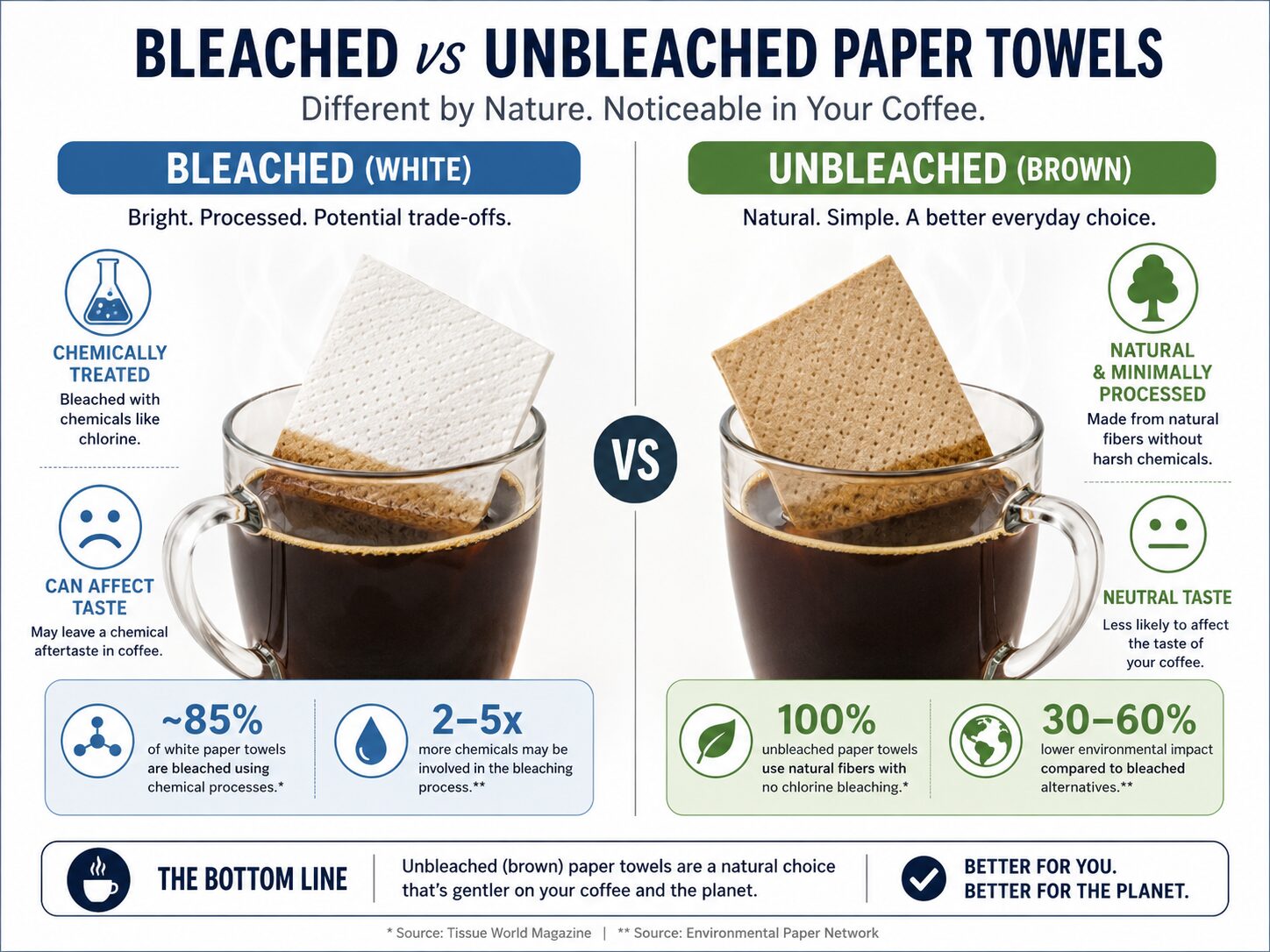
Not all paper towels are created equal, and the differences matter when they’re steeping in your coffee.
| Variable | Bleached (White) | Unbleached (Brown) |
|---|---|---|
| Process | Treated with chlorine or hydrogen peroxide to whiten. | No chemical bleaching; retains natural brown color. |
| Potential Leachate | Chlorine compounds (e.g., dioxins in trace amounts from older processes). | Lignin (natural plant polymer) which can impart a slightly earthy taste. |
| Taste Impact | Can add a chemical or “off” note to coffee. | Adds a milder, papery or woody taste. |
| Recommendation | Avoid completely for coffee. | The marginally safer choice if you have no other option. |
The unbleached towel is the lesser evil. Its primary contaminant is lignin, which is naturally occurring and less concerning than industrial bleaching byproducts. The taste it adds is more “paper” and less “chemical.” Still, it’s a compromise, not a solution.
This distinction mirrors the debate in bleached and unbleached coffee filters, where the food-grade versions are designed to minimize taste transfer.
Frequently Asked Questions
Is it safe to use a paper towel as a coffee filter?
There is no definitive “safe” rating because paper towels are not evaluated as food-contact items by the FDA. While a one-time use is low-risk for most, the potential for chemical leaching from bleaching agents and binding resins exists. It is not recommended.
Will a paper towel filter dissolve or break in my coffee maker?
quality paper towel is designed for wet strength, so it likely won’t dissolve. However, it can tear if not properly seated or if overloaded with grounds, especially in a basket-style brewer. Always wet it first to help it adhere.
How does coffee filtered through a paper towel taste?
It tastes sour and weak due to severe under-extraction, with a dominant wet cardboard or paper flavor. Multiple direct tests confirm the paper taste is unmistakable and overwhelms the coffee’s natural profile.
What is the best alternative if I have no coffee filters?
permanent metal mesh filter is the best long-term solution. For an immediate, no-cost alternative, the cowboy method (brewing grounds directly in water and letting them settle) or using a clean cotton cloth like a handkerchief are far better options than a paper towel.
The Bottom Line
A paper towel can physically hold coffee grounds and let liquid pass through. By that bare-minimum definition, it “works.” But the resulting cup is a punishment, not a pleasure, and it carries an unnecessary question mark about chemical safety.
The hack is a fascinating experiment in improvisation. It proves you can get caffeinated under duress. For your daily ritual, it’s a failure. The few dollars for a box of proper filters, or the small investment in a reusable metal one, pays for itself in the first pot that actually tastes like coffee. Keep a spare box in the pantry. Your future self, savoring a clean, balanced cup, will thank you.
{
“@context”: “https://schema.org”,
“@type”: “HowTo”,
“name”: “How to Use a Paper Towel as an Emergency Coffee Filter”,
“totalTime”: “PT10M”,
“tool”: [
{
“@type”: “HowToTool”,
“name”: “Paper towels (unbleached preferred)”
},
{
“@type”: “HowToTool”,
“name”: “Coffee dripper (V60, Melitta, or basket)”
},
{
“@type”: “HowToTool”,
“name”: “Mug or carafe”
},
{
“@type”: “HowToTool”,
“name”: “Boiling water”
}
],
“supply”: [
{
“@type”: “HowToSupply”,
“name”: “Freshly ground coffee”
}
],
“step”: [
{
“@type”: “HowToStep”,
“name”: “Select and prepare the paper towel”,
“text”: “Choose a plain, unbleached paper towel. Fold it in half, then in half again to create a square or rectangle slightly larger than your brewer’s basket or mug opening.”
},
{
“@type”: “HowToStep”,
“name”: “Shape the filter”,
“text”: “Form the folded paper towel into a cone or basket shape that fits snugly into your brewer. For a pour-over, press it into the dripper’s grooves.”
},
{
“@type”: “HowToStep”,
“name”: “Wet and seat the filter”,
“text”: “Pour a small amount of hot water over the paper towel to rinse it and help it adhere to the brewer’s walls. Discard this rinse water.”
},
{
“@type”: “HowToStep”,
“name”: “Add coffee and brew slowly”,
“text”: “Add your ground coffee to the damp filter. Pour hot water in slow, steady circles, saturating all the grounds. Expect a slower draw-down than with a standard filter.”
},
{
“@type”: “HowToStep”,
“name”: “Remove and discard immediately”,
“text”: “Once brewing is complete, carefully lift out the used paper towel and grounds. Dispose of it to avoid a soggy mess and paper taste transfer.”
}
]
}
{
“@context”: “https://schema.org”,
“@type”: “FAQPage”,
“mainEntity”: [
{
“@type”: “Question”,
“name”: “Is it safe to use a paper towel as a coffee filter?”,
“acceptedAnswer”: {
“@type”: “Answer”,
“text”: “There is no definitive \”safe\” rating because paper towels are not evaluated as food-contact items by the FDA. While a one-time use is low-risk for most, the potential for chemical leaching from bleaching agents and binding resins exists. It is not recommended.”
}
},
{
“@type”: “Question”,
“name”: “Will a paper towel filter dissolve or break in my coffee maker?”,
“acceptedAnswer”: {
“@type”: “Answer”,
“text”: “quality paper towel is designed for wet strength, so it likely won’t dissolve. However, it can tear if not properly seated or if overloaded with grounds, especially in a basket-style brewer. Always wet it first to help it adhere.”
}
},
{
“@type”: “Question”,
“name”: “How does coffee filtered through a paper towel taste?”,
“acceptedAnswer”: {
“@type”: “Answer”,
“text”: “It tastes sour and weak due to severe under-extraction, with a dominant wet cardboard or paper flavor. Multiple direct tests confirm the paper taste is unmistakable and overwhelms the coffee’s natural profile.”
}
},
{
“@type”: “Question”,
“name”: “What is the best alternative if I have no coffee filters?”,
“acceptedAnswer”: {
“@type”: “Answer”,
“text”: “permanent metal mesh filter is the best long-term solution. For an immediate, no-cost alternative, the cowboy method (brewing grounds directly in water and letting them settle) or using a clean cotton cloth like a handkerchief are far better options than a paper towel.”
}
}
]
}
