
Can You Heat Up Cold Brew Coffee? The Right Way to Warm It
Yes, you can heat up cold brew coffee by adding hot water or milk to the concentrate, or by gently warming a prepared cup. The key is to avoid overheating the coffee itself, as temperatures above 160°F (71°C) can reactivate bitter compounds and strip away the smooth, low-acid profile that defines cold brew.
Most people assume heating is just about temperature. They zap a mug in the microwave for two minutes and wonder why their smooth coffee now tastes sharp and thin. The real problem is how you apply the heat, not if you apply it.
This guide walks through the chemistry behind the flavor change, compares every heating method, and gives you the steps to make a genuinely good hot cup from your cold brew concentrate.
Key Takeaways
- Heat the diluting liquid, not the coffee concentrate, to preserve flavor.
- Microwave heating is the fastest way to ruin your cup by unevenly superheating acids and bitter oils.
- Cold brew made at room temperature tastes better when heated than brew made in the fridge.
- The target serving temperature for hot cold brew is 150–160°F (65–71°C).
- Using a light roast or a balanced blend gives you more flavor flexibility when heating.
How Heating Changes the Flavor
Cold brew gets its signature smoothness from a slow, cold extraction. Hot water acts like a chemical key, unlocking hundreds of compounds from coffee grounds—including acids and bitter phenols. Cold water is a pickier key. It mostly extracts sugars, caffeine, and milder oils, leaving many of the harsher notes behind.
The 2017 review “Coffee Brewing and Extraction” in the Journal of Agricultural and Food Chemistry notes that solubility of coffee compounds is highly temperature-dependent. Chlorogenic acids (a source of bitterness) and certain volatile aromatics have much higher extraction yields at temperatures above 195°F (90°C).
When you re-introduce high heat to finished cold brew, you don’t extract new compounds—the grounds are gone. But you can change the ones already in your cup. You are essentially cooking the coffee.
Volatile aromatic compounds, the ones that give coffee its fruity or floral high notes, are fragile. They evaporate quickly with heat. That’s the warm smell you get when heating, but it’s flavor leaving the cup. Meanwhile, some of the heavier, more stable bitter compounds can undergo chemical changes, making them more perceptible. The result is a cup that can taste flat, with a sharper, more astringent finish.
TL;DR: Heat drives off delicate aromatics and can amplify existing bitter compounds, turning a smooth cup into a dull, sharp one.
The Acidity Illusion
A common report is that heated cold brew tastes “more acidic.” True titratable acidity doesn’t increase. Your cold brew has a fixed amount of acid molecules. What changes is your perception.
Cold mutes sour notes. Warming any liquid makes its acidic character more pronounced to your tongue. Combine that with the loss of sweet-balancing aromatics, and the sourness seems to jump forward. It’s not new acid. It’s unbalanced flavor.
| Flavor Component | Effect of Cold Brewing | Effect of High Heat After Brewing |
|---|---|---|
| Bright Acidity | Significantly reduced | Perception is increased |
| Bitterness | Mildly extracted | Can become more pronounced |
| Sweetness | Well-extracted, prominent | Remains, but can be overshadowed |
| Volatile Aromatics | Some extraction, preserved by cold | Evaporated, leading to a flatter aroma |
The Right Way to Heat Cold Brew
The goal is to warm the drink without cooking it. You achieve this by heating the thing you’re mixing into the coffee, not the coffee itself. This method gives you control.
Before you start: Use a heatproof mug. If using a saucepan, avoid high heat—a rapid boil can scorch even water, imparting a flat taste. Steam can cause burns; pour slowly.
The Hot Water Dilution Method (Recommended)
This is the most reliable technique. It works because you are performing the final “brew” dilution with hot water, mimicking how you’d make an Americano from espresso.
- Portion your concentrate. Pour your desired amount of cold brew concentrate into your mug. A standard ratio is 1 part concentrate to 2 parts hot water.
- Heat fresh water. Use a kettle or saucepan to heat fresh water to just below boiling, around 190°F (88°C). Do not use boiling water.
- Combine and stir. Pour the hot water into the mug with the concentrate. Stir gently for a few seconds to ensure even temperature and dilution.
- Taste immediately. The drink will be ready. If it’s too strong, add more hot water in small increments.
Common mistake: Heating the concentrate and water together — this extends the time the coffee is exposed to heat, giving bitter compounds more time to oxidize and your aromatics more time to vanish. Your cup will taste stale within minutes.
Why does this work? You are raising the temperature of the concentrate quickly and evenly with a large volume of pre-heated liquid. The coffee itself never sits on a heat source, so it doesn’t have time to undergo prolonged thermal stress. The hot water dilution method is the same principle used for espresso-based drinks like Americanos, where the espresso is protected by the surrounding water.
The Stovetop Warm-Up Method
Use this if you have already diluted your cold brew with cold water or milk and want to warm the whole serving.
- Pour into a saucepan. Use a small, clean saucepan and pour in your pre-diluted cold brew.
- Apply low heat. Use the lowest heat setting on your stove. You are warming, not simmering.
- Stir constantly and monitor. Use a thermometer. The moment the liquid reaches 150–160°F (65–71°C), remove it from the heat. Do not let it steam or simmer.
- Pour and drink. Get it out of the hot pan and into your mug immediately.
Constant stirring is non-negotiable. It prevents localized overheating at the bottom of the pan, which is where you get those sharp, burnt notes. This method requires more attention than the dilution method.
The Wrong Way to Heat Cold Brew
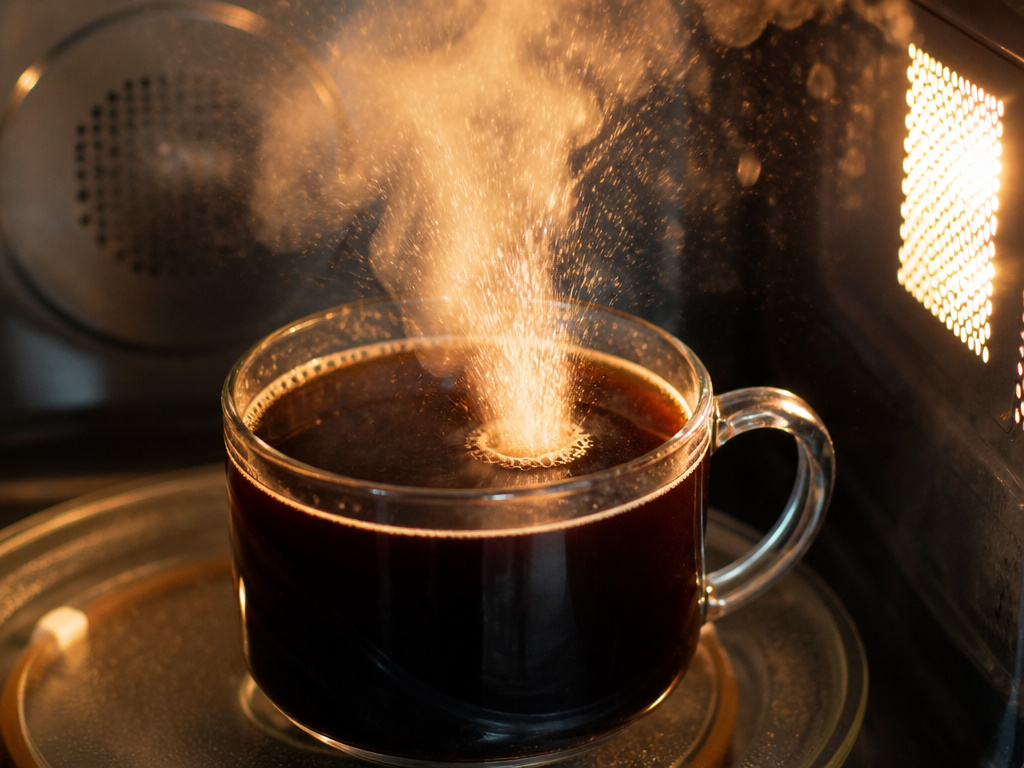
The microwave is the most accessible tool and the easiest way to degrade your coffee. The problem is uneven, intense energy.
Microwaves heat water molecules aggressively and irregularly. This creates super-hot pockets within the liquid while other spots remain cool. Those hot pockets are where the damaging chemical changes occur most intensely. You are essentially pressure-cooking parts of your coffee.
I reheated a mug of pre-diluted cold brew for 90 seconds on high. The first sip was deceptively smooth, but by the third sip, a harsh, tinny bitterness coated my tongue. The cup was undrinkable after it cooled for five minutes, tasting purely of ash and acid.
The visual cue is steam. If you see heavy steam rolling off your mug from the microwave, you’ve already gone too far. That steam is your flavor profile leaving the cup.
TL;DR: The microwave applies heat too violently and unevenly, creating localized hotspots that wreck the coffee’s balance.
Why the “Just Warm” Setting Fails
Most microwave guides say “use a lower power setting.” This doesn’t solve the core issue. Lower power just extends the time the coffee spends in that chaotic heating environment, increasing the overall thermal stress. It might prevent a boil-over, but it won’t protect the delicate chemistry of your cold brew caffeine and flavors.
Choosing the Best Coffee for Heating
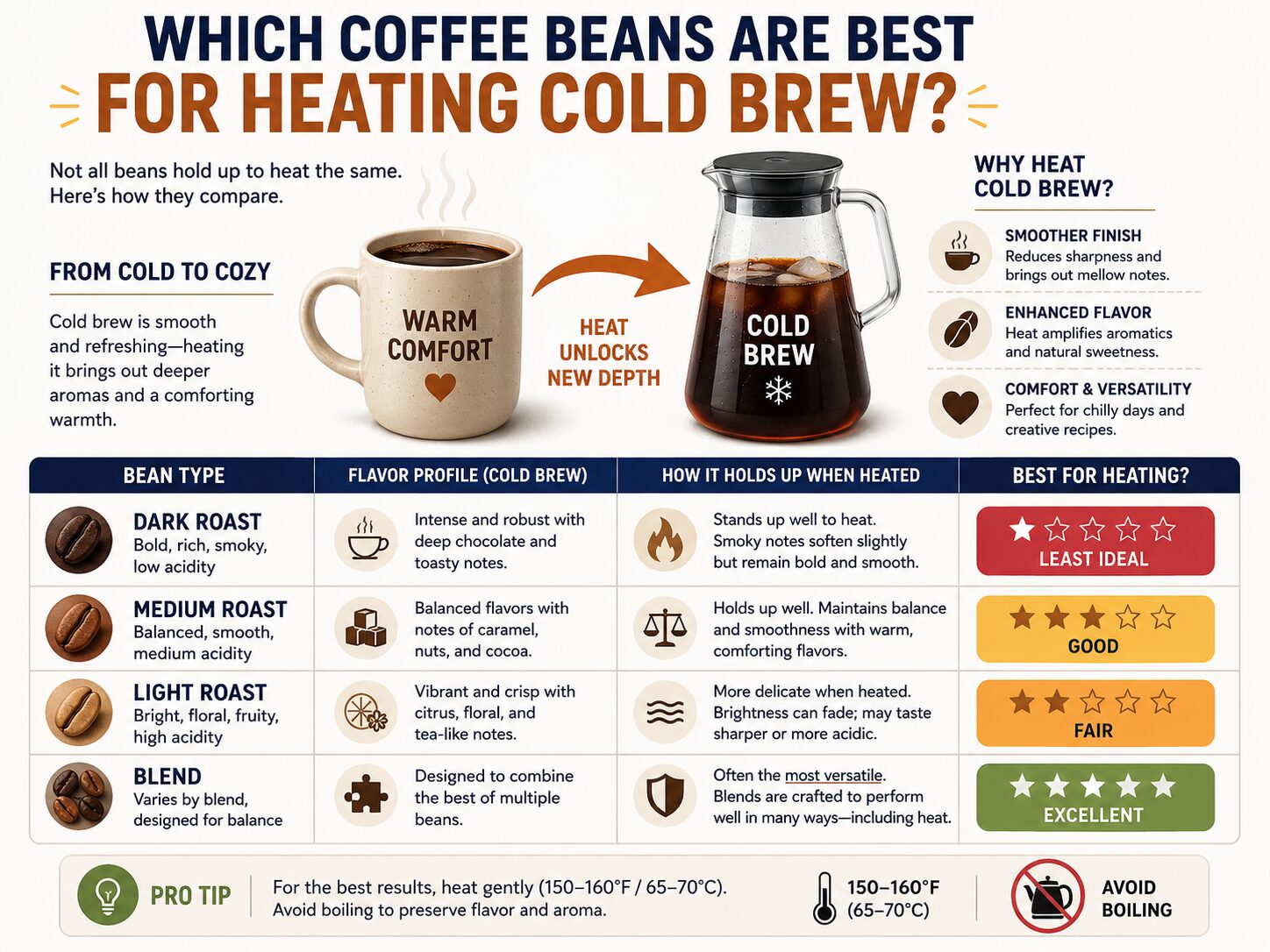
Not all cold brews are created equal, especially when heat is involved. The coffee bean you start with sets a ceiling for your hot drink.
Roast Level Matters. Dark roasts develop more bitter, carbonized compounds during roasting. These compounds are stable and become very assertive when heated. A light or medium roast, which has more inherent acidity and fruity notes to begin with, has a better chance of retaining complexity when warmed. The bright notes that survive cold brewing can complement the warmth instead of fighting it.
Consider Blends. A well-crafted coffee blend is designed for balance. Blenders combine beans to create a rounded flavor profile that can withstand different brewing methods. A single-origin might shine icy cold but fall apart when heated, its one dominant note becoming harsh. For a versatile cold brew you plan to heat, start with a balanced blend or a light roast coffee.
Grind Consistency is Key. If you make your own concentrate, use a proper burr grinder. A uniform coarse grind ensures even extraction and prevents over-extraction of fine particles, which contribute harshness that heat will magnify.
| Bean Choice | Cold Brew Character | Heated Result | Best For Heating? |
|---|---|---|---|
| Dark Roast | Chocolatey, bold, low acid | Can become ashy, sharply bitter | Least ideal |
| Medium Roast | Balanced, nutty, caramel | Retains sweetness, gains warmth | Good, reliable choice |
| Light Roast | Tea-like, bright, fruity | Bright notes can become tart or winey | Best if you enjoy acidity |
| Brazilian Blend | Nutty, low acidity, creamy | Stays smooth, gains a comforting warmth | Excellent, forgiving choice |
Brewing Temperature’s Role in Final Flavor
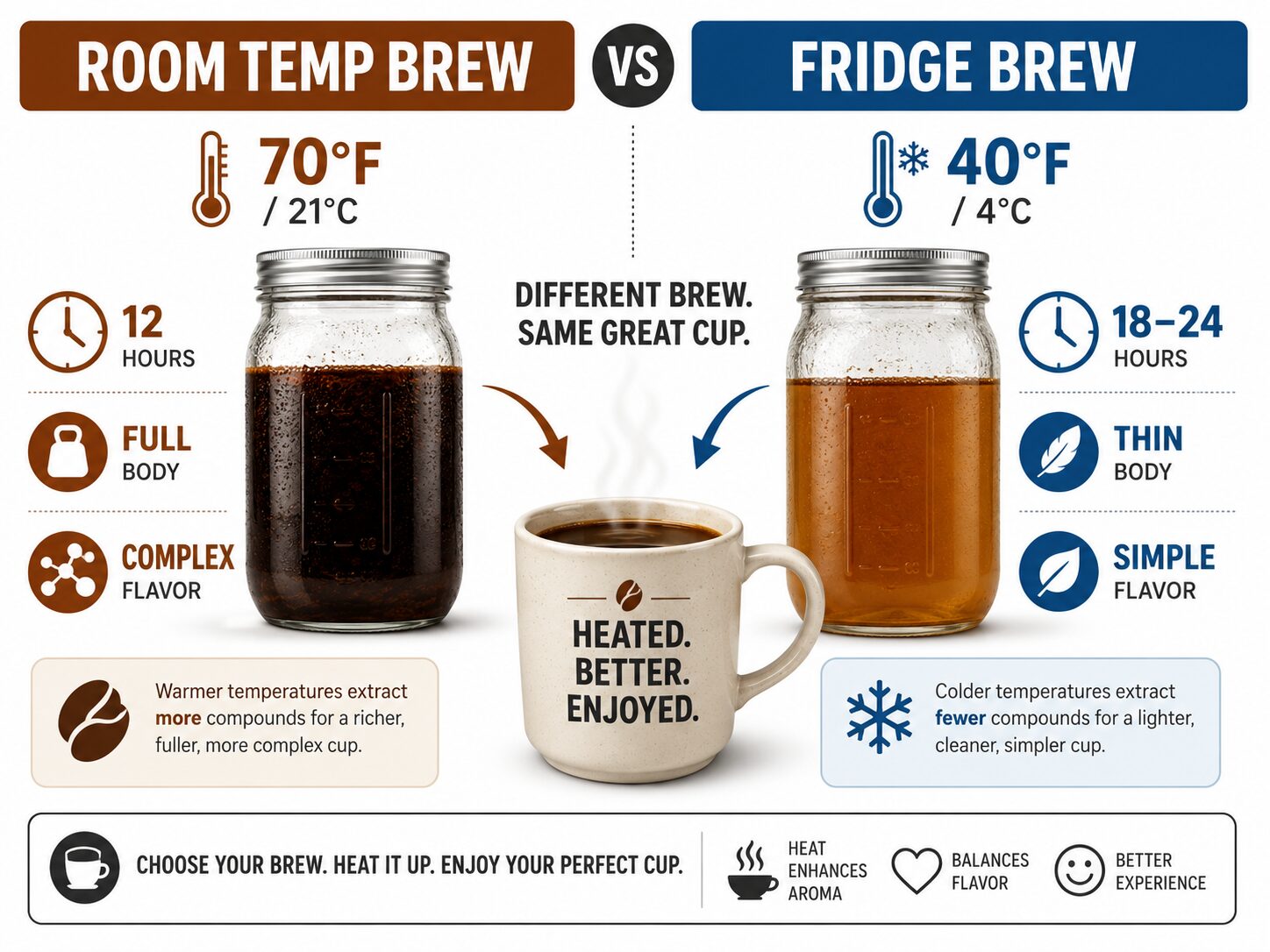
Where you steep your cold brew impacts how it will taste hot. The YouTube research shows a clear divide: room temperature brewing versus refrigerator brewing.
“I recommend letting it steep for at least 12 hours at room temperature. This will give you much better tasting cold brew than if you let it steep in the fridge.”
Brewing at room temperature (around 70°F/21°C) allows for a more complete extraction of flavor compounds within a reasonable time. The resulting concentrate is fuller-bodied and more balanced. When you heat this, you have a richer, more complex base that can handle the temperature shift.
Brewing in the fridge (around 40°F/4°C) drastically slows extraction. To compensate, many recipes call for 18-24 hour steep times. Even then, the extraction is often weaker and more one-dimensional, heavily favoring the most easily soluble compounds like caffeine and simple sugars. Heating this brew magnifies its simplicity, often resulting in a thin, sharp cup.
A 2024 NIH cold brew shelf life study also examined extraction temperature. It found that sensory profiles differed significantly between cold and room-temperature extractions, with room-temperature brews generally scoring higher in body and overall preference. This foundational quality carries over when you apply heat.
Frequently Asked Questions
Does heating cold brew make it bitter?
It can, if done incorrectly. High, direct heat (like from a microwave) causes chemical changes that make existing bitter compounds more perceptible. Gently heating by dilution with hot water minimizes this risk.
Can you heat cold brew coffee in the microwave?
You can, but you shouldn’t. Microwave heating is uneven and aggressive, creating hotspots that degrade flavor. It’s the most common way to turn a smooth cold brew into a bitter, acidic drink. If you must, use very low power in short bursts and stop before you see steam.
What is the best way to heat up cold brew coffee?
The best way is the hot water dilution method. Heat fresh water separately to about 190°F (88°C), then pour it over cold brew concentrate in your mug. This warms the coffee quickly and evenly without applying direct heat to it.
Does heated cold brew have more caffeine?
No. Caffeine content is determined during the initial brewing extraction. Heating the finished beverage does not create or destroy caffeine molecules. The caffeine content is fixed once you’ve brewed it.
Before You Go
Heating cold brew coffee is absolutely possible, but it’s not as simple as warming up yesterday’s traditional hot coffee. Treat it with the same care you used to make it. Ditch the microwave. Reach for the kettle instead.
Heat your water, not your coffee. Aim for a final temperature just hot enough to be comfortable, not scalding. Start with a well-brewed, room-temperature concentrate made from beans you like. A little brown sugar or steamed milk can bridge any gaps if your first hot attempt isn’t perfect.
You get a warm, comforting cup that keeps most of cold brew’s gentle charm. That’s the real goal.
