
Drinking Expired Coffee: Is It Safe? Mold & “Best By” Facts
You can drink expired coffee if it shows no signs of mold, rancidity, or spoilage. The date on a coffee bag is almost always a “Best If Used By” date set by the manufacturer for peak flavor, not a safety expiration. Coffee stored in a dry, sealed container away from heat and light remains safe to consume for months or years past that date, though its taste degrades significantly.
Most people panic when they find a forgotten bag in the pantry. They see the date, imagine food poisoning, and dump what is often perfectly safe coffee down the drain. The real risk isn’t bacterial illness, it’s a cup that tastes like cardboard.
This guide breaks down what “expired” really means for coffee, how to inspect it, when to toss it, and how storage changes everything.
Key Takeaways
- The “Best By” date on coffee is a quality guarantee, not a safety cutoff. Coffee doesn’t expire in the same way milk or meat does.
- Mold is the primary safety concern. Inspect old coffee for any fuzzy growth or a musty, mildewy smell, discard immediately if present.
- Flavor degrades due to staling, not spoilage. Aromatic compounds evaporate, oils oxidize, and the cup turns flat and papery.
- Proper storage in an airtight, opaque container in a cool pantry can extend good flavor for months beyond the printed date.
- Freezing whole beans is effective for long-term storage, but you must thaw the entire bag to room temperature before opening to prevent moisture damage.
What Does “Expired” Actually Mean for Coffee?
That date stamped on your bag is not what you think. In the United States, the USDA’s Food Safety and Inspection Service clearly distinguishes date labels. A “Best If Used By/Before” date indicates when a product will be of best flavor or quality. It is not a purchase or safety date. A “Use-By” date is the last date recommended for use while at peak quality.
The USDA FSIS states that for shelf-stable products like coffee, date labeling is primarily about quality degradation rather than immediate safety concerns past these dates.
Virtually all roasted coffee uses a “Best By” date. It’s the roaster’s estimate of when the volatile compounds that create fragrance and flavor will have diminished noticeably. It’s a promise of taste, not a warning of danger. Grocery stores often require these dates for food compliance reasons, but they tell you little about what’s happening inside the bag.
TL;DR: “Expired” coffee usually means “past its peak flavor date,” not “unsafe to drink.”
How to Tell If Your Expired Coffee Is Still Good
Your senses are the best tools here. Follow this inspection sequence before you brew.
First, look. Open the bag or container in good light. Pour a small amount onto a white plate. You’re searching for any signs of mold: fuzzy patches, blue-green or white spots, or any unusual discoloration. Mold needs moisture, so if your coffee was stored in a damp place, the risk is real. If you see mold, the entire container is compromised. Bag it and bin it.
Second, smell. Take a deep inhale. Fresh coffee has a pronounced, pleasant aroma, fruity, chocolaty, nutty, or floral depending on the roast. Stale coffee smells faint, like paper or cardboard. Bad coffee smells wrong: musty, mildewy, or like old rancid nuts. That rancid smell is from oxidized oils, and while it won’t make you sick, it will ruin your cup. A musty smell indicates moisture and potential mold, even if you can’t see it.
Third, feel. Whole beans should be dry and brittle. If they feel oily, rubbery, or soft, they’ve absorbed moisture. Ground coffee should be loose and granular. If it’s clumped into hard chunks, moisture has gotten in.
The Brew Test
If it passes the look-and-smell check, do a small brew test. Make a single cup. Taste it.
- Flat, bland, weak: The coffee is stale but safe. The aromatic oils have evaporated.
- Sour, musty, overwhelmingly bitter: Something is off. This is likely oxidized or contaminated coffee. Don’t drink it.
- Fine, just not great: You have your answer. It’s usable for baking, cold brew (which mutes some flaws), or in a pinch.
Common mistake: Assuming a bad taste means you’ll get sick, a sour or bitter cup from expired coffee is unpleasant, but it’s not a food safety issue like spoiled dairy. The real danger is visual mold or a mildewy smell.
The Real Risks: Mold and Added Dairy
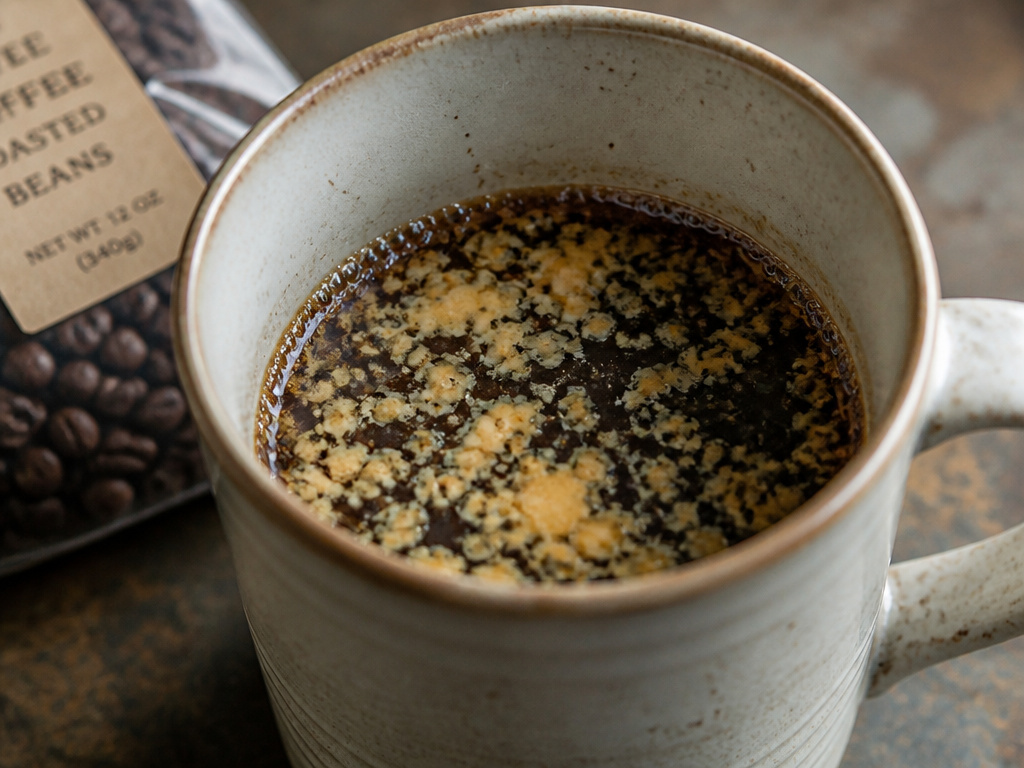
The research and expert consensus point to two actual hazards.
Mold growth is the only significant safety risk with plain, expired coffee beans or grounds. Mold spores are everywhere, and they need moisture to grow. If your coffee was exposed to humidity, a leaky bag in a humid garage, condensation from freezer thawing, it can develop mold. Drinking moldy coffee can cause respiratory irritation, especially in those with allergies or asthma. If you see it or smell that distinctive damp basement odor, throw it out.
Added dairy changes the game entirely. This is where bacterial spoilage becomes a real threat. A forgotten cup of coffee with milk or cream on the counter is a different beast. The dairy provides the nutrients for bacteria like Bacillus cereus to multiply. The USDA and FDA guidance on spoilage bacteria applies here. Drinking that can lead to stomach cramps, bloating, and diarrhea within a few hours.
Black coffee that’s been brewed and left out can still grow mold after several days, but it’s less hospitable to rapid bacterial growth. The general rule: toss any brewed coffee left at room temperature for more than 24 hours, especially if you can’t see the bottom of the mug.
| Coffee Form | Primary Risk | Timeline for Concern | Safe to Consume? |
|---|---|---|---|
| Whole beans, dry & sealed | Flavor staling, mold (if moist) | Months to years past “Best By” | Yes, if dry and mold-free |
| Ground coffee, dry & sealed | Rapid flavor loss, mold (if moist) | Weeks to months past “Best By” | Yes, if dry and mold-free |
| Brewed black coffee, left out | Mold growth | After 24–48 hours at room temp | No, discard after 1 day |
| Brewed coffee with milk/cream, left out | Bacterial spoilage | After 2–4 hours at room temp | No, discard promptly |
Why Expired Coffee Tastes Terrible (The Science of Staling)
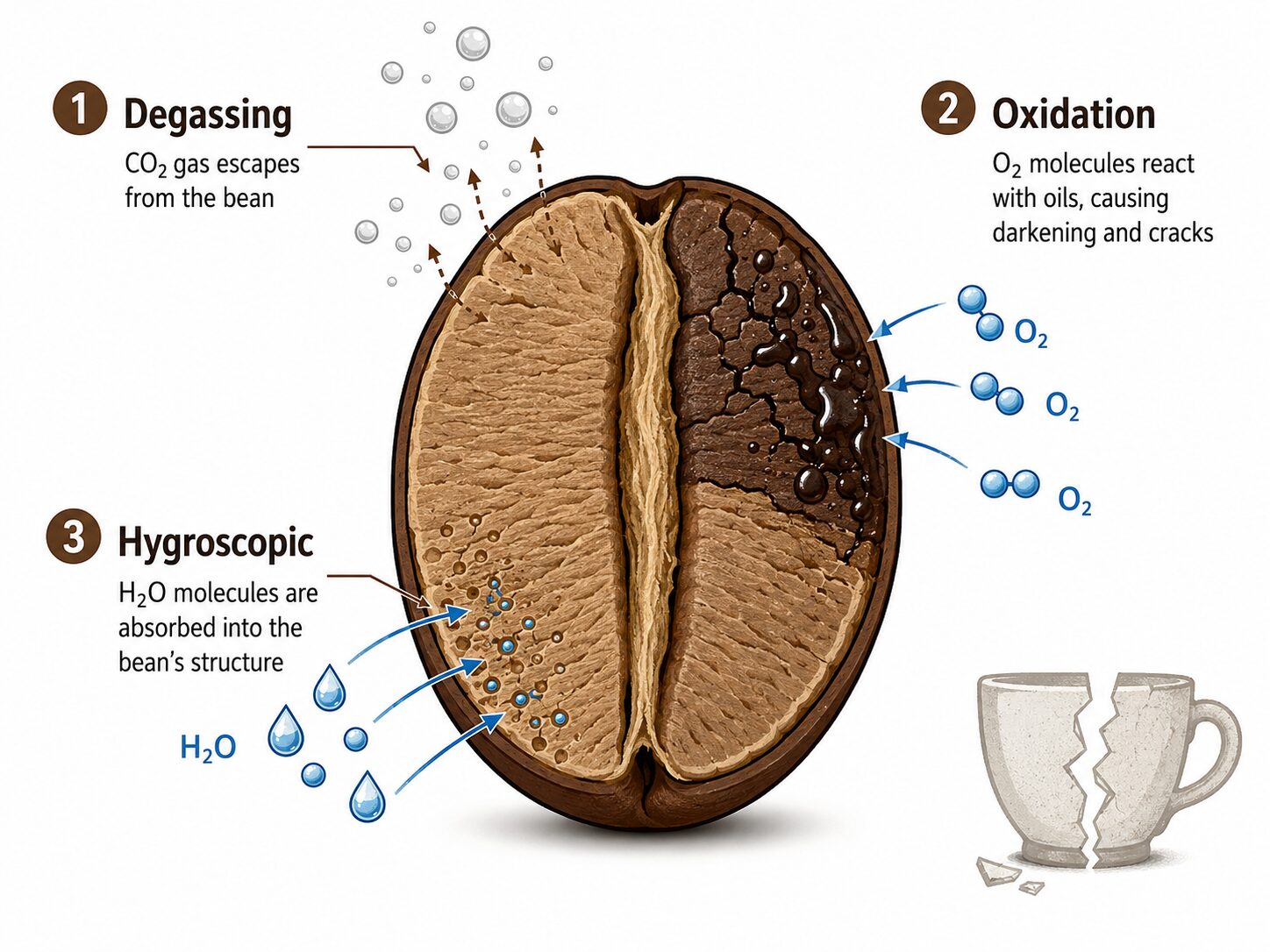
Safety is one thing. Enjoyment is another. That bag from last year might be safe, but it will likely make a disappointing cup. Here’s what happens on a chemical level.
Upon roasting, coffee beans release hundreds of volatile aromatic compounds. These are the source of its complex scent and taste. These compounds are incredibly fragile. They begin escaping the moment the bag is sealed, a process called degassing. After a few weeks, the most delicate top notes (the florals, the citrus) are gone.
Next, oxidation sets in. Oxygen reacts with the oils in the coffee, particularly in darker roasts which are oilier. This turns the oils rancid, producing those stale, bitter, cardboard-like flavors. Light and heat dramatically accelerate this process. That’s why clear bags on a warm supermarket shelf are the worst packaging for longevity.
Finally, coffee is hygroscopic, it absorbs moisture from the air. Moisture makes ground coffee clump, dulls flavor, and as we’ve covered, invites mold. This moisture absorption is also why very old, dry whole beans can become rock-hard and damage your grinder’s burrs. The extra stress on the motor is a hidden cost of using ancient beans.
The health benefits of coffee, like its antioxidants, also degrade over time. You’ll still get the caffeine, but many of the beneficial compounds break down.
How to Store Coffee to Extend Its Life (Before and After the Date)
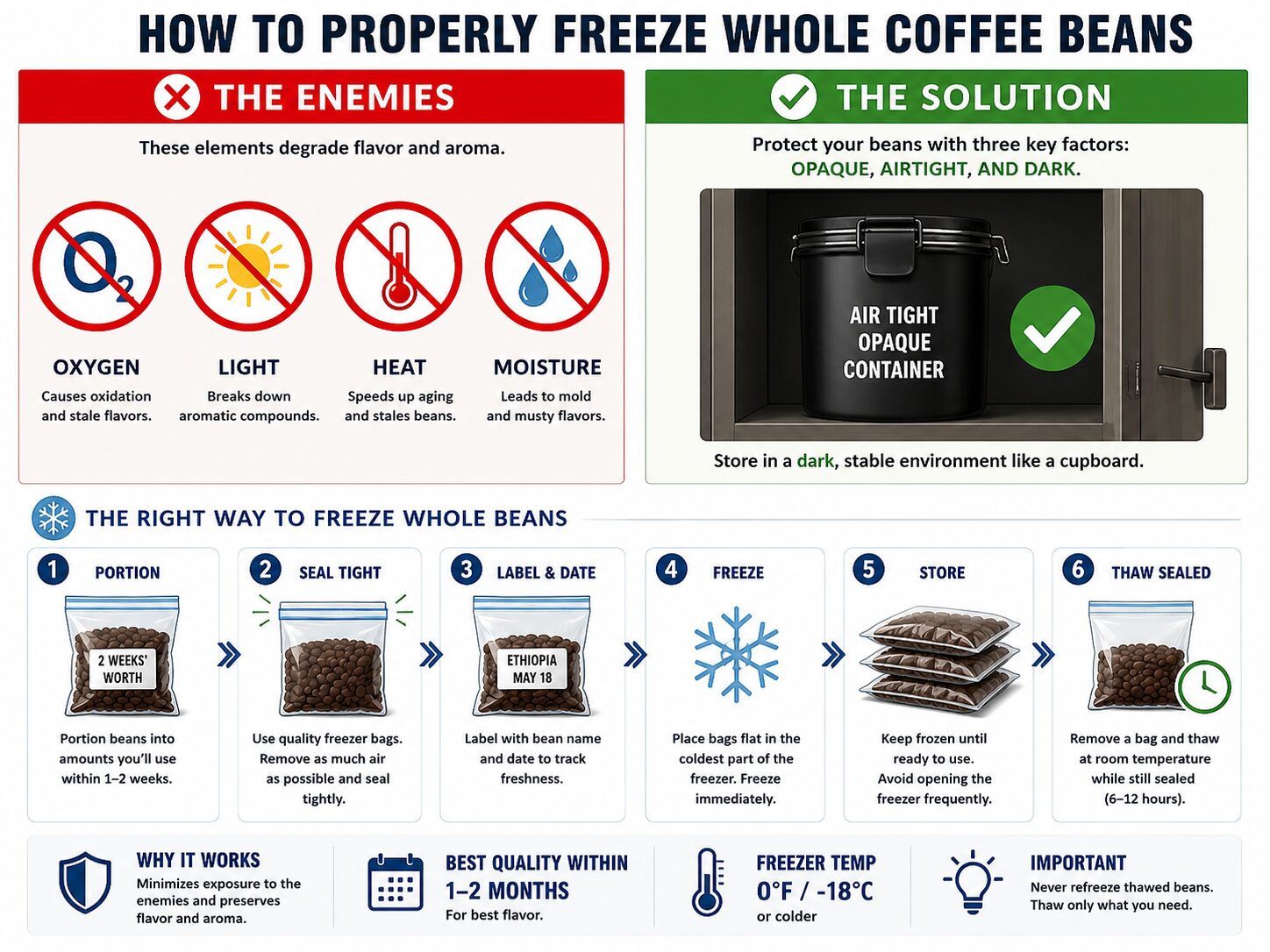
You can’t stop time, but you can slow it down. Proper storage is the difference between coffee that’s stale in three weeks and coffee that’s still passable after three months.
The Enemies: Oxygen, light, heat, moisture.
The Solution: An airtight, opaque container made of ceramic or stainless steel. Keep it in a cool, dark cupboard, away from the stove, oven, or dishwasher. Never store coffee in the clear plastic bag it came in, and never in the fridge. The fridge is a humid environment filled with food odors, which coffee will absorb.
What About Freezing?
Freezing whole bean coffee is a valid long-term storage method. It dramatically slows oxidation and volatile loss. A scientific review of coffee degradation in the National Institutes of Health (NIH) database confirms that low-temperature storage is highly effective at preserving key quality parameters.
But you must do it right.
1. Divide a large bag into smaller, airtight portions (heavy-duty freezer bags work).
2. Freeze the entire portion.
3. When you need coffee, remove one portion and let it thaw completely, sealed, to room temperature before opening. This prevents condensation from forming on the cold beans, which would add moisture and ruin them.
4. Do not refreeze. Once thawed, keep that portion in your pantry container and use it within a week or two.
Ground coffee shouldn’t be frozen. The increased surface area makes it far more susceptible to moisture damage and flavor absorption.
When to Absolutely Throw Expired Coffee Away
Some scenarios have a clear answer. Toss the coffee if:
- You see any mold. No exceptions.
- It smells musty, mildewy, or like rancid nuts. Your nose is detecting spoilage.
- It was stored in a damp, humid environment (e.g., a basement, next to a sink).
- It’s pre-ground and has formed solid, hard clumps. This is a sign of significant moisture ingress.
- It’s brewed coffee left out for over a day, or any coffee with dairy left out for more than a few hours.
Remember, the goal is a good cup. If your expired coffee makes a brew so bad you’d rather skip coffee altogether, its purpose is gone. It might be safer to use it as a deodorizer for your fridge or as an exfoliant in the garden.
Frequently Asked Questions
Can expired coffee make you sick?
Yes, but only under specific conditions. Drinking coffee with visible mold can cause respiratory irritation. Drinking old coffee that had milk or cream added and was left out can cause food poisoning-like symptoms (stomach cramps, diarrhea) from bacterial growth. Dry, mold-free expired coffee beans or grounds will not cause illness, just a bad taste.
How long past the expiration date is coffee good?
There’s no universal answer, as storage is everything. In an ideal, airtight container in a cool pantry, whole bean coffee might remain palatable for 3-6 months past its “Best By” date. Pre-ground coffee loses quality much faster, often within 1-2 months. It’s always a sensory test.
Does caffeine go away in expired coffee?
No. Caffeine is a highly stable compound. It does not degrade or evaporate over time. An expired coffee bean will have the same caffeine content as a fresh one from the same batch. The change is in flavor, not stimulant potency.
Why is my expired coffee so hard to grind?
Very old, overly dry coffee beans can become extremely brittle and hard. This puts extra strain on your grinder’s motor and burrs. As one YouTube creator found, grinding severely expired beans can feel like trying to crush pebbles and isn’t worth the potential damage to your equipment.
Can I use expired coffee for anything else?
Absolutely. Stale, flavorless coffee is perfect for non-consumption uses: as a natural deodorizer in shoes or the fridge, as a body or face scrub (mix with coconut oil), to add depth to a compost pile, or to dye paper or fabric.
Before You Go
That date on the bag is a guideline, not a gospel. Your eyes and nose are the final judges. Mold means trash. A musty smell means trash. Dairy left out means trash. Everything else is a question of taste, not safety.
Invest in a good airtight canister. Buy whole beans and grind them as needed. Keep your coffee cool and dark. Do those things, and you’ll rarely have to ask if an old bag is still good, you’ll know, because it will be.
And if you do find a fossilized bag from holidays past? Give it the sniff test. You might be surprised. Or you might have a fantastic fertilizer for your rose bushes.
