
Can You Drink Coffee Before a CT Scan? The Cardiac CTA Rule
You can drink black coffee before a standard CT scan without intravenous (IV) contrast. For a CT scan with IV contrast, you must follow a fasting period with nothing by mouth (NPO), which includes no coffee. A Cardiac CT Angiography (CTA) requires avoiding all caffeine for 12-24 hours beforehand.
Most confusion comes from mixing up the rules for different types of scans. People hear “fasting” and think it’s only about food, or they get a standard instruction sheet that doesn’t mention their morning espresso habit. The real answer isn’t one-size-fits-all, it’s locked to the specific contrast protocol ordered by your doctor.
This guide breaks down the three scenarios, explains the medical reasons behind each rule, and tells you exactly what to ask your imaging center.
Key Takeaways
- The scan type dictates the rule: No IV contrast usually means coffee is fine; IV contrast means fasting with no coffee.
- Cardiac CT Angiography (CTA) has a strict 12-24 hour caffeine ban because caffeine increases heart rate and creates motion blur on the images.
- Always call the imaging center for final instructions, especially if you take medications like Metformin for diabetes.
- “Black coffee” means no milk, cream, or sugar, as those are considered food and will break a fasting order.
- The primary risk of coffee before a contrast scan isn’t the caffeine, it’s the potential for stomach contents to cause aspiration if you have a reaction to the contrast dye.
The Short Answer for a Standard CT Scan
For a routine CT scan of your abdomen, pelvis, or chest, the coffee rule splits cleanly based on one factor: whether you are receiving intravenous (IV) contrast dye. This liquid is injected to highlight blood vessels and organs. The American College of Radiology (ACR) provides the foundational guidelines that hospitals follow.
For CT without IV contrast, patients may usually eat, drink, and take medications as usual. For CT with IV contrast, a period of fasting (NPO) is typically advised to minimize aspiration risk should contrast reaction-induced nausea or vomiting occur.
If your order says “CT Abdomen/Pelvis without contrast,” your morning cup is generally permissible. If it says “CT Abdomen/Pelvis with contrast,” you will be told to have nothing by mouth for 2-4 hours prior. That window includes coffee, water, and food.
TL;DR: No contrast, coffee’s okay. IV contrast, fast completely, no coffee.
Why Fasting is Tied to IV Contrast
The logic isn’t about the coffee interacting with the dye. It’s a safety protocol. IV contrast can cause nausea in a small percentage of people. If you have a full stomach and vomit while lying flat in the scanner, you could aspirate stomach contents into your lungs. Fasting empties the stomach and drastically reduces this risk. A cup of black coffee stimulates gastric acid production, effectively creating “stomach contents” and defeating the purpose of the fast.
When Coffee is Absolutely Forbidden: Cardiac CT Angiography
This is the non-negotiable exception. A Cardiac CT Angiography (CTA) is a specialized scan that takes detailed pictures of your coronary arteries. It requires your heart to beat slowly and steadily, often below 65 beats per minute. Caffeine is a stimulant.
Drinking coffee before this scan will increase your heart rate. A faster, irregular heartbeat creates motion blur on the images, making the arteries look fuzzy and unreadable. This often leads to a canceled or non-diagnostic scan, wasting your time and the clinic’s resources.
| Scan Type | Caffeine Rule | Reason | Typical Fasting Window |
|---|---|---|---|
| CT without IV Contrast | Allowed (black) | No aspiration risk from contrast. | 0 hours |
| CT with IV Contrast | Not Allowed | Prevents aspiration if contrast causes vomiting. | 2-4 hours NPO |
| Cardiac CT Angiography (CTA) | Strictly Forbidden | Caffeine increases heart rate, ruining image clarity. | 12-24 hours caffeine-free |
Hospital protocols for Cardiac CTA are explicit. You’ll see instructions like: “Avoid all caffeine (coffee, tea, cola, chocolate) for 24 hours prior to your exam.” This includes decaf coffee, which contains trace caffeine. They mean all stimulants.
Common mistake: Having a diet soda the morning of a Cardiac CTA, the caffeine will elevate your heart rate enough that the beta-blocker medication given to slow it down may not work, and your scan could be rescheduled.
The mechanism here is direct and physical. As noted in a YouTube transcript from a vascular specialist, “caffeine can transiently decrease the size the dimensions of the vein shrink the vein so much that it can falsely appear that you don’t have vein disease.” For cardiac imaging, the concern is the rate, not the diameter, but the principle is the same: caffeine alters physiology in a way that corrupts the diagnostic data.
Navigating “Clear Liquids” and Other Gray Areas
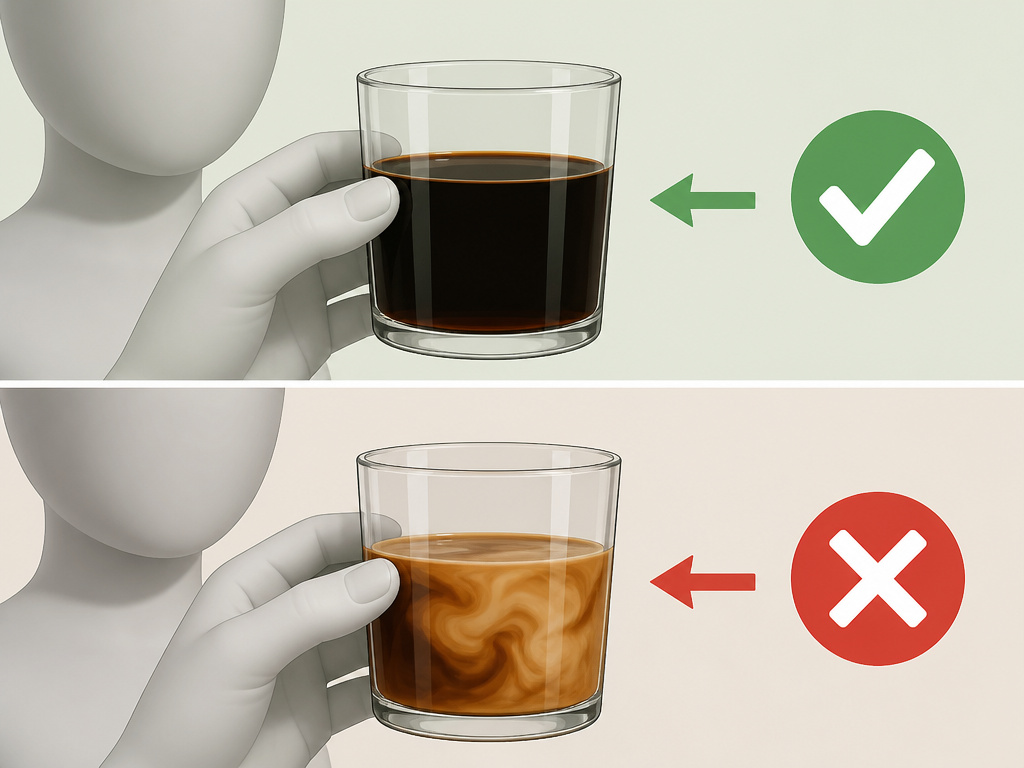
Sometimes instructions get murky. You might be told you can have “clear liquids” up to two hours before your scan. This is a common protocol for certain abdominal scans. Where does coffee fit?
- Black coffee is a clear liquid. From a radiology perspective, a fluid you can see through is a clear liquid. Black tea and black coffee qualify.
- But “allowed” and “recommended” are different. Even if the protocol permits clear liquids, the imaging center may still advise against coffee. Why? Because coffee is a diuretic. It can make you dehydrated, which makes your veins smaller and harder to find for the IV line. It can also make you restless and uncomfortable.
- The additive rule. The second you add milk, creamer, sugar, or a flavored syrup, coffee is no longer a clear liquid. It becomes a “cloudy liquid” or, essentially, food. This will break any fasting order.
Your best move is to stick to water if you’re in a clear-liquids window. It’s the safest, most neutral choice that won’t prompt any questions from the technologist.
The Medication Overlap: Metformin and Contrast
This is a critical, non-negotiable safety intersection. If you take Metformin for Type 2 diabetes, the contrast dye rule becomes doubly important. IV contrast can cause a rare but serious condition called contrast-induced nephropathy (kidney injury). If your kidneys are temporarily impaired, Metformin can build up in your system and cause lactic acidosis.
The standard safety protocol is:
* You will be told to stop taking Metformin starting the day of your scan.
* You must have a blood test to check your kidney function (creatinine level) 1-2 days after the scan.
* You cannot restart Metformin until your doctor confirms your kidney function is normal.
Breaking the fasting rule by drinking coffee doesn’t directly cause this, but it signals a breakdown in following pre-procedure instructions. If you can’t follow the “no coffee” rule, a nurse may worry you also didn’t stop your Metformin. This could delay your care. Adhering strictly to the medical imaging pre-procedure guidelines is part of managing your overall health.
How to Get Your Specific, Final Instructions

Do not rely on Google, this article, or even the printed pre-op sheet from your doctor’s office. Protocols vary by hospital, by radiologist, and even by the specific scanner. The only source of truth is the imaging center performing your scan.
- Call 24-48 hours in advance. Don’t call the morning of. Reach the front desk or nursing line of the radiology department.
- Have your information ready. Provide your full name, date of birth, and the exact name of the scan on your order (e.g., “CT Chest with Contrast”).
- Ask these three questions:
- “Is this scan with or without IV contrast dye?”
- “What is the exact fasting window for food and drink?”
- “Are there any specific medications I need to stop, especially Metformin or blood thinners?”
- Disclose everything. Tell them about all your medications, supplements, and any conditions like kidney disease or diabetes. Mention your coffee habit so they can give you a clear “yes” or “no.”
This call takes five minutes. It prevents a wasted trip, a canceled scan, or a suboptimal result. It is the single most important step in your preparation.
Frequently Asked Questions
Can I drink decaf coffee before a CT scan?
For a standard contrast scan, decaf is usually acceptable during a fasting window because the caffeine content is minimal (2-5 mg per cup). However, for a Cardiac CTA, many centers will say no to decaf as well, as they aim for zero stimulant effect. Always ask.
What about coffee before a CT scan of the head or brain?
The same contrast rule applies. A head CT without contrast? Coffee is fine. A head CT with contrast? Follow the NPO instructions. There is no specific caffeine restriction for brain imaging unless otherwise stated.
I already drank coffee before my scan. What should I do?
Be honest with the technologist when you arrive. Do not try to hide it. For a standard contrast scan, they will likely proceed but note it in your chart. For a Cardiac CTA, they will likely reschedule your appointment, as the images will not be usable.
Why is the advice different from an ultrasound?
Different technologies, different rules. For vascular ultrasound of leg veins, caffeine can constrict veins, making them appear healthier than they are, as explained in specialist transcripts. For CT, the issue is primarily heart rate (for cardiac scans) and aspiration risk (for contrast). The caffeine and cardiovascular effects are relevant for one but not the other.
Before You Go
The question of coffee before a CT scan has a logical, if layered, answer. Match the drink to the dye: no dye often means yes to coffee, IV dye means no. Remember the absolute ban for heart scans. Your personal caffeine consumption guidelines for daily life don’t apply here, this is a short-term medical protocol.
The final authority is always the radiology department holding your appointment. Their instructions, based on the latest ACR contrast media guidelines PDF and their own equipment, override any general advice. Make that call, follow their directions exactly, and you’ll walk in prepared for a smooth, successful scan. Then you can celebrate with the best cup of coffee afterwards.
