
Levothyroxine and Coffee: The 55% Absorption Drop Explained
No. Do not take levothyroxine with coffee. Coffee can reduce the absorption of your thyroid medication by more than half, leading to unstable hormone levels and unresolved hypothyroid symptoms. Take levothyroxine on an empty stomach with only water, and wait a full 60 minutes before consuming coffee or any food.
The problem isn’t just that coffee is a beverage. It’s a specific gastrointestinal stimulant with a long half-life. Most guides tell you to wait 30 to 60 minutes. That’s the commodity answer. They miss the mechanism, the exact absorption penalty, and the fact that for some people, even a four-hour gap isn’t enough.
This guide explains the concrete science behind the interaction, how long coffee actually lingers in your system, and three proven strategies, including one most doctors don’t mention, to keep your levels rock solid without giving up your morning ritual.
Key Takeaways
- A 2008 study in the Journal of Clinical Pharmacology found coffee reduces levothyroxine absorption by an average of 55% when taken together.
- Coffee stimulates gut motility, rushing the medication through your small intestine before it can be absorbed. This effect lasts as long as caffeine is in your system.
- Caffeine has a 5-hour half-life, meaning a single cup can affect absorption for up to 25 hours if your dosing timing overlaps.
- The American Thyroid Association’s official guidance is to wait 30–60 minutes after your dose before any food or drink besides water.
- Switching to a liquid levothyroxine formulation or moving your dose to bedtime are two workarounds if the morning wait is impossible for you.
The 55% Absorption Drop
The interaction isn’t theoretical. It’s measured.
When L-thyroxine was ingested with coffee, its absorption was reduced by an average of 55%. The authors concluded that “coffee interferes with L-thyroxine absorption and that the two should not be ingested simultaneously.”
, Journal of Clinical Pharmacology, 2008
That 55% figure comes from a peer-reviewed study involving patients with primary hypothyroidism. The drop isn’t minor. It’s enough to push a well-managed patient back into a hypothyroid state over weeks or months. Your TSH climbs. Fatigue, brain fog, and weight gain creep back in. You might blame the medication or your condition, but the culprit is your morning routine.
The official drug label from the U.S. National Library of Medicine’s DailyMed database lists “Food” as an interaction, advising administration “on an empty stomach, one-half to one hour before breakfast.” Coffee counts as food here. The American Thyroid Association patient bulletin is more direct, recommending you take levothyroxine “on an empty stomach, 30-60 minutes before food or drink (other than water).”
TL;DR: Coffee cuts levothyroxine absorption by more than half. Taking them together is like taking half your prescribed dose.
Why Coffee, Specifically, Is a Problem
It’s not about acidity or temperature. It’s about speed.
Coffee is a potent gastrointestinal stimulant. For many, it triggers a bowel movement. That accelerated gut motility is the enemy of levothyroxine absorption. The medication needs to sit in your upper small intestine, dissolve, and pass through the intestinal wall. Coffee hurries everything along.
Think of it as a train leaving the station before all the passengers have boarded.
This stimulant effect is tied directly to caffeine. That means it’s not just coffee. Black tea, green tea, energy drinks, and even some sodas pose the same risk if they contain caffeine. A detailed PMC review of levothyroxine food interactions groups all caffeinated beverages together as high-risk for interference.
The half-life of caffeine is about five hours. So if you drink a cup at 8 AM, half of that caffeine is still active in your system at 1 PM. A quarter of it is still there at 6 PM. This long tail is why some patients who take their pill at noon, after a morning coffee, still see poor absorption. The gut is still stimulated.
Common mistake: Taking your pill with decaf coffee, the gastrointestinal stimulation isn’t solely from caffeine; other compounds in coffee also increase motility, so decaf isn’t a safe substitute.
TL;DR: Coffee speeds up your digestive system, shuttling the pill through before it can be absorbed. Caffeine’s long half-life means this effect lasts for hours.
The Safe Timing Window (It’s Longer Than You Think)
The standard advice is to wait 30 to 60 minutes. That’s the minimum.
The goal is to give the levothyroxine tablet time to completely dissolve and be absorbed before coffee hits your stomach. A full hour is safer than 30 minutes, especially if you have slower digestion. Set a literal timer.
Here’s the sequence that works:
1. Wake up. Take your levothyroxine tablet with a full glass of plain water, nothing else.
2. Wait 60 minutes. Do nothing during this window except drink more water if you’re thirsty.
3. After the timer goes off, have your coffee and breakfast.
What ruins this?
– Taking the pill with a sip of water, then drinking coffee 10 minutes later because you’re groggy.
– Taking the pill with your coffee on the way out the door.
– Taking the pill after your coffee because you forgot.
The consequence is a slow, cumulative undermedication. Your lab numbers might still be “in range,” but you’ll feel off. You’ll need a higher dose to achieve the same effect, which introduces more variables.
| Beverage/Food | Minimum Wait After Dose | Why It Matters |
|---|---|---|
| Black Coffee | 60 minutes | High caffeine & gut stimulants |
| Tea (Black/Green) | 60 minutes | Caffeine content varies |
| Dairy Milk | 60 minutes | Calcium binds with levothyroxine |
| High-Fiber Cereal | 60 minutes | Fiber can adsorb medication |
| Calcium/Magnesium Supplement | 4 hours | Minerals bind irreversibly |
TL;DR: A full 60-minute wait between your levothyroxine dose and your first sip of coffee is the non-negotiable baseline for reliable absorption.
When the Morning Wait Doesn’t Work
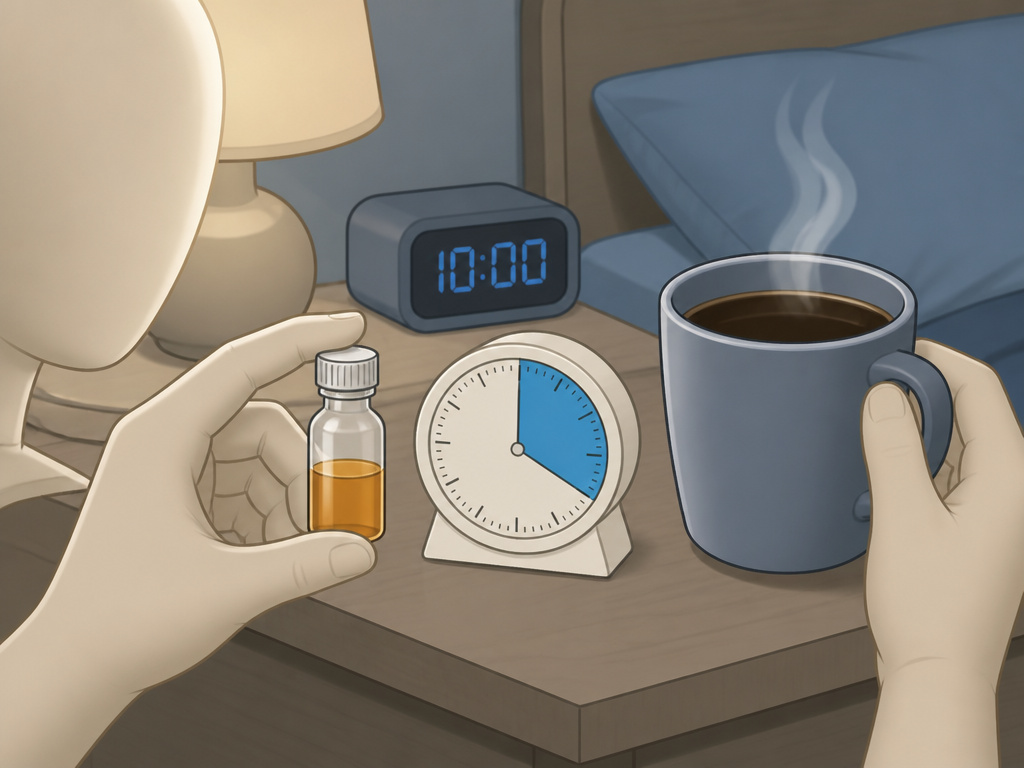
Some people’s schedules or biology make that morning gap impossible. The caffeine headache wins. Or you simply cannot function without an immediate coffee.
You have two proven escape routes.
Option 1: Switch to Liquid Levothyroxine
This is the lesser-known fix. Liquid formulations (like Tirosint-SOL) bypass the dissolution step in the stomach. The medication is already in solution, ready for absorption. A key clinical trial on coffee and thyroid absorption and subsequent research indicates this form is not affected by coffee, even when taken just 30 minutes apart.
The downside is cost and insurance coverage. Liquid formulations are often more expensive. Talk to your doctor. If you can’t change the habit, changing the drug’s form is a valid medical strategy.
Option 2: The Nighttime Dose
Taking your levothyroxine at bedtime, at least 4 hours after your last meal and any caffeine, is a well-supported alternative. Your stomach is empty, and you’ve had no coffee for hours. The absorption window is clean.
The rules are strict:
– Your last meal should be at least 4 hours prior.
– Your last caffeinated drink should be at least 4 hours prior.
– Take the pill with water and go to sleep.
This method sidesteps the morning rush entirely. It also aligns with your body’s natural circadian rhythm for hormone metabolism. Some studies suggest bedtime dosing leads to marginally better TSH levels. The risk is forgetting the dose if you’re exhausted.
I tried the bedtime dose for a month after struggling with morning timing. The first week was adjustment, setting an alarm for 10 PM. By week three, my TSH dropped from 3.8 to 2.1 on the same dose. The consistency of an empty stomach at night beat my variable morning routine.
Other Drinks and Foods to Avoid

Coffee is the biggest offender, but it’s not alone. The same gut-motility logic applies to other stimulants, and a separate binding issue applies to minerals.
Tea contains caffeine, often less than coffee but enough to matter. A strong black tea can have half the caffeine of a cup of coffee. Green tea has less, but it’s still a stimulant. Herbal teas are generally safe, but check for ingredients like senna, which is a laxative.
Dairy is a separate problem. The calcium in milk, yogurt, or a latte binds directly to levothyroxine in the gut, forming an insoluble complex that your body cannot absorb. This is a chemical binding, not just accelerated transit. The same goes for high-dose calcium or magnesium supplements. The wait time for these is longer, aim for 4 hours.
High-fiber foods like bran cereals or psyllium husk supplements can “adsorb” the medication, trapping it and carrying it through. Take your pill first thing, then have your high-fiber breakfast later.
Understanding these interactions helps explain why some people see wide swings in their thyroid levels even when they think they’re following the “no food” rule. They’re having a large, fiber-rich smoothie 45 minutes after their pill.
Signs Your Coffee Habit Is Interfering
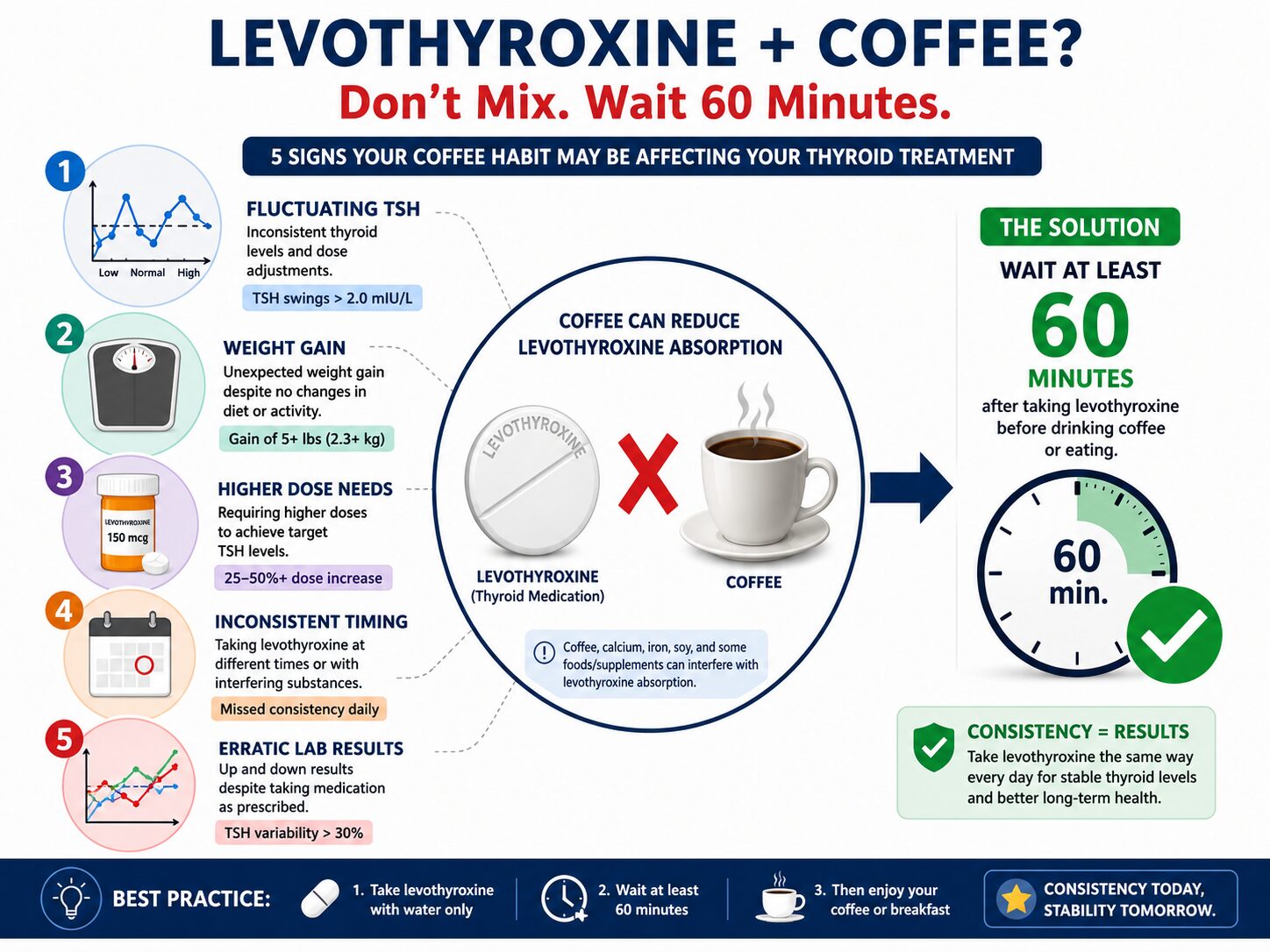
How do you know if this is your problem? Look for these patterns:
- Your TSH level is persistently above 2.5 mIU/L (or above your target range) despite a seemingly adequate dose.
- You experience hypothyroid symptoms, fatigue, weight gain, dry skin, brain fog, even though your labs are “normal.”
- Your required levothyroxine dose is unusually high for your weight.
- You feel noticeably better on days you accidentally skip coffee.
- Your levels are erratic from one test to the next with no change in prescription.
If you suspect interference, the simplest test is to strictly adhere to the 60-minute rule for 6-8 weeks and then retest your TSH. No cheating. If your TSH drops significantly on the same dose, you’ve found the culprit.
This kind of variability is one reason managing coffee and heart health requires similar attention to timing and individual response. The body’s systems are connected.
Frequently Asked Questions
Can I take levothyroxine with decaf coffee?
No. Decaffeinated coffee still contains other compounds that stimulate gastrointestinal motility. While the effect might be slightly less pronounced than with regular coffee, it’s still a risk. Stick to the 60-minute rule with decaf as well.
What about tea?
Tea contains caffeine. The same rule applies. Black tea, green tea, and oolong tea all require a 60-minute wait after your dose. Herbal teas without caffeine or stimulant herbs are generally safe, but always check the ingredients. The caffeine content in tea and coffee varies, but the mechanism of interference is the same.
I take my pill at night. Can I have coffee in the morning?
Yes. If you take your levothyroxine at bedtime (at least 4 hours after your last meal and caffeine), your morning coffee is completely separate. There’s no interaction because the medication has long since been absorbed. This is a major advantage of the bedtime dosing schedule.
Will a small splash of milk in my coffee ruin it?
small splash is unlikely to cause a significant problem for most people, as the calcium content is low. However, if you’re sensitive or your levels are hard to control, it’s best to take your coffee black during the absorption window or wait the full hour. A latte, with its substantial milk volume, is a definite no-go.
My doctor said 30 minutes is fine. Why do you say 60?
The 30-minute guideline is the minimum. The 2008 study measured interference at the time of simultaneous ingestion. A 60-minute window provides a larger safety margin, ensuring complete dissolution and absorption, especially for those with slower digestion or higher sensitivity. The American Thyroid Association patient bulletin states 30-60 minutes, acknowledging that longer is more reliable.
Can switching to a liquid form really fix this?
According to research, yes. Liquid levothyroxine (like Tirosint-SOL) is already in solution, so it doesn’t need to dissolve in the stomach and appears to be less affected by coffee. Some studies show it can be taken just 30 minutes before coffee without significant absorption loss. This is a conversation to have with your prescribing doctor, as it’s a more expensive formulation.
Before You Go
The 55% absorption drop isn’t a maybe. It’s a measured, peer-reviewed fact. Taking levothyroxine with coffee is the most common, silent reason for unstable thyroid levels.
The fix is simple in theory: wait a full 60 minutes after your pill. In practice, it requires discipline, a timer, a changed routine. If that’s impossible, you have two concrete alternatives backed by science: switch to a liquid formulation or move your dose to bedtime.
Your medication only works if it gets into your system. Don’t let your favorite ritual be the thing that blocks it.
