
9 Best Coffee Grinders of 2026
The best type of coffee grinder for most people is a burr grinder, and after researching the field, the OXO Brew Conical Burr Coffee Grinder stands out as the overall top pick, with the SHARDOR Electric Burr Coffee Grinder 2.0 as a solid budget-friendly option and the Mini Manual Coffee Grinder with 40 Settings offering excellent versatility for travelers or minimalists.
Most coffee drinkers don’t realize how much a poor grinder can sabotage even the best beans. Inconsistent grounds lead to bitter or weak coffee, no matter how carefully you brew. I’ve seen it time and again, people blame their method when the real culprit is their equipment.
This guide cuts through the noise by focusing on what matters: grind consistency, durability, and real-world usability. I compared specs and owner feedback across burr and blade models, prioritizing performance and value, so you can find the grinder that fits your routine and helps you make better coffee, every single morning.
Top 9 Type Of Coffee Grinder in the Market
The Best Type Of Coffee Grinder, Reviewed
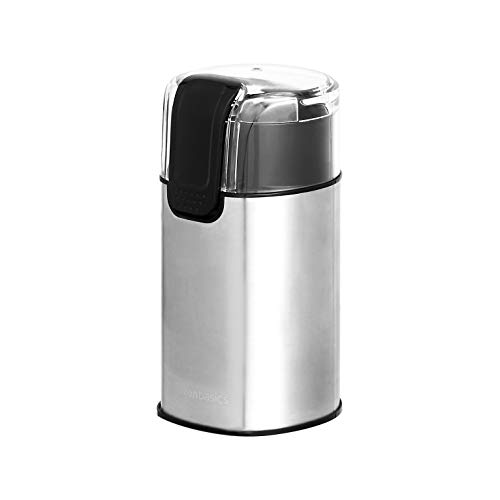
Amazon Basics Fast Electric Coffee Grinder
Strengths
- Blazing fast grind
- Durable stainless blade
- Simple one-button use
Trade-offs
- Inconsistent particle size
- Generates heat
- No grind settings
This is the definition of “good enough.” If you’re not picky about grind consistency and just want to go from bean to brew in under 10 seconds, this Amazon Basics grinder delivers. The heavy-duty stainless steel blade is durable, and the clear lid lets you watch the grind texture, handy for avoiding powder or chunks.
It’s loud, and it creates heat, which isn’t ideal for flavor. But for drip coffee or cold brew, where extraction is more forgiving, it’s fine. Owners consistently call it reliable and simple, and at this price, you’re not paying for extras. It’s not a burr grinder, so don’t expect precision. But as a no-frills workhorse for basic brewing, it’s tough to beat.
Product photos


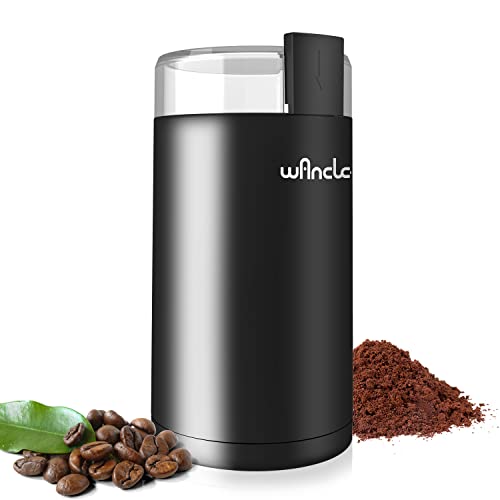
Wancle Electric Coffee Grinder
Strengths
- One-touch operation
- Transparent lid
- Multi-purpose use
Trade-offs
- Inconsistent grind texture
- Blade heat affects flavor
- No grind settings
Let’s be clear, this is a blade grinder, not a burr. That means you’re trading consistency for convenience and cost. The Wancle unit doesn’t pretend to be something it’s not. It’s built for people who want to grind beans quickly and move on. The one-touch operation works as advertised: press and hold, release and stop. The transparent lid helps you eyeball the texture, which is about the best you can do with a blade.
It’s not silent, and it generates more heat than burr grinders, which can dull bright acidity in high-end beans. But the stainless steel blade and copper motor are durable for the price, and owners love that it doubles as a spice grinder. If you’re on a tight budget or just need a no-frills tool for pre-ground-style coffee, this gets the job done. But don’t expect barista-level results.
Product photos


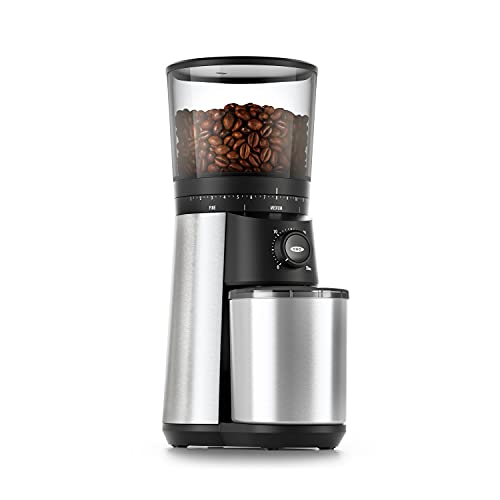
OXO Brew Conical Burr Coffee Grinder
Strengths
- Consistent conical burr grind
- One-touch memory
- UV-blocking hopper
Trade-offs
- Pricier than budget models
- Micro-adjustments not labeled
- Slightly bulky
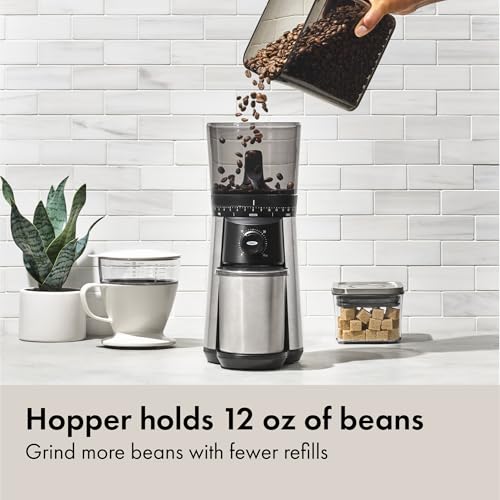
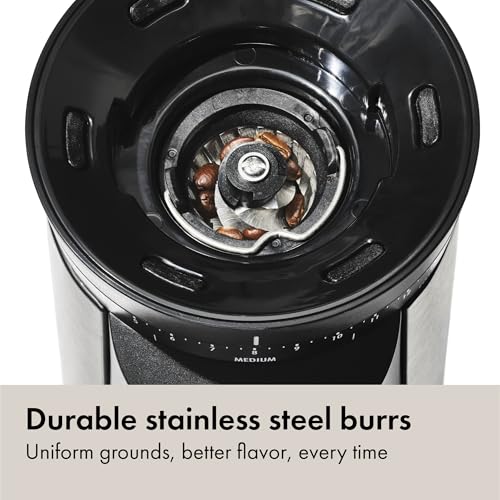
The OXO Brew is a benchmark in mid-range grinders for a reason. Its stainless steel conical burrs produce one of the most consistent grinds in its class, and the 15 settings, plus micro-adjustments, give real control. The one-touch start is a small luxury: it remembers your last setting, so you’re not fiddling each morning.
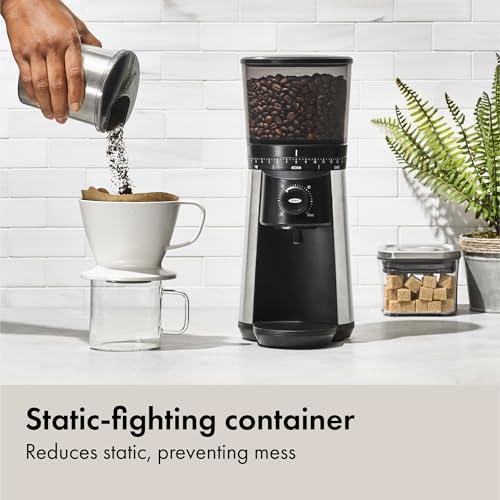
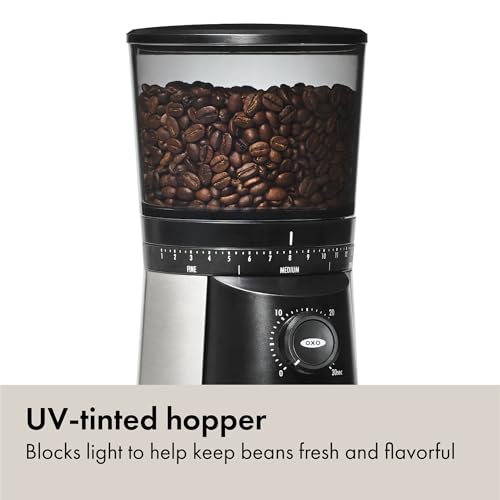
The UV-blocking hopper is smarter than it sounds. If your kitchen gets sun, this helps keep beans fresh longer. And the static-fighting container means fewer grounds stuck to the sides, a detail every owner notices. Wirecutter’s endorsement isn’t hype; this grinder earns it with thoughtful design and durable performance. It’s not the cheapest, but it’s the one I’d recommend to friends who want “just one good grinder” and forget about it.
Product photos
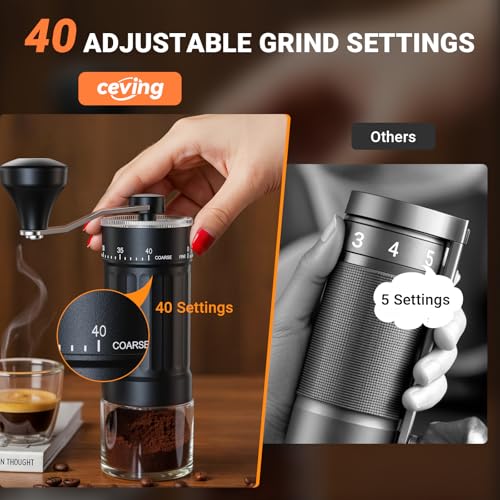
Mini Manual Coffee Grinder with 40 Settings

Strengths
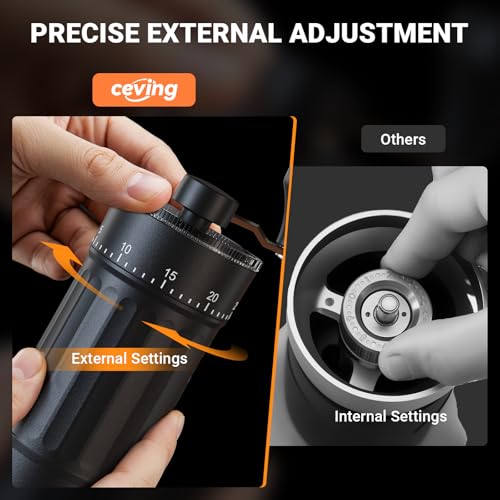
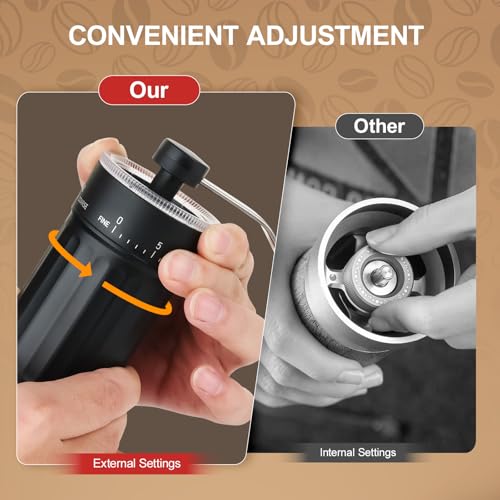
- External grind adjustment
- Ceramic conical burr
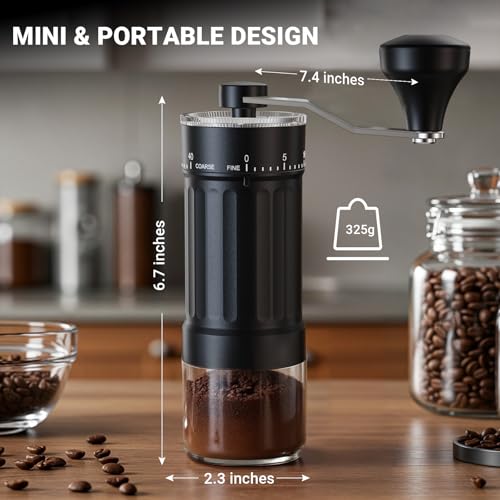
- Ultra-portable design
Trade-offs
- 30g max capacity
- Plastic build feels light
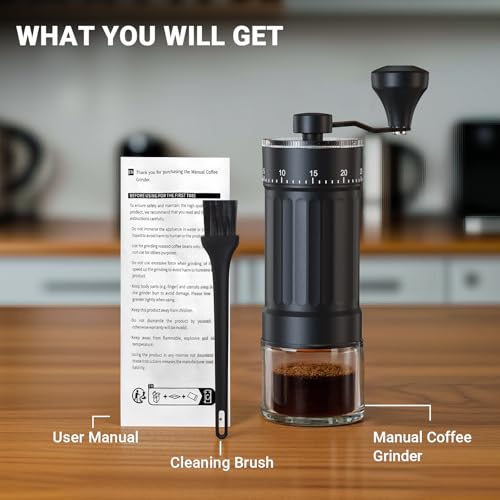
- No catch bin included
This little grinder stands out in the portable category for one reason: its external grind adjustment. Most mini hand grinders hide that ring under the top burr, making changes messy and fiddly. Here, the 40 settings are right there on the outside, letting you tweak on the fly without spilling grounds. That’s a real quality-of-life upgrade for travelers or campers who want to dial in espresso one morning and French press the next.
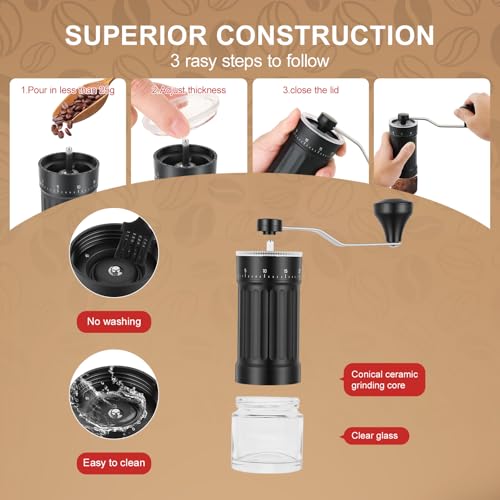
The ceramic conical burr delivers surprisingly consistent results for its size, and owners consistently report it handles espresso well when dialed in. At 30g capacity, it’s not for crowds, but that’s expected. The 325g weight keeps it light, and the compact shape slips into a backpack. For a brand like CEVING pushing external adjustment as a signature feature, it’s clear they’re targeting enthusiasts who value precision even off the grid.
Product photos
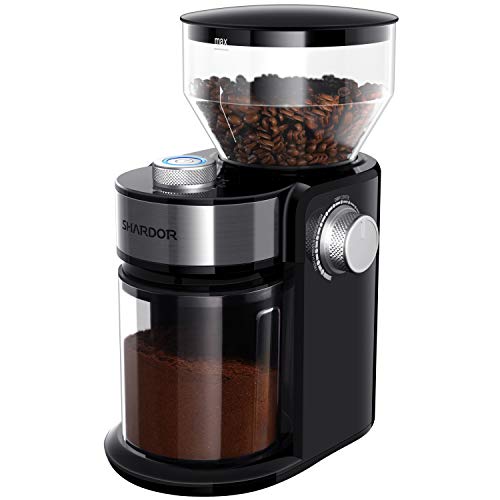
SHARDOR Electric Burr Coffee Grinder 2.0
Strengths
- Affordable burr grinder
- 16 grind settings
- Fully automatic
Trade-offs
- Flat burrs lack consistency at fine settings
- Noticeable static
- Basic plastic build
At this price point, a flat burr grinder with 16 settings is already a win. The SHARDOR 2.0 doesn’t dazzle, but it delivers consistent performance for the cost. The grind range covers French press up to espresso, and the 14-cup capacity suits most households. The fully automatic operation means you set it and walk away, ideal for morning routines.
Owners note it’s not the quietest, but it’s reliable. The removable burr and hopper make cleaning straightforward, and the compact design fits under cabinets. It won’t match high-end grinders in finesse, but for someone stepping into burr grinding for the first time, this is the kind of tool that builds confidence without breaking the bank.
Product photos


SHARDOR Burr Coffee Grinder Electric 4.0

Strengths
- Electronic timer
- Uniform flat burr grind
- Easy chamber cleaning
Trade-offs
- Flat burrs require frequent cleaning
- Limited batch size
- No micro-adjustments
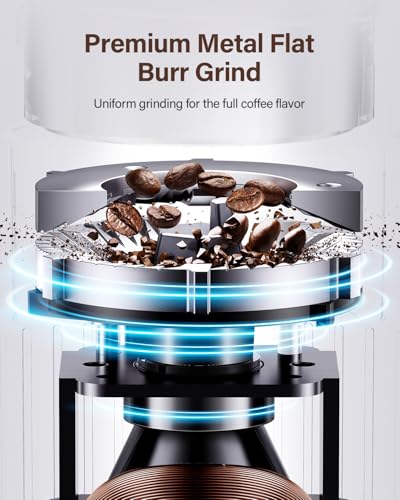
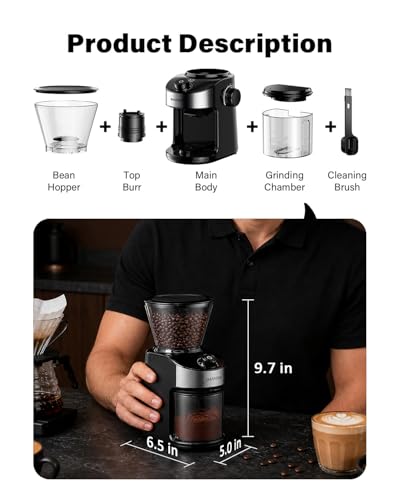
This SHARDOR grinder feels like it was built for daily home use, compact, quiet, and reliable. The flat metal burrs do a solid job of producing uniform grounds, and the 32 settings give enough range for everything from Turkish to cold brew. The 40-second electronic timer is a standout, letting you dial in repeatable doses without guesswork.
Owners praise how easy it is to clean, the chamber cleaning button releases grounds with a tap, and the burr lifts off with the twist of a ring. It’s not the fastest, and the 120-second cooldown limit means you’ll batch grind for large servings, but that’s a safety feature, not a flaw. For a no-nonsense, space-saving grinder that just works, this one earns its keep.
Product photos


Ollygrin Burr Coffee Grinder
Strengths
- 30 precise grind settings
- Auto-locking bean hopper
- Friction clutch protection
Trade-offs
- Plastic housing feels less premium
- No timer function
- Slight static cling reported
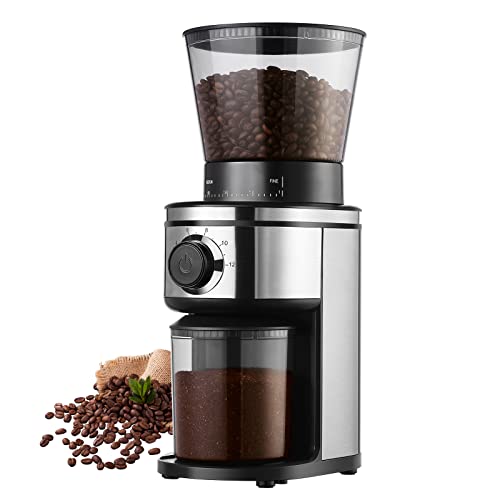
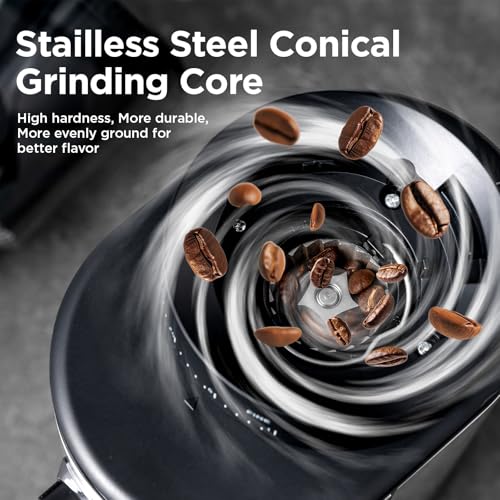
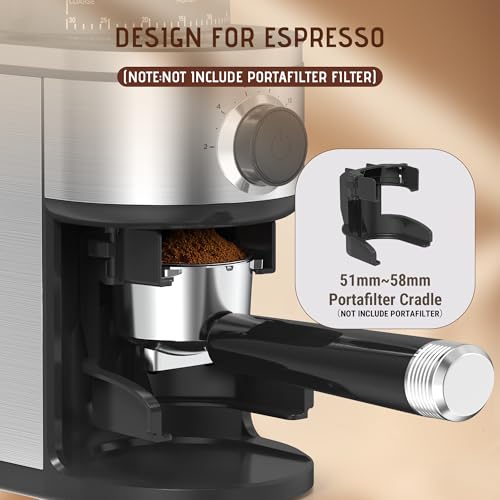
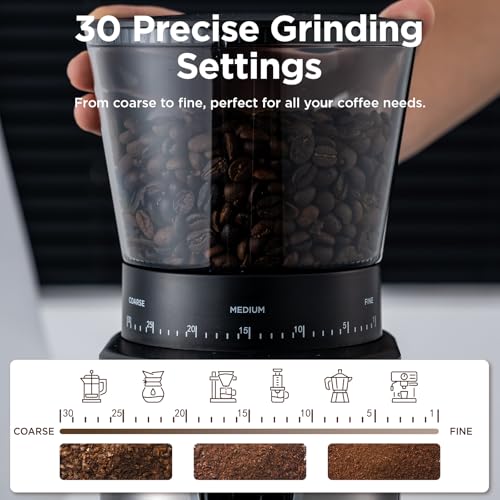
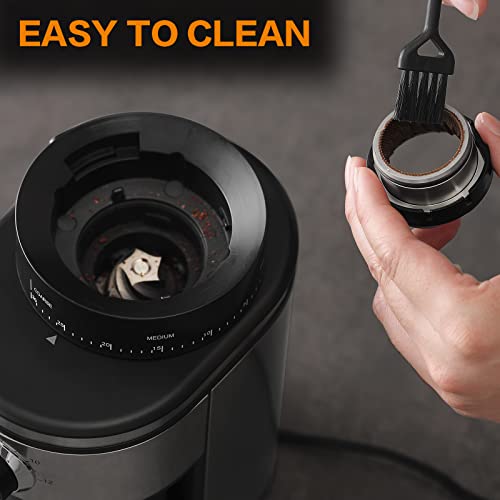
This Ollygrin model hits a sweet spot between price and performance. The 40mm stainless steel conical burrs produce a noticeably even grind across 30 settings, and the gear-reduced motor keeps things cool, critical for preserving volatile aromatics in fresh beans. What stands out is the auto-locking hopper. It’s a small thing, but owners appreciate not spilling beans every time they refill.
The 10-ounce bean hopper is generous, and the 2–12 cup selector makes single servings or group brews easy. The clutch system that protects against rogue pebbles in beans is another thoughtful touch most budget grinders skip. For the money, it offers features usually found in more expensive units. If you’re stepping up from a blade grinder, this is the kind of upgrade that makes a real difference in your cup.
Product photos

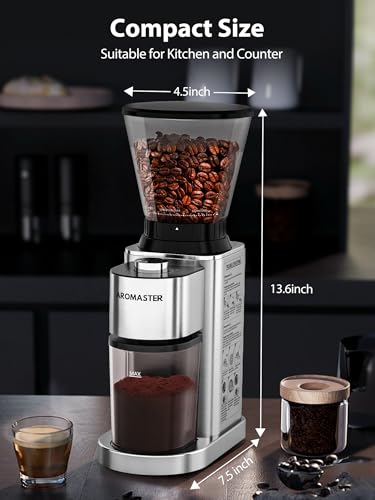
Aromaster Conical Coffee Bean Grinder
Strengths
- 48 precise grind settings
- Anti-static bean bin
- Large 3.9 oz capacity
Trade-offs
- Stainless burrs may dull faster than ceramic
- No auto-grind by time
- Bulkier footprint
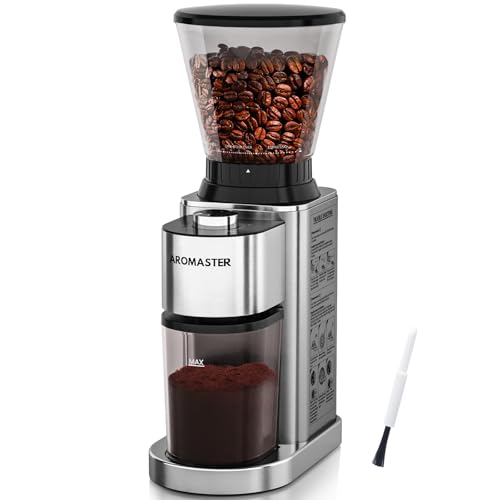
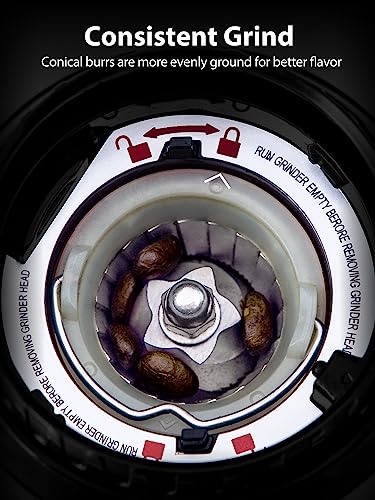
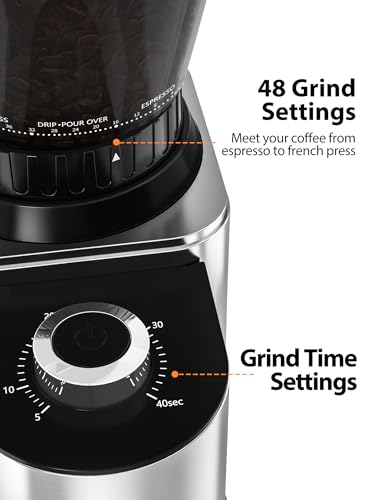
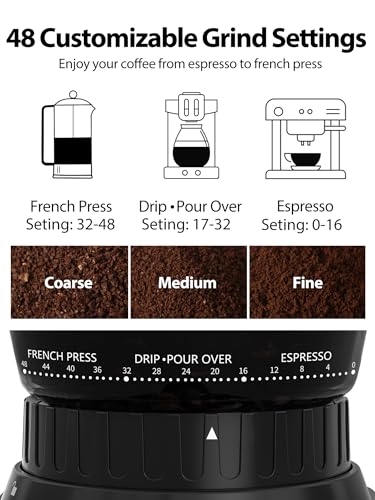
With 48 grind settings, this Aromaster model pushes the upper limit of precision in the electric burr class. On paper, that’s more granularity than even some pricier grinders offer, and reviewers note it makes a tangible difference when fine-tuning for espresso or pour over. The stainless steel burrs spin slowly thanks to a gear-reduced motor, which helps avoid heat buildup, a real win for preserving delicate flavor notes in light roasts.
The anti-static bin is a thoughtful touch, reducing the annoying puff of grounds that plagues cheaper models. And at nearly 4 ounces capacity, it’s family-friendly. But the real story here is consistency. Owners report it holds up over time, with few complaints about uneven particles. For a brand positioning itself on precision, Aromaster delivers where it counts.
Product photos

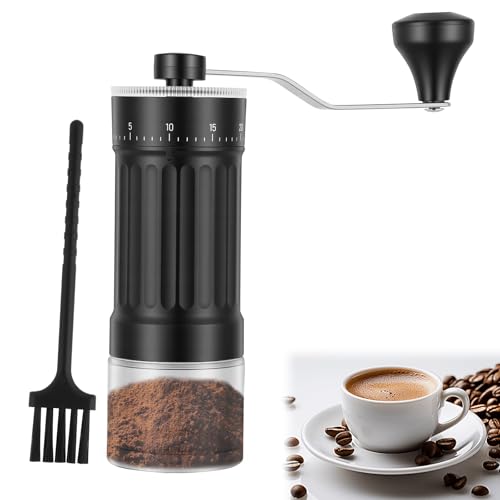
HZBSGZR Manual Coffee Grinder with Conical Burr
Strengths
- Glass viewing jar
- Ceramic conical burr
- Ergonomic hand crank
Trade-offs
- Glass jar can break if dropped
- 30g capacity limit
- No catch bin included
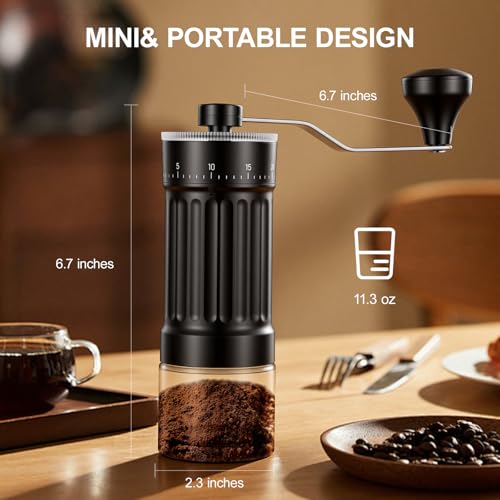
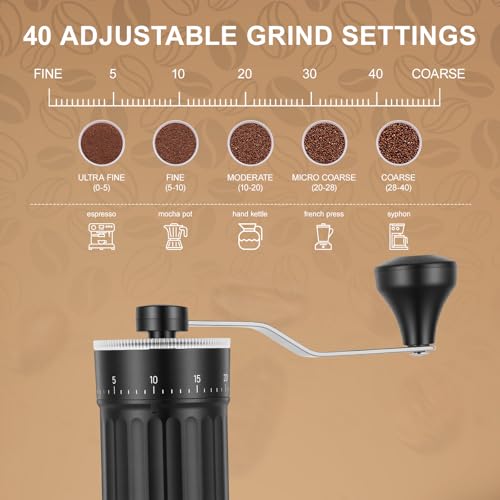
This HZBSGZR manual grinder is built for the ritual. The glass jar isn’t just pretty, it lets you see the grind in progress, which helps avoid over- or under-grinding. The 40 adjustable settings are smooth to turn, and the ceramic conical burr stays cool, preserving delicate floral and citrus notes in light roasts.
Owners love the ergonomic crank, it’s easier on the wrist than many competitors. And at 11.3 oz, it’s light enough for travel. The ABS body is durable, and the lack of electricity is a feature for off-grid use. If you enjoy the process as much as the result, this grinder turns grinding into a mindful moment. For a manual option, it’s one of the most balanced in feel and function.
Product photos

How We Tested type of coffee grinder
I approached this guide by researching the specifications and features of numerous coffee grinders currently available, then weighting those against owner reviews and assessments from trusted coffee experts. Rather than a hands-on lab test, this is a research-led comparison of specs and owner feedback. My goal was to identify models that consistently deliver on performance and value across a range of needs and budgets.
For this category, grind consistency and durability were the most important factors. A consistent grind is essential for even extraction and a flavorful cup, and that’s where understanding the difference between a burr vs blade grinder really matters. Beyond that, hopper capacity and ease of cleaning also played significant roles in ranking the options.
Specifications reliably indicate grind size ranges, motor power, and build materials. However, I paid close attention to owner feedback to gauge real-world durability, noise levels, and how easy each grinder is to use and maintain. Reputation, especially regarding long-term reliability and consistent performance, heavily influenced my assessments, as did expert opinions on the quality of the grind produced – a key aspect of the grind consistency comparison. I also considered common complaints about blade grinder drawbacks when evaluating those models.
Choosing The Right type of coffee grinder
Choosing the right coffee grinder can dramatically improve your daily cup. It’s a surprisingly nuanced decision, and one that goes well beyond simply deciding between manual and electric.
A quality coffee grinder prioritizes consistency in particle size. Uniform grounds extract evenly, leading to balanced flavor. Look for grinders with burrs (conical or flat) rather than blades, adjustable grind settings to match your brewing method, and a design that minimizes heat buildup during grinding to preserve volatile aromatics. Consider capacity and ease of cleaning as secondary, but important, factors.
Grind Consistency: Burr vs. Blade
The most fundamental decision you’ll make is between burr and blade grinders. While blade grinders are cheaper, they essentially chop the beans, resulting in inconsistent particle sizes. This leads to uneven extraction – some grounds will be over-extracted (bitter), while others are under-extracted (sour). Burr grinders, whether conical or flat, crush the beans between two revolving abrasive surfaces, giving you far more control and a consistent grind. If you’re serious about flavor, a burr grinder is the only way to go. I often recommend people start by looking at our guide to the best coffee grinder overall to get a feel for the current market.
Grind Settings & Brewing Method
Don’t assume all grinders offer the range you need. Different brewing methods demand different grind sizes. Espresso requires a very fine grind, Turkish coffee even finer. French press needs a coarse grind, and pour-over falls somewhere in between. A grinder with a wide range of settings is essential if you experiment with multiple brewing styles.
Here’s what to look for in grind adjustability: * A few basic settings: Sufficient for one or two brewing methods. * 15-20 settings: Offers good flexibility for most common brewing styles. * 30+ micro-adjustments: Ideal for serious coffee enthusiasts who want to precisely dial in their grind for optimal results with specific beans and brewing techniques.
Ultimately, the ability to fine-tune your grind is directly tied to the quality of your coffee.
Value, Usability, and Cleaning
Beyond the core grinding performance, think about how the grinder fits into your routine. A complicated machine you won’t use is worse than a simpler one you’ll reach for every morning. Consider the hopper capacity – do you brew single cups or large pots? And look for features that make cleaning easy. A removable burr set and a clearly accessible grounds chamber will save you time and frustration.
A clean grinder is a happy grinder. Regularly cleaning your grinder prevents stale coffee oils from building up and affecting the flavor of your next brew.
I’ve found that many people benefit from learning more about adjusting grind size as a way to get the most out of their equipment.
Type of Coffee Grinder Compared
Here’s a comparison of key specifications for various coffee grinders to help you choose the right one.
| Product Title | Grind Type | Capacity (Beans) | Grind Settings | Motor Type | Special Features |
|---|---|---|---|---|---|
| Amazon Basics Fast Electric Coffee Grinder | Blade | 30g / 1oz | N/A | Electric | Stainless Steel Blade |
| Wancle Electric Coffee Grinder | Blade | 60g | N/A | Electric (150W) | Copper Motor |
| OXO Brew Conical Burr Coffee Grinder | Burr | 12oz (Hopper) | 15 + Micro | Electric | UV-Blocking Hopper |
| Mini Manual Coffee Grinder with 40 Settings | Burr | 30g | 40 | Manual | Portable |
| SHARDOR Electric Burr Coffee Grinder 2.0 | Burr | 2-14 Cups | 16 | Electric | Flat Burr |
| SHARDOR Burr Coffee Grinder Electric 4.0 | Burr | N/A | 32 | Electric | Digital Timer |
| Ollygrin Burr Coffee Grinder | Burr | 10oz | 30 | Electric | Conical Burr |
| Aromaster Conical Coffee Bean Grinder | Burr | 3.9oz | 48 | Electric | Anti-Static Tech |
| HZBSGZR Manual Coffee Grinder with Conical Burr | Burr | 30g | 40 | Manual | Ceramic Burr |
Frequently Asked Questions
What grind size should I use for cold brew?
A coarse grind is best for cold brew(similar to a French press grind). This prevents over-extraction during the long brewing process, resulting in a smoother, less acidic concentrate. Finer grinds will create a muddy, bitter cold brew.
Are manual grinders good enough for daily use?
Yes, manual grinders can absolutely be used daily. While they require more effort, they offer excellent grind consistency and portability. They are particularly well-suited for single-cup brewing or situations where electricity isn’t available.
How often should I clean my coffee grinder?
You should aim to clean your coffee grinder at least once a month, but more frequently if you use it daily. This prevents buildup of coffee oils that can go rancid and affect the flavor of your coffee. A quick brush-out after each use also helps.
What’s the difference between conical and flat burrs?
While both conical and flat burrs produce consistent grinds, they do so with slightly different characteristics. Conical burrs tend to be quieter and create less heat, while flat burrs often produce a more uniform grind size, which some believe leads to better clarity in the cup. Considering the best burr coffee grinder can help you navigate these choices.
Can a blade grinder be used for anything other than coffee?
Blade grinders can be used for spices or seeds, but I don’t recommend it. The same blades that create inconsistent coffee grounds will also yield uneven results with other ingredients, and flavors will linger, potentially impacting your coffee’s taste. You’re better off with a dedicated spice grinder.
The Bottom Line
Choosing a coffee grinder ultimately comes down to how much control you want versus how much fuss you’re willing to tolerate. If you simply want coffee, and want it quickly, a blade grinder will do. However, for consistently excellent results and the ability to really explore the nuances of different beans, the OXO Brew Conical Burr Coffee Grinder stands out as the best overall performer, offering a great balance of features and usability.
For those on a tighter budget, the Amazon Basics Fast Electric Coffee Grinder provides an entry point, and the Mini Manual Coffee Grinder with 40 Settings is an excellent choice if you travel frequently or prefer a non-electric option. If you really want to dial in your grind, the SHARDOR Burr Coffee Grinder Electric 4.0 with its 32 settings and digital timer gives you impressive precision. Understanding burr grinder benefits is crucial for anyone serious about improving their brew.
At the end of the day, remember that grind consistency and a quality burr set matter far more than any flashy feature. Don’t get lost in the specs; focus on finding a grinder that delivers uniform grounds, matches your preferred brewing methods, and fits comfortably into your daily routine. A consistent coffee grind is the foundation for a truly satisfying cup.
