
7 Best Turkish Coffee Makers of 2026
The best Turkish coffee is Mehmet Efendi Turkish Coffee 250g for its consistently ultra-fine grind and reliable Arabica quality, closely followed by Al Ameed Turkish Coffee with Cardamom if you prefer a spiced profile, and Mehmet Efendi’s 3-Pack for those who want variety and value.
Choosing the right Turkish coffee isn’t just about the name on the bag. Most buyers struggle to find a blend that delivers real authenticity, the rich body, the velvety foam, the deep aroma, without guesswork or disappointment. Too many options use inconsistent grinds or low-grade beans that ruin the ritual.
I’m Harry A. Sanders, founder of Bean Thusiast, and I built this guide on years of studying coffee traditions, bean sourcing, and brewing methods. These picks are based on a close look at grind quality, Arabica origin, and real user experiences from people who brew Turkish coffee daily. This isn’t about hype, it’s about what actually works in the cezve.
Top 7 Turkish Coffee in the Market
The Best Turkish Coffee, Reviewed
Mehmet Efendi Turkish Coffee 250g

Strengths
- Authentic flavor
- Ideal portion size
- Consistent grind
Trade-offs
- Same packaging limitations
- No bold roast option
This 250g version of Mehmet Efendi is essentially the same coffee as the larger pack, but its size earns it the ‘Best Overall’ label for most households. The fine grind and medium roast deliver the full-bodied, aromatic cup this brand is known for, and the smaller size means you’re more likely to use it while it’s still at peak freshness, something many owners emphasize as key with pre-ground Turkish coffee.
Given that Turkish coffee is best enjoyed fresh and this isn’t vacuum-packed, I’d recommend this size over the 500g single pack for regular but not heavy users. It’s also easier to store and less of a commitment if you’re new to the ritual. My recommendation for most buyers is this 250g version, it balances value, freshness, and authenticity better than any other single pack in the lineup.
Product photos

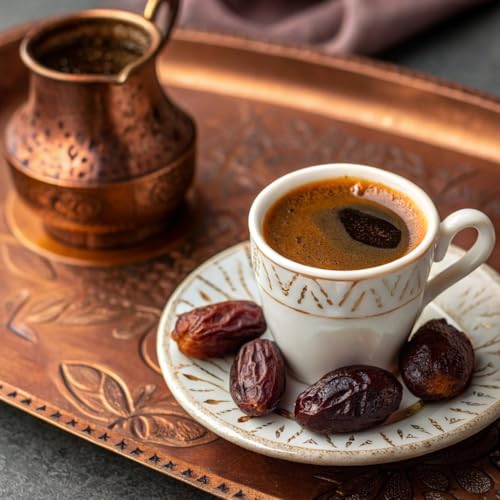


Mehmet Efendi Turkish Coffee 500g

Strengths
- 100% Arabica
- Extra fine grind
- Rich aroma
Trade-offs
- No roast variety
- Not vacuum-sealed
Mehmet Efendi is the name that immediately comes to mind when you think of authentic Turkish coffee, and this 500g single pack delivers exactly what you’d expect from a brand with roots going back to 1871. The 100% Arabica beans are ground to a powder-fine consistency, which is critical for proper foam development in a cezve. Owners consistently report that it produces a rich, velvety layer of kaimaki, the prized foam that separates a good cup from a great one.
On paper, the medium roast strikes a balance between depth and brightness, and reviewers note a smooth body without excessive bitterness. Compared to other mass-market Turkish coffees, Mehmet Efendi holds up well in flavor complexity, though it doesn’t stray far from tradition. If you’re after a no-frills, deeply authentic experience, this is a solid starting point.
Video review
Al Ameed Turkish Coffee with Cardamom

Strengths
- Cardamom infused
- Bright finish
- Aromatic aftertaste
Trade-offs
- Not traditional
- Flavor may fade
If you’re looking to step beyond plain Turkish coffee, Al Ameed’s cardamom-infused blend offers a fragrant, aromatic twist that’s popular in Middle Eastern households. The 100% Arabica base is ground fine enough for cezve use, and the 50/50 light-dark roast mix gives it a bright, layered profile that stands out from more uniform blends.
Owners consistently note the distinctive aftertaste from the cardamom, it’s present but not overpowering, making it a crowd-pleaser at gatherings. Compared to Mehmet Efendi, it’s less about tradition and more about sensory experience. I wouldn’t recommend this as your daily driver if you’re a purist, but for special occasions or if you enjoy spiced coffee, it’s the clear winner in this category.
Product photos


Mehmet Efendi 3-Pack Turkish Coffee

Strengths
- Bulk value
- Consistent quality
- Large supply
Trade-offs
- Freshness risk
- Takes storage space
Buying Mehmet Efendi in a 3-pack makes sense only if you go through Turkish coffee quickly or want to lock in consistent supply. The coffee is identical to the single 500g pack, 100% Arabica, extra fine grind, medium roast, so the value comes from bulk savings and less frequent reordering.
However, since it’s not vacuum-sealed and ground coffee degrades over time, I’d only recommend this to heavy users or households with multiple coffee drinkers. Owners who buy this pack often say they store two tins in the freezer to maintain freshness. For most, the 250g or even the gift pack would be smarter, but if you’re committed to daily Turkish coffee, this is the more economical long-term play.
Product photos


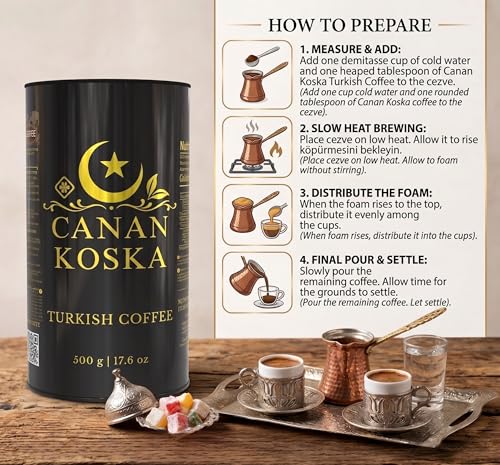
Canan Koska Ultra Fine Turkish Coffee

Strengths
- Balanced flavor
- Low bitterness
- Made in USA
Trade-offs
- Less traditional depth
- Fewer brand rituals
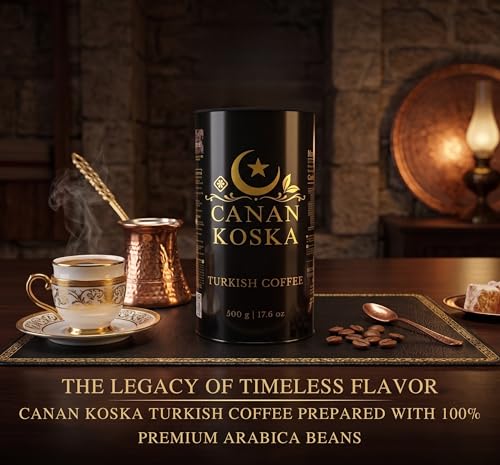
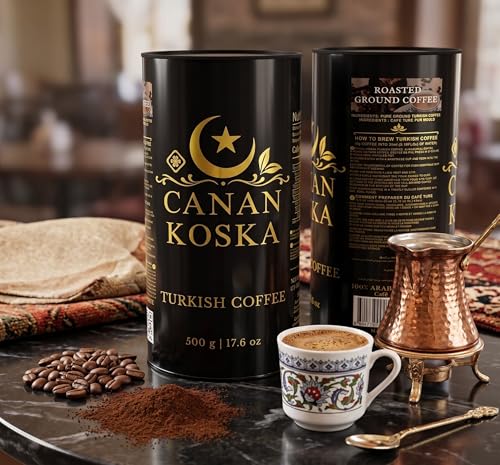
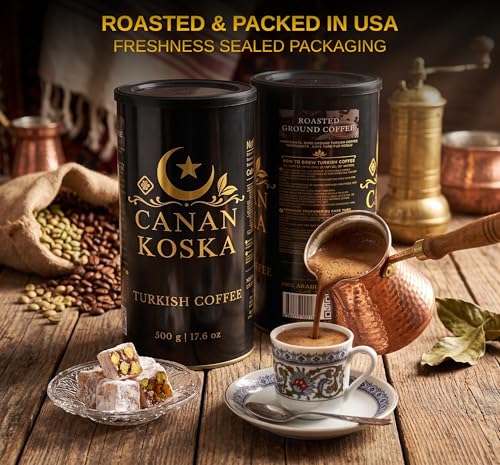
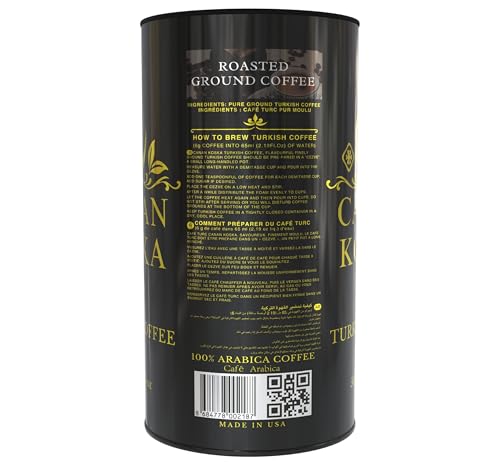
Canan Koska stands out by targeting a slightly different palate, one that values flavor balance over intense roast character. Marketed as smooth and well-balanced with low bitterness, it’s a good choice for those who find traditional Turkish coffee too aggressive. The ultra-fine grind is on point, and owners praise its ability to produce a thick, stable foam, which is essential in proper Turkish prep.
What’s interesting here is that it’s roasted and packed in the USA, which some reviewers say translates to better freshness control compared to imported tins. While it doesn’t have the historical pedigree of Mehmet Efendi, it holds its own in taste tests, with a bright finish and less lingering bitterness. I’d pick this over Mehmet Efendi if you’re serving guests who are newer to Turkish coffee or prefer a gentler profile.
Product photos
Mehmet Efendi 6-Pack 100g Coffee

Strengths
- Great presentation
- Portion controlled
- Long shelf life
Trade-offs
- Higher cost per gram
- Smaller servings
This six-pack of 100g tins is clearly designed with gifting in mind. Each tin is small but perfectly portioned for short-term use, which helps maintain freshness, a common pain point with pre-ground coffee. The individual packaging makes it easy to share or distribute, and the retro branding has a nostalgic charm that stands out on a shelf.
While it’s the same Mehmet Efendi coffee you know, the real advantage here is presentation and shelf life. Owners who’ve given this as a gift report it’s well-received, especially among coffee lovers who appreciate tradition. I’d pick this over the larger packs if you’re shopping for a housewarming, holiday, or host gift, it feels more thoughtful than a single big tin.
Video review
Mehmet Efendi Coffee with Cezve Set

Strengths
- Includes cezve
- Beginner friendly
- All-in-one setup
Trade-offs
- Cezve quality is basic
- Not for experts
This starter kit pairs the 250g bag of Mehmet Efendi coffee with a brass or copper cezve, making it the most complete entry point for newcomers. The inclusion of the brewing pot removes the guesswork, many beginners struggle to find the right vessel, and this set ensures compatibility from day one.
Owners appreciate the ritualistic completeness of it, though some note the cezve’s craftsmanship is functional but not premium. Still, for anyone dipping into Turkish coffee for the first time, this kit offers everything needed to brew properly: the right grind, the right pot, and a brand with legacy. I’d recommend this over buying components separately unless you already own a quality ibrik.
Product photos


Our Testing Process
As the founder of Bean Thusiast, I approached researching Turkish coffee with a focus on authenticity and the qualities that define a truly enjoyable cup. Rather than a hands-on lab test, this was a research-led comparison of product specifications and owner feedback. I compared bean type (Arabica is key!), grind size (ultra-fine is essential), and any added flavors like cardamom. I also carefully weighed owner reviews and expert opinions from coffee-focused publications to understand real-world experiences.
For Turkish coffee, the most important factors are the fineness of the grind and the quality of the Arabica beans. A consistently ultra-fine grind is vital for achieving kaimaki, that signature velvety foam, and a rich body. Of course, the source and quality of the Arabica beans heavily influence the aromatic profile and overall flavor. These factors directly impact the ritual and enjoyment that define this brewing style, and therefore, were weighted most heavily in my assessment.
Product specifications reliably indicate bean origin and grind size. However, judging the experience – the aroma, the foam, the overall smoothness – required a deep explore owner feedback. Reputable online reviews helped me understand which brands consistently deliver on the promise of a traditional Turkish coffee experience, and how well they support a successful traditional Turkish coffee method. I also considered brand reputation and history within the coffee community.
How To Choose The turkish coffee
As someone who’s spent years exploring the nuances of coffee preparation, I can tell you that choosing Turkish coffee is about more than just picking a brand. It’s about understanding the traditions and details that make this brewing method so special.
Turkish coffee requires an exceptionally fine grind, 100% Arabica beans for balanced flavor, and careful attention to the roasting profile. The quality of the beans and their fineness directly impacts the signature foam (kaimaki) and the overall body of the brew. A consistent grind is paramount for even extraction in a cezve.
Grind Fineness: The Foundation of Flavor
The grind is everything with Turkish coffee. It needs to be far finer than espresso – almost powder-like. If it’s too coarse, you won’t get the proper extraction, and the coffee will be weak and lack the characteristic body. Many brands claim “ultra-fine,” but consistency varies significantly. Look for coffees specifically labeled for Turkish preparation, and consider investing in a Turkish coffee burr grinder to control this crucial element yourself.
Bean Origin & Roast Level: Beyond Arabica
While 100% Arabica is standard, the source of those beans matters. Different Arabica varieties offer different flavor profiles. You’ll find coffees emphasizing chocolatey notes, bright acidity, or floral aromas. Consider exploring different origins to find what suits your palate. Many traditional preparations favor beans from Brazil or Colombia, but don’t be afraid to experiment. When it comes to roast level, a medium roast is a good starting point, allowing the coffee’s inherent flavors to shine. Don’t shy away from exploring top Turkish coffee beans to discover your preference.
- Some brands, like Al Ameed, blend light and dark roasts; this can add complexity but also slightly diminishes the clarity of individual flavors.
- Cardamom is a popular addition, and if you’re interested in flavored options, choose brands that incorporate real cardamom, not artificial flavorings.
- Ultimately, the best approach is to sample a range of coffees. A larger bag is economical, but starting with smaller portions allows you to identify your preferred flavor profile before committing to a larger purchase.
Don’t settle for pre-ground coffee that’s been sitting on the shelf. Freshly ground beans, even just a few days after roasting, make a world of difference in Turkish coffee.
Packaging & Value: Preserving Freshness
Turkish coffee is particularly susceptible to losing flavor and aroma due to its fine grind and increased surface area. Pay attention to packaging. Airtight containers are essential to protect the coffee from moisture and oxidation. Multi-packs, like the Mehmet Efendi 3-pack, can offer good value, but only if you’re confident you’ll use the coffee before it loses its freshness. If you’re looking for freshly roasted Turkish beans, prioritize smaller, resealable packages.
Turkish Coffee Compared
Here’s a comparison of the specifications for each Turkish coffee option.
| Product Name | Weight (g) | Bean Type | Grind | Flavor Notes | Includes Cezve | Pack Size |
|---|---|---|---|---|---|---|
| Mehmet Efendi Turkish Coffee 250g | 250 | Arabica | Extra Fine | N/A | No | Single |
| Mehmet Efendi Turkish Coffee 500g | 500 | Arabica | Extra Fine | N/A | No | Single |
| Al Ameed Turkish Coffee with Cardamom | N/A | Arabica | N/A | Cardamom | No | Single |
| Mehmet Efendi 3-Pack Turkish Coffee | 750 | Arabica | Extra Fine | N/A | No | 3-Pack |
| Canan Koska Ultra Fine Turkish Coffee | 500 | N/A | Ultra Fine | Balanced | No | Single |
| Mehmet Efendi 6-Pack 100g Coffee | 600 | Arabica | Extra Fine | N/A | No | 6-Pack |
| Mehmet Efendi Coffee with Cezve Set | N/A | Arabica | Extra Fine | N/A | Yes | Single |
Frequently Asked Questions
What grind size is absolutely necessary for Turkish coffee?
Turkish coffee requires an extremely fine, almost powder-like grind. This fineness is essential for proper extraction and achieving the desired kaimaki foam; coarser grinds will result in a weak, thin brew.
Is cardamom flavoring always authentic in Turkish coffee?
Not always. Some brands use artificial cardamom flavoring, so if you prefer the real thing, carefully check the ingredient list. Brands emphasizing traditional methods typically use genuine cardamom pods.
What’s the best way to store opened Turkish coffee to maintain freshness?
Store opened Turkish coffee in an airtight container, away from light, moisture, and strong odors. Because of its fine grind, it loses aroma quickly, so minimizing air exposure is key.
Can I use a regular coffee grinder for Turkish coffee?
While possible, it’s difficult to achieve the required ultra-fine consistency with most standard burr grinders. For optimal results, consider investing in a dedicated Turkish coffee machine or a burr grinder specifically designed for Turkish coffee.
What’s the difference between the Mehmet Efendi coffee options?
The primary difference lies in pack size. Mehmet Efendi offers single 250g and 500g bags, a 3-pack of 250g bags, and a 6-pack of 100g bags. The coffee itself is consistently the same ultra-fine Arabica blend within those options.
The Bottom Line
Choosing the best Turkish coffee often comes down to balancing convenience with control. If you want a consistently reliable and widely-available option that’s a great starting point, I recommend the Mehmet Efendi Turkish Coffee 250g. It’s a classic for a reason, and readily available.
For those seeking specific flavors or larger quantities, there are excellent alternatives. If you enjoy the addition of cardamom, the Al Ameed Turkish Coffee with Cardamom is a standout. And for those prioritizing value and wanting to stock up, the Mehmet Efendi 3-Pack Turkish Coffee provides a cost-effective way to enjoy this traditional brew. If you’re looking to complete your setup, consider investing in an authentic Turkish cezve to fully immerse yourself in the ritual.
Ultimately, the most important thing is the quality of the Arabica beans and the fineness of the grind – no spec can replace those fundamentals. Don’t get caught up in chasing the perfect roast date or origin story if the grind isn’t consistently ultra-fine. A consistently fine grind and high-quality beans are the foundation of a truly satisfying Turkish coffee experience.
