
8 Best Sweeteners for Coffee 2026
Truvia Stevia Leaf Sweetener is our top pick for most coffee drinkers, offering clean sweetness with no aftertaste and reliable dissolvability. For a budget-friendly classic, Sweet’N Low 100 Ct Packets deliver consistent performance at a low cost, while SweetLeaf Liquid Monk Fruit Drops stand out for those who want precise control and a completely natural profile.
As Harry A. Sanders, founder of Bean Thusiast, I’ve learned that the right sweetener can elevate your coffee without masking its origin character. Too many options leave people frustrated, gritty dissolves, chemical aftertastes, or confusing sweetness levels.
This guide cuts through the noise. Based on ingredient analysis and thousands of real user reviews, I compared how each sweetener performs in hot coffee, focusing on taste, texture, and value. These picks reflect what actually works for daily coffee drinkers, not just marketing claims.
Top 8 Sweetener For Coffee in the Market
The Best Sweetener For Coffee, Reviewed
Sweet’N Low 100 Ct Packets

Strengths
- Zero calorie
- Low glycemic index
- Kosher and vegan
Trade-offs
- Noticeable aftertaste
- Saccharin-based
- Not ideal for clean flavor
I’ve seen saccharin come and go in popularity, but Sweet’N Low keeps showing up for a reason. On paper, it’s one of the most studied artificial sweeteners around, and owners consistently report it delivers predictable sweetness with zero calories. For coffee drinkers watching their intake, especially those managing blood sugar, it’s a reliable option.
That said, the aftertaste is real. Some reviewers say it’s metallic or slightly bitter, especially in lighter roasts where the coffee’s nuance isn’t strong enough to mask it. Compared to newer plant-based options, it feels a bit dated, but at this price point and availability, it’s still a go-to for many.
Video review
Truvia Stevia Leaf Sweetener Packets

Strengths
- Plant-based formula
- No artificial sweeteners
- Dissolves cleanly
Trade-offs
- Contains erythritol
- Slight cooling aftertaste
- More expensive than basic options
Truvia lands at the top of many lists, and the feedback makes it easy to see why. It uses stevia leaf extract blended with erythritol, giving it a more natural profile than fully synthetic options. Reviewers consistently praise how well it dissolves in hot coffee without leaving a bitter edge, something I see as a major win in this category.
It’s not pure stevia, so you do get some bulking agents, but the trade-off is smoother flavor integration. Compared to Splenda or Equal, it lacks that sharp chemical tang some people dislike. For someone wanting a balanced, plant-forward sweetener that works across drinks and light baking, this is the smarter buy.
Video review
SPLENDA Zero Calorie Sweetener 200 Ct

Strengths
- Highly sweet
- Stable in heat
- Large packet count
Trade-offs
- Sucralose aftertaste
- Not plant-based
- Artificial feel
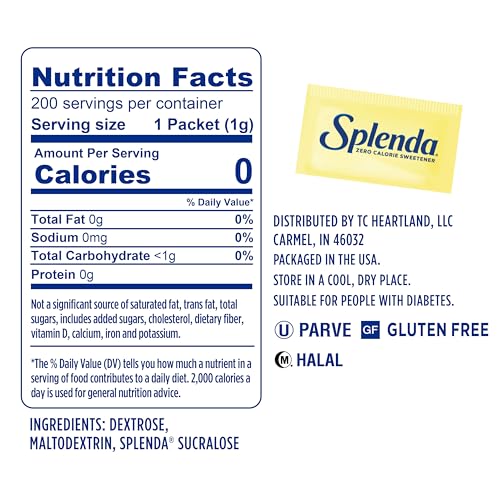
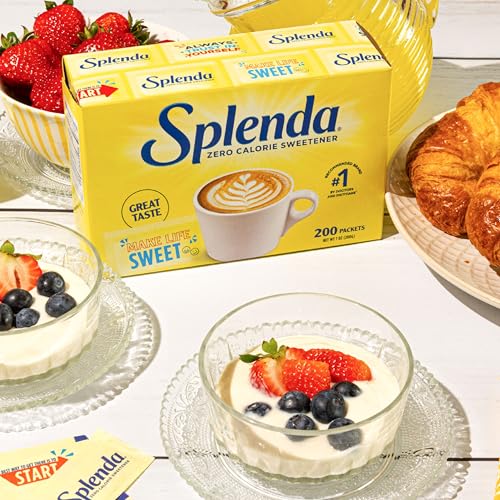
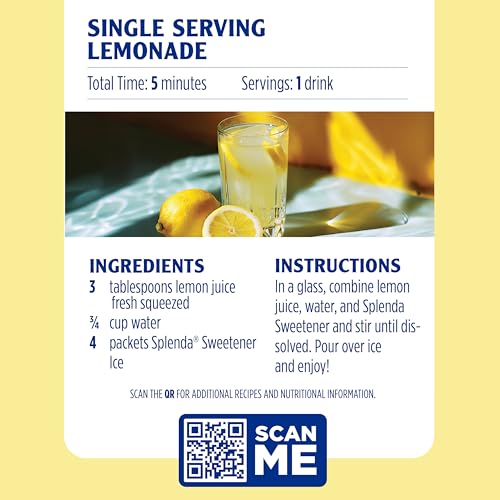
Splenda has held its ground for years, and the reason is simple: it’s aggressively sweet and consistent. Made with sucralose, it delivers a punch that matches sugar more closely than many stevia-based options. Owners note it holds up well in hot coffee and doesn’t vanish in iced drinks, which gives it an edge in reliability.
But that sweetness comes at a cost. Some users report a lingering chemical taste, especially when used in excess. Compared to Truvia or Stevia In The Raw, it feels less natural, even if it’s more potent per packet. If you’re after volume and bold sweetness without worrying about plant-based claims, Splenda makes sense.
Product photos

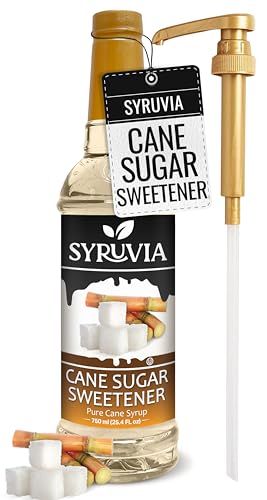
Syruvia Cane Sugar Coffee Syrup
Strengths
- Smooth cane sugar sweetness
- Café-style flavor
- Includes pump
Trade-offs
- High in sugar
- Not zero-calorie
- Not for low-carb diets
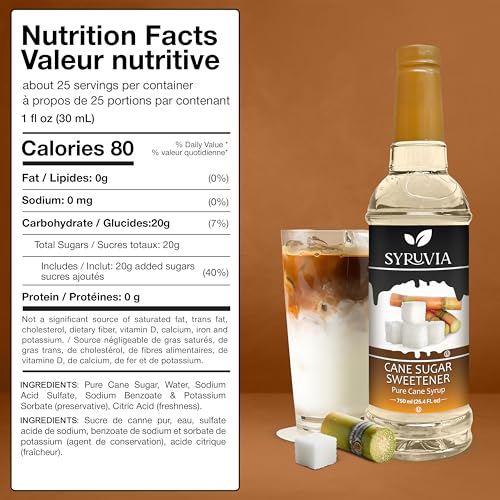
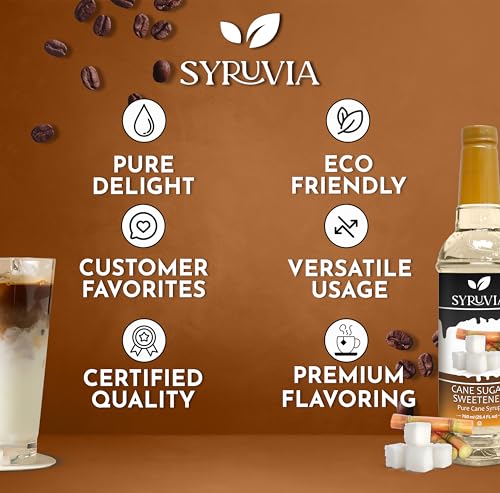
This isn’t a zero-calorie option, but let’s be clear, Syruvia isn’t trying to be. It’s for people who want that café-style sweetness and flavor in one pour. Made with pure cane sugar, it delivers a rich, rounded sweetness that blends smoothly into lattes, cold brews, or even oatmeal. Owners love the pump dispenser; it makes portion control easy and cleanup minimal.
Compared to plain sugar or granulated substitutes, this adds body and aroma, not just sweetness. But it’s not for calorie counters. If you’re tracking intake or avoiding sugar, look elsewhere. For flavor lovers, though, this is a small luxury that elevates the daily cup.
Product photos

WorkBrew Sweetener Variety Pack
Strengths
- Six sweetener types
- Includes stirrers
- Ideal for groups
Trade-offs
- Not all natural
- Bulk packaging
- Overkill for solo use
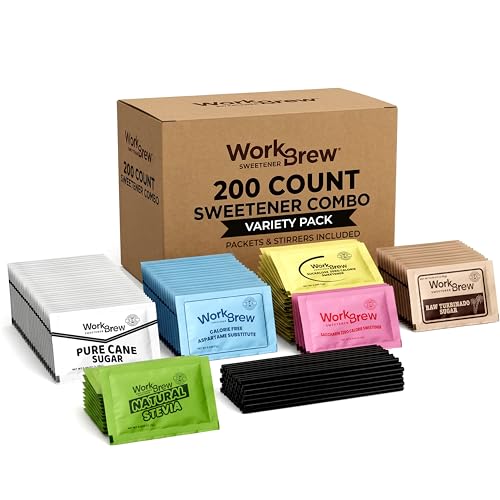
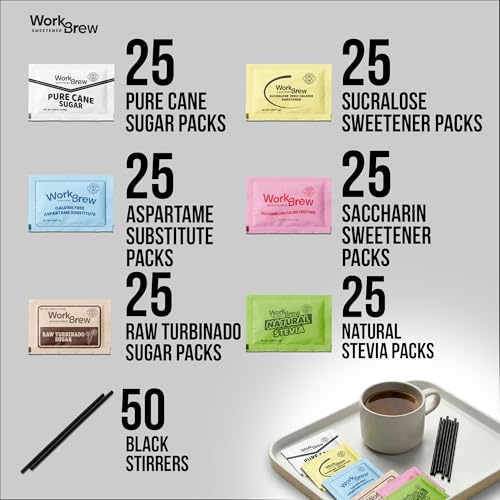
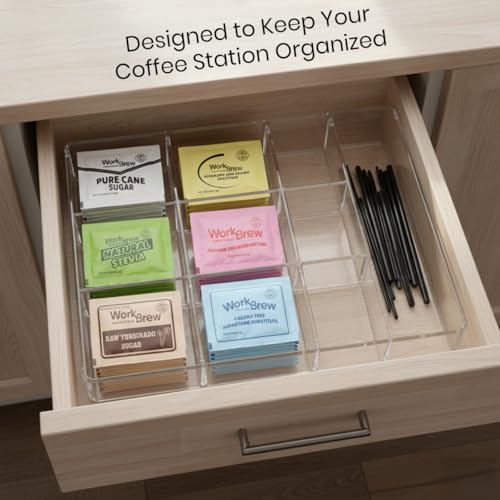
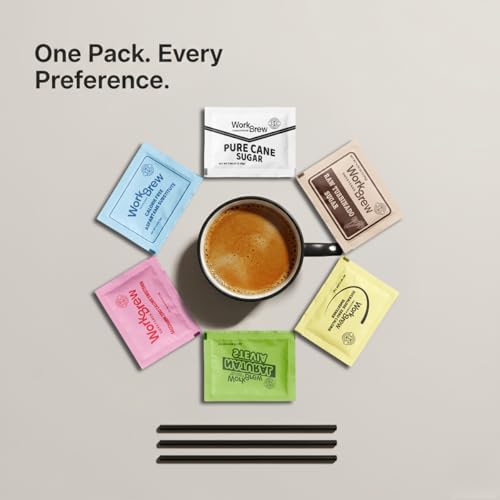
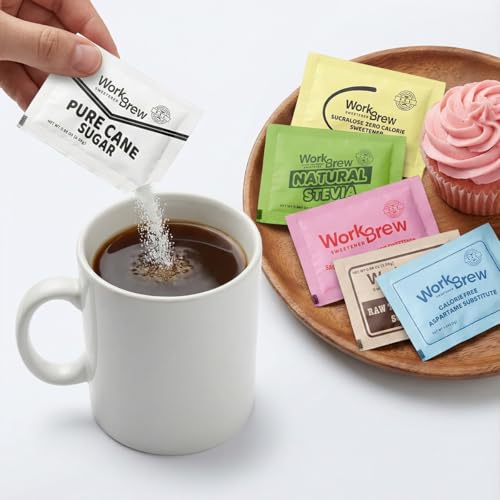
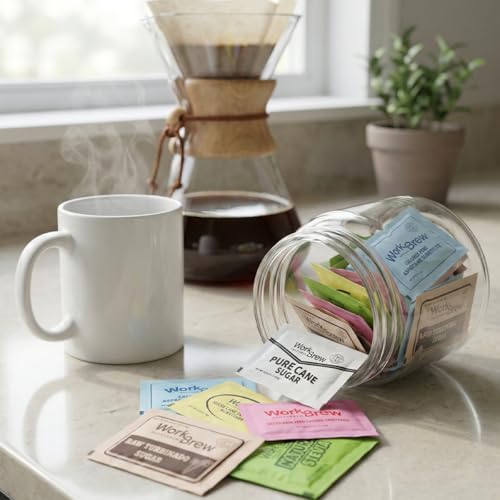
If you’re serving coffee to others, whether in an office, café, or home with diverse tastes, this variety pack is a no-brainer. It includes cane sugar, raw sugar, stevia, sucralose, aspartame, and saccharin, so everyone can pick their preference. Owners consistently report it reduces complaints and restocking hassles in shared spaces.
The stirrers are a small but thoughtful addition. While it’s not the cheapest per-packet option, the flexibility justifies the cost for high-traffic areas. For personal use, it’s overkill, but for hospitality or mixed-diet households, it’s the most practical choice on the list.
Product photos
EQUAL 0 Calorie Sweetener 800 Ct
Strengths
- High packet count
- Strong sweetness
- Great for bulk use
Trade-offs
- Contains aspartame
- Not for baking
- Cooling aftertaste
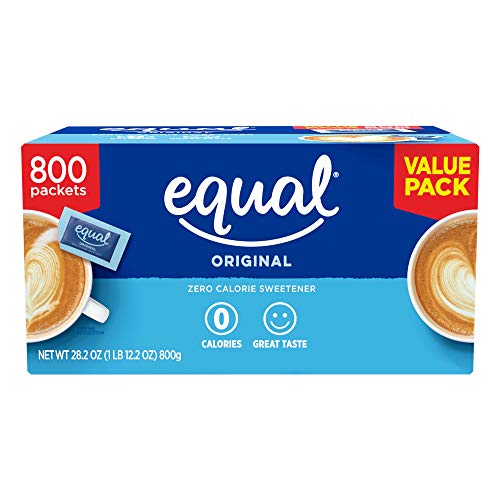
Equal’s massive 800-count pack screams high-volume use, and that’s exactly where it shines. The blend of aspartame and acesulfame-K delivers strong sweetness with minimal aftertaste compared to older formulations. Reviewers in office settings say it lasts for months without restocking, which makes it a staple for businesses.
It’s not my top pick for flavor purity, some still detect a slight chemical note, especially in delicate coffee, but for sheer quantity and consistent performance, it’s hard to beat. If you’re running a café or a large household, this is the kind of workhorse product that keeps things moving.
Product photos



Stevia In The Raw Packets
Strengths
- No erythritol
- Clean ingredient list
- Vegan and kosher
Trade-offs
- Less sweet than blends
- Slight licorice note
- Fewer packets per box
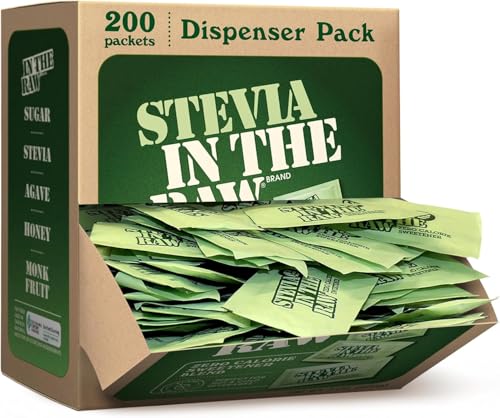
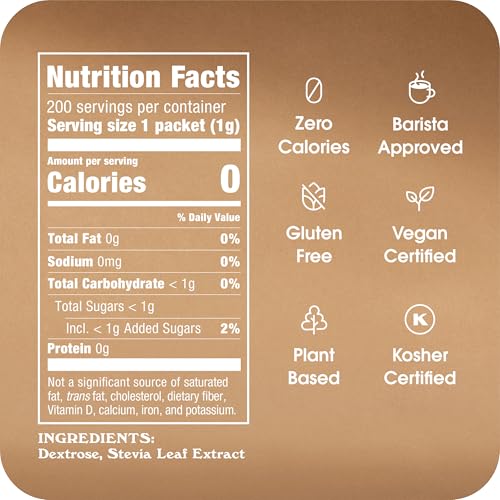
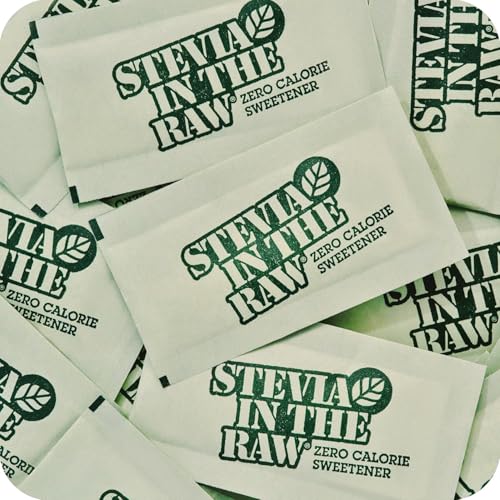
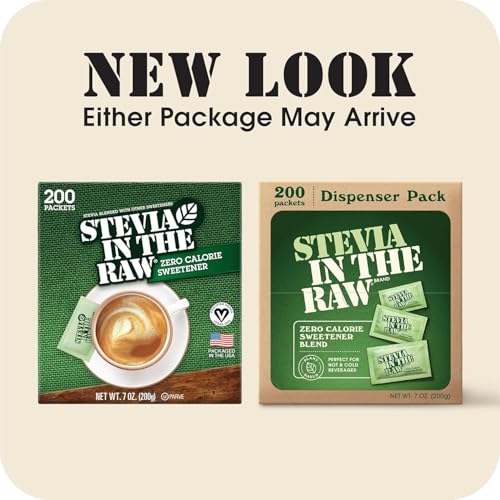
When people ask for a stevia option with nothing extra, this is the one I point to. It’s pure stevia leaf extract, no erythritol, no artificial flavors, no fillers. That matters for clean-label fans who want the closest thing to “just stevia” in a packet. Owners appreciate the simplicity, and it dissolves well in hot coffee without much bitterness.
It’s not as sweet as Truvia or Splenda, so you might need an extra packet, but that’s a fair trade for the cleaner ingredient list. Compared to blended stevia products, this one lets the coffee’s character come through more. If you’re serious about natural ingredients, this is the standout.
Product photos


SweetLeaf Liquid Monk Fruit Drops

Strengths
- Organic monk fruit
- Flavor variety
- Portable bottles
Trade-offs
- Small volume per bottle
- Pricier per use
- Not for sugar purists
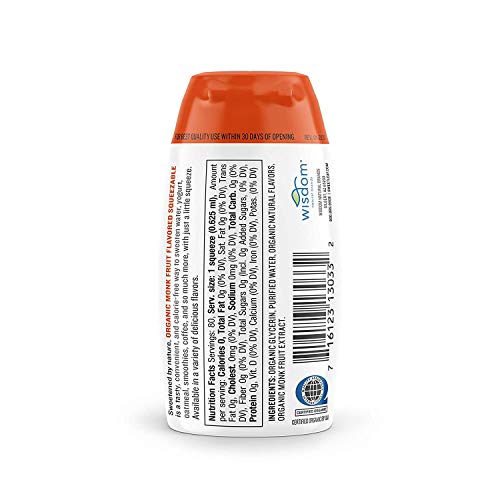
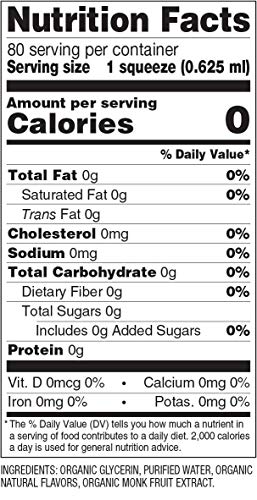
Liquid sweeteners change the game, and SweetLeaf’s monk fruit drops bring both convenience and flavor. The variety pack, featuring French Vanilla, English Toffee, and Caramel Macchiato, lets you experiment without commitment. Reviewers love how a few drops transform black coffee into something dessert-like, without sugar or carbs.
It’s USDA organic and keto-friendly, which sets it apart from most liquid options. The small bottles are perfect for travel or tossing in a bag. Compared to plain stevia drops, the monk fruit base is smoother, with less bitterness. If you enjoy flavored coffee and want control over dosage, this is the most fun option on the list.
Product photos
How We Picked These sweetener for coffee
As a long-time coffee enthusiast, I know a sweetener can make or break a cup. Rather than a hands-on lab test, this ranking is a research-led comparison of published specifications and, crucially, owner feedback. I looked at a wide range of options, comparing ingredients, packet/bottle counts, and reported sweetness levels. Then, I weighed thousands of customer reviews and expert opinions from food blogs and diabetes resources to understand real-world performance and taste preferences.
For coffee specifically, I focused on three key factors: sweetness equivalency, aftertaste, and how well the sweetener dissolved. A clean taste is paramount; nobody wants a bitter or chemical aftertaste ruining their brew. Dissolvability impacts the overall experience, especially in hot coffee, and influences how much sweetener you actually need to use. Finally, value for money – packets per dollar – played a role, particularly for everyday use.
Specifications reliably tell you about calorie counts, ingredients, and packet/volume sizes. However, owner feedback proved essential for judging taste and any lingering aftertastes. Reputation also mattered; established brands with decades of use often have more consistent quality control. I considered how each sweetener stacked up against alternatives like brown sugar in coffee to provide a well-rounded perspective.
How To Choose The sweetener for coffee
Finding the right sweetener is surprisingly personal. It’s about more than just cutting calories; it’s about how a sweetener interacts with coffee’s delicate flavors and how it fits into your lifestyle.
A quality coffee sweetener should dissolve readily, offer a clean sweetness without overpowering the coffee’s nuances, and align with dietary preferences. Consider factors like ingredient sourcing (natural vs. artificial), aftertaste, and whether you prioritize bulk value or portability. Pay attention to glycemic index if blood sugar is a concern, and always check for any potential allergens.
Understanding Sweetener Types
The biggest decision is often between natural and artificial sweeteners. While sucralose (like in SPLENDA) and saccharin (like in Sweet’N Low) deliver intense sweetness with zero calories, many find they have a noticeable aftertaste. Natural options – stevia, monk fruit, or even cane sugar syrups – tend to have more complex flavor profiles, but might not be calorie-free. I often recommend experimenting to find what you enjoy most, as taste perception varies wildly. Don’t fall into the trap of thinking “natural” automatically equals “better”; some people genuinely prefer the clean sweetness of a well-formulated artificial sweetener.
Evaluating Sweetness & Dissolvability
Dissolving is a huge issue. Granulated sweeteners can sink and leave a gritty residue. Liquid sweeteners and individual packets generally dissolve more easily, but some stevia products, for example, can still leave a slight sediment. Consider your brewing method; a French press might not be the best pairing for a sweetener that doesn’t fully dissolve. It’s also wise to think about the sweetness level. One packet isn’t always equivalent to two teaspoons of sugar, and some sweeteners (like monk fruit) are significantly more potent.
- Some sweeteners, like Stevia In The Raw, pride themselves on a “natural” profile, but might require slightly more to achieve the same sweetness as sugar.
- Liquid sweeteners, like SweetLeaf Liquid Monk Fruit Drops, offer precise control over sweetness, allowing you to adjust to your exact preference.
- For high-volume use, a larger format like the EQUAL 800 Ct packets can be more economical, but consider storage space and potential waste if you don’t use it quickly.
Considering Value & Usage Scenarios
Think about where and how you’ll be using the sweetener. A variety pack like the WorkBrew option is fantastic for offices or households with diverse preferences. If you’re frequently traveling, individual packets are essential. If you’re primarily looking to cut calories, a zero-calorie option is obvious, but if you’re looking for a bit of extra flavor, a cane sugar syrup might be more appealing.
A general rule of thumb is to start with less sweetener than you think you’ll need. You can always add more, but you can’t take it away.
I find that many people overlook the convenience factor. If you regularly add sweetener to your coffee on the go, the ease of pre-portioned packets is hard to beat. For those exploring natural coffee sweeteners, keep in mind that flavor profiles can significantly impact your overall coffee experience. And if you’re curious about alternatives to traditional sweeteners, you might also be interested in learning about honey for coffee.
Sweetener for Coffee Compared
Here’s a comparison of key specifications for popular coffee sweeteners.
| Product Name | Sweetener Type | Calories per Serving | Packet Count | Best Use Case | Sugar Substitute |
|---|---|---|---|---|---|
| Truvia Stevia Leaf Sweetener | Stevia/Erythritol | 0 | 240 | Overall | Yes |
| Stevia In The Raw Packets | Stevia | 0 | 400 | Natural Stevia | Yes |
| SPLENDA Zero Calorie | Sucralose | 0 | 200 | Budget Pack Size | Yes |
| WorkBrew Sweetener Variety | Multiple | Varies | N/A | Variety | Yes |
| SweetLeaf Liquid Monk Fruit | Monk Fruit | 0 | N/A | Liquid Sweetener | Yes |
| Syruvia Cane Sugar Coffee | Cane Sugar | Varies | N/A | Flavor Lovers | No |
| EQUAL 0 Calorie Sweetener | Aspartame/Acesulfame | 0 | 800 | High-Volume Use | Yes |
| Sweet’N Low 100 Ct Packets | Saccharin | 0 | 100 | Budget Classic Choice | Yes |
Frequently Asked Questions
What’s the best sweetener if I’m watching my blood sugar?
For those monitoring blood sugar, I generally recommend stevia or monk fruit sweeteners. They have a minimal impact on glucose levels because they aren’t metabolized like sugar, but individual responses can vary so monitoring is key.
Do liquid sweeteners dissolve better than packets?
Generally, liquid sweeteners like SweetLeaf Liquid Monk Fruit dissolve more readily than granulated packets. However, some newer packet formulations are designed for faster dissolving, and the difference is often negligible with hot coffee.
Are there any sweeteners that don’t have an aftertaste?
Finding a sweetener with no aftertaste is tough, as perception is subjective. Sucralose-based sweeteners (like SPLENDA) and monk fruit often have the least noticeable aftertaste for most people, though some detect a slight metallic note.
What’s the difference between stevia and erythritol?
Stevia is a natural sweetener derived from the stevia plant, while erythritol is a sugar alcohol. Erythritol is often combined with stevia to balance the flavor and improve the texture, reducing any potential bitterness from the stevia alone.
I’m trying to avoid artificial sweeteners for coffee. What are my best natural options?
If you prefer to avoid artificial sweeteners, monk fruit and cane sugar syrups are good natural choices. Keep in mind that cane sugar syrups will add calories, while monk fruit is calorie-free, but may have a slightly different flavor profile than sugar.
The Bottom Line
Choosing a sweetener ultimately comes down to balancing your priorities. Do you want the cleanest possible taste, even if it means adjusting to a slightly different sweetness profile? Or are you seeking the closest replication of sugar, prioritizing familiarity over all else? For most coffee drinkers, I believe the Truvia Stevia Leaf Sweetener strikes the best overall balance – it dissolves well, has minimal aftertaste reported by users, and offers a good sweetness level without a hefty price tag.
For those specifically seeking a natural option, Stevia In The Raw Packets are a solid choice. If you’re on a strict budget and go through a lot of sweetener, the SPLENDA Zero Calorie 200-count pack delivers the most value per packet. And for the office or a household with varied tastes, the WorkBrew Sweetener Variety pack ensures everyone can find something they enjoy.
Ultimately, the “best” sweetener is the one you enjoy most. Don’t get too caught up in calorie counts or ingredient lists; focus on finding a sweetener that complements your coffee and enhances your overall experience. Experiment with different types and brands, and remember that a little can go a long way – you can always add more, but you can’t take it away. Consider exploring honey as coffee sweetener if you’re open to a different flavor profile altogether.
