
7 Best Professional Coffee Grinders of 2026
The SHARDOR 64mm Flat Burr Grinder stands out as the best overall professional coffee grinder, delivering exceptional grind consistency and precision. For those on a tighter budget, the SHARDOR Conical Burr Coffee Grinder offers strong performance at a lower price. If you want maximum control for espresso, the Baratza Encore ESP Pro with stepless adjustment is our top versatility pick.
Most people don’t realize how much the grinder impacts their coffee’s flavor. A bad one can turn even premium beans into a bitter or flat brew, no matter how good your machine is.
I researched the field by comparing specs, reading owner feedback, and reviewing expert analyses to identify grinders that deliver true consistency, durability, and practical features. This guide breaks down what actually matters, so you can pick one that fits your routine and gets the most from every bean.
Top 7 Professional Coffee Grinder in the Market
The Best Professional Coffee Grinder, Reviewed
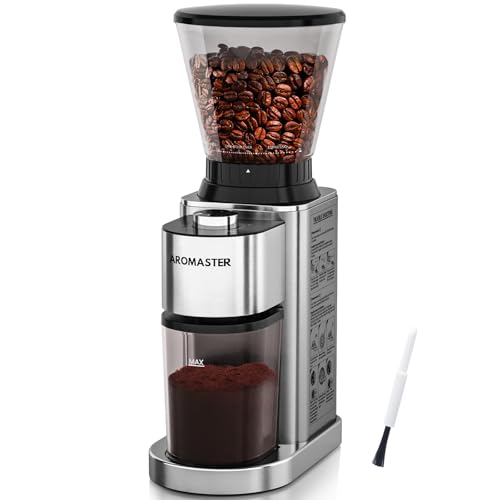
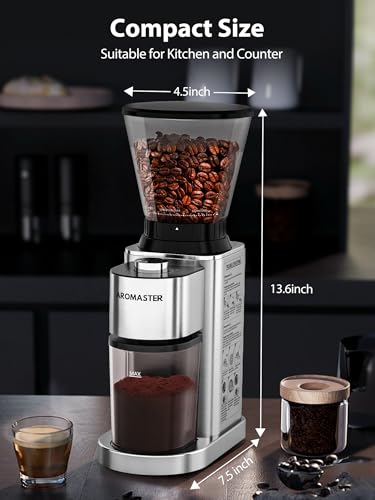
Aromaster Conical Burr Coffee Grinder
Strengths
- 48 grind settings
- Anti-static design
- Easy to clean
- Large hopper
- Budget-friendly
Trade-offs
- No stepless adjustment
- Timer less precise
- Not espresso-focused
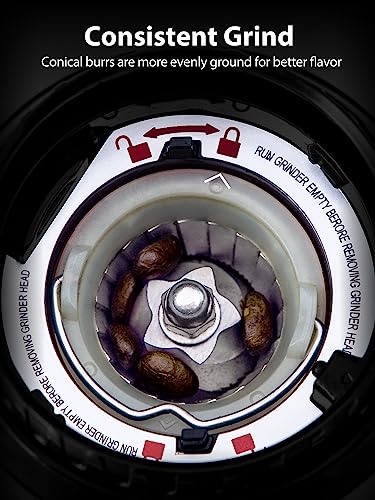
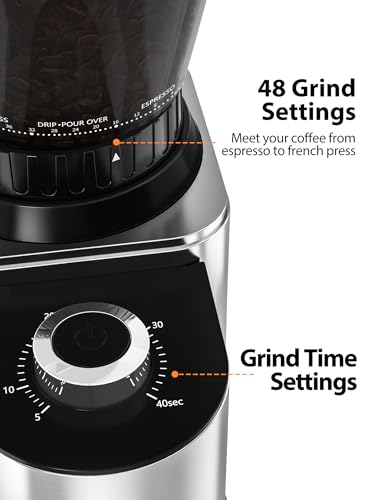
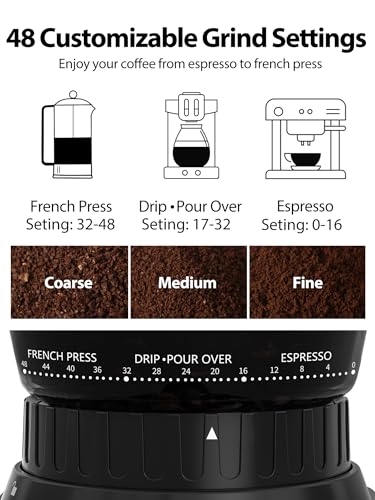
The Aromaster hits a sweet spot for budget-focused buyers who still want real burr grinder performance. With 48 settings and a conical stainless steel burr, it delivers even grinding across methods, from pour-over to French press. Reviewers praise its anti-static design, noting fewer messy grounds clinging to the bin, a real win at this price.
But let’s be clear: it’s not built for espresso precision. The timer-based dosing lacks the repeatability of stepless or digital weight-based systems. Compared to the Baratza Encore ESP Pro, it’s less serviceable and lacks the same long-term upgrade path. Still, for a beginner or office setup where espresso isn’t the goal, it’s a dependable workhorse.
Product photos

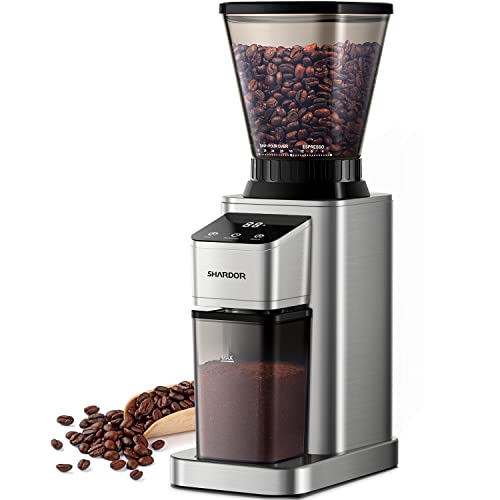
SHARDOR Conical Burr Coffee Grinder
Strengths
- 48 grind settings
- Anti-static tech
- Precision timer
- Low heat grinding
- Easy to use
Trade-offs
- Not espresso-ready
- Plastic components
- Limited upgrade path
This SHARDOR model is clearly designed as an affordable gateway into consistent grinding. The 48 settings and low-speed conical burr help preserve bean oils, and owners say it’s a big improvement over blade grinders. The anti-static upgrade works well enough to keep counters clean, which is rare at this price.
But it’s a step behind its bigger sibling, the 64mm flat-burr model. The grind quality is decent for drip or French press, but not tight enough for consistent espresso. Compared to the Aromaster, it’s very similar, nearly identical in performance and build. If you’re not pulling espresso shots, this gets the job done without overspending.
Product photos




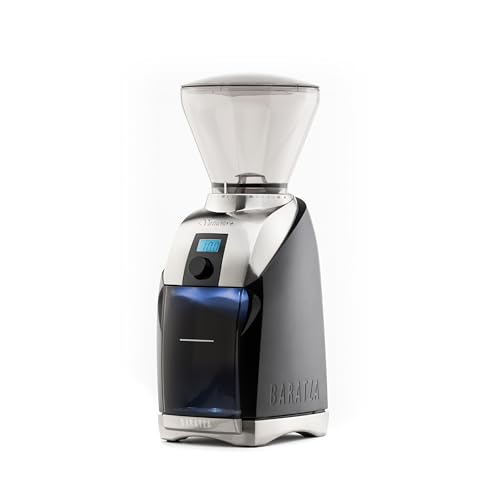
Baratza Virtuoso+ Coffee Grinder
Strengths
- 40 precise settings
- Backlit grounds bin
- DC motor
- Brew method flexibility
- Durable build
Trade-offs
- Fewer settings than rivals
- No stepless adjustment
- Higher price
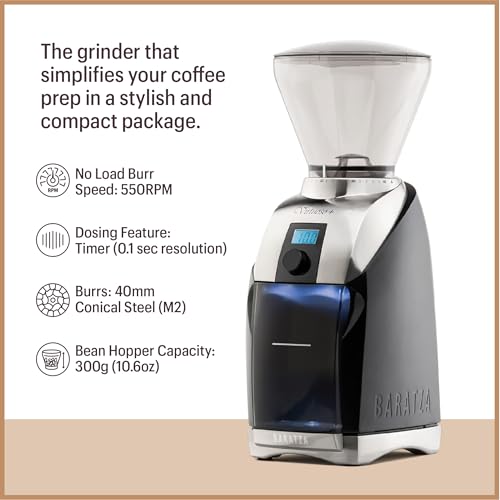
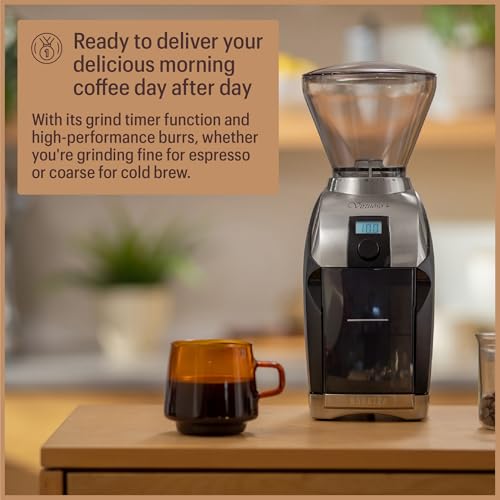
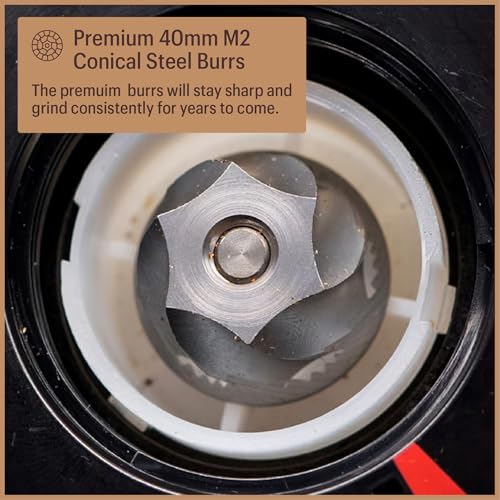
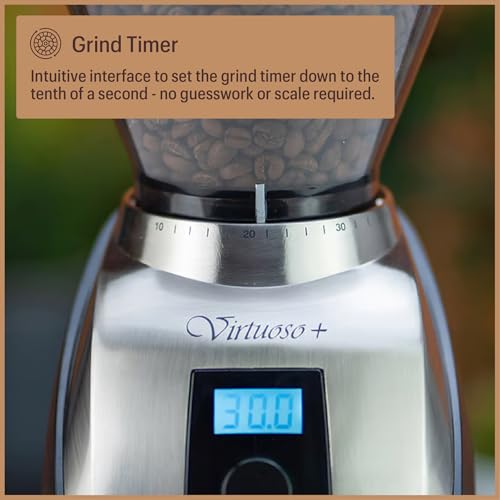
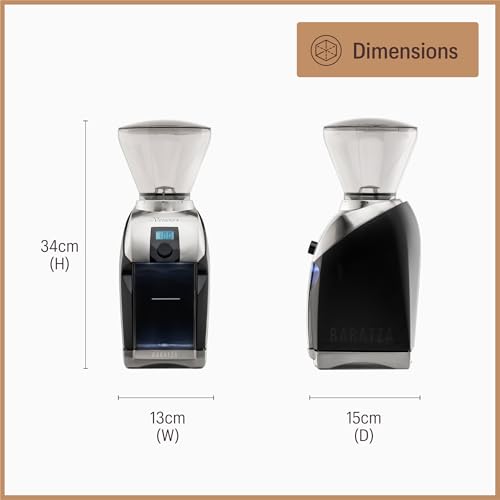
The Virtuoso+ is a favorite for good reason, it’s built for brew versatility. With 40 settings and hardened steel conical burrs, it handles everything from fine espresso to coarse French press with confidence. The backlit grounds bin and 0.1-second timer make dosing accurate, and the DC motor ensures smooth, cool grinding. Owners consistently rank it among the most reliable mid-tier grinders.
It doesn’t have the 100 settings of the SHARDOR 64mm, but the grind quality is more consistent across the range. Compared to the Encore ESP Pro, it’s a slight upgrade in motor and build, though the core experience is similar. If you’re exploring different brewing methods and want one grinder to rule them all, this is my top recommendation.
Product photos
SHARDOR 64mm Burr Coffee Grinder

Strengths
- 64mm flat burrs
- 100 grind settings
- All-metal chamber
- Precise timer
- Easy disassembly
Trade-offs
- 120V only
- No programmable dosing
- Heavier footprint
This is the value pick if you want high-end specs without the high-end cost. The 64mm flat burrs and 100 grind settings mirror what you’d find in much pricier grinders. The all-metal grinding chamber and removable parts make cleaning easier than expected, and owners report excellent consistency, especially for espresso.
Still, the 120V-only warning is a real limitation, plug it into the wrong outlet and it’s dead. And while the LED display offers 0.1-second timer accuracy, it lacks the programmable dose memory of the Breville. Compared to the Breville Smart Grinder Pro, this one wins on burr size and heat management, but loses on user-friendly programming. A smart buy if you’re hands-on with your grind settings.
Product photos


Baratza Encore ESP Pro Coffee Grinder
Strengths
- Stepless adjustment
- Tool-free maintenance
- Anti-static tech
- Trusted brand support
- Long lifespan
Trade-offs
- Smaller burrs than premium models
- No touchscreen
- Basic aesthetics
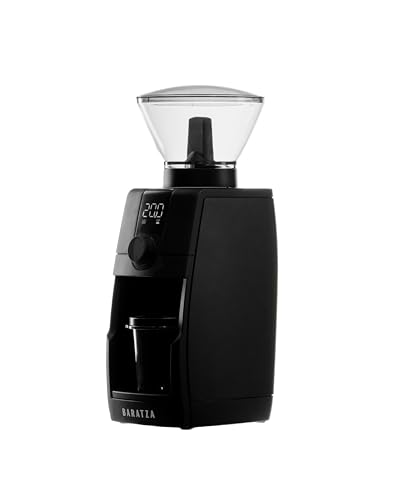
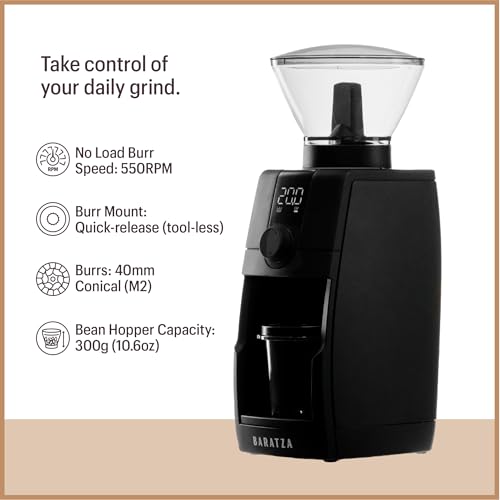
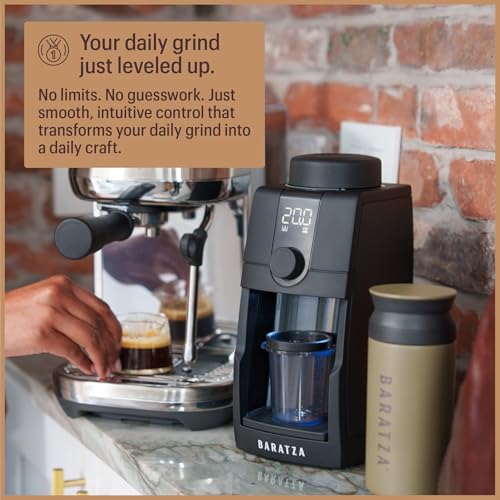
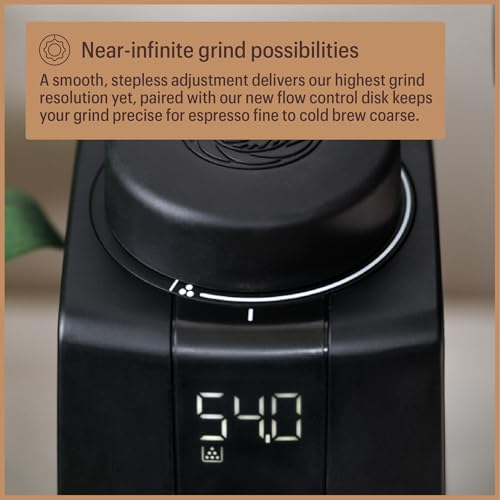
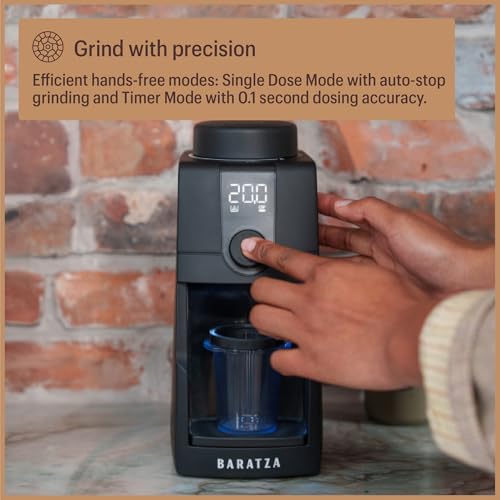
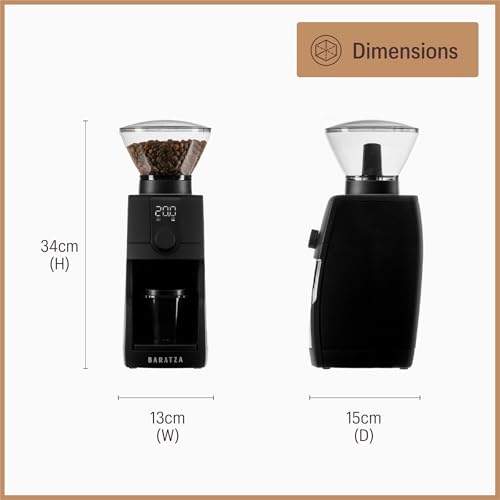
If you value long-term ownership and easy upkeep, the Encore ESP Pro is hard to beat. The quick-release burr system means cleaning or replacing burrs takes seconds, no tools, no fuss. This is a grinder built to last, and owners report years of trouble-free use. The stepless grind adjustment lets you fine-tune for espresso with real precision, something few in this range offer.
It’s not flashy, but it’s effective. The active anti-static tech actually works, grounds stay fluffy and clump-free. Compared to the SHARDOR 64mm, it lacks the big burr size, but the M2 steel burrs are proven performers. My pick for anyone who wants a “set it and forget it” grinder that won’t quit after a year.
Product photos
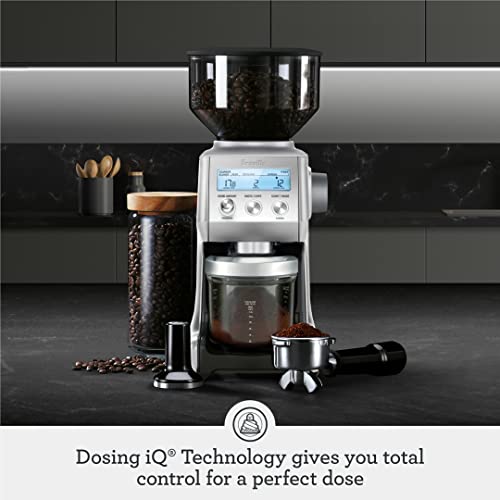
Breville BCG820BSS Smart Grinder Pro
Strengths
- 60 grind settings
- Dosing IQ precision
- LCD display
- Multiple accessories
- Portafilter ready
Trade-offs
- Conical burr limits espresso edge
- Static in dry air
- Plastic housing
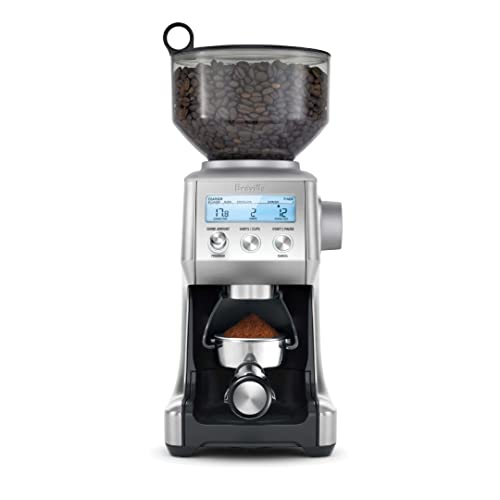
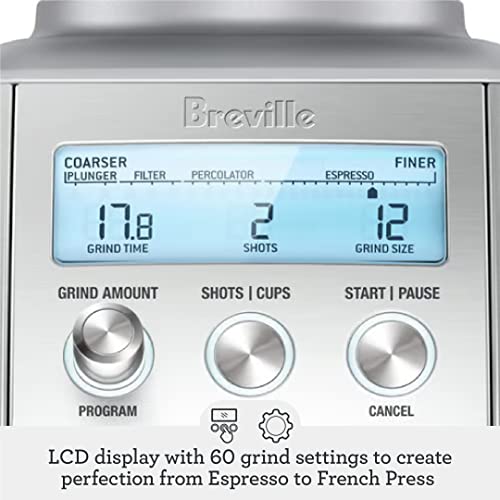
The Breville Smart Grinder Pro is the go-to for tinkerers who love programmable precision. With 60 grind settings and DOSING IQ, allowing 0.2-second timer adjustments, it’s built for repeatable results. You can program exact doses for single or double shots, and the LCD screen keeps everything visible. Reviewers love how it grinds directly into portafilters or filters with minimal mess.
But it’s not perfect. The conical burr, while solid, doesn’t match the uniformity of flat burrs in the SHARDOR 64mm models. And some users report increased static in dry climates. Still, for someone who brews multiple methods daily and wants consistency across them, this is one of the most flexible options here.
Product photos


SHARDOR 64mm Flat Burr Grinder
Strengths
- 64mm flat burrs
- 100 grind settings
- All-metal chamber
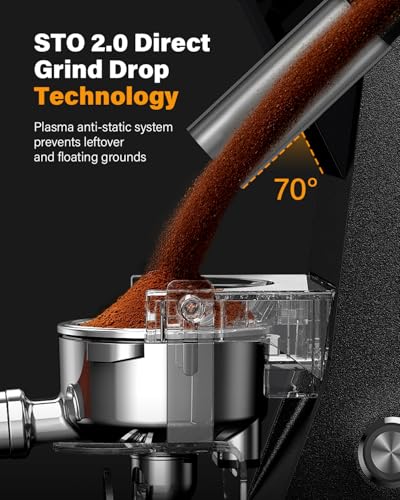
- Anti-static tech
- Portafilter ready
Trade-offs
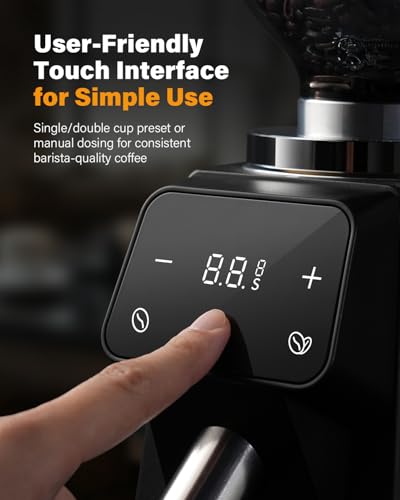
- Touchscreen learning curve
- Moderate retention
- Heavy build
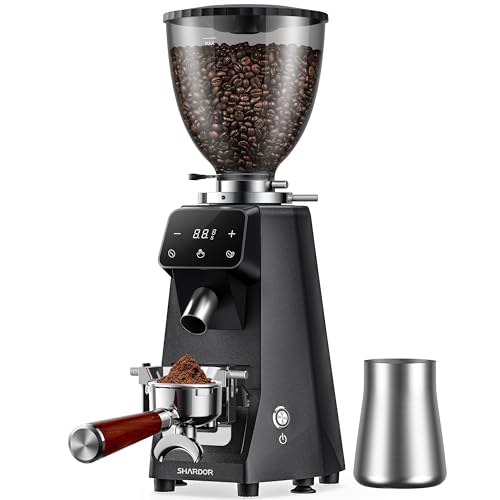
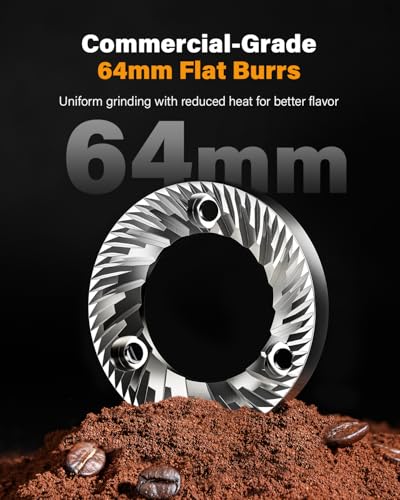
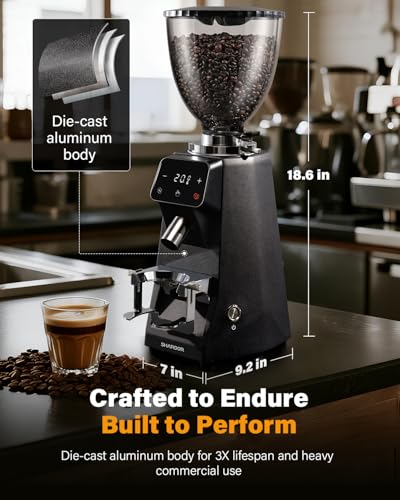
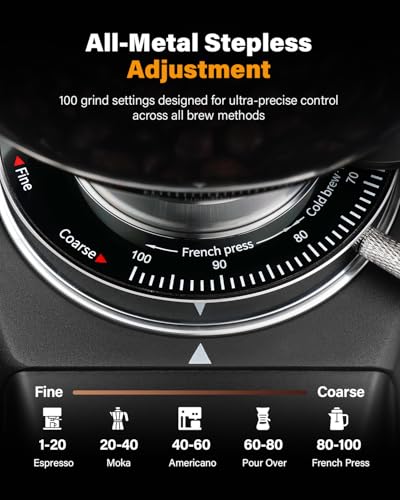
On paper, the SHARDOR 64mm stands out with its commercial-grade flat burrs and 100 grind settings, a rare combination in this price tier. Owners consistently report a noticeable jump in consistency over entry-level grinders, especially when pulling espresso shots. The all-metal grinding chamber and die-cast housing suggest serious durability, and reviewers confirm it handles daily use well without overheating.
Still, it’s not quite in Baratza’s league. Some users note minor grind retention, and while the touchscreen looks sharp, it’s less intuitive than a simple dial. Compared to the Breville Smart Grinder Pro, this one trades some programmability for raw grinding performance. For someone stepping up from a basic conical burr, this is a solid leap into precision.
Product photos
How We Evaluated professional coffee grinder
As a long-time coffee enthusiast and the founder of Bean Thusiast, I approached researching professional coffee grinders by first compiling a detailed specification sheet for each model. I then compared these specs – burr size, grind settings, motor power, and features like timers and anti-static technology – against one another. Crucially, I also spent considerable time reading owner reviews and expert analyses from trusted coffee publications to gauge real-world performance and reliability. This research-led comparison, rather than a hands-on lab test, allowed me to rank grinders against a set of established criteria.
For professional coffee grinders, consistency and control are paramount. I weighted grind adjustment range and accuracy most heavily, as the ability to dial in the perfect grind for different brew methods is essential. Equally important was build quality and durability; a professional-grade grinder should withstand frequent use. Finally, features that minimize mess and streamline workflow – like anti-static technology and direct-to-portafilter options – also significantly impacted my assessment.
Specifications readily reveal things like burr material and motor speed, which directly influence grind quality. However, owner feedback proved invaluable in assessing long-term durability and the effectiveness of features like anti-static systems. Reputable expert reviews helped confirm or challenge those experiences, particularly when considering subtle differences in grind consistency. Understanding the nuances between a burr vs blade grinder is also vital for anyone serious about their coffee.
What To Look For In professional coffee grinder
Choosing the right professional coffee grinder is about more than just getting beans from whole to ground; it’s about unlocking the full potential of your coffee.
A quality professional coffee grinder prioritizes consistency in particle size, minimizing heat transfer during grinding to preserve volatile aromatics, and offering a wide range of grind settings to accommodate various brewing methods. Durable burrs (typically stainless steel or ceramic) and a robust motor are also key indicators of long-term performance and reliability.
Burr Type and Size
The burrs are the heart of any grinder, and choosing between conical and flat burrs is often the first decision. Flat burrs, like those found in the SHARDOR 64mm Flat Burr Grinder, generally produce a more uniform grind, which is prized by espresso enthusiasts. However, they can retain more heat. Conical burrs, as seen in many models, tend to run cooler but may not achieve the same level of consistency. Beyond shape, burr size matters. Larger burrs (64mm and up) grind faster and produce less heat, crucial for maintaining flavor, but they also increase the cost. If you are looking for a truly exceptional grinder, consider exploring a premium burr coffee grinder.
Grind Settings and Adjustability
A wide range of grind settings is essential, especially if you enjoy experimenting with different brewing methods. While 40 settings might seem sufficient, grinders like the Breville BCG820BSS Smart Grinder Pro with 60 settings, or the SHARDOR 64mm Flat Burr Grinder with 100, offer significantly more control. Stepless adjustment, as found in the Baratza Encore ESP Pro, provides even finer control, letting you dial in the perfect grind for specific beans and brewing parameters. Learning about adjusting grind size is vital to maximizing your results.
- A basic grinder might offer coarse, medium, and fine settings – enough for French press, drip, and espresso, respectively.
- A mid-range grinder (like the SHARDOR Conical Burr Coffee Grinder) with around 48 settings gives you more nuanced control within those broad categories.
- A high-end grinder with 60+ settings or stepless adjustment allows for precise calibration, letting you fine-tune for specific roast levels, bean origins, and even humidity levels, unlocking subtle flavor differences. This is particularly important if you’re serious about espresso.
Don’t assume more settings automatically equal better quality. Focus on the resolution of those settings – how small the increments are between each setting.
Usability and Maintenance
Professional grinders shouldn’t be a hassle to use or maintain. Look for features like removable burrs for cleaning (Baratza Encore ESP Pro makes this especially easy), anti-static technology to minimize mess, and intuitive controls. Many models, like the SHARDOR 64mm Flat Burr Grinder, include a timer for consistent dosing. Consider if you want direct-to-portafilter grinding, which streamlines the espresso-making process. Finally, think about long-term reliability and parts availability. Understanding coffee grinder techniques and routine maintenance will keep your grinder performing optimally, and prevent you from needing a commercial-grade coffee grinder sooner than you’d like.
Professional Coffee Grinder Compared
Here’s a comparison of key specifications for several professional coffee grinders to help you make an informed decision.
| Product Name | Burr Type | Grind Settings | Hopper Capacity (oz) | Timer | Anti-Static |
|---|---|---|---|---|---|
| Aromaster Conical Burr | Conical | 48 | 3.9 | Yes | Yes |
| SHARDOR Conical Burr | Conical | 48 | 9.7 | Yes | Yes |
| Baratza Virtuoso+ | Conical | 40 | N/A | Yes | N/A |
| SHARDOR 64mm Burr | Flat | 100 | N/A | Yes | Yes |
| Baratza Encore ESP Pro | Steel | Stepless | N/A | Yes | Yes |
| Breville Smart Grinder Pro | Conical | 60 | 18 | Yes | N/A |
| SHARDOR 64mm Flat Burr Grinder | Flat | 100 | 17.6 | Yes | Yes |
Frequently Asked Questions
What grind consistency is best for espresso?
A very fine and uniform grind is best for espresso; flat burrs generally excel at this, minimizing fines and providing a consistent particle size for optimal extraction. However, conical burrs can also produce excellent results with careful adjustment.
Do I really need a stepless grinder?
Stepless grinders offer incredibly precise adjustments, which is beneficial if you frequently switch between single-origin beans or experiment with brew methods. For most users, a grinder with many clearly defined settings will suffice, but for ultimate control, stepless is preferable.
How important is the hopper capacity?
Hopper capacity depends on your volume. A smaller hopper (around 4 ounces) is fine for single-cup brewing, while larger cafes or those grinding for multiple people will prefer a hopper holding 18 ounces or more. Consider storage space, too.
What’s the benefit of anti-static technology?
Anti-static technology reduces coffee grounds clinging to the grinder and portafilter, resulting in less mess and more accurate dosing. This is particularly helpful when grinding fine for espresso, as static cling is more pronounced with finer grinds.
Are more expensive grinders always better?
Not necessarily. While higher prices often correlate with better build quality and features, a best commercial espresso grinder’s value depends on your needs. A well-built mid-range grinder can be an excellent choice for home use, offering a substantial upgrade over entry-level models without the cost of a professional machine.
The Bottom Line
Choosing a professional coffee grinder often comes down to balancing control with convenience. While a wider range of settings and stepless adjustment offer ultimate precision, the SHARDOR 64mm Flat Burr Grinder strikes a fantastic balance – offering 100 grind settings, a powerful motor, and features like a timer, all at a reasonable price point. It’s a capable machine for serious coffee drinkers who want to explore different brewing methods without breaking the bank.
For those prioritizing a specific need, we have several strong recommendations. The Baratza Encore ESP Pro excels at espresso preparation thanks to its stepless adjustment, while the SHARDOR Conical Burr Coffee Grinder offers excellent value and a generous hopper capacity for those brewing larger batches. If you’re focused on understanding the burr grinder benefits, the Breville Smart Grinder Pro provides a good entry point with 60 settings and intuitive controls.
Ultimately, the specifications matter less than your commitment to fundamental principles. Freshly ground beans are paramount, and a consistent coffee grind – achieved through a quality burr grinder – is the key to unlocking their full flavor potential. Don’t get lost in the details; focus on finding a grinder that encourages you to experiment and enjoy the process of brewing exceptional coffee.
