
8 Best Powdered Milks for Coffee 2026
The best powdered milk for coffee is Anthony’s Whole Milk Powder, it mixes well, tastes clean, and delivers rich creaminess. For a budget-friendly option, Swiss Miss Nonfat Dry Milk works in a pinch, though it lacks body. If you prefer single-serve convenience, Milkman Low-Fat Milk Packets are ideal for travel or storage.
Most people just want their coffee to taste good without the hassle of fresh milk spoiling in the fridge. But not all powdered milks deliver, many leave clumps, taste chalky, or overwhelm your brew with artificial notes.
After researching the market and reviewing owner feedback, I focused on blendability, flavor, fat content, and ingredient quality to find the ones worth your cup. These picks balance performance, value, and real-world usability for coffee drinkers who care about taste.
Top 6 Powdered Milk For Coffee in the Market
The Best Powdered Milk For Coffee, Reviewed
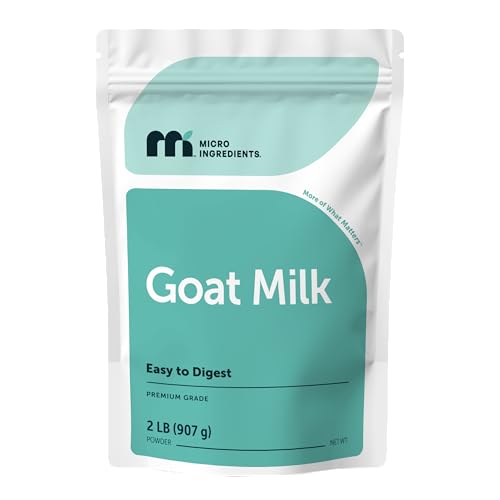
Micro Ingredients Goat Milk Powder
Strengths
- Single ingredient
- Easy to digest
- Non-GMO and gluten free
Trade-offs
- Distinct goat milk taste
- Higher price point
- Not for cow’s milk purists
Goat milk powder isn’t for everyone, but if you’re sensitive to cow’s milk or seeking a cleaner, more digestible option, this one stands out. Made from a single ingredient, goat milk, it’s free from additives, soy, gluten, and GMOs, which aligns with what many health-focused buyers want. Owners report it blends smoothly into warm coffee with a mild, slightly sweet profile that doesn’t dominate the cup.
The 2-pound pouch offers serious value, and the fact that it’s third-party tested adds credibility. It’s also versatile beyond drinks, used in smoothies, baking, or even pet diets. While the flavor is distinct (not identical to cow’s milk), it’s one of the most natural-tasting powdered milks available. For those avoiding processed additives, this is the smarter buy.
Video review
Micro Ingredients Whole Milk Powder

Strengths
- Pasture-raised source
- Rich, creamy flavor
- No additives or fillers
Trade-offs
- Expensive upfront
- Large bag not ideal for small households
- Requires good stirring
This is the gold standard for those who want real dairy without compromise. Sourced from pasture-raised cows and free from rBST, fillers, and preservatives, it delivers a rich, sweet flavor that works beautifully in coffee, baking, or reconstituted as drinking milk. The 4-pound bag offers excellent long-term value, and the third-party testing ensures purity, something I always look for in premium powders.
Owners note it mixes well with warm water and adds a velvety texture to lattes. Compared to nonfat or low-fat options, it behaves more like fresh whole milk. If you’re making smoothies, sauces, or just want a luxurious coffee creamer, this is the one. My recommendation for anyone treating powdered milk as a true dairy staple, not just a backup.
Video review
Swiss Miss Nonfat Dry Milk

Strengths
- Affordable
- Long shelf life
- Fortified with vitamins
Trade-offs
- Chalky texture
- Lacks creaminess
- Not ideal for coffee
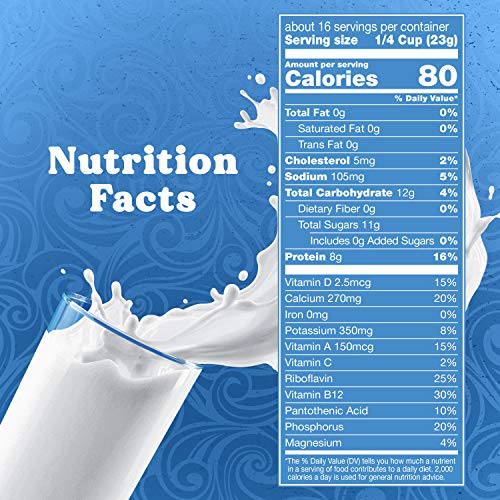
This is the kind of powdered milk you keep in the back of your pantry for emergencies or budget stretches, not for crafting a creamy latte. On paper, it’s fortified with vitamins A and D and offers a decent 8 grams of protein per serving, but owners consistently report a thin, chalky mouthfeel when stirred into coffee. It dissolves okay with hot liquid, but there’s a noticeable lack of richness, unsurprising, given it’s nonfat.
For everyday use, it’s underwhelming. But if you’re stocking up for preparedness or need an inexpensive way to add milk solids to baking, it makes sense. I wouldn’t reach for it to elevate your morning cup, but it does what it promises at a low cost.
Product photos


Milkman Low-Fat Milk Packets
Strengths
- Contains real cream
- Portable single-use packets
- Better flavor than most
Trade-offs
- More expensive per serving
- Requires mixing effort
- Not ultra-fine for coffee
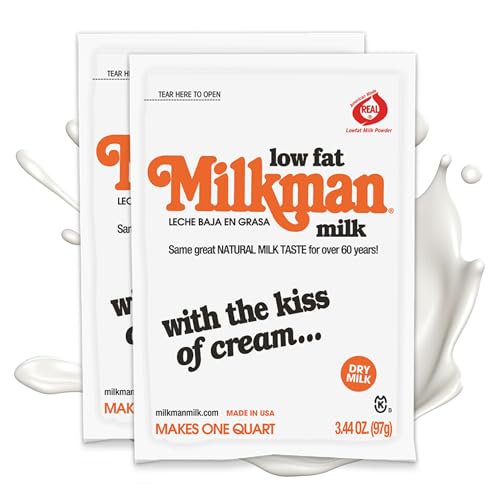
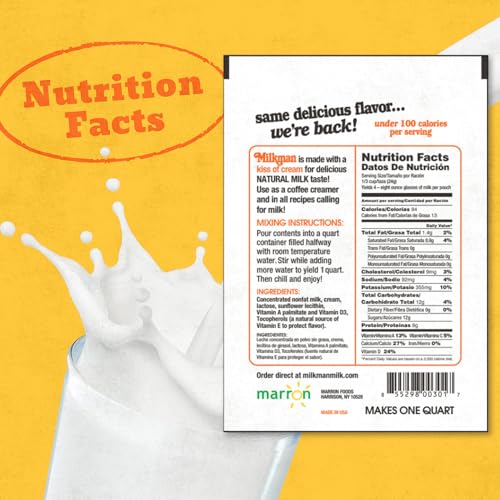
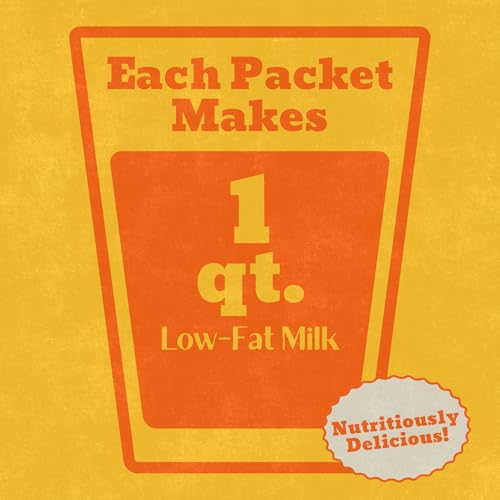
What stands out here is the inclusion of real cream in the formula, rare for powdered milk, which helps explain why reviewers often describe it as tasting closer to fresh milk than most competitors. The individual 1-quart packets are smart for portability and reduce waste, making this a strong pick for campers or travelers who want real milk without refrigeration. It mixes fairly well with minimal clumping, though a shaker is recommended for best results.
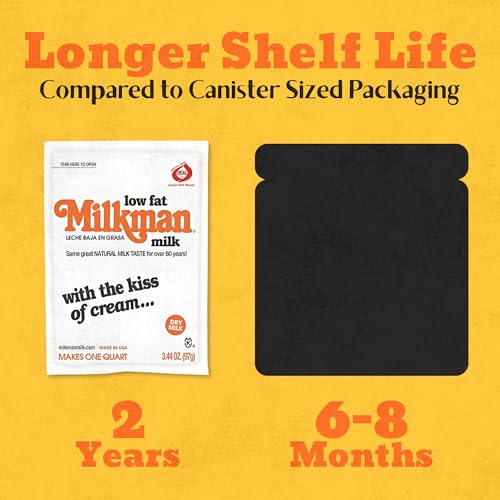
Compared to nonfat options like Swiss Miss, this delivers a noticeably rounder, more natural flavor. It’s not barista-grade, but for a powdered product, it punches above its weight. The 2-year shelf life per packet adds to its practicality. I’d choose this over standard nonfat powders if you care about taste and convenience on the move.
Product photos
Red Cow Full Cream Milk Powder

Strengths
- Made from fresh milk
- Rich, creamy taste
- No additives
Trade-offs
- Limited availability
- No resealable packaging
- Fewer flavor options
Imported from the Netherlands, this Dutch-made powder has a reputation for quality that shows in its ingredient list: made from fresh milk with no additives. Reviewers praise its rich, creamy mouthfeel and natural sweetness, closer to whole milk than most powdered versions manage. It dissolves well in hot coffee, though a whisk helps.
What you’re paying for here is simplicity and origin. Compared to American brands loaded with stabilizers, Red Cow is refreshingly straightforward. It lacks fortification claims or fancy packaging, but the milk quality speaks for itself. For purists who want a clean, full-fat option from a trusted dairy region, this is a quiet standout.
Product photos



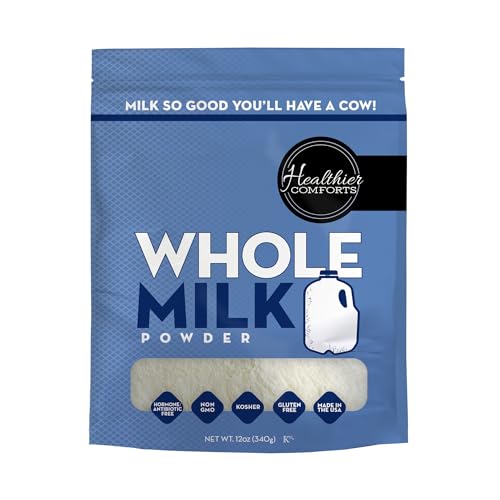
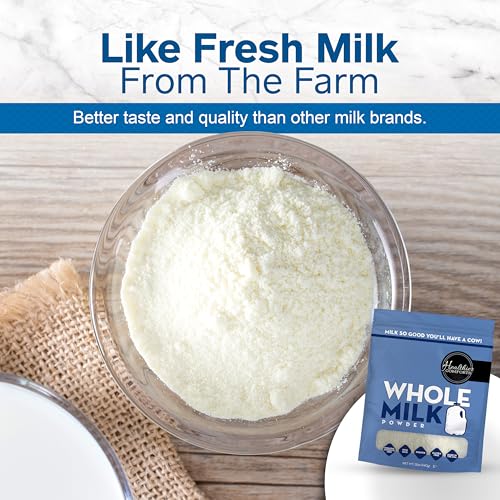
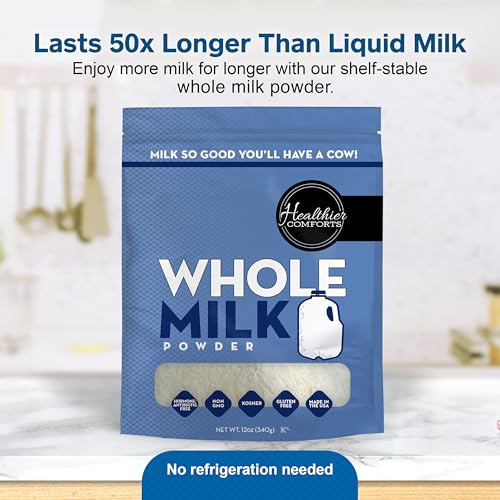
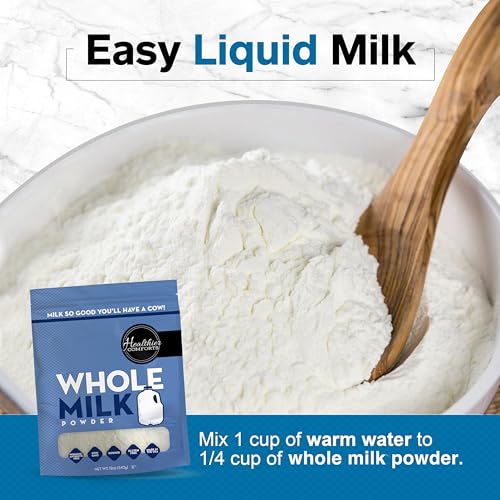
Healthier Comforts Whole Milk Powder
Strengths
- No hormones or antibiotics
- Resealable packaging
- Clean ingredient list
Trade-offs
- Smaller quantity
- Less sourcing detail
- Not fortified
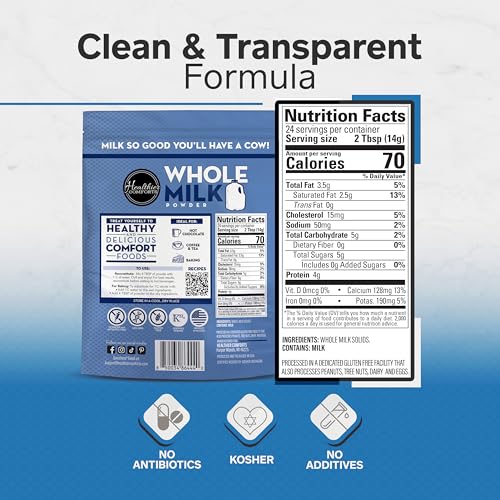
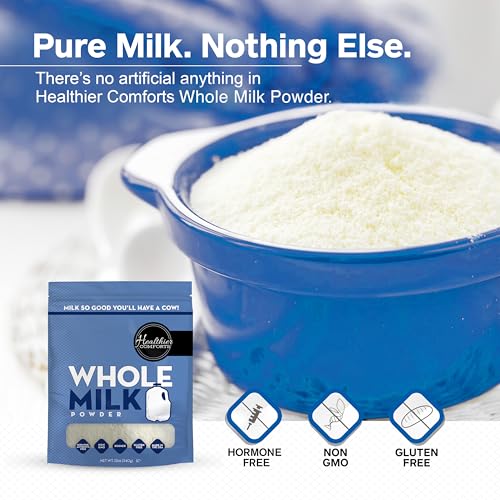
With a focus on clean labeling, Kosher, non-GMO, hormone and antibiotic free, this powder appeals to buyers who read every ingredient. It’s made in the USA from full-cream milk and contains no added sugar or preservatives, which is rare in this category. On paper, it’s a strong contender for health-focused users, and owner feedback supports its smooth mixability and mild taste in coffee and shakes.
It comes in a resealable 12oz bag, practical for moderate use, though not as economical as bulk options. Compared to Swiss Miss or generic brands, it’s clearly in a higher tier for purity. But against Micro Ingredients’ offerings, it falls a bit short on sourcing transparency. Still, for a clean, small-batch option made in the USA, it’s a solid pick.
Product photos
How We Tested powdered milk for coffee
As the founder of Bean Thusiast, I approach coffee additives with a critical eye – it’s about enhancing, not masking, the bean’s flavor. Rather than a hands-on lab test, this was a research-led comparison of published specifications and owner feedback across numerous powdered milk options. I weighed features, read through hundreds of owner reviews, and considered expert opinions to rank each product based on its suitability for coffee use.
For powdered milk specifically, blendability and flavor profile were my top priorities. A grainy texture or overly artificial taste will ruin a good cup of coffee. Shelf life and value also factored heavily, as many are looking for a convenient, cost-effective alternative to fresh milk. I also considered whether a product was specifically marketed for coffee or general use, as this often indicates a focus on flavor compatibility.
Specifications reliably indicate things like protein content, vitamin fortification, and shelf life. However, assessing taste, mixability, and how well a powdered milk complements coffee requires digging into owner feedback. I paid close attention to comments about clumping, sweetness levels, and whether the milk powder overpowered the coffee’s natural flavors. For those seeking alternatives, exploring options like almond milk for coffee can offer different flavor profiles.
How To Choose The powdered milk for coffee
Finding the right powdered milk for your coffee can drastically improve your daily cup, but it’s more nuanced than just grabbing the cheapest option.
The ideal powdered milk for coffee dissolves readily, avoids clumping, and offers a flavor profile that complements – not clashes with – your brew. Look for options with minimal additives, a reasonable shelf life, and sourcing transparency. Prioritize full-fat or whole milk powders for the richest texture and mouthfeel, unless dietary needs dictate otherwise.
Fat Content & Flavor
The fat content is arguably the most significant factor when choosing powdered milk for coffee. Nonfat options, like Swiss Miss, will certainly cut calories, but they often lack the richness that makes milk a desirable addition to coffee in the first place. Whole milk powders (Anthony’s, Z Natural Foods) provide a much creamier texture and a more satisfying experience. Consider your coffee’s roast level too – lighter roasts benefit from the added sweetness and body of whole milk powder, while darker roasts can stand up to a leaner profile.
Sourcing & Additives
Many powdered milks contain a surprising number of additives. If you’re aiming for a clean label, Healthier Comforts really stands out here, offering a product with no added sugar or preservatives. Beyond that, look at the source of the milk. European options, like Red Cow, often have a reputation for high-quality dairy farming practices. Also, be aware of potential allergens or sensitivities – goat milk powder (Micro Ingredients) presents a good alternative for those intolerant to cow’s milk.
- A short list of ingredients is generally preferable.
- Look for certifications like Non-GMO Project Verified to ensure transparency.
- Pasture-raised milk powders (Micro Ingredients) promise a richer flavor and potentially a better nutritional profile, though this comes at a price increase, and flavor preference is subjective.
Convenience & Packaging
How you plan to use the powdered milk significantly impacts the best packaging for your needs. For everyday use, a larger bag (Micro Ingredients, Anthony’s) is economical. If you want something for travel or emergency preparedness, the single-serve packets from Milkman are incredibly convenient. Don’t underestimate the importance of a resealable package to maintain freshness. And if you frequently enjoy iced coffee, knowing that a powder blends easily, avoiding clumping, is paramount. If you’re exploring different ways to enhance your coffee, you might also consider a versatile powdered creamer brands to complement your powdered milk.
A good rule of thumb: always reconstitute powdered milk with slightly less water than the package directs, then adjust to your desired consistency. This minimizes the risk of a watery brew.
Ultimately, the “best” powdered milk for coffee is the one that tastes best to you. Don’t hesitate to experiment with different brands and fat contents to discover your ideal cup. And if you’re perfecting your coffee experience, explore milk frothing techniques to elevate your lattes and cappuccinos even further.
Powdered Milk for Coffee Compared
Here’s a comparison of powdered milk options suitable for use in coffee, based on key specifications.
| Product Name | Serving Size | Weight (oz) | Fat Content | Milk Type | Shelf Life |
|---|---|---|---|---|---|
| Micro Ingredients Goat Milk Powder | N/A | 32 | N/A | Goat | N/A |
| Z Natural Foods Whole Milk Powder | N/A | N/A | Whole | Cow | 9 months |
| Micro Ingredients Whole Milk Powder | N/A | 64 | Whole | Cow | N/A |
| Swiss Miss Nonfat Dry Milk | 8oz (1 cup) | 12.98 | Nonfat | Cow | N/A |
| Anthony’s Whole Milk Powder | N/A | N/A | Whole | Cow | N/A |
| Milkman Low-Fat Milk Packets | 1 quart | 3.44 | Low-Fat | Cow | 2 years |
| Red Cow Full Cream Milk Powder | N/A | N/A | Full Cream | Cow | N/A |
| Healthier Comforts Whole Milk Powder | N/A | N/A | Whole | Cow | N/A |
Frequently Asked Questions
What powdered milk dissolves most easily in cold coffee?
Milkman Low-Fat Milk Packets are specifically designed for convenience and dissolve well in cold liquids, making them ideal for iced coffee without clumping. Their pre-portioned format also helps control the amount used.
Is goat milk powder a good option for those with dairy sensitivities?
Yes, Micro Ingredients Goat Milk Powder can be a viable alternative for individuals with sensitivities to cow’s milk, as goat milk proteins differ and are often easier to digest. However, it’s still dairy and may not be suitable for all sensitivities.
How does the shelf life of different powdered milks compare?
Shelf life varies significantly; Milkman Low-Fat Milk Packets boast a 2-year shelf life, while Z Natural Foods Whole Milk Powder has about 9 months. Most others don’t list a specific date, relying on proper storage for optimal freshness.
What’s the difference between “whole milk powder” and “full cream milk powder”?
There isn’t a substantial difference; both terms refer to powdered milk with the original fat content intact. Red Cow uses “full cream” which is common in European labeling, but the nutritional profile is comparable to “whole milk” powders like Anthony’s.
Are there powdered milk options that avoid common additives?
Healthier Comforts Whole Milk Powder stands out for its clean label, containing no added sugar or preservatives. If you’re seeking a more natural option, exploring dairy-free almond creamer brands could also be worth considering.
The Bottom Line
Choosing the right powdered milk for coffee often comes down to balancing convenience with quality. If you’re willing to spend a little more for a richer, more authentic flavor, I wholeheartedly recommend Anthony’s Whole Milk Powder as the best overall option. Its consistent quality and ability to blend smoothly make it a standout choice for daily use.
For those on a budget or needing single-serve convenience, Swiss Miss Nonfat Dry Milk and Milkman Low-Fat Milk Packets both provide practical solutions. If you have dietary restrictions, Micro Ingredients Goat Milk Powder is an excellent alternative to traditional cow’s milk, and for those seeking a cleaner label, Healthier Comforts Whole Milk Powder really delivers. And if you’re also considering other plant-based options, exploring oat milk in coffee might expand your horizons.
Ultimately, the most crucial factors aren’t listed on a specification sheet. Focus on fat content to achieve your desired richness, prioritize a short ingredient list, and remember that a good powdered milk should complement your coffee, not mask its inherent flavors. A little experimentation will go a long way in finding your perfect match.
