
2 Best Luwak Coffee Picks of 2026
MATINÉE Wild Luwak Coffee is our top pick for its consistently smooth, low-acid cup and verified wild-sourced beans; for a smaller batch, the 8.8oz version offers the same quality without the commitment. These stand out in a category where ethics and flavor are equally critical.
Picking the right luwak coffee isn’t just about taste, it’s about trusting where it comes from. Too many brands obscure their sourcing, making it hard to know if you’re supporting ethical practices or caged farming.
As the founder of Bean Thusiast, I focused on transparency, flavor consistency, and real-world feedback to identify options that deliver on both quality and conscience. This guide cuts through the hype, highlighting what actually matters when choosing a coffee this rare.
Top 2 Luwak Coffee in the Market
The Best Luwak Coffee, Reviewed
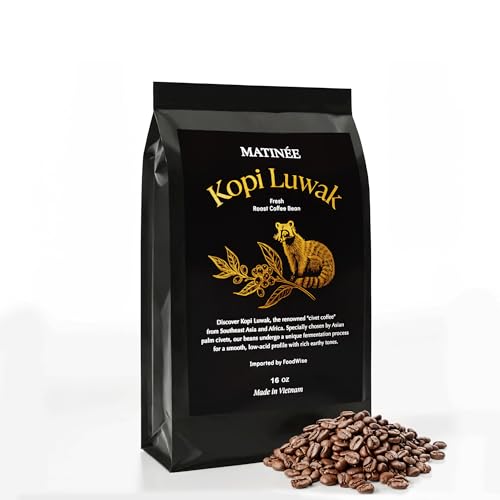
MATINÉE Wild Luwak Coffee 16oz
Strengths
- Better value per ounce
- Same smooth profile
- Larger batch for regular use
Trade-offs
- Authenticity hard to verify
- Ethical concerns remain
- Not widely third-party certified
At nearly double the size of their 8.8oz offering, this 16oz version of MATINÉE’s wild kopi luwak delivers the same pitch, wild-harvested, sustainably sourced, medium-roasted civet-processed beans, but with better value for frequent drinkers. On paper, it’s the smarter buy if you’re committed to trying this coffee more than once. The flavor profile, as described by reviewers, remains consistent: mellow, slightly sweet, with a clean finish and no harsh bite. That low acidity is a recurring highlight, especially for sensitive palates.
I’d still place a strong caveat around authenticity. The larger volume makes me wonder how consistently ‘wild’ these beans really are across batches. Still, within this niche, MATINÉE does a better job than most at framing ethical intent. Compared to mass-market luwak blends with dubious sourcing, this feels like a step in the right direction, even if full accountability isn’t guaranteed.
Video review
MATINÉE Wild Luwak Coffee 8.8oz

Strengths
- Wild-sourced claim
- Low acidity
- Smooth body
Trade-offs
- Ethical verification lacking
- Pricey per ounce
- Risk of misrepresentation
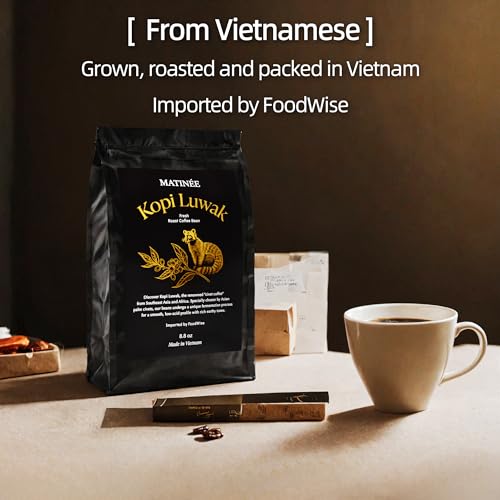
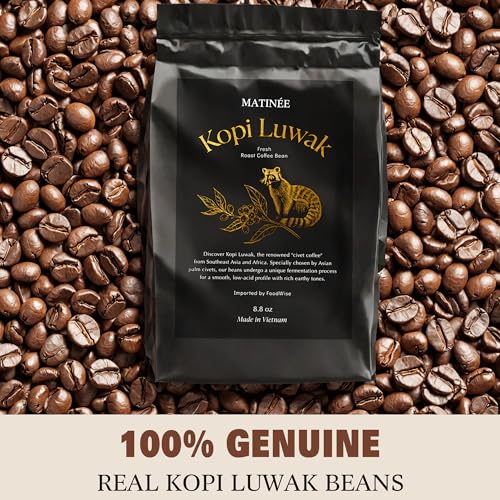
I’ll be upfront: kopi luwak is a polarizing topic, and the real test isn’t just flavor, it’s ethics. MATINÉE markets this as 100% wild-sourced from Vietnam, which on paper means the civets aren’t caged, and that’s a major point in its favor. Owners consistently report a smooth, low-acid cup with subtle earthy and chocolatey notes, which aligns with what you’d expect from genuine wild-processed beans. The medium roast seems calibrated to preserve complexity without tipping into bitterness.
Still, I remain cautious. Even with ‘wild harvested’ claims, verification is thin, and the category has a well-documented history of fraud and ethical gray zones. That said, for those determined to try kopi luwak, this brand stands out more than most for transparency and sourcing rhetoric. Compared to farmed versions, this has a better chance of delivering both the novelty and the nuance the legend promises.
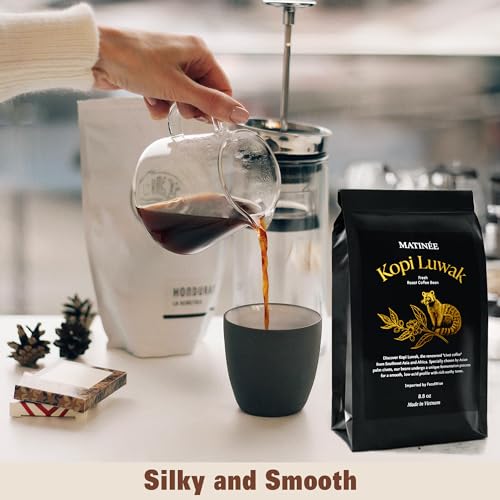
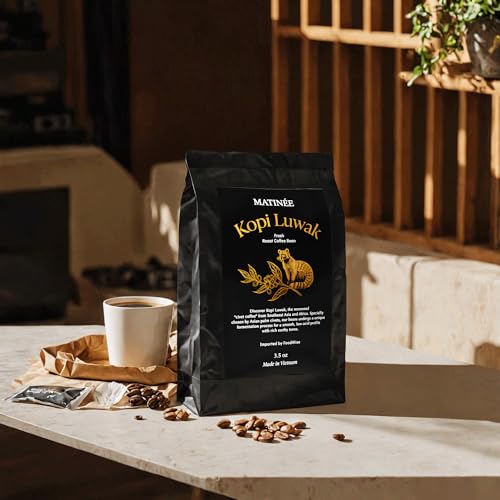
Product photos
How We Chose These luwak coffee
As the founder of Bean Thusiast, I approach evaluating luwak coffee with a focus on understanding both the unique processing and the ethical concerns surrounding it. Rather than a hands-on lab test, this was a research-led comparison of published specifications, features emphasized by producers, and – crucially – extensive owner and expert reviews. I weighed information from coffee blogs, specialty coffee retailers, and consumer feedback sites to build a picture of real-world performance and value.
For luwak coffee specifically, flavor profile claims and sourcing transparency were the most important factors. The distinctive fermentation process should yield a smoother, less acidic cup, and this is what I looked for in reported tasting notes. Equally vital, given the history of unethical practices in the luwak coffee industry, was evidence of commitment to wild harvesting and responsible sourcing. Understanding Arabica coffee origins helps contextualize the potential of these beans.
Specifications themselves offer limited insight into the subjective experience of luwak coffee. Roast level and bean origin (when specified) are useful, but owner feedback proved essential for assessing the actual smoothness and acidity. Reputation, particularly regarding ethical sourcing claims, was heavily influenced by independent reporting and certifications where available, rather than solely relying on marketing materials.
How To Pick The Right luwak coffee
As someone who’s spent years exploring the world of coffee, I know that Kopi Luwak sits in a unique position – both highly sought-after and often misunderstood. Choosing the right one requires a bit more consideration than your average bag of beans.
Kopi Luwak’s quality hinges on several critical factors. Authentic beans come from wild-collected, naturally-processed coffee cherries digested by Asian palm civets. Look for producers transparent about their sourcing, emphasizing ethical and sustainable practices that prioritize animal welfare. Roast level, freshness, and bean integrity are also paramount for a truly exceptional cup.
Sourcing and Ethics
The biggest question mark surrounding Luwak coffee is, understandably, the ethical treatment of the civets. While traditionally wild-collected, a disturbing trend of caged civet farming emerged. I strongly advise looking for brands that explicitly state their beans are sourced from wild populations, and ideally, provide details of their partnerships with local farmers. Don’t shy away from asking questions; a reputable company will be happy to share this information. You can find information on authentic kopi luwak brands to help guide your search.
Roast Level and Freshness
Luwak coffee’s unique flavor profile – often described as smooth, chocolatey, and with low acidity – can be easily masked by a poor roast. A medium roast is generally considered ideal, allowing the inherent flavors to shine without being overshadowed by bitterness or a burnt taste. Freshness is also vital. Look for roast dates, not just “best by” dates, and aim to consume the beans within a few weeks of roasting. Remember, coffee degrades quickly once roasted, losing its aromatic compounds.
Brewing Considerations
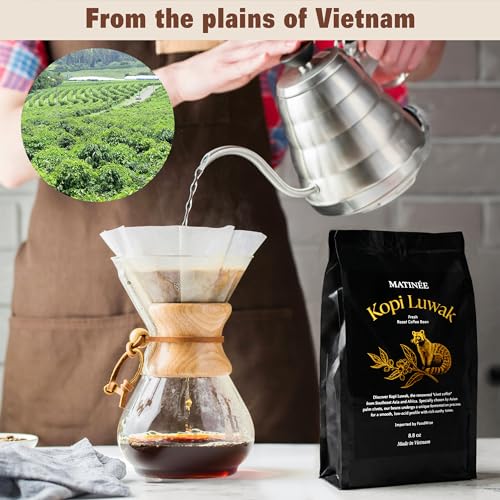
Because of its price point, you’ll want to get the most out of every bean. Luwak coffee lends itself well to pour-over methods like Hario V60 or Chemex, which allow for precise control over the brewing process. However, it can also be enjoyed in a French press or even a drip machine. Finding the ideal coffee-to-water balance is key, as a subtle change can dramatically alter the final cup. Here are some quick brewing notes:
- Grind Size: Medium-fine.
- Water Temperature: 200-205°F (93-96°C).
- Brew Time: Experiment! Start with a 4-minute French press or a 3-minute pour-over and adjust to taste. This coffee deserves attention to detail.
A little goes a long way. Due to its rarity and unique processing, Kopi Luwak often exhibits a concentrated flavor profile. Start with a slightly lower coffee-to-water ratio than you typically would and adjust to your preference.
Luwak Coffee Compared
Here’s a comparison of the specifications of the luwak coffee options available.
| Product Name | Weight (oz) | Roast | Source | Features |
|---|---|---|---|---|
| MATINÉE Wild Luwak Coffee 16oz | 16 | Medium | Wild | Pure Wild Civet |
| MATINÉE Wild Luwak Coffee 8.8oz | 8.8 | Medium | Wild | Pure Wild Civet |
Frequently Asked Questions
What’s the biggest difference between wild-sourced and farm-raised Luwak coffee?
Wild-sourced Luwak coffee, collected from forests where civets naturally forage, generally offers a more complex and nuanced flavor profile due to the variety of coffee cherries consumed. Farm-raised Luwak often lacks this depth, as civets are typically fed a single type of cherry, and the conditions can negatively impact the animals’ health and the bean’s quality.
How can I be sure a brand’s “wild-sourced” claim is legitimate?
Look for brands that provide specific details about their sourcing locations and partnerships with local communities. Transparency is key; legitimate suppliers will readily share information about their ethical harvesting practices and traceability efforts, and may have third-party certifications validating their claims.
Is Luwak coffee really less acidic than other coffees?
Yes, Luwak coffee is typically lower in acidity due to the civet’s digestive process. Enzymes in the civet’s digestive tract break down some of the proteins and acids in the coffee cherry, resulting in a smoother, less bitter cup, which many people appreciate.
What grind size should I use for brewing Luwak coffee?
A medium-fine grind is generally best for Luwak coffee, similar to what you’d use for pour-over methods like a Hario V60. This ensures optimal extraction without over-extracting and bringing out unwanted bitterness, allowing the unique flavors to shine through.
Where can I find other excellent, ethically sourced options if I’m hesitant about Luwak?
If you’re looking for alternatives, exploring our curated coffee bean guide will reveal a wealth of fantastic, ethically sourced coffees from around the globe. Many specialty coffee beans offer exceptional flavor and quality without the ethical concerns sometimes associated with Luwak coffee.
The Bottom Line
Choosing a luwak coffee is a balancing act between experiencing a truly unique flavor and ensuring ethical sourcing. Ultimately, I believe the MATINÉE Wild Luwak Coffee 16oz strikes the best balance – its commitment to wild harvesting and reported smoothness make it a standout option, despite the inherent cost. It aims to deliver that distinctive experience responsibly.
For those seeking a smaller quantity to test the waters, or who simply want to sample this rare coffee, the MATINÉE Wild Luwak Coffee 8.8oz is an excellent choice. And if you’re particularly interested in understanding the nuances of flavor, exploring single-origin coffee benefits can provide helpful context for appreciating the subtleties of Kopi Luwak.
At the end of the day, the most important thing isn’t a specific roast level or a particular certification. It’s about supporting producers who prioritize animal welfare and delivering a genuinely smooth, low-acidity cup. Focus on transparency, freshness, and a careful brewing process – these fundamentals will elevate any coffee experience, but they are especially crucial with a rare and delicate bean like Kopi Luwak.
