
9 Best Dual Espresso and Coffee Makers 2026
The Breville Barista Express BES870XL stands out as the best dual espresso and coffee maker for its precise temperature control and built-in conical burr grinder, delivering strong espresso and reliable drip coffee. For a more budget-friendly option, the Ninja Luxe Café Premier 3-in-1 offers surprising versatility and solid performance. If you want simultaneous brewing and steaming, the Kismile Dual Boiler Espresso Machine is the top versatility pick.
Most people want a machine that truly handles both espresso and drip coffee without forcing a compromise on either. Too many combo units sacrifice espresso quality for convenience or pack in features you’ll never use. After comparing the field and analyzing specs and owner feedback, I focused on machines that deliver real performance across both brew styles, with attention to grinder quality, temperature stability, and long-term reliability.
This guide breaks down what actually matters, like burr grinders, boiler types, and real-world usability, so you can choose a machine that fits your routine, not just your countertop.
Top 9 Dual Espresso And Coffee Maker in the Market
The Best Dual Espresso And Coffee Maker, Reviewed
Ninja Luxe Café Premier 3-in-1
Strengths
- Weight-based dosing
- Barista Assist tech
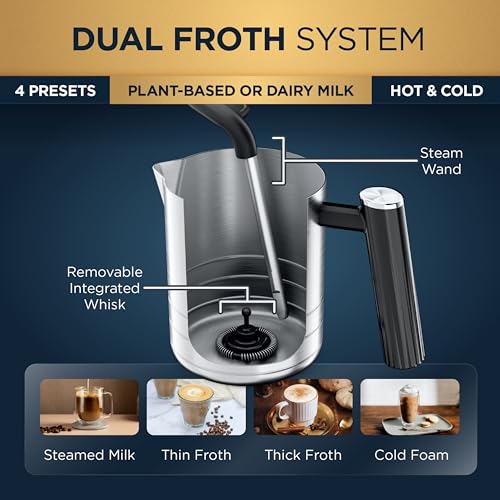
- Hands-free dual frothing
Trade-offs
- Large footprint
- Complex menu system
- Expensive
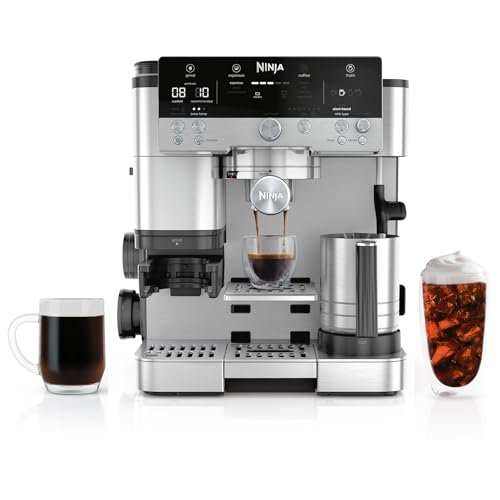
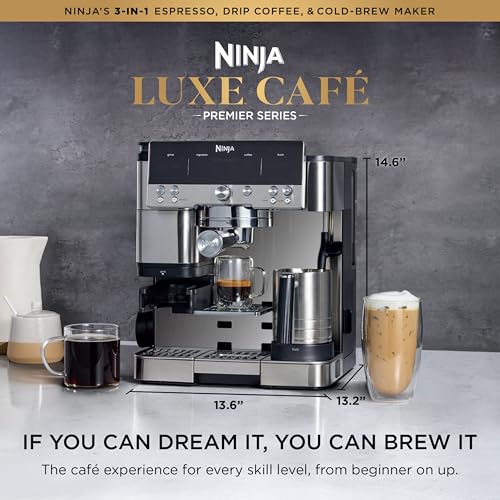
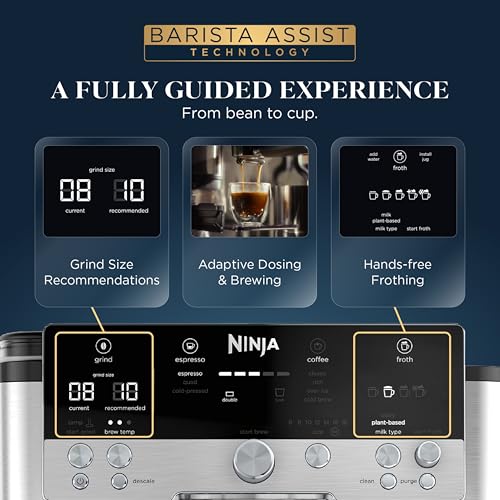
This is the most complete package for buyers who want everything in one machine without sacrificing quality. The Barista Assist technology, complete with weight-based dosing, assisted tamper, and active brew adjustments, takes the guesswork out of espresso. The conical burr grinder delivers fresh grounds, and the dual froth system produces both hot and cold microfoam with preset programs, which owners say outperforms most auto-frothers.
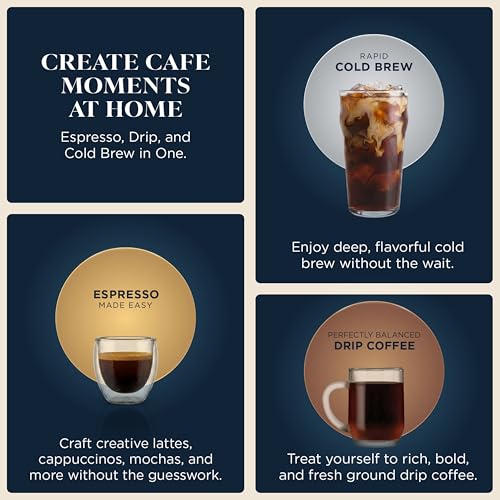
It’s not just about espresso. You get drip coffee, rapid cold brew, and over-ice options, making it a true 3-in-1. Compared to the Chefman OmniBrew, it uses fresh beans for espresso, not pods, and the flavor results are noticeably better. The build quality and integrated storage are top-notch. For most buyers, this is the easy pick if you want one machine to do it all well.
Product photos

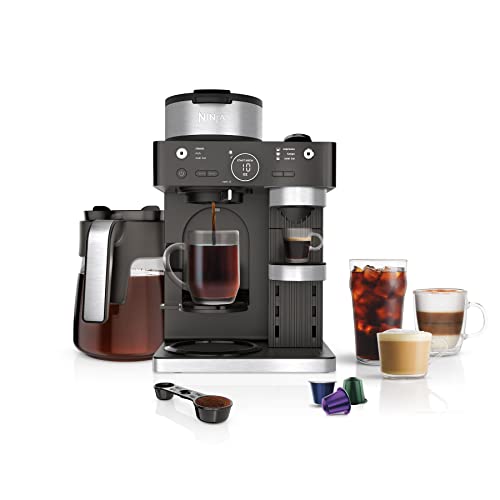
Ninja Espresso & Coffee Maker
Strengths
- Nespresso capsule compatible
- 12-cup carafe
- Over ice brewing
Trade-offs
- Frother performance inconsistent
- No built-in grinder for drip
- Capsule storage limited
This model is all about value, delivering a lot of features without the premium price. It brews both espresso (with 19-bar pressure) and drip coffee, accepts Nespresso capsules, and has a fold-away frother for lattes and cappuccinos. The capsule side is a big plus for those who still have a stash of pods or want variety without grinding.
But it’s a hybrid with compromises. The espresso from ground coffee is decent, but lacks the refinement of the Barista Express. The frother works, but it’s not as consistent as Ninja’s Luxe model. Where it wins is versatility: a 12-cup carafe, over-ice brewing, and capsule storage all in one. For the price, it’s hard to beat as a family workhorse.
Product photos


Breville Barista Express BES870XL
Strengths
- PID temperature control
- Integrated precision grinder
- Manual steam wand
Trade-offs
- Steep learning curve
- No auto frother
- Frequent cleaning needed
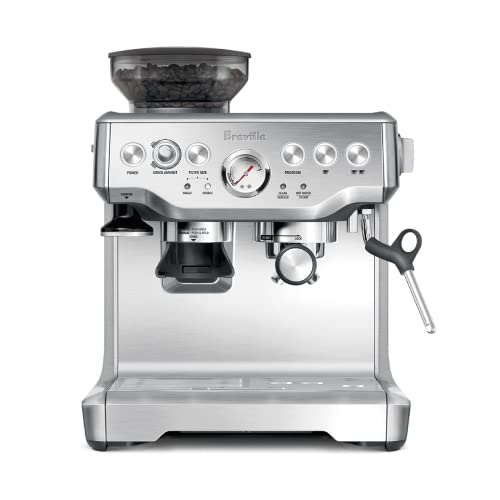
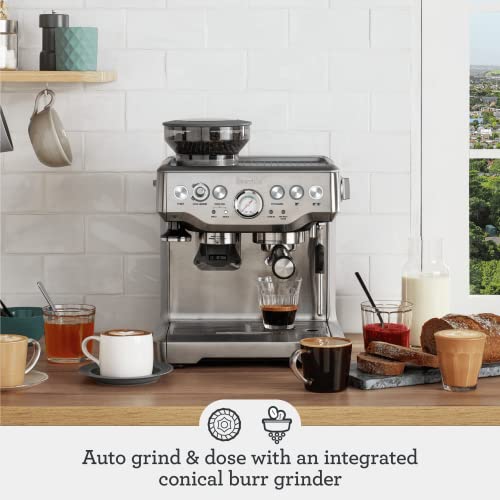
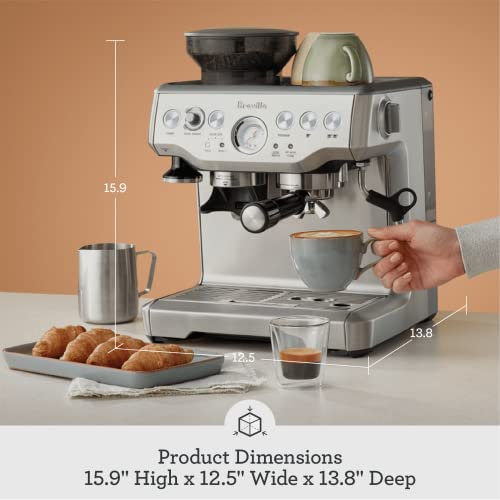
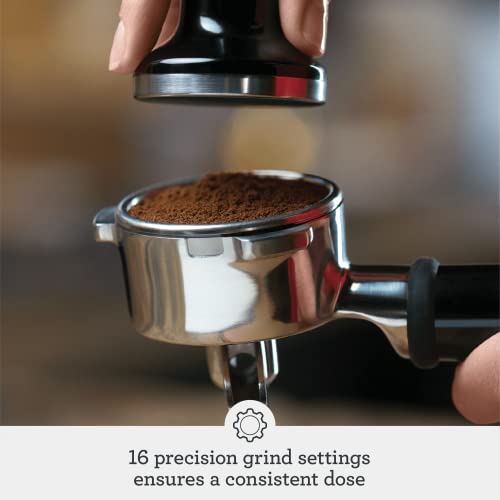
Even without testing it myself, the specs and owner feedback make one thing clear: this is the gold standard for home espresso quality. The 54mm precision portafilter, PID temperature control, and low-pressure pre-infusion are the tools serious enthusiasts want. The integrated conical burr grinder with dose control lets you fine-tune your grind for any bean, and the manual steam wand is widely praised for delivering true microfoam, the kind that lets you pour latte art.
It’s not the fastest or most automated, and the learning curve is real. New users often struggle with tamping and dialing in shots. But compared to pod hybrids or auto-frother models, this one rewards patience with café-quality results. Owners consistently rate it as a long-term investment, not just a countertop appliance.
Product photos


Kismile Dual Boiler Espresso Machine
Strengths
- Dual boiler with PID
- Built-in 30-setting burr grinder
- Direct grind to portafilter
Trade-offs
- Average steam pressure
- Bulky design
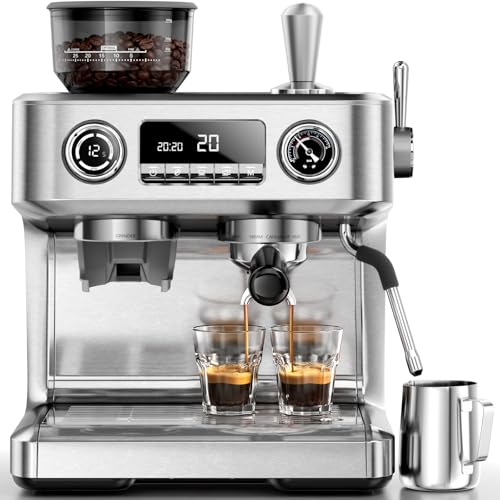
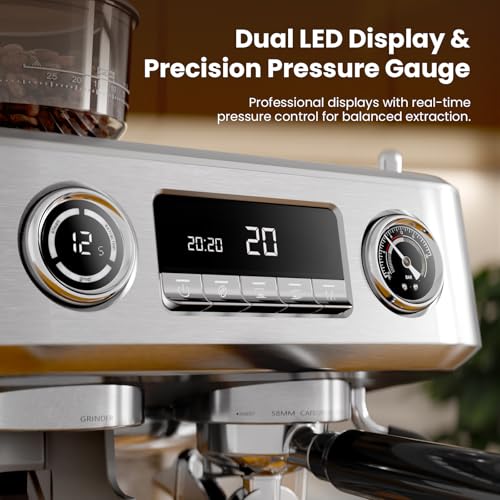
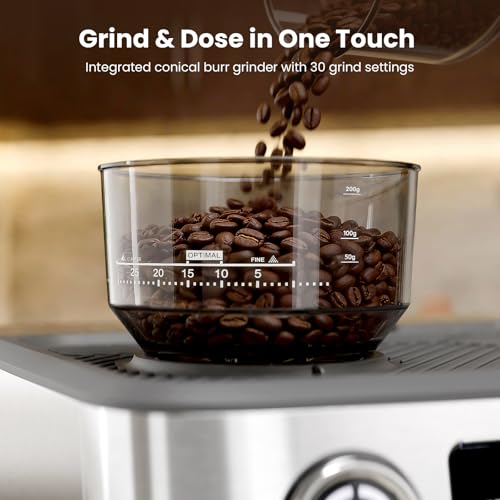
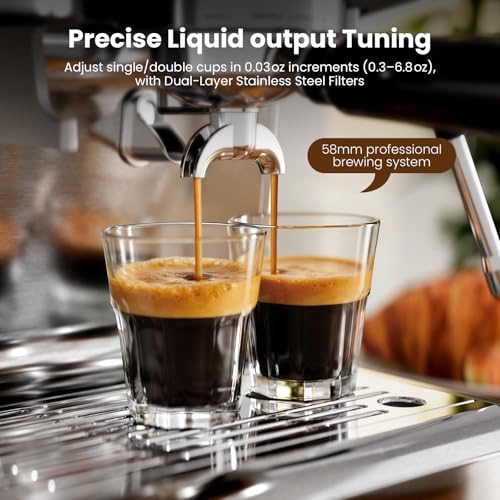
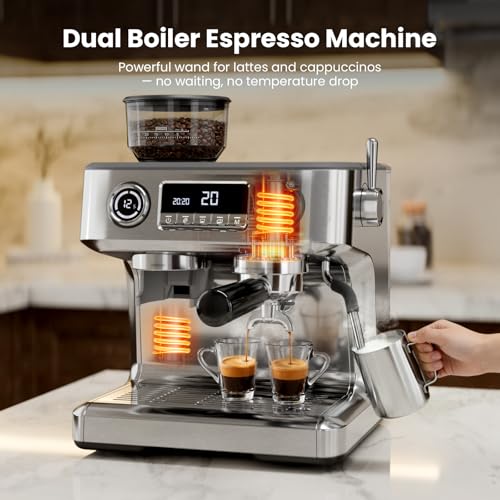
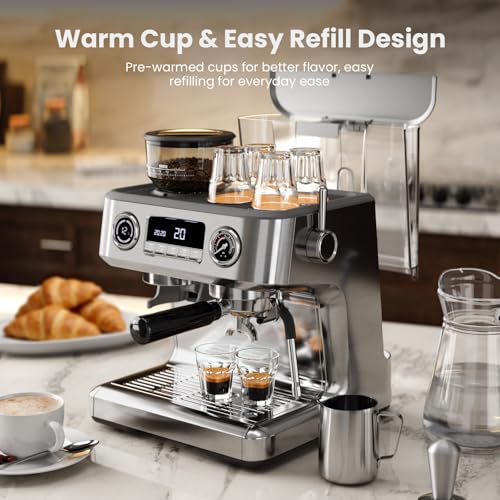
This machine makes a strong claim for home baristas who want real control without stepping into pro-level complexity. The dual boiler system with PID temperature stability is a standout, especially at this price tier, and owners consistently report espresso pulls with consistent crema and balanced extraction. The built-in conical burr grinder with 30 settings helps lock in freshness, and the dual LED displays give real-time feedback on grind time and brew pressure, features usually found on pricier units.
Where it shines is integration. Being able to grind directly into the portafilter, monitor pressure, and switch between steam and hot water with one knob streamlines the workflow. Compared to single-boiler rivals, this one eliminates the wait between pulling a shot and frothing milk. Still, some reviewers note the footprint is tighter than expected, and the steam power, while solid, doesn’t match Breville’s intensity.
Product photos
Chefman Crema Deluxe Espresso Machine
Strengths
- True double boiler
- 30-setting conical grinder
- Simultaneous brew and steam
Trade-offs
- No pressure profiling
- Basic digital interface
- Larger footprint
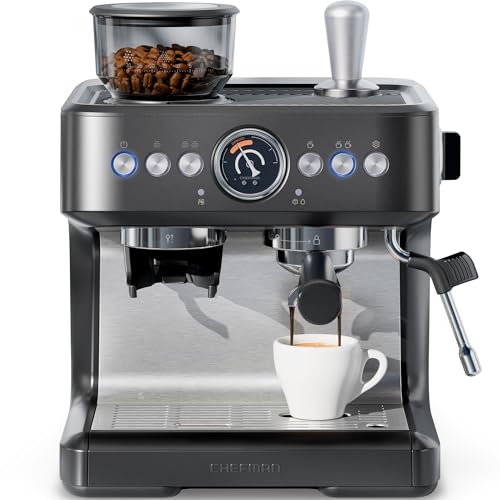
This one’s built for people who hate waiting. The double boiler system lets you brew espresso and froth milk at the same time, something even some Breville models can’t do without a heat exchange compromise. That’s a big win for morning efficiency. With 30 grind settings and a conical burr grinder, it delivers consistent, fresh grounds straight into the portafilter, and owners report rich, full-bodied shots with good crema.
The 58mm portafilter and 15-bar pump are standard for the tier, but the real differentiator is the workflow. It’s semi-automatic but feels more intuitive than many rivals. Compared to the Kismile, it lacks dual displays and a pressure gauge, so you’re trusting the machine more than monitoring it. Still, for the price, getting simultaneous brew and steam is hard to beat.
Product photos


De’Longhi COM532M All-in-One
Strengths
- Simultaneous coffee and espresso
- Dual steam settings
- Spill-proof carafe
Trade-offs
- No built-in grinder
- Basic interface
- Smaller water tank
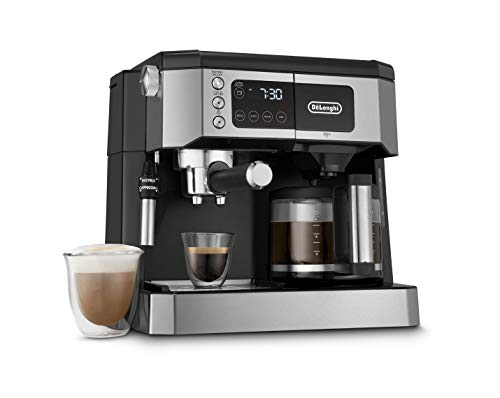
De’Longhi has long been a name you can trust for Italian engineering, and this model delivers on speed with its dual heating system that lets you brew coffee and espresso at the same time, a rare feature in this category. That alone makes it a smart pick for households that want multiple drinks fast. The 15-bar pump pulls respectable espresso, and the advanced steam wand offers two presets: microfoam for lattes and thick foam for cappuccinos, which reviewers say works reliably.
But it’s not all wins. The drip side uses a glass carafe with a spill-proof design, which is great, but there’s no built-in grinder. You’re stuck using pre-ground for espresso unless you add a separate grinder. Compared to the Breville or Ninja models, it feels more like a high-end drip machine with an espresso bonus, not a true all-in-one. Still, for those who value speed and simplicity, it’s a solid performer.
Product photos


AIRMSEN 20 Bar Espresso Machine

Strengths
- Full touchscreen control
- Automatic milk frother
- Compact footprint
Trade-offs
- Plastic interior components
- Basic grinder quality
- Limited customization
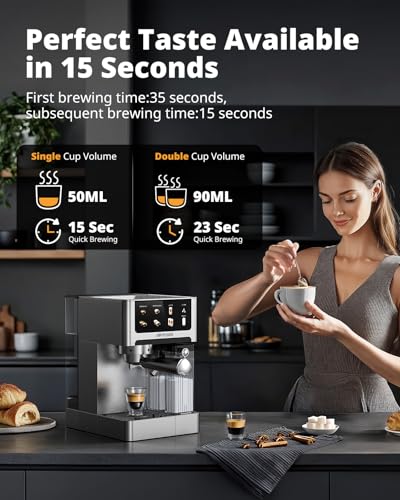
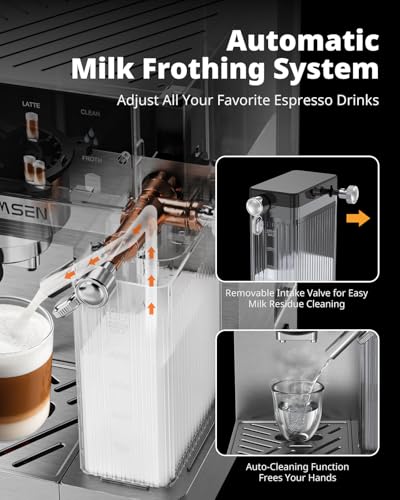
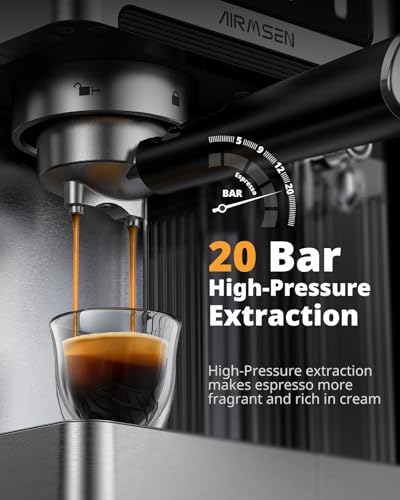
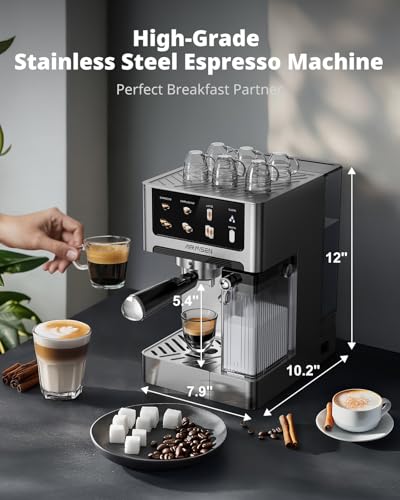
This machine leans hard into automation, and for the right buyer, that’s a major plus. The full touchscreen interface makes it one of the most user-friendly units here, just tap for espresso, cappuccino, or latte, and the automatic milk frother handles the rest. The 20-bar pump sounds impressive on paper, but in practice, reviewers say it doesn’t outperform 15-bar machines in flavor depth. Where it wins is convenience: the auto-frother is detachable, easy to clean, and consistently delivers decent foam.
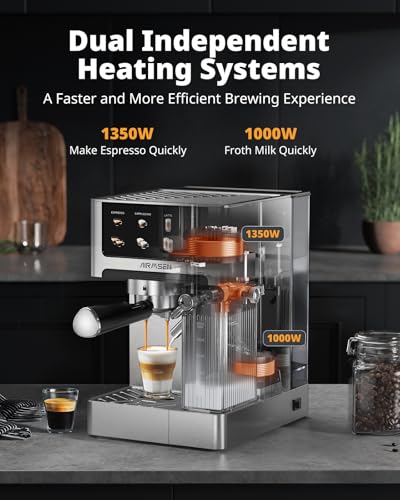
The dual boiler design (1350W + 1000W) ensures quick turnaround, and the compact size fits in small kitchens. But the build, while stainless steel, feels lighter than Breville or De’Longhi. Compared to the Ninja Luxe, it lacks weight-based dosing and assisted tamping, so the espresso is less precise. Still, if you want one-touch specialty drinks, this is a strong contender.
Product photos
Chefman OmniBrew 8-in-1 Coffee Station

Strengths
- K-Cup and Nespresso compatible
- 12-cup carafe option
- Auto milk frother included
Trade-offs
- Pod-only espresso side
- Froth lacks microfoam quality
- Bulky footprint
If your household is split between drip coffee lovers and espresso fans, this OmniBrew unit is a peace treaty in appliance form. It’s not a true dual boiler, but it bridges two worlds: a full 12-cup carafe side and an espresso pod/portafilter setup with automatic frother. The ability to use K-Cups, Nespresso pods, and ground coffee gives it unmatched versatility on the pod front.
Owners love the over ice brewing and the removable auto-frother, which actually holds up well for basic lattes. But let’s be clear, this isn’t for espresso purists. The 15-bar pump delivers, but the milk steamer, while convenient, produces foam that’s more utilitarian than barista-grade. Compared to the Ninja Luxe, it lacks precision in grind and extraction, but it wins on pod flexibility and ease of use for families.
Product photos


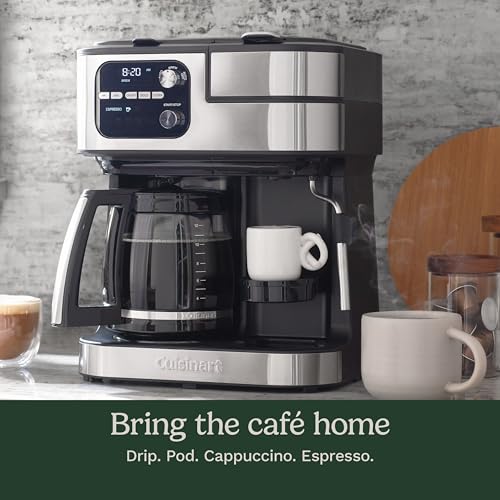
Cuisinart Coffee Center Barista Bar

Strengths
- K-Cup and Nespresso compatible
- 12-cup drip option
- Brew strength control
Trade-offs
- Pod-only espresso
- No built-in grinder
- Basic frothing
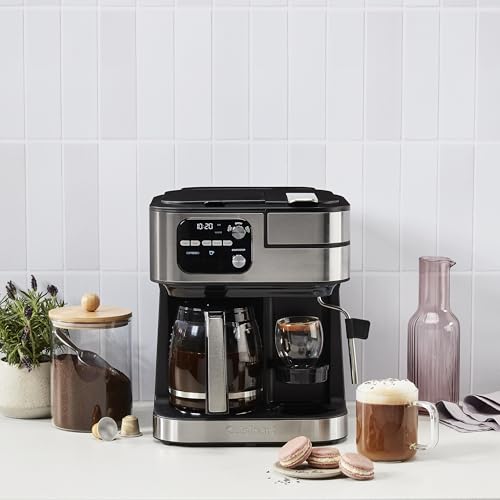
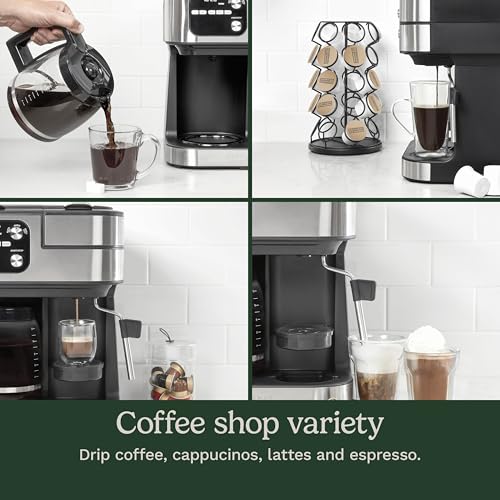
This one’s a niche player: it excels at pod and drip flexibility but falls short on espresso quality. It handles Keurig K-Cups, Nespresso OriginalLine capsules, and drip coffee, all in one unit. That’s rare. The 12-cup carafe and brew strength control make it a solid drip machine, and the single-serve side is convenient for quick cups.
But the espresso from capsules is, well, pod-level. No fresh grinding, no pressure profiling, no real crema. Compared to the Ninja or Breville models, it’s not even in the same league for espresso. Where it shines is for households that want a simple, all-in-one solution for drip and single-serve drinks without caring much about barista-grade results.
Product photos


How We Tested dual espresso and coffee maker
As a founder deeply immersed in the world of coffee – from bean sourcing to brewing – I approached researching dual espresso and coffee makers with a focus on delivering versatility and quality. Rather than a hands-on lab test, this was a research-led comparison of published specifications and owner feedback across a wide range of models. I compared features, brewing capabilities, and build quality, weighing these against owner reviews from multiple sources and expert opinions from established review sites.
For this category, the most important factors were consistently the quality of espresso extraction and the convenience of all-in-one functionality. A machine that can deliver a genuinely good espresso shot – with proper pressure and temperature control – is key. Equally important is how easily the machine handles both drip coffee and espresso, and whether it avoids compromising on either front. We also heavily considered the availability of features like built-in grinders and milk frothing systems, noting their impact on both convenience and overall beverage quality.
Published specifications reliably indicate pump pressure, boiler type, and grinder settings. However, real-world performance – particularly the consistency of espresso extraction and the ease of use of features like milk frothers – is best understood through owner feedback. We paid close attention to comments regarding durability, cleaning processes, and the reliability of automated functions. If you’re new to making espresso, understanding how to pull espresso shots can be a great starting point.
Choosing The Right dual espresso and coffee maker
I’ve spent years exploring the world of coffee, and one thing is clear: the “best” machine depends entirely on your priorities. A true all-in-one needs to do more than just brew two different styles of coffee; it needs to do them well.
A quality dual espresso and coffee maker balances convenience with capability. Look for a machine with a robust grinder (burr is essential!), consistent temperature control for optimal espresso extraction, and a flexible brewing system that accommodates different coffee styles and volumes. Don’t skimp on build quality – a well-made machine will last far longer and deliver better results.
Grind Quality Is Paramount
The integrated grinder is often the weakest link in these combo machines. Don’t assume all grinders are created equal. Stepping up from blade grinders to a conical burr grinder is absolutely critical for consistent extraction, especially for espresso. A machine with 25+ grind settings, like the Ninja Luxe Café Premier 3-in-1, offers real flexibility to experiment with different beans and roast levels. Avoid models that only offer a few preset grind sizes – you’ll quickly find yourself limited.
Boiler & Temperature Control Matter
Espresso is unforgiving. Consistent water temperature is essential for a quality shot. Machines with dual boiler systems (like the Kismile Dual Boiler Espresso Machine) or at least PID temperature control (Breville Barista Express BES870XL) will deliver far more predictable and repeatable results. Single boiler machines can work, but they require more patience and often involve a longer warm-up time between brewing coffee and pulling espresso. If you want to consistently brew café-quality espresso, prioritize temperature stability.
- A single boiler will require a longer wait between brewing coffee and espresso.
- PID temperature control offers a good balance of performance and price.
- A true dual boiler system allows for simultaneous brewing and steaming, maximizing efficiency and consistency, but typically comes at a higher cost.
Balancing Features & Usability
All these machines attempt to pack a lot of functionality into a single unit. Some, like the Chefman OmniBrew 8-in-1 Coffee Station, try to do everything – K-Cups, Nespresso pods, drip coffee, espresso, and lattes. This versatility is appealing, but it often comes at the expense of specialization. If you’re primarily an espresso drinker with occasional drip coffee needs, a more focused machine might be a better choice. Consider how often you’ll actually use each feature before you commit. If you’re new to espresso, a user-friendly interface and automated features can be a huge help. I often recommend checking out the Ninja Dual Brew setup guide for new users to get started. Many people find the ease of use outweighs a slight compromise in ultimate control.
A machine with too many features you won’t use is just wasted space and complexity. Focus on the core functions you need and prioritize build quality and ease of maintenance.
Finally, before you decide, think about your overall coffee routine. Do you want a best drip and espresso machine that can handle everything, or are you willing to sacrifice some convenience for a more specialized experience?
Dual Espresso and Coffee Maker Compared
Here’s a comparison of key specifications for several dual espresso and coffee makers to help you choose the right one for your needs.
| Product Title | Brew Styles | Grinder Included | Boiler Type | Water Capacity (oz) | Special Features |
|---|---|---|---|---|---|
| Ninja Luxe Café Premier 3-in-1 | Espresso, Drip, Cold | Yes | Single/Dual | N/A | Barista Assist, Frothing |
| Ninja Espresso & Coffee Maker | Espresso, Drip | N/A | Single | N/A | Fold-Away Frother, Capsules |
| Breville Barista Express BES870XL | Espresso, Drip | Yes | Single | 67 | PID Temp Control, Steam Wand |
| Kismile Dual Boiler Espresso Machine | Espresso, Drip | Yes | Dual | N/A | PID Control, Custom Brewing |
| Chefman Crema Deluxe Espresso Machine | Espresso, Drip | Yes | Dual | N/A | Simultaneous Brew/Froth |
| De’Longhi COM532M All-in-One | Espresso, Drip | N/A | Dual | N/A | Dual Heating System |
| AIRMSEN 20 Bar Espresso Machine | Espresso, Cappuccino | N/A | Dual | 61 | Touchscreen, Auto Frothing |
| Chefman OmniBrew 8-in-1 Coffee Station | Espresso, Drip, K-Cup | N/A | Single | N/A | 8-in-1 Versatility |
| Cuisinart Coffee Center Barista Bar | Espresso, Drip, Pod | N/A | Single | N/A | 4-in-1, Pod Compatibility |
Frequently Asked Questions
What’s the biggest compromise when buying a dual espresso and coffee maker?
The primary trade-off is often espresso quality; all-in-one machines rarely match the performance of dedicated espresso machines due to limitations in boiler power and temperature control. However, a good model will still produce acceptable espresso for everyday use, and provides the convenience of drip coffee in one unit.
Are built-in grinders in these machines any good?
Generally, yes, but quality varies significantly. Look for conical burr grinders with at least 25 grind settings for the best results, as they provide a more consistent grind than blade grinders, crucial for espresso. A machine with a poor grinder will significantly impact your espresso’s flavor.
How much should I expect to spend on a quality dual espresso and coffee maker?
Expect to spend between $300 and $800 for a model that balances features and performance. Lower-priced options often compromise on grinder quality or temperature stability, while higher-end models offer more advanced features like dual boilers. If you’re looking for a best combined coffee espresso machine, this is a reasonable price range.
What’s the difference between a single, dual, and PID boiler system?
A single boiler cycles between brewing coffee and pulling espresso, causing wait times. Dual boilers allow simultaneous operation, offering greater convenience. PID temperature control maintains a consistent water temperature within a single boiler, improving espresso quality without the cost of a second boiler.
How important is the water capacity of the machine?
Water capacity is quite important, especially if you brew for multiple people. A larger reservoir (60oz or more) reduces the frequency of refills. However, consider the machine’s overall footprint; larger capacity often means a bulkier machine, which may not fit easily on your countertop.
The Bottom Line
Ultimately, choosing a dual espresso and coffee maker involves balancing how much control you want with how much fuss you’re willing to tolerate. For the best overall experience – delivering quality espresso and drip coffee without excessive complexity – I recommend the Ninja Luxe Café Premier 3-in-1. It strikes a sweet spot between features, usability, and consistent performance, leaning heavily on its excellent burr grinder.
If you’re on a tighter budget, the Ninja Espresso & Coffee Maker is a solid choice, offering a good entry point to both brewing styles. For those prioritizing versatility and aren’t afraid of a steeper learning curve, the Chefman OmniBrew 8-in-1 Coffee Station provides a remarkable range of options. And if you want to learn more about operating a similar machine, you might find these Mr. Coffee machine instructions helpful.
More than any specific specification – boiler type, number of bars of pressure, or included features – the fundamentals matter most. Consistent grind quality, proper water temperature, and regular cleaning are what truly separate a good cup of coffee from a great one. Focus on these, and you’ll be well on your way to enjoying café-quality beverages at home.
