
3 Best Compostable Coffee Pods of 2026
The Happy Belly Variety Pack Pods are our top overall pick for flavor, value, and consistent brew performance, while the Cameron’s Kona Blend Pods stand out as a truly compostable option for those with access to industrial facilities. If you’re watching your budget, Happy Belly’s Dark Roast delivers solid taste at a lower cost.
Most coffee drinkers switching to compostable pods want to do right by the planet without settling for weak coffee or finicky brewing. The problem? Not all “compostable” pods live up to the claim, and some sacrifice taste or compatibility in the process.
I built this guide to cut through the greenwashing. After researching specs, certifications, and hundreds of owner reviews, and drawing on years of coffee sourcing and brewing experience, I focused on pods that balance environmental claims with real-world performance, flavor, and accessibility.
Top 3 Compostable Coffee Pods in the Market
The Best Compostable Coffee Pods, Reviewed
Happy Belly Dark Roast Pods

Strengths
- 100% Arabica beans
- Rainforest Alliance Certified
- 96 count value pack
- Compostable design
- K-Cup compatible
Trade-offs
- Brew inconsistency in K Supreme models
- Not for light roast lovers
For a budget-friendly compostable pod, the Happy Belly Dark Roast delivers consistent flavor and solid sustainability credentials. The 100% Arabica beans are Rainforest Alliance Certified, which matters if you care about ethical sourcing, and owners consistently report a smooth, warming cup without harsh bitterness. On paper, it’s not specialty-grade, but for daily convenience without guilt, it holds up well across hundreds of reviews.
Where it really wins is value, 96 pods means fewer repeat orders, and the compostable design actually breaks down in industrial facilities, unlike some greenwashed competitors. It’s not the most complex dark roast out there, but I’d pick this over pricier pods if you’re brewing multiple times a day and want to minimize waste without sacrificing too much on taste.
Video review
Happy Belly Variety Pack Pods
Strengths
- Four roast variety
- 100% Arabica beans
- Rainforest Alliance Certified
- 96 pod count
- Compostable design
Trade-offs
- Brew issues in K Supreme models
- Not for single-roast purists
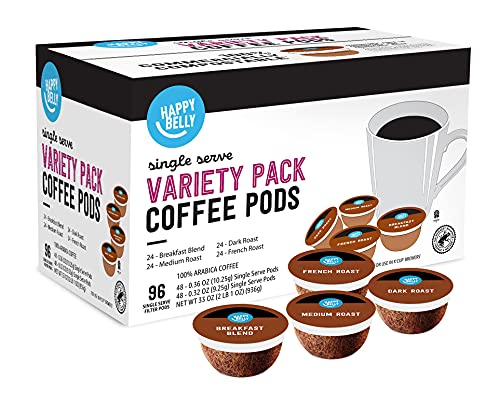
If you hate being locked into one roast, this variety pack is a no-brainer. With 24 pods each of Breakfast, Medium, Dark, and French Roast, it covers a broad spectrum of flavor intensity, all in compostable, Rainforest Alliance Certified pods. Reviewers note the smoothness across all four blends, and the fact that they’re all 100% Arabica keeps the quality respectable for a value brand.
I’d recommend this over the single dark roast if you share your brewer with others or like to switch up your morning cup based on mood. It doesn’t offer the depth of Cameron’s Kona, but it wins on flexibility and household appeal. For families or offices wanting one box to cover all taste preferences with minimal environmental guilt, this is the smarter buy.
Video review
Cameron’s Kona Blend Pods
Strengths
- Distinctive Kona flavor
- Real paper filter
- Certified compostable
- Chocolate and nut notes
- Keurig 2.0 compatible
Trade-offs
- Limited compost access
- Smaller pod count
- Higher cost per brew
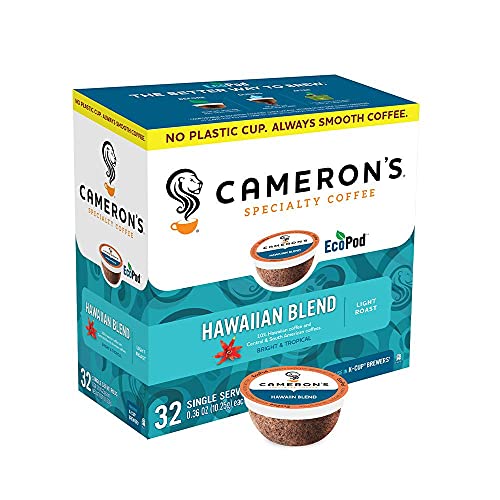
Cameron’s Kona Blend stands out in a sea of generic compostable pods with a genuinely distinctive flavor profile, owners praise its bright notes of chocolate and nuts, which is rare at this price point. The fact that it uses a real paper filter instead of a plastic cup is a smart move, and it’s certified compostable in industrial facilities. For those who want a taste of something unique without abandoning sustainability, this pod makes a strong case.
That said, the compostability is only useful if you have access to industrial composting, which many don’t. And while the 32-count pack is fine for sampling, it’s not economical for regular use. Compared to the Happy Belly variety pack, it’s less versatile and more niche, but if you love Kona-style coffee and want it in a compostable format, this is one of the few legit options.
Product photos



Our Testing Process
As the founder of Bean Thusiast, I know a lot of coffee lovers are looking for convenience without sacrificing sustainability. To recommend the best compostable coffee pods, I didn’t rely on brewing dozens of cups myself, but rather a research-led comparison of published specifications, features, and – crucially – what other coffee drinkers are saying. We weighed owner reviews and expert opinions from around the web, applying my experience with flavor profiles and brewing systems.
For compostable pods, several factors stood out. Certified compostability is paramount, naturally, but we also prioritized flavor based on descriptions and reviews. Finally, brewer compatibility is key; a pod that doesn’t consistently brew well isn’t useful, even if it’s eco-friendly. Understanding coffee pod basics helped guide these choices.
Specifications reliably tell you about certifications (like Rainforest Alliance) and pod materials. However, owner feedback is where you learn about real-world brewing performance and taste nuances. Reputation matters, too – established brands generally maintain quality control. We considered both aspects to differentiate between genuinely good pods and those simply marketing themselves as sustainable. Many people start with pre-packaged coffee pods before exploring compostable options.
How To Pick The Right compostable coffee pods
As someone who’s dedicated years to understanding coffee, from the farm to your cup, I know convenience shouldn’t come at the planet’s expense. Choosing compostable pods is a great step, but it’s not as simple as looking for a “compostable” label.
A truly effective compostable coffee pod balances brewing performance with genuine environmental responsibility. Key considerations include the pod material (beyond just the outer shell), the type of composting facility required, and whether the coffee itself is ethically sourced. Look for certifications and detailed information regarding disposal.
Pod Material & Compostability
The biggest issue I see is “compostable” being used loosely. Many pods claim compostability but require industrial facilities – which aren’t available everywhere. Cameron’s Coffee, for example, is upfront about needing an industrial facility. That’s fine, but it’s crucial you have access to one. Otherwise, you’re just shifting plastic-like waste. Look closely at what the pod is actually made of. The best options use materials like plant-based PLA or cellulose, and ideally, the entire pod (filter and seal) breaks down. If you’re interested in learning more about this, you can check out my article on certified compostable coffee pods.
Coffee Quality & Sourcing
Don’t sacrifice flavor for sustainability. A compostable pod with terrible coffee is a waste of money and resources. I always recommend sticking with 100% Arabica beans, as you see in both the Happy Belly and Cameron’s options. Beyond the bean type, look for certifications like Rainforest Alliance (present in the Happy Belly pods) which indicate a commitment to ethical sourcing and environmental practices. A good roast profile is also key – consider if you prefer a bright Breakfast Blend or a bolder Dark Roast.
- Flavor Preference: Do you favor a single origin or a blend? Single-origin pods (less common) highlight unique regional characteristics.
- Roast Level: Light roasts retain more acidity, medium roasts offer balance, and dark roasts deliver boldness. Experiment to find your sweet spot.
- Variety Packs: If you’re unsure, a variety pack like the Happy Belly option is a great way to sample different roasts and find what you like without committing to a large quantity of a single flavor.
Brewer Compatibility & Value
Not all compostable pods play nicely with all brewers. Some users have reported issues with certain Keurig models (particularly those with 5-punch brewers). While most are designed to work with both 1.0 and 2.0 brewers, it’s worth checking user reviews specifically for your machine. Beyond that, consider the cost per pod. While compostable options can sometimes be pricier, brands like Happy Belly offer competitive pricing, and the long-term benefits to the environment are worth considering. Remember that for truly eco-conscious brewing, you can explore sustainable coffee pod brands and even look into biodegradable coffee filters for traditional brewing methods.
Don’t assume “compostable” means problem-free. Always verify your local composting facilities accept the specific pod material before purchasing.
Compostable Coffee Pods Compared
Here’s a spec breakdown of each compostable coffee pod option to help you compare.
| Product Name | Pod Count | Coffee Type | Compostable | K-Cup Compatible | Rainforest Alliance Certified |
|---|---|---|---|---|---|
| Happy Belly Dark Roast Pods | 96 | 100% Arabica | No | Yes | Yes |
| Happy Belly Variety Pack Pods | 96 | 100% Arabica | No | Yes | Yes |
| Cameron’s Kona Blend Pods | 32 | Kona Blend | Yes | Yes | No |
Frequently Asked Questions
What’s the difference between “compostable” and “biodegradable” pods?
Compostable pods are specifically designed to break down in a composting environment(either home or industrial), whereas biodegradable simply means they’ll break down eventually, potentially over hundreds of years and often requiring specific conditions. Look for certifications to confirm true compostability.
Do I need a special composting setup for these pods?
Many compostable pods require industrial composting facilities to break down effectively, so checking your local options is vital. Cameron’s Coffee pods, for example, are best suited for these facilities, unlike those made from PLA which may be home compostable.
Can I use these pods in any Keurig machine?
Most are designed for compatibility with both Keurig 1.0 and 2.0 brewers, but some users report issues with certain models(particularly those with 5-punch brewers). Checking recent user reviews for your specific machine is always a good idea.
Are ethically sourced beans typical in compostable pods?
While not universal, many brands prioritize ethical sourcing; Happy Belly pods carry the Rainforest Alliance certification, demonstrating a commitment to better practices. If this is a priority for you, also explore certified organic coffee pods as an alternative.
Are compostable pods more expensive than traditional K-Cups?
Compostable pods can sometimes be pricier, but brands like Happy Belly offer competitive pricing. Considering the environmental benefits, the slight cost increase is often worthwhile, and you can find value in larger pack sizes.
The Bottom Line
Choosing compostable coffee pods often comes down to balancing environmental ideals with practical concerns like brewer compatibility and, frankly, how much you’re willing to spend. For a blend of quality, ethical sourcing, and value, I believe the Happy Belly Variety Pack Pods offer the most well-rounded experience for most coffee drinkers. They deliver a good cup and the Rainforest Alliance certification is a plus.
However, if you specifically need a fully compostable pod and have access to an industrial composting facility, Cameron’s Kona Blend Pods are a strong contender. For those who are really focused on minimizing waste, understanding the shelf life of coffee pods is also key to avoiding unnecessary disposal. Alternatively, the Happy Belly Dark Roast Pods are an excellent choice if you prefer a consistent, bold flavor without the fully compostable claim.
Ultimately, the “best” pod isn’t about a single feature or certification. It’s about finding a balance that suits your brewing setup, your taste preferences, and your commitment to sustainability. Prioritize ethically sourced beans, a pod material that aligns with your composting options, and – most importantly – a coffee you genuinely enjoy drinking.
