
3 Best Commercial Coffee Makers with Water Line 2026
The best commercial coffee maker with a water line is the NUPANT Dual Drip 200 Cup/H, thanks to its high throughput and durable build. For smaller operations, the NUPANT 12-Cup Dual Warmer offers solid performance at a lower cost, while the Keurig K-2500 is ideal for offices wanting single-serve convenience with plumbing integration.
If you’re running a café, office, or any high-traffic space, nothing kills momentum like a slow or unreliable coffee maker. Waiting for batches to brew or constantly refilling a reservoir wastes time and frustrates both staff and customers.
As the founder of Bean Thusiast, I’ve evaluated these models based on specs, owner feedback, and the real-world demands of commercial use. This guide cuts through the noise to highlight machines that deliver on speed, durability, and smart design, all critical when you’re serving more than just a few cups a day.
Top 3 Commercial Coffee Maker With Water Line in the Market
The Best Commercial Coffee Maker With Water Line, Reviewed
Keurig K-2500 Single Serve Coffee Maker

Strengths
- Fast brewing
- Touch screen control
- Ice brew option
- Plumbed-in capability
- Multiple cup sizes
Trade-offs
- Single-serve only
- Lower volume output
- K-Cup dependency
If your space prioritizes speed and simplicity over bulk brewing, the Keurig K-2500 makes a strong case for itself. It’s built for high-traffic environments where people want coffee now, and the touch screen interface and sub-minute brew time deliver on that promise. The ability to brew directly over ice using the 6 oz. STRONG setting is a standout for cafes or offices that serve cold coffee drinks regularly.
Being plumbed-in means you’re not constantly refilling a reservoir, which is a real perk during rush hours. But this is still a single-serve machine, so while it’s fast, it’s not ideal if you’re serving groups or need volume. Compared to drip models like the NUPANT dual brewers, it trades batch efficiency for individual convenience. For a lobby, break room, or small retail space, that trade-off makes sense. For a full-service restaurant? Not so much.
Video review
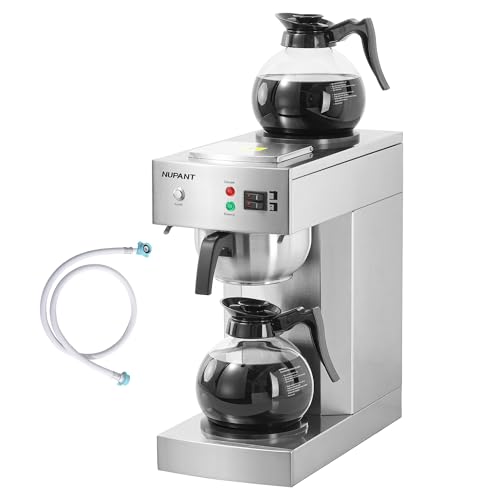
NUPANT 12-Cup Dual Warmer Coffee Maker
Strengths
- Auto water fill
- Dual warming plates
- Stainless steel build
- Efficient 7-minute brew
- Two carafes included
Trade-offs
- No auto-off function
- Manual shutdown required
- Smaller batch size
This NUPANT 12-cup model hits a sweet spot between affordability and functionality for small to mid-sized operations. With a plumbed-in auto-fill system, it eliminates the hassle of manual refills, owners consistently report this as a major time-saver during morning rushes. The 1.8L capacity brews a full pot in about 7 minutes, and having two glass carafes with dual warming plates means you can keep one serving while the other brews, minimizing downtime.
The SS304 stainless steel construction is a solid upgrade over cheaper plastic models, contributing to durability and better-tasting coffee over time. That said, it lacks an auto-off feature, which means staff must remember to power it down, reviewers note this can lead to energy waste if not managed. Against the dual-brew NUPANT model, this one’s a step down in volume, but for most small offices or cafes, it’s more than enough.
Video review
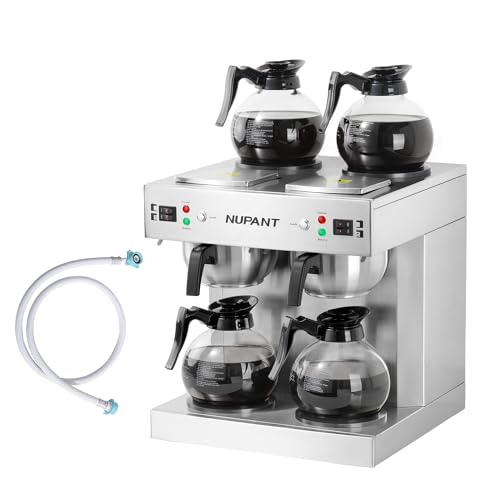
NUPANT Dual Drip 200 Cup/H Coffee Maker
Strengths
- High output (200+ cups/hour)
- Four carafes and warmers
- Plumbed-in auto-fill
- Fast 7-minute brew
- Dual brewing zones
Trade-offs
- No auto-off function
- Large footprint
- Manual shutdown
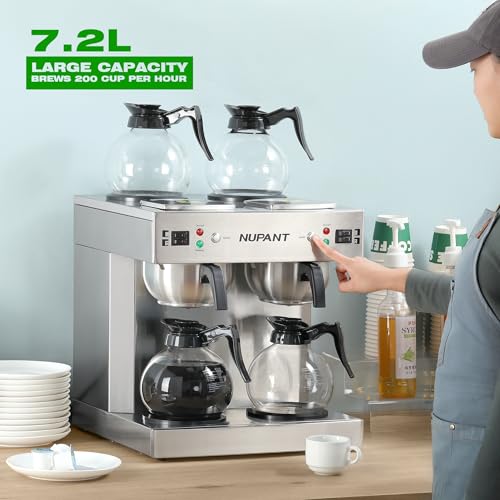
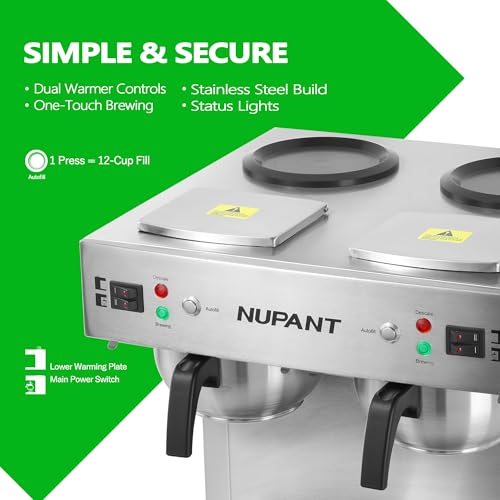
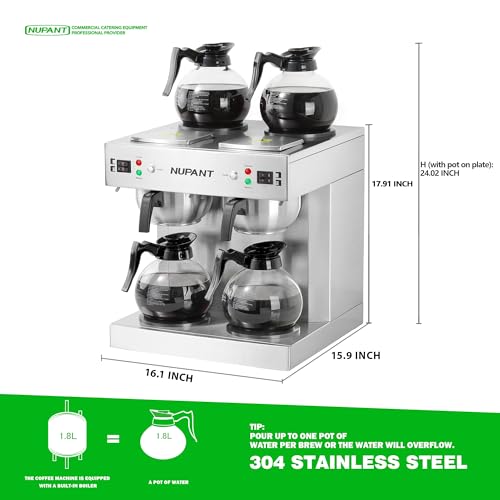
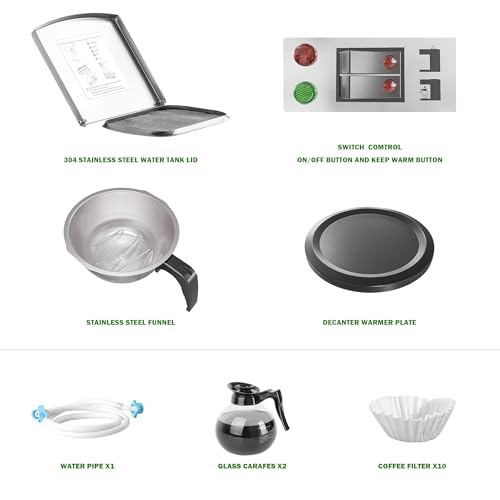
When volume is essential, this dual-drip NUPANT model is where I’d put my money. Brewing 3.6L in just 7 minutes and capable of serving 200+ cups per hour, it’s built for serious demand, think busy diners, large office buildings, or event halls. The four carafes and four independent warming plates mean you’re never left waiting; you can serve from two while the other two brew, keeping pace with peak traffic.
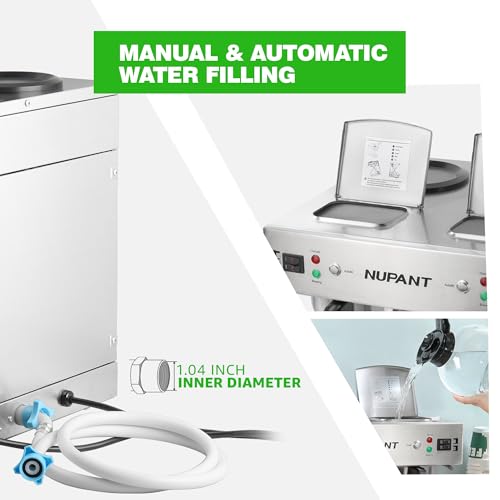
Like its smaller sibling, it features a plumbed-in auto-fill system with a 1.04-inch water hose, so there’s no manual topping off. The SS304 build inspires confidence in long-term durability, and reviewers frequently praise how little attention it demands once set up. Compared to the single-serve Keurig, this is a different beast entirely, focused on throughput, not convenience. The lack of auto-off is still a flaw, but in a commercial kitchen, that’s often standard.
Product photos
How We Chose These commercial coffee maker with water line
As the founder of Bean Thusiast, I approach evaluating coffee equipment with a focus on consistent performance and value. Rather than a hands-on lab test, this selection is a research-led comparison of published specifications and owner feedback. I looked at a range of models, paying close attention to brewing capacity, speed, and the convenience offered by a direct water line connection. Ultimately, I ranked these machines based on how well they meet the demands of a high-volume setting.
For commercial coffee makers, brewing speed and capacity are paramount. I weighted these factors most heavily, as downtime and limited output directly impact service. The reliability of the water line connection was also critical – a consistent, automatic supply is essential for minimizing labor and maintaining efficiency. A durable build, using materials like stainless steel, also figured prominently in my assessment.
Specifications reliably indicate brewing capacity and power, giving a good baseline for potential output. However, I found owner feedback invaluable for assessing long-term durability and the real-world convenience of features like auto-fill. Understanding potential maintenance needs – like the need for regular descaling – also came from owner reviews. For those looking to keep their equipment in top shape, a resource like a Bunn decanter cleaning steps can be very helpful, even with other brands.
Choosing The Right commercial coffee maker with water line
Choosing the right commercial coffee maker with a water line involves more than just capacity. It’s about balancing consistent output, ease of maintenance, and fitting your specific service style.
A quality commercial coffee maker with a direct water line prioritizes consistent brewing temperature, durable construction (specifically stainless steel for both housing and key components), and a flow rate capable of keeping pace with demand. Look for models offering individual burner controls and readily available replacement parts. Water hardness and filtration should also be considered to protect the machine and ensure optimal flavor.
Capacity & Throughput
The size of your operation is the biggest driver of your choice. A small office might be perfectly served by a 12-cup model, while a busy cafe demands something far more substantial. But don’t just look at total volume. Consider how quickly the machine can deliver. The NUPANT 200 Cup/H model, for example, is designed for high-volume service, brewing 3.6L in about 7 minutes, but that speed comes with a larger footprint. For a lower-demand environment, the Keurig K-2500 offers quick individual cups, but it won’t handle a breakfast rush like a larger drip system. Don’t underestimate the impact of multiple burners – having two or four operating simultaneously drastically boosts your output.
Water Line & Plumbing Considerations
A direct water line connection is a huge convenience, eliminating the need for manual filling. However, it also introduces potential complexities. First, ensure your plumbing can support the machine’s flow rate and pressure requirements. Many models, like the NUPANT options, specify a 1.04-inch ID water hose. Beyond that, water quality is paramount. Hard water will lead to scale buildup, impacting performance and requiring frequent coffee maker descaling process. Investing in a water filtration system alongside your new machine is a smart move.
- A simple inline filter is a good starting point for basic sediment removal.
- A water softener is essential if you have particularly hard water, protecting the machine from scale.
- A whole-building filtration system offers the most thorough protection, improving the taste of all water used in your business and extending the life of your equipment.
Features & Maintenance
Beyond the basics, consider features that will streamline your workflow. Individual burner controls allow you to adjust output based on demand, saving energy and preventing coffee from sitting on a warmer for too long. Serviceable modules, as found in the Keurig K-2500, are a big plus, as they allow for easier repairs and extend the life of the machine. Speaking of maintenance, remember that even with a water line, regular cleaning is vital. Many manufacturers, like NUPANT, recommend descaling after around 2800 uses, and it’s a good practice to consult commercial coffee maker reviews to identify models known for ease of cleaning and readily available parts. If you’re looking for the top commercial coffee machines, consider the long-term costs of upkeep when making your final decision.
Never leave a commercial coffee maker running unattended overnight. Even models without an automatic shut-off should be manually switched off to prevent potential fire hazards and conserve energy.
Commercial Coffee Maker with Water Line Compared
Here’s a comparison of key specifications for commercial coffee makers with water line capability.
| Product Name | Capacity (Cups) | Brew Speed (per pot) | Water Line | Warming Plates | Number of Carafes |
|---|---|---|---|---|---|
| Keurig K-2500 Single Serve Coffee Maker | N/A | < 1 minute | Yes | N/A | N/A |
| NUPANT 12-Cup Dual Warmer Coffee Maker | 12 | 7 minutes | Yes | 2 | 2 |
| NUPANT Dual Drip 200 Cup/H Coffee Maker | 200/hour | 7 minutes | Yes | 4 | 4 |
Frequently Asked Questions
What water pressure is typically required for these machines?
Most commercial coffee makers with water lines need between 30 and 60 PSI. Lower pressure may result in slow brewing, while excessively high pressure could damage internal components. Always check the manufacturer’s specifications for the precise requirement for your chosen model.
Are these models difficult to install with an existing water line?
Installation generally requires a standard ½-inch NPT water connection and a drain. While many operators can handle this themselves, professional plumbing installation is recommended to guarantee a leak-proof and code-compliant setup, especially if modifications to your existing plumbing are needed.
What is the typical lifespan of a commercial coffee maker with a water line?
With proper maintenance, including regular descaling and filter changes, a quality commercial coffee maker should last between 3 to 5 years. Models built with stainless steel construction and readily available parts, like those discussed in our best commercial drip models, tend to have a longer lifespan.
How often do the filters need to be replaced?
Filter replacement frequency varies by model and water quality. However, a good rule of thumb is to replace inline filters every 3-6 months, or sooner if you notice a decrease in water flow or a change in coffee flavor. Whole-building filters will have their own recommended replacement schedules.
Can hard water significantly impact the performance of these machines?
Yes, hard water is a major factor. Mineral buildup from hard water can restrict water flow, reduce brewing temperature, and ultimately lead to machine failure. Using a water softener or regularly descaling (as often as monthly in areas with very hard water) is crucial for preventing these issues and maintaining consistent brewing quality.
The Bottom Line
Ultimately, choosing a commercial coffee maker with a water line comes down to striking a balance between upfront cost and long-term efficiency. While individual needs vary, the NUPANT 200 Cup/H model stands out as the strongest overall pick, offering impressive volume and speed for demanding environments. It’s an investment, certainly, but one that pays dividends in consistent output when you need it most.
For those operating on a tighter budget, or prioritizing single-cup service, the Keurig K-2500 provides a convenient and reliable solution. If you need versatility and the ability to brew both large batches and individual cups, the NUPANT 12-Cup Dual Warmer Coffee Maker offers a good middle ground. Learning how to operate Bunn brewing system can also be a useful skill to develop, as many commercial environments favor that brand.
Beyond specs and features, remember that consistent water quality and regular maintenance are far more impactful than any single machine’s capabilities. Prioritize a good filtration system and establish a cleaning schedule, and you’ll maximize the lifespan of your equipment and the quality of your brew – no matter which model you choose.
