
8 Best Cold Brew Coffee Systems of 2026
The OXO Good Grips 32 oz Cold Brew Maker stands out as the best overall system, combining smart design with reliable performance. For a budget-friendly option, the 64 oz Mason Jar Cold Brew Pitcher delivers solid results, while the Takeya Deluxe Cold Brew Maker offers excellent versatility for those who value portability and ease of use.
Most people want smooth, rich cold brew without the grit or hassle, but not all systems deliver on that promise. Poor filtration, awkward cleaning, or undersized batches can turn a simple ritual into a chore.
I researched the field, comparing specs and owner feedback to find systems that consistently meet real-world needs. These picks focus on filtration quality, durability, and how easy they are to use and clean, because a great cold brew system should make life better, not more complicated.
Top 8 Cold Brew Coffee System in the Market
The Best Cold Brew Coffee System, Reviewed
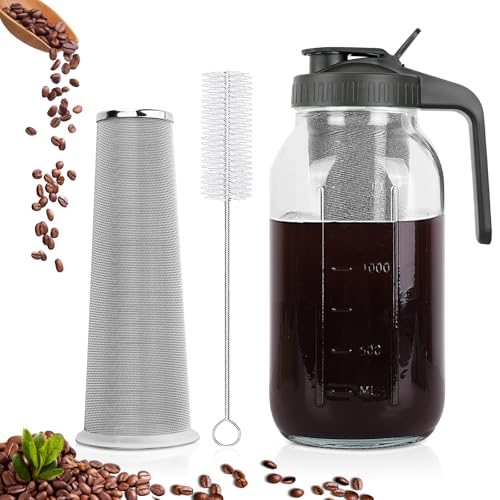
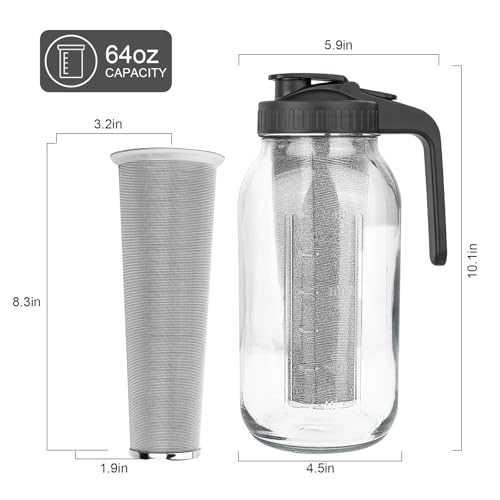
64 oz Mason Jar Cold Brew Pitcher
Strengths
- Includes cleaning brush
- Leakproof spout lid
- Wide mouth for easy cleaning
Trade-offs
- Glass not heat-resistant
- Lid plastic feels cheap
- No measurement markings
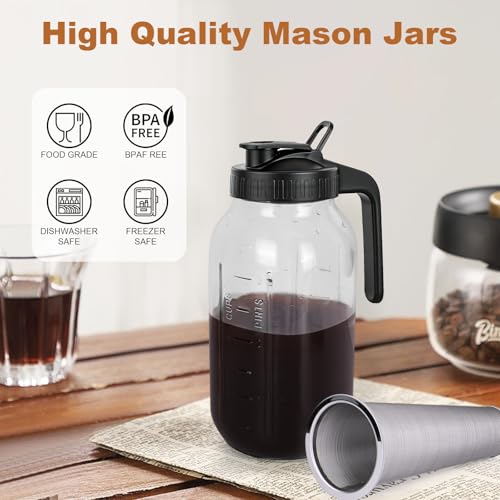
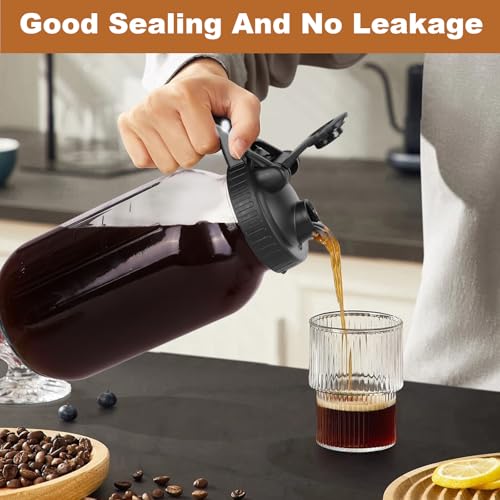
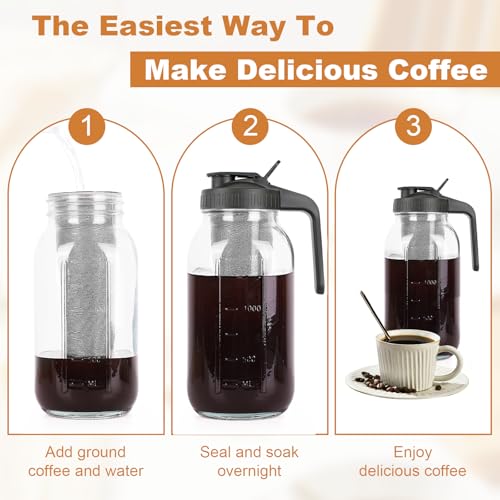
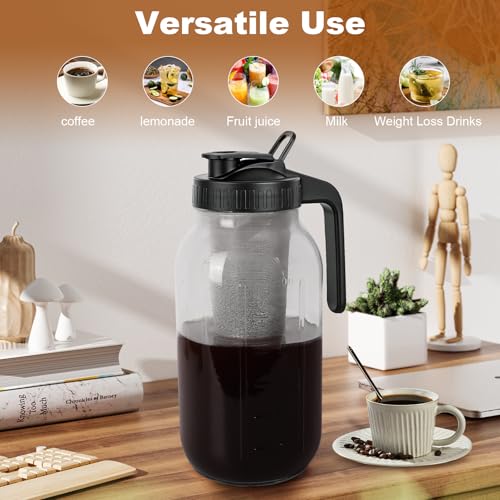
This 64-oz mason jar pitcher hits a sweet spot between function, value, and versatility. The 160-micron stainless steel filter strikes a balance, fine enough to keep most grounds out, but not so tight it clogs easily. Owners love the wide mouth for filling and cleaning, and the airtight spout lid gets consistent praise for preventing leaks and fridge odors.
It comes with a cleaning brush, which is a small but appreciated touch. The glass feels thick and food-safe, though it’s not rated for extreme temperature shifts. Compared to the JunVpic, it’s nearly identical in design, but this one edges ahead with included accessories and slightly better lid ergonomics.
Product photos
Takeya Deluxe Cold Brew Maker 1 Quart
Strengths
- BPA-free Tritan
- Leakproof lid
- Dishwasher safe
Trade-offs
- Small capacity
- Plastic taste early on
- No measurement markings
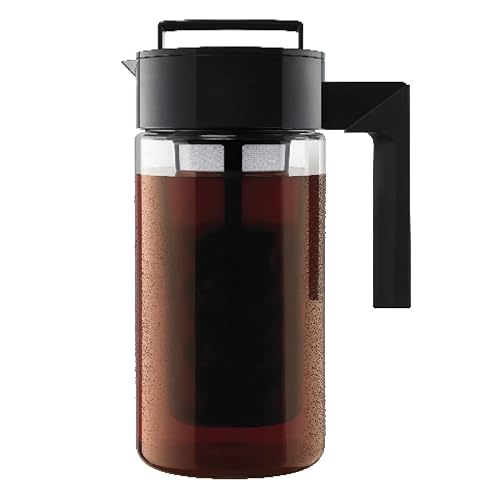
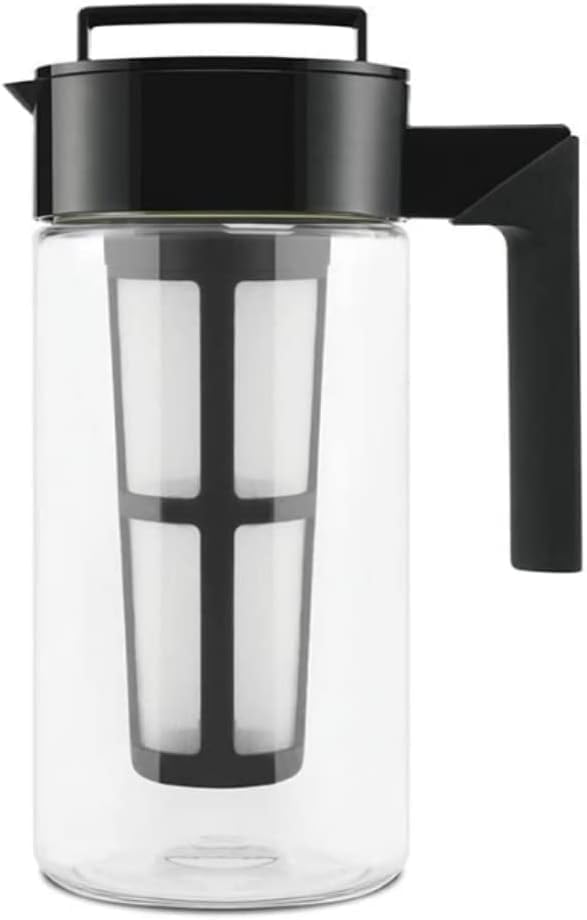
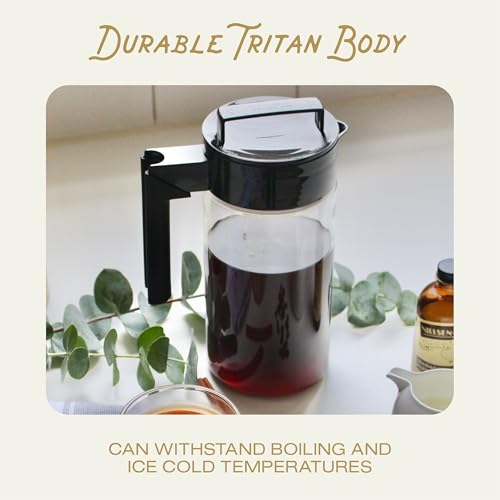
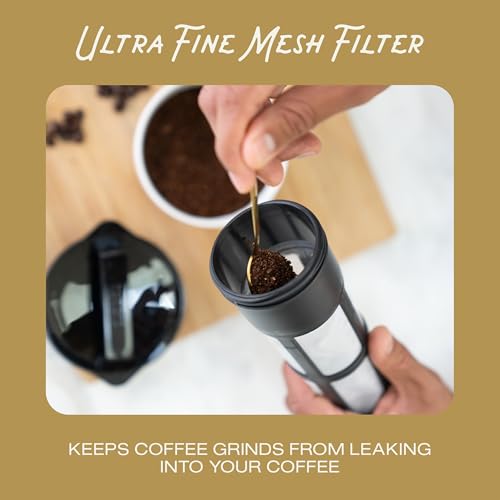
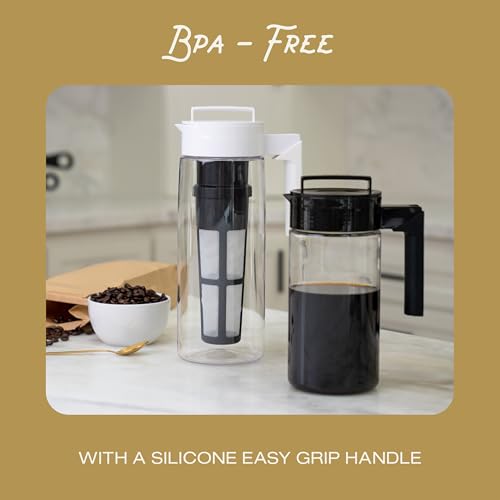
The Takeya Deluxe is a no-frills, reliable cold brew pitcher that delivers smooth, clean coffee without fuss. On paper, its 1-quart capacity is modest, but it’s ideal for solo drinkers or couples who want a week’s worth of concentrate without clutter. Owners consistently report that the fine-mesh filter keeps grounds out better than many budget models, and the BPA-free Tritan build feels sturdy without being heavy.
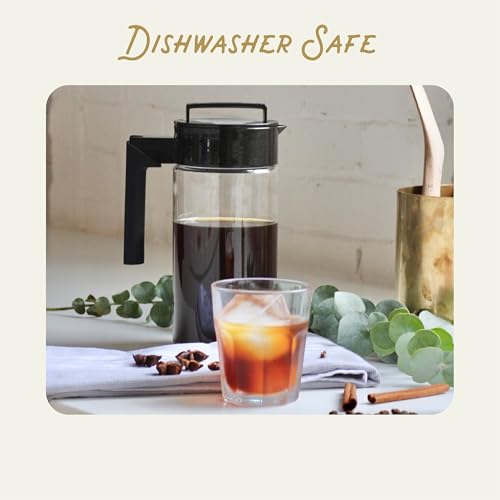
What stands out is how well it seals, reviews confirm the airtight lid truly prevents leaks and odor transfer in the fridge. For a plastic pitcher, it holds up well in durability tests, and being dishwasher safe makes cleanup a non-issue. Compared to glass models, it’s less elegant but far more travel-friendly.
Product photos
OXO Brew Compact Cold Brew Maker
Strengths
- Space-saving design
- Even water distribution
- Nests for storage
Trade-offs
- Small batch size
- No scale markings
- Filter clogs with fine grounds
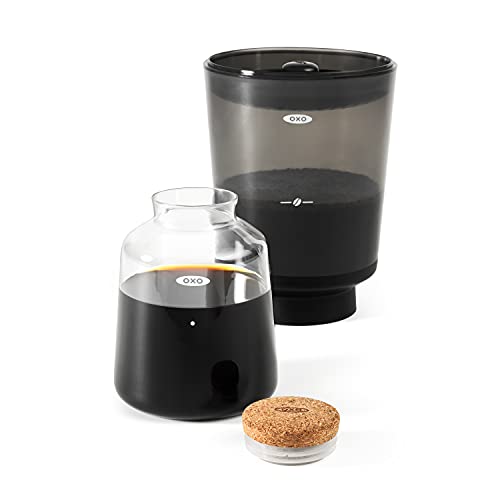
OXO’s compact model is a standout for small kitchens or fridge shelves that run tight on space. The 24-oz capacity is modest, but it’s designed to nest, brewer sits right on top of the carafe, so storage is a breeze. The Rainmaker top is a clever feature: it evenly disperses water over grounds, which reviewers say leads to more consistent extraction than free-pour methods.
The borosilicate glass carafe feels high quality, and the stainless steel mesh filter is easy to rinse and reuse. However, some owners note that the filter can clog if too fine a grind is used. It doesn’t have measurement markings on the brewer itself, which is a miss. Still, for controlled, small-batch brewing, it outperforms many in its size class.
Video review
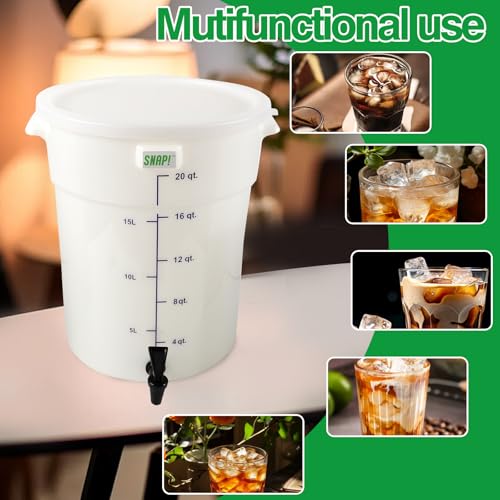
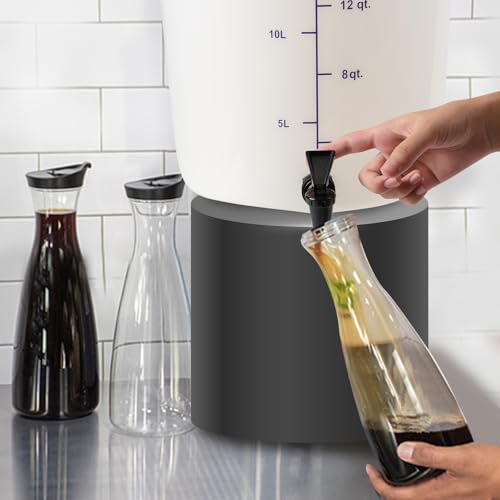
Snap! 5 Gallon Commercial Cold Brew System

Strengths
- Huge 5-gallon capacity
- Dual filtration system
- Eco-friendly reusable parts
Trade-offs
- Overkill for small households
- Takes up major space
- Higher price point
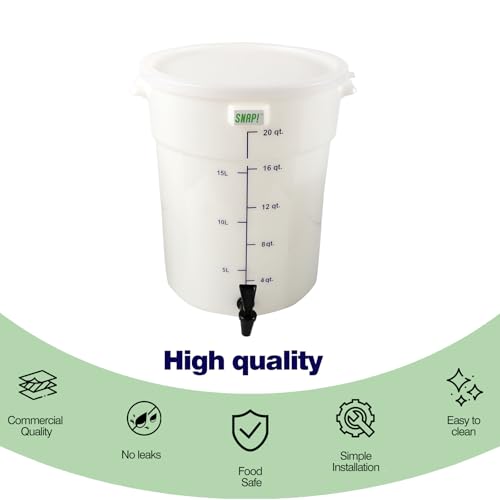
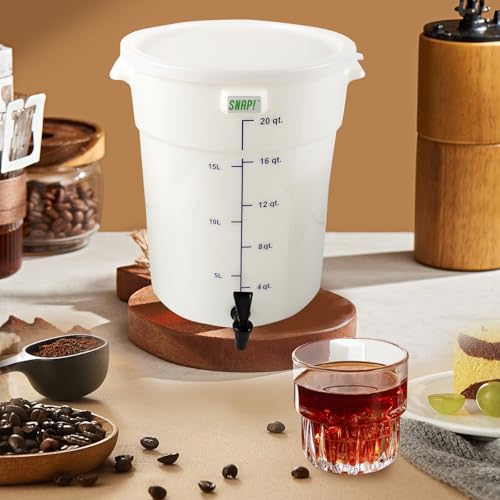
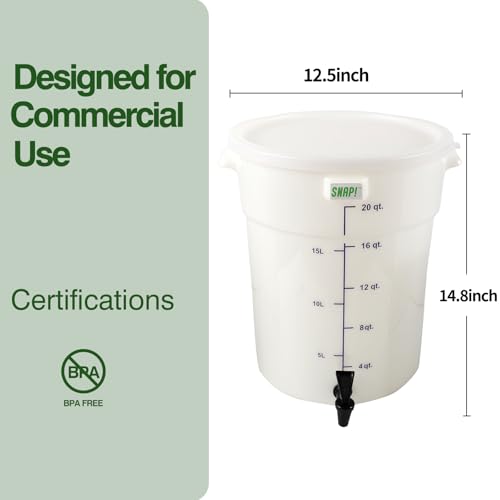
The Snap! 5-gallon system is in a league of its own when it comes to volume. Designed for commercial or heavy home use, it can brew up to 3.5 gallons of concentrate in one go, enough for a small café or weekly office supply. The dual filtration system, with PLA and cotton spigot filters, delivers remarkably smooth, low-acid coffee, and owners say it reduces bitterness better than most.
It’s built with food-grade PP and PE materials, so it’s durable and safe, though not as visually appealing as glass. The reusable components help cut down on waste, and the compostable PLA filters are a nice eco-touch. Compared to the TODDY, it’s larger and more modern, but also pricier and overkill for most homes.
Product photos
TODDY Cold Brew Coffee Set White

Strengths
- Massive 9.5L capacity
- Proven brewing system
- Includes multiple filters
Trade-offs
- Bulky storage
- Paper filters not reusable
- Tap can leak
The TODDY is the original cold brew system, and it still holds up as a traditional, large-capacity workhorse. With a 9.5-liter capacity, it’s built for brewing enough concentrate to last a week or more, perfect for families or offices. The natural paper filters do a solid job of producing smooth, low-acid coffee, though they’re single-use, which adds cost and waste over time.
Reviewers note the tap system is convenient but can drip if not seated right. The plastic feels utilitarian, not sleek, and it takes up serious fridge real estate. But for those who value tradition and volume, it’s hard to beat. Compared to the Snap! system, it’s less commercial but more home-friendly.
Product photos


JunVpic 64oz Cold Brew Coffee Jar

Strengths
- Thick, durable glass
- True leakproof seal
- Easy hand cleaning
Trade-offs
- Heavy when full
- Not shatterproof
- Lid mechanism stiff at first
If you’re after a glass cold brew jar that feels like a mason jar but performs like a specialty brewer, the JunVpic delivers. Its 4.15mm-thick soda-lime glass gives it a substantial, premium feel, and owners say it holds up well with regular use. The 100-micron stainless steel filter is one of the finer weaves in this category, resulting in noticeably cleaner brews, fewer fines, less sediment.
The leakproof spout and sealing ring are where this one shines. Multiple reviewers have tested it on its side in the fridge with zero spills, which is rare. The wide mouth makes cleaning easy, and you can actually fit your hand inside, unlike narrow-neck glass pitchers. Compared to the Takeya, it’s less portable but better for long-term fridge storage.
Video review
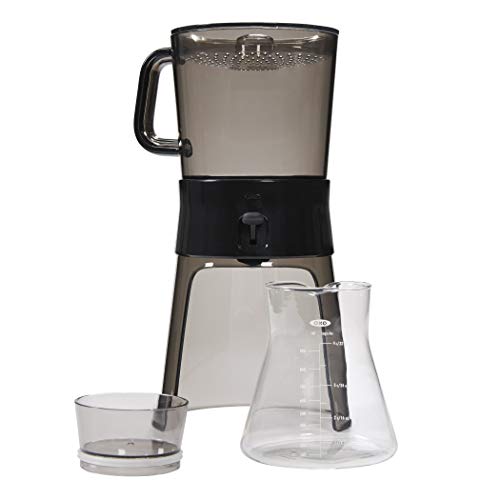
OXO Good Grips 32 oz Cold Brew Maker
Strengths
- Brew-release switch control
- Measurement markings
- Even water distribution
Trade-offs
- Larger footprint
- Slightly pricier
- Carafe can tip if full
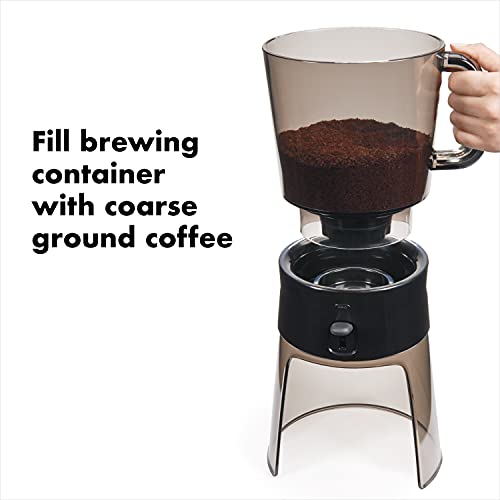
OXO’s Good Grips model is the most controlled brewing system in this lineup. The brew-release switch lets you start and stop filtration on demand, no waiting for gravity to do its thing. This means you can steep longer for strength but drain only when ready, avoiding over-extraction. Owners say this feature alone makes it worth the upgrade over passive systems.
The Rainmaker top ensures even saturation, and the 32-oz borosilicage carafe has measurement markings, making dilution easy. The stainless steel filter is durable and dishwasher safe. Compared to the compact OXO model, this one offers more capacity and better control, making it the preferred pick for serious home brewers.
Product photos


Maestri House 40oz Compact Cold Brew Pitcher

Strengths
- High-precision ratio markings
- Ultra-fine 350-mesh filter
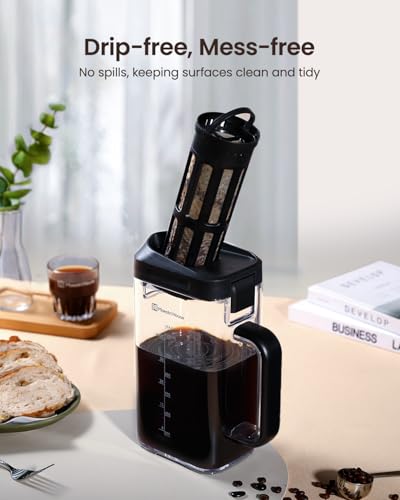
- Leakproof design
Trade-offs
- Tritan can stain over time
- Filter assembly fiddly
- Scales wear off with scrubbing
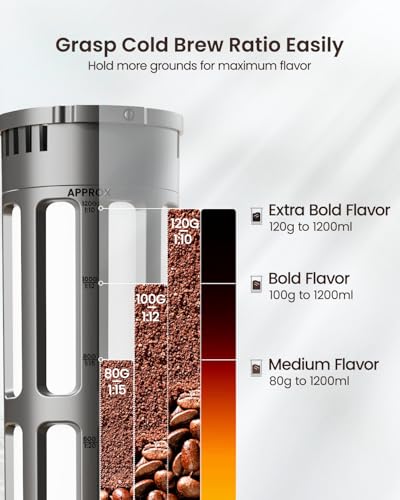
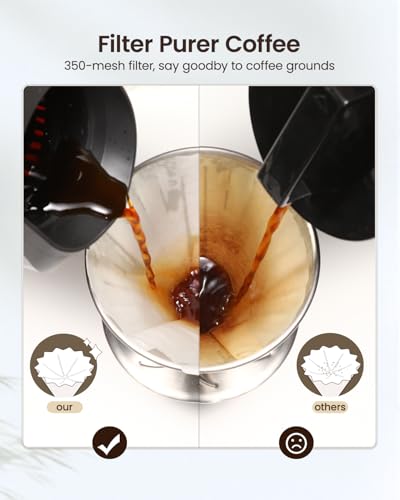
The Maestri House pitcher is built for coffee lovers who geek out over ratios and extraction control. Its 350-mesh filter is one of the finest available, delivering ultra-clean cold brew with almost no sediment. But what really sets it apart is the scaled pitcher body, which lets you measure coffee and water precisely, no guesswork.
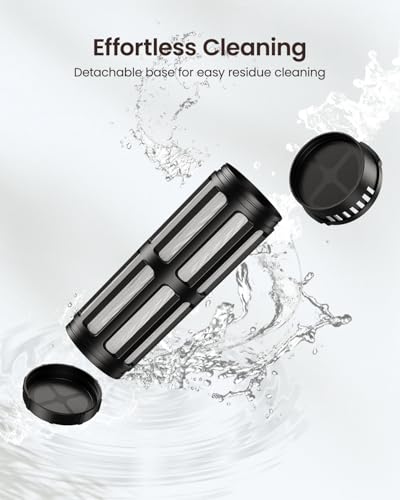
Owners praise the leakproof seal and the removable filter bottom, which makes cleaning far easier than with welded filters. The Tritan material is lightweight and durable, though not quite as premium as OXO’s glass. Compared to the Takeya, it offers more precision and better filtration, but at a slightly higher price point.
Product photos

How We Evaluated cold brew coffee system
As the founder of Bean Thusiast, I approach cold brew systems with a focus on delivering smooth, balanced coffee – and understanding what features truly contribute to that outcome. Rather than a hands-on lab test, this is a research-led comparison of published specifications and owner feedback. I compared features across numerous systems, weighing owner reviews from multiple sources and expert opinions to form a ranked list. My goal was to identify systems excelling in different areas, from budget-friendly options to those suited for larger batches.
For cold brew, filtration quality, material durability, and ease of cleaning are paramount. A fine mesh filter is crucial to avoid sediment, while sturdy materials (like Tritan or thick glass) ensure longevity. Capacity also played a role; a system that’s inconvenient to fill or store loses points. These factors directly impact the final cup quality and the overall user experience, so I gave them the most weight in my assessment.
Specifications reliably detail capacity, materials, and filter micron size. However, I heavily relied on owner feedback to gauge real-world performance – particularly regarding leak-proof designs, cleaning difficulty, and the filter’s effectiveness over time. Reputation and consistency of positive comments were key. If you’re looking for more in-depth information, our homemade cold brew guide provides a solid foundation for understanding the process.
How To Pick The Right cold brew coffee system
Finding the right cold brew system can drastically improve your daily coffee ritual. It’s a surprisingly nuanced process, with options ranging from simple mason jar setups to sophisticated, all-in-one brewers.
A quality cold brew system prioritizes even saturation of the coffee grounds, effective filtration to remove sediment, and a container designed for long steeping times in the refrigerator. Look for durable materials like borosilicate glass or Tritan plastic, and a filter with a micron rating between 100-200 for a clean cup. The system should also be easy to disassemble and clean, as regular maintenance is crucial for optimal flavor.
Capacity and Batch Size
The volume of cold brew you typically make should be the first consideration. A smaller system, like the OXO Good Grips 32oz Cold Brew Maker, is perfect for individuals or couples. However, if you’re brewing for a family or entertaining frequently, you’ll want to step up to a larger capacity. The Snap! 5 Gallon Commercial Cold Brew System, while geared toward businesses, demonstrates the upper end of the scale. Don’t overestimate your needs; a smaller batch brewed frequently will always taste better than a large batch that sits too long.
Filtration and Clarity
Filtration is where many systems differentiate themselves. The goal is a smooth, sediment-free concentrate. Many systems use stainless steel filters, but the weave density matters. A finer weave (lower micron rating) will block more sediment, but can also slow down the filtration process.
Here’s what to consider: * Mesh Size: A coarser mesh is faster, but leaves more fines. * Filter Material: Stainless steel is reusable and durable, but paper filters (like those used with the TODDY Cold Brew Coffee Set White) offer exceptional clarity. * Multi-Stage Filtration: Some systems, like the Snap! system, employ multiple filtration stages for superior results.
Ultimately, the level of clarity you prefer is a matter of personal taste.
Usability and Cleaning
Let’s be honest: convenience matters. A system that’s a pain to clean won’t get used. Look for systems with wide mouths for easy access, dishwasher-safe components, and designs that disassemble quickly. The Takeya Deluxe Cold Brew Maker, for example, is lauded for its ease of cleaning. Beyond that, consider the overall brewing process. Some systems, like those with a “Rainmaker” feature (OXO), aim for more even saturation. If you’re striving for a consistently balanced brew, features like these can be incredibly helpful. Understanding the ideal cold brew ratio is also key to getting the strength you desire.
A good rule of thumb: prioritize a system you’ll actually use. The most expensive, complex brewer won’t deliver a better cup if it sits neglected in a cupboard.
Cold Brew Coffee System Compared
Here’s a comparison of key specifications for various cold brew coffee systems to help you decide which one is right for you.
| Product Name | Capacity (oz) | Filter Type | Material | Leak-Proof | Special Features |
|---|---|---|---|---|---|
| 64 oz Mason Jar Cold Brew Pitcher | 64 | Stainless Steel (160 micron) | Soda Lime Glass | Yes | Pour Spout, Cleaning Brush |
| Takeya Deluxe Cold Brew Maker 1 Quart | 32 | Fine-Mesh | Tritan | Yes | Airtight Lid |
| OXO Brew Compact Cold Brew Maker | 24 | Stainless Steel Mesh | Glass | N/A | Rainmaker, Auto-Release |
| Snap! 5 Gallon Commercial Cold Brew System | 512 | PLA & Cotton | PP/PE | Yes | Dual Filtration |
| TODDY Cold Brew Coffee Set White | 9.5L (321oz) | Paper/PLA | N/A | N/A | Large Capacity |
| JunVpic 64oz Cold Brew Coffee Jar | 64 | Stainless Steel (100 micron) | Soda Lime Glass | Yes | Ultra-Fine Mesh |
| OXO Good Grips 32 oz Cold Brew Maker | 32 | Stainless Steel Mesh | Glass | N/A | Brew-Release Switch |
| Maestri House 40oz Compact Cold Brew Pitcher | 40 | 350-Mesh | Tritan | Yes | Precision Brewing |
Frequently Asked Questions
What micron filter size is best for cold brew?
A filter between 100-200 microns generally provides the best balance. Smaller micron sizes, like those found in the JunVpic system (100 micron), create a very clear brew, but can slow down filtration.
Can I use any coffee grounds for cold brew, or should I use a specific grind?
Coarsely ground coffee is essential for cold brew. A coarse grind minimizes sediment and prevents over-extraction, leading to a smoother, less bitter concentrate, unlike the finer grounds used for drip coffee.
Are glass cold brew makers more fragile than plastic ones?
Glass carafes, like those in the OXO systems, are more susceptible to breakage than Tritan plastic. However, borosilicate glass is quite durable and resistant to thermal shock, and many owners prefer its lack of plastic taste.
How does the “Rainmaker” feature on the OXO system improve the brew?
The OXO’s “Rainmaker” top evenly saturates the coffee grounds during the bloom phase. This ensures all grounds are fully immersed, which results in a more consistent and balanced extraction compared to simply pouring water on top.
I’m interested in a drip-style cold brew system. Where can I learn more?
If you’re exploring options beyond immersion brewing, our guide to the best cold drip brewers details the advantages and disadvantages of drip systems, offering an alternative to the traditional immersion method.
The Bottom Line
Ultimately, choosing a cold brew system comes down to balancing convenience with control. You can spend a lot on features, but the core process remains the same. For the best overall experience – a blend of quality, ease of use, and a reasonable price – I recommend the Takeya Deluxe Cold Brew Maker. It consistently receives high marks for its leak-proof design and simple cleaning process, delivering a smooth concentrate without unnecessary fuss.
If you’re on a tighter budget, the 64 oz Mason Jar Cold Brew Pitcher offers excellent value. For those needing to brew for larger groups, the Snap! 5 Gallon Commercial Cold Brew System is a clear winner, offering dual filtration and significant capacity. And if you’re exploring alternative methods, consider the French press cold brew method for a versatile option.
At the end of the day, the most important factors aren’t micron ratings or fancy features. It’s about using fresh, high-quality coffee, maintaining a consistent coffee-to-water ratio, and letting the brew steep long enough to develop a rich, smooth flavor. Focus on those fundamentals, and any system on this list will help you unlock delicious cold brew at home.
