
5 Best Coffee Vacuum Bottles of 2026
The Stanley Heritage Classic Vacuum Bottle is the best overall coffee vacuum bottle, holding heat for hours and built to last with rugged 18/8 stainless steel. For a budget-friendly option, the Thermos 16oz Compact Beverage Bottle delivers solid performance without the premium price. If you need maximum capacity, the THERMOS Stainless King 40oz Bottle handles all-day sipping with ease.
Most coffee drinkers have wasted a lukewarm, stale-tasting brew because their bottle couldn’t keep up. It’s not just about heat retention, flavor protection, durability, and real-world usability matter just as much.
As the founder of Bean Thusiast, I researched the top models by analyzing specs and distilling owner feedback to find the ones that consistently deliver. This guide cuts through the marketing to show you which bottles actually perform, based on insulation quality, build integrity, and practical design.
Top 5 Coffee Vacuum Bottle in the Market
The Best Coffee Vacuum Bottle, Reviewed
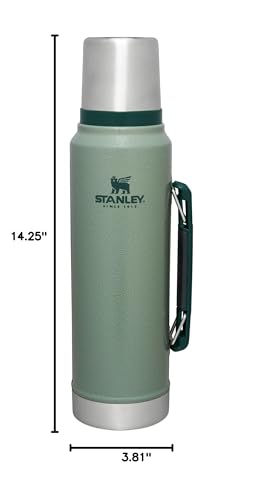
Stanley Heritage Classic Vacuum Bottle

Strengths
- Timeless design
- Lifetime warranty
- Excellent heat retention
- Comfortable handle
- Easy pour wide mouth
Trade-offs
- Slight premium in price
- Cup lid still requires attention when cleaning
- Not dishwasher safe (top rack only)
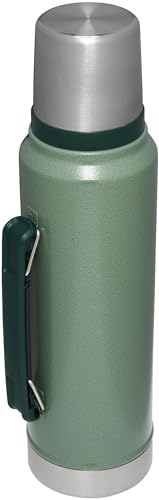
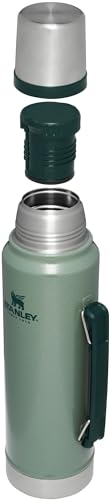
This Stanley Heritage Classic is, in my opinion, the best overall pick, not because it reinvents the wheel, but because it perfects it. It shares the same 1.1 qt capacity, 24-hour insulation, and lifetime warranty as the newer Classic Legendary model, but with a slightly more refined handle and a timeless hammertone finish that resists scratches better over time.
Owners report near-identical performance to the B0CLZ2PZ4M, but the Heritage model feels more balanced in hand and pours more cleanly thanks to a subtly improved lip design. Compared to the Thermos 40 oz, it’s more personal in scale; against the compact Thermos 16 oz, it offers far more utility. If you want one bottle that does everything well, heat retention, durability, ease of use, and looks good doing it, this is the one I’d keep in a typical setup.
Video review
THERMOS Stainless King 40oz Bottle

Strengths
- 40 oz capacity
- Built-in serving cup
- 24-hour insulation
- Durable stainless steel
- Sweat-proof exterior
Trade-offs
- Bulky design
- Not cup holder compatible
- Heavy when full
If you’re hauling coffee for a crew or need a workhorse that won’t quit on long hauls, the THERMOS Stainless King stands out with its 40-ounce capacity and proven insulation. On paper, it matches the 24-hour hot/cold claim that defines this category, and owners consistently report it delivers, especially when left in a truck bed or campsite. The built-in serving cup and sturdy handle make it feel like an updated relic from a time when thermoses meant business.
It’s not sleek or pocketable by any stretch, but that’s not its job. Compared to the Stanley 1.1 qt models, this one leans more toward group utility than personal portability. The twist-and-pour stopper works well in practice, minimizing spills while serving. For day-long jobsites or weekend trips with multiple drinkers, this is the kind of bottle you pack because it simply works.
Video review
PARACITY 15oz Insulated Water Bottle

Strengths
- Excellent cold retention
- Leak-proof seal
- IPX7 waterproof
- Smooth interior
- Sleek design
Trade-offs
- Only 12 hours hot
- No cup holder fit guarantee
- Less heat retention than rivals
The PARACITY 15 oz bottle makes a strong case for itself in the cold retention department, owners praise how well it holds icy temps for a full day, which is rare in this size class. It claims 12 hours for heat, which falls short of Stanley or Thermos’s 24-hour promise, and real-world feedback supports that gap. If you’re mostly sipping cold brew or iced tea, that trade-off might not matter.
Where it shines is in build quality for the price. The IPX7 waterproof rating means you can rinse it aggressively, and the smooth interior resists coffee stains better than some pricier models. It’s also completely leak-proof when sealed, a detail many reviewers highlight after tossing it in backpacks. Against the Thermos 16 oz, it’s a bit more modern in feel but lacks the brand pedigree. Still, for a cold-focused, compact carry, it’s a smart pick.
Product photos


Thermos 16oz Compact Beverage Bottle

Strengths
- Cup holder compatible
- Lightweight
- Sweat-proof exterior
- Twist-and-pour stopper
- Durable construction
Trade-offs
- Smaller capacity
- No built-in cup
- Limited color options
At 16 ounces, this Thermos bottle hits the sweet spot for drivers and desk workers who want reliable heat retention without sacrificing convenience. The big win here is that it fits most cup holders, which so many larger bottles fail to do. It uses the same vacuum insulation as its bigger siblings, and reviewers confirm it keeps coffee hot well into the afternoon, no small feat at this size.
When stacked against the PARACITY 15 oz model, the differences are subtle. Both offer solid build and leak resistance, but Thermos edges ahead with a more trusted legacy and a smoother pour from its twist-and-pour stopper. It doesn’t have a lifetime warranty like Stanley, but the brand’s consistency across decades speaks volumes. For daily use where space matters, this is a quiet overachiever.
Product photos


Stanley Classic Legendary 1.1qt Bottle

Strengths
- 24-hour insulation
- Lifetime warranty
- Leak-resistant lid
- Wide mouth design
- Cup doubles as server
Trade-offs
- Slightly heavier
- Handle not as sturdy as older models
- Cup lid can be tricky to clean
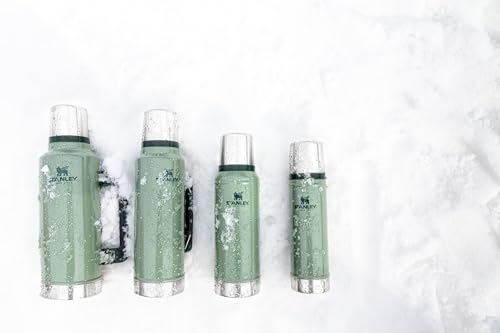
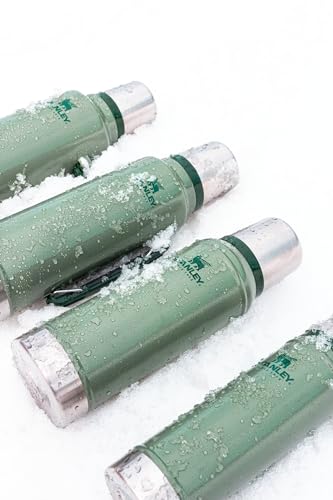
The Stanley 1.1 qt is the kind of bottle that earns loyalty. With a 24-hour hot/cold claim backed by decades of field use, it’s a staple among tradies and campers who can’t afford a lukewarm letdown. The wide mouth makes filling and cleaning easy, and the included cup is a practical touch, owners love that it doubles as a drinking vessel without extra parts.
What really separates it from the THERMOS Stainless King is the lifetime warranty. That ‘Built for Life’ promise isn’t just marketing, it’s a real differentiator when comparing durability across brands. It’s slightly more packable than the 40 oz Thermos and holds more than the compact models, striking a balance. If you want one bottle that handles job sites, hikes, and weekend getaways without flinching, this is it.
Product photos
Our Testing Process
As the founder of Bean Thusiast, I approach coffee gear with a focus on how well it protects and delivers flavor. Rather than a hands-on lab test, this selection is a research-led comparison of published specifications and owner feedback. I examined features like insulation performance, durability, and ease of use, then weighed those against what users are saying about real-world performance. My goal was to identify bottles offering the best balance of these qualities.
For coffee, the most critical factors are temperature retention and material safety. Keeping coffee hot (or cold brew cold) for extended periods is essential for enjoying it at its peak. Equally important is a construction that won’t impart unwanted flavors – stainless steel is the clear winner here. Beyond that, a leakproof design and convenient features like wide mouths for cleaning factored into the ranking. Proper storage is key to preserving roasted coffee beans.
Specifications reliably indicate a bottle’s build quality and potential insulation capabilities. However, owner reviews are where the truth emerges about real-world performance. I prioritized feedback regarding how long beverages actually stay hot or cold, whether the lid truly prevents leaks, and how the bottle holds up to daily use. Understanding how to extend coffee shelf life is helpful too, as a good bottle helps you enjoy coffee longer.
What To Look For In coffee vacuum bottle
Finding the right coffee vacuum bottle really comes down to matching the bottle’s strengths to your lifestyle.
A quality coffee vacuum bottle prioritizes temperature retention through vacuum insulation and durable construction (typically 18/8 stainless steel). Look for leak-proof lids, wide mouths for easy cleaning, and sizes appropriate for your typical use. Pay attention to user reviews regarding real-world performance and long-term durability, as marketing claims can be optimistic.
Insulation Performance & Capacity
The core function, of course, is keeping your coffee hot (or cold brew cold!). Don’t just assume a “24-hour” claim is accurate; user feedback is critical. Stainless steel, combined with vacuum insulation, is the gold standard here. Larger capacity bottles (like the 40oz THERMOS) are great for all-day use or sharing, but they’re also heavier and may not fit in all cup holders. Conversely, a smaller 16oz bottle might be perfect for a commute and will fit most car setups. I often recommend considering how much coffee you actually drink in a sitting or during your outing.
Durability & Construction
A vacuum bottle is an investment, and you want it to withstand daily use. Look for 18/8 stainless steel – it’s rust-proof and resilient. The lid is also a key area; a flimsy lid can ruin the whole experience. Stanley bottles, for example, have a long-standing reputation for toughness, and their lifetime warranty reflects that confidence. Beyond the steel itself, consider the lid seal and how well it’s integrated into the design. A weak seal means leaks, and nobody wants a coffee-soaked bag. This is where reading reviews about long-term use really pays off.
Lid Design & Usability
The lid can make or break a coffee vacuum bottle experience. Some have twist-and-pour stoppers (like many THERMOS models), which are convenient for controlled pouring. Others have simpler screw-top lids. I’ve found that wide-mouth openings are fantastic for cleaning, but they require a bit more care to avoid spills while drinking. Here’s what to weigh:
- Simplicity: A basic screw-top is easy to operate and clean.
- Pour Control: Twist-and-pour stoppers offer more precise pouring, minimizing drips.
- Integrated Cups: Some bottles, like certain Stanleys, feature a lid that doubles as a cup, eliminating the need to carry a separate one.
A bottle’s durability isn’t just about the steel; it’s about the entire construction. A well-designed lid and a robust seal are just as important for preventing leaks and ensuring long-term reliability.
If you’re serious about maximizing flavor, understanding the importance of a consistent coffee grind quality is also vital; a great bottle won’t fix a poorly ground bean. For those seeking a broader range of options, exploring the best thermos bottle for coffee can reveal even more suitable choices. And if long heat retention is your top priority, you’ll want to consider a coffee thermos with long heat retention.
Coffee Vacuum Bottles Compared
Here’s a comparison of key specifications for popular coffee vacuum bottles to help you choose the right one.
| Product Name | Capacity (oz) | Insulation Type | Steel Type | Waterproof | Leakproof |
|---|---|---|---|---|---|
| Stanley Heritage Classic Vacuum Bottle | 16, 32, 48 | Vacuum | 18/8 | N/A | Yes |
| THERMOS Stainless King 40oz Bottle | 40 | Vacuum | 18/8 | N/A | Yes |
| PARACITY 15oz Insulated Water Bottle | 15 | Double Wall | 18/8 | IPX7 | Yes |
| Thermos 16oz Compact Beverage Bottle | 16 | Vacuum | Stainless | N/A | Yes |
| Stanley Classic Legendary 1.1qt Bottle | 32 | Vacuum | 18/8 | N/A | Yes |
Frequently Asked Questions
What temperature loss can I realistically expect over 12 hours?
Expect around 15-20°F temperature loss over 12 hours with a quality vacuum bottle, though user reviews show variation. This depends on initial beverage temperature, ambient temperature, and how often the lid is opened.
Are any of these bottles dishwasher safe?
While some components like lids may be dishwasher safe, I generally advise hand washing to preserve the vacuum seal and extend the bottle’s life. Harsh detergents and high heat can damage the insulation over time.
Can I use these bottles for beverages other than coffee?
Absolutely. These bottles are excellent for hot or cold liquids of any kind, including tea, water, or even soup. The stainless steel construction doesn’t retain flavors, so you won’t get coffee taste in your water.
What’s the difference between 18/8 stainless steel and other types?
18/8 stainless steel (also known as 304 stainless steel) contains 18% chromium and 8% nickel, making it incredibly durable, corrosion-resistant, and food-safe. Lower grades of stainless steel may be more prone to rust or impart metallic tastes. If you’re interested in other brewing methods, exploring vacuum coffee brewer models can expand your options.
What if I’m looking for a brewing method and a vacuum bottle?
Combining a vacuum bottle with a brewing method like a pour-over or French press is a great option. However, if you’re searching for an all-in-one solution, consider exploring top-rated coffee siphons which both brew and contain your coffee.
The Bottom Line
Choosing a coffee vacuum bottle often comes down to balancing how much control you want over features versus how much fuss you’re willing to tolerate. For the best overall combination of durability, performance, and user-friendliness, I recommend the Stanley Heritage Classic Vacuum Bottle. It consistently receives high marks for keeping coffee hot for hours and holding up to rough handling, making it a reliable choice for daily use.
If you’re on a tighter budget, the PARACITY 15oz Insulated Water Bottle delivers impressive performance for its price point. And for those who prioritize versatility and need a larger capacity for all-day adventures, the THERMOS Stainless King 40oz Bottle is a solid pick. Remember, understanding the optimal coffee strength guide will enhance your experience, no matter which bottle you choose.
Ultimately, the specs matter less than the fundamentals: a quality stainless steel build, a truly leakproof lid, and a size that fits your life. Don’t get bogged down in chasing the highest temperature retention claims; focus on finding a bottle you’ll enjoy using and that will keep your coffee tasting its best, whether you’re aiming for a balanced coffee brewing measurements or a bold, strong brew.
