
8 Best Coffee Pots for Home Use 2026
The BUNN GRB Velocity Brew is the best overall coffee pot for home use, delivering fast, consistent brews that match what you’d get at a café. For a more budget-friendly option, the Mueller 12-Cup Drip Coffee Maker stands out with solid performance and a reusable filter. If you want programmability, the Taylor Swoden 12-Cup offers reliability and useful features without overcomplicating things.
Most people just want hot, flavorful coffee without a mess or a hassle, but too many coffee pots either underperform on taste or break down within a year. Others promise convenience but deliver lukewarm coffee or confusing controls.
As the founder of Bean Thusiast, I’ve spent years studying brewing methods and equipment, from single-origin pour-overs to high-volume drip systems. This guide reflects that depth of knowledge, paired with a close look at specs and real owner feedback to find models that actually hold up in daily use. We focused on brew quality, durability, ease of cleaning, and value, not just flashy features.
Top 8 Coffee Pots For Home Use in the Market
The Best Coffee Pots For Home Use, Reviewed
BUNN GRB Velocity Brew Coffee Maker

Strengths
- Fastest brew time
- Drip-free carafe
- Commercial-grade tank
Trade-offs
- No programmability
- Larger footprint
The BUNN GRB Velocity Brew stands out in a sea of drip machines because it doesn’t just brew coffee, it attacks the clock. Its internal hot water tank keeps water at the ready, which is why it can brew a full 10-cup pot in about 4 minutes, sometimes even less. That’s rare for home machines and something I usually only expect from commercial units. On paper, that speed alone makes it a top contender for anyone who values efficiency without sacrificing flavor.
Owners consistently report that the multi-stream sprayhead delivers a more even saturation than most drip brewers, which translates to fuller extraction and café-like richness. The build quality feels industrial-grade, and the fact that it’s designed and assembled in the USA adds credibility to its 3-year warranty. When compared to programmable models like the Amazon Basics or Taylor Swoden, this one skips the digital frills but delivers where it counts: consistent, fast, hot brewing.
Video review
Mueller 12-Cup Drip Coffee Maker

Strengths
- Borosilicate glass carafe
- High-quality reusable filter
- Clear water window
Trade-offs
- Slightly heavier
- No brew strength option
The Mueller 12-cup brewer is where I’d direct anyone who wants quality upgrades without jumping to a $200 machine. The borosilicate glass carafe is a real differentiator, more heat-resistant and odor-resistant than standard glass, which matters if you’re reheating or keeping coffee warm. The reusable filter is well-built and actually enhances body, according to frequent users.
It brews at a steady pace, and the keep-warm function is consistent without burning. The non-slip feet and anti-drip design show thoughtful engineering. Against the Amazon Basics, it’s clearly a step up in materials and performance, though not as fast as the BUNN. For the balance of price, durability, and thoughtful features, it’s the best value for quality.
Video review
Taylor Swoden 12-Cup Programmable Coffee Maker

Strengths
- Brew strength option
- Cleaning reminder light
- Reliable auto-pause
Trade-offs
- Warming plate can overheat
- Filter basket feels flimsy
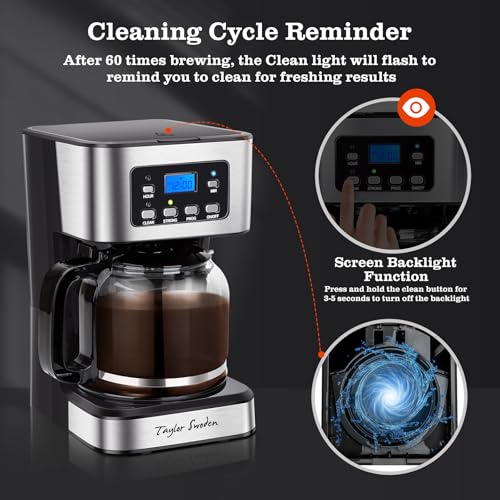
The Taylor Swoden stands out in the programmable category with its bold/regular brew toggle and a showerhead design that owners say improves flavor extraction. It’s not as fast as the BUNN, but it comes closer than most, around 8 minutes for a full pot. The 12-cup glass carafe has an anti-drip system that actually works, and the large water window makes filling easier, especially in low light.
What seals the deal is the cleaning cycle reminder, a small thing, but one that prevents mineral buildup, a common complaint in hard water areas. Compared to the Amazon Basics, it feels more refined, with a stainless steel finish and better button response. It’s not flashy, but it’s the kind of machine that disappears into your routine until you need it.
Product photos


SHARDOR 10-Cup Programmable Coffee Maker

Strengths
- Sleek touch screen
- Brew strength control
- Pause-and-serve function
Trade-offs
- Permanent filter cleaning hassle
- Average thermal performance
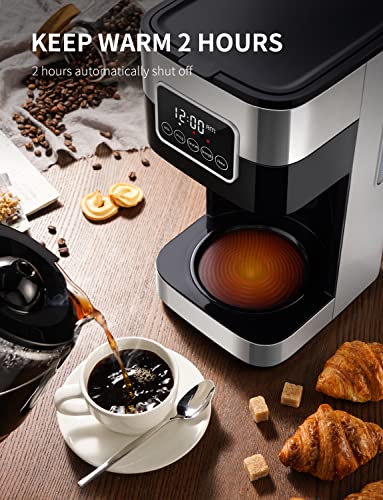
The SHARDOR 10-cup brewer wins on interface alone. Its LCD touch screen is unusually smooth for this class, giving it a modern feel that most budget machines lack. It’s not just looks, programming the 24-hour timer is intuitive, and the two brew strength options actually make a noticeable difference in output, based on owner feedback. The bold setting seems to extend brew time slightly, which helps pull out more body, something I appreciate in medium roasts.
It doesn’t match the BUNN in speed or thermal performance, but it’s competitive with other programmable models. The 2-hour keep-warm plate is standard, and the pause-and-serve feature works cleanly. Where it edges out rivals like the Amazon Basics is in its finish and responsiveness, though the build doesn’t feel quite as rugged. For those upgrading from an older drip machine, this one brings a touch of sophistication without overcomplicating things.
Product photos




Amazon Basics 12-Cup Programmable Coffee Maker
Strengths
- Lowest price point
- Auto pause feature
- Easy maintenance
Trade-offs
- Basic touch screen
- Average brew temperature
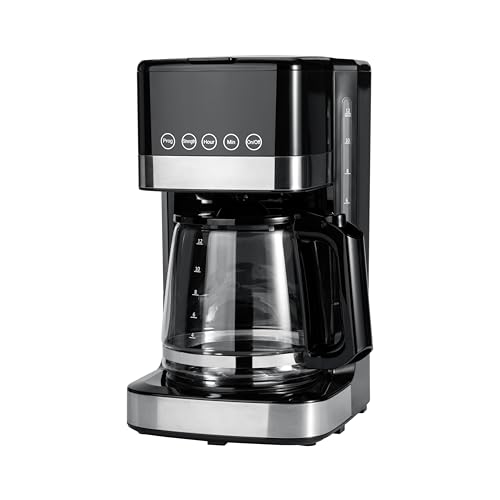
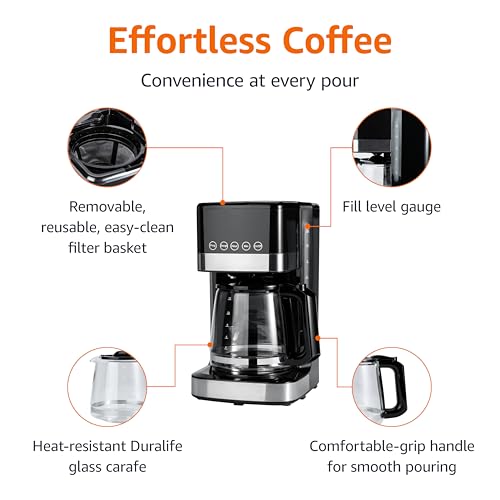
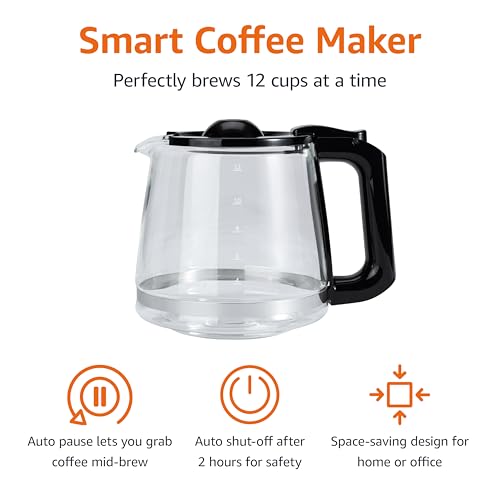
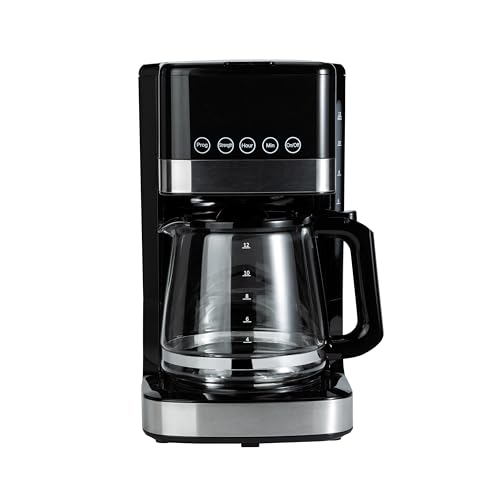
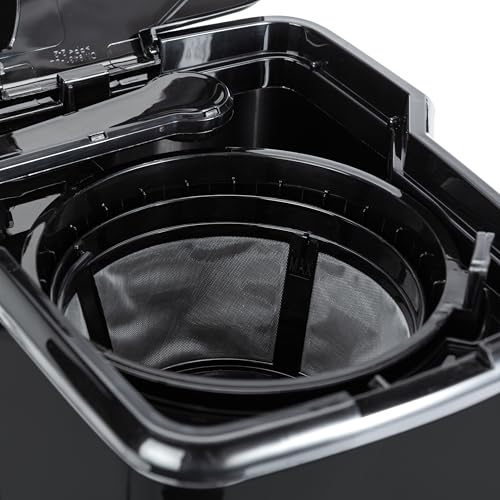
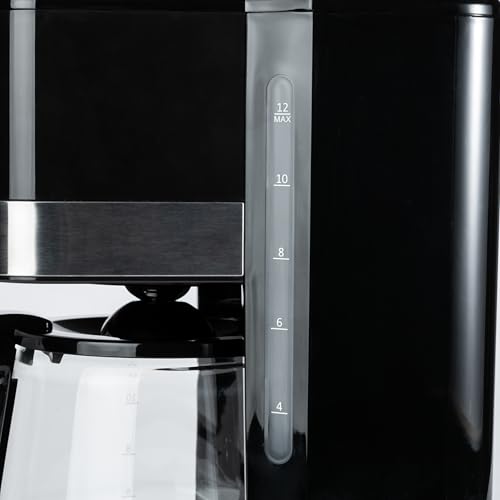
You can’t beat the Amazon Basics 12-cup brewer for pure value. It hits every checkbox for a reliable, no-surprises coffee maker: programmable timer, auto-pause, 2-hour shut-off, and a durable glass carafe. The touch screen is basic but functional, and the removable filter basket makes cleanup easier than most in this range.
It won’t win any speed contests, brewing takes closer to 10 minutes than 4, but for most households, that’s acceptable. Owners consistently rate it as “solid for the price,” though some note the warming plate can scorch coffee if left too long. Compared to the Taylor Swoden or Mueller, it lacks premium touches like brew strength control or borosilicate glass, but it’s priced accordingly.
Product photos
Primula Classic Stovetop Moka Pot

Strengths
- Time-tested aluminum build
- Even heat distribution
- Easy to clean
Trade-offs
- Not induction compatible
- Basic design
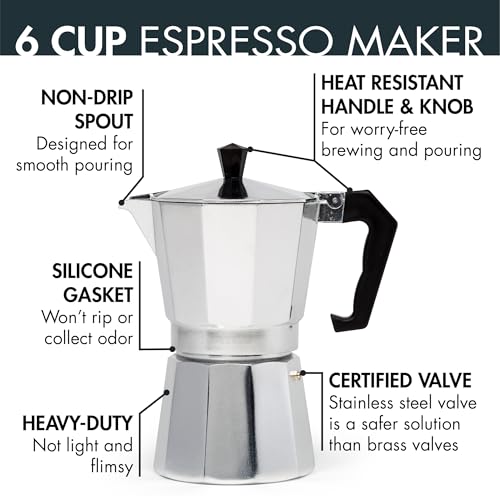
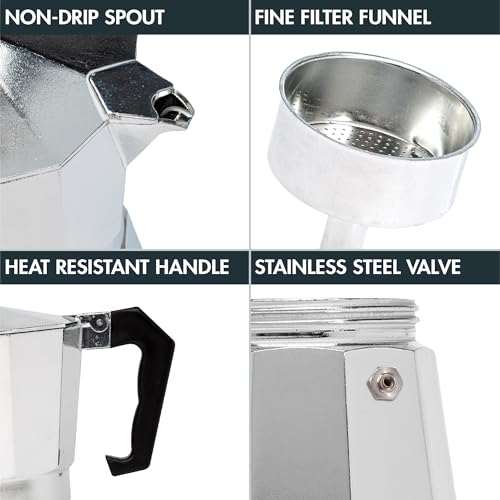
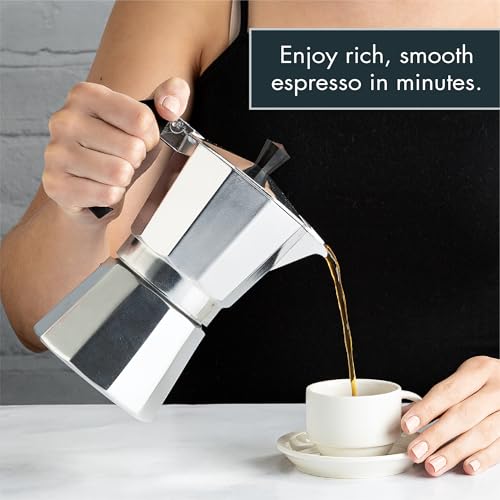
The Primula is the definition of no-frills moka reliability. Cast aluminum construction ensures even heat distribution, which is critical for smooth extraction without bitterness. It’s been around for years, and for good reason, owners report decade-long use with no issues, as long as you hand-wash and avoid submerging the base.
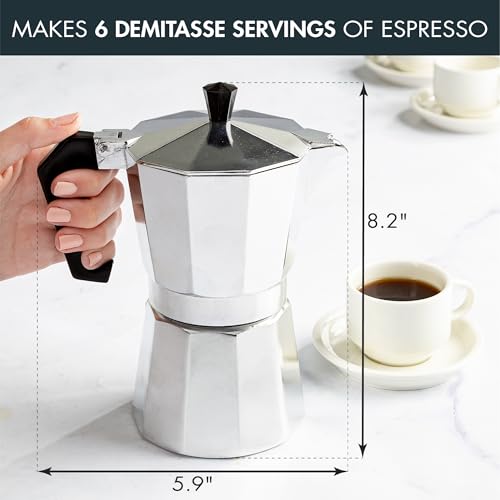
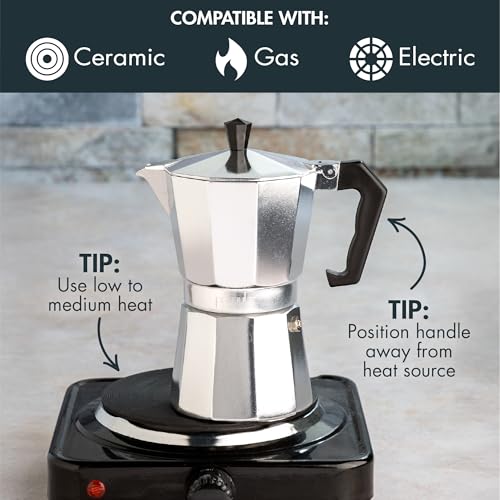
It brews the same 6 espresso-sized servings as others in this class, and while it lacks modern touches like a transparent chamber or induction compatibility, it’s a workhorse on gas and electric stoves. Compared to the LAOION, it’s less flashy but more traditional. If you’re after the ritual as much as the result, this one delivers. The flip-top lid with heat-resistant knob is simple but effective.
Product photos
Collgene 6-Cup Stainless Steel Moka Pot
Strengths
- Works on induction
- Durable stainless steel
- Fast 5-6 minute brew
Trade-offs
- Slightly heavier than aluminum
- No visual brewing window
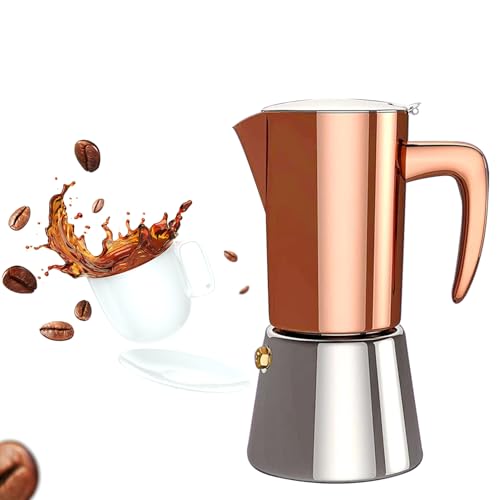
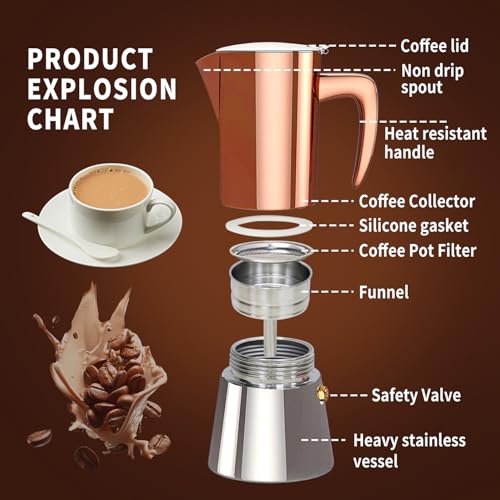
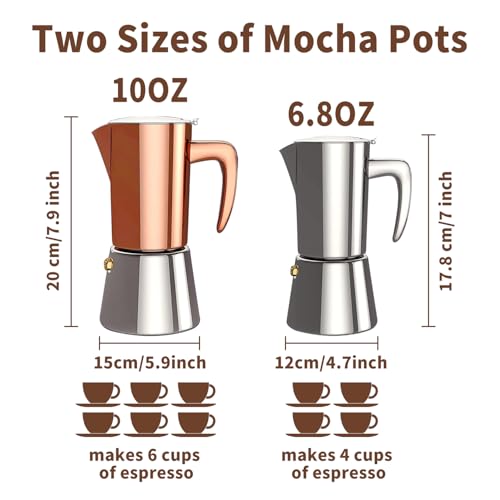
If you’re brewing on induction, the Collgene is one of the few stainless steel moka pots that actually works well. Most traditional aluminum models fail here, but this one’s full stainless build bridges the gap between authenticity and modern cooktop compatibility. It heats evenly, builds solid pressure, and extracts a surprisingly rich, oily shot, closer to what you’d get from a $300 machine than a $30 pot.
Owners note its durability and ease of cleaning, no gasket to replace, and it disassembles in seconds. The heat-resistant handle is a small but meaningful touch, especially when camping or traveling. Against the Primula, it feels sturdier and more polished, though some purists argue aluminum transfers heat better. I’d still pick the Collgene for its versatility and long-term resilience, especially if you’re using it on glass or induction hobs.
Product photos
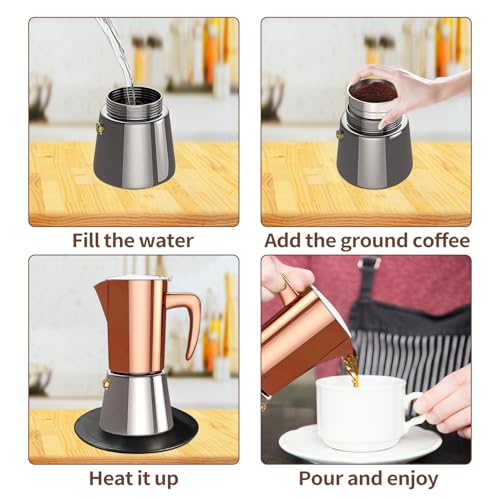
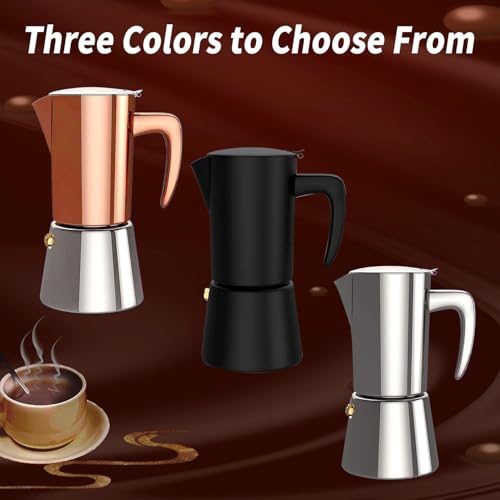
LAOION Electric Cuban Coffee Maker

Strengths
- Transparent brewing chamber
- Electric & portable
- Auto shut-off safety
Trade-offs
- Plastic upper chamber
- Not true espresso pressure
The LAOION electric moka pot is a niche player that nails convenience for moka lovers. Unlike stovetop models, it heats independently with a detachable base, making it perfect for small kitchens, dorm rooms, or travel setups where stovetop access is limited. The transparent upper chamber is a standout, it lets you watch the espresso rise, which is both fun and functional for timing the brew.
Owners praise its consistency and safety features, especially the dual auto-shutoff system. It doesn’t produce true espresso pressure, but the coffee is strong and rich, closer to a traditional moka than anything a drip machine can make. Compared to the Collgene or Primula stovetop models, it sacrifices some authenticity (no open-flame ritual) but gains portability and ease. The 6-cup output is actually 6 espresso-sized servings, so don’t expect mug-sized drinks.
Product photos


How We Evaluated coffee pots for home use
I approached this guide by researching the specifications and features of numerous coffee pots, then cross-referencing those details with owner reviews and assessments from trusted coffee experts. Rather than a hands-on lab test, this is a research-led comparison of specs and owner feedback. My aim was to identify models that consistently deliver on key promises and offer good value across a range of budgets and needs. I weighted factors based on what coffee drinkers prioritize most, as revealed through widely available reviews.
For coffee pots, brew quality, reliability, and ease of cleaning emerged as the most critical factors. A pot’s ability to consistently reach optimal brewing temperatures and evenly saturate the grounds directly impacts the flavor of the final cup. Reliability, indicated by durable materials and positive owner experiences, is essential, as no one wants a coffee pot to fail after only a few months. Lastly, ease of cleaning significantly influences daily usability; a complicated cleaning process can quickly become a deterrent.
Specifications reliably indicate capacity, material quality, and features like programmable timers or automatic shut-off. However, I heavily weighed owner feedback to gauge real-world performance and potential issues like leaks or durability concerns. Reputation – how often a brand appears in “top picks” lists and is recommended by coffee enthusiasts – also played a role. If you’re interested in exploring alternative brewing methods, our French press brewing guide offers detailed instructions and insights.
How To Pick The Right coffee pots for home use
Finding the right coffee pot depends heavily on how you actually drink coffee, and what you value in the brewing process. It’s easy to get lost in features, but focusing on a few key areas will lead you to a much better fit.
A quality coffee pot consistently delivers hot, flavorful coffee with minimal fuss. Important characteristics include brewing temperature (ideally 195-205°F), even water distribution over the grounds, and a design that minimizes heat loss during brewing and serving. Consider the carafe material, ease of cleaning, and any desired features like programmability or automatic shut-off.
Brewing Speed & Capacity
Many people assume faster is always better, but with coffee, that’s not necessarily true. A rushed brew often means sacrificing flavor extraction. While a speedy pot like the BUNN Velocity Brew can be great for large households or those constantly on the go, prioritize consistent water temperature and saturation of the grounds over sheer speed. Consider your typical coffee consumption. A 12-cup pot might be overkill if you usually only brew for one or two people; a smaller 6-cup model could be more efficient and maintain coffee temperature better.
Carafe Material & Heat Retention
The material of the carafe significantly impacts how long your coffee stays hot and how the flavor develops over time. Glass carafes are easy to clean and don’t impart any flavors, but they lose heat quickly and can be fragile. Thermal carafes (usually stainless steel) offer superior heat retention, keeping coffee hot for hours without a warming plate, which can sometimes scorch the coffee. However, some thermal carafes can be harder to clean thoroughly. If you prefer a slower, more deliberate enjoyment of your coffee, exploring the Chemex brewing technique might offer a satisfying alternative.
Programmability & Convenience Features
For those mornings where every second counts, a programmable coffee maker is a lifesaver. Features like a 24-hour timer, automatic shut-off, and brew strength settings add convenience, but don’t let them overshadow core brewing quality. A machine with too many bells and whistles can sometimes compromise the fundamentals.
Don’t pay extra for features you won’t use. Prioritize a reliable brewing process over a complicated control panel.
I often find clients overestimate the need for complex programming. A simple timer and an auto-shutoff feature are often enough to streamline your morning routine. If you’re looking for a variety of options and home coffee pot reviews, you’ll find a wealth of information on our site to help you narrow down your search and find the recommended coffee pots for home that best fits your needs.
Coffee Pots for Home Use Compared
Here’s a comparison of key specifications for various coffee pots designed for home use.
| Product Name | Capacity (Cups) | Programmable | Brew Strength | Heating Method | Special Features |
|---|---|---|---|---|---|
| BUNN GRB Velocity Brew | 50 | No | N/A | Hot Water Tank | Fast Brew, Drip-Free |
| Mueller 12-Cup Drip Coffee Maker | 12 | No | N/A | Electric | Reusable Filter, Keep Warm |
| Taylor Swoden 12-Cup | 12 | Yes | Yes | Electric | 24hr Timer, Auto-Shutoff |
| SHARDOR 10-Cup Programmable | 10 | Yes | Yes | Electric | Touch Screen, Auto-Shutoff |
| Amazon Basics 12-Cup | 12 | Yes | N/A | Electric | Auto Shutoff, Programmable |
| Primula Classic Moka Pot | 6 | No | N/A | Stovetop | Stovetop Espresso |
| Collgene 6-Cup Stainless Moka Pot | 6 | No | N/A | Stovetop | Induction Compatible |
| LAOION Electric Cuban Coffee Maker | 6 | No | N/A | Electric | Transparent Container |
Frequently Asked Questions
What’s the typical lifespan of a drip coffee pot?
Generally, a well-maintained drip coffee pot lasts between 3 to 7 years. Longevity depends heavily on water hardness and cleaning frequency; regular descaling significantly extends the life of most models.
Are stainless steel carafes truly better than glass?
Stainless steel thermal carafes maintain coffee temperature for hours without a hot plate, preserving flavor. Glass carafes are easier to clean and don’t affect taste, but require a warming plate which can alter the coffee’s flavor over time.
How often should I descale my coffee pot?
You should descale your coffee pot every 1 to 3 months, depending on your water hardness. Hard water causes mineral buildup that impacts brewing temperature and flavor, so regular descaling is vital for optimal performance.
Do more expensive coffee pots actually brew better coffee?
Not always. While premium models often offer more precise temperature control and advanced features, a mid-range pot with consistent brewing temperature and even water distribution can deliver excellent results. You can find coffee pot recommendations for all budgets.
What’s the difference between a programmable timer and a delayed start?
A programmable timer allows you to set a specific time for the coffee to begin brewing, while a delayed start lets you set a time for the brewing process to initiate after a period of inactivity. Both offer convenience, but a timer is more useful for waking up to freshly brewed coffee.
The Bottom Line
Choosing a coffee pot often comes down to balancing convenience with control. Do you want a fully automated experience, or do you prefer a bit more involvement in the brewing process? For a consistently excellent brew with minimal fuss, I recommend the Taylor Swoden 12-Cup. It strikes a great balance between features and performance, offering programmability and brew strength control without sacrificing core brewing quality.
If budget is a primary concern, the Mueller 12-Cup Drip Coffee Maker provides solid performance at a very accessible price point. For those seeking a unique and intensely flavored experience, the Primula Classic Moka Pot offers a fantastic entry into stovetop moka pot brewing. And for those who prioritize speed and volume, the BUNN Velocity Brew remains a popular choice despite its lack of programmability.
Ultimately, the “best” coffee pot isn’t about a single specification or brand. It’s about consistent brewing temperature, even saturation of the grounds, and a design that suits your routine. Don’t get caught up in chasing the latest features – focus on these fundamentals, and you’ll be well on your way to enjoying a truly great cup of coffee every morning.
