
8 Best Coffee Packaging Ideas of 2026
The DMpcakDM 16 oz Coffee Bags are our top pick for overall freshness protection, thanks to their reliable foil barrier and one-way valve. For a budget-friendly option that still performs well, the ZOOFOX 8 oz Coffee Bags stand out, while the FireKylin 16 oz Kraft Coffee Bags offer the best blend of eco-aesthetic and functional sealing.
Most people don’t realize how much packaging affects their coffee’s flavor. Even the best beans go stale fast if the bag doesn’t block oxygen, release CO2, and seal tightly. As someone who’s spent years studying what keeps coffee vibrant, I know the right materials and design make all the difference.
This guide cuts through the noise. We compared specs and real-world feedback to find bags that actually protect freshness. You’ll learn what to prioritize, valves, materials, seals, and why some popular options fall short.
Top 8 Coffee Packaging in the Market
The Best Coffee Packaging, Reviewed
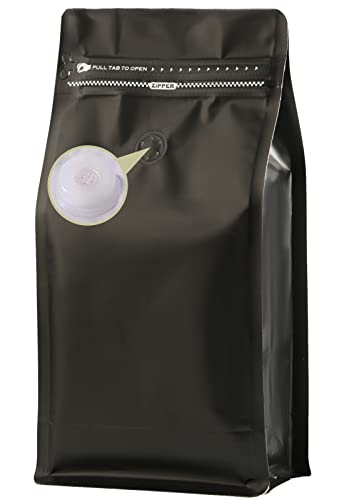
DMpcakDM 16 oz Coffee Bags with Valve
Strengths
- 4-layer barrier
- Flat bottom design
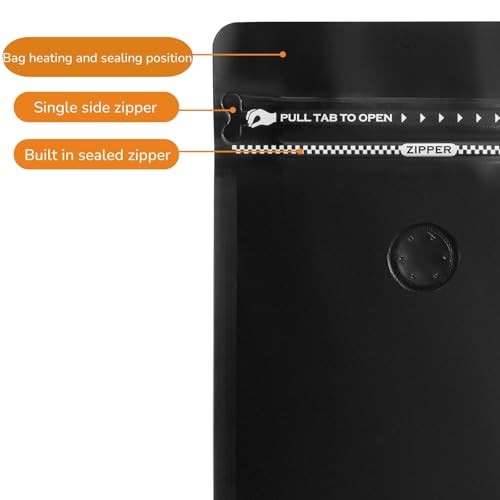
- Side zipper resealable
Trade-offs
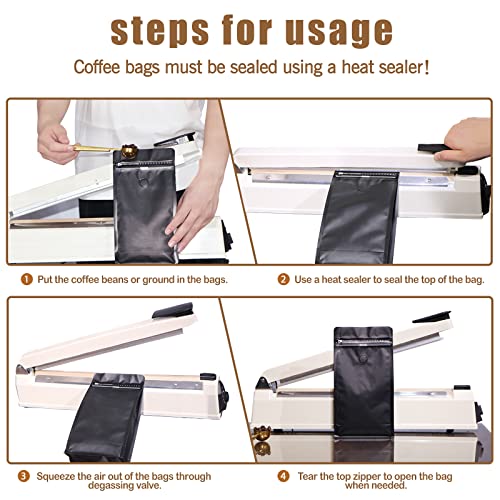
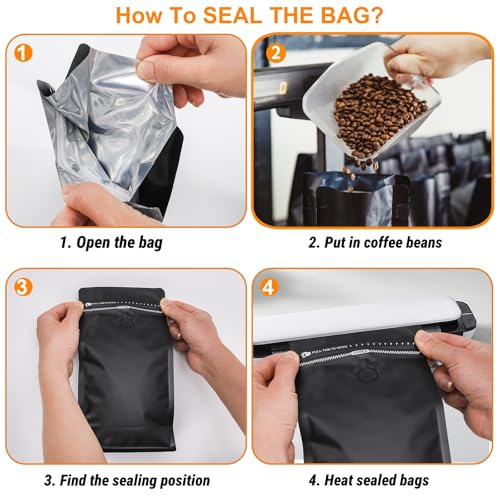
- Heat sealer required
- Slightly stiffer material
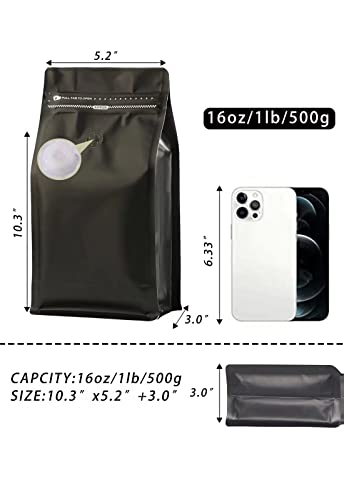
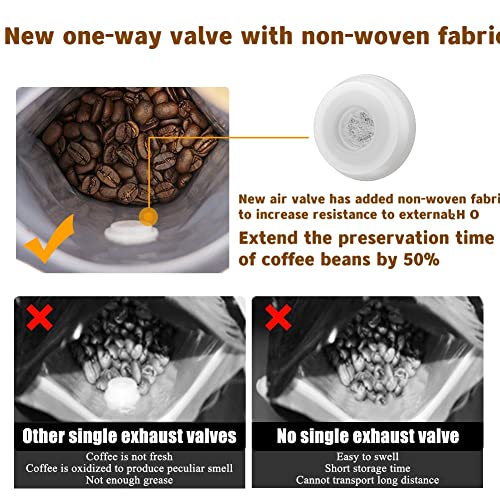
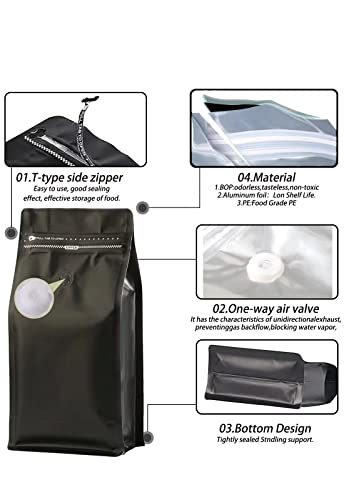
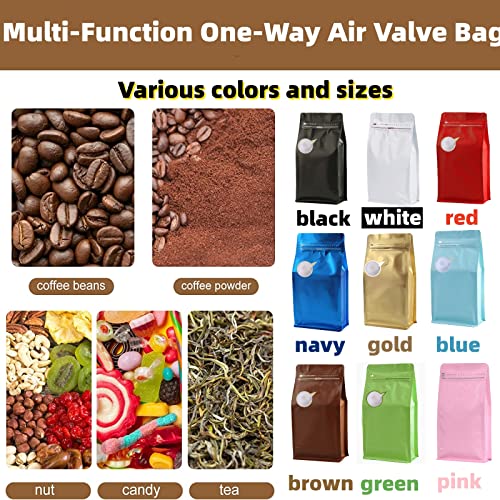
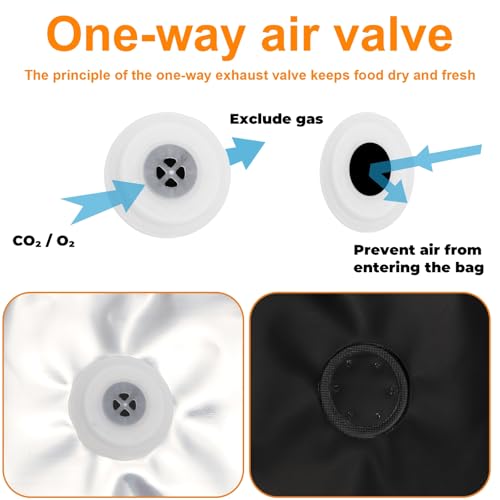
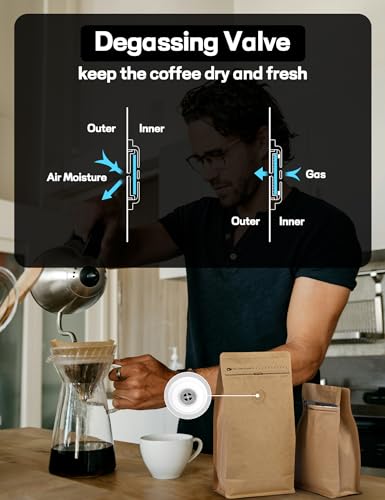
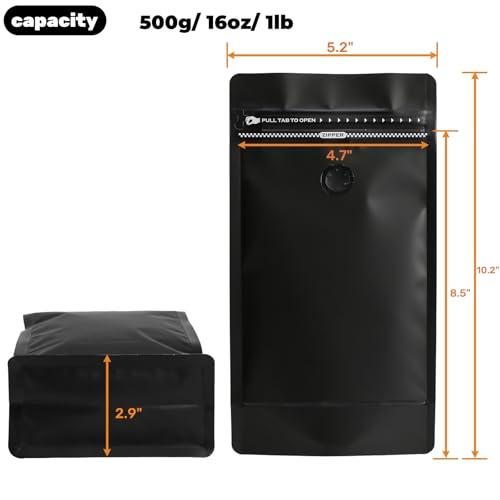
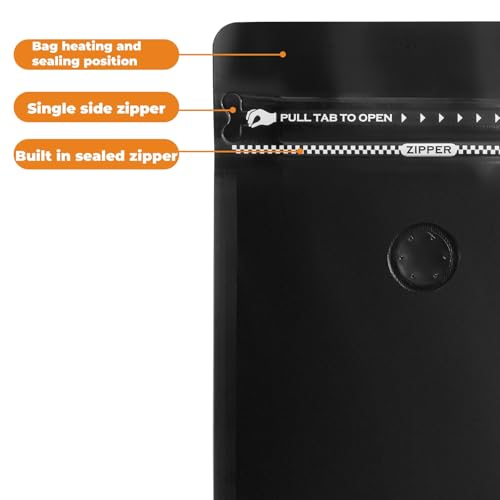
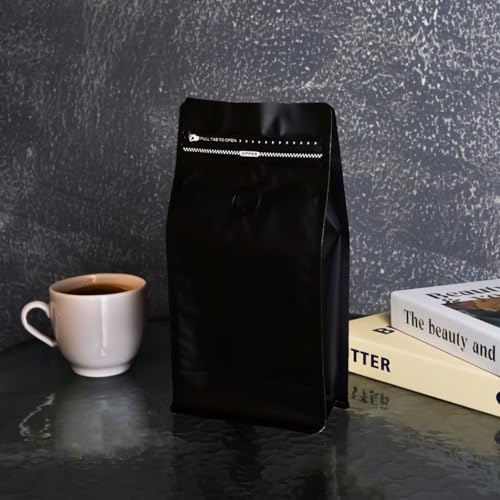
These DMpcakDM bags stand out because of their 4-layer construction, which is a real upgrade over the standard 3-layer design seen in most competitors. That extra layer makes a measurable difference in blocking oxygen and moisture, and owners consistently report noticeably better flavor retention over time, especially important for roasters who sell beans weeks after roast date. The flat bottom and side zipper offer solid shelf stability and reusability, while the one-way valve works as intended to release CO₂ without letting air back in.
What pushes these ahead of the pack for overall performance is the combination of high-barrier aluminum foil and heat-seal reliability. They’re built for both home users who care about freshness and small businesses that want a professional look. Compared to thinner alternatives, these feel sturdier and handle shipping better, which reviewers confirm in real-world use.
Product photos
ZOOFOX 8 oz Coffee Bags with Valve
Strengths
- Affordable per unit
- Stand-up design
- Easy zipper access
Trade-offs
- Thinner material
- Smaller capacity
- 3-layer only
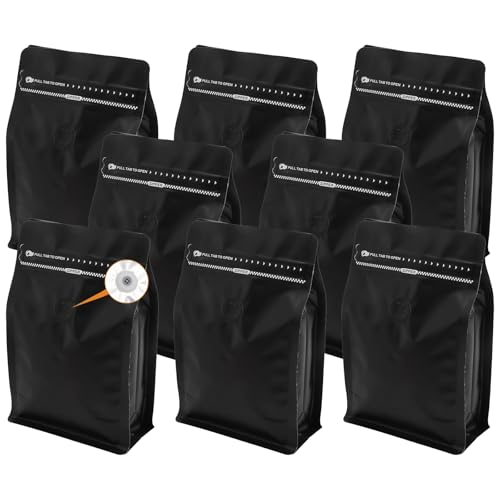
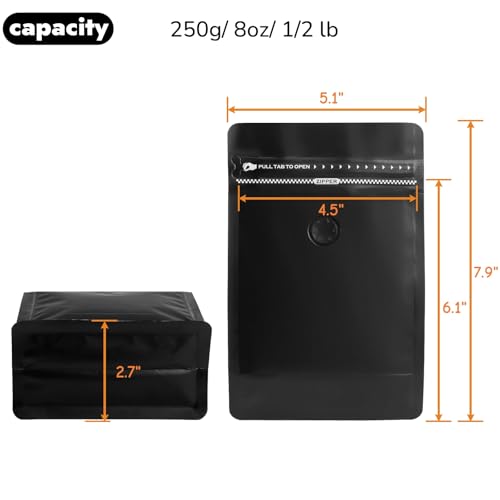
If you’re just starting out or need a solid, no-frills option for smaller batches, the ZOOFOX 8 oz bags are a smart budget-friendly choice. They use a standard 3-layer foil construction that blocks light and odor well, and the one-way valve performs reliably for basic freshness needs. At this price point, getting 50 matte black stand-up pouches with zippers and valves is a strong value, especially for home use or sampling.
They don’t have the high-barrier specs of pricier models, and the material is thinner, so long-term storage isn’t ideal. Still, for casual users or roasters giving out sample packs, these do the job cleanly. Compared to the 16 oz REMTAP or DMpcakDM options, they’re less durable but serve a different, lighter-duty purpose.
Product photos
32 oz Large Coffee Packaging Bags
Strengths
- Large 2 lb capacity
- Odor-proof material
- Resealable zipper
Trade-offs
- Bulk size reduces freshness per use
- Harder to seal evenly
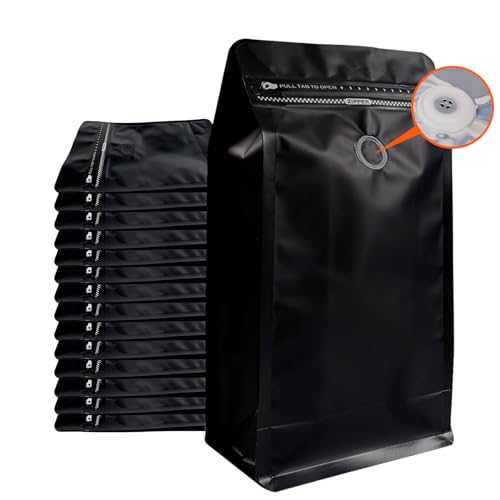
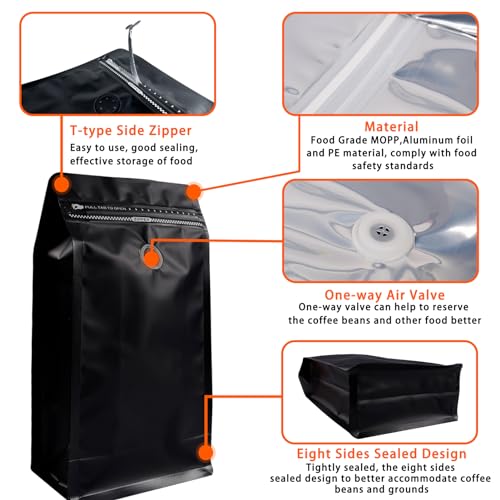
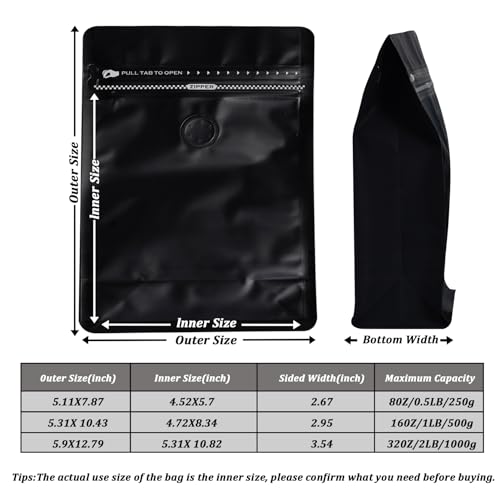
When you need to package big batches, these 32 oz bags are one of the few options that go beyond 1 lb capacity while still including a degassing valve and resealable zipper. The 2 lb size is ideal for bulk home storage or commercial repackaging, and the flat bottom holds steady even when full. The 3-layer aluminum foil construction keeps moisture and odor at bay, though it’s not as robust as the 4-layer DMpcakDM.
Owners using these for home storage love not having to transfer beans after roasting. However, the larger size means more air exposure each time you open it, so frequent users might prefer smaller bags. Compared to standard 16 oz pouches, these trade some freshness control for convenience.
Product photos


Moretoes Kraft Paper Coffee Pouches
Strengths
- Eco-friendly kraft
- Transparent window
- Resealable design
Trade-offs
- Limited freshness life
- Small capacity
- Not moisture-proof
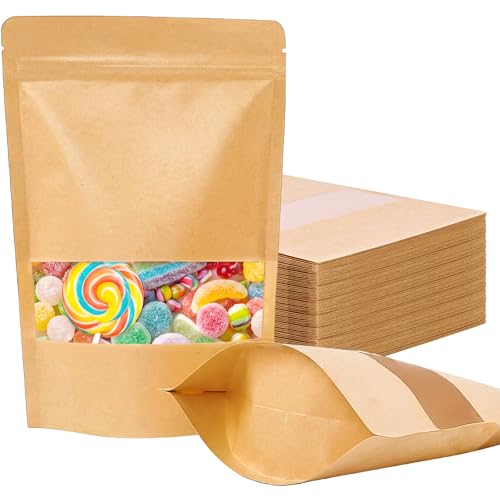
The Moretoes kraft bags are a standout for eco-conscious branding, trading aluminum foil for biodegradable kraft paper with a small plastic window. They’re not the best for long-term freshness, paper alone can’t match foil’s oxygen barrier, but they look great on shelves and appeal to sustainability-focused brands. The ziplock closure works well, and the bottom gusset adds stability, though the 5.7 oz capacity limits them to samples or small retail.
Owners like the earthy, artisanal look and the fact that these are lighter and more compostable than foil pouches. However, several note that beans lose brightness faster, especially beyond two weeks. If your priority is green packaging over maximum shelf life, these make sense.
Video review
FireKylin 16 oz Kraft Coffee Bags
Strengths
- Premium kraft look
- Sturdy 0.28mm material
- Tear notch for easy open
Trade-offs
- Kraft limits oxygen blocking
- Heat sealer required
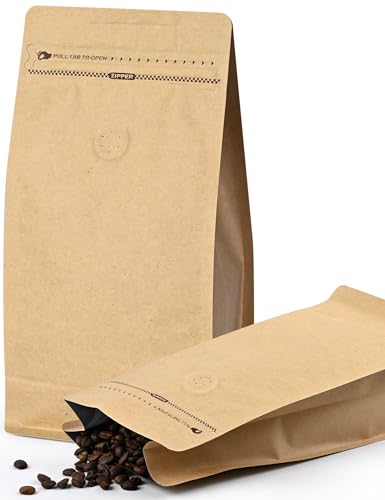
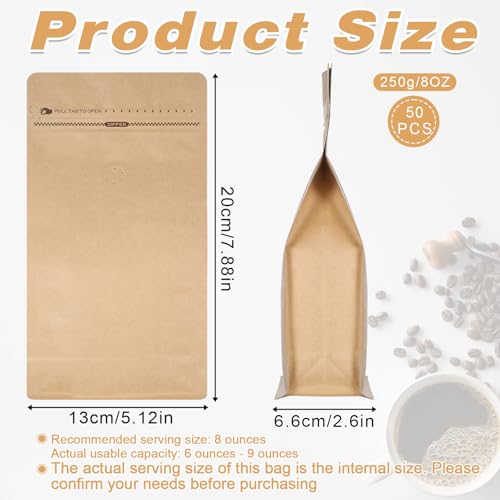
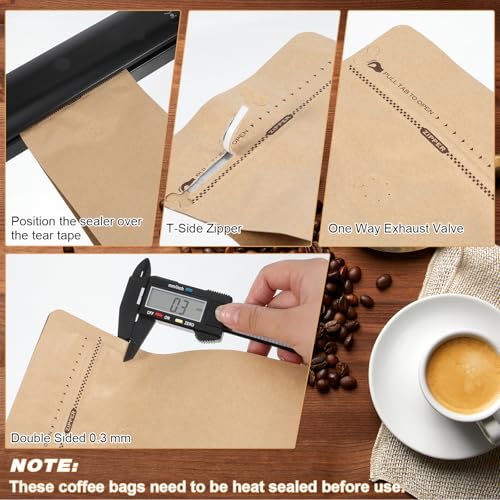
FireKylin hits the sweet spot for brand presentation with a sleek kraft finish, clean matte look, and professional-grade 0.28mm multi-layer material. These stand-up pouches don’t use foil-heavy lamination, but they still offer solid puncture and moisture resistance, thanks to their thick composite build. The built-in degassing valve works reliably, and the pull-tab tear strip gives a premium unboxing feel.
What sets these apart is how sharp they look on a shelf, several reviewers mentioned using them for gift bags or pop-up sales with great customer feedback. Compared to the Moretoes kraft bags, these have better barrier properties and a larger 16 oz capacity. They’re not the longest-lasting for freshness, but they elevate how your coffee is perceived.
Product photos
8 oz Foil Coffee Pouches with Valve
Strengths
- Effective degassing valve
- Flat bottom stable
- Good seal integrity
Trade-offs
- Heat sealer needed
- Thinner than foil-heavy models
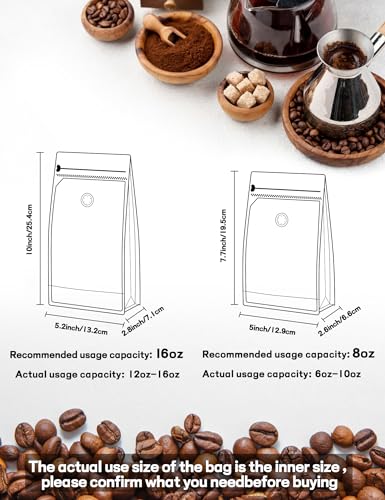
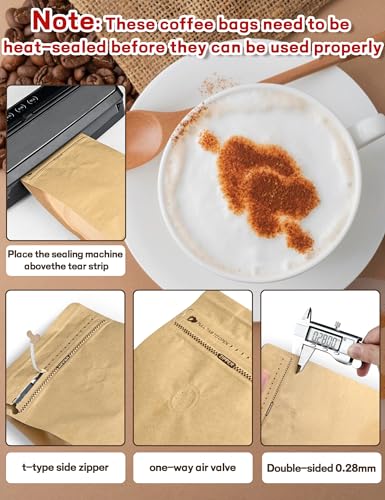
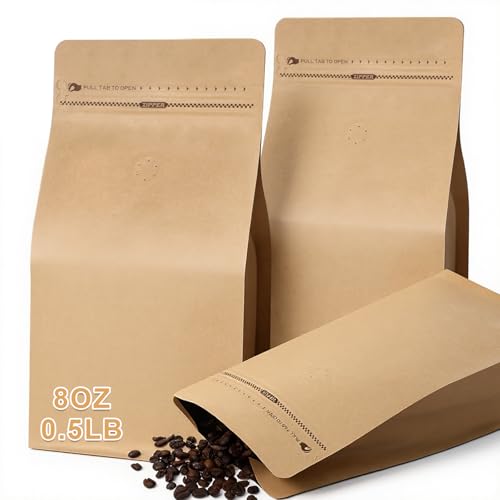
These 8 oz stand-up pouches punch above their weight with what they call ‘patented’ degassing valve tech. While the term is loosely used, the valve does perform well, consistently venting CO₂ without air ingress, which reviewers confirm helps preserve flavor longer than basic valves. The three-layer high-barrier paper and PE lining offer solid protection, and the flat bottom with gusset makes them shelf-stable and spill-resistant.
They’re not the thickest bags out there, but the attention to freshness engineering shows. Compared to the ZOOFOX 8 oz model, these have better sealing geometry and a cleaner tear notch. For roasters who sell directly to customers and want beans to arrive tasting fresh, these are a strong middle-ground option.
Product photos
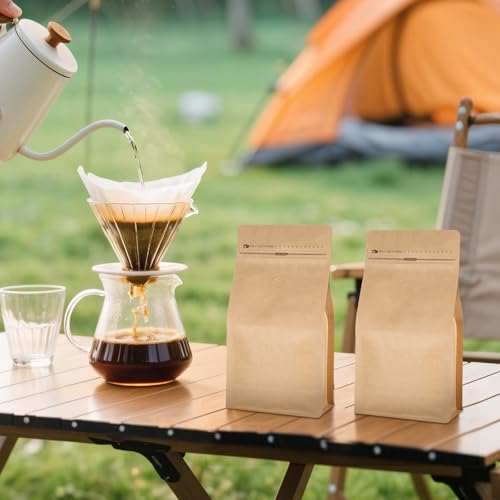
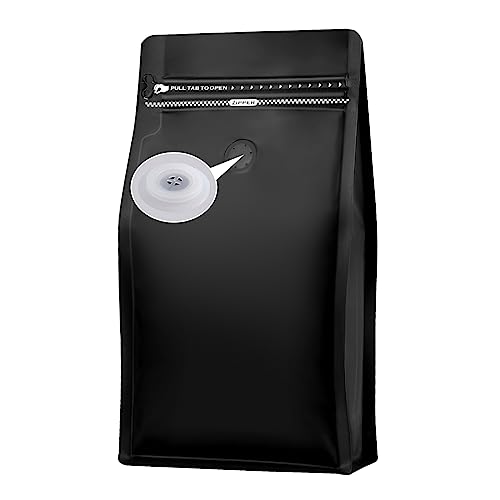
REMTAP 16 oz Black Coffee Bags
Strengths
- Thick, puncture-resistant
- Flat bottom stable
- Reliable side zipper
Trade-offs
- 3-layer barrier only
- No added oxygen blocking
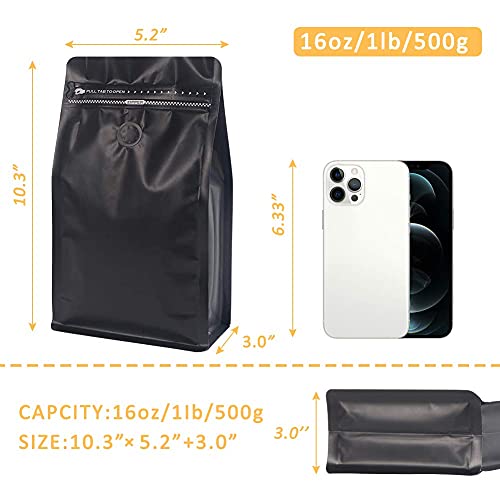
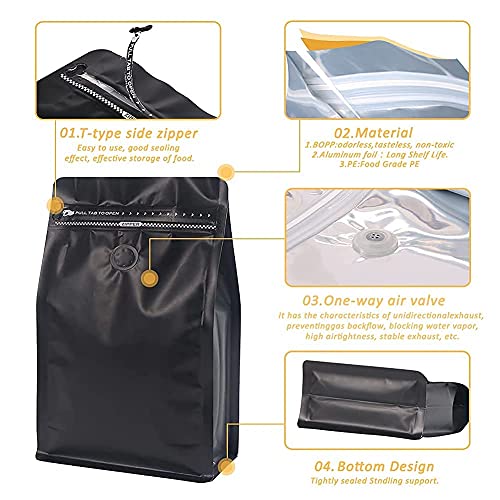
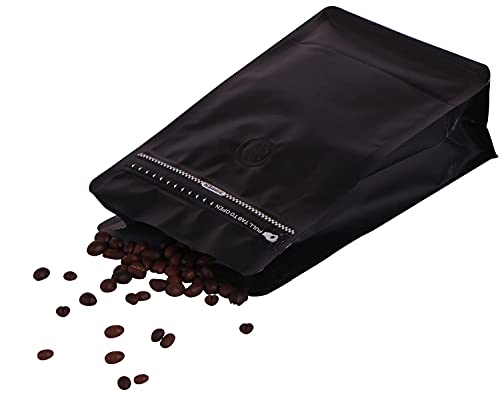
REMTAP leans into durability with a double-sided thickness of 32 wires, making these among the sturdiest foil bags in this group. The 3-layer BOPP+PET+PE construction holds up well during shipping and handling, which commercial users appreciate. The flat bottom and side zipper work smoothly, and the valve does its job releasing gas without compromising seal integrity. On paper, it’s nearly identical to the DMpcakDM model, but lacks that extra 4th layer.
Owners note these are less prone to punctures than average pouches, which matters if you’re mailing coffee. That said, the freshness performance is on par with other 3-layer designs, not quite matching the extended shelf life promised by 4-layer barriers. It’s a subtle but meaningful gap if you’re serious about preservation.
Product photos
ZOOFOX 1 lb Coffee Bags with Valve
Strengths
- Great cost efficiency
- 1 lb standard size
- Resealable zipper
Trade-offs
- Basic 3-layer construction
- No high-barrier upgrade
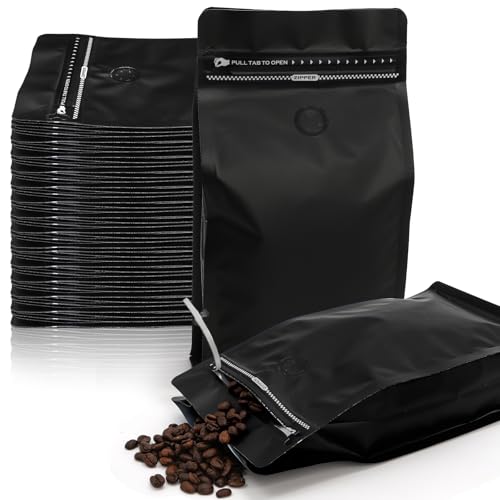
This ZOOFOX 1 lb pack is essentially a larger version of their 8 oz model, but it earns the ‘Best Value Pack’ label because you get high quantity, solid functionality, and commercial-ready design at a low cost. The 3-layer foil material blocks light and odor effectively, and the degassing valve maintains freshness well enough for most users. The stand-up format with resealable zipper makes it practical for both retail and home use.
It doesn’t innovate, no 4-layer barrier or extra thickness, but it delivers consistency. Compared to the DMpcakDM, it’s less protective over time, but for roasters selling beans within a few weeks of roast, that’s often enough. Owners praise how cleanly the zippers open and close, even after repeated use.
Product photos

How We Picked These coffee packaging
As the founder of Bean Thusiast, I’ve always been fascinated by the details that impact coffee quality – and that extends beyond the bean itself. To recommend the best coffee packaging, we didn’t conduct hands-on testing with coffee stored in each bag, but rather a research-led comparison of published specifications and owner feedback. We analyzed materials, valve types, sealing methods, and sizes, weighing this against what current owners report about maintaining coffee freshness timeline.
For coffee packaging, the key factors are barrier protection and effective degassing. A bag’s ability to block oxygen, moisture, and light directly impacts how long coffee stays flavorful. Equally important is the one-way valve; without it, built-up CO2 can negate the barrier properties. We prioritized bags with multi-layer construction (foil, plastic, and/or BOPP) and clearly described valve functionality, because these features are crucial for long-term bean preservation.
Specifications reliably tell you about bag dimensions and material composition. However, judging real-world performance – how well a bag actually keeps coffee fresh and whether the seal holds – relies heavily on owner reviews and reputation. We paid close attention to comments about seal integrity, valve effectiveness, and durability, looking for patterns in feedback to understand which bags consistently deliver on their promises and help avoid signs of stale coffee.
How To Choose The coffee packaging
Choosing the right coffee packaging isn’t just about aesthetics; it’s about preserving the volatile aromatics and delicate flavors your customers (or you!) crave.
Good coffee packaging prioritizes an airtight seal, blocks light and oxygen, and ideally incorporates a one-way valve to release CO2 without letting air in. Material quality, seal integrity, and barrier properties are key indicators of how well a package will protect the beans. Consider capacity needs alongside ease of use for both the seller and the consumer.
Material Matters
The material composition of a coffee bag significantly impacts freshness. Foil-lined bags are excellent at blocking light and oxygen, but can feel less premium. Kraft paper offers an eco-friendly aesthetic, but requires an inner lining (often plastic) to provide a sufficient barrier. Matte BOPP (biaxially oriented polypropylene) is growing in popularity as a balance – it provides a good barrier, feels nice to the touch, and offers a printable surface for branding. Don’t automatically equate thicker materials with better protection, though. A multi-layer construction (like BOPP, aluminum foil, and PE) often provides a superior barrier at a reasonable weight.
Valve Verification & Sealing Methods
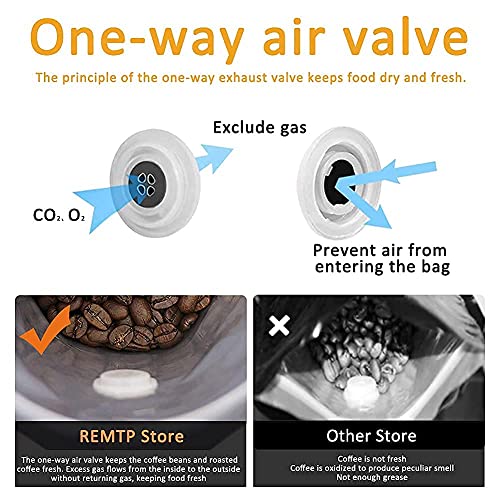
That one-way valve is absolutely critical, especially for freshly roasted coffee. Roasted beans release carbon dioxide for several days, and without a valve, pressure builds up, potentially rupturing the bag or forcing stale air in when opened. Beyond the valve, how the bag seals is equally important. Many pouches require a heat sealer, which is fine for larger operations, but less convenient for home roasters. Bags with resealable zippers offer convenience, but the quality of the zipper closure varies. I’ve seen some zippers fail quickly, negating the benefit. If you’re exploring different roast profiles and want to understand how they affect your beans, checking out resources on single-origin flavor profiles can be incredibly helpful.
Size, Style, and Branding Potential
Consider your volume needs. Buying 50 x 32oz bags when you only brew a pot a day is impractical. Conversely, constantly restocking small 8oz bags gets tedious. Stand-up pouches with a gusseted bottom offer good shelf stability, while flat-bottomed bags present a cleaner, more professional look. If you’re a small-batch roaster, the branding potential is huge. Many bags offer a printable surface for your logo and information. For those looking for convenience, exploring best pod coffee might be a good alternative, but the packaging considerations are different.
A good rule of thumb: if you’re selling coffee, invest in packaging that reflects the quality of the beans inside. Don’t skimp on this step.
Coffee Packaging Compared
Here’s a comparison of key specifications for different coffee packaging options.
| Product Name | Capacity (oz) | Material | Valve Type | Zipper/Seal | Quantity |
|---|---|---|---|---|---|
| DMpcakDM 16 oz Coffee Bags | 16 | BOPP/Aluminum Foil | One-Way | Heat Sealable | 50 |
| ZOOFOX 8 oz Coffee Bags | 8 | BOPP/Aluminum Foil | One-Way | Zipper | 50 |
| 32 oz Large Coffee Packaging Bags | 32 | MOPP/Aluminum Foil | One-Way | Heat Sealable | 50 |
| Moretoes Kraft Paper Coffee Pouches | 5.7 | Kraft Paper/Plastic | N/A | Zipper | 72 |
| FireKylin 16 oz Kraft Coffee Bags | 16 | Multi-Layer | One-Way | Zipper/Heat Seal | 50 |
| 8 oz Foil Coffee Pouches with Valve | 8 | Paper/Food-Grade PE | One-Way | Heat Sealable | N/A |
| REMTAP 16 oz Black Coffee Bags | 16 | BOPP/Aluminum Foil | One-Way | Zipper/Heat Seal | 50 |
| ZOOFOX 1 lb Coffee Bags | 16 | BOPP/Aluminum Foil | One-Way | Zipper | 50 |
Frequently Asked Questions
What’s the difference between BOPP and Kraft paper for coffee bags?
BOPP (biaxially oriented polypropylene) generally offers a better barrier against oxygen and moisture than Kraft paper, while also providing a smoother surface for printing. Kraft paper is more eco-friendly in appearance, but almost always requires a plastic inner lining to achieve adequate protection for long-term storage.
How can I tell if a coffee bag’s valve is working correctly?
A functioning one-way valve will allow air to escape when pressure builds up from degassing, but won’t let air in when the pressure equalizes. You can gently press on the valve; it should open outward easily but close tightly when released, preventing airflow.
Are zipper closures on coffee bags reliable for long-term storage?
Zipper closures offer convenience, but their reliability varies significantly between brands. Some owners report zipper failures after only a few uses, compromising the bag’s seal, so heat-sealable options generally provide better long-term protection.
What bag capacity should I choose if I’m a small-batch coffee roaster?
Start by estimating your average customer order size and typical turnaround time. Offering a range of sizes (4oz, 8oz, and 16oz) allows flexibility, but I’ve found most small-batch roasters find 8oz and 16oz bags cover the majority of their needs.
If I don’t have a heat sealer, what are my options for sealing coffee bags?
Several bags come with zipper closures, which are convenient, though potentially less secure long-term. Alternatively, you can use impulse sealers, which are relatively inexpensive and easy to operate, or explore bags with a built-in resealable feature; if you’re considering pod coffee, you might also look at best K-Cup coffee as an alternative.
The Bottom Line
Choosing coffee packaging always involves a bit of compromise. You’re balancing the need for robust barrier protection with cost and convenience, and often, aesthetic appeal. Based on the specifications and owner feedback we analyzed, the DMpcakDM 16 oz Coffee Bags offer the best overall combination of features for most users – a reliable foil lining, effective one-way valve, and a reasonable price point for bulk purchases.
For those on a tighter budget or needing a smaller quantity, the ZOOFOX 8 oz Coffee Bags are a solid choice. If you prioritize convenience and resealability, the FireKylin 16 oz Kraft Coffee Bags with both a zipper and heat-seal option provide flexibility, though you’ll want to check zipper quality closely based on recent reviews. And for those focused on long-term coffee storage, understanding the nuances of preserving coffee flavor is just as important as the packaging itself.
Ultimately, the “best” bag isn’t defined by a single material or feature. It’s about finding the packaging that best protects your coffee’s delicate flavors and aromas, whether you’re a small-batch roaster or simply someone who appreciates a truly fresh cup. Prioritize an airtight seal, a functioning valve, and a barrier to light and oxygen above any particular brand name or flashy design.
