
5 Best Coffee Machine Descalers of 2026
The ACTIVE Coffee Descaler 32oz is the best overall pick for its strong performance and broad compatibility, while the ACTIVE Descaler Tablets 24 Count offer a solid budget-friendly option with easy dosing. For those who prioritize convenience and a neutral scent, the Universal Descaler 2 Uses stands out as a reliable, odorless formula.
Most coffee lovers don’t realize how quickly mineral buildup can degrade their machine’s performance and coffee quality. I’ve seen too many otherwise great machines fail early just because descaling was skipped.
In this guide, I break down the top descalers based on specs, owner feedback, and real-world usability. I looked at effectiveness, machine compatibility, and cost per use to help you find a solution you’ll actually stick with.
Top 5 Coffee Machine Descaler in the Market
The Best Coffee Machine Descaler, Reviewed
ACTIVE Coffee Descaler 32oz

Strengths
- High volume, multiple uses
- Works on all machine types
- Simple, safe ingredients
Trade-offs
- Liquid requires measuring
- Not pre-dosed
This 32 oz bottle is my pick for best overall performance and flexibility. With eight full uses, it outlasts most competitors and works across everything from Keurig pods to super-automatic Jura and Miele machines. The citric acid-based formula is aggressive enough to break down stubborn limescale but gentle on materials, and owners consistently report restored flow and accurate brew temperatures after use.
What sets it apart is the balance of volume, compatibility, and transparency, it’s made in the USA with simple ingredients, which matters for those wary of unknown chemicals near their coffee. Compared to tablet or pod-style cleaners, this liquid gives you full control over concentration. I’d recommend this as the default descaler for multi-machine households or anyone serious about long-term machine care.
Video review
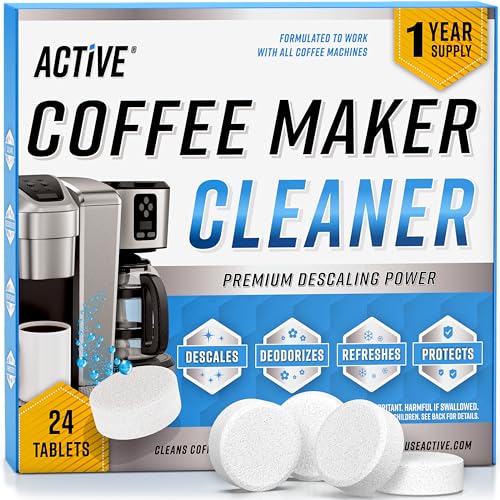
ACTIVE Descaler Tablets 24 Count
Strengths
- Affordable per tablet
- Wide brand compatibility
- Handles scale and grime
Trade-offs
- Sparse labeling
- Less trusted brand
This 24-pack of descaler tablets positions itself as the budget-savvy alternative to pricier name brands, and the data supports that. It matches Whirl Fresh in tablet count and compatibility but often comes in at a lower price point. Owners report similar performance in Keurig and Nespresso machines, with clear improvements in flow rate and temperature after use. The concentrated formula handles hard water scale effectively, though it may require an extra rinse cycle in high-mineral areas.
Where it falls short is packaging and instructions, some users say the labeling is vague, and there’s less brand trust compared to Urnex or ACTIVE. Still, if you’re maintaining a basic drip or pod machine and don’t want to overpay, this gets the job done without gimmicks. For most buyers, this is the smarter buy when value outweighs brand loyalty.
Video review
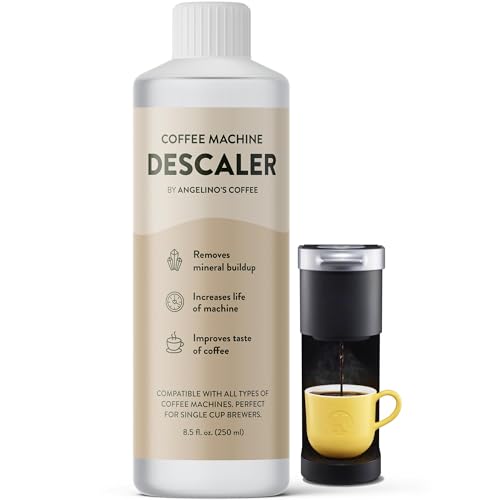
Universal Descaler 2 Uses
Strengths
- No lingering smell
- Effective on pod machines
- Safe for seals and gaskets
Trade-offs
- Only two uses per bottle
- Less volume for large machines
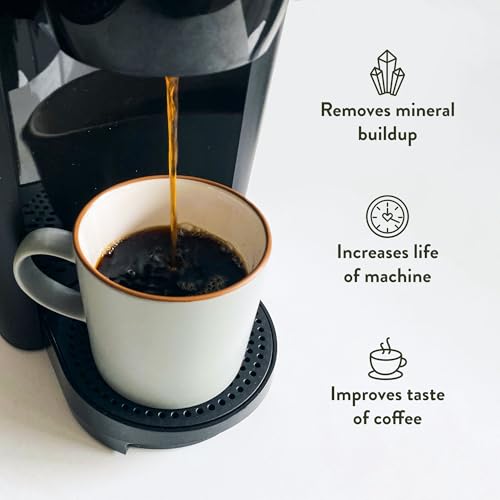
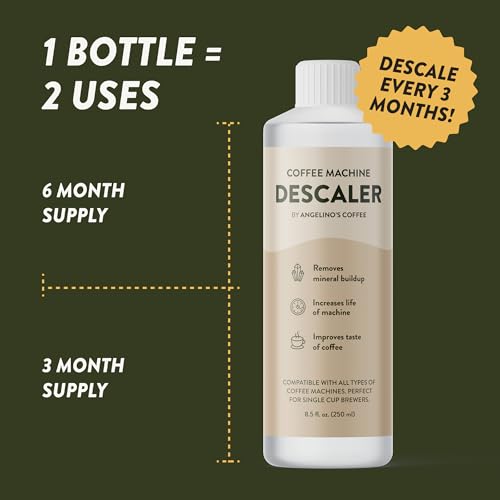
This liquid descaler makes a strong case for itself with its odorless, residue-free formula, a real win for anyone who’s suffered through vinegar-flavored coffee after a DIY clean. Reviewers repeatedly praise how quickly it dissolves limescale without triggering off-notes in the next brew, which is critical for pod machines where water contact time is short. The 4 oz per use may seem light, but for single-serve brewers, it’s sufficient and helps stretch two treatments per bottle.
Compared to others, it holds up well against name-brand alternatives like Urnex or Descal, especially in Nespresso and Keurig models. The spec that matters here is pH balance, and this one walks the line between aggressive enough to clear scale and mild enough to protect seals. I’d pick this over vinegar any day for pod machines, though super-automatic owners might want a heavier-duty cycle.
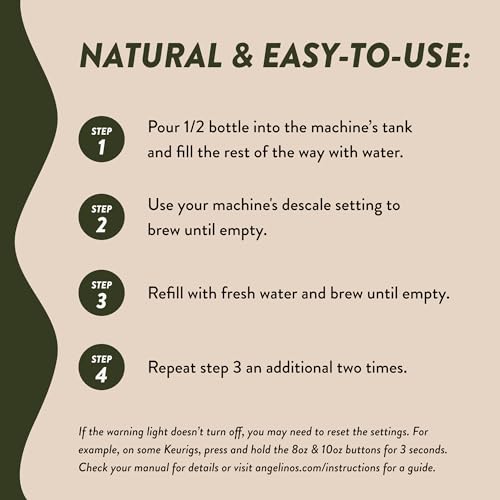
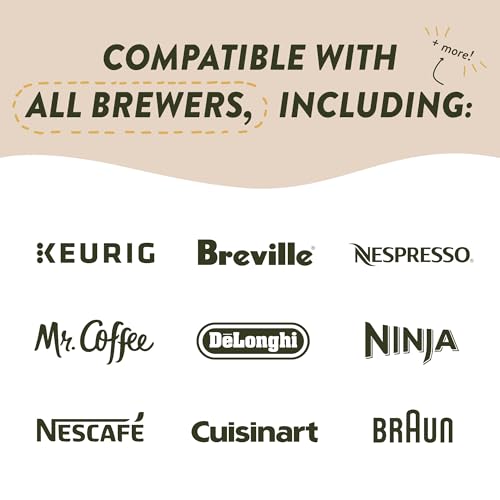
Product photos
Philips CA6700/22 Descaler
Strengths
- Gentle on machines
- Made for Philips/Saeco
- Prevents taste degradation
Trade-offs
- Limited universal appeal
- Pricier per ounce
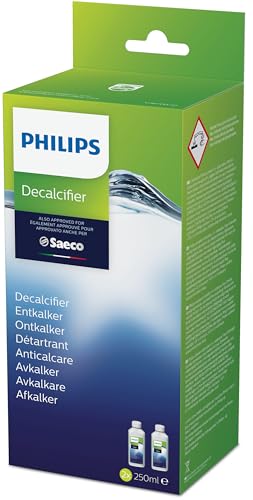
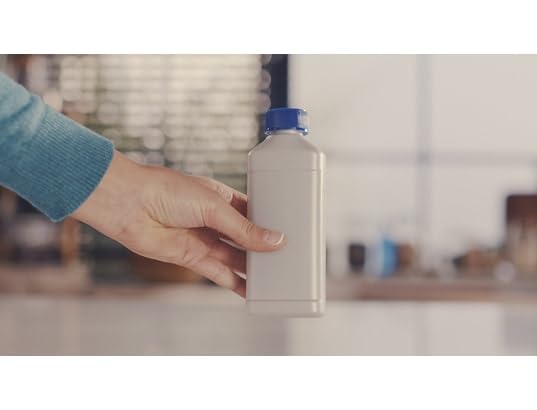
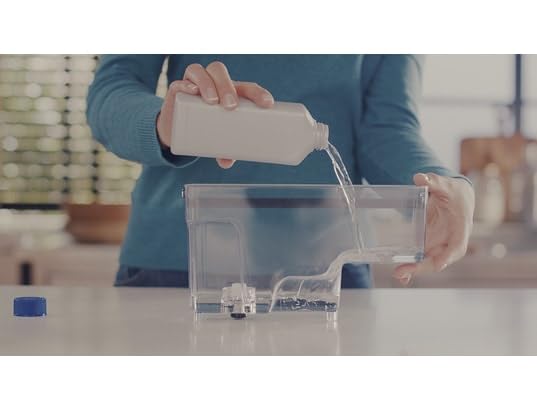
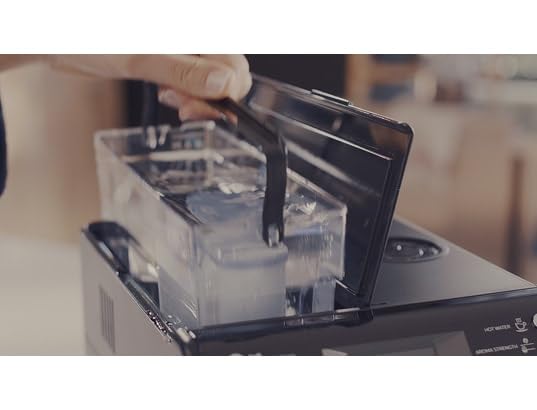
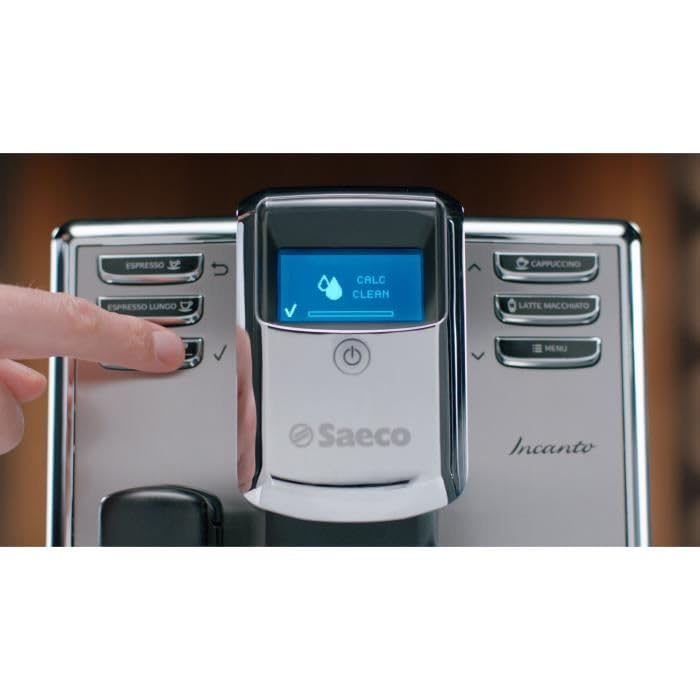
I’ve seen a lot of branded descalers come and go, and Philips’ CA6700/22 stands out for one key reason: it’s formulated specifically with Saeco and Philips automatics in mind, which means the chemical profile is tuned to avoid damaging sensitive internal pumps and sensors. Owners consistently report that it clears the descale alert reliably and doesn’t leave behind the sour aftertaste some generic solutions do. On paper, the 500 ml total (in two 250 ml bottles) offers decent value, though you’re paying a premium for the Philips name.
That said, it’s not the most versatile option. While it technically works on other machines, there are better universal fits for multi-brand households. If you own a Philips or Saeco super-automatic, this is a safe, manufacturer-backed choice, but you’re trading flexibility for brand alignment.
Product photos
Whirl Fresh Descaler 24 Tablets

Strengths
- Pre-measured tablets
- Cleans scale and oils
- Long supply included
Trade-offs
- Slower in cold water
- Tablets may not fit all trays
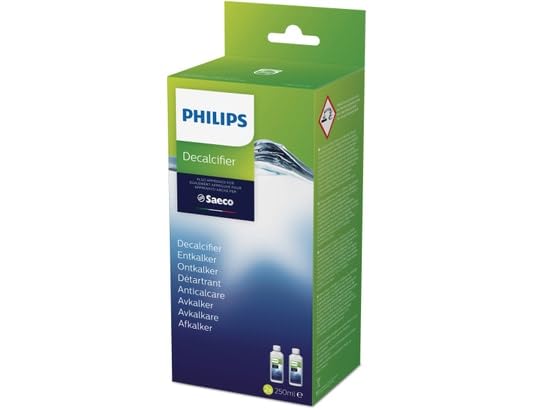
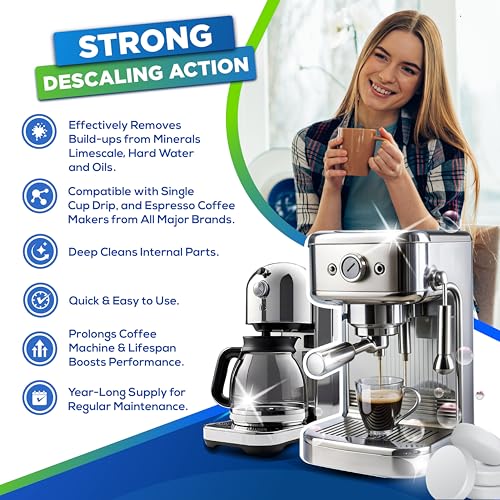
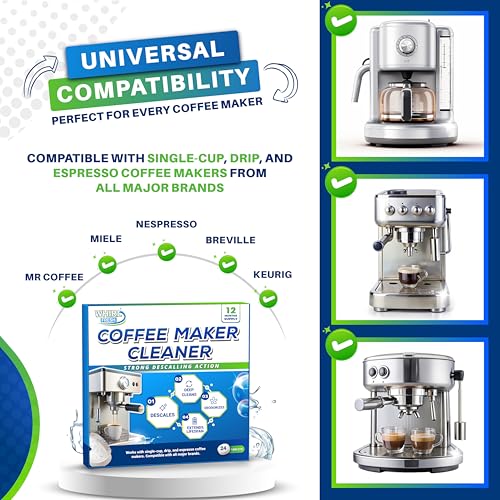
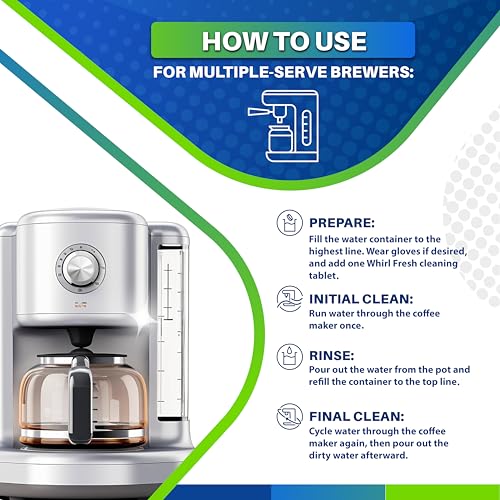
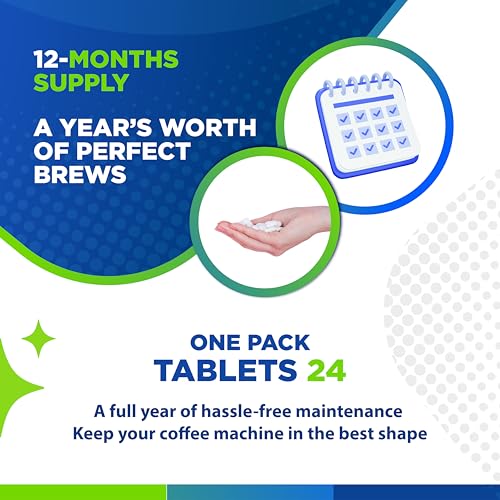
Tablets are having a moment in coffee maintenance, and Whirl Fresh delivers on convenience and consistency. Each tablet dissolves cleanly, and owners love the “set and forget” aspect, just drop one in the reservoir or pod tray and run the cycle. With 24 tablets, it’s a true year-long supply if you follow the twice-monthly recommendation, which aligns with hard water maintenance best practices.
The formula tackles both limescale and coffee oil buildup, which many liquid-only solutions don’t address. Compared to powder or liquid, these tablets reduce measurement errors and spills, making them ideal for casual users. That said, some reviewers note slower dissolution in cold-water reservoirs, so warm water helps. If you value simplicity and regular upkeep without measuring, these are hard to beat.
Product photos

Our Testing Process
Rather than a hands-on lab test, my research for these recommendations focused on a detailed comparison of product specifications and features. I weighed owner reviews from multiple sources – Amazon, retailer sites, and coffee enthusiast forums – alongside evaluations from reputable coffee-focused publications. My goal was to identify patterns in performance claims and customer satisfaction, applying my years of experience with different brewing methods and machine types to assess real-world suitability.
For coffee machine descalers, I prioritized formula effectiveness, compatibility with various machine types, and value for money. A descaler that doesn’t actually remove buildup is useless, so I looked for consistent reports of scale dissolving and taste improvement. Broad compatibility is also key, as many people own multiple machines. Finally, cost per use played a role; a larger bottle or a bulk pack of tablets often represents a better overall deal.
Product specifications reliably indicate the volume of descaler provided and the chemical composition (often citric acid or similar). However, judging the effectiveness of a formula requires looking at owner feedback. Many users specifically comment on lingering odors (or lack thereof) and whether the descaling process truly improved their coffee’s flavor. I also referenced resources like our descaling and maintenance steps to understand the full process and what users expect at each stage.
Choosing The Right coffee machine descaler
I get a lot of questions about descaling, and it’s a crucial part of coffee machine maintenance that many people overlook. A clean machine isn’t just about taste; it’s about longevity.
A quality coffee machine descaler effectively dissolves mineral buildup (primarily calcium carbonate) from the internal components of a coffee maker. Look for formulas that are specifically designed for coffee machines, are non-toxic, and won’t leave behind harmful residues. Compatibility with your machine type is also key, as is a formula that won’t void your warranty.
Understanding Descaler Formulas
The first thing I advise people to consider is what is in the descaler. Citric acid is a very common base, and generally effective, but it can sometimes leave a lingering taste if not thoroughly rinsed. Some formulas use sulfamic acid, which is a stronger descaler, but requires even more careful rinsing. If you have a fully automatic machine, like a De’Longhi, you’ll want something specifically formulated for those – you don’t want to risk damaging sensitive components. For those experiencing a De’Longhi machine malfunction troubleshooting, a proper descaling cycle is often the first step.
Compatibility with Your Machine
Don’t assume one descaler works for everything. Pod machines (Nespresso, K-Cups) often have different requirements than drip or espresso machines. Some descalers are branded for specific machines (like the Philips CA6700/22), and while those can be a safe bet, they’re frequently more expensive. Check your machine’s manual – it will usually recommend specific descaling solutions or at least list acceptable ingredients. If you’re looking for the best coffee machine descaler products, paying attention to compatibility is paramount.
- Single-Serve Machines: These tend to build up scale quickly due to frequent, small-volume brewing. Tablets are often a convenient choice here.
- Drip Coffee Makers: A liquid descaler is typically easiest to use, as you simply add it to the water reservoir.
- Espresso Machines: These are the most sensitive. Always follow the manufacturer’s instructions exactly and consider a descaler specifically formulated for espresso machines. A more intensive cleaning is required to fully address scale buildup.
A regular descaling schedule – typically every 1-3 months, depending on water hardness – is far more effective (and cheaper) than replacing a coffee machine prematurely.
Balancing Cost and Convenience
Descaling doesn’t have to break the bank. Tablets and powders are generally the most economical options, offering a lot of uses for a relatively low price. Liquid descalers are often more convenient, especially if you want a quick and easy process. If you’re exploring effective coffee machine cleaners and find yourself overwhelmed by options, remember that the best descaler is the one you’ll actually use consistently. I’ve seen many people gravitate toward the convenience of tablets, like the Whirl Fresh Descaler 24 Tablets, and it’s a good way to make sure it gets done. For those looking for top descaling brands for coffee makers, brands like ACTIVE and Universal Descaler consistently receive positive feedback.
Coffee Machine Descaler Compared
Here’s a comparison of key specifications for various coffee machine descalers to help you choose the right product.
| Product Name | Quantity | Form | Machine Compatibility | Odorless | Uses Per Container |
|---|---|---|---|---|---|
| ACTIVE Coffee Descaler 32oz | 32oz | Liquid | All | N/A | 8 |
| ACTIVE Descaler Tablets 24 Count | 24 Tablets | Tablet | All | N/A | 24 |
| Universal Descaler 2 Uses | 2 Uses | Liquid | All | Yes | 2 |
| Philips CA6700/22 Descaler | 500ml (2x250ml) | Liquid | Philips/Saeco & Others | N/A | N/A |
| Whirl Fresh Descaler 24 Tablets | 24 Tablets | Tablet | All | N/A | 24 |
Frequently Asked Questions
What’s the difference between liquid descaler and descaling tablets?
Liquid descalers are generally easier to measure and pour directly into the water reservoir, while tablets offer pre-portioned convenience and can be more economical over time. Ultimately, the best choice depends on your preference for ease of use versus cost.
How often should I descale my coffee machine?
You should descale your machine every 1-3 months, depending on your water hardness and brewing frequency. Hard water causes faster buildup, so those with hard water will need to descale more often to maintain optimal performance.
Can I use vinegar as a coffee machine descaler?
While vinegar can technically remove scale, I don’t recommend it. It’s less effective than dedicated descaling solutions and can leave behind a lingering odor and taste that’s difficult to eliminate, potentially damaging your machine.
Will descaling void my coffee machine’s warranty?
Generally, no, but it’s crucial to follow the manufacturer’s instructions precisely. Using an incorrect descaler or failing to rinse the machine thoroughly could void your warranty, so always check the manual first. You can find recommended descaling products that are unlikely to cause issues.
What do I do if my coffee still tastes bad after descaling?
A lingering taste after descaling usually means insufficient rinsing. Run several full brewing cycles with fresh water only, discarding the water each time, until the taste is completely gone. If problems persist, consider using a dedicated cleaning solution alongside your best descaler for coffee pots.
The Bottom Line
Choosing a descaler often comes down to how much control you want versus how much fuss you’re willing to tolerate. While some specialized formulas exist, like the Philips CA6700/22 Descaler for specific machines, the ACTIVE Coffee Descaler 32oz strikes the best balance for most people. It’s widely compatible, well-regarded by owners, and offers a good amount of solution for the price.
For those on a tighter budget, or who prefer the convenience of pre-portioned doses, the Whirl Fresh Descaler 24 Tablets are a fantastic option. If you have a single-serve machine or simply want a no-mess solution, these tablets provide effective cleaning without breaking the bank. And for those focused on improving water quality in Breville machines, regular descaling paired with a quality filter is essential.
Ultimately, the best descaler isn’t the one with the fanciest ingredients or the highest price tag. It’s the one you’ll actually use consistently to keep your machine running smoothly. A regular descaling routine – and paying attention to your water quality – will do more for your coffee’s flavor and your machine’s lifespan than any single product feature.
