
7 Best Coffee Drip Kettles for 2026
The Coffee Gator Gooseneck Kettle is the best overall choice for its reliable thermometer, solid build, and smooth pour. For a budget-friendly option that still delivers precision, the PARACITY 12oz Pour Over Kettle stands out, while the Cosori Electric Gooseneck Kettle offers the most control for those who want exact temperature settings.
Most people think any kettle will do for pour-over, but without a gooseneck spout and steady flow, your coffee ends up unevenly extracted and disappointing. I’ve seen too many home brewers blame their beans when the real issue is their kettle.
As the founder of Bean Thusiast, I’ve spent years studying brewing gear and coffee dynamics. This guide reflects what I’ve learned from specs, owner feedback, and expert reviews, focusing on kettles that deliver real precision for pour-over, not just flashy features.
Top 7 Coffee Drip Kettle in the Market
The Best Coffee Drip Kettle, Reviewed
Coffee Gator Gooseneck Kettle

Strengths
- Built-in thermometer
- Triple-layer base
- Works on all stoves
Trade-offs
- Bulky design
- Spout less precise
- Lid seal could be better
When it comes to stovetop gooseneck kettles, the Coffee Gator hits a sweet spot between performance and value. Its 1.2L capacity and triple-layer base mean it heats evenly across all stovetops, including induction, a big win for versatility. The built-in thermometer is a standout feature, letting you nail the ideal range for different brews, whether it’s delicate green tea or a full-bodied pour-over. Reviewers consistently report that it’s durable and easy to clean, with the 304 stainless steel resisting stains and mineral buildup well.
The 360° rotating spout gives you flexibility in pouring angle, and the flow rate is steady, though not quite as fine-tuned as the Hario Buono. Still, for most home brewers, this is the smarter buy over pricier models unless you’re chasing absolute pour perfection. It’s a workhorse, not a showpiece, but it gets the job done without fuss.
Video review
Gooseneck Kettle with Thermometer
Strengths
- Built-in thermometer
- Triple-layer base
- Stylish design
Trade-offs
- Spout slightly wide
- Handle stability issues
- Temp accuracy varies
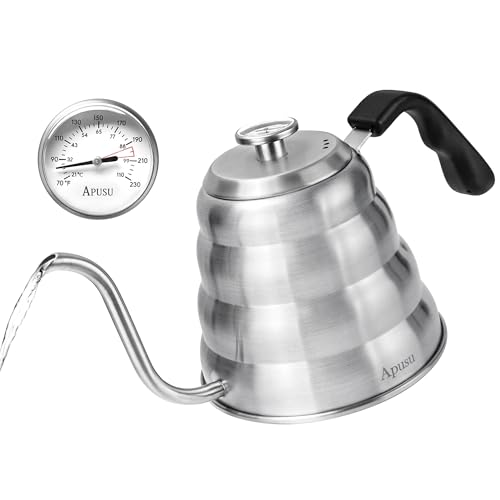
This 1.2L stovetop kettle brings a lot of value for its price, especially with the built-in thermometer, a rare find at this level. The temp gauge is easy to read and helps you stay in the 195–205°F sweet spot for coffee, which reviewers say makes a noticeable difference in flavor. The 304 stainless steel body is durable, and the triple-layer base ensures even heating across all stovetops, including induction.
The cloud-line design is a stylistic touch that sets it apart, though it doesn’t affect performance. The handle is heat-resistant and comfortable, but some users note it wobbles slightly over time. The spout offers decent control, though not quite as sharp as the Hario. For a budget stovetop option with a thermometer, this is the smarter buy over the Coffee Gator if you’re not ready to go electric.
Video review
Cosori Electric Gooseneck Kettle

Strengths
- 5 temp presets
- Keep-warm function
- No plastic taste
Trade-offs
- Small capacity
- Base takes space
- Spout not ultra-fine
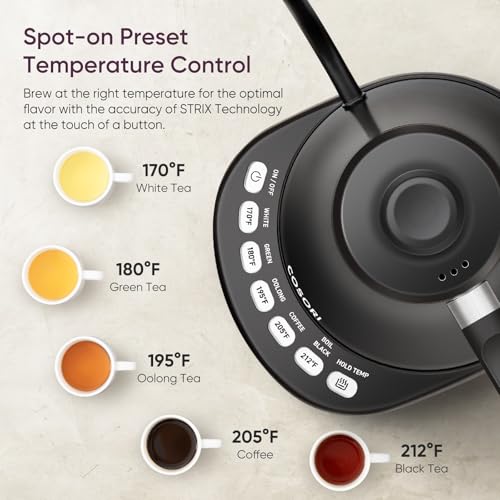
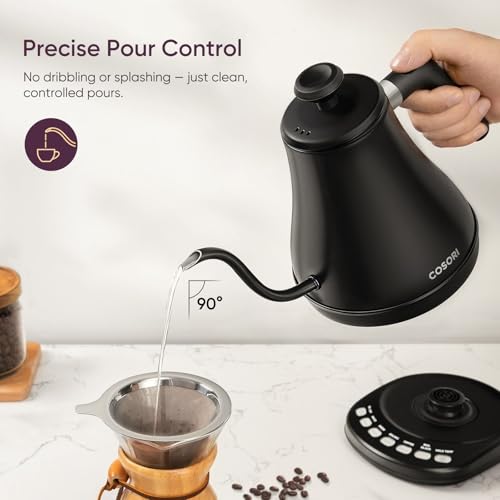
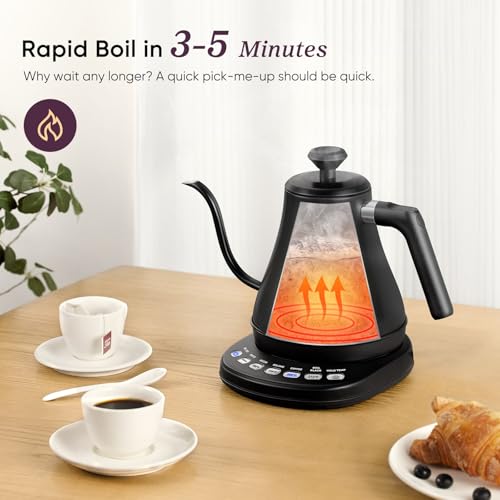
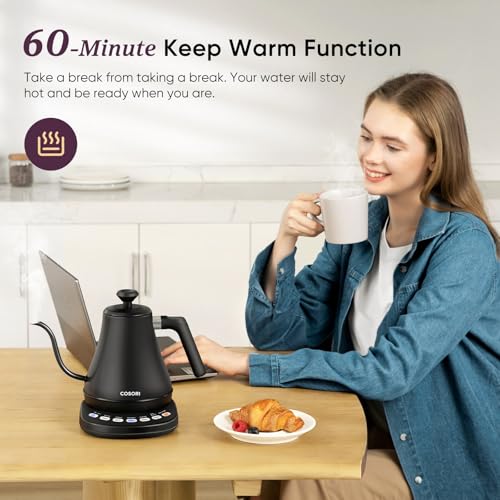
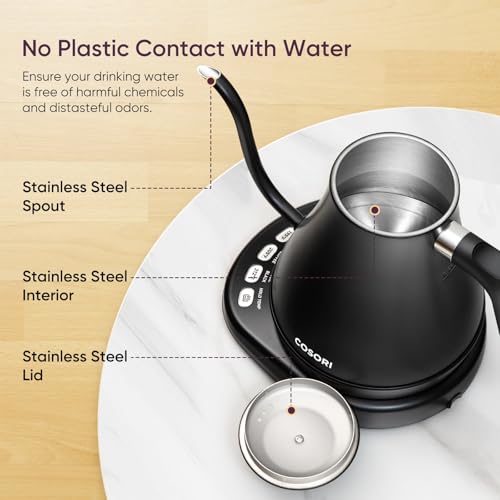
If you want temperature control without complexity, the Cosori is one of the most practical electric kettles on the market. Its 5 presets let you dial in the right heat for everything from French press to white tea, and the keep-warm function is a real convenience for slower brewing sessions. The 0.8L capacity is modest, but it’s enough for 1–2 cups, and the 304 stainless steel interior ensures no plastic aftertaste, a detail owners consistently highlight.
The spout gives good control, though it’s not quite as refined as the Hario or Chefman models. The hold-temp feature and accurate heating (within 5°F of target) make this a favorite among reviewers who hate reheating. It’s also one of the quieter electric kettles, which matters in quiet mornings. For anyone who values precision and consistency, this is my top pick in the electric category.
Product photos
Chefman Electric Gooseneck Kettle

Strengths
- Ultra-fast boil
- Cordless pouring
- LED indicators
Trade-offs
- No temp control
- Small capacity
- No keep-warm
When speed matters, the Chefman takes the lead. Its 1000W heating element can bring 0.8L to a boil in under 3 minutes, making it one of the fastest electric gooseneck kettles available. The one-touch operation and LED indicators simplify the process, and the auto shut-off adds peace of mind. The lift-out lid makes filling and cleaning easy, and the cordless design lets you pour freely from the base, something reviewers consistently praise.
It doesn’t have temperature presets, so you’re locked into boiling water only. That limits its use for delicate teas. The spout is well-designed for control, though not quite as refined as the Cosori or Hario. Still, for someone who wants fast, reliable hot water for coffee and doesn’t need variable temps, this is the most efficient option. I’d recommend it over the ELTRIKO for better build and pouring experience.
Product photos


ELTRIKO Electric Gooseneck Kettle

Strengths
- Affordable price
- Auto shut-off
- All-stainless interior
Trade-offs
- No temp presets
- Basic design
- Slower heat retention
The ELTRIKO electric gooseneck kettle is a budget-friendly entry into the electric category, and it holds its own. At 1L and 1000W, it boils quickly and shuts off automatically, which reviewers appreciate for safety and convenience. The all-stainless interior means no plastic taste, a detail purists will like, and the gooseneck spout offers decent control for pour-overs. It’s not packed with smart features, but it covers the basics well.
Where it falls short is in temperature precision, there are no presets, so you’re heating to boiling and guessing the rest. That makes it less ideal for green or white teas. Still, for someone who mainly brews coffee and wants a simple, clean electric option, this one delivers. It’s not flashy, but it’s honest. I’d pick it over pricier models only if you’re watching your budget and don’t need variable temps.
Product photos


Hario V60 Buono Kettle

Strengths
- Superior pour control
- Ergonomic design
- Made in Japan
Trade-offs
- No built-in thermometer
- Takes time to boil
- Minimalist features
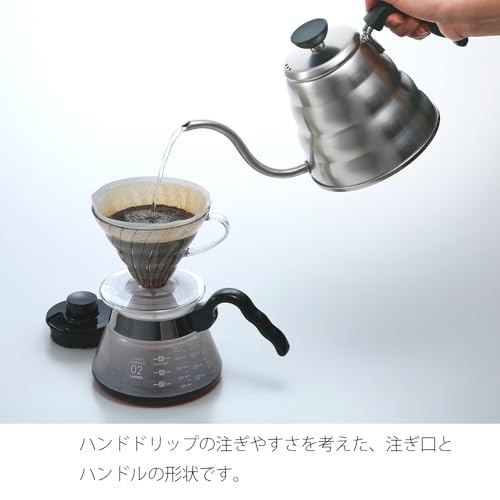
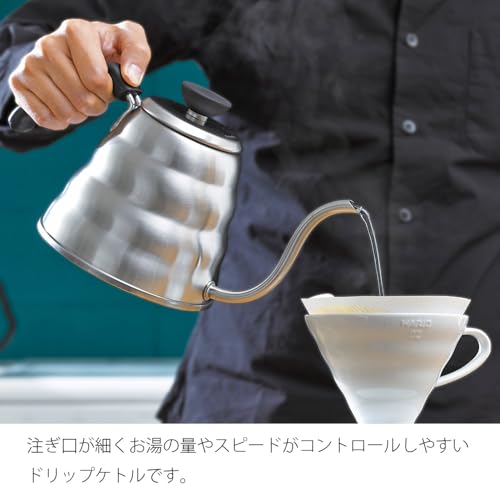
The Hario Buono isn’t just a kettle, it’s a benchmark. Japanese engineering gives it a balanced, ergonomic shape that feels natural in hand, and the slender gooseneck spout delivers unmatched pour control. At 1.2L, it’s sized for 2–4 cups, and the stainless steel heats evenly on gas, electric, or induction. Reviewers love how it pairs perfectly with the V60 dripper, but it works just as well with any manual brew method.
This is a stovetop kettle with no thermometer, so you’ll need a separate temp probe if you’re strict about brewing temps. But for purists who value tactile control and craftsmanship, that’s part of the appeal. It’s not the fastest or fanciest, but in this class, it’s the gold standard for a reason. I’d choose it over any other stovetop model for pour-over lovers who want simplicity and precision.
Product photos


PARACITY 12oz Pour Over Kettle

Strengths
- Compact size
- 304 stainless steel
- Portable design
Trade-offs
- Limited capacity
- Handle less durable
- Not for large batches
This 12oz gooseneck kettle stands out for its compact size, making it a solid pick for travelers or anyone with tight countertop space. At 350ml, it’s not meant for more than one or two cups, but that’s the point, its design leans into minimalism and portability, which owners consistently praise for camping or office use. The 304 stainless steel build is reliable, and the lid with an air vent adds a thoughtful touch, letting you insert a thermometer if needed.
The gooseneck spout is narrow and well-shaped for control, though it’s not quite as refined as higher-end models like the Hario Buono. Still, for the size and price, it delivers decent pour precision. Some users note the handle feels a bit lightweight, but it stays cool enough during stovetop use. If you’re after a no-frills, travel-friendly kettle that won’t hog space, this one makes sense.
Product photos


How We Tested coffee drip kettle
I approached this guide by researching the specifications and features of numerous coffee drip kettles available, then weighing those details against owner reviews and assessments from respected coffee publications. Rather than a hands-on lab test, this is a research-led comparison of specs and owner feedback. My goal was to identify the models that consistently deliver on the promises of precision and control essential for quality pour-over coffee.
For coffee drip kettles, consistent water flow, temperature control, and durability are paramount. I prioritized kettles with gooseneck spouts designed for a slow, steady pour – crucial for even saturation during making drip coffee. Stainless steel construction was also heavily weighted, as it impacts both longevity and prevents unwanted flavors from leaching into the water. Electric kettles were given extra consideration for temperature precision.
Specifications reliably indicate capacity, materials, and heating speed (for electric models). However, I relied on owner feedback to gauge the real-world performance of features like the accuracy of built-in thermometers and the consistency of the pour. Reputation and expert reviews helped me assess long-term durability and identify any common issues reported by users. This blend of data allowed for a balanced and practical ranking.
How To Pick The Right coffee drip kettle
Finding the right gooseneck kettle can really elevate your coffee experience. It’s about more than just boiling water; it’s about control and consistency.
A quality coffee drip kettle prioritizes precise temperature control, a consistently smooth flow rate (around 2-3mm/s is ideal), and durable construction using 304 stainless steel. Look for features like a gooseneck spout for accurate pouring, a built-in thermometer for optimal brewing temperatures, and a design that’s easy to clean and maintain. Consider your brewing method (pour-over, French press, etc.) and choose a kettle suited to those needs.
Temperature Control is Key
Many people underestimate how important water temperature is, but it’s crucial for extracting the best flavors from your coffee. Different beans and roast levels benefit from different temperatures, and a kettle with a built-in thermometer – or the ability to easily add one – lets you dial things in. Electric kettles, like the Cosori Electric Gooseneck Kettle, typically offer preset temperatures, which is convenient, but a stovetop model paired with a good thermometer gives you ultimate control. Don’t assume all thermometers are equal; look for quick-reading, accurate models.
Spout Design and Flow Rate
The gooseneck spout is the defining feature of these kettles, but not all are created equal. A good spout will allow for a slow, steady, and predictable pour. This is absolutely vital if you’re aiming for a consistent bloom and extraction with your precision pour-over kettle. The flow rate is directly related to the spout’s design. Here’s what to consider:
- Angle: A more sharply angled spout offers greater control.
- Diameter: A narrower opening restricts flow, promoting precision.
- Internal smoothness: A smooth interior minimizes turbulence and ensures a consistent stream, which is why stainless steel is preferred over materials that might cause resistance.
A slow, controlled pour is the foundation of a great pour-over. Don’t rush it.
Material and Usability
While stainless steel is the gold standard for durability and avoiding off-flavors, usability features shouldn’t be overlooked. Consider how easy the kettle is to fill, pour from, and clean. Electric kettles offer convenience, but stovetop models offer a more tactile experience and don’t rely on electricity. And when you’ve got the kettle, don’t forget the importance of getting your drip coffee ratio right for a truly balanced cup. A kettle’s capacity should also match your typical brewing volume – a smaller kettle like the PARACITY 12oz Pour Over Kettle is great for single cups, while a larger one is better for families or multiple servings.
Coffee Drip Kettle Compared
Here’s a comparison of key specifications for various coffee drip kettles to help you choose the right one.
| Product Name | Capacity (L) | Material | Thermometer | Electric | Spout Type | Stovetop Compatible |
|---|---|---|---|---|---|---|
| Coffee Gator Gooseneck Kettle | 1.0 | Stainless Steel | Yes | No | Gooseneck | Yes |
| Gooseneck Kettle with Thermometer | 1.2 | Stainless Steel | Yes | No | Gooseneck | Yes |
| Cosori Electric Gooseneck Kettle | 0.8 | Stainless Steel | Yes | Yes | Gooseneck | No |
| Chefman Electric Gooseneck Kettle | 0.8 | Stainless Steel | No | Yes | Gooseneck | No |
| ELTRIKO Electric Gooseneck Kettle | N/A | Stainless Steel | No | Yes | Gooseneck | No |
| Hario V60 Buono Kettle | 1.2 | Stainless Steel | No | No | Gooseneck | Yes |
| PARACITY 12oz Pour Over Kettle | 0.35 | Stainless Steel | No | No | Gooseneck | No |
Frequently Asked Questions
What temperature should the water be for pour-over coffee?
Generally, 200°F (93°C) is the sweet spot for most coffees, but this varies. Lighter roasts benefit from hotter water (up to 205°F/96°C) to extract their full flavor, while darker roasts do well with slightly cooler water (around 195°F/90°C) to prevent bitterness.
Can I use any kettle for pour-over?
While you can use any kettle, a dedicated coffee drip kettle – specifically one with a gooseneck spout – provides the level of control necessary for even saturation. I recommend looking at a best gooseneck kettle for pour-over to ensure consistent results.
Are electric kettles more accurate than stovetop ones?
Electric kettles with built-in temperature control are typically more accurate than relying on a stovetop and separate thermometer. However, a high-quality thermometer paired with a stovetop kettle still allows for precise temperature adjustments and offers a more tactile brewing experience.
What’s the advantage of a gooseneck spout?
A gooseneck spout restricts the water flow, allowing for a slow, deliberate pour. This is essential for a proper bloom and even extraction during pour-over, giving you a cleaner and more flavorful cup. If you’re seeking a kettle for controlled pour-over this is the biggest advantage.
What material is best for a coffee kettle?
Stainless steel (304 grade is ideal) is the best material because it’s durable, doesn’t impart flavors, and is easy to clean. While other materials exist, stainless steel consistently outperforms them in terms of longevity and maintaining coffee purity. You’ll find many of the top stovetop gooseneck kettles are made from this material.
The Bottom Line
Choosing a coffee drip kettle often comes down to how much control you want versus how much convenience you’re willing to sacrifice. While electric models like the Cosori Electric Gooseneck Kettle offer pre-set temperatures and ease of use, the Coffee Gator Gooseneck Kettle strikes a fantastic balance – offering stovetop control with a built-in thermometer and a well-designed spout for precision pouring. Ultimately, it’s a tool to help you consistently brew better coffee, and the Coffee Gator delivers on that promise.
For those on a tighter budget, or who primarily brew single cups, the PARACITY 12oz Pour Over Kettle is a solid choice. If you value versatility and don’t mind using a separate thermometer, the Hario V60 Buono Kettle is a classic for a reason, and its stainless steel construction will last. Remember, a kettle is only one component of a great brewing setup – knowing your ideal drip coffee grind is just as crucial.
More than any specific feature or price point, consistency is what matters most. A kettle that allows you to reliably heat water to the right temperature and pour with a steady, controlled flow will always outperform one with fancy gadgets but poor execution. Focus on build quality, spout design, and your personal brewing preferences, and you’ll be well on your way to consistently delicious coffee.
