
8 Best Coffee Bean Roasters of 2026
This post contains affiliate links. As an Amazon Associate, we earn from qualifying purchases.
The 500g Automatic Coffee Roaster stands out as the best overall pick for its precision, smoke control, and user-friendly automation, while the Fresh Roast SR800 is our top budget choice for hands-on roasters who want reliable performance without the frills. For those seeking maximum batch size, the JIAWANSHUN 1.1lb Electric Roaster offers serious capacity and solid temperature control.
Home roasting isn’t just about saving money, it’s about control, freshness, and the thrill of crafting a cup that’s truly yours. But picking the wrong roaster can turn that dream into a smoky, frustrating mess.
As the founder of Bean Thusiast, I researched these models based on specs, owner feedback, and real-world usability, focusing on temperature precision, smoke management, and roast consistency. This guide cuts through the noise to show you which roasters actually deliver on their promises.
Top 8 Coffee Bean Roaster in the Market
The Best Coffee Bean Roaster, Reviewed
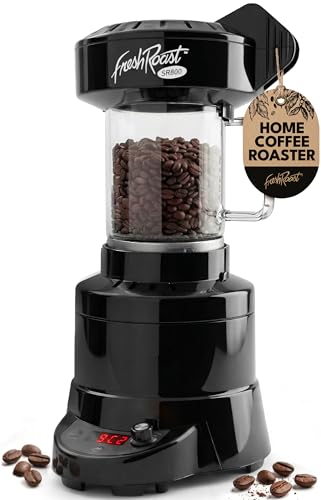
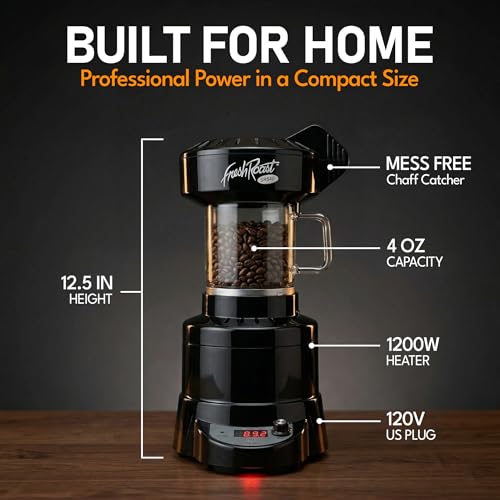
Fresh Roast SR800 Coffee Roaster
Strengths
- Digital temperature display
- 8 oz batch capacity
- Variable heat and fan control
- Precise real-time feedback
- USA-made support
Trade-offs
- Higher price point
- Steeper learning curve for beginners
- Limited to smaller home batches
The Fresh Roast SR800 stands out in the home roasting space with its precise heat and fan control, a digital display that actually delivers real-time feedback, and a batch size that hits the sweet spot for most households. On paper, the 6–8 oz capacity is ideal for roasting enough for several days without overcommitting, and owners consistently report that the speed roast system gets the job done in under 10 minutes with surprisingly even results.
What really sets it apart is the level of adjustability, nine power settings, convection fan control, and the ability to tweak start parameters on the improved control board. For someone like me who values customization without needing a PhD in roasting, this machine strikes a rare balance between accessibility and depth. Compared to the SR540, it’s a clear step up in both batch size and control, making it a favorite among reviewers who want room to grow without jumping into pro-level gear.
Video review
500g Automatic Coffee Roaster

Strengths
- 9 built-in roast profiles
- Stainless drum durability
- Smart temp probe
- Dual smoke exhaust options
- High-speed cooling fan
Trade-offs
- Complex setup for beginners
- Smoke management required
- Manual mode has strict airflow rules
This roaster is built for people who want to roast smarter, not harder, its 9 built-in profiles for different bean types and processes make it one of the most automated options under $500. The stainless steel drum and intelligent temperature probe suggest solid engineering, and owners praise how well it handles medium to dark roasts when paired with the included smoke pipes. The automatic mode is a win for beginners, while manual users appreciate the airflow reminders during first crack.
Still, it’s not without quirks. The chaff collector helps, but indoor roasting, even with the smoke filter, can still set off alarms unless vented properly. Compared to the SR800, it offers more automation but less immediate hands-on control. If you’re into experimenting with washed vs. honey-processed beans and want repeatable profiles, this is a strong contender. But it’s overkill for someone just dipping into home roasting.
Video review
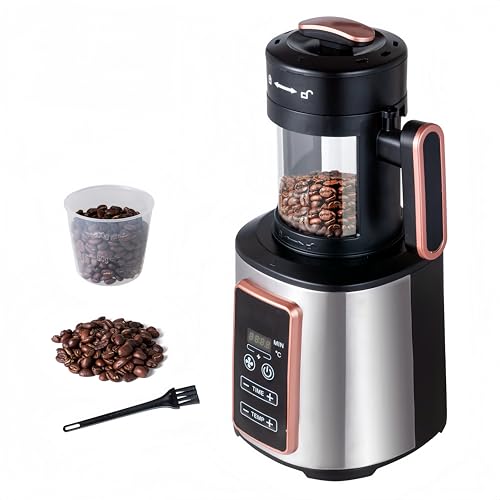
1500W Air Coffee Roaster
Strengths
- 1500W powerful heating
- Hot air circulation
- Built-in chaff collector
- Compact countertop design
- Transparent lid
Trade-offs
- 100g max batch size
- Limited manual control
- No fan speed adjustment
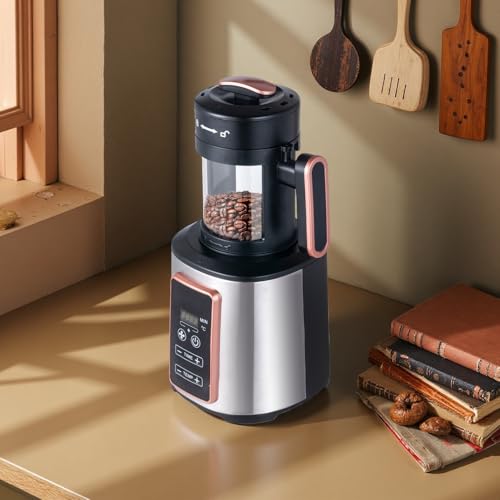
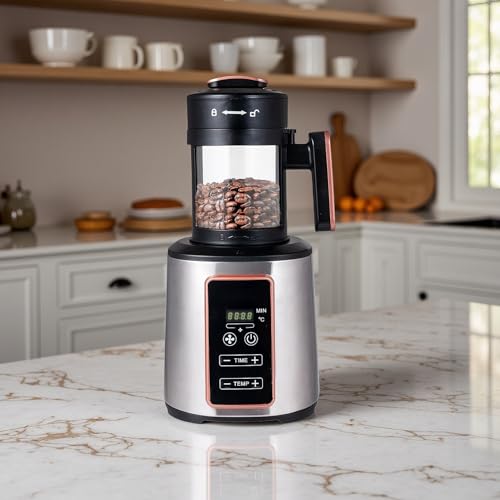
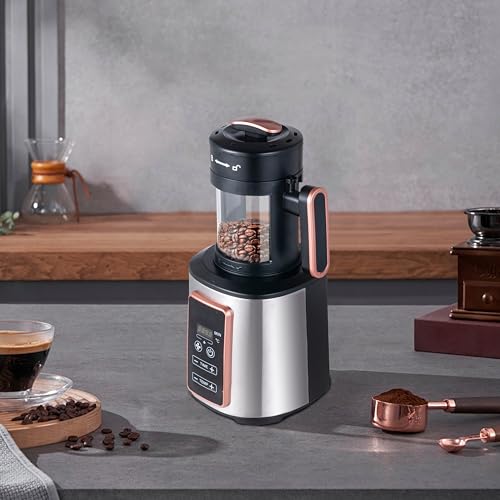
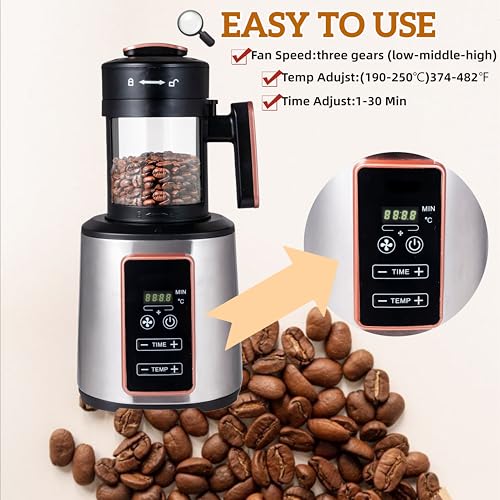
With a 1500W heating system and strong hot air circulation, this roaster delivers even results without stirring, owners love how the airflow lifts and tumbles beans for uniform development. The 100g capacity keeps batches small and fresh, and the built-in chaff collector makes cleanup a one-second task. It’s compact, stylish, and the transparent lid adds a nice touch for watching the color shift in real time.
But that small capacity is a hard limit. Compared to the SR540, it offers similar volume but less control, no variable fan speed or real-time temp readout. It’s best for someone who wants consistent, no-fuss roasting with minimal learning curve. If you’re into tweaking profiles, this isn’t the tool. But if you want café-style results with push-button ease, it’s a solid pick.
Product photos

1Pound Electric Coffee Roaster
Strengths
- 1-pound capacity
- Observation window
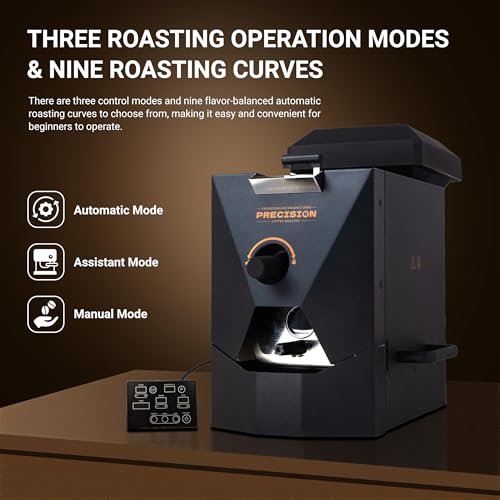
- Multiple roasting modes
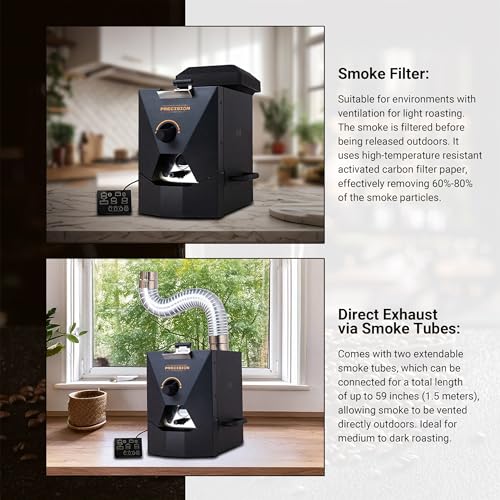
- Dual smoke exhaust
- Easy cleanup
Trade-offs
- Inconsistent at max capacity
- Smoke filter limited to light roasts
- Bulkier design
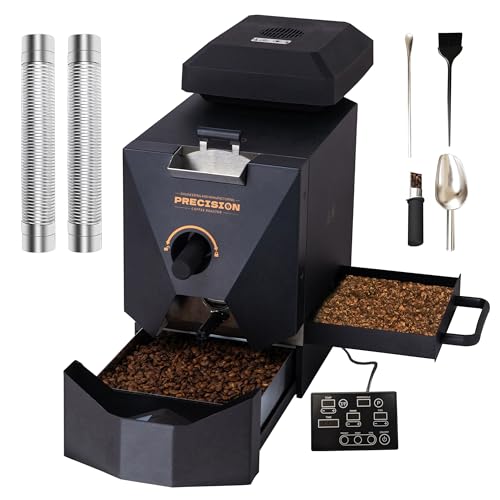
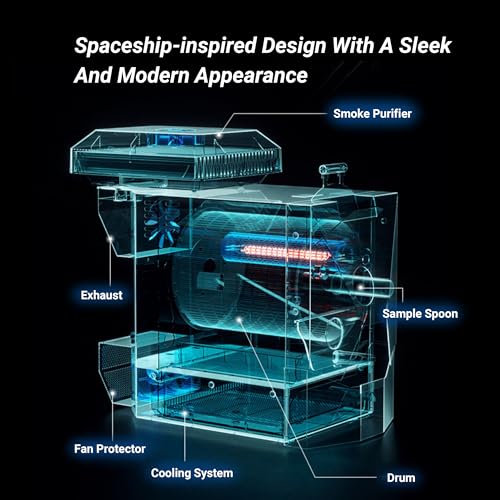
Roasting a full pound at once is rare in home units, and this machine leans into that with serious capacity and flexible modes, automatic, assisted, and manual. The inclusion of both a smoke filter and dual chimney tubes shows the designers understood real-world roasting challenges. Owners note the observation window is a standout for tracking roast stages, and the sample spoon allows mid-roast checks without killing airflow.
But big doesn’t always mean better. At full capacity, some reviewers report uneven roasting unless beans are split into smaller loads. It’s clearly built for light to medium roasts (the filter struggles with dark roast smoke), and while the control interface is simple, it lacks the precision of digital feedback systems. Still, for someone who hosts often or wants to roast weekly, the volume advantage is real.
Product photos
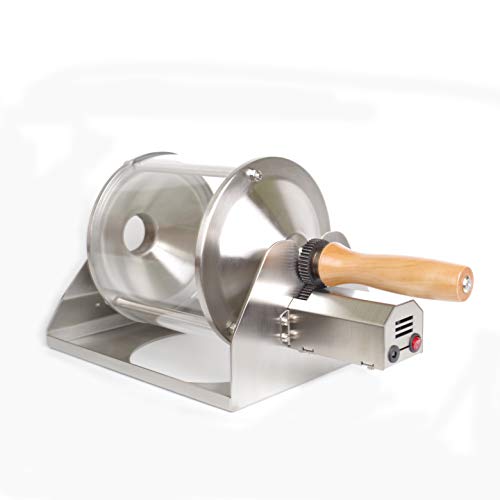
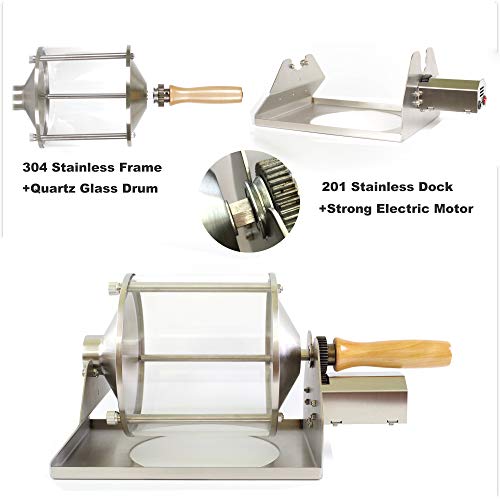
DYVEE Gas Coffee Roaster
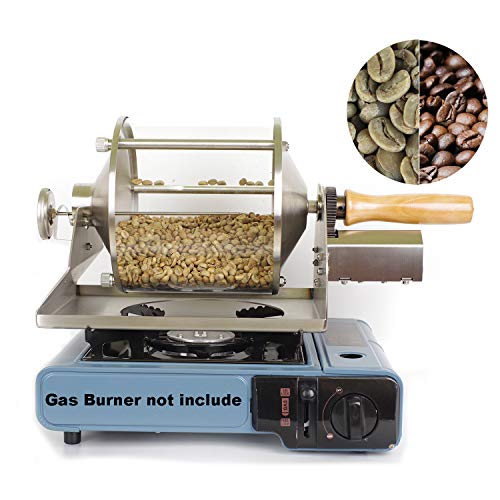
Strengths
- Quartz drum visibility
- Gas heat control
- 12V safe motor
- Stainless steel build
- Roast peanuts too
Trade-offs
- Requires external burner
- No automation
- High smoke output
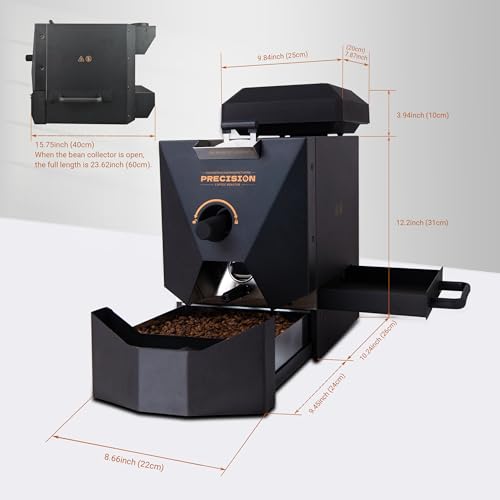
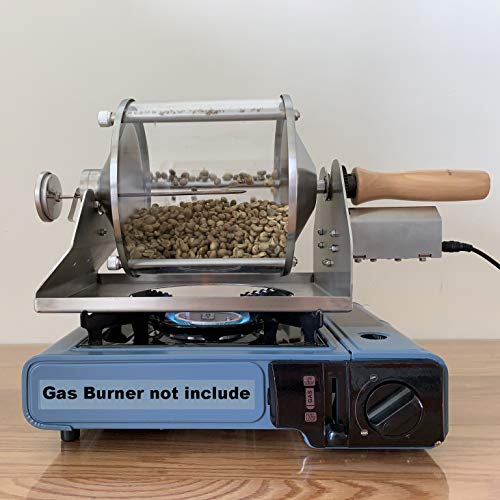
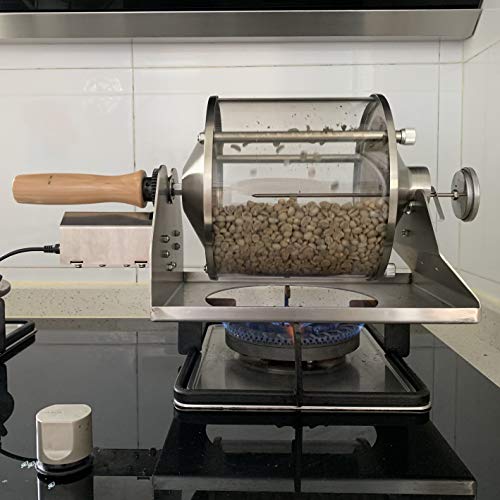
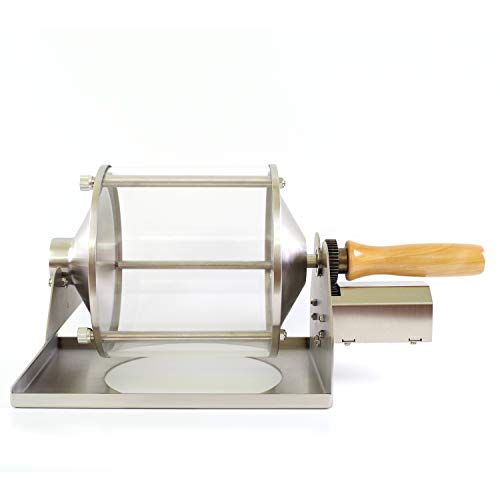
This is for the hands-on enthusiast who craves control and loves the craft. The quartz glass drum lets you watch every stage of development, and using a gas burner means you can fine-tune heat on the fly, something electric models struggle to match. At 400g max (best at 200–300g), it’s sized right for serious home use, and the 12V motor adds a safety edge over higher-voltage competitors.
Reviewers praise the roast clarity and flavor depth, often comparing results to small-batch artisan setups. But it demands attention: no automation, no presets, just you, the flame, and the beans. Compared to electric roasters, it’s louder, smokier, and requires outdoor or well-vented use. But if you’re chasing that analog roasting experience, this is as close as it gets at this price.
Product photos
Nuvo Eco Ceramic Handy Roaster
Strengths
- Fully manual operation
- Eco-friendly ceramic
- Portable and lightweight
- Unique roasting experience
- Handcrafted aesthetic
Trade-offs
- Inconsistent roast results
- Very small batch size
- Requires constant attention
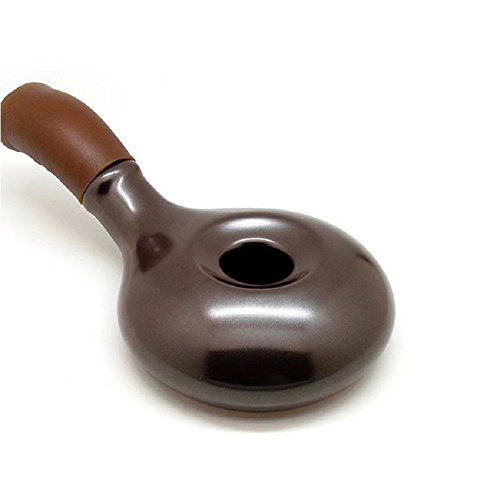
This is the oddball of the bunch, a manual, hand-cranked ceramic roaster you hold over a stove. No electronics, no power, just you turning the handle while beans tumble in a waffle-textured ceramic chamber. On paper, it’s the most portable and eco-friendly option here, and owners love the ritualistic aspect, there’s something meditative about hearing the pop of first crack while cranking away.
But it’s not practical for daily use. Batch size is tiny, heat control is entirely dependent on your stove and attention, and results vary widely. Compared to even the SR540, it’s a step back in consistency. Still, as a backup, travel option, or gift for a coffee romantic, it has charm. I wouldn’t rely on it, but I’d keep one in my camping kit.
Product photos


JIAWANSHUN 1.1lb Electric Roaster

Strengths
- Large 800g capacity
- 0–240℃ temperature control
- Non-stick interior
- Transparent heat-resistant lid
- Multi-use (nuts, beans)
Trade-offs
- No real-time temp display
- Stirring rod can wear over time
- Bulkier footprint
This JIAWANSHUN roaster grabs attention with its 0–240℃ temperature control and 800g capacity, on paper, that’s massive for a home unit. The non-stick interior and built-in stirring rod suggest a design focused on convenience, and reviewers confirm it’s easy to clean and consistent for light to dark roasts. But here’s the catch: while the temperature range looks broad, the lack of real-time monitoring or digital feedback means you’re relying heavily on timing and sight through the transparent lid.
It’s more of a “set and watch” machine than a precision tool. Compared to the Fresh Roast models, it trades finesse for volume and versatility. Owners who roast nuts or want to batch large quantities love it, but coffee purists note it can lack the nuance needed for single-origin beans. If you’re after raw capacity and multi-use functionality over roast profiling, this makes sense. But don’t expect the same level of control as convection-based systems.
Product photos


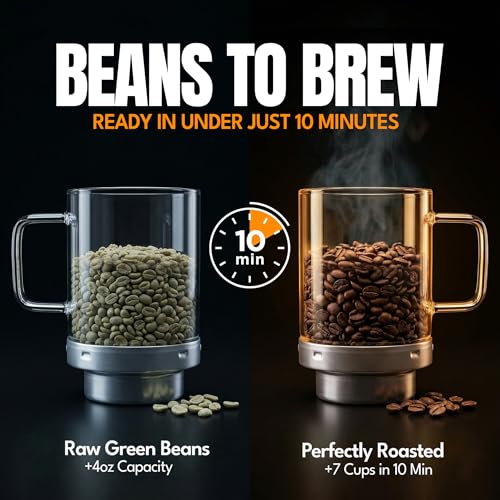
Fresh Roast SR540 Automatic Roaster
Strengths
- Affordable entry point
- Convection fan control
- Digital temp display
- Quick roast times
- Trusted Fresh Roast build
Trade-offs
- Small 120g batch size
- No automated profiles
- Limited for dark roast lovers
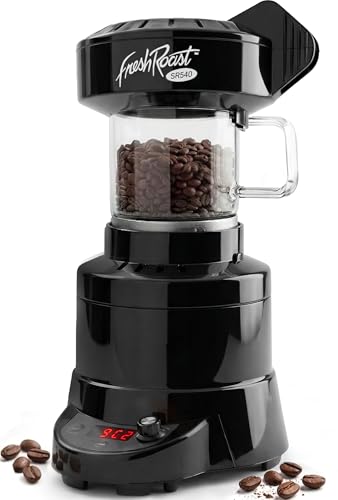
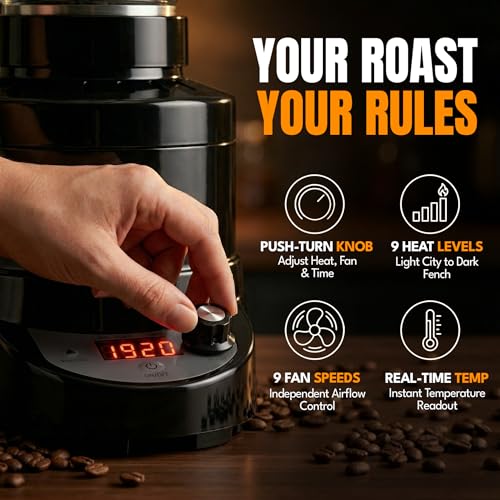
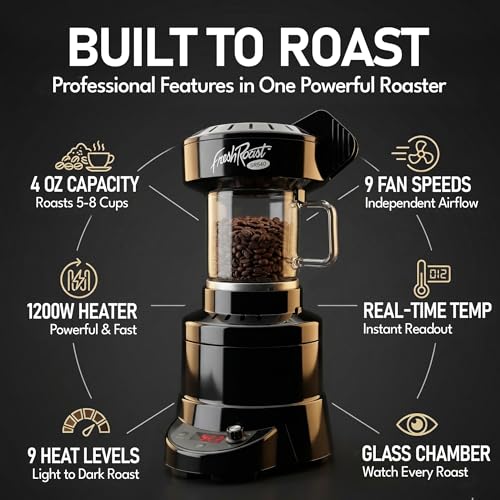
The SR540 is the budget-friendly entry point into the Fresh Roast ecosystem, and it delivers where it counts: speed, simplicity, and that same convection-based roasting logic as its bigger sibling. With a 120g capacity, it’s meant for small batches, ideal if you’re roasting daily or experimenting with single origins without waste. Owners consistently say it’s easy to learn, with a digital display and nine heat settings giving enough control to dial in light or medium roasts.
It’s not as powerful or spacious as the SR800, but for the price, it’s hard to beat. Compared to the JIAWANSHUN or the 500g automatic model, it lacks automation and capacity, but it’s more responsive and better tuned for coffee-specific work. If you’re just starting out and want a machine that grows with you, this is the smarter buy over pricier, less focused alternatives.
Product photos
How We Picked These coffee bean roaster
As the founder of Bean Thusiast, I approached researching coffee bean roasters by focusing on a detailed comparison of published specifications and features. I weighed owner reviews from multiple sources – Amazon, coffee forums, and specialty coffee sites – alongside assessments from reputable reviewers. My goal was to rank these roasters against criteria important to home coffee enthusiasts, rather than conducting hands-on lab tests. This research-led approach allowed me to build a picture of real-world performance.
For this category, consistent temperature control and roasting capacity were the most important factors. Achieving an even roast requires precise heat management, and the ability to roast a sufficient amount of beans per batch is crucial for regular use. Beyond that, I considered features like smoke mitigation, ease of cleaning, and the availability of automated profiles as valuable differentiators. Understanding a roaster’s capacity to deliver a consistent result, and the user experience it offers, were paramount.
Specifications reliably indicate capacity and power, but I relied heavily on owner feedback to gauge real-world consistency and ease of use. Reports of uneven roasting, excessive smoke, or mechanical failures carried significant weight. Similarly, the reputation of the manufacturer, and their responsiveness to customer concerns, was a key consideration. For those interested in exploring lighter roast profiles, understanding the nuances of a light roast coffee beans can be particularly helpful when considering a home roaster.
How To Choose The coffee bean roaster
Choosing a coffee bean roaster can seem daunting, but with a little understanding of the key features, you can find the perfect machine to unlock incredibly fresh and flavorful coffee.
A quality coffee bean roaster prioritizes consistent heat distribution, precise temperature control, and effective chaff collection. Look for models offering adjustable settings to fine-tune your roast profile and a durable construction to withstand repeated use. Consider capacity based on your consumption and desired frequency of roasting.
Roast Capacity and Batch Size
The size of the roaster dictates how much you can roast at once, which directly impacts frequency and convenience. Don’t automatically assume bigger is better. A smaller capacity (under half a pound) is excellent for experimentation and single-origin coffee benefits, allowing you to dial in profiles without wasting a lot of beans. Larger capacities (over a pound) are better if you need to supply a larger household or enjoy sharing your roasts. However, larger batches require more attention to ensure even roasting.
Temperature Control and Roast Profiles
Precise temperature control is arguably the most critical factor. Roasting isn’t just about heat; it’s about hitting specific temperature ranges at particular times to develop the desired flavors. Many roasters offer adjustable temperature settings. However, some, like the 500g Automatic Coffee Roaster, take it a step further with pre-programmed roast profiles for different bean types (washed, sun-dried, etc.). This is incredibly helpful for beginners, but even experienced roasters appreciate the convenience.
- A simple, analog temperature dial is sufficient for experienced users who prefer a hands-on approach.
- A digital display with precise temperature readings (within a few degrees) is essential for repeatable results and fine-tuning your roasts.
- Automatic profiles, while convenient, should be adjustable, allowing you to modify them to suit your preferences and the specific characteristics of the beans you’re using. This is important because even within a single origin, bean density and moisture content can vary.
A good rule of thumb: start with lower heat settings and gradually increase as you become more comfortable with your roaster.
Smoke Management & Usability
Home roasting inevitably produces smoke, so effective smoke management is vital. Some roasters, particularly air roasters, produce relatively little smoke. Others, like drum roasters, can generate a substantial amount, especially during darker roasts. Look for models with built-in chaff collectors and, ideally, options for venting the smoke outdoors. Beyond smoke, consider the overall usability. Is the control panel intuitive? Is the roasting chamber easy to clean? A frustrating user experience will quickly diminish the joy of home roasting, so read home coffee roaster reviews carefully. If you’re new to this, you might also want to check out a buying guide for roasters to help narrow your choices.
Coffee Bean Roaster Compared
Here’s a comparison of key specifications for different coffee bean roasters.
| Product Name | Capacity (grams) | Power (Watts) | Modes | Temperature Control | Ventilation System | Roast Type |
|---|---|---|---|---|---|---|
| Fresh Roast SR800 | 226 | N/A | Manual/Adjustable | 9 Levels | N/A | All |
| 500g Automatic Coffee Roaster | 500 (350-400 rec) | N/A | Auto/Manual | Pre-set Profiles | Smoke Purifier/Pipe | Light to Dark |
| 1500W Air Coffee Roaster | 100 | 1500 | Adjustable | Variable | Built-in Collector | Even, All |
| 1Pound Electric Coffee Roaster | N/A | N/A | Auto/Assist/Man | N/A | Filter/Vent Pipe | All |
| DYVEE Gas Coffee Roaster | 400 (200-300 rec) | N/A | Manual | Gas Burner | N/A | All |
| Nuvo Eco Ceramic Handy Roaster | N/A | N/A | Manual | N/A | Rear Hole | All |
| JIAWANSHUN 1.1lb Electric Roaster | 800 (300-500 rec) | 1200 | Adjustable | 0-240°C | 4-Hole Ventilation | All |
| Fresh Roast SR540 | 120 | N/A | Manual/Adjustable | 9 Levels | N/A | All |
Frequently Asked Questions
What temperature should I roast coffee beans to?
Generally, first crack occurs around 380-410°F (193-210°C), and that’s a good starting point for a medium roast. However, the ideal temperature depends heavily on the bean’s origin and density, and your personal preference; experimenting within a range of 350-450°F (177-232°C) is recommended.
Can I roast green coffee beans indoors?
Yes, but smoke is a significant concern. Air roasters produce the least smoke, while drum roasters generate more, so consider a model with good ventilation or the ability to vent outdoors. A coffee roaster for personal use with a built-in smoke suppression system is a worthwhile investment.
How long does it take to roast coffee beans at home?
A typical roasting session takes between 12 and 20 minutes, depending on the roaster and the desired roast level. The first few minutes involve drying the beans, followed by the yellowing, first crack, development, and finally, second crack if you’re aiming for a darker roast.
What’s the difference between an air roaster and a drum roaster?
Air roasters use hot air to circulate and roast the beans, resulting in a more even roast and less smoke. Drum roasters tumble the beans in a heated drum, providing more direct heat and producing a more traditional roast profile, but often with more chaff and smoke. Choosing a home roasting machine comparison can help you decide.
Are home coffee roasters difficult to learn?
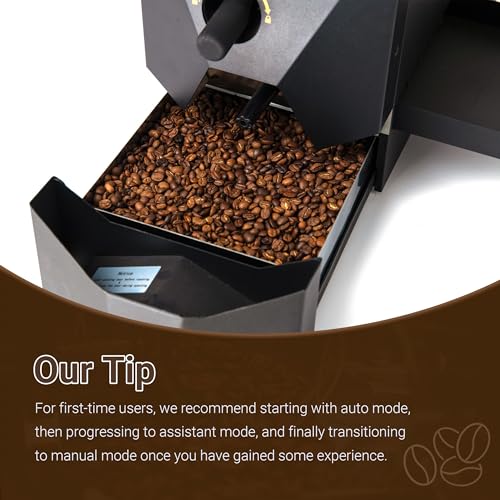
Not necessarily, but there is a learning curve. Starting with a model offering pre-set roast profiles can simplify the process, especially for a roaster for beginners. Consistent practice and careful observation of the beans throughout the roasting process are key to achieving consistent results.
The Bottom Line
Ultimately, choosing a coffee bean roaster comes down to balancing control with convenience. If you’re a dedicated enthusiast eager to truly master the roasting process, the DYVEE Gas Coffee Roaster offers the most hands-on experience and potential for nuanced results, though it requires a steeper learning curve. However, for most home users, I believe the 500g Automatic Coffee Roaster strikes the best overall balance, providing pre-set profiles and adjustability in a package that addresses smoke mitigation.
For those on a tighter budget, the Fresh Roast SR540 is an excellent entry point, offering a simple, manual roasting experience without sacrificing too much in terms of control. If you prioritize versatility and the ability to roast larger batches, the JIAWANSHUN 1.1lb Electric Roaster is a solid choice, offering a broad temperature range and decent ventilation. Remember, understanding the importance of a burr grinder advantages is crucial to making the most of your freshly roasted beans.
More than any specific feature or capacity, the key to great home roasting is consistency and attention to detail. Don’t get caught up in chasing the highest wattage or the most automated profiles. Focus on learning how heat affects the bean, practicing your technique, and developing a keen sense of smell. A consistent approach, and a good understanding of grind consistency impact, will yield far more satisfying results than any gadget ever could.
