
9 Best Camping Coffee Makers for 2026
The STANLEY French Press 48 oz is the overall best camping coffee maker for its durability, consistent brew, and insulated design. For a budget-friendly and rugged option, the COLETTI Bozeman 9-Cup Percolator delivers solid performance. If you value versatility and a clean cup, the STANLEY Pour Over Set is a strong pick for pour-over lovers.
Out in the wild, a bad coffee maker can turn your morning ritual into a mess of grounds, burnt pots, or extra cleanup. I’ve seen too many campers stuck with flimsy gear that fails after one trip or brewers that are more hassle than they’re worth.
As the founder of Bean Thusiast, I focused on what actually matters: real-world durability, ease of cleaning, and reliable brewing under outdoor conditions. This guide cuts through the noise, using specs, owner feedback, and brewing knowledge to highlight the models that deliver a great cup without the fuss.
Top 9 Camping Coffee Maker in the Market
The Best Camping Coffee Maker, Reviewed
Grip Coffee Percolator 8 Cup

Strengths
- Enamel durability
- Rustproof steel
- Dual handles
- 8-cup capacity
Trade-offs
- Heavy for backpacking
- Enamel can chip
- No induction compatibility
This classic-style percolator stands out for its enamel finish, which reviewers consistently praise for resisting rust and chipping, even after repeated open-fire use. The 8-cup capacity is generous for small groups, and the dual handles make it easier to manage when hot. On paper, it’s a nostalgic throwback built for campers who want durability without leaning into stainless steel.
Still, enamel has limits. While it’s more colorful and scratch-resistant than bare metal, it can crack under extreme thermal shock or if dropped. Owners note it’s best suited for slow, steady heating, not cranked up on a roaring fire. Compared to the Stanley Hold Tight, it’s heavier and less packable, but the visual appeal and heat retention are definite pluses for base camp setups.
Video review
STANLEY French Press 48 oz

Strengths
- 4-hour heat retention
- Dishwasher safe
- Sturdy 18/8 steel
- Fine mesh filter
Trade-offs
- Bulky for tight packs
- No pour-over functionality
- Slightly slower cleanup
If you want coffee that stays hot for hours and tastes clean and balanced, this double-wall vacuum insulated French press is the clear leader. The 48-oz capacity is ideal for two to three people, and the stainless steel mesh filter does an excellent job keeping sludge out of your cup. Owners love that it doesn’t just brew, it holds the heat, making it perfect for slow mornings or long hikes where you want hot coffee hours later.
It’s also one of the few French presses built for real outdoor use. The BPA-free 18/8 steel is dent-resistant, and every part is dishwasher-safe, no surprise given Stanley’s reputation. Compared to the Odoland budget set, this is heavier and pricier, but it’s built to last decades. For those who hate weak coffee or lukewarm brews, this model delivers. I’d pick it over most percolators for flavor clarity and temperature control.
Video review
STANLEY Hold Tight 6-Cup

Strengths
- Lightweight stainless steel
- Cool-grip handle
- Dishwasher safe
- Lifetime warranty
Trade-offs
- No viewing window
- Percolator flavor limits
- Not for induction
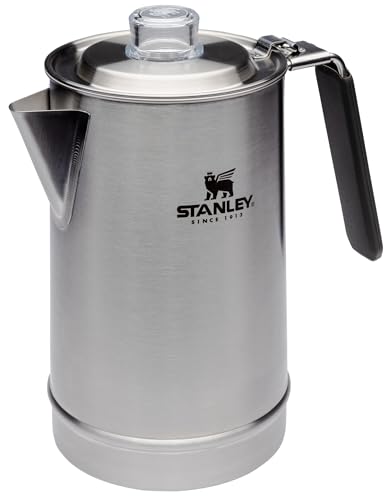
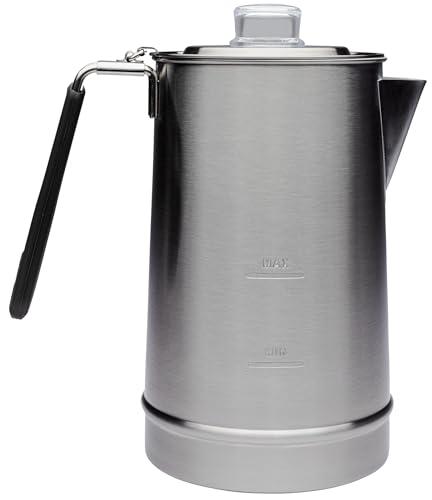
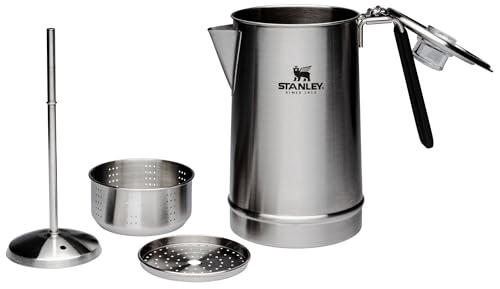
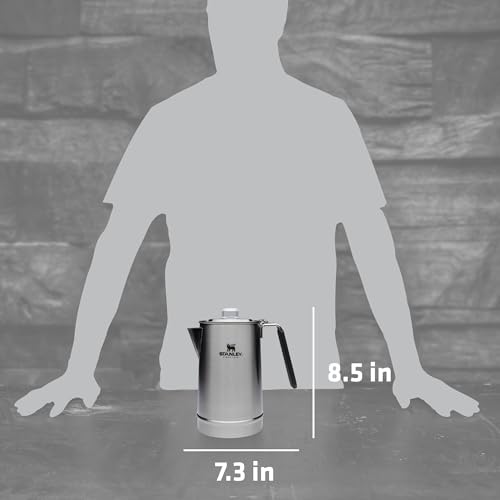
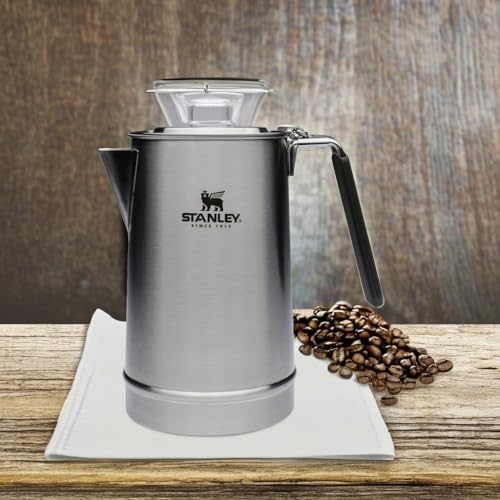
Stanley’s Hold Tight percolator earns its spot as the best lightweight percolator thanks to smart design: a silicone-coated handle that stays cool, a tight-sealing lid, and a build that’s both rugged and packable. At just over a quart, it’s ideal for 2–3 campers, and the stainless-steel basket keeps grounds contained better than many budget models.
Owners consistently report it’s easy to clean and performs well on both stoves and open fires. The lifetime warranty is a big plus, reinforcing Stanley’s “built for life” promise. Compared to the enamel Grip model, this one is lighter and more durable for constant movement. While percolated coffee isn’t as nuanced as pour-over, this delivers a bold, reliable cup, perfect when you need caffeine fast and don’t want fuss.
Product photos
Odoland Camping Coffee Set

Strengths
- Ultra-lightweight
- All-in-one set
- Stacks neatly
- Fast heating
Trade-offs
- Aluminum construction
- Non-stick coating
- Less durable long-term
This kit is a solid budget pick, lightweight, compact, and surprisingly complete for the price. The 1.2L anodized aluminum kettle heats fast, the foldable mug saves space, and the included percolator filter works well for small batches. At under a pound and packed in a mesh bag, it’s easy to toss into a pack without weighing you down.
But it’s not without trade-offs. Aluminum isn’t as durable or flavor-neutral as stainless steel, and the non-stick coating raises long-term concerns for some users, especially over open flame. Still, for beginners or occasional campers, this set offers great value. Compared to the Coletti Bozeman, it lacks build quality and longevity, but it’s a smarter buy if you’re not yet committed to outdoor brewing.
Product photos


Yanyole Stainless Steel Dripper

Strengths
- Collapsible design
- Reusable filter
- Lightweight
- Easy cleanup
Trade-offs
- No insulated mug
- Single serve only
- No stand included
This mini collapsible dripper is a standout for solo travelers who love pour-over precision. The stainless steel double-mesh filter produces a clean cup without paper waste, and the compact design folds down to fit in a pocket. It works with most mugs, and owners say cleanup is a breeze, just rinse and go.
It’s not for groups, obviously, but for one person who values flavor and eco-friendliness, it’s hard to beat. Compared to the Stanley Pour Over Set, it lacks insulation and a dedicated mug, but it’s lighter and more packable. If you’re the type who brings a gooseneck kettle on weekend trips, this is your go-to. For most backpackers, though, the lack of a built-in mug might be a downside.
Product photos


COLETTI Bozeman 9-Cup Percolator
Strengths
- All stainless steel
- Glass viewing knob
- Large 9-cup capacity
- Dishwasher safe
Trade-offs
- Heavy for portability
- Glass knob fragile
- Not induction compatible
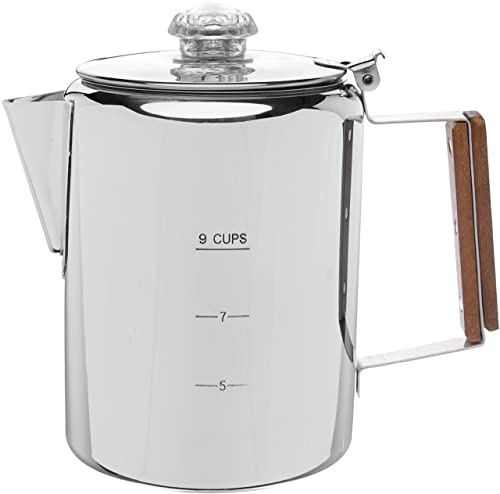
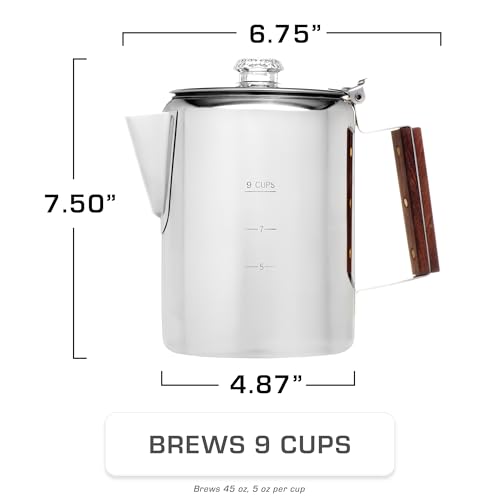
The Bozeman percolator makes a strong statement: stainless steel, no compromises. With a 9-cup capacity and a glass knob on the lid so you can watch the brew cycle, it’s built for campers who want durability and flavor control. The all-stainless construction avoids the off-tastes some associate with aluminum or plastic-lined pots, and owners report it cleans up easily with just a rinse.
It’s heavier than most percolators, which makes it better for car camping than backpacking. The glass knob is a nice touch, but it’s also a vulnerability, some users report cracking if exposed to rapid temperature shifts. Still, with a 1-year warranty and solid feedback on consistent brews, it’s a top pick for those who want a no-nonsense, long-lasting pot. I’d take this over the Grip model if I prioritized materials over color.
Product photos




STANLEY Pour Over Set

Strengths
- Insulated mug included
- Reusable stainless filter
- Lifetime warranty
- Clean flavor extraction
Trade-offs
- Single serve only
- No larger capacity
- Mug may dent
This set nails the pour-over experience in the wild. The insulated stainless steel mug keeps coffee warm while you brew, and the included reusable filter eliminates paper waste without sacrificing clarity. The fit is snug on most mugs, and the fine mesh brings out the bright, floral notes in light roasts, something percolators can’t match.
It’s dishwasher safe and backed by Stanley’s lifetime warranty, which adds serious value. Compared to the Yanyole dripper, this one includes a proper insulated mug and lid, making it more complete out of the box. For travelers who miss their morning pour-over ritual, this is the closest you’ll get to home. The 12-oz limit means it’s not for groups, but for solos or pairs, it’s ideal.
Product photos


Tastyle Single Serve Coffee Maker

Strengths
- Works with K-Cups and grounds
- Energy efficient
- Self-cleaning function
- Portable handle
Trade-offs
- Requires power source
- Not for true off-grid
- Bulky for tight spaces
This hybrid brewer stands out by supporting both K-Cups and ground coffee, a rarity in compact machines. The included filter and K-pod holder mean you can switch based on convenience or freshness, and the one-button operation is as simple as it gets. At 800 watts, it’s energy-efficient and ETL certified, with safety features like auto-shutoff and overheat protection.
But it needs power, a 100W+ power bank for camping, which limits off-grid use. Owners say brewing takes longer on battery, and while it’s small, it’s not as packable as non-electric options. Still, for RVers or car campers with access to power, this is a smart middle ground between convenience and flexibility. Beats the Keurig K-Mini by offering ground coffee use without needing a separate accessory.
Product photos


Keurig K-Mini Single Serve

Strengths
- Ultra-compact design
- Fast brewing
- Cord storage
- Travel mug compatible
Trade-offs
- Pods only (without add-on)
- Needs electricity
- No ground coffee support
The K-Mini is the most compact pod brewer in the Keurig lineup, under 5 inches wide and designed for tiny kitchens or travel bags. It brews any size from 6 to 12 oz, has a removable drip tray for travel mugs, and includes cord storage for easy packing. For Keurig loyalists, it’s the go-to when space is tight.
But it’s pod-only unless you buy a separate My K-Cup filter, which adds cost and complexity. While fast and consistent, it’s heavier than non-electric options and still needs a power outlet. Compared to the Tastyle model, it’s less versatile but more polished in design. If you’re committed to K-Cups and have power, it’s a solid pick, but not for the off-grid camper.
Product photos


How We Picked These camping coffee maker
I approached this guide to camping coffee makers by researching published specifications and features across a range of models. I then weighed owner reviews from major retailers alongside expert opinions from sites dedicated to outdoor gear and coffee brewing. As the founder of Bean Thusiast, I drew on my years of experience with various brewing methods to assess which features truly matter when you’re away from a full kitchen. Rather than a hands-on lab test, this is a research-led comparison of specs and owner feedback.
For camping coffee makers, I prioritized build quality and ease of cleaning above all else. A rugged, dependable brewer is essential when you’re off the grid, and nobody wants to spend valuable campsite time scrubbing. Capacity was also a key factor; I considered whether the brewer suited solo adventurers or larger groups. Understanding various camping coffee brewing methods is key to choosing the right approach for your style of travel.
Specifications reliably tell you about capacity, materials used, and dimensions – important for packing. However, I leaned heavily on owner feedback to gauge real-world durability and ease of use. Reputation also played a role; brands known for quality outdoor products generally hold more weight. Knowing what wilderness coffee gear to bring is important, and owner reviews are the best way to determine which options truly deliver on their promises.
How To Pick The Right camping coffee maker
Finding a good cup of joe in the great outdoors shouldn’t be a struggle. I’ve seen a lot of options come and go, and the key is understanding what actually matters when you’re away from a kitchen.
A quality camping coffee maker prioritizes durability, ease of cleaning, and consistent brewing – even with limited resources. Look for stainless steel construction where possible, simple designs with few parts, and features that minimize grounds in your cup. Consider your typical group size, brewing preferences (pour-over, French press, percolator), and power source availability.
Brewing Method Matters Most
The first thing to nail down is how you like to brew. While many options exist, percolators and French presses are the most common for camping. Percolators, like the COLETTI Bozeman, offer a robust, full-bodied brew and are exceptionally durable, but can sometimes produce a slightly bitter taste if not carefully monitored. French presses, such as the STANLEY French Press, offer more control over the brewing process and a cleaner cup, but require a bit more finesse and can be more fragile. Don’t discount pour-over options like the STANLEY Pour Over Set if you prioritize a nuanced flavor profile and don’t mind a slower brew time.
Material & Build Quality
When you’re miles from the nearest store, reliability is paramount. Stainless steel is the king here. It’s durable, easy to clean, and doesn’t impart any unwanted flavors to your coffee. Avoid aluminum, which can dent easily and potentially leach into your brew. Enamel-coated steel, as seen in the Grip Coffee Percolator, is another good choice for durability, especially when used over a campfire. Consider the thickness of the steel – thinner steel will heat up faster but may warp or dent more easily.
Here’s what I look for in a quality build:
- A secure lid. Nothing ruins a morning faster than a lid that pops off mid-brew.
- A comfortable, heat-resistant handle. You’re likely brewing over an open flame or hot stove.
- A robust filter system. You want coffee, not sediment. A fine mesh filter is essential.
Portability & Ease of Use
A complicated setup isn’t ideal when you’re trying to enjoy the outdoors. Look for a camping coffee maker that’s lightweight and packs down reasonably small. Single-serve options, such as the Tastyle Single Serve Coffee Maker, are convenient for solo adventurers, but may not be practical for larger groups. If you’re interested in alternative brewing methods, exploring DIY camping coffee methods can also be a great solution.
A good rule of thumb: the fewer parts, the easier it is to clean and the less there is to break.
For many, the convenience of pod-based systems like the Keurig K-Mini Single Serve are appealing, but remember these require access to power and a supply of K-Cups, which adds to the packing weight. Ultimately, selecting the right setup depends on your priorities and whether you’re after a quick and easy brew or a more involved, artisanal experience–and if you’re searching for the best option for your needs, checking out top-rated camping coffee brewers is a great place to start.
Camping Coffee Maker Compared
Here’s a comparison of key specifications for various camping coffee makers to help you choose the right one.
| Product Name | Capacity (oz) | Brew Type | Material | Power Source | Special Features |
|---|---|---|---|---|---|
| STANLEY French Press 48 oz | 48 | French Press | Stainless Steel | N/A | Insulated, Dishwasher Safe |
| COLETTI Bozeman 9-Cup | 45 | Percolator | Stainless Steel | Stovetop | Glass View Top |
| STANLEY Hold Tight 6-Cup | N/A | Percolator | Stainless Steel | Stovetop | Lightweight, Cool Grip |
| STANLEY Pour Over Set | N/A | Pour Over | Stainless Steel | N/A | Stainless Filter |
| Yanyole Stainless Steel Dripper | N/A | Pour Over | Stainless Steel | N/A | Portable |
| Tastyle Single Serve | 12 | Pod/Grounds | Plastic/Metal | 800W | K-Cup & Grounds |
| Keurig K-Mini Single Serve | 6-12 | Pod | Plastic | 120V | Compact, Auto-Off |
| Odoland Camping Coffee Set | N/A | Percolator | Aluminum | Stovetop/Fire | Kettle & Mug Included |
| Grip Coffee Percolator 8 Cup | N/A | Percolator | Enamel Steel | Stovetop/Fire | Heavy Glazed Enamel |
Frequently Asked Questions
What capacity camping coffee maker should I get if I usually camp solo?
A 12- to 16-ounce capacity is generally ideal for solo campers. Smaller options, like the Tastyle Single Serve Coffee Maker, are convenient, but a slightly larger size allows for a second cup or sharing with a friend–and checking out best portable coffee maker options can help narrow it down.
Are percolators really as prone to making bitter coffee as some people say?
Percolators can produce a bitter brew if left on the heat too long, as the coffee repeatedly cycles through the grounds. However, many modern percolators, like the COLETTI Bozeman, have features to help regulate the brewing process and minimize bitterness.
What’s the biggest advantage of a stainless steel camping coffee maker?
Stainless steel is the most durable material for camping coffee makers. It resists dents, doesn’t impart flavors, and cleans easily, which is vitally important when you’re away from convenient cleaning facilities.
Can I use a French press camping coffee maker at high altitudes?
Yes, you can, but be aware that water boils at a lower temperature at higher altitudes. This means you may need to steep your coffee for a longer period to extract the full flavor, or preheat the water a bit more before brewing.
What about pod-based systems – are they a practical choice for camping?
Pod-based systems like the Keurig K-Mini Single Serve are convenient if you have access to a power source and are willing to pack the pods. However, they create more waste and aren’t ideal if you’re aiming for a minimalist packing list, or want to explore compact coffee makers for outdoors.
The Bottom Line
Choosing a camping coffee maker often comes down to balancing convenience with control. You can opt for a simpler, faster setup like the Tastyle Single Serve Coffee Maker if speed and ease are top priorities, or invest in a more traditional method that lets you fine-tune your brew. For the best overall combination of durability, capacity, and brewing quality, I recommend the STANLEY French Press 48 oz – it’s a workhorse that will deliver consistently good coffee on any adventure.
If you’re a solo camper or prioritize portability, the Keurig K-Mini Single Serve is a solid choice, despite the need for power. For those who prefer the robust flavor of a percolator, the COLETTI Bozeman 9-Cup offers a classic camping experience with a durable build. And if you’re a pour-over enthusiast, the STANLEY Pour Over Set allows you to enjoy a nuanced cup, even in the backcountry, and will help you perfect your French press brewing guide.
Ultimately, the specs matter less than consistently good technique. Paying attention to things like water quality, a proper [ideal French press grind], and a consistent [French press steep time] will elevate your camping coffee far more than any fancy feature. Don’t overlook the importance of proper [French press water temperature] either – it’s a fundamental element of a great brew, wherever you are.
