
8 Best Bean to Cup Coffee Machines of 2026
The best bean to coffee machine overall is the Ninja Luxe Café Premier, thanks to its excellent grind consistency and versatile brewing options. For a more affordable pick, the AMZCHEF Espresso Machine With Grinder delivers strong performance with precise temperature control, while the Philips 3300 Series stands out for those who want convenience and milk-based drinks.
Most people want café-quality coffee at home without the hassle of a complicated machine. The real challenge is finding a balance between consistent flavor, ease of use, and long-term reliability, too many machines sacrifice one for the others.
After researching the market and reviewing specs and owner feedback, I focused on grind quality, temperature control, and usability. These are the machines that deliver the most for coffee lovers who value both taste and convenience.
Top 8 Bean To Coffee Machine in the Market
The Best Bean To Coffee Machine, Reviewed
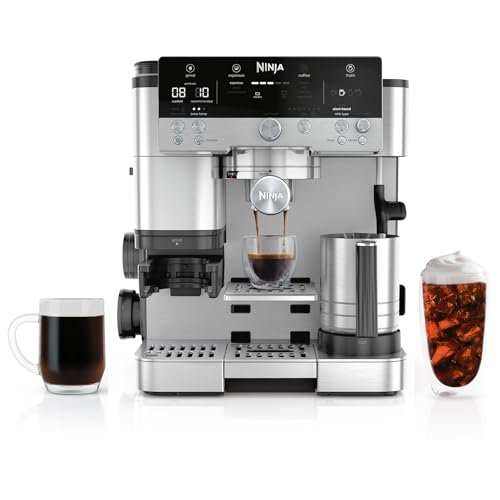
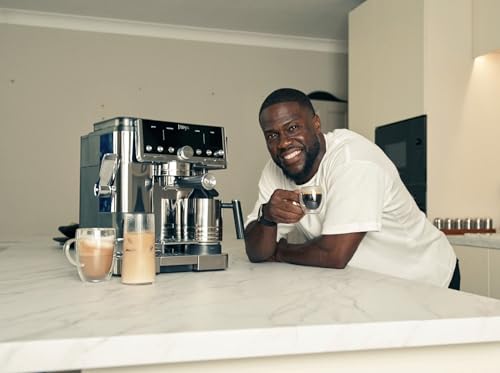
Ninja Luxe Café Premier 3-in-1
Strengths
- Conical burr grinder
- Weight-based dosing
- Hands-free frothing
Trade-offs
- Large footprint
- Steeper learning curve
- Noisy grinder
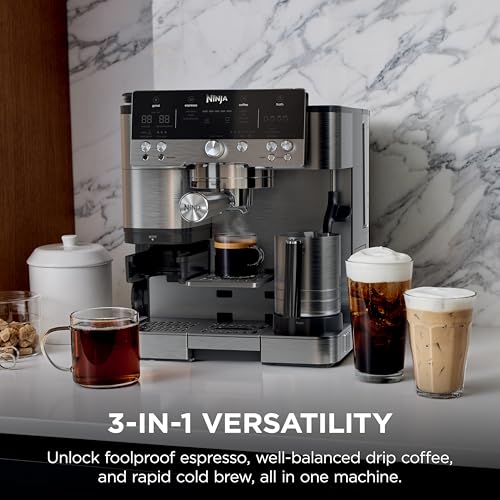
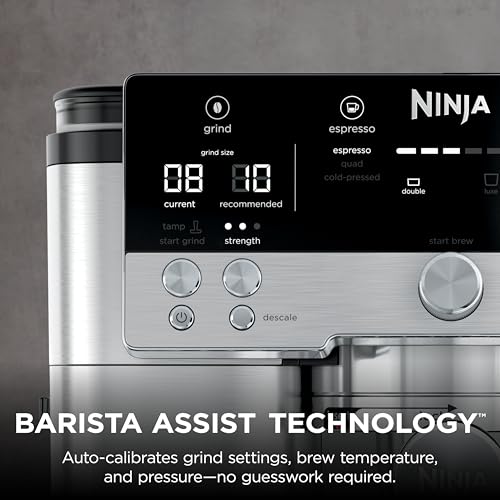
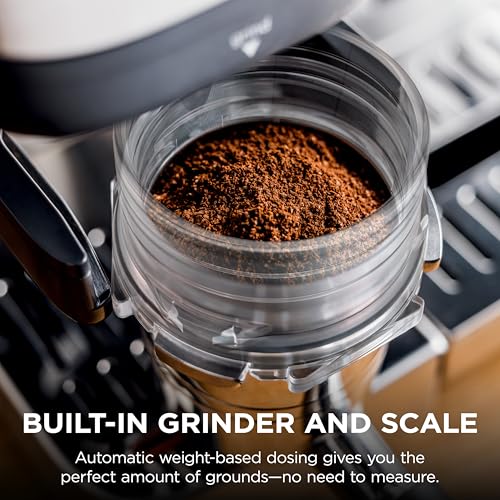
The Ninja ES601 isn’t just another combo machine, it’s a category leader for good reason. With true espresso, drip, and cold brew in one unit, plus a conical burr grinder and weight-based dosing, it brings serious barista-level control to home users. The assisted tamper and barista assist tech take the guesswork out of espresso, which reviewers consistently praise for pulling balanced, repeatable shots.
The hands-free frother is a standout, delivering microfoam without the learning curve of steam wands. Compared to the Philips 3300, it offers more drink variety and better grind precision. For someone who wants drip coffee in the morning and a latte at noon, this is the smarter buy. It’s bulkier, yes, but you’re getting three machines in one with real performance.
Product photos

Philips 3300 Series Fully Automatic
Strengths
- LatteGo milk system
- AquaClean filter
- Quiet operation
Trade-offs
- Limited grind control
- Plastic build
- Expensive pods
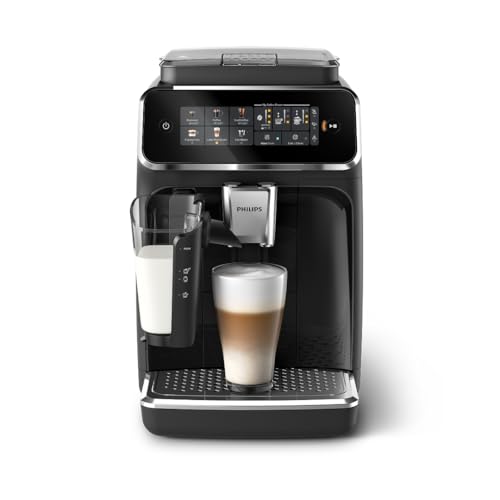
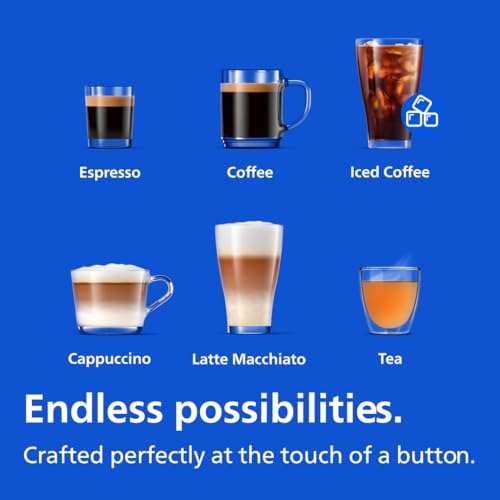
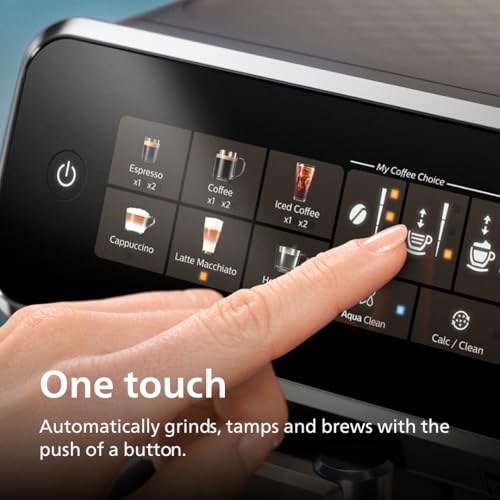
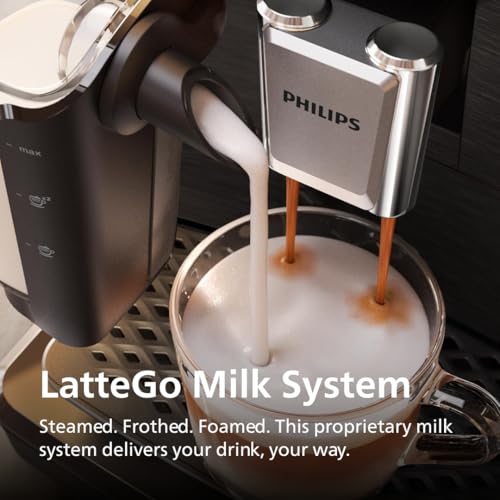
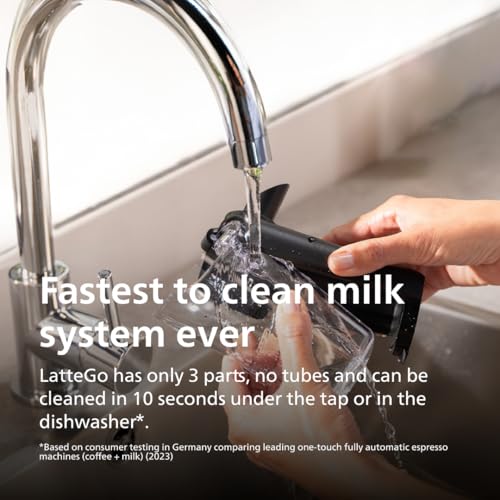
For milk-based drinks, the Philips EP3341/50 is the go-to super-automatic. The LatteGo system is a standout for ease, 3 parts, no tubes, rinses in 10 seconds. Owners love that it delivers café-style cappuccinos and lattes with one button, and the 15-bar pump pulls solid espresso shots consistently. The 6 presets take the hassle out of daily brewing.
Where it pulls ahead of rivals like the AMZCHEF is in reliability and quiet operation, its SilentBrew is noticeably hushed. The AquaClean filter is a big win too, eliminating descaling for up to 5,000 cups. It’s not as customizable as manual machines, but for convenience-driven buyers, it’s a standout.
Product photos

Gevi 10-Cup Drip Coffee Maker

Strengths
- Burr grinder
- Reusable filter
- Programmable timer
Trade-offs
- Basic build quality
- No thermal carafe
- Plastic taste reports
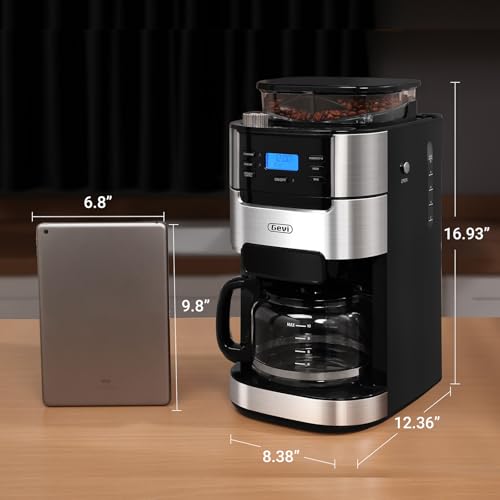
The Gevi stands out as the best budget-friendly option with a burr grinder. For the price, it packs in programmable brewing, 8 grind settings, and pre-brew tech that soaks grounds before full extraction, owners say this boosts aroma and body noticeably. The reusable filter saves money and waste, and the 1.5L tank suits small families.
It lacks the polish of the Breville or Ninja, and the build feels lighter, but it delivers solid flavor for the cost. Compared to blade-grinder models like the Horavie, it’s a clear step up in consistency. If you want fresh ground coffee without breaking the bank, this is the smart pick.
Product photos


Breville Grind Control Coffee Maker

Strengths
- Burr grinder
- Thermal carafe
- Steep and release
Trade-offs
- No espresso
- No programmable timer
- Higher price
When flavor precision matters, the Breville Grind Control is hard to beat for drip coffee lovers. Its Steep and Release technology and 8 strength settings let you extract exactly how you want, owners say it highlights subtle notes in single-origin beans better than most drip machines. The thermal carafe keeps coffee hot without scorching, and the burr grinder’s adjustability means you can match grind size to roast type.
It’s not flashy like touchscreen models, but it’s built for taste. Compared to the Gevi, it has better build quality and more nuanced control. The 60oz tank suits small families, and the gold filter enhances body. If you’re after third-wave flavor in a drip format and don’t need espresso, this is my top pick.
Product photos


Horavie Single Serve Coffee Maker
Strengths
- Ultra-compact
- 6 grind settings
- Fits tall mugs
Trade-offs
- Blade grinder
- Drip bags needed
- Smaller water tank
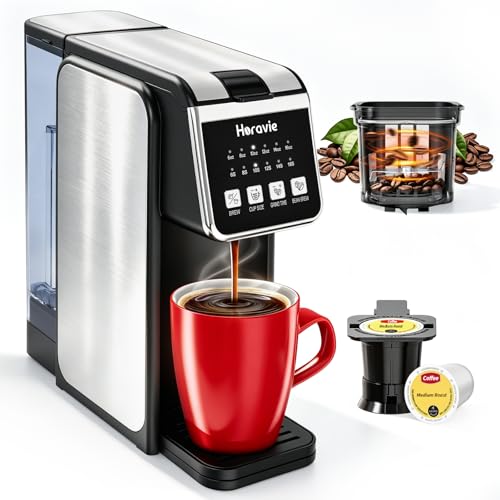
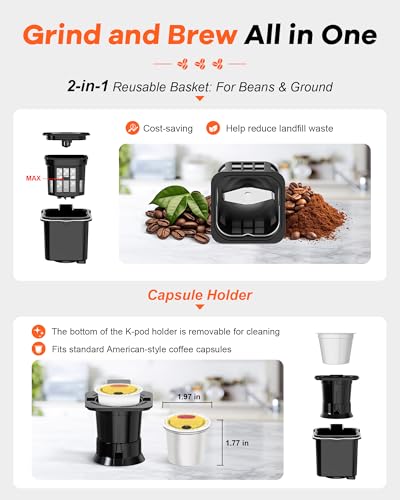
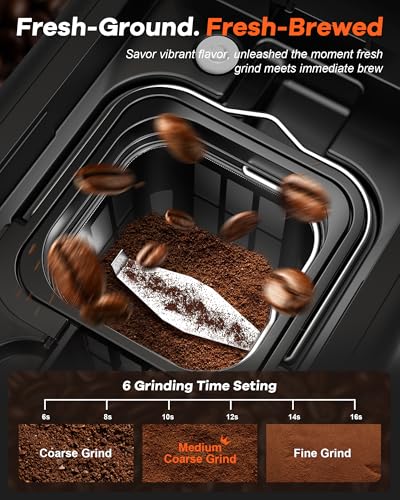
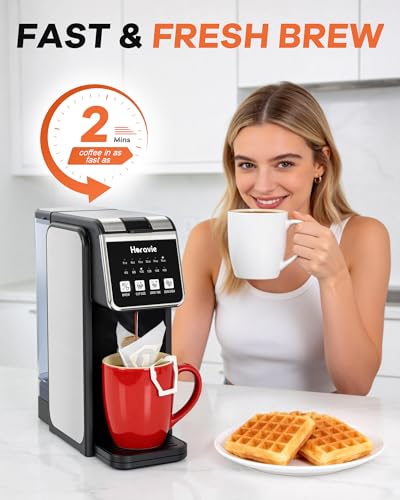
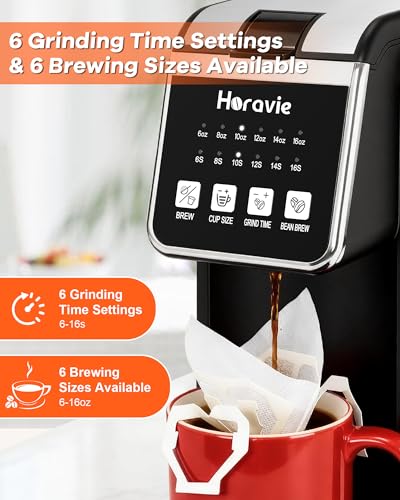
If counter space is tight, the Horavie is one of the most compact single-serve brewers with a grinder I’ve seen. At under 4.7 inches wide, it slips into dorms, RVs, or narrow kitchen gaps where other machines won’t fit. Despite its size, it packs in six brew sizes and six grind time settings, giving real control over extraction, owners say this makes a noticeable difference when dialing in lighter roasts or reducing bitterness.
The blade grinder is a compromise, but the 6–16 second range lets you fine-tune coarseness more than most budget models. It’s not perfect, some sediment sneaks through, but the included drip bags help. For the footprint, it’s a strong performer. Compared to the AIRMSEN, it trades features like touchscreen and larger tank for sheer space efficiency.
Product photos
AMZCHEF Espresso Machine With Grinder
Strengths
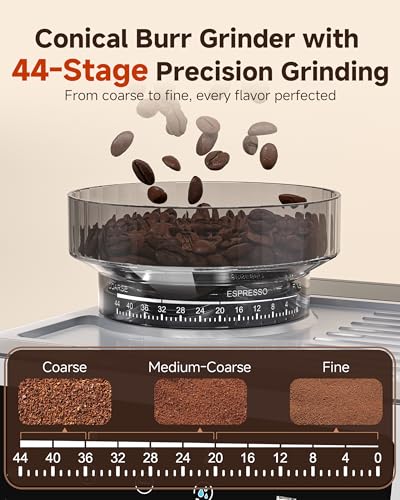
- 44 grind settings
- Precise temp control
- Cold brew mode
Trade-offs
- Frothing learning curve
- Build quality issues
- Touchscreen glitches
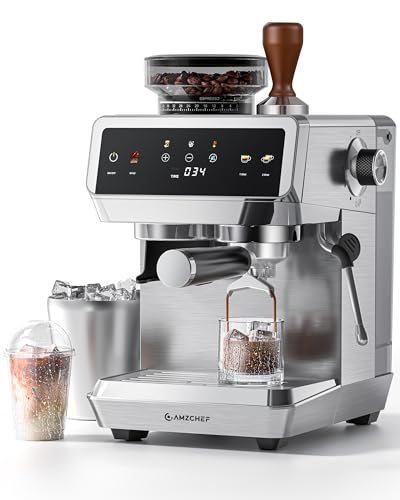
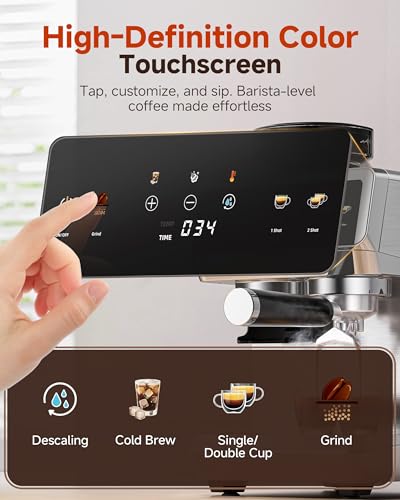
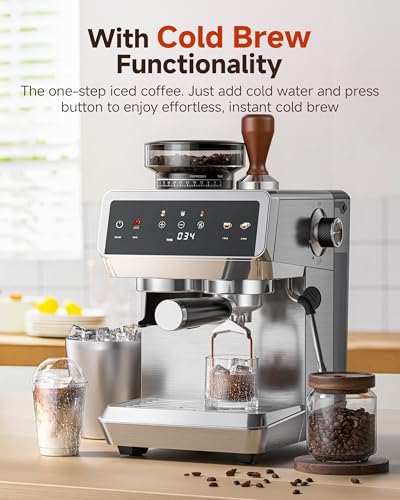
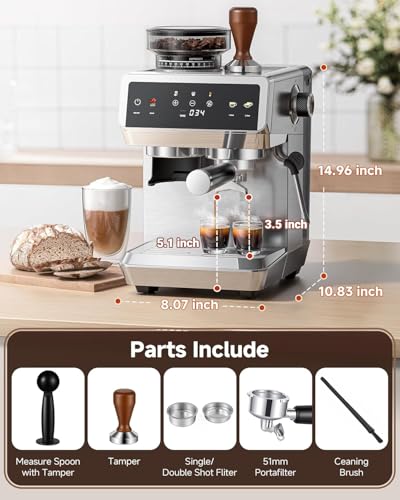
The AMZCHEF shines where most budget machines fail: temperature control. Being able to dial brewing temp from 190℉ to 201℉ is rare at this price, and it makes a real difference, owners report brighter acidity with light roasts and deeper chocolate notes in darks. Combined with 44 grind settings, this machine lets you fine-tune extraction like a pro.
It’s not perfect, the touch screen feels cheap, and the milk frother takes practice, but for enthusiasts who want to experiment, it offers serious value. Compared to the Ninja, it lacks automation, but for hands-on users, that’s a feature, not a bug. If you love dialing in your shot, this is the more rewarding machine.
Product photos
AIRMSEN Grind & Brew Coffee Maker
Strengths
- Touchscreen interface
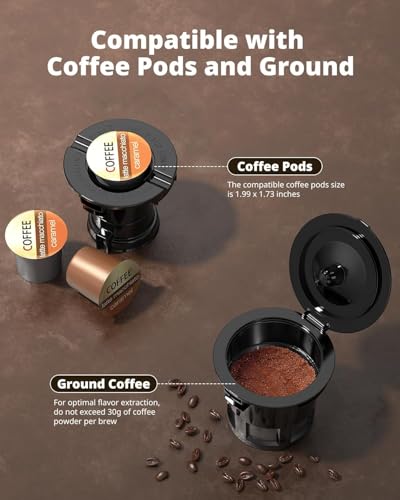
- K-Cup compatible
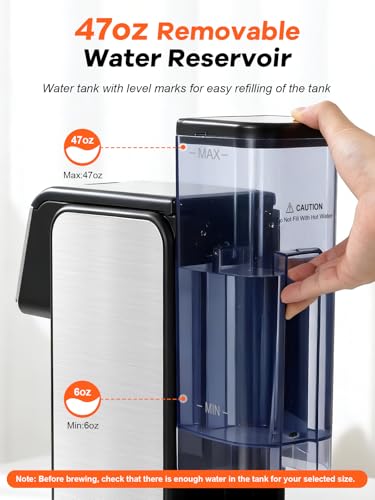
- Large water tank
Trade-offs
- Blade grinder
- Some sediment
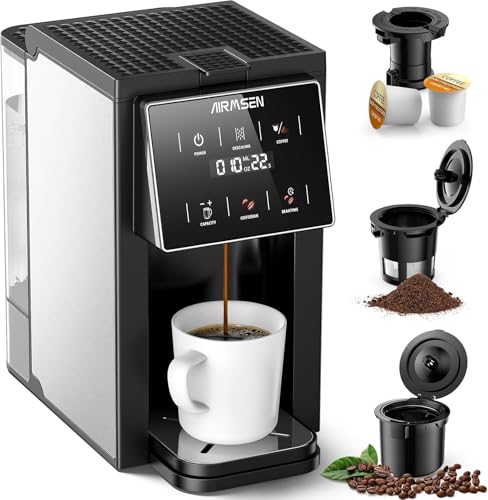
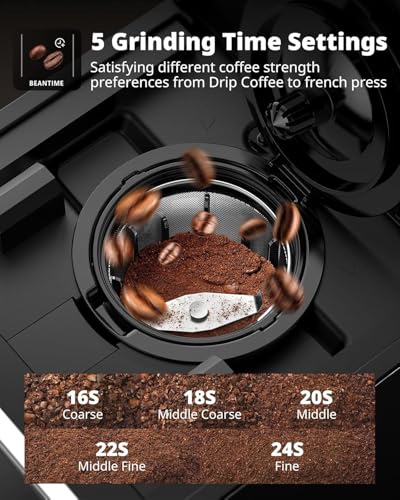
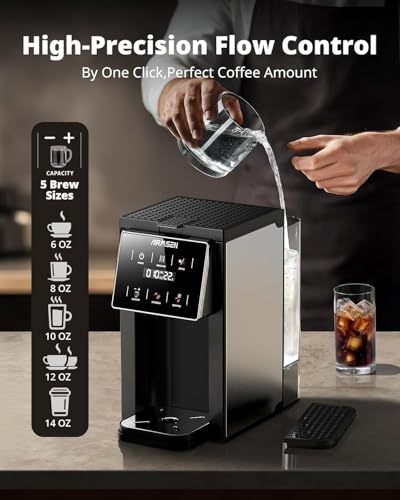
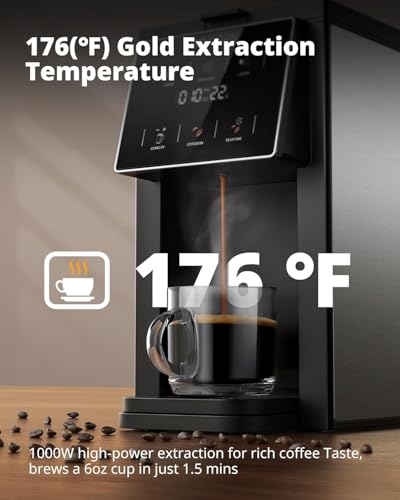
This AIRMSEN model stands out in the single-serve grind-and-brew space with its touchscreen interface and smart extraction upgrades. On paper, it delivers a well-rounded mix of convenience and customization, especially for users who want both K-Cup flexibility and fresh bean grinding in one compact system. The 5-stage grind adjustment and optimized water flow are designed to reduce sediment, and owners consistently report a cleaner cup compared to similar machines using mesh-only filters.
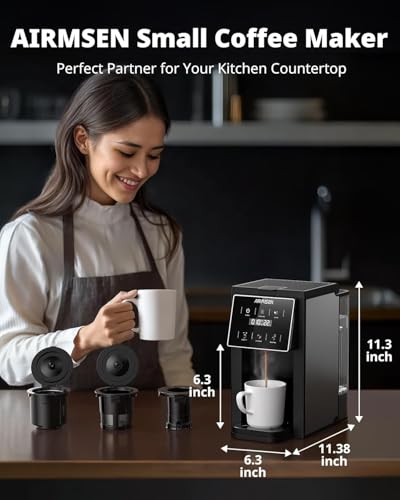
Where it really pushes ahead is in usability: the descaling alert, 50oz tank, and hidden storage make it a tidy, low-maintenance option for small kitchens or offices. While it doesn’t match full espresso machines in depth, it bridges the gap between pod speed and fresh-ground flavor better than most in its class. I’d pick this over basic pod brewers if you want more control without sacrificing simplicity.
Product photos
De’Longhi True Brew Drip Coffee

Strengths
- Over Ice mode
- Conical burr grinder
- Espresso style option
Trade-offs
- No milk frother
- No programmable timer
- Limited hot brew options
If iced coffee is your daily driver, the De’Longhi CAM51025MB is engineered for it. Its Over Ice brew setting chills coffee instantly without dilution, and owners say it preserves clarity and sweetness better than standard hot-to-ice methods. The conical burr grinder ensures freshness, and Bean Extract Technology handles dosing automatically, no guesswork.
With 6 sizes and 5 styles, including espresso-style shots, it’s versatile. But where it pulls ahead of the Gevi or AIRMSEN is in cold performance. For hot drip, it’s solid, but not exceptional. If you’re all-in on iced coffee, this is the most purpose-built machine here.
Product photos


How We Chose These bean to coffee machine
As the founder of Bean Thusiast, I approach coffee equipment with a focus on the factors that truly deliver a superior cup. Rather than a hands-on lab test, this is a research-led comparison of specifications and owner feedback across numerous bean-to-cup machines. I examined published specs – grinder adjustment levels, temperature control, brew styles – and weighed them against user reviews and expert opinions from sites like Wirecutter and Serious Eats. My goal was to identify models that consistently excel in key areas.
For bean-to-cup machines, the most important factors are grind consistency and temperature stability. A precise, consistent grind is essential for even extraction and balanced flavor, and a conical burr grinder is almost always preferable to a blade grinder. Equally important is temperature control; brewing at the correct temperature (typically between 195-205°F) is critical for unlocking the coffee’s aromatic compounds. Beyond these, versatility – offering different brew styles and customization options – significantly impacts the overall value.
Specifications reliably indicate grinder types and the range of adjustments available. However, I leaned heavily on owner feedback to gauge real-world performance – how easily adjustments are made, the consistency of the grind across different bean types, and the machine’s long-term reliability. Reputation, particularly regarding ease of cleaning and durability, was also a major consideration. Understanding basic coffee machine steps is also key to getting the most out of any machine.
Choosing The Right bean to coffee machine
Choosing the right coffee machine can feel overwhelming, but focusing on your priorities will narrow down the field.
A truly good coffee machine balances consistent grind quality, reliable brewing temperature, and user-friendly operation. Look for models with adjustable grind settings, precise temperature control, and features that simplify cleaning and maintenance. Pay attention to water filtration systems and the overall build quality, as these impact the longevity and flavor of your brews.
Grind Quality & Consistency
The integrated grinder is arguably the most crucial component of a bean-to-cup machine. Don’t assume all grinders are created equal. Blade grinders, found in some budget models, chop the beans unevenly, leading to inconsistent extraction and a muddy flavor. Instead, prioritize machines with conical burr grinders. These crush the beans between two burrs, producing a much more uniform grind size. The Ninja Luxe Café Premier, for example, boasts 25 grind settings, giving you considerable control. However, more settings don’t automatically translate to better quality; look for feedback from owners about the actual consistency across the range. If you are interested in learning more about flavor nuances, exploring the single-origin vs blended coffee will help you appreciate the impact of bean choice.
Temperature Stability & Control
Temperature is paramount to proper coffee extraction. If the water isn’t hot enough, you’ll end up with sour, under-extracted coffee. If it’s too hot, you’ll get bitter, burnt flavors. Many machines advertise temperature control, but the precision of that control matters. The AMZCHEF Espresso Machine With Grinder stands out here, offering adjustment between 190°F and 201°F.
Here’s what to consider when evaluating temperature stability:
- Heating System: Thermoblock systems generally heat water faster but can fluctuate more than boiler systems.
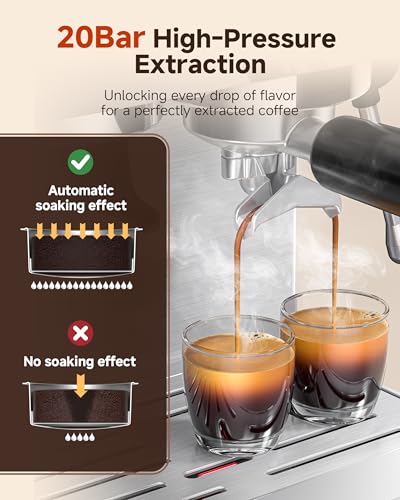
- Pre-Infusion: This wets the grounds before full brewing, allowing for more even extraction.
- Temperature Consistency: Read reviews to see if users report consistent temperatures across multiple brews.
A consistent brewing temperature within a narrow range (ideally 195-205°F) is the hallmark of a quality coffee machine.
Usability & Feature Set
Beyond the core brewing process, think about how you’ll actually use the machine day-to-day. Consider the cleaning process, the size of the water reservoir, and the overall ease of operation. The AIRMSEN Grind & Brew Coffee Maker exemplifies a focus on usability with its touchscreen interface and self-clean function. For those prioritizing convenience, a model like the Philips 3300 Series with its LatteGo milk system offers rapid cleaning. If you’re looking for the best home bean-to-cup machines, consider your daily routine and choose features that streamline your coffee-making process.
Bean to Coffee Machine Compared
This table provides a side-by-side comparison of key specifications for various bean to coffee machines.
| Product Title | Brew Methods | Grind Settings | Water Tank Capacity | Bean Hopper Capacity | Special Features |
|---|---|---|---|---|---|
| Ninja Luxe Café Premier 3-in-1 | Espresso, Drip, Cold Brew | 25 | N/A | N/A | Integrated Grinder, Weight-Based Dosing, Frothing |
| Philips 3300 Series Fully Automatic | Espresso, Coffee, Iced Coffee, Cappuccino, Latte Macchiato | N/A | N/A | N/A | LatteGo Milk System, AquaClean Filter |
| Gevi 10-Cup Drip Coffee Maker | Drip | 8 | N/A | N/A | 2-10 Cup Versatility, Reusable Filter, Pre-Brew Technology |
| Breville Grind Control Coffee Maker | Drip | 8 | 60 oz | 1/2 lb | Steep and Release Technology, Adjustable Grinder |
| Horavie Single Serve Coffee Maker | Single Serve, K-Cup, Ground | 6 | 47 oz | N/A | Grind & Brew, 6 Brew Sizes, Compact Design |
| AMZCHEF Espresso Machine With Grinder | Espresso | 44 | 60 oz | N/A | Temp Control, Cold Brew Mode, Steam Wand |
| AIRMSEN Grind & Brew Coffee Maker | Grind & Brew, K-Cup, Ground | 5 | 50 oz | N/A | 3-in-1 System, Touchscreen, Auto-Shutoff |
| De’Longhi True Brew Drip Coffee | Drip | N/A | N/A | N/A | Built-in Burr Grinder, 6 Brew Sizes, 5 Brew Styles |
Frequently Asked Questions
What’s the typical lifespan of a bean to coffee machine?
With proper cleaning and maintenance, most bean-to-cup machines will last between 3-7 years. The longevity depends heavily on usage frequency and water hardness; regular descaling is crucial to prevent mineral buildup.
Can I use pre-ground coffee in a bean to coffee machine?
Yes, most models have a bypass option allowing you to use pre-ground coffee. This is useful if you want to try a different blend without using the grinder or if the grinder is undergoing maintenance.
How often do I need to clean a bean to coffee machine?
Daily rinsing of removable parts is essential, and a deeper clean, including descaling, should be done monthly or every 2-3 months depending on water hardness. Neglecting cleaning will impact flavor and shorten the machine’s life.
Are more expensive bean to coffee machines always better?
Not necessarily. While higher price points often correlate with better build quality and more features, a focus on core functionalities, grind consistency and temperature control, is more important. You can find excellent affordable bean-to-cup picks that deliver exceptional results.
What’s the difference between a thermoblock and a boiler heating system?
A thermoblock heats water on demand, offering faster heating times but potentially less temperature stability. A boiler system heats and maintains a larger volume of water, providing more consistent temperatures but taking longer to initially heat up.
The Bottom Line
Buying a bean-to-cup machine often comes down to balancing control with convenience. If you want a machine that delivers maximum customization and consistently excellent results, the Ninja Luxe Café Premier stands out. It offers a wide range of grind settings and brew styles, allowing you to really dial in your perfect cup.
For those on a tighter budget, or who want a simple, reliable machine, the AIRMSEN Grind & Brew Coffee Maker is an excellent choice. If you primarily brew drip coffee and appreciate ease of use, the Breville Grind Control Coffee Maker is also a solid contender, offering good grind consistency for coffee without overwhelming complexity.
Ultimately, the specifications matter less than understanding your own preferences. Consistent grind quality, understanding the difference between a burr vs blade grinder, and stable brewing temperature are the foundations of good coffee. Don’t get lost in the features; focus on a machine that consistently delivers a flavor you enjoy.
