
3 Best Almond Milks for Coffee 2026
The best almond milk for coffee is the 365 Organic Unsweetened for its clean taste and reliable performance, followed by the Pacific Foods Barista Series for espresso drinks and the Amazon Grocery Vanilla Unsweetened for budget-minded buyers.
Choosing the wrong almond milk can turn your carefully brewed coffee into a grainy, curdled mess. After comparing the field and reading through owner feedback, I found that not all almond milks hold up under heat or pair well with bold coffee flavors.
This guide breaks down what actually matters, like texture, sweetness, and heat stability, based on specs, ingredient quality, and real-world user experiences. I’ll help you pick one that complements your brew, whether you’re drinking it black or making a creamy latte.
Top 3 Almond Milk For Coffee in the Market
The Best Almond Milk For Coffee, Reviewed
365 Organic Unsweetened Almond Milk

Strengths
- Organic
- No added sugar
- Low calorie
Trade-offs
- May curdle in very hot coffee
- Thinner mouthfeel
This almond milk stands out for coffee drinkers who want a clean, neutral base without any sweetness getting in the way. On paper, the 30-calorie profile and lack of added sugars make it a smart fit for purists, and owners consistently report it blends smoothly into hot brew without overpowering the bean’s natural flavors. The organic certification adds peace of mind, especially for those prioritizing clean ingredients.
The calcium and vitamin fortification is solid, though it doesn’t promise barista-level performance under heat. Some reviewers note slight separation in very hot coffee, but for drip or pour-over, it holds up well. Compared to sweeter or creamier options, this one stays in the background, ideal if you like your coffee bold and unaltered.
Video review
Amazon Grocery Vanilla Unsweetened Almond Milk

Strengths
- Large 64 oz size
- Vanilla flavor without sugar
- High calcium
Trade-offs
- Not heat-stable
- Flavor may mask subtle notes
- Packaging varies
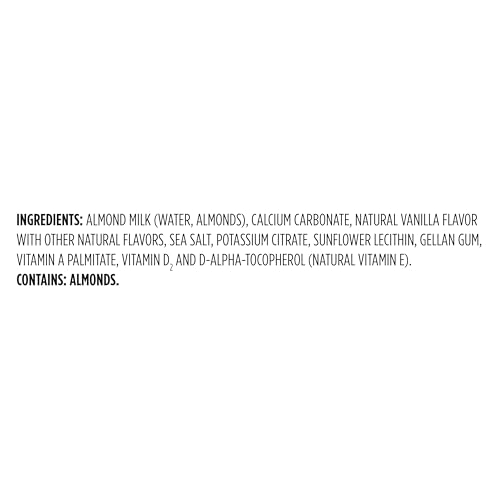
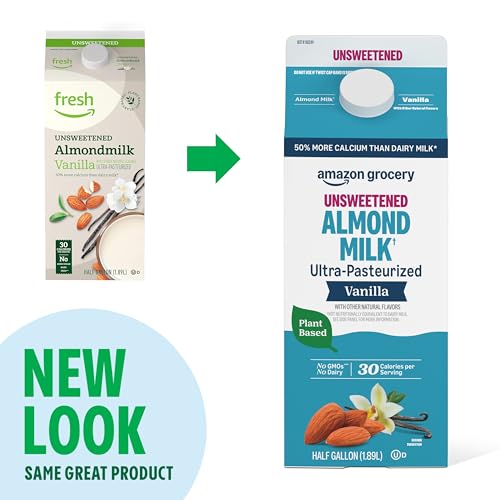
The half-gallon size and straightforward formulation make this a practical staple for daily drinkers who want a little flavor without the sugar crash. The vanilla here is subtle, owners say it adds warmth without turning syrupy, which keeps it compatible with medium to dark roasts. The fact that it contains 50% more calcium than dairy milk is a standout spec, and the full suite of free-from labels (soy, gluten, carrageenan) adds broad appeal.
It’s not designed for steaming, and like most vanilla almond milks, it can mute delicate single-origin notes. But for routine use in drip coffee or iced brews, it’s a dependable, cost-efficient option. Compared to the Whole Foods 365 version, it offers more volume and flavor nuance, though with slightly less purity in sourcing.
Product photos



Pacific Foods Barista Series Almond Milk

Strengths
- Steam-stable
- Smooth foam
- Heat resistant
Trade-offs
- Not organic
- Slightly higher price
- Fewer fortification claims
If you’re pulling espresso at home or steaming milk regularly, this is the closest almond milk gets to mimicking dairy in performance. The formulation is clearly built for heat resistance, and reviewers confirm it steams smoothly, foams evenly, and resists curdling, rare traits in the almond milk category. I’d pick this over standard options every time if micro-foam and integration are priorities.
It’s not labeled organic, which may give some pause, but the barista-focused design delivers where it counts. Compared to the 365 option, this one has a slightly creamier body and holds up better in dark roasts without developing a burnt aftertaste. It’s also effective in cold brew, where some almond milks turn thin or chalky.
Video review
How We Evaluated almond milk for coffee
As a long-time coffee enthusiast, I know the right almond milk for coffee can elevate your daily cup. Rather than hands-on testing, we researched these options by comparing published nutrition information, ingredient lists, and stated features. We then weighed owner reviews from multiple sources and considered expert opinions on how different almond milks perform in coffee. This allowed us to rank choices against a set of criteria important to coffee drinkers.
For almond milk specifically, texture and heat stability are key. We prioritized options that avoid curdling when added to hot coffee – a common complaint – and those with a creamy consistency that complements, rather than waters down, the brew. Flavor profile also mattered; a neutral base is generally preferred to avoid overpowering the coffee’s nuances, but a subtle vanilla can be a nice addition.
Specifications reliably show nutritional content and ingredients, helping assess things like added sugars or vitamin enrichment. However, we leaned heavily on owner feedback to understand real-world performance. Reviews revealed which brands actually held up when steamed or frothed, and which ones delivered a pleasant almond milk coffee pairing without separation or a chalky aftertaste.
Choosing The Right almond milk for coffee
As someone who’s spent years exploring the nuances of coffee and milk pairings, I know choosing the right almond milk can elevate–or ruin–your morning cup.
A quality almond milk for coffee should prioritize a neutral flavor profile that complements rather than competes with the coffee’s taste. Look for options without added sugars or thickeners that can negatively impact texture. Pay attention to whether the milk is formulated for heat stability; barista blends are designed to resist curdling when steamed. Finally, consider organic certifications and ingredient lists to ensure a clean product.
Flavor & Sweetness
I’ve found the biggest pitfall people make is assuming all almond milks taste the same. They really don’t! Many brands load up on sugars and artificial flavors, masking the delicate almond notes. For coffee, you want a clean slate. Opt for unsweetened varieties, even if you normally add sugar to your coffee. You can always control the sweetness yourself. If you’re curious about flavored options, I suggest experimenting with adding your own vanilla extract or syrups instead of relying on pre-flavored milks.
Heat Stability & Texture
This is critical, especially if you enjoy lattes or cappuccinos. Standard almond milks often separate and become watery when heated. That’s why “barista blend” almond milks are increasingly popular. These are formulated with added stabilizers (often gellan gum) to maintain a smooth, consistent texture even at high temperatures. If you’re serious about latte art, exploring how to froth non-dairy milk is a great next step.
Value vs. Specialization
While it’s tempting to grab the biggest, cheapest jug, remember you’re paying for quality and formulation. A basic almond milk might be fine for cereal, but it could disappoint in your coffee. Consider how often you drink coffee with almond milk.
- If it’s a rare treat, a standard unsweetened carton will likely suffice.
- If it’s a daily ritual, investing in a barista blend is worth it for the consistent texture and flavor.
- And if you’re looking to expand your options, be sure to check out other almond milk coffee creamer brands to find the perfect fit.
Don’t let a low price tag fool you. A curdled latte is a wasted latte – spend a little more for a barista blend if you regularly make hot, milk-based coffee drinks.
Almond Milk for Coffee Compared
Here’s a comparison of key specifications for these almond milk options, to help you choose the best one for your coffee routine.
| Product Name | Size | Sweetened | Organic | Calcium (%) | Best Use |
|---|---|---|---|---|---|
| 365 Organic Unsweetened | 32 fl oz | No | Yes | N/A | Overall |
| Amazon Grocery Vanilla Unsweetened | 64 fl oz | No | No | 50% more | Value Pack |
| Pacific Foods Barista Series | 32 fl oz | No | Yes | N/A | Coffee/Espresso |
Frequently Asked Questions
What if I’m sensitive to carrageenan, a common stabilizer?
Several brands offer carrageenan-free options(such as 365 Organic Unsweetened). Look closely at the ingredient list; gellan gum is a popular alternative stabilizer that doesn’t typically cause the same digestive issues for sensitive individuals.
Can almond milk really froth like dairy milk?
While it’s true standard almond milk struggles with froth, barista blends are specifically designed to create a stable foam. These contain added stabilizers that allow for a texture closer to dairy, but don’t expect quite the same volume or longevity as traditional milk foam.
Is organic almond milk noticeably better in coffee?
Organic almond milk generally avoids the use of pesticides and synthetic fertilizers during almond growth, which some people believe translates to a cleaner, purer flavor. However, the difference in coffee is often subtle and comes down to personal preference.
My almond milk always curdles in hot coffee. What am I doing wrong?
Curdling happens because the almond proteins react with the heat and acidity of coffee. Switching to a barista-style almond milk formulated with stabilizers is the most effective solution. If you prefer a non-barista blend, try adding the almond milk after the coffee has cooled slightly.
Are there good alternatives if I don’t like the taste of almond milk?
Absolutely. Many people find best oat milk for coffee to be a fantastic substitute, offering a naturally sweeter flavor and excellent frothing capabilities. Soy milk is another popular option, known for its creamy texture and neutral taste.
The Bottom Line
Choosing the best almond milk for coffee often comes down to balancing your budget with how critical texture and heat stability are to your daily routine. While many options exist, we found that 365 Organic Unsweetened strikes an excellent balance, offering a clean flavor profile and reliable performance without unnecessary additives. It’s a solid all-around choice for most coffee drinkers.
For those prioritizing value or needing a larger quantity, the Amazon Grocery Vanilla Unsweetened is a great option. If you regularly enjoy lattes, cappuccinos, or other hot coffee drinks, the Pacific Foods Barista Series is the clear winner. Its formulation resists curdling and delivers a consistently smooth, creamy texture, even when steamed – something many standard almond milks struggle with. You might also want to explore oat milk vs almond milk to see if another non-dairy option suits your preferences.
Ultimately, the “best” almond milk isn’t about a single feature or brand. It’s about finding a product that complements your coffee and your preferences. Focus on unsweetened varieties, prioritize heat stability if you’re making hot drinks, and remember that a clean, neutral flavor will always let your coffee shine.
